
You've probably heard whispers about it—an underwater ballet that happens nearly every single night just off the Big Island's coast. The manta ray night dive in Kailua Kona is one of those world-famous encounters where you get to see majestic manta rays up close, feeding on plankton drawn to special lights. It’s an experience that’s hard to put into words and easily ranks as one of the most memorable dives on the planet.
Your Essential Guide to the Kona Manta Ray Night Dive
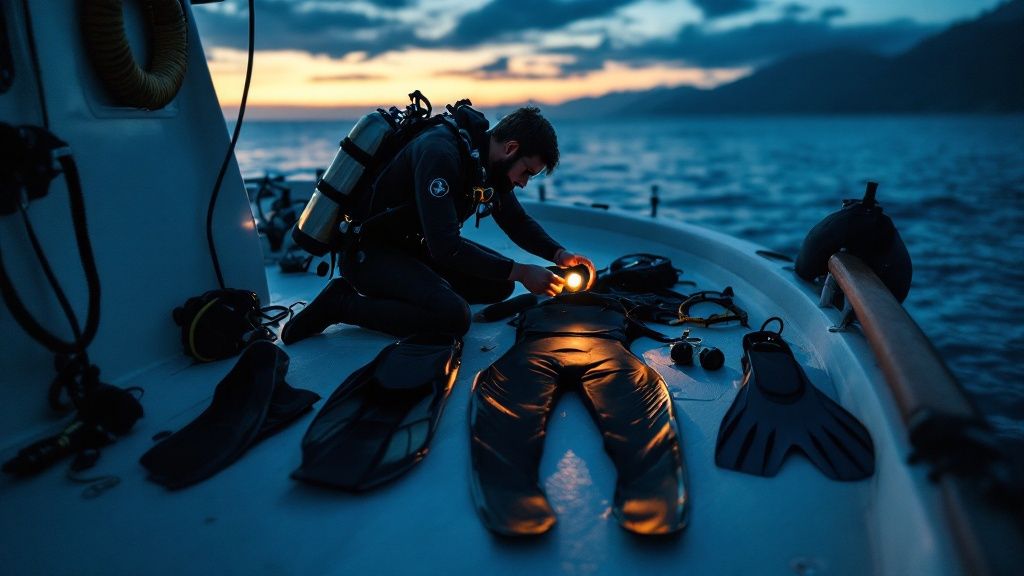
Welcome! You've found the complete guide to one of the world's most incredible underwater adventures. We're going to walk you through exactly why this dive is on every ocean lover's bucket list and how you can get in on the action. We'll look at what makes Kona the global hotspot for these gentle giants, from its unique underwater landscape to a very special population of resident mantas.
We'll paint a picture of the whole journey, from a beautiful sunset boat ride to that breathtaking moment when these massive, graceful creatures glide inches from your face. Best of all, we'll cover options for both certified scuba divers and snorkelers, so everyone has a chance to witness this marine spectacle.
Why This Dive Is a Must-Do Experience
The Kona Coast, especially around Kailua Kona, has some of the highest success rates for seeing manta rays anywhere in the world. Seriously. Sightings happen more than 85-90% of the time on any given night. Why so consistent? It's thanks to a local population of over 450 identified manta rays that call this coastline home, many with massive wingspans stretching over 12 feet.
Most dives are pretty shallow, usually around 30-40 feet, which lets you spend a good 45 to 60 minutes just taking in the show. It's a combination that almost guarantees an unforgettable encounter.
This guide is your first step. By the time you're done reading, you'll know:
- What makes this experience so unique and reliable.
- How to pick the right tour for your comfort level.
- What to expect from the moment you get on the boat to when you get off.
- How to interact responsibly with these magnificent animals.
It’s not just about seeing the mantas—it’s about appreciating this natural wonder in a safe and sustainable way. When you're ready to make it happen, you can check out some fantastic Manta Ray Dive Tours.
Understanding the Magic Behind Kona’s Manta Encounters
Ever wondered what makes Kailua-Kona the absolute best place on the planet to see manta rays? It’s not just pure luck. It's a pretty amazing story that involves a bit of biology and a brilliant, completely accidental discovery that created the perfect underwater stage.
The secret behind the manta ray night dive in Kailua Kona is actually super simple. Think of it as a giant, glowing dinner bell on the ocean floor. Decades ago, someone at a coastal hotel pointed lights into the water and noticed that manta rays were showing up to hang out in the beams. They quickly figured out the lights were attracting huge swarms of plankton—the mantas' favorite food.
Today, tour operators have this down to a science. During the dive, powerful lights are set up on the bottom, creating something that looks a lot like an underwater campfire. This intense glow is a magnet for zooplankton, pulling them in from the dark and creating a thick, soupy buffet. This is the "dinner bell" that rings every single night, calling the mantas in for a reliable, all-you-can-eat feast.
A Learned Behavior Unique to Kona
What really makes the mantas here so special is that they’re residents. These aren't just tourists passing through; the several hundred mantas we’ve identified along this coast live here all year. And over generations, they’ve learned to connect those bright lights with an easy meal.
This learned behavior is the key to our incredible sighting success rate, which is consistently over 90%. The mantas aren't just swimming by chance; they actively head to the dive sites every night because they know food is on the menu. It's a beautiful, symbiotic relationship where everyone wins: the mantas get a safe and predictable meal, and we get a front-row seat to one of nature's most incredible shows.
This nightly gathering isn’t random at all; it’s a conditioned response that has developed over decades. Kona's mantas have literally built this "campfire" of lights into their natural feeding routine, making the experience exceptionally reliable for divers and snorkelers alike.
The Science of the Spectacle
The whole encounter is a perfect, real-time example of the food chain in action, and it’s all kicked off by the dive operators.
- The Light Source: Powerful, stationary lights create a concentrated beam, setting the stage for the whole event.
- The Plankton: These microscopic critters are naturally drawn to light (a behavior called phototaxis), so they swarm into the illuminated area.
- The Manta Rays: As filter feeders, the mantas just have to glide through these dense clouds of plankton with their massive mouths open, effortlessly scooping up thousands of organisms in a graceful, looping ballet.
This simple but genius setup lets you watch natural feeding behaviors up close in a totally controlled and non-invasive way. When you understand how it all works, the dive becomes more than just a thrilling adventure—it’s a genuine connection with the marine world. To get a feel for what it's like from the water, check out this post on what it’s like to go on the manta ray dive in Kona.
Choosing Your Ideal Manta Adventure
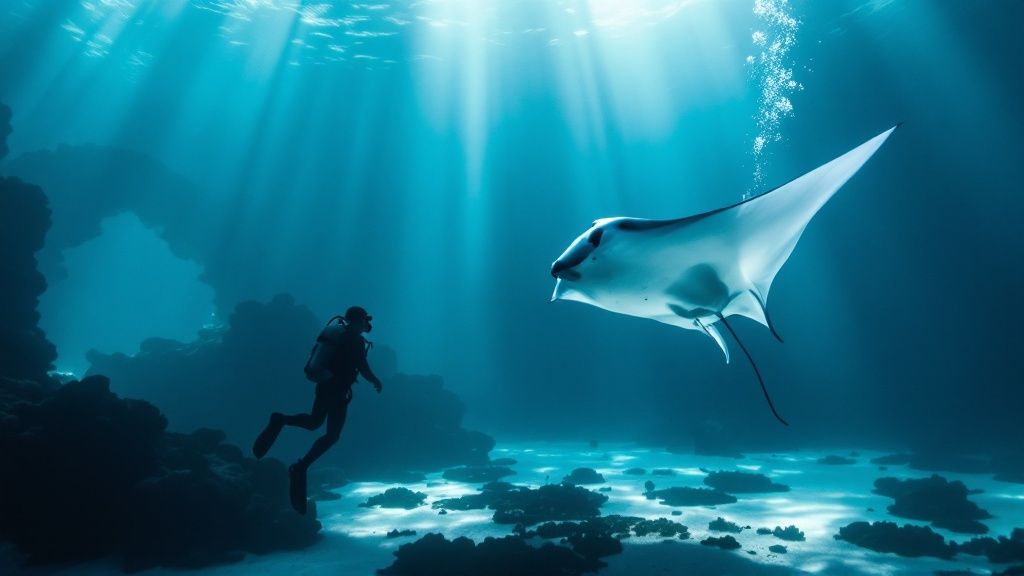
Alright, so you're ready to plan your manta ray night dive in Kailua Kona. This is where the fun begins. You've got a few key decisions that will shape your perfect underwater evening. With roughly 80,000 people doing this dive every year, two spots have become the reliable go-tos for seeing these amazing animals.
The first big choice is picking your dive site. To the north of Kona, you have Garden Eel Cove, better known as "Manta Heaven." To the south, there's Keauhou Bay, which we call "Manta Village." Each has its own vibe and conditions, so it really comes down to what you're looking for. If you're still on the fence, you can read more about why you should go on a manta ray dive in Kona.
Manta Heaven vs. Manta Village
So, what's the difference? Manta Heaven is famous for attracting huge groups of mantas. On a good night, the show is absolutely spectacular. The trade-off is that its location is more exposed to the open ocean, which can mean choppier surface conditions. If you're new to night diving or get seasick, that's something to keep in mind.
Manta Village, on the other hand, is tucked into a protected bay. This means calmer waters and a smoother boat ride, making it a fantastic option for first-timers or families. While you might see slightly smaller groups of mantas here, the sightings are incredibly consistent night after night.
Kona Manta Ray Dive Site Comparison
To make it even easier, here's a quick side-by-side to help you figure out which spot is right for you.
| Feature | Garden Eel Cove (Manta Heaven) | Keauhou Bay (Manta Village) |
|---|---|---|
| Location | North of Kailua Kona | South of Kailua Kona |
| Water Conditions | Can be choppier, more exposed | Generally calmer, more protected |
| Manta Sightings | Known for larger groups of mantas | Extremely consistent sightings |
| Best For | More experienced divers seeking a grand spectacle | First-timers, snorkelers, and those preferring calm seas |
Ultimately, you can't go wrong with either site. It's just a matter of choosing the experience that best fits your comfort level and adventure style.
Scuba Diving vs. Snorkeling
Next up: how do you want to see the show? From below as a scuba diver, or from above as a snorkeler? Both give you a front-row seat to the action, but the perspective is totally different.
-
Scuba Divers: If you're a certified diver, you'll head down to the sandy bottom, about 30-40 feet deep. You'll settle in a designated spot and look up as the mantas perform their graceful ballet just feet above you. It's a surreal, bottom-up view that feels like you're in another world.
-
Snorkelers: As a snorkeler, you'll float on the surface holding onto a specially designed light board. The powerful lights shine down into the water, attracting the plankton and bringing the mantas right up to you. You get an incredible top-down view as these gentle giants feed just inches below your face.
Honestly, one isn't "better" than the other—they're just different ways to experience the same magic. Snorkeling is a great, accessible option for anyone who isn't a certified diver, including families with kids.
Finding a Responsible Operator
This is the most important decision you'll make. A great tour operator doesn't just keep you safe; they put the well-being of the manta rays first. Look for companies that follow the Manta Ray Green List standards for sustainable tourism.
Adhering to responsible viewing guidelines is critical. This means passive observation only—no touching, chasing, or blocking the mantas' path. This protects the animals' delicate skin and ensures the experience remains sustainable for generations to come.
Here at Kona Honu Divers, we live by these principles. We make sure every trip is awe-inspiring for our guests and completely respectful of the marine environment. Our experienced guides will give you a full briefing and manage the dive to ensure a safe and ethical encounter for everyone involved.
Preparing for Your Dive and What to Expect
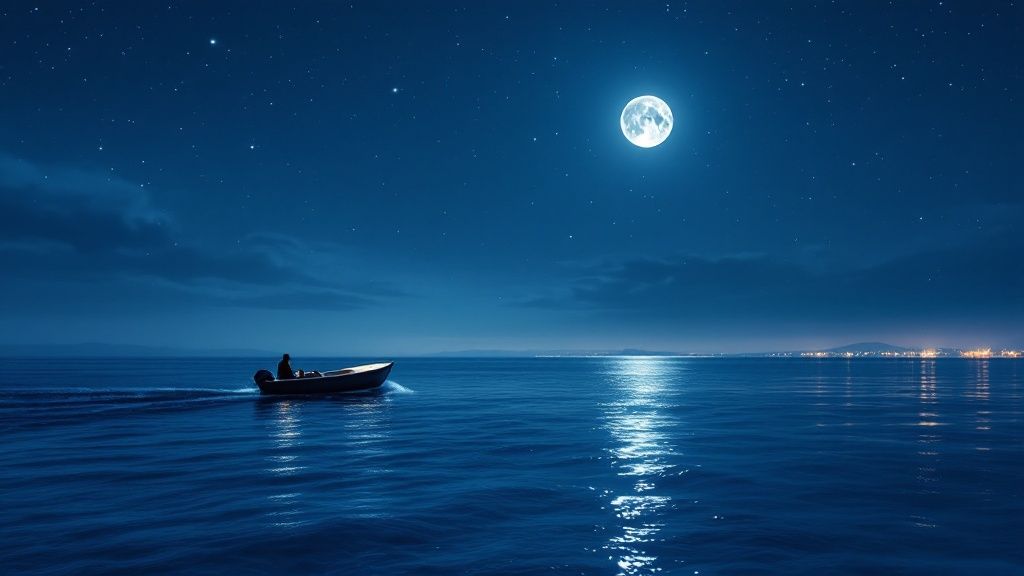
Knowing the flow of the evening can make your manta ray night dive in Kailua Kona a lot more relaxing and fun. Let’s walk through what a typical trip looks like, from the harbor to the ocean floor, so you feel totally ready for this incredible experience.
Most manta ray scuba charters are two-tank trips, which is a huge bonus. You’re essentially getting two completely different dives in one evening. The first is usually a gorgeous twilight reef dive. You'll get to explore Kona's vibrant corals as the sun goes down and all the nocturnal critters start waking up.
Think of this first dive as the perfect warmup. It’s a chance to get comfortable with your gear and reacquainted with being underwater before the main show begins. After you surface, you'll have a break on the boat with some snacks and drinks while dusk settles in, building the anticipation for what’s to come.
Your Trip Timeline Step-by-Step
Every operator has their own rhythm, but the general schedule is pretty consistent across the board. Here's a rough idea of how your evening will unfold.
- Check-In and Briefing: The adventure kicks off at the harbor. You’ll meet the crew, sign the necessary waivers, and get sized up for your gear. Then comes the important part: a thorough briefing on the dives, safety protocols, and how to interact respectfully with the mantas.
- Sunset Boat Ride: Seriously, the boat ride out is an event in itself. Cruising along the Kona coast while the sun dips below the horizon is just magical. Get your camera ready for some killer sunset shots.
- The First Dive (Twilight Reef): As the last light of day fades, you’ll drop in for your first dive on a healthy reef. This is your chance to see fish, maybe a turtle or an eel, and watch the whole ecosystem shift from day to night.
- The Main Event (Manta Dive): After a quick break back on the boat, it’s time for the headliner. You’ll descend again into the darkness and your guide will lead you to a spot on the sandy bottom where they set up the "campfire"—a circle of powerful lights pointing up.
- Return to the Harbor: Once everyone is back on board, the crew helps you out of your gear and usually has hot cocoa or tea waiting. The ride back is filled with buzzing energy as everyone shares stories of what they just witnessed.
What to Bring and What’s Provided
Good news: you can pack light. The tour operator handles almost everything, but a few personal items will make your evening much more comfortable.
What You Should Bring:
- A Towel: A no-brainer for drying off after your dives.
- A Warm Jacket or Sweatshirt: It can get surprisingly chilly on the boat ride back, especially when you're wet. You'll be glad you have it.
- Reef-Safe Sunscreen: If you're heading out before sunset and are sensitive to the sun, it's a good idea.
- Any Personal Dive Gear: Prefer your own mask, fins, or dive computer? Go ahead and bring them along.
What Your Operator Provides:
- All Scuba Gear: This includes your BCD, regulator, a nice warm wetsuit (usually 5mm or 7mm), mask, fins, and tanks.
- Snacks and Drinks: Most boats have light snacks, water, and hot drinks to warm you up after the dive.
- Professional Guides: You’ll have expert divemasters looking out for you every step of the way, both on the boat and in the water.
Your job in the water is simple: be a calm, respectful observer. Find your spot on the sand, stay put, and just look up. This allows the mantas to do their thing naturally and gives you the absolute best, up-close view of their incredible underwater ballet.
It's an experience that hits all the senses—the muffled sounds of the ocean at night, the bright beams of light cutting through the dark water, and the pure awe of seeing these gentle giants glide inches above your head. Trust me, it’s a memory you’ll be replaying for years to come.
Responsible Interaction with Kona’s Gentle Giants
Jumping in for the manta ray night dive in Kailua Kona is more than just a wild adventure; it’s a privilege. That privilege comes with a responsibility to protect these incredible animals. Think of yourself as a guest in their underwater dining room—being a good one ensures this experience stays magical for years to come.
The whole encounter hinges on one golden rule: passive observation. This is the absolute cornerstone of a safe, ethical, and mind-blowing dive. It's a simple idea that makes a massive difference for the well-being of Kona's resident manta population.
The Golden Rule Explained
Passive observation means exactly what it sounds like: you're there to watch, not to interact. These are wild animals, and our presence should never mess with their natural feeding routine. Following these guidelines isn't optional; it's essential.
- No Touching: This is a big one. Manta rays have a delicate, slimy coating on their skin that acts as a shield against infections. Touching them strips this protective layer off, leaving them vulnerable to disease.
- No Chasing: Don't ever swim after a manta. Chasing causes them stress and can spook them away from their main feeding spot, ruining the very thing you came to see.
- Give Them Space: Let the mantas have the right of way. They're focused on feeding and will glide in graceful loops. Your job is to stay put on the sandy bottom and let them navigate around you.
When you simply stay still and watch, you become part of the scenery instead of an intruder. This calm approach not only keeps the mantas safe but actually encourages them to come closer, giving you a much more authentic and breathtaking view.
Why These Guidelines Are Crucial
Sticking to these rules is absolutely vital for the long-term health of the mantas and the future of this world-class dive. When mantas feel safe and undisturbed, they keep coming back to the "campfire" of lights, night after night. This consistency is what makes the Kona experience so reliable and special. If you're wondering about the best times to plan your trip, check out our guide on the best time of year to see manta rays in Kona.
The most important thing you can do is choose an operator that follows the Manta Tour Operator Standards. These outfits put the animals' welfare first, making sure every dive is conducted with the utmost respect.
A Safe and Controlled Environment
If you're new to night diving, it's totally normal to wonder about safety. Don't worry, the whole experience is professionally managed in a very controlled setting. The dive sites are shallow, usually only 30-40 feet deep, and tucked into protected bays.
Experienced divemasters lead the dive, giving you a thorough briefing and staying with you every step of the way. Because the dive is so structured—everyone stays in a designated area—it's one of the safest and most organized night dives you can imagine. And the mantas themselves? They're completely harmless. No teeth, no stingers, no barbs.
Beyond the Mantas: An Advanced Thrill
Your commitment to responsible diving opens up a whole other world of incredible underwater experiences in Kona. The awareness and skills you build during the manta dive are invaluable. For divers looking for the next level of adventure, Kona is home to one of the most unique and surreal dives on the planet: the Blackwater Night Dive. This is a totally different ballgame, where you drift in the deep, dark ocean to see bizarre and beautiful creatures that only come up from the depths at night.
For divers seeking other thrilling Kona experiences, consider the unique Blackwater Night Dive or explore challenging sites on an advanced dive tour.
Exploring More of Kona’s Underwater World
Look, the manta ray night dive in Kailua Kona is absolutely a bucket-list experience. No question about it. But think of it as the grand finale, not the whole show. While the mantas are the stars after dark, the Big Island’s daytime diving is a whole different world, and it’s every bit as mind-blowing. If you only come for the mantas, you're missing out on so much more.
The Kona coastline is a diver's dream, literally built by volcanoes. What that means for us underwater is a landscape you just won't find anywhere else on earth. Imagine swimming through ancient lava tubes, navigating massive archways, and dropping off vertical walls that just disappear into the deep blue. It’s dramatic stuff.
Life on the Lava Reefs
All that wild volcanic rock is now home to some of Hawaii's healthiest coral reefs. Seriously, these things are thriving. On any daytime dive, you're practically guaranteed to be surrounded by schools of fish—bright yellow tangs, the local Hawaiian cleaner wrasse, you name it. It's a kaleidoscope down there.
And it’s not just the little guys. Encounters with big marine life are super common. You'll see green sea turtles (honu) all the time, just chilling on the reef or cruising by. Spinner dolphins often pop by to say hello to the boat. And if you keep your eyes peeled, you'll spot moray eels poking their heads out of crevices and octopuses doing their crazy camouflage thing against the rocks.
The real magic of diving the Big Island is its sheer variety. One day you’re in a shallow, sun-drenched coral garden, the next you’re drifting along a deep underwater pinnacle. That’s what keeps divers like me coming back year after year.
Plan Your Dive Vacation Right
To really soak it all in, you should plan for a few days of diving. Hit a different site each day to see new underwater landscapes and meet a whole new cast of marine characters. This way, you also build up your comfort and skills in the water, which makes that big manta ray night dive even more relaxing and fun when the time comes.
Here at Kona Honu Divers, we run guided trips that show off the very best of the Big Island. Our crew lives and breathes these waters, so we know exactly where to go for the best conditions and sightings each day. We're all about making sure every trip is safe, unforgettable, and just plain awesome.
From pristine reefs by day to thrilling encounters by night, Kona has it all. Check out all the different trips we offer on our main diving tours page.
Your Manta Ray Night Dive Questions Answered
Even after getting pumped up about the manta ray night dive in Kailua Kona, you probably still have a few questions rolling around in your head. That's totally normal. Getting those questions answered is the best way to go from feeling nervous to feeling stoked for the adventure.
We've heard just about every question there is, so we put the most common ones right here with straightforward answers. Let's get them sorted so you can focus on the incredible experience ahead.
Do I Need to Be Scuba Certified to See the Manta Rays?
Nope, you absolutely don't! This is one of the coolest parts of the whole experience. The best operators run an equally amazing snorkel tour right alongside the dive.
Snorkelers get to float on the surface, holding onto a big, custom-built light board. These powerful lights shine down, attracting a buffet of plankton, and the mantas swim right up to the surface to feast. It's an incredible bird's-eye view, perfect for non-divers, families, or groups with a mix of snorkelers and divers.
Is the Manta Ray Night Dive Safe?
Yes, it has a fantastic safety record. The whole show happens in a pretty shallow, sheltered bay—we're talking only 30-40 feet deep. You're under the watchful eye of professional divemasters and guides the entire time.
And the mantas themselves? They're the definition of gentle giants. They have no teeth, no stingers, and no barbs. Their only mission is to slurp up microscopic plankton. Just listen to your guide's briefing, keep a respectful distance, and you're set for a safe and mind-blowing encounter.
What if I Get Cold During the Dive?
Getting a little chilly on a night dive is a common worry, but the tour companies have this dialed in. They'll outfit you with a nice, thick wetsuit, usually 5mm or 7mm, which does a great job of keeping you toasty for the whole time you're in the water.
That said, the boat ride back can feel a bit brisk once you're out of the water. Do yourself a favor and bring a towel and a warm sweatshirt or jacket to throw on. A lot of boats will even have hot cocoa or tea waiting for you, which is the perfect way to warm up after the swim.
Pro Tip: Don't let the warm Hawaiian air fool you. A boat ride at night after being in the water can feel brisk. Packing that extra layer is a small step that makes a huge difference in your overall comfort.
Is a Manta Ray Sighting Guaranteed?
Okay, so these are wild animals, and nobody can ever offer a 100% guarantee. But the success rate here in Kona is ridiculously high, often over 90%. Why? Because the local manta population doesn't migrate and they've figured out that this is a reliable dinner spot every single night.
To give you extra peace of mind, most good operators offer a "manta guarantee." If for some rare reason the mantas don't show up for your tour, you can usually come back another night for free (depending on availability). Just make sure to ask about the specific policy when you book your manta ray dive tour.
At Kona Honu Divers, our experienced crew is here to answer any other questions you may have and ensure your manta ray adventure is the highlight of your trip to Hawaii.