
You're probably standing at the dock wondering whether tonight will be the night the whole trip turns memorable. The sky is fading, the water looks dark and flat, and the only real question is whether this manta ray night dive Hawaii experience will feel crowded, calm, and worth the effort, or like a rushed wildlife line-up with too many boats.
The answer depends less on the manta rays than on the site, the group size, and the operator's discipline. Kona gives you a real chance at a close encounter, but it only works well when the lights, the divers, and the wildlife all have room to do their jobs.
Arriving at the Kona Harbor at Dusk
By the time you reach Honokohau Harbor, the heat of the day has eased off and the boat deck already feels like a staging area for something different. Gear gets checked, masks are fitted, and the crew walks through the plan while the last daylight hangs over the water. If you've done boat dives before, it feels familiar. If you haven't, it feels organized in a good way, not rushed.
The ride out is short enough that people usually stay focused on the moment instead of drifting into travel fatigue. You're not heading far offshore into a long, rolling crossing. You're moving from harbor light into open dark, with the coastline dropping behind you and the first underwater lamps being readied for the site.
A lot of first-timers worry that the night part will feel disorienting. It doesn't, once the briefing is clear and the crew keeps everyone together. The first five minutes in the water are usually the most important, because that's when the lights settle into place and your eyes adjust to the glow below. After that, the whole scene narrows down to the beam of light, the sandy bottom, and whatever moves through it.
Practical rule: the calmer you are on the entry and the steadier you stay near the lights, the better the encounter usually feels for everyone in the group.
For readers mapping out the broader trip, the harbor departure and evening flow are part of the same Big Island rhythm you'll find on other Kona boat outings. On a good night, the transition from dock to water feels less like a tour and more like stepping into a very deliberate, very quiet wildlife setup.
How a Manta Ray Night Dive Actually Works
Lights, plankton, and why the mantas show up
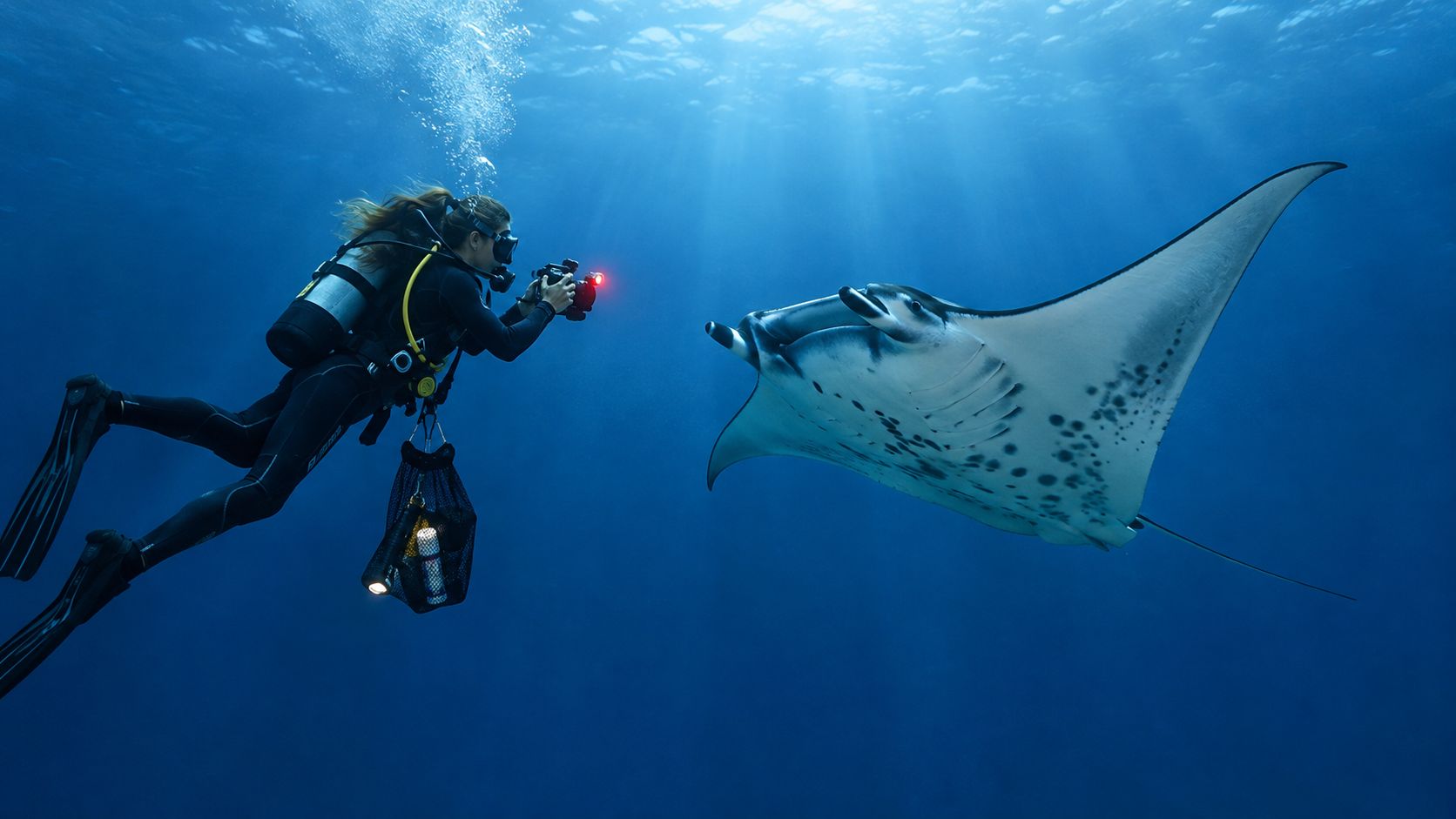
The whole encounter starts with light, not bait. Operators place purpose-built lights on the seafloor or use a surface light board, and those lights draw plankton into a concentrated patch of water. The manta rays follow the food, not the fixture itself. That's why the setup works, and why the viewing area stays more predictable than a random open-ocean sighting.
On the scuba side, divers usually settle on sand in about 30 feet (10 meters) of water, which keeps the group stable and gives the mantas an open lane above them. The classic image is the underwater “campfire,” where everyone stays low and the mantas circle overhead in controlled feeding passes. The best nights feel almost staged, but they aren't. They're just organized around how the animals already feed.
That structure matters. When people move too much, the water gets messy and the light cone breaks up. When the group stays compact and still, the mantas can repeat the same feeding pattern over and over without interruption. That's when the barrel rolls happen close enough for you to appreciate the size and precision of the animal instead of just seeing a blur.
Scuba and snorkel are not the same experience
A true manta ray night dive Hawaii trip gives certified divers the bottom-up view, which is why so many divers love it. You're settled in place, looking straight up at the mantas as they sweep through the beams. A snorkel format is different. You're on the surface, usually holding a float or light board, watching the mantas rise from below into the light field.
Both can be excellent. They just reward different comfort levels and different expectations. Divers usually care more about bottom stability, buoyancy, and how the group positions itself. Snorkelers care more about floating calmly and not crowding the board. The wrong choice isn't scuba or snorkel, it's assuming the two deliver the same perspective.
Learn more about the nighttime scuba setup, especially if you're comparing your first Kona manta trip with your normal day-diving habits. Night changes everything, and the best operators make that change feel simple instead of hectic.
The encounter works best when you stop trying to “do” anything and let the light draw the feeding pattern to you.
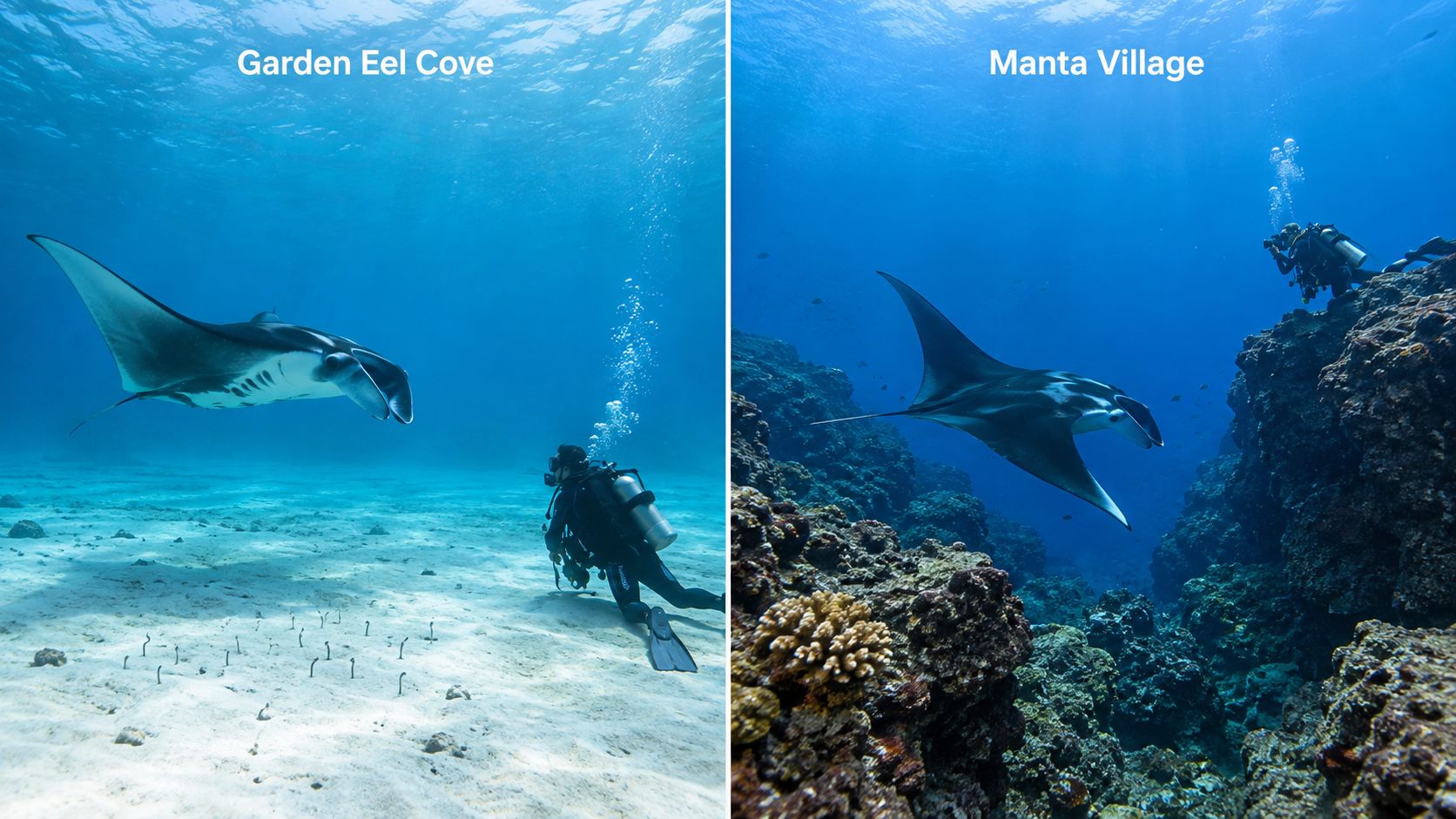
Garden Eel Cove vs Manta Village
Why the site itself changes the trip
If you care about comfort, positioning, and the quality of the viewing lane, Garden Eel Cove, also known as Manta Heaven, usually makes the stronger case. It sits off Kona International Airport in a naturally more protected setting, which helps reduce exposure to open-ocean swell compared with more exposed coastal spots. For a night dive, that matters more than people admit on the booking page.
The layout also works in the diver's favor. Garden Eel Cove gives you a defined sandy area where divers can stay put while mantas feed above and around the light source. That means less chasing, fewer awkward adjustments, and a cleaner viewing area. The site is easier to manage when the goal is close observation without disturbing the animals.
How Manta Village compares
Manta Village at Keauhou, or Makako Bay, has its place, and it's part of Kona's long manta history. But for a careful night diver, the practical question is not just whether mantas show up. It's whether the site gives the group enough room to watch without adding unnecessary crowding or positioning problems. Hawaii's management documents note that Keauhou was designated as a snorkel-only site because it lacks a sandy area suitable for divers' stationary “campfire” positioning, which was identified as a safer way to reduce human-manta collisions and avoid interrupting feeding patterns.
That distinction tells you a lot. If the dive format depends on stable bottom positioning, the site has to support it. Garden Eel Cove does that better. Manta Village can still produce strong encounters, but the geometry of the site is not as forgiving for the exact kind of calm, low-impact viewing most divers want on a manta night.
For a manta ray night dive Hawaii booking, I'd treat Garden Eel Cove as the superior choice when the priority is calmer conditions, predictable positioning, and close observation. That's the site that fits the dive, instead of forcing the dive to work around the site.
Certification, Age Limits and Safety Considerations
Who should book the scuba version
If you're booking the scuba dive, you should already be comfortable underwater, because a manta night dive asks for more than a basic holiday dip. Buoyancy control matters more here than on many day dives, since you're staying low, staying still, and avoiding contact while large animals pass over your head. A nervous diver who hovers, sculls, or drops a fin into the light lane makes the whole thing harder.
That's why the right operator spends time screening, briefing, and pairing the group correctly. First-timers who are certified can absolutely enjoy the trip, but they need honest guidance about how the dive works. If you're new to night conditions, talk through your comfort level before you book. The best crews adjust the pace, explain the entry, and keep the expectations realistic.
Check the certification requirements before you book, especially if you're deciding between the scuba trip and a snorkel-only manta experience. The format matters more than the marketing language.
Safety at night is a real planning issue
Hawaii's Department of Land and Natural Resources documented that, at the time of its boating and safety assessment, manta-viewing locations including Makako Bay and Keauhou Bay did not have location- or activity-specific regulations restricting boating, diving, or swimming. The same assessment noted that nighttime diver visibility and marking were safety concerns, including the absence of regulations governing lighted flags or markers for divers operating after dark. That's why disciplined group procedures matter so much.
Stay with the guide, keep awareness of boats and other divers, and use proper night signaling gear if your operator requires it.
If you're a nervous swimmer, a certified diver with limited night experience, or a family member booking for someone else, the safest question is not “Will I be fine?” It's “How does this operator organize the group, brief the entry, and control the spacing?” On a manta dive, those details are the difference between a smooth night and a chaotic one.
Best Time of Year and Conditions for the Dive
Timing is less about a season and more about conditions
Kona's manta encounters are reliable enough that you don't need to chase a narrow calendar window. The better question is whether the night's ocean conditions will support a relaxed boat ride and a steady viewing setup. The best nights are the ones where the harbor is calm enough that the crew can focus on the dive instead of compensating for chop.
That said, the practical booking advice is simple. If your trip dates are fixed, take the manta night when it fits your schedule. If you have flexibility, choose the calmer part of your stay and avoid leaving it for the very last night. That gives you a buffer if the operator needs to shift plans for conditions.
See the local timing guide for manta dives in Kona if you're trying to build the dive into a larger Big Island itinerary. The goal is not to overthink the forecast, it's to avoid stacking your most important ocean night against the least forgiving weather window.
What a good operator does when conditions slip
A reputable crew doesn't pretend marginal water is ideal. They evaluate the night, explain what's changing, and make a call that puts safety and encounter quality ahead of squeezing in one more departure. That matters because crowding and poor visibility both make the encounter less comfortable.
The right expectation is a controlled, honest adjustment when needed. Not every cancellation is a disappointment. Sometimes it's the sign that the operator understands the site well enough to protect the experience. If the water is choppy, the boat is overloaded, or the viewing zone won't stay orderly, postponing the trip can be the right move.
What to Pack and How to Photograph Mantas
Pack light, but don't forget the useful stuff
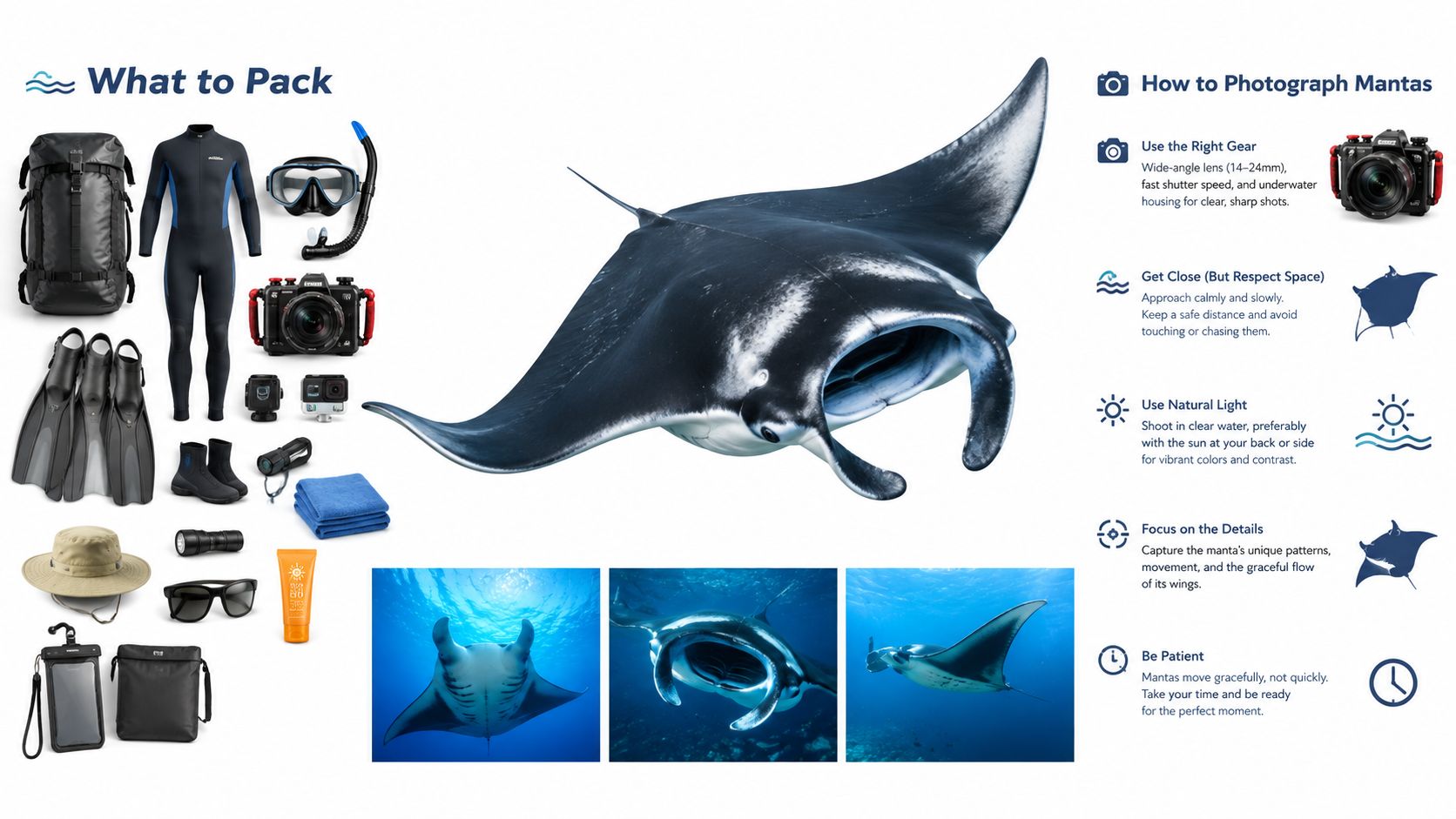
You don't need much for the water, because the operator should handle the core dive gear. For a manta night dive, that usually means mask, fins, weights, and the in-water setup. Your own job is to show up ready for the boat ride and the temperature change afterward. Bring a towel, dry clothes, a light layer for the ride back, and something for motion discomfort if you know you need it.
A few things help more than people expect:
- Warm layer for the return ride: The post-dive chill hits faster than most visitors expect.
- Towel and dry clothes: You'll use both the second you're back aboard.
- Motion-sickness remedy: Take it seriously if you've had issues on boats before.
- Simple pre-dive snack and hydration: Don't arrive overfull or underhydrated.
Shoot the manta, not the chaos around it
Photography gets better when you stay patient. A manta passes cleanly through a light field, so the image works best when your setup is already ready before the animal arrives. Keep your camera steady, use a wide frame if you can, and avoid blasting the animal with unnecessary light. Strong strobes and frantic movement don't help the shot, and they can distract from the encounter.
If you're using a focus or video light, keep it controlled and pointed where the crew allows. The point is to record the mantas without changing how they behave. The best manta photos usually come from one thing most photographers resist, stillness.
Photographer's rule: wait for the manta to come through your frame, don't chase the frame toward the manta.
How to Book and What to Look for in an Operator
What separates a good booking from a frustrating one
The booking page tells you the departure time. The operator tells you how the night will run. Ask who's leading the dive, how many people they put in each group, and how they handle crowding at the site. Those are the details that determine whether you get a focused encounter or a noisy one.
Boat size matters because it shapes the flow from harbor to site. Group size matters because it affects the light field, the amount of movement in the water, and how easily the mantas can feed without disturbance. Guide-to-diver ratio matters because it keeps the underwater setup orderly, which is a safety issue and a wildlife issue at the same time.
What to compare before booking a Manta Ray Night Dive Hawaii
| Criterion | Why It Matters | What to Ask |
|---|---|---|
| Group size | Smaller groups usually mean less crowding around the lights | How many divers or snorkelers are taken per run? |
| Site choice | The site changes swell exposure and positioning quality | Do you run Garden Eel Cove, Manta Village, or both? |
| Briefing quality | A strong briefing keeps everyone calmer and safer | How do you explain entry, spacing, and no-touch rules? |
| Visibility and marking | Night boating adds real safety concerns | What night signaling or buddy procedures do you use? |
| Gear condition | Good gear reduces small problems that ruin the night | Is the rental equipment maintained regularly? |
If you're shopping beyond the manta trip, that same operator judgment carries over into other diving too. For readers planning a full Big Island dive week, Kona diving and boat trips are worth comparing alongside the manta night, because the standard you want at night is the same standard you want during the day.
Kona Honu Divers is one operator in that space, and its manta trip is built around guided site management rather than a loose crowd-on-the-water approach. That's the kind of structure this dive needs.
Why Kona Honu Divers for Your Manta Ray Night Dive
The booking choice should match the dive, not just the logo
A manta night dive works best when the operator treats it like wildlife viewing with rules, not nightlife with fins. That means small groups, clear positioning, and a crew that knows how to keep people calm without packing the light field. It also means using a site that suits the format, which is why Garden Eel Cove makes more sense for the dive than a site designed around a different setup.
The crowding issue is real. A survey at Kona's Garden Eel Cove found 77% of respondents encountered more snorkelers than they considered normal, 67% encountered more scuba divers, and 68% encountered more boats than their preferred norm, which is exactly why disciplined operator procedures matter as much as the manta rays themselves. That's not a reason to skip the dive. It's a reason to choose the operator carefully.
For divers who want to branch out after the manta encounter, the same operator can also support more advanced nights, including the Kona blackwater dive and the premium advanced two-tank trip. Those are different dives, but they reward the same habits, good buoyancy, good briefings, and respect for the water.
What Kona Honu Divers brings to the table
Kona Honu Divers runs the manta dive from Kona with guided planning, well-maintained rental gear, and a custom boat setup that suits organized night operations. Their broader dive program also includes Big Island diving tours for readers who want to turn one manta night into a fuller dive trip. If you want a simple way to move from research to reservation, the operator's manta tour page is the right place to start.
If you want a manta night that's organized, low-friction, and built around the site that handles the dive best, book with Kona Honu Divers and keep the night focused on the mantas instead of the logistics. Visit Kona Honu Divers to reserve your spot, compare the manta dive with their other Big Island options, and lock in a guide-led trip that respects the animals and the conditions.