
You're probably doing what most visiting divers do. You typed Kona Diving Company into search, found a familiar name, and now you're trying to figure out whether to just book it or keep looking.
That's smart. Kona diving is too good to waste on the wrong fit.
I've seen a lot of visitors make the same mistake. They compare operators like they're booking a shuttle, not a dive day. In Kona, the operator changes everything. Briefings, site choice, boat handling, how crew deal with nervous divers, how they adapt when conditions shift, and whether a signature dive feels polished or slapped together. That's the difference between a good vacation activity and the dive you talk about for years.
Planning Your Ultimate Kona Dive Trip
Visitors often arrive in Kona with one big goal and one vague backup plan. The goal is usually manta rays. The backup is “maybe a morning reef dive too.” Then they start searching operators and assume they're mostly interchangeable.
They aren't.
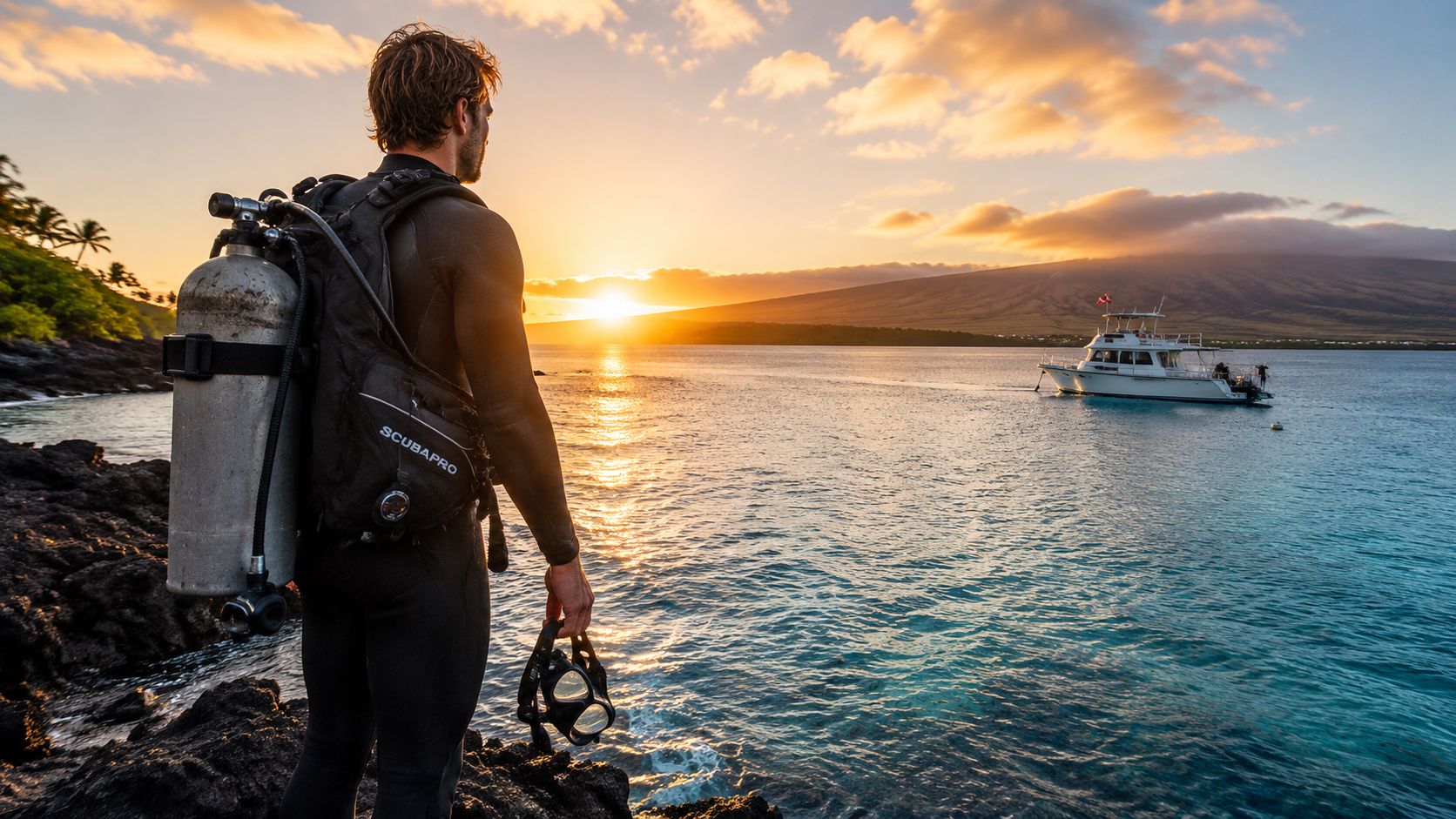
The better approach is to pick your trip in this order: your experience level, the specific dive you care about most, then the crew you trust to run it well. If you start with the company name alone, you'll miss the key question, which is who matches your kind of diving.
A visitor doing an intro dive needs patience and calm instruction. A certified diver chasing mantas needs sharp logistics and site judgment. An advanced diver looking at blackwater needs a crew that understands buoyancy discipline, tether procedures, and how to keep an offshore night dive orderly when there's no visual reference at all. Those are not the same skill sets.
Start with the dive, not the logo
Kona is famous for a few very different experiences:
- Manta night dives for controlled, shallow spectacle
- Morning reef dives for easy marine life and lava structure
- Blackwater dives for advanced divers who want something far stranger
- Training and intro dives for people getting started
If you're narrowing down options, it helps to review a broad snapshot of Kona dive trips on the Big Island before you commit to one operator's sales page.
Practical rule: In Kona, book the operator that runs your priority dive well. Don't book a generalist first and hope the marquee dive works out later.
I'll give Kona Diving Company a fair look because that's what brought you here. But if you want my local read, I'd keep your standards high and compare operators by specialty, safety culture, and how clearly they match the trip to the diver.
An Overview of Kona Diving Company
Kona Diving Company is a real player in the Kailua-Kona market, not some pop-up outfit with a boat and a logo. Its PADI dive center listing says the company was founded in 2010, is family-owned and operated, and runs from 74-5615 Luhia St. E-1, Kailua-Kona, HI 96740 with listed hours of 10:00 AM to 3:00 AM daily. That tells you a few useful things fast. They have a fixed retail footprint, they're built around visitor scheduling, and they're clearly comfortable operating around night-dive demand.
That matters in Kona because a lot of the island's highest-interest dives happen late in the day or after dark.
What they offer
Their public profiles show a broad menu. Trip descriptions on TripAdvisor's Kona Diving Company page mention certification dives, introductory dives, night dives, manta ray dives, and multi-day packages. So if you're looking for a single operator that covers several categories, they do check that box.
They're also not new to handling tourists who want more than one kind of trip in the same stay. That kind of product spread usually appeals to vacation divers who want convenience first.
What stands out historically
The strongest objective point in their favor is consistency. Their TripAdvisor listing states they earned the Certificate of Excellence from 2014 to 2019 and the Travelers' Choice Award from 2020 to 2023, which gives them a documented run of at least 10 consecutive award years on that platform. That's a meaningful signal of staying power in a competitive Kona market.
If you want a little more background on how local operators position themselves, the about page for Kona diving operations and training support is useful context when comparing shop style, trip emphasis, and service philosophy.
A long award streak doesn't automatically make an operator the right choice for your dive. It does tell you they've stayed visible and well-reviewed over time.
My read on Kona Diving Company is simple. They're established, broad in their offerings, and clearly built to serve the standard Kona visitor who wants easy access to multiple dive types. That's solid. It just doesn't settle the bigger question, which operator I'd choose when the dive itself matters most.
Exploring the Kona Honu Divers Experience
If you ask local divers which operation they'd book when they care about execution, not just availability, one name comes up a lot. Kona Honu Divers gets attention because the company is built around matching trips to diver type, not just filling seats across a generic menu.
That's the difference I'd pay for.
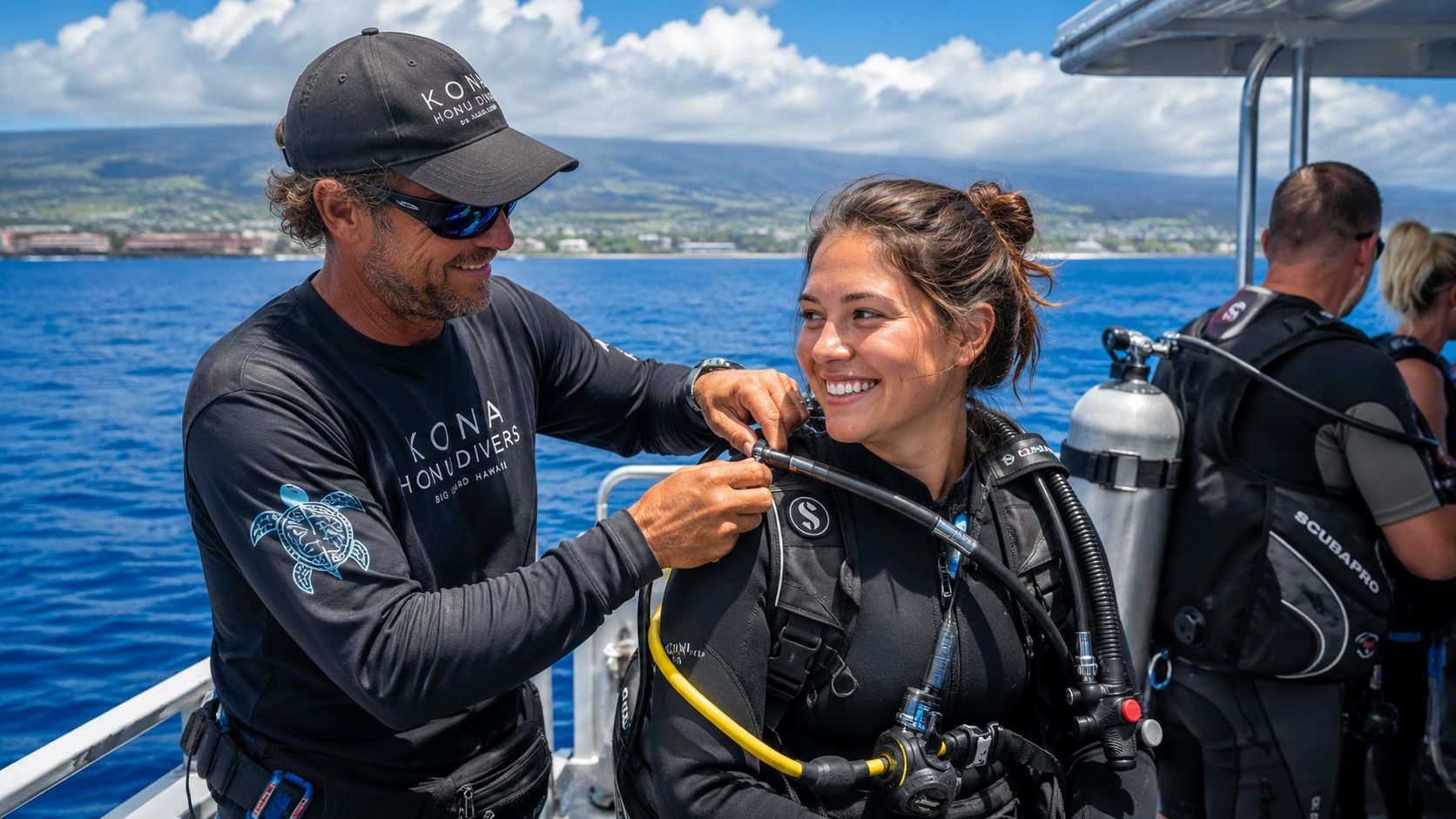
Why experienced divers notice the difference
A premium operation isn't just cleaner marketing. It shows up in briefing quality, diver grouping, pace on deck, and whether the crew seem like they're managing the day or reacting to it.
Kona Honu Divers is one operator in Kona that runs guided scuba trips, training, and specialty dives with a strong focus on trip fit. According to the publisher information provided for this article, the company offers free Nitrox for certified divers, early diver discounts, custom dive boats, and a crew with deep industry experience. Those details matter because they affect actual dive days, not just brochures.
I like operators that make it easy to tell who a trip is for. That saves beginners from getting overwhelmed and saves advanced divers from ending up on the wrong boat with the wrong expectations.
What I'd look for before booking
When I compare a shop like Kona Diving Company against a more specialized alternative, I'm checking for these things:
- Trip matching: Do they clearly separate intro, recreational, manta, and advanced offerings?
- Crew confidence: Do the guides sound procedural and calm, or vague and salesy?
- Boat design: Is the platform set up for divers first, or adapted for tourists generally?
- Specialty depth: Are signature dives central to the operation, or just another checkbox?
That last point matters more than people think. Operators that treat manta and blackwater as core products usually run them with tighter systems.
Book the crew that already knows what your questions will be. That's usually the crew that has run your kind of dive many times before.
My opinionated takeaway
Kona Diving Company is a valid option if your priority is booking with a known local shop that offers a wide range of standard activities. If your priority is sharper specialization, cleaner product mapping, and a more deliberate fit between diver and dive, I'd lean the other way.
That's especially true if your trip includes a night dive, an advanced charter, or a mixed group where one bad choice can drag down the whole day.
Comparing Signature Kona Dive Experiences
You land in Kona with two dives circled on the calendar: manta and blackwater. That is the point where generic operator comparisons stop being useful. These trips reward shops that run them all the time, with clear procedures and crews who know how to control the pace underwater.
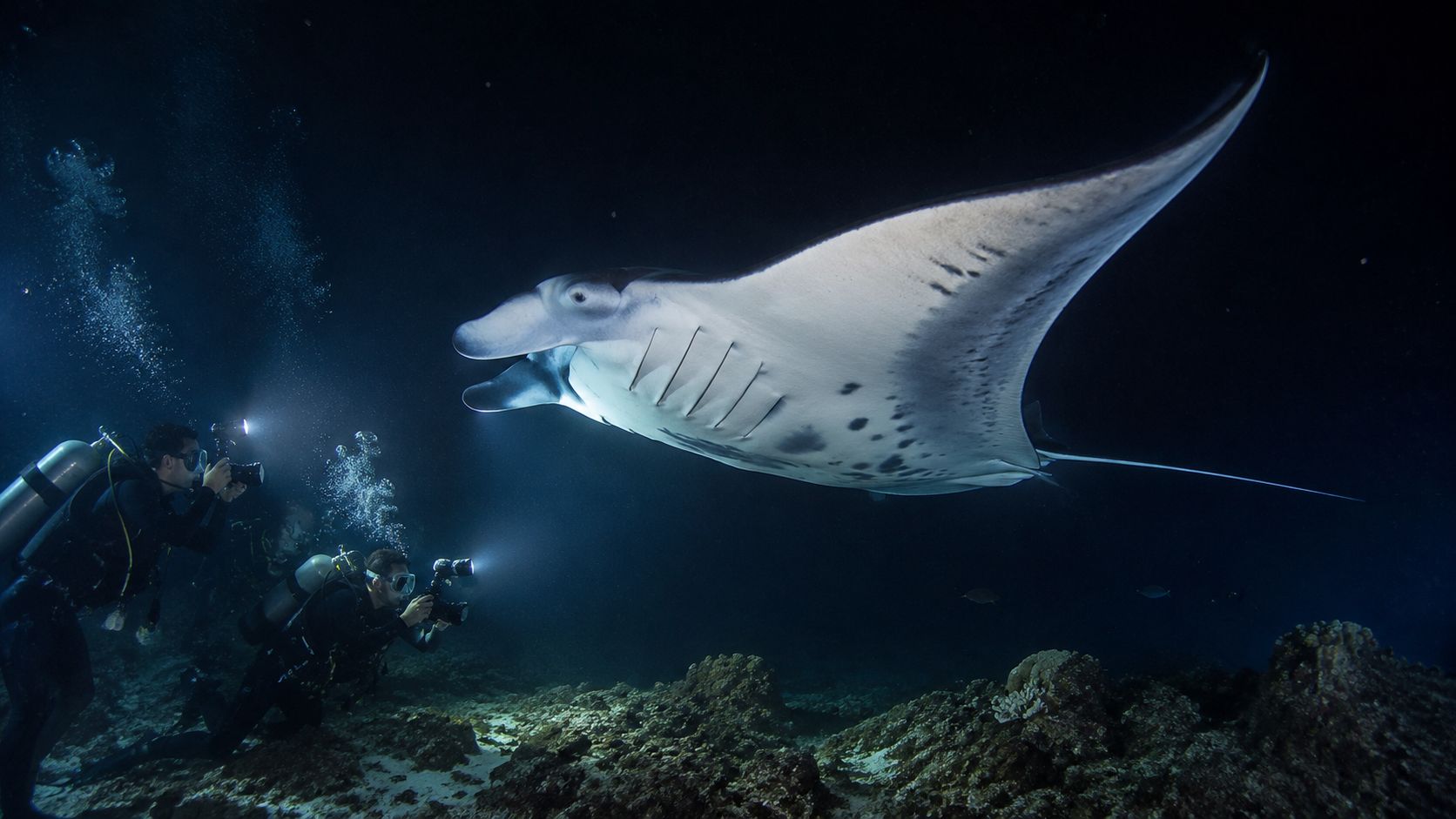
The manta dive
The manta night dive is Kona's signature for a reason. It is accessible, dramatic, and easy to underestimate. A shallow profile helps, but the quality of the trip still depends on site choice, briefing quality, light setup, and how well the crew manages diver positioning once the mantas start circling.
I would put more weight on operator discipline than on marketing copy. Kona Honu Divers puts real attention on Garden Eel Cove manta diving and night swim logistics, and that matters. Protected conditions and a cleaner viewing layout usually produce a calmer dive and better manta passes.
If mantas are your priority, study the manta ray night dive tour options. Kona Diving Company can get you on the water. Kona Honu Divers is usually the stronger pick if you want a manta operation that feels purpose-built instead of added onto a standard schedule.
The blackwater dive
Blackwater is the dive that separates casual vacation planning from smart trip planning. You are offshore at night, suspended over open ocean, managing buoyancy without a reef or bottom for reference. That requires a crew that treats the dive as a specialty, not a novelty.
The Kona black water dive write-up explains the basic format, including the offshore setting and tethered descent. That article is useful for understanding the environment. It also makes the bigger point clear. Blackwater demands precision, comfort in the dark, and tight supervision.
Book accordingly.
If blackwater is on your list, I'd choose a crew that runs it with a consistent system and a clear screening standard. Read the black water night dive details before you commit. This is one of the clearest reasons divers searching for Kona Diving Company often end up booking with Kona Honu Divers instead.
Local advice: Manta is forgiving for a wider range of divers. Blackwater rewards experience, control, and a crew that runs a tight operation.
The advanced charter question
Advanced divers usually want less traffic, better site selection, and a trip profile that does not get watered down for mixed certification levels. Plenty of shops promise that. Fewer build a charter around it.
That is why the premium advanced long-range dive tour deserves a close look. It is a better fit for experienced divers who want the day planned around advanced diving from the start, rather than hoping a general charter turns into one.
Kona Honu Divers signature dives
| Dive Type | Best For | KHD Advantage |
|---|---|---|
| Manta night dive | Certified divers who want Kona's classic bucket-list experience | Strong emphasis on Garden Eel Cove and a controlled viewing setup |
| Blackwater night dive | Advanced divers with solid buoyancy control | Specialty focus on tethered offshore diving in deep pelagic water |
| Premium advanced charter | Experienced divers seeking less standard sites | Trip structure aimed at advanced profiles rather than mixed ability groups |
Onboard with Kona's Best Fleet and Crew
You feel the difference before the first giant stride. One boat runs calm, organized, and diver-first. Another feels like a cattle call with tanks.
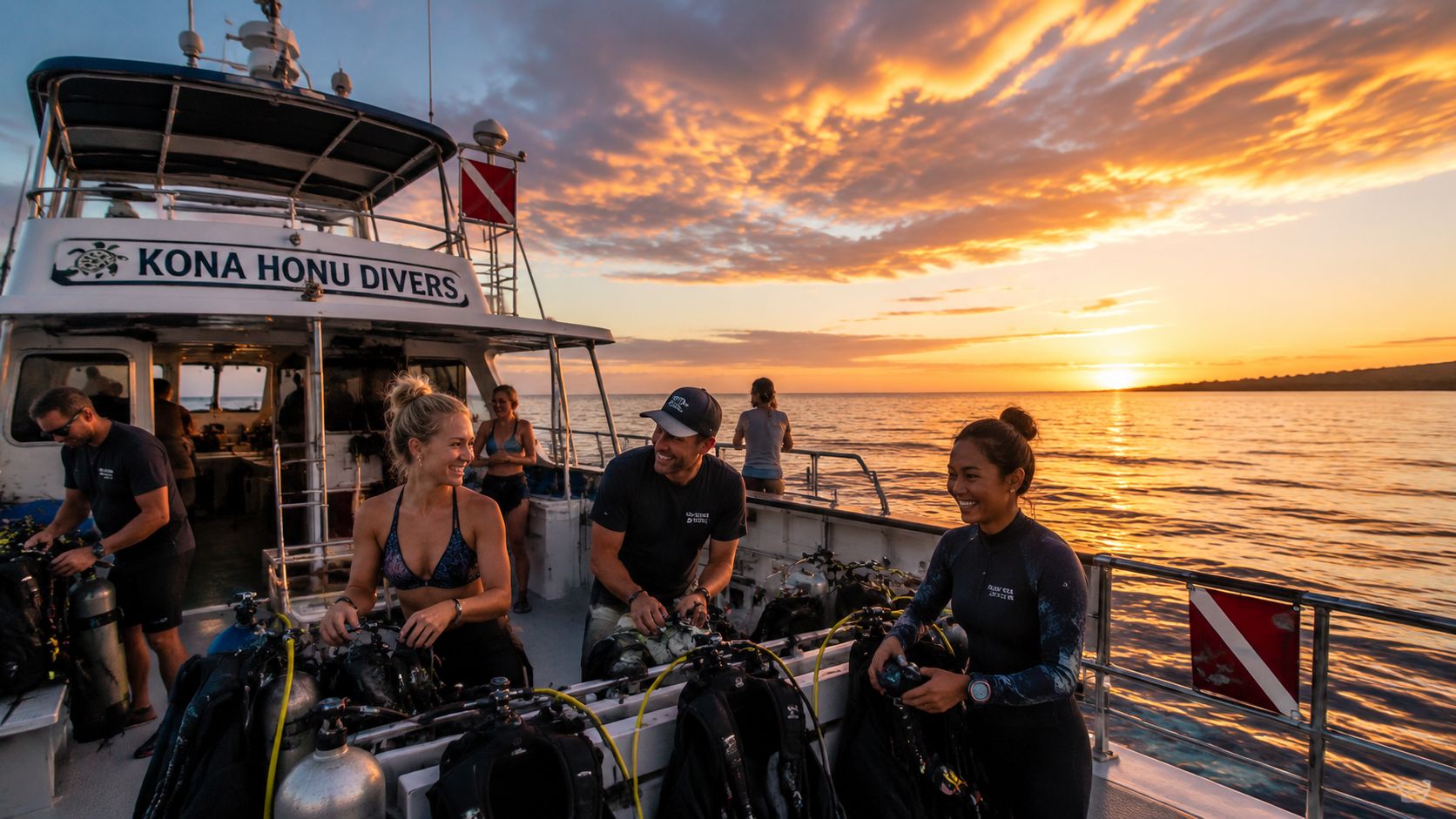
That distinction matters in Kona because the boat is part of the dive. Good captains pick the right approach. Good crew set the deck so entries are clean, exits are fast, and nobody is tripping over fins or waiting for basic help. Kona Honu Divers runs boats built for scuba, not general sightseeing with tanks added later. That shows up in the details divers care about. Wide working space, sensible gear staging, easy exits, and a flow that keeps the day from dragging.
The crew matters even more than the hull. A sharp team can brief clearly, spot bad weighting before it becomes a problem, and keep the pace moving without making newer divers feel rattled. That balance is hard to find. If you want a sense of who is on deck and in the water, look at the Kona Honu Divers dive team and instructors.
Comfort is safety in practice.
Visitors usually notice that on the second dive, when they get cold, tired, and sloppy. Kona water often feels warm at the surface and cooler over a full dive day, especially if you are doing repeat dives or a night charter. A crew that knows the local conditions will tell you to wear enough suit before you spend the afternoon shivering through the briefing.
Use this rule set:
- If you get cold easily: Ask for a warmer wetsuit before the boat leaves.
- If you are diving several days in a row: Plan for cumulative chill, not just one morning dive.
- If you are unsure what to wear: Follow the crew that watches divers come back cold every day.
The better operations handle these small decisions well. They sort weights early. They help with fit issues. They give current warnings that are specific to the site, not generic boilerplate. That is one reason experienced visitors who start by searching for Kona Diving Company often end up booking with Kona Honu Divers instead. The trips feel more dialed in, and the people running them usually make the difference.
Finding Your Perfect Dive with Kona Honu Divers
Most booking mistakes happen because visitors choose a company before they choose the right trip. That's backward.
The useful question is simpler. What kind of diver are you, and who has a product that fits?
If you're new to diving
You want an intro experience that feels structured, not rushed. Public information about Kona Diving Company shows broad beginner-to-advanced offerings, but one of the clearest market gaps in Kona is helping people understand what's suitable for mixed comfort levels, ages, and experience bands. That gap is specifically called out on the Kona Diving Company main site, which also shows a wide spread of services from certification and introductory dives to snorkeling trips and multi-day packages.
For a true beginner, the best operator is the one that explains what you should not book just as clearly as what you can book.
If you're certified and want more than a basic reef dive
The significance of better product mapping is clear. Some operators lump everything together under “advanced” or “specialty.” That's not good enough. Blackwater, long-range charters, and standard two-tank reef dives ask for different skill and comfort profiles.
Value is in an operation that clearly separates those trips so you don't end up under-challenged, over-challenged, or just on the wrong boat.
If your group is mixed
Families and friend groups almost never have equal confidence in the water. One person is certified. One wants to snorkel. One gets anxious at night. One says they're fine until the boat leaves the harbor.
That's why a company that clearly maps products to age, comfort, and experience constraints is easier to book well. You need honest fit guidance, not vague reassurance.
A simple decision guide works:
- First-timers: Choose intro-focused dives with patient instruction.
- Certified vacation divers: Pick morning reefs or manta.
- Advanced divers: Reserve blackwater or a dedicated advanced charter.
- Mixed groups: Book an operator that can handle different water comfort levels without forcing everyone into the same mold.
If your goal is a clean match between diver and dive, then a more specialized operator begins to make more sense than a general shop.
Frequently Asked Questions About Diving in Kona
What should I take if I get seasick?
Take it seriously before the boat leaves the harbor. Kona can be calm, but “usually calm” doesn't help once you're green on the ride out.
Good options include Ship-EEZ Seasickness Patch, Dramamine pills, Bonine pills, Sea Band wristbands, and ginger chews. If you already know you get motion sick, don't try to tough it out.
What happens if weather or ocean conditions change?
This is one of the biggest booking issues in Kona, and too many operators don't explain it clearly enough upfront. The booking policies published at Kona Diving Company's policy page show a 72-hour cancellation window and note that bookings are subject to Hawaii's GET and harbor tax. That policy discussion points to a bigger traveler concern: what happens when conditions force a change.
That's why I favor operators that are explicit about contingency planning. If the ocean changes the plan, you want clear communication, a defined process, and no confusion about next steps.
Don't just ask what dive you're booking. Ask what happens if that dive can't run as planned.
What should I bring on a Kona dive boat?
Keep it simple.
- Certification card and logbook: Bring them if you're certified.
- Towel and dry clothes: Night dives and second dives can leave you chilled.
- Reef-safe sun protection: The Kona sun works fast on deck.
- Water comfort extras: Sunglasses, hat, and any motion-sickness backup you trust.
Is the manta dive or blackwater dive better?
They're not competitors. They're different trips for different divers.
Manta is the obvious choice if you want a famous Kona experience with a controlled setup and broad appeal. Blackwater is for divers who want a more technical, surreal offshore night dive and already have the control to enjoy it. If you're debating between them, choose based on your comfort in open water and your interest in advanced conditions, not on which one sounds cooler over dinner.
If you searched for Kona Diving Company and you're still deciding, my blunt advice is this: book the operator that fits your exact dive, not the first recognizable name. If you want a crew that puts real thought into specialty trips, mixed-skill planning, and clean execution on the water, take a hard look at Kona Honu Divers.