
Picture this: massive, elegant manta rays soaring through a beam of light, performing a silent, underwater ballet right in front of you. This isn't some CGI fantasy—it's the world-famous manta ray night dive in Hawaii, an absolute must-do for divers and ocean enthusiasts from all over the globe. It's become one of the Big Island’s premier marine adventures for a reason.
Why This is the World’s Most Magical Night Dive
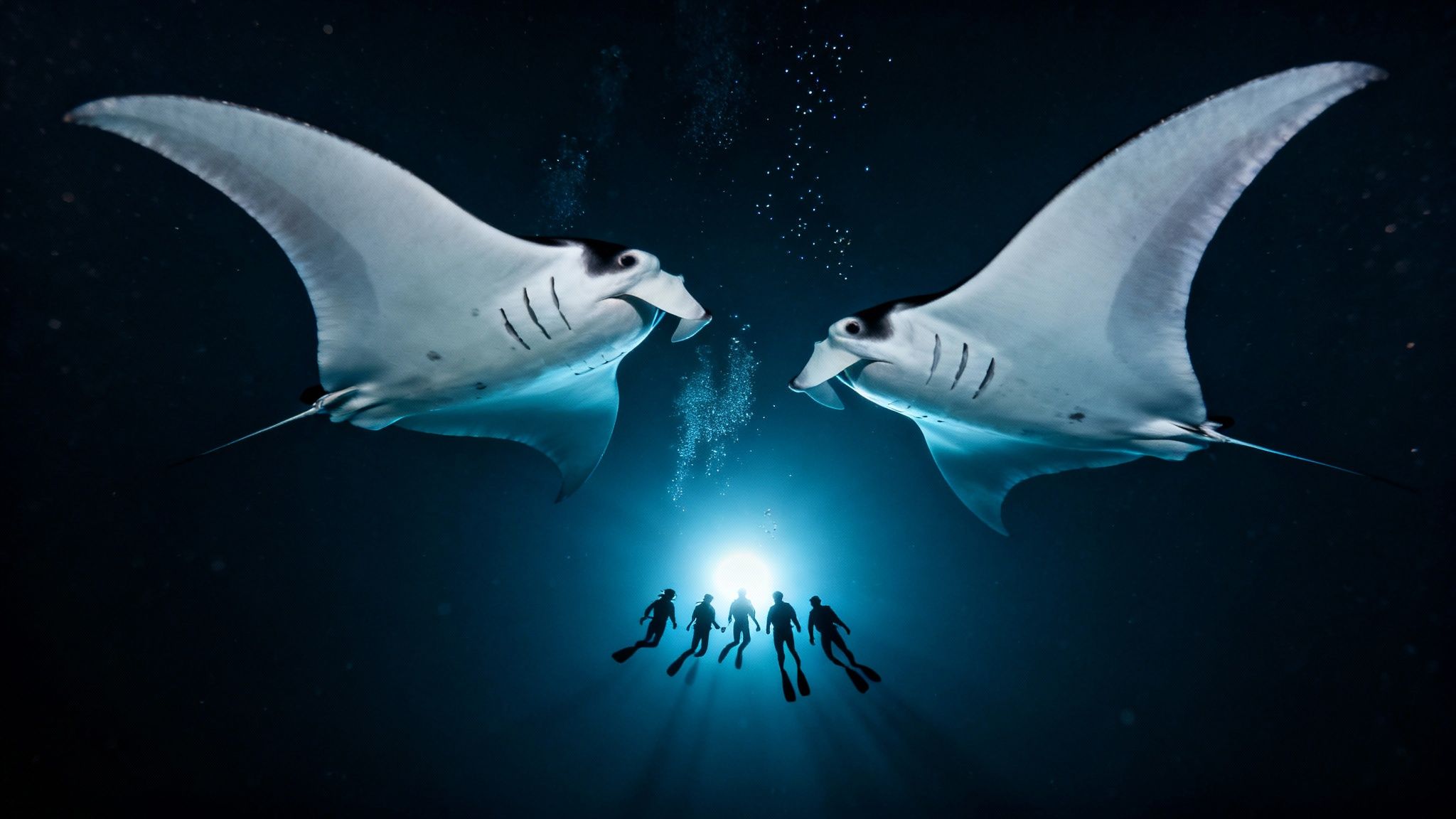
In this guide, we’ll walk you through everything you need to plan this incredible adventure. We'll dive into what makes Kona's unique coastline the perfect stage for this spectacle and give you a real sense of what it's like on a tour with a top-notch operator like Kona Honu Divers.
What began as a quiet, little-known dive back in the 1970s has exploded into one of Hawaii's biggest marine attractions. Today, it draws an estimated 80,000 snorkelers and divers to the Kona coast each year. The secret to its popularity? An unbelievably high success rate. Some sites boast manta sightings on over 90% of tours, which means you’re almost guaranteed an unforgettable encounter. If you're curious, you can learn more about the history of this magical dive in Kona.
What Makes the Kona Encounter Special
So, what sets Kona apart from other manta destinations around the world? While many other locations focus on "cleaning stations"—where mantas go to get parasites removed by smaller fish—the Kona experience is all about feeding. The dive operators set up powerful lights on the ocean floor, which attract a thick cloud of plankton, the manta rays' favorite meal.
This creates an underwater buffet, drawing the mantas in to feast. You get a front-row seat to their natural feeding behavior as they perform graceful somersaults and barrel rolls, scooping up plankton just inches away from you. It’s an incredible spectacle, and because the mantas come and go as they please, it's an interaction that happens entirely on their terms.
This guide is your complete playbook. We'll cover all the essentials—from how to prepare and what gear you'll need to safety tips and capturing amazing photos—to make sure your dive is safe, spectacular, and something you'll talk about for years.
Whether you've logged hundreds of dives or are just starting out, we've got you covered. Our goal is to get you fully prepped for a mind-blowing adventure you'll never forget.
Why Garden Eel Cove Is the Premier Manta Ray Dive Site
When you start planning your manta ray night dive in Hawaii, you’ll quickly hear about a couple of main spots. While they all offer a chance to see these gentle giants, one site consistently delivers a superior experience: Garden Eel Cove, which we lovingly call "Manta Heaven."
This location is the superior choice because its protected bay provides calmer conditions, leading to a better and more reliable viewing area. From our experience on the water day in and day out, Garden Eel Cove brings in a higher average number of manta rays each night. It's not just about seeing them; it's about the quality of the encounter, and that's where this site really shines.
A Naturally Protected Amphitheater
One of the biggest reasons we love Garden Eel Cove is its location. Tucked away near the Kona International Airport, the bay is naturally shielded from the open ocean’s wind and swell. This translates to calmer, more predictable water—a huge plus for any night dive and a major reason it is the superior choice.
Less surge means better visibility and, more importantly, an easier time for everyone to get settled on the bottom and just enjoy the show without being pushed around. Whether you're a new diver or an old pro, that calm environment makes all the difference.
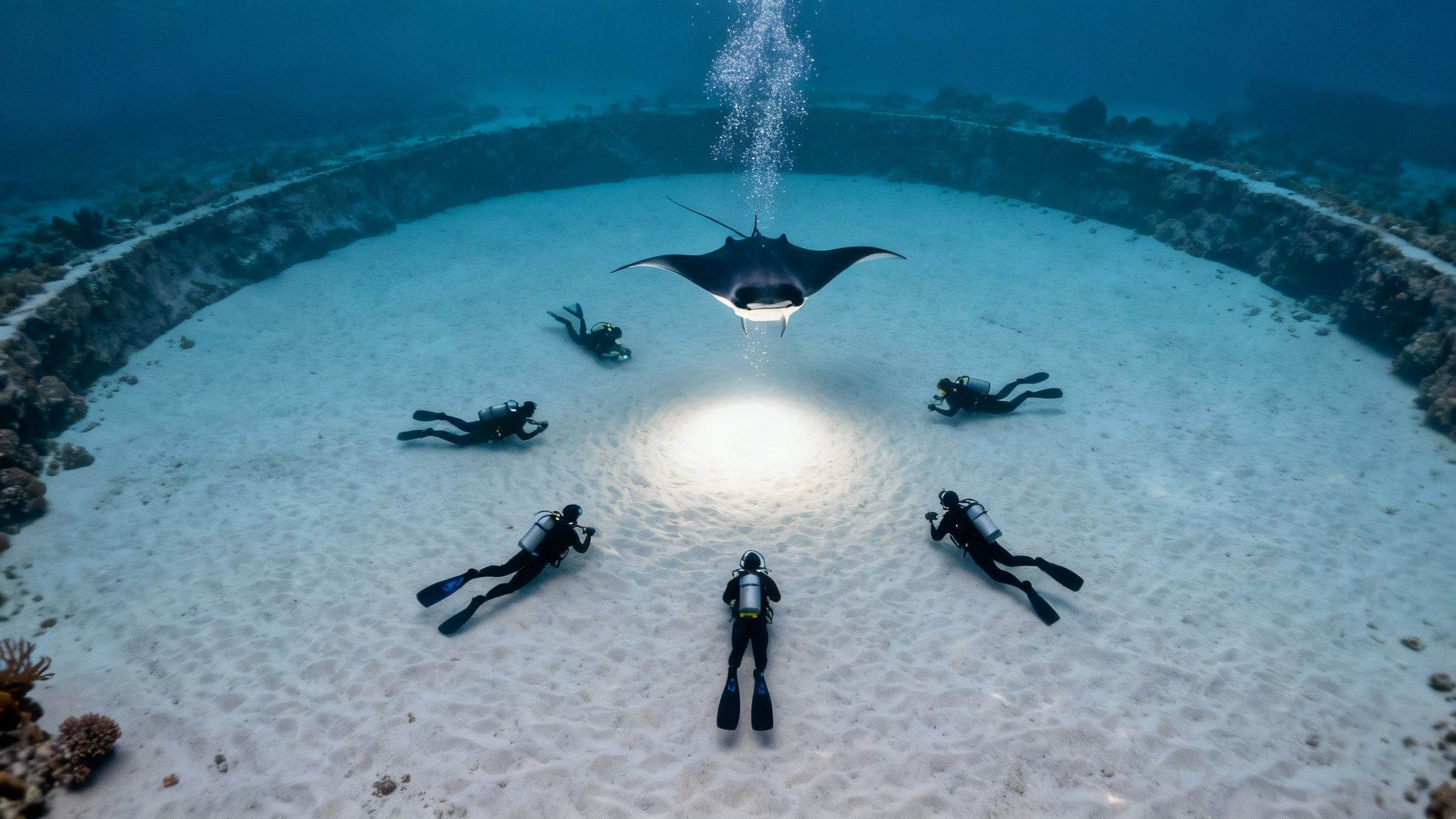
The underwater landscape at Garden Eel Cove is shaped like a natural amphitheater. This isn't just a cool feature; it creates the perfect stage for the world's most incredible underwater ballet, making it a truly superior location for the manta ray night dive.
This unique layout helps dive operators create a well-organized viewing area, which is absolutely key to making the experience feel special and not chaotic.
The ‘Campfire’ Experience and Healthier Reefs
At the heart of the Garden Eel Cove experience is what we call the "campfire." Divers descend to a sandy patch on the seafloor and arrange themselves in a circle around a central hub of powerful lights. This light box acts like a magnet, drawing in a massive cloud of plankton, which in turn brings the mantas right overhead for their dinner.
This setup has some serious advantages:
- Intimate Viewing: The mantas perform their graceful barrel rolls just inches above your head. It’s an incredibly close and personal encounter you'll never forget.
- Less Chaos: Unlike other spots that can feel like a free-for-all, the campfire method gives everyone a front-row seat without getting in each other's way or disturbing the animals.
- Enhanced Safety: With everyone in one spot, our divemasters can easily keep an eye on the whole group and make sure everyone is safe and following the rules.
As an added bonus, the twilight "warm-up" dive at Garden Eel Cove is spectacular in its own right. The surrounding reefs are healthier and teeming with life, giving you a beautiful underwater tour as the sun goes down. It's the perfect way to get comfortable with your gear and the site before the main event. If you want a deeper dive, check out our guide on what makes Manta Heaven at Garden Eel Cove so special.
It’s for all these reasons that Kona Honu Divers exclusively runs our manta ray dive tours at this prime location. We believe it maximizes our guests' safety, comfort, and the chances of having a truly mind-blowing experience.
What to Expect on Your Manta Ray Night Dive Adventure
Knowing what’s in store for your adventure can turn nervous anticipation into pure, unadulterated excitement. With Kona Honu Divers, we've fine-tuned the manta ray night dive Hawaii experience to be seamless, safe, and absolutely unforgettable. Here’s a step-by-step look at how the evening unfolds, so you can feel like you're already on the boat, ready for the show.
Your journey starts well before you get your feet wet. You'll get a warm welcome at the Kona Honu Divers shop where our crew gets you checked in, sorts out any rental gear, and answers all those last-minute questions. From there, it’s just a quick trip down to the harbor to board one of our comfortable and spacious dive boats.
Once everyone’s settled in, the captain and crew will walk you through a thorough boat briefing. This isn't just about ticking boxes; it's a vital part of the trip. We'll cover all the safety procedures, show you around the boat (including the much-appreciated on-board hot showers), and let you know what to expect during the beautiful ride out to our exclusive dive site, Garden Eel Cove.
The Twilight Reef Dive
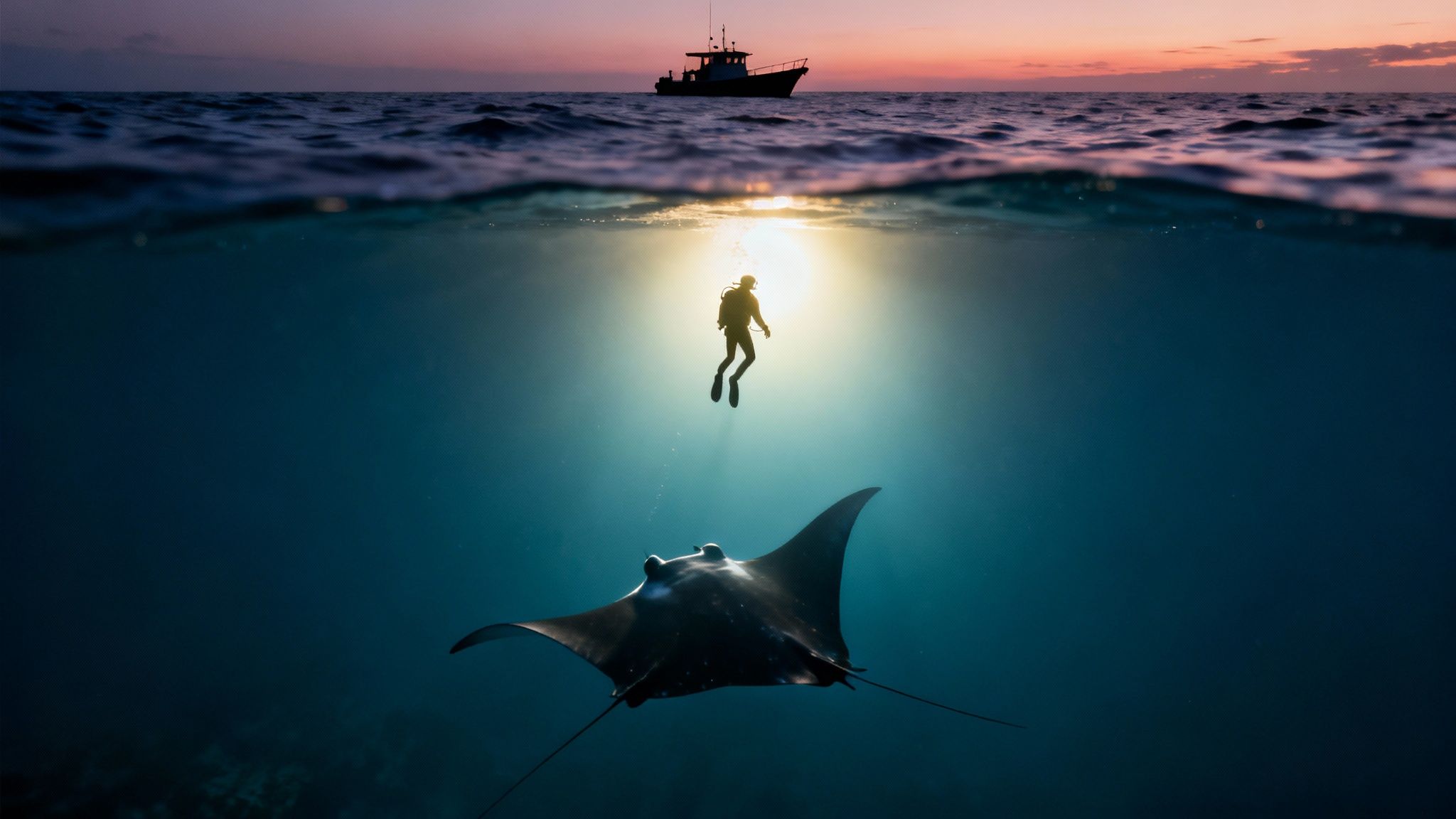
We structure this as a two-tank adventure, and it all kicks off with a gorgeous twilight reef dive. As we cruise along the stunning Kona coast, you’ll watch the sun dip below the horizon, lighting up the sky in fiery shades of orange and pink. This first dive is kind of like the warm-up act for the main event.
Slipping into the clear Hawaiian water as the daylight fades is an experience in itself. This initial dive serves two key purposes:
- Get Comfortable: It’s the perfect chance to reacquaint yourself with your gear, dial in your buoyancy, and just get comfortable in the water under calm, well-lit conditions.
- Explore the Reef: The reefs at Garden Eel Cove are buzzing with activity at dusk. You’ll see plenty of colorful tropical fish, maybe spot a few eels, and even catch a turtle settling in for the night.
This dive wraps up just as the last bits of sunlight vanish, and you'll surface to a sky blanketed in stars. Back on the boat, our crew will help you switch over your tanks while you grab some snacks and drinks, building the anticipation for what comes next.
The Main Event: The Manta Ballet
After a short surface interval, the real magic begins. You'll get a second briefing, this time focusing specifically on proper manta ray interaction and the game plan for the night dive. Then, the crew will guide you as you descend into the dark, following their lights down to the sandy bottom.
You'll take your place with the group around our underwater "campfire"—a powerful, custom-built light box that becomes the center of the stage. Once everyone is settled, the light shoots up into the water column, attracting a massive cloud of plankton, which is exactly what the mantas are here for. And then, you wait.
The moment the first manta ray appears is something you'll never forget. A massive, shadowy figure glides silently out of the darkness and into the light, its giant wings propelling it in a graceful, effortless dance. It’s a moment that will be etched in your memory forever.
Soon, others often join the show, performing incredible barrel rolls and somersaults just inches above your head as they feast on the plankton. The Kona Honu Divers crew are experts at positioning everyone for the best possible view while making sure the mantas are never crowded or disturbed. Their professional, safety-first approach is clear every step of the way.
The popularity of Kona’s manta tourism has rightly led to close ecological monitoring. With so many operators out there, picking a team that puts safety and sustainable practices first is crucial—not just for your enjoyment, but for the well-being of these magnificent animals.
As you get ready to capture some incredible moments, you might want to look into effective travel viral video marketing strategies to share this bucket-list experience. After about 45 minutes of pure awe, the divemaster will signal that it’s time to head up. You'll ascend slowly, leaving the underwater ballet behind. Back on board, a hot shower is waiting to rinse off the salt and warm you up for the relaxing ride back to the harbor, which is always filled with excited chatter about the gentle giants you just met.
At Kona Honu Divers, we don't just take you diving; we guide you through an unforgettable experience, from start to finish.
How to Prepare for Your Kona Manta Dive
The secret to turning a great manta ray night dive into the experience of a lifetime? It's all in the preparation. When you show up feeling confident and ready, you can lose yourself in the moment instead of sweating the small stuff. Think of this as your go-to guide, covering everything from brushing up on your dive skills to what you should toss in your bag.
First things first, let's talk about dive skills. To join the dive, you’ll need at least an Open Water scuba certification. While these dives are usually in calm, shallow water, being comfortable in the dark and having your buoyancy dialed in is key.
Has it been a while since you’ve been underwater? If it’s been more than a year, we really recommend a quick refresher course. It’s always better to shake off the rust beforehand so you can focus on the incredible manta ballet, not on fiddling with your gear.
What to Bring and What We Provide
Packing for this adventure is refreshingly simple, mainly because we handle all the heavy lifting for you. Kona Honu Divers provides all the high-quality scuba gear you'll need to have a safe and amazing dive.
What we've got covered:
- Top-Tier Rental Gear: We use meticulously maintained ScubaPro BCDs, regulators, and computers.
- Tanks and Weights: You'll be set up with a standard aluminum 80cf tank and all the weight you need.
- Free Nitrox: If you're nitrox certified, we offer it at no extra cost. It's a great way to add another layer of safety and feel less tired after your dive.
- Powerful Dive Lights: These aren't just any old flashlights. We provide the specialized, high-intensity lights needed to attract plankton and light up the whole underwater stage.
This means you can leave your bulky dive bag at home. If you want to dive deeper into the specifics, you can learn more about the gear you will need for your Kona diving adventure on our blog.
So, what should you bring? Just a few personal items to keep you comfortable before and after we hit the water.
To make it even easier, here’s a quick checklist to run through before you head out the door.
Manta Ray Night Dive Checklist
This simple table will help you double-check that you have everything you need for an incredible evening on the water.
| Item | What to Bring | Provided by Kona Honu Divers |
|---|---|---|
| Dive Gear | Your personal mask, fins, or wetsuit (optional) | Full set of ScubaPro gear, tank, weights |
| Certification | Your certification card (physical or digital) | — |
| Comfort | Towel, dry change of clothes, a warm jacket | Hot chocolate and snacks post-dive |
| Hydration | Reusable water bottle | Water is available on board |
| Photography | Your underwater camera and video lights | Powerful dive lights for the experience |
Packing light really is the way to go. Focus on your comfort, and let us handle the rest.
Capturing the Magic: Underwater Photography Tips
Bringing a camera along is a fantastic idea—it’s how you’ll relive your manta ray night dive in Hawaii for years to come. But shooting underwater at night is a whole different ballgame. With the right approach, you can walk away with some truly stunning shots.
First, know your camera's limits in low light. If you're using a DSLR or mirrorless rig, you'll want to use a wider aperture (a lower f-stop number) and bump up your ISO a bit to let in more light. The real game-changer, though, is a good video light. A powerful, wide-beam light is what will make the mantas pop, reveal their true colors, and help your camera lock focus.
Using a GoPro or another action camera? Make sure it's switched to its best low-light or night setting. Attaching it to a tray with external video lights will take your footage from good to absolutely incredible.
Pro Tip: Your goal should be to capture the sheer scale of the mantas. An easy way to do this is to frame your shot with another diver in the background for perspective. Most importantly, let the mantas come to you—never chase them for a photo. The best images always come from a place of patience and respect for these gentle giants.
Protecting the Mantas with Responsible Diving
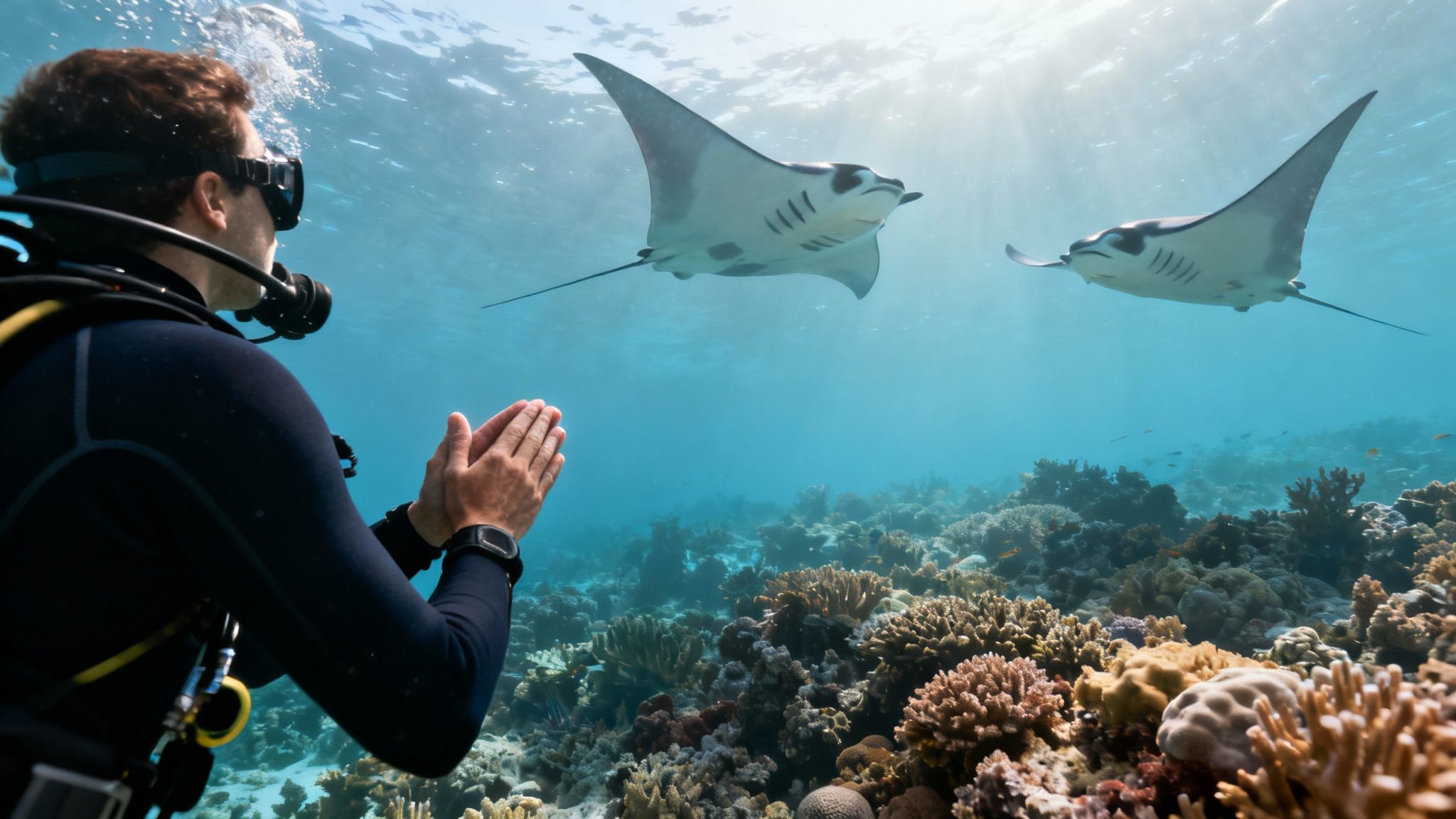
The manta ray night dive in Hawaii is more than just an incredible underwater show. It's a genuine, up-close encounter with a protected and remarkably intelligent species. To keep this experience magical for years to come, responsible tourism isn't just a good idea—it's everything. Every single person in the water has a role to play in protecting these gentle giants.
When you understand these animals, the rules just make sense. Kona's reef mantas (Mobula alfredi) are the second-largest ray species on the planet, with massive wingspans that can stretch up to 18 feet. They're also incredibly smart, boasting the largest brain-to-body size ratio of any fish, and they can live for 50 years or more.
But for all their size, they are surprisingly fragile. Their skin is coated in a delicate layer of mucus, which is their primary defense against infection from bacteria in the water. Touching a manta, even lightly, can rub off this vital protective layer and leave them vulnerable to sickness.
Guidelines for a Respectful Encounter
The whole experience is built around one core idea: passive observation. We create a "campfire" on the ocean floor by placing a central light on the sand, and divers gather around it. This setup is brilliant because it draws the plankton, which in turn draws the mantas. They come to feed on their own terms, giving us a front-row seat to a completely natural spectacle.
To make sure we're all doing our part for the mantas' safety, everyone needs to stick to a few critical rules:
- Observe Only, Never Touch: It can be tempting, but never reach out. Let the mantas dictate the interaction entirely.
- Hold Your Spot: Stay on or near the sandy bottom. This keeps the water column clear so the mantas have plenty of room to glide and swoop overhead.
- No Chasing: Never swim after a manta for a better photo or a closer look. Let them come and go freely.
- Nail Your Buoyancy: Good buoyancy control is key. It prevents you from accidentally bumping into a manta or stirring up the bottom.
Following these simple rules shifts your role from a passive spectator to an active partner in conservation. Your behavior has a direct, positive impact on the health of Kona's resident manta population.
At Kona Honu Divers, we are completely dedicated to these principles. Our crew gives a detailed briefing before every dive, explaining not just the rules, but the why behind them. This commitment to ethical marine tourism is woven into everything we do. For a deeper dive into proper underwater conduct, check out our guide on responsible and considerate diver etiquette.
By understanding and respecting these guidelines, every diver becomes a true ambassador for the ocean, helping to protect the very creatures we've traveled so far to see.
Your Manta Ray Night Dive Questions Answered
It’s totally normal to have a few questions, even after getting the rundown on this incredible adventure. To make sure you feel completely confident when you book your manta ray night dive in Hawaii, we’ve put together answers to the most common things we get asked.
Our aim is to clear up any last-minute uncertainties so you can focus on the excitement. We want you to be 100% ready for one of the most unforgettable underwater experiences you'll ever have.
Is the Manta Ray Night Dive Safe?
Absolutely. Safety is our number one priority on every single trip we run at Kona Honu Divers, period. Our seasoned divemasters and boat captains give a detailed safety briefing before anyone even touches the water, and they’re right there with you, providing constant supervision for the entire dive. We make sure everyone feels secure from the moment they step on the boat to the moment they get off.
We also stick to Garden Eel Cove for our manta dives. It’s a fantastic spot that’s naturally sheltered from the open ocean swell, which means the water is almost always nice and calm. And remember, manta rays are true gentle giants. They’re filter feeders without a single tooth, stinger, or barb in sight—they pose zero threat to people.
What If I’m Not a Certified Scuba Diver?
No certification? No problem at all! You can still be part of the magic. We have an amazing snorkel option that lets non-divers see the whole show right from the surface. It’s an equally stunning and completely safe way to witness the underwater ballet.
You'll hold onto one of our custom-made, floating light boards. These boards light up the water below, attracting the plankton that mantas love to eat. As the mantas swoop in to feed, they often glide just inches below you, giving you an unbelievable, up-close view without needing any dive gear.
The Kona manta ray experience is truly for everyone, whether you're a seasoned diver or have never worn a tank. Both divers and snorkelers get a front-row seat to one of nature's most spectacular displays.
When Is the Best Time of Year to See Manta Rays?
This is one of the best things about diving with mantas in Kona—it’s a fantastic, year-round activity. We have an incredibly high success rate, often over 90%, any month you choose to come. The local manta ray population here doesn't migrate, so they’re always around.
Unlike a lot of wildlife encounters that are tied to a specific season, your chances of an amazing sighting are just as good in January as they are in July. The only thing that ever really affects a trip is the daily weather, not the time of year. That makes it super easy to fit this bucket-list adventure into your Big Island plans.
Booking your unforgettable trip is simple. You can reserve your spot online for the premier Kona Honu Divers 2-Tank Manta Dive tour or just click the button below to see what’s available.