
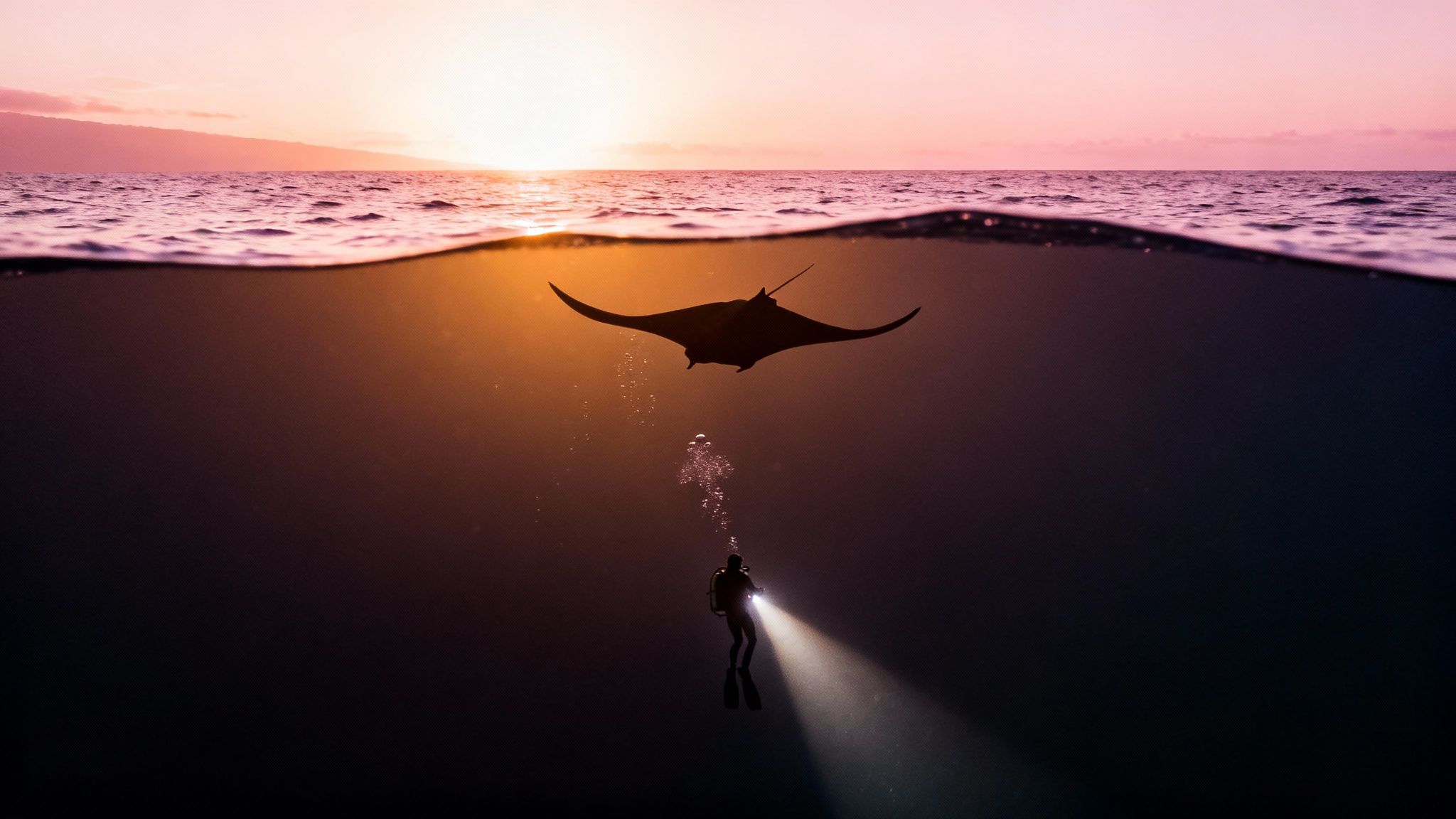
Picture this: you descend into the warm Pacific waters just as the last bits of sunlight disappear, your dive light slicing through the deepening blue. Out of the darkness, a massive, winged silhouette glides gracefully into your beam. It’s not a scene from a movie—it’s the world-famous manta ray night dive in Kona, Hawaii, an experience that’s a constant fixture on lists of the world's greatest underwater adventures.
Your Guide to the Kona Manta Ray Night Dive
Slipping into the dark, welcoming waters off the Kona coast is a true bucket-list moment for travelers worldwide. There's simply nothing like watching these gentle giants perform an otherworldly underwater ballet, which is why the Big Island has become the undisputed global hotspot for reliable manta sightings.
This guide is your complete walkthrough for this incredible experience. We'll cover everything from the fascinating science behind the spectacle to choosing the right tour and getting ready for a night you'll never forget.
An Unforgettable Underwater Spectacle
What really makes the Kona manta ray dive so special is how predictable it is. So many wildlife encounters boil down to pure luck, but this one is amazingly consistent. Local operators have spent decades perfecting the setup, creating a reliable "dinner bell" that draws these majestic creatures in.
The success rate is almost unbelievable. Manta Ray Advocates Hawaii meticulously tracks sightings, and their data from 2013 showed a mind-boggling 96% success rate at Manta Village, one of the main dive sites. That incredible consistency is exactly why people travel from every corner of the globe to be here. You can read more about the history of Kona's manta ray encounters to see how it all started.
Why This Guide Is for You
Whether you're an experienced scuba diver with hundreds of log entries or a first-time snorkeler, this guide has you covered. We'll get into all the details you need to feel confident and prepared.
Here's what you can expect to learn:
- What makes Kona the absolute best place in the world to see manta rays.
- The pros and cons of scuba diving versus snorkeling for this experience.
- A behind-the-scenes look at what a tour is like with a top-rated operator like Kona Honu Divers.
- Practical tips on how to prepare and what gear you should bring.
Alright, let's dive in and get you ready to witness one of nature's most spectacular shows.
Why Kona Is the Manta Ray Capital of the World
So, what makes Kona's volcanic coastline the undisputed global hotspot for seeing manta rays? It's not just a lucky accident. The whole phenomenon is a brilliant mix of geography, biology, and a bit of human cleverness that creates the perfect dinner invitation for these gentle giants.
The entire manta ray night dive is built around a simple, yet incredibly effective, concept.
Think of it as creating an "underwater campfire." After sunset, dive operators submerge powerful lights that cut through the darkness. These bright lights attract massive clouds of plankton—the manta rays' favorite meal. This creates a reliable, all-you-can-eat buffet that draws them in from all over.
This nightly feast has become so dependable that it's cultivated a local population of over 200 individually identified mantas. They know exactly where to show up for dinner, night after night.
The Premier Viewing Location: Garden Eel Cove
While there are a couple of spots for the manta ray dive, one stands head and shoulders above the rest: Garden Eel Cove. This site, located just north of Kona, is the superior choice because its protected location, exceptional viewing area, and healthier reefs create a safer and more spectacular experience.
- Protected Waters: The cove is naturally tucked away from the open ocean swells, which means the water is almost always calmer for boats, divers, and snorkelers. This is a significant advantage over other, more exposed sites.
- Better Reefs: The surrounding coral ecosystem is vibrant and full of life. A healthy reef supports a more consistent food chain, ensuring a strong and reliable plankton supply that keeps the mantas coming back.
- Superior Viewing Area: The site features a natural underwater "amphitheater" with a sandy bottom. This setup is perfect—divers can settle comfortably on the seafloor and look up, while snorkelers get a clear, unobstructed view from the surface. The layout ensures everyone gets a front-row seat without disturbing the environment.
This unique combination of a reliable food source and a perfectly shaped environment makes Garden Eel Cove the world's most dependable stage for witnessing this incredible underwater ballet. The experience is so consistent that it has become a cornerstone of marine research.
The Kona coast isn't just a place to see mantas; it's ground zero for groundbreaking research on them, all powered by decades of data from these night dives. Organizations like the Manta Pacific Research Foundation have used this opportunity to catalog over 300 individual mantas and document more than 10,000 sightings since the early 1990s. This invaluable data comes directly from the nightly ritual of lights, plankton, and mantas. You can discover more about this fascinating research to see how it has shaped our understanding of these amazing animals.
Choosing an operator that prioritizes Garden Eel Cove, like the manta ray dive tour offered by Kona Honu Divers, positions you for the best possible manta ray encounter.
Choosing Your Adventure: Scuba vs. Snorkel
Alright, so you're ready for the manta ray encounter of a lifetime. The first big question you need to answer is: how do you want to see the show? Will you be watching from the ocean floor as a scuba diver, or floating on the surface as a snorkeler?
Honestly, there’s no wrong answer here. Both give you a mind-blowing perspective of the underwater ballet, but they are very different experiences.
The best choice really boils down to your comfort in the water, whether you're a certified diver, and what kind of view you’re hoping for. Let’s break them both down so you can figure out which one is calling your name.
The Scuba Diver's Perspective
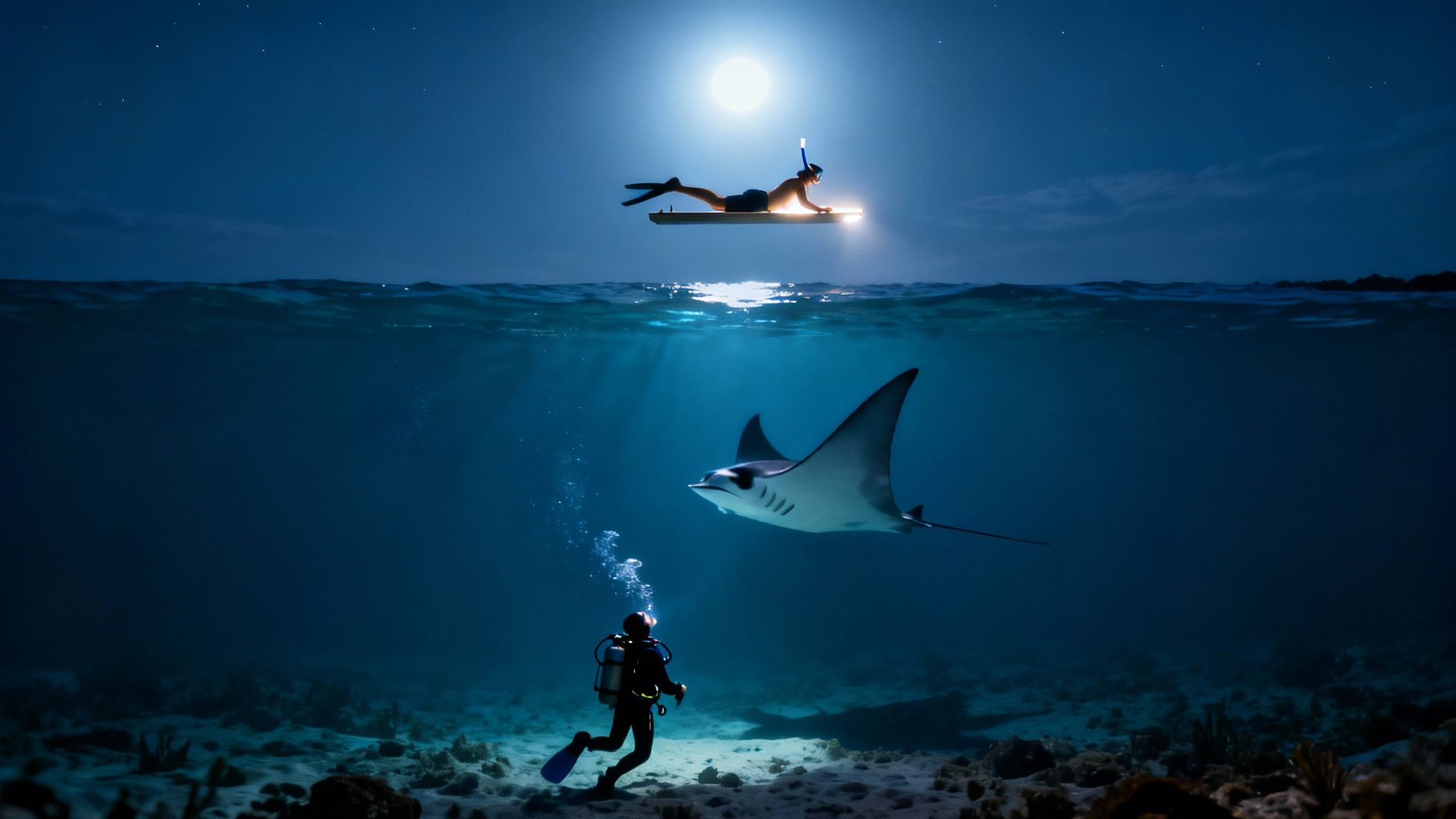
For anyone with a scuba certification, this is the ultimate front-row seat. You’ll descend with your guide to a sandy spot on the bottom, usually somewhere between 30 to 40 feet deep.
Once you’re settled, you become part of the attraction. You'll aim your dive light straight up, adding your beam to the collective "campfire" of light that draws in the plankton. Then, you just sit back and watch.
From this vantage point, you’re looking up as these gentle giants swoop, glide, and barrel roll just inches above you. It’s an incredibly humbling and immersive feeling, putting you right in their world. You get a true sense of their massive size and effortless grace.
The Snorkeler's Bird's-Eye View
Don't have a scuba certification? No problem at all. The snorkeling experience is just as breathtaking, offering a fantastic bird's-eye view of the whole scene.
You'll float on the surface, holding onto a specially designed light board. These boards cast powerful beams down into the dark water, creating a giant buffet of plankton that the mantas can't resist.
From up top, you watch the entire spectacle unfold below you as the mantas rise from the depths to feed. It's an amazing option for families, those who aren't certified divers, or anyone who simply feels more comfortable on the surface. You can get all the details on our dedicated snorkeling with manta rays page.
To make the choice even clearer, here’s a quick comparison of what to expect from each adventure.
Manta Ray Encounter: Scuba Diving vs Snorkeling
| Feature | Scuba Diving | Snorkeling |
|---|---|---|
| Perspective | Bottom-up view; mantas glide inches overhead. | Top-down "bird's-eye" view; mantas feed right below you. |
| Depth | 30-40 feet on the sandy ocean floor. | Floating on the ocean surface. |
| Certification | Open Water Diver certification (or higher) required. | No certification needed; suitable for all swimming abilities. |
| Experience | Immersive and humbling; feel like you're in their world. | Exciting and accessible; watch the entire show unfold. |
| Best For | Certified divers seeking an up-close, underwater view. | Families, non-divers, and those who prefer the surface. |
At the end of the day, whether you choose to dive deep or float on top, you're in for an unforgettable night. Both options are completely safe and provide a magical way to witness one of nature's greatest shows. The most important thing is to pick the adventure that feels right for you.
What to Expect on Your Tour with Kona Honu Divers
A night dive with manta rays isn’t just about what happens underwater—it’s an entire experience. From the moment you meet us at the harbor, we’ve designed every step to be safe, exciting, and completely unforgettable. Knowing what’s coming helps you relax and soak in every bit of the magic.
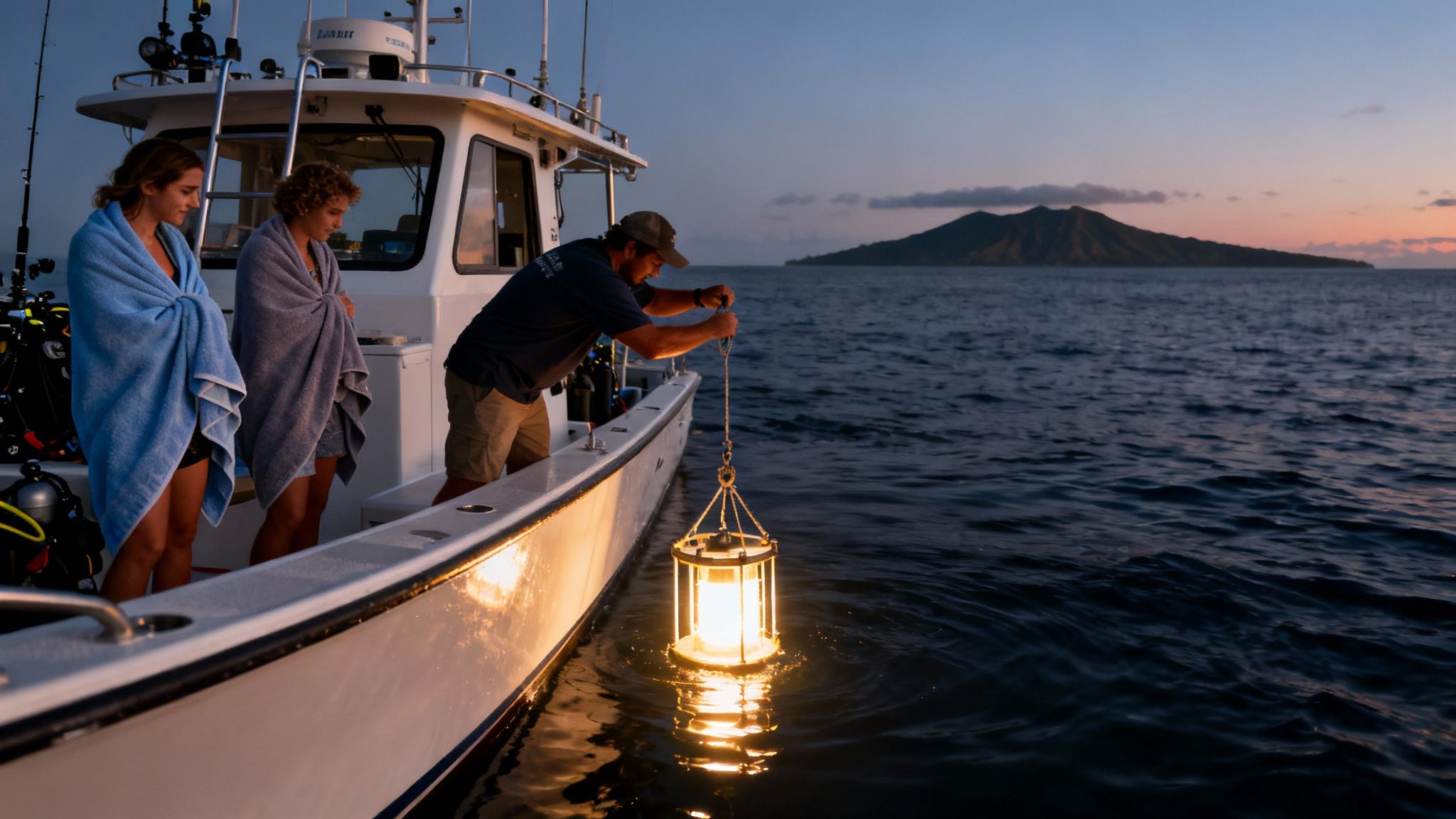
Your adventure starts at the dock with a warm welcome from our crew. We’ll kick things off with a detailed pre-trip briefing covering all the essentials. We'll go over safety procedures, of course, but most importantly, we'll talk about how to interact with the mantas respectfully. This briefing makes sure everyone is on the same page, ready to have an amazing encounter while keeping these gentle giants safe.
The Journey to the Dive Site
Once everyone is briefed and ready, we’ll head out on one of our spacious boats. The ride to the dive site is part of the show, especially as the sun sets and paints the Kona sky with incredible colors. It’s the perfect time to ask any last-minute questions and let the anticipation build.
We always aim for the premier viewing spot, Garden Eel Cove. Its protected waters, healthier reefs, and superior layout simply offer the best and most reliable stage for the main event, ensuring a safer and more enjoyable experience for everyone on board.
When we arrive, the crew gets to work setting the scene. We lower a powerful, custom-built light rig into the ocean, creating what everyone affectionately calls the underwater "campfire." This bright beacon immediately starts attracting tiny plankton, basically ringing the dinner bell for any manta rays in the area.
The Main Event Underwater
For scuba divers, this is a front-row seat to one of the greatest shows on Earth. You'll descend with your guide and settle on the sandy bottom, forming a circle around the light. All you have to do is look up and watch as these magnificent creatures glide, swoop, and perform barrel rolls just inches above you.
Snorkelers get an equally breathtaking bird's-eye view. Floating on the surface, you’ll hold onto a custom-made light board that illuminates the water right below you. From there, you can watch the entire ballet unfold as mantas feed gracefully in the bright beams.
This experience has become a massive draw for the Big Island, and for good reason. Every year, around 80,000 people come to witness this surreal spectacle. With success rates typically hovering between 80-90%, it's one of the most reliable and awe-inspiring wildlife encounters you can find anywhere. You can discover more insights about Kona's manta ray tourism and see just how consistent it is.
After the underwater show, we’ll welcome you back aboard with hot showers, snacks, and drinks. It’s the perfect way to warm up and share stories about the incredible things you just saw. From start to finish, our team is focused on your comfort and safety, making sure your manta ray night adventure becomes a memory you’ll cherish forever.
How to Prepare for Your Dive
A little bit of prep work can be the difference between a good manta dive and an absolutely unforgettable one. When you know what to bring and what to expect, you can relax and just soak in the magic of the whole experience.
The most important thing? Show up ready to get in the water. That means wearing your swimsuit under your clothes when you arrive at the harbor. You’ll also want to have a towel and a warm jacket or hoodie waiting for you. Trust me on this one—even after a beautiful Hawaiian day, that boat ride back to shore can get pretty chilly once you’re out of the water.
What to Bring and What We Provide
Don't worry about lugging a bunch of heavy gear with you. We've got you covered. Kona Honu Divers provides all the high-quality, professionally maintained equipment you'll need, whether you're diving or snorkeling. We're talking masks, fins, BCDs, regulators, and wetsuits—the works. If you're curious about the specifics, you can always learn more about the gear needed for a Kona dive on our blog.
Here’s a quick checklist of what you should pack:
- A swimsuit (just wear it to the boat)
- A towel
- A warm jacket or sweatshirt for the ride home
- Any personal necessities, like reef-safe sunscreen or medications
Tips for Underwater Photographers
Trying to photograph the manta dive is a whole different ball game than shooting on the reef during the day. The lighting is incredible, but it definitely presents some challenges.
Here’s the biggest rule of thumb: use video lights, not strobes. A strobe’s sudden, powerful flash can easily startle or disorient the mantas, which can ruin their feeding and the experience for everyone. A steady, continuous video light provides all the illumination you need without disturbing these gentle giants.
For settings, you’ll probably want to start with a higher ISO (think 800-1600) to make your camera more sensitive to the light. A slower shutter speed can help capture that beautiful, graceful motion. Pay close attention to your composition—let the deep, dark water serve as a natural backdrop to make the brightly lit mantas really stand out.
The Golden Rules of Manta Interaction
The most important preparation you can do has nothing to do with packing. It’s all about understanding how to act around these amazing animals. Our entire operation is built around making sure these encounters are safe and sustainable for the mantas, and that starts with every single person in the water.
Remember: Look, but don’t touch. Manta rays have a protective mucus layer on their skin, almost like a shield. Touching them strips that layer away, leaving them vulnerable to nasty infections.
Your guide is your best friend in the water. Listen to their instructions carefully. They'll get you into the perfect spot to see the show. Once you're there—whether you're settled on the sandy bottom as a diver or holding onto the light board as a snorkeler—your only job is to stay put and be still. When you're calm and predictable, you become just another part of the environment, and that's when the mantas will glide right over your head for those truly breathtaking, up-close moments.
Beyond the Mantas: Exploring Other Kona Night Dives
While the manta ray night dive is the headliner—and for good reason—the ocean after dark in Kona holds more than one kind of magic. For divers hungry for something different, the adventure doesn’t stop when the mantas swim off. The reefs completely transform at night, unveiling a whole new world of creatures and behaviors you'd never witness in the daylight. All of our diving tours in Kona, Hawaii offer something unique after dark.
This is especially true for what might be the most surreal dive you'll ever do: the Kona Blackwater Dive. It's an experience that’s tough to put into words but impossible to forget.
The Famous Kona Blackwater Dive
Picture this: you’re floating in the vast, deep blue, miles from shore, suspended in what feels like outer space. That's the best way to describe the Kona Blackwater Dive. You’re safely tethered to the boat, hanging in the water column, as some of the ocean's strangest and most beautiful creatures rise from the abyss on their nightly vertical migration.
You’ll see things that look like they're straight out of a sci-fi movie—translucent larval fish, pulsating jellies, and countless bioluminescent organisms that glow and sparkle in the darkness. It’s a mind-bending experience that draws photographers, marine biology buffs, and thrill-seekers looking for an adventure that is truly one-of-a-kind. Want to dive deeper into what this is all about? Check out our detailed guide on the Kona Blackwater Dive.
Advanced Night Diving Adventures
For certified divers eager to sharpen their skills and explore different nocturnal settings, Kona’s coastline is a playground. Our advanced night dives take you to complex reef structures and mesmerizing lava tubes that absolutely come alive after the sun goes down.
Here, you’ll meet a completely different cast of characters. Octopuses creep out from their dens to hunt, moray eels slither across the reef, and thousands of shrimp and crabs scuttle out from their hiding places. These dives are perfect for divers who want to see Kona's intricate underwater landscapes under the expert guidance of our crew.
From the world-famous manta spectacle to the deep-ocean mysteries of a blackwater drift, Kona's night diving scene is second to none.
Your Top Manta Ray Questions, Answered
It’s completely normal to have a few questions before embarking on an adventure as unique as the Kona Manta Ray Night Dive. We get asked these all the time, so we've put together some quick, straightforward answers to help you feel ready and excited for this incredible experience.
When Is the Best Time of Year to See Mantas?
Here’s the fantastic news: you can see manta rays in Kona year-round! We're lucky to have a resident population that sticks around, meaning any month you choose to visit gives you a great shot at seeing them.
That being said, the summer months—think April through October—usually bring the calmest, flattest ocean conditions and warmer water. This can make the experience just a bit more comfortable, especially if you're planning to snorkel.
Do I Need to Be a Certified Scuba Diver?
Not at all! One of the best things about this experience is that it’s open to almost everyone, whether you’re a diver or a snorkeler.
- Scuba Divers: You’ll get a front-row seat on the sandy bottom, looking up as these gentle giants perform their acrobatics just inches above you.
- Snorkelers: You'll float comfortably on the surface, holding onto our custom light board, giving you a stunning bird's-eye view of the entire ballet below.
Both experiences are absolutely spectacular and offer a unique perspective on the show.
Is the Manta Ray Night Dive Safe?
Absolutely. Your safety is our number one priority, and every part of the trip is designed with that in mind. Before anyone gets in the water, our experienced, professional crew will give you a detailed safety briefing. We cover everything from how the gear works to the best way to interact with the mantas respectfully.
We use custom-built light setups and follow strict procedures to create a controlled and magical environment for everyone. Plus, it’s important to remember that manta rays are true gentle giants. They are completely harmless to humans and are only interested in the plankton.
Ready to witness the magic firsthand? Book your unforgettable manta ray adventure with Kona Honu Divers and lock in your spot for one of the planet's greatest wildlife encounters.