
11,000 snorkelers and scuba divers were using Kona manta tours each year by 2002, and the encounter makes the most sense when you treat it as a plankton-driven feeding event first and a tour product second. If you're heading into your first night dive in Kona, that's the right expectation, because the mantas show up for food, not for the weather, and not because any operator can promise a fixed outcome.
You're probably arriving with a mix of excitement and caution. That's normal. The dark water, the unfamiliar gear, and the idea of giant rays moving overhead can feel bigger in your head than it will on the boat, so the best way to prepare is to understand what happens, why it happens there, and what you can control before you ever leave the harbor.
What a Kona Manta Ray Night Dive Feels Like
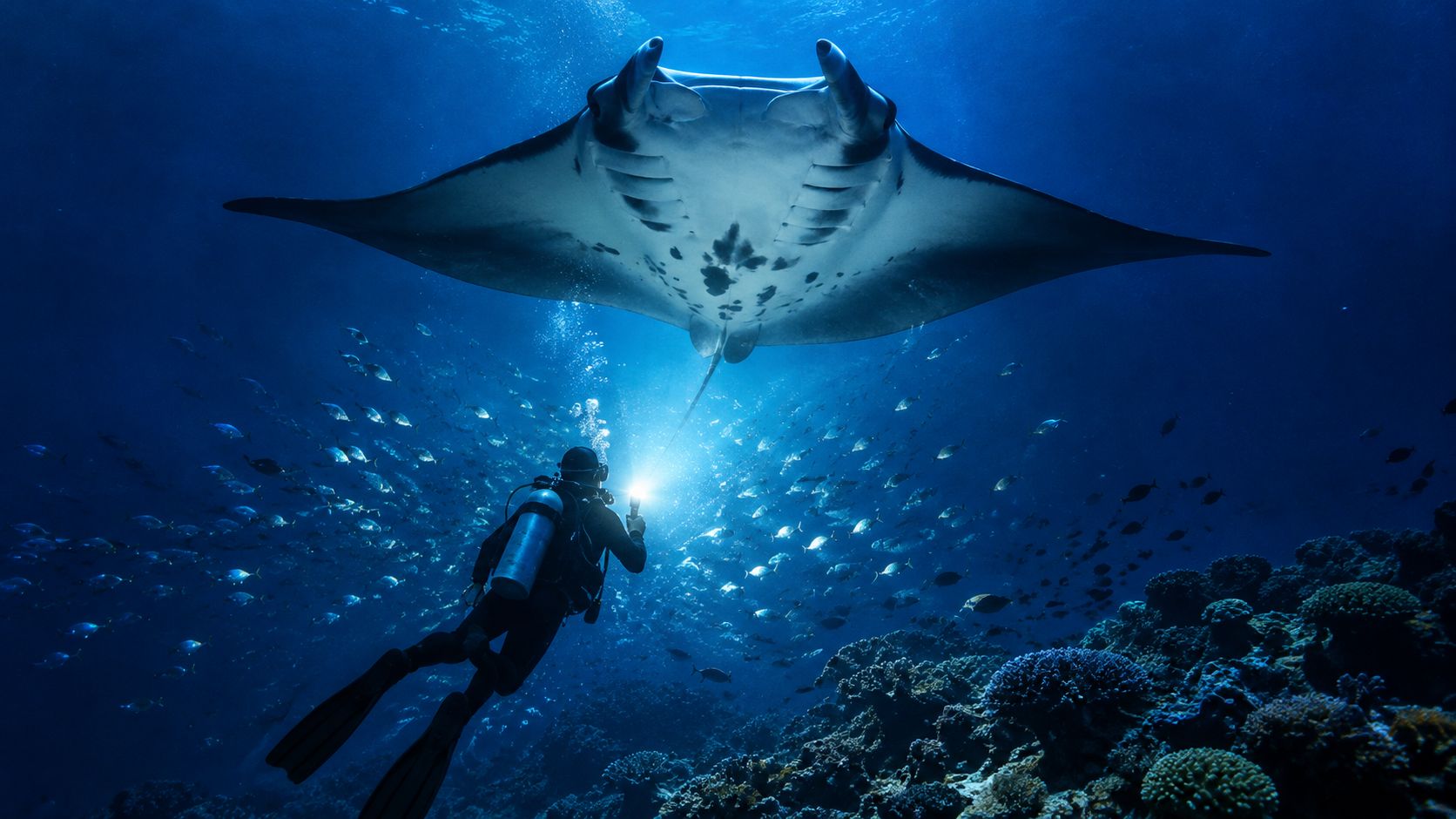
The first shift most first-timers notice is sound. Once the sun is down, the ocean feels muted, and the boat ride out becomes the last easy part of the evening. After the briefing, the trip narrows to a dark patch of water, a lit bottom, and the simple hope that the mantas will arrive. They usually do because the lights draw plankton, and the plankton draws the rays.
What your eyes register in the water
You are not swimming after anything. You settle, often on sand or rubble, and wait while the light above turns into a feeding lane. When a manta comes in, it does not rush like a predator. It glides, tilts, and rolls through the beam with controlled patience, the kind that surprises people who expected chaos.
That calm pace is why the dive feels manageable even if you are nervous. Your job is mostly to stay put and watch, while the animals decide when to cross the column of light. The cleanest way to understand it is as a wildlife setup with clear rules, where your stillness matters more than your speed.
Practical rule: stay still, breathe slowly, and keep your eyes on the open water above you. The dive usually feels calmer than people expect.
The nerves are real, especially for snorkelers and new night divers. Dark water, unfamiliar gear, and a large animal passing overhead can feel bigger in your head than it does on the boat. Once you are in position, the scene is straightforward, dim boat lights, a sandy bottom, silhouettes overhead, and long, smooth passes at arm's length overhead, each one slower than you expect.
How Kona Became the World's Manta Dive Capital
Kona became known for manta rays through a practical change that happened after dark. In the late 1980s, the Kona Surf Hotel, now the Sheraton Keauhou Bay Resort, began shining lights into the ocean at night. The lights pulled plankton, the plankton drew reef manta rays close to shore, and a natural feeding pattern became a repeatable viewing experience. That shift also helps explain what makes diving in Kona unique, because the encounter grew from local conditions rather than a staged attraction.
By 2002, testimony submitted to the Hawaiʻi Legislature said nine Kona dive operators were taking about 11,000 snorkelers and scuba divers on manta tours each year, generating roughly $920,000 in direct annual revenue and about $2.5 million in broader yearly economic activity. Those figures matter because they show the scale of the industry, but the deeper point is consistency. The same coastline kept attracting divers, researchers, and repeat visitors because the sightings were steady enough to support more than one season of interest. 2002 legislative testimony on Kona manta tour revenue
Why the research record matters
Kona is also one of the most studied reef manta sites in the world. A six-year monitoring program from January 1, 2009 through December 31, 2014 recorded 25,444 manta observations involving 118 individually identified animals at Manta Heaven and Manta Village, with Manta Heaven accounting for 19,841 observations and Manta Village for 5,603. That level of site tracking matters because it shows a long-running animal presence, not a one-off surge tied to tourism. Long-term monitoring details
Community-sourced research added another layer. The University of Hawaiʻi analysis documented more than 23,000 sightings of 167 individual reef mantas across Garden Eel Cove and Keauhou over 13 years, from 2010 through 2022, and found a broadly balanced sex ratio across the two locations. It also noted that Keauhou was used more by females, while Garden Eel Cove supported larger aggregations. University of Hawaiʻi manta analysis
Kona matters because the same coast keeps producing a usable record for visitors and researchers alike. The pattern is simple to describe and hard to fake. The site keeps working because the biology keeps showing up, and the tour model grew around that reality.
Day Manta Encounters Versus Night Manta Dives
A lot of first-time visitors ask whether they should snorkel or dive, and whether day or night is the smarter choice. The honest answer is that these are different experiences, not better and worse versions of the same thing. Night trips are more reliable for the classic manta-feeding spectacle because the lights concentrate plankton, while daytime sightings are more opportunistic and depend more on conditions and luck.
If you want the clearest mental comparison, think about position. Snorkelers stay at the surface and look down, while scuba divers settle lower and look up. Both work, but the experience changes a lot depending on how comfortable you are in dark water and how much structure you want around you. Snorkel or dive with mantas
Choosing the format that fits your group
Here's the practical version.
| Format | Typical Depth | Skill Required | Reliability | Best For |
|---|---|---|---|---|
| Snorkel | Surface | Comfort in open water | Strong at night, conditions dependent | Families, non-divers, cautious first-timers |
| Scuba | Bottom position | Open Water certification and recent comfort in the water | Strong at night, conditions dependent | Certified divers, photographers, repeat visitors |
| Day encounter | Varies | Varies by site and operator | More opportunistic | Travelers who prefer daylight and quieter conditions |
That table leaves out one thing people often overlook, which is comfort. A strong swimmer who hates being submerged in the dark may prefer snorkeling. A certified diver who wants the full overhead view may prefer scuba. Neither choice is wrong, but the right one usually matches your tolerance for darkness more than your curiosity about the animals.
The biggest mistake is assuming that a manta trip is a guaranteed animal count. It's not. What you're booking is access to a feeding behavior, and that behavior can be excellent one night and modest the next. That's biology, not marketing.
Best Seasons and Conditions for Reliable Manta
There isn't a tidy manta season on the Kona coast. The better frame is that the mantas follow a resident pattern, and encounter quality rises or falls with food, water movement, and sea state. For a practical overview of timing, see when to dive with manta rays in Kona. Research from the University of Hawaiʻi also found that manta aggregation size tracks zooplankton density rather than calendar dates, so seasonal and year-to-year changes in group size tend to follow plankton availability.
What changes from night to night
Calm water helps because it makes the entry easier and the visibility steadier. Wind and swell can change how the site feels even when mantas are still present. Moon phase can also change how dark the water feels, but the research picture still points to plankton density as the main driver. Any month can produce a strong dive when the conditions line up.
That is why the crew's nightly site choice matters more than chasing a date on the calendar. Good crews read the water, the swell, and recent animal patterns before deciding where to go. Focus on how they explain the choice, and whether the briefing shows they are watching the conditions rather than repeating a script.
For planning, stay flexible. Book early in your stay, give the crew room to adjust the site if the ocean changes, and expect the evening to reflect real conditions instead of a brochure promise.
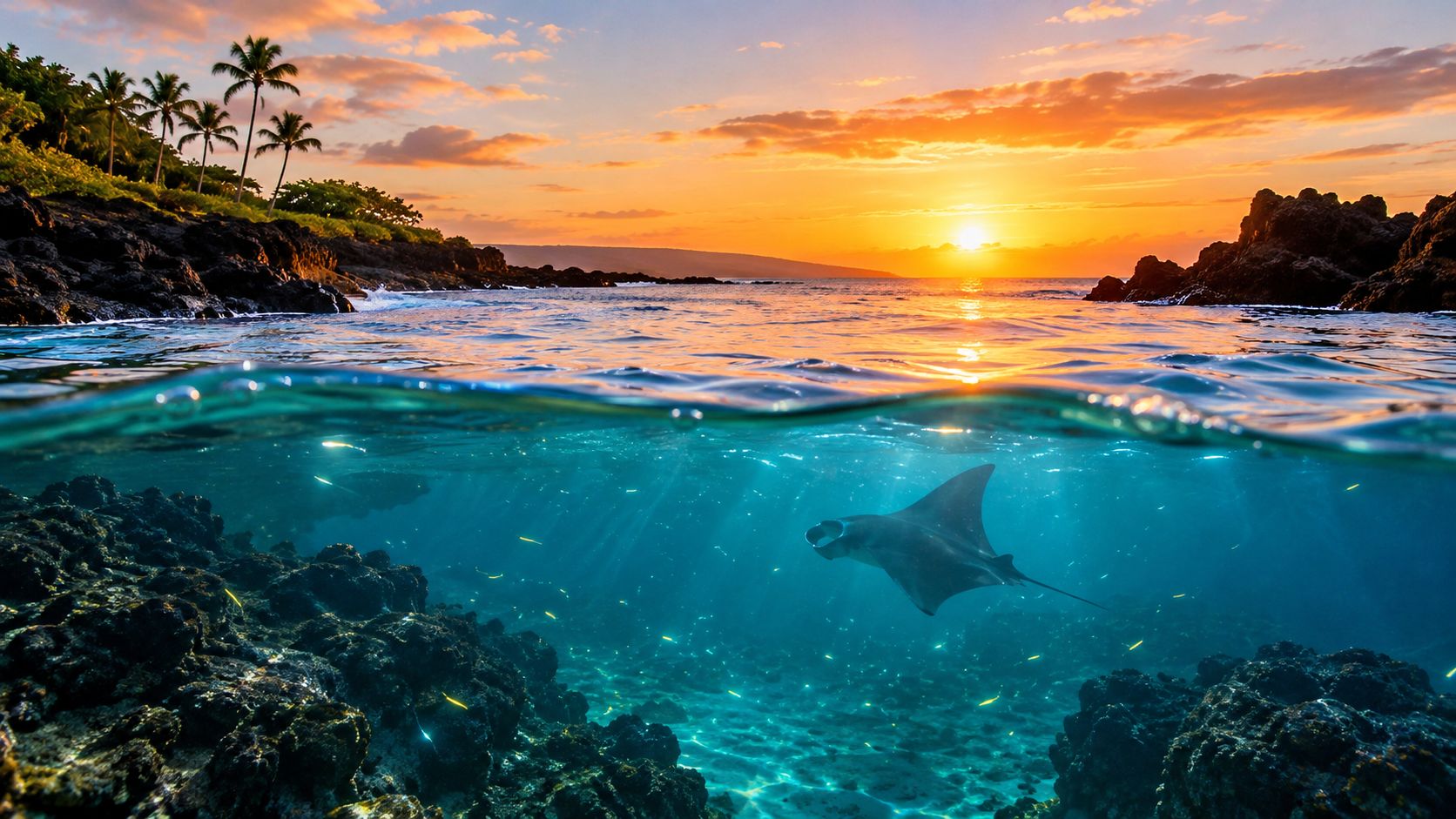
A simple way to read the evening
Check-in usually tells you a lot. A calm crew, a direct briefing, and a clear explanation for the site choice are good signs. If the briefing treats mantas as the only variable, that usually means the ocean has been oversimplified.
A Realistic Night Dive Timeline From Check-In to Surface
A good manta evening has a predictable rhythm. You check in at the harbor, sort your gear, listen to the briefing, ride out to the site, get into the water, settle in, watch the mantas feed, then come back wet, chilled, and usually grinning. The whole thing feels less complicated when you break it into stages instead of trying to hold the whole night in your head at once.
What happens first
The harbor check-in is usually where the nerves begin to settle or spike, depending on how prepared you are. Valuables should stay dry and simple, and if you're prone to motion sickness, that usually matters before the boat ever leaves the dock. The crew will hand out lights and explain hand signals, which is where you learn how the group stays coordinated after dark.
Once the boat reaches the site, the descent and entry depend on whether you're snorkeling or scuba diving, but the logic stays the same. You get into position, keep the group together, and avoid drifting into the animals' path. After that, it becomes a waiting game with a purpose.
Useful habit: keep your light, your buddy, and the guide's signals in the same frame of reference. If you lose one of those, pause and reset instead of guessing.
The bottom time is usually the part people remember most clearly. The mantas may arrive quickly or after a short wait, and the group stays in place long enough for multiple passes if the animals cooperate. On the way back, the boat ride can feel colder than the entry because you're wet, it's dark, and the excitement has worn off.
The point of rehearsing the timeline is simple. The more ordinary the sequence feels in your head, the less room there is for panic once you're on board.
Staying Safe, Polite, and Still Effective Underwater
The manta is usually not the part that causes trouble. Poor positioning, weak communication, fatigue, and confusion create more problems than the animal does. NOAA wildlife-interaction guidance recommends staying on or near the sand, rubble, or boulder bottom in a semi-circle, holding lights overhead so they point upward and help gather plankton, and timing exhalations so bubbles do not blow directly into an approaching ray. NOAA wildlife-interaction guidance
The underwater setup that works
Divers belong low and still, with open water above them. Snorkelers stay at the surface, where they can watch without dropping into the feeding lane. That keeps the feeding pattern intact and gives the mantas room to move through the light without dodging people.
That is also why responsible, considerate diver etiquette treats “look, don't touch” as more than a slogan. Touching can damage the protective mucus on a manta's skin, and chasing one pushes the encounter away from the calm pattern that makes it work. Quiet bodies and controlled lights help the animals, and they help everyone else in the water too.
The human safety side needs the same kind of discipline.
- Confirm the guide's signals early: If you are unsure how the crew will communicate underwater, ask before entry.
- Secure loose gear: Cameras, straps, and gauges need to stay out of the animal's path.
- Tell the crew about anxiety or medical concerns: A nervous diver who has been heard ahead of time usually has a smoother night.
- Keep the diver's flag or surface reference in sight: Hawaii visitor guidance says nighttime snorkeling, freediving, and scuba activity requires a clearly illuminated diver's flag, and participants generally may not surface more than 100 feet from that flag except in an emergency. Darkness makes orientation harder than it looks from shore.
- Stop if you feel separated: Do not push forward blindly if the group has drifted away.
These points keep the dive safer without turning it into a checklist exercise. The encounter stays memorable when you treat it as a managed wildlife interaction, not a free-for-all.
Gear, Packing, and Underwater Photography Tips
Most operators provide the heavy diving gear, so you don't need to overpack. Think of the trip as a short, gear-supported night outing rather than a full-day expedition. What you bring should make you warmer, drier, and less distracted.
What belongs in your bag
Bring a towel, a dry layer for the ride back, reef-safe sunscreen if you're doing the sunset portion, and something for motion sickness if you know you need it. If you're taking photos, keep the camera setup simple. A wide-angle lens works better than trying to zoom in on a moving manta, and a secure wrist or dual-mount helps when the animal passes close and fast.
The better advice, though, is often not to shoot at all on your first manta dive. First-time divers usually enjoy the encounter more when they watch with both hands free and let the moment happen without framing every pass. If you're already experienced and want a dedicated setup, a photo package can make sense, including on trips like Kona Honu Divers' manta night dive with photo package.
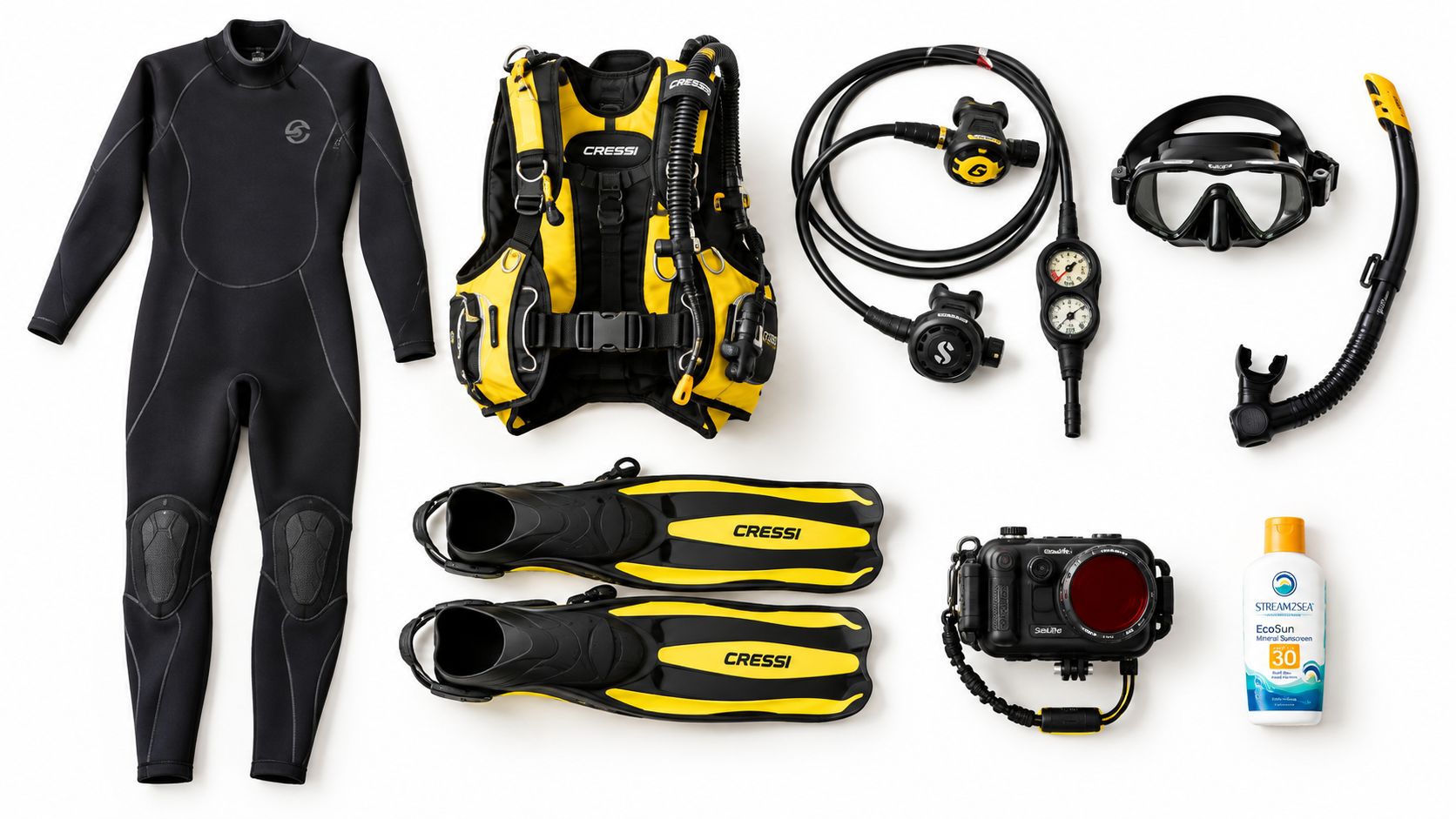
The best camera is the one that doesn't pull your attention away from the mantas for the whole dive.
If you do bring a camera, test your straps before you get on the boat, not after you're in the water. The encounter moves quickly, and fumbling with gear in the dark is how people miss the best passes.
Booking a Manta Night Dive With Kona Honu Divers
Garden Eel Cove is the stronger manta dive choice because its protected location usually gives you a better viewing area and better reefs, which helps create a calmer surface and a cleaner sand channel for the encounter. That matters because the sightline is part of the experience. When the water is organized and the position is stable, the animals can make closer, smoother passes without constant interruption from chop or crowding.
Kona Honu Divers runs the trip as a guided two-tank option for certified divers, and the structure makes sense if you want more than one underwater experience in a single outing. The manta dive is the headline, but the daytime reef dive gives you context for the coastline and lets you use the boat time more efficiently. If you're comparing operators, look at how they brief, how they support the surface, and how they choose the site nightly based on conditions rather than promising a fixed outcome.
Questions people usually ask before they book
Can non-divers join? Yes, snorkelers can take part from the surface, while scuba divers stay on the bottom. The encounter is built to work from both positions.
Is it guaranteed? No. It's a wildlife encounter shaped by plankton, not a staged show.
What if the night is quiet? A responsible operator should still give you a well-run trip, clear briefing, and honest expectations about what the ocean is doing that night.
Is Garden Eel Cove always the answer? No single site wins every night. The stronger choice is the one that fits the conditions, but Garden Eel Cove is a very strong fit when the protected setup and viewing lane line up well.
If you want to see what that looks like in practice, start with the booking page, read the trip details carefully, and pick the date that gives the crew the most room to choose the right site.
If you're ready to plan your Kona manta night dive, book with Kona Honu Divers and choose the option that fits your comfort level, whether that's snorkeling, scuba, or a two-tank outing. Their crew can walk you through the gear, the briefing, and the night plan so you show up knowing what biology is driving the encounter and what part of the evening is under your control.