
You're standing on the edge of a Kona night dive and trying to decide whether the water will feel magical or messy. The honest answer is that manta ray diving Kona can be one of the most disciplined wildlife encounters in Hawaiʻi, or it can turn into a crowded light show that stresses the animals and ruins the viewing for everyone. The difference comes down to site selection, operator discipline, and how well divers and snorkelers respect the feeding space.
The Reality of the Kona Manta Night Dive
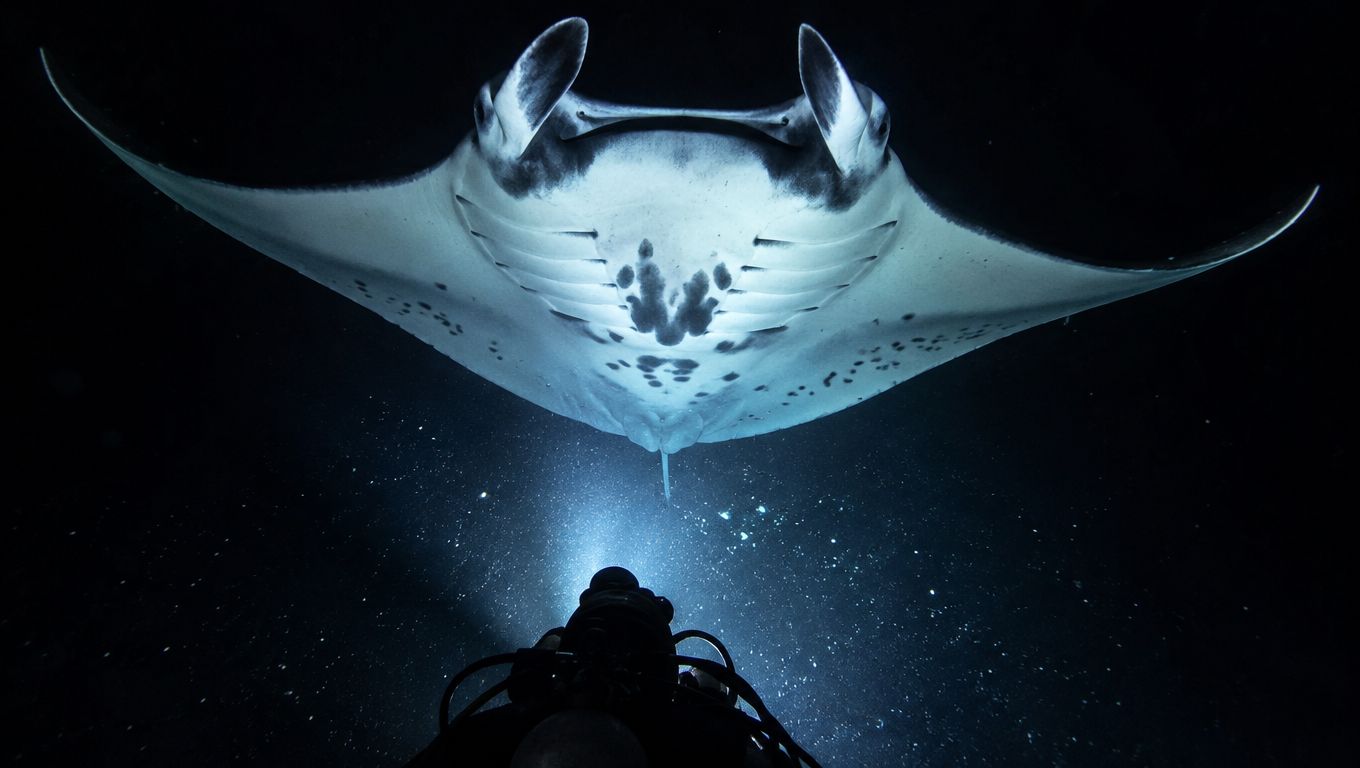
The first thing you notice is the darkness. Then the lights come on, the water fills with plankton, and a manta ray appears out of nowhere like a living sail unfolding in front of your mask. It doesn't glide past once and disappear, it often turns, rolls, and comes back through the beam again, which is why this dive can feel almost unreal when everything is handled correctly.
A well-run trip is built around that feeding behavior. Operators place lights in the water to gather plankton, and the plankton brings the mantas in close, whether you're on scuba or snorkeling at the surface. The boat ride and in-water time vary by operator and site, but the important thing isn't the clock, it's whether the crew gives you a calm briefing, a stable setup, and enough room to stay still and watch.
For scuba divers, the experience is usually more grounded. You settle on the sand, stay compact, and look up as the animals circle overhead. Snorkelers stay at the surface and hold position above the lights, which means the encounter feels different even though both groups are seeing the same feeding event.
How deep is the Kona manta ray dive?
Practical rule: If you're fighting the water, you're probably making the dive worse. Calm positioning matters more than trying to chase a better angle.
The water is still night ocean water. That means colder air on the ride back, black water around the lit patch, and a real need to be comfortable floating, breathing steadily, and following directions. If you want a vanity photo session, this isn't the right mindset. If you want a true wildlife encounter, the restraint is what makes it work.
Why Kona Became the Global Epicenter for Reef Mantas
Kona's manta night dive did not start as a tourism idea. It grew from an accidental wildlife attraction in the 1970s, when shoreline lights near today's Keauhou area lit up the water, drew plankton in, and brought reef manta rays close to feed near the surface Scuba Diving's history of Keller Laros in Kona. A repeatable feeding pattern followed, then a dive experience built around it.
A resident population, not a random passing show
Kona works because of site fidelity. These are reef mantas, Mobula alfredi, and the long-term pattern is not seasonal movement through empty water. The same animals keep returning to the same feeding grounds because night conditions continue to support plankton there.
A 2025 University of Hawaiʻi study backs that up with unusually strong local evidence. Researchers analyzed 13 years of community-sourced observations from 2010 through 2022 at Garden Eel Cove and Keauhou, with more than 23,000 sightings and 167 individually identified manta rays University of Hawaiʻi study. The study also found strong female fidelity at Keauhou, more mobile males, and aggregation changes that tracked zooplankton density.
That is the reason Kona stands out. The ecology keeps producing the same result when the site stays healthy and the viewing pressure stays under control.
The best wildlife nights are predictable for the animals, not controlled by the divers.
By 2003, thousands of visitors were already diving and snorkeling with mantas in Hawaiʻi each year, supported by about 12 charter operators Scuba Diving's Kona history piece. That early growth gave Kona a global reputation, but the deeper value is scientific. Long-running observation has turned a striking dive into a place where conservation and tourism overlap.
Choosing the Right Site, Garden Eel Cove vs Keauhou
A good Kona manta night dive starts before anyone drops in. Site choice shapes the whole encounter, because the two main locations work differently once boats, lights, and divers are on the water.
Why Garden Eel Cove usually wins for the dive
Garden Eel Cove, also called Manta Heaven, sits north of Kailua-Kona near the airport and is described as a naturally sheltered site with less exposure to open-ocean wind, swell, and current Garden Eel Cove site description. That matters in practical terms. A calmer ride out, less bottom surge, and fewer current surprises make it easier for divers to settle without stirring up sand or drifting out of position.
The broad sandy bottom helps too. It gives the group a clear place to settle, keeps fins off the reef, and leaves the viewing lane open when the lights go on. The nearby reef structure adds habitat, so the site still feels alive rather than stripped down to bare sand.
Keauhou has a different personality
Keauhou, often called Manta Village, has a longer history and a more public-facing feel. If you want a quick side-by-side overview of the trade-offs, compare the main Kona manta sites here. In practice, Keauhou can be the better pick for divers who care more about the south-side setting and are comfortable with a busier, more exposed experience.
That difference shows up in the dive itself. Garden Eel Cove is usually the better choice when you want a more controlled layout and a stronger chance of keeping the group organized around one viewing area. Keauhou can still produce a memorable night, but crowding, boat traffic, and diver spacing matter more there, so the operator's discipline has a bigger effect on what you see.
The key divider is not the name on the boat. It is how well the crew handles positioning, spacing, and flow once everyone is in the water.
A good operator will say why a site fits that night's conditions, not just sell a manta outing and hope for the best. That tells you they understand the trade-off between a famous location and a cleaner, less crowded encounter.
Mastering Underwater Positioning and Light Technique
A clean manta encounter starts with position, not movement. On scuba, the right setup is to stay on the sandy bottom, keep neutral buoyancy, and point your light upward into the water column so the plankton stays concentrated where the mantas can use it, as outlined in NOAA manta-viewing guidance.
The scuba position that actually works
On scuba, the goal is to stay small and predictable. Settle on sand, not reef, keep hands close, and let your fins stay still. Even a few careless kicks can stir silt, blur the light field, and make the whole setup harder for everyone in the lane.
Light discipline matters just as much. Hold the beam above your head and keep it angled upward, about 45 degrees, so it feeds the water column instead of sweeping across the mantas. A torch waved side to side pulls attention away from the feeding area and often leads to a messier, less comfortable dive. If you need to reposition, give a simple hand signal first, then move slowly so your bubble trail and fin wash do not break the pattern.
Snorkelers need a different setup
Snorkelers should stay at the surface and avoid dropping into the feeding corridor. Hawaiʻi Ocean Watch's manta guidance stresses calm surface behavior and staying clear of the animals' path so the encounter stays organized and safe. If you are in a group, stay clustered and use flotation support to hold your place without drifting into the dive lane.
That separation is what keeps the mantas moving naturally through the site. Divers stay low, snorkelers stay high, and the open water between them gives the animals room to turn without getting boxed in. When people rush for a better angle, they usually get worse results.
Use the photo-package dive details here
A good operator will brief this clearly before entry and keep the group tight enough to manage, but not so crowded that the site turns into a light show for people instead of a feeding area for mantas. That difference shows up fast, especially on nights when the boat load is heavy and the current is moving.
Navigating Crowds and Practicing Manta Etiquette
Crowding is the part of this dive many brochures soften. Survey research involving 444 manta-viewing participants found that 82% felt crowded by snorkelers, 78% by boats, and 69% by scuba divers county testimony summary of the survey. That's not a small issue. In a tight night environment, crowding changes behavior on both sides of the encounter.
What the mantas experience matters more than what the camera wants
Hawaiʻi Ocean Watch warns that touching can remove protective mucus, frighten mantas, alter feeding behavior, and contribute to avoidance of heavily visited areas Hawaiʻi Ocean Watch on manta behavior. The same guidance says snorkelers should remain calm at the surface and scuba divers should stay together on the sandy bottom, leaving a feeding corridor open.
That's where the contrarian truth lives. Closer isn't better. A diver who holds position and lets the manta choose the pass often sees longer, more natural loops than someone who keeps adjusting for a tighter angle. The animal decides the distance, not the diver.
The broader safety picture is bigger than manta contact. Hawaiʻi Ocean Watch says manta-viewing sites concentrate boats, divers, snorkelers, kayakers, and paddleboarders in the same limited areas, which creates collision, propeller, entanglement, and overcrowding risks Hawaiʻi Ocean Watch on site crowding and governance. It also notes that about 25% of regularly observed mantas show injuries attributed to human activity, and that proposed site-management rules were still pending as of its 2023 assessment.
Read the etiquette guidance here
A good operator controls the room before anyone enters the water. They separate snorkelers from divers, keep the group compact, brief people clearly, and refuse to let the site turn into a chaotic free-for-all. That discipline is what protects the animals and gives you a cleaner encounter.
Booking Your Dive with Kona Honu Divers
Not every manta trip is built the same. Some boats are packed, some crews rush the briefing, and some operators treat the manta site like a photo funnel rather than a wildlife encounter. A serious dive operator keeps the boat organized, maintains gear properly, and enforces the positioning rules before the first light hits the water.
Kona Honu Divers runs manta trips from Kona, including a manta ray night dive and a manta ray night snorkel, and their broader dive lineup also includes blackwater and advanced charters Kona Honu Divers manta and dive tours. Their service model matters here because manta success depends on calm control, not just enthusiasm.
What to look for in a solid manta operator
A real operator doesn't just say “we're going to see mantas.” They explain the site choice, the boat setup, and how they're going to prevent crowding once the lights are in the water. They also keep rental gear in working order and make sure the crew has enough experience to manage both beginners and photographers without turning the dive into a traffic jam.
Kona Honu Divers also offers other options for divers who want to expand their itinerary, including a blackwater dive and more experienced charters such as a premium advanced two-tank trip. Those are different products for different goals, but they fit the same pattern, strong planning and controlled execution matter more than hype.
A good manta night starts on the boat, before anyone splashes in.
That's why small groups and strict etiquette enforcement matter so much. When the crew protects spacing and keeps the formation sane, Garden Eel Cove works the way it should, with better flow and fewer distractions.
Essential Logistics and Common Questions Answered
Bring the basics, not your whole beach bag. A swimsuit, towel, warm layer for the ride home, and motion-sickness medication if you're prone to seasickness are the practical essentials. If you plan to bring a camera, keep it low-profile and remember that the mantas should be coming to you, not being chased by your lens.
Underwater cameras are fine when they stay discreet. Flashy movement, repeated light bursts, and blocking another diver's view create friction fast. The smartest photographers keep their bodies compact, their strobes restrained, and their position fixed.
Weather can cancel any ocean trip. That isn't a failure of the operator, it's part of working in real water, and the safer crews will reschedule rather than push a marginal night. If you're visiting Kona, book early in your stay so a cancellation doesn't trap you at the end of your trip.
A few final questions come up on almost every boat. The answer to “is it safe?” is yes, when the operator controls the setup and the guests follow the rules. The answer to “can I touch them?” is no. The answer to “is this easy?” is yes, but only if you respect that easy for the guest still depends on discipline in the water.
If you want the kind of manta trip that feels organized instead of crowded, Kona Honu Divers runs the kind of operation that fits this dive. Their manta trips, gear handling, and site discipline are built around a real nighttime wildlife encounter, not a rushed swim-by. Visit Kona Honu Divers and choose the trip that matches how you want to experience Kona.