
You're standing on a boat in Kona after sunset, wetsuit zipped, mask fog-free, and every familiar reference point has disappeared. The crew dims the deck lights, the ocean turns black, and the idea of climbing into it suddenly feels more serious than it did at the dock. Then the underwater lights come on, and the night becomes a stage.
Kona's manta experience is special because you're watching a resident reef manta community, not hoping a passing animal appears by chance. Photo-identification research has cataloged 318 unique reef manta rays around Hawaiʻi Island, with the catalog treated as a minimum population indicator because a robust island-wide abundance estimate isn't available (peer-reviewed genomic research). The experience is remarkable, but it's also crowded, physical, and dependent on disciplined operators. Here's how to choose the right site, decide between snorkeling and scuba, and avoid the parts that surprise first-time guests.
Slipping Into a Dark Ocean With Giant Wings
I remember the sensation clearly. The dive boat sat offshore with its crew lights low, and the water below looked like a sheet of ink. I couldn't see my own fins after the backward roll, only the cold pressure of the Pacific and the faint glow of lights somewhere beneath me.
At depth, my eyes adjusted to a bright circle on the sandy bottom. Divers settled around the perimeter while beams gathered plankton in the water column. The first manta didn't announce itself. A dark shape emerged out of the darkness above the lights, turned through a slow feeding roll, and disappeared into the black before returning for another pass.
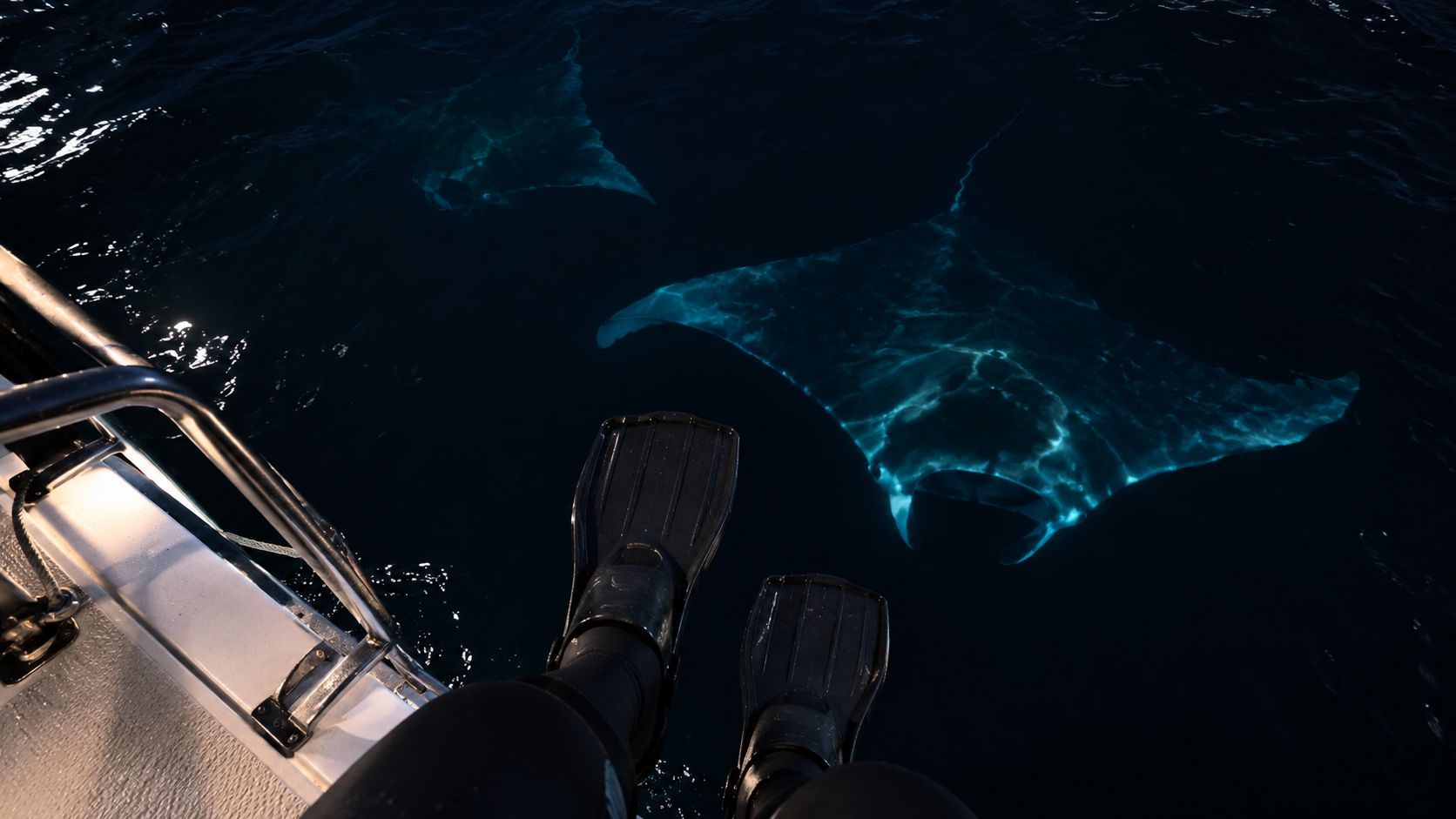
That moment answers one question immediately. The mantas come to the lights, not to the divers. Your job is to find a stable position, control your breathing and fins, and let the animals choose their path.
Kona's rays show strong site fidelity. Long-term observations found that many Hawaiian reef mantas were resighted over a five-year period, returning to established feeding areas rather than moving through as an anonymous stream of animals (genomic and photo-identification study). Earlier Kona Coast research estimated approximately 4.27 new manta pups entered the local population each year, which reinforces why careless contact and repeated disturbance matter.
The practical questions are more important than the postcard version of the experience. Where should you go? Is Garden Eel Cove better than Keauhou Bay? Will snorkeling give you enough of a view? How uncomfortable is the boat ride, and how chaotic does the water feel when several operators arrive together? The rest of this guide gives you direct answers.
How the Kona Manta Night Dive Actually Works
The mechanism is simple. Underwater lights concentrate zooplankton, and reef manta rays, Mobula alfredi, filter-feed in the water column above the seafloor. The animals follow the food, glide through the illuminated corridor, and make repeated passes while divers watch from below and snorkelers observe from the surface.
This isn't a traditional reef dive where you swim from coral head to coral head. The viewing area is fixed. A boat or light platform creates the attraction, and the best divers are the least active ones. Stay near the designated position, keep your fins low, and don't swim after a manta that turns away.
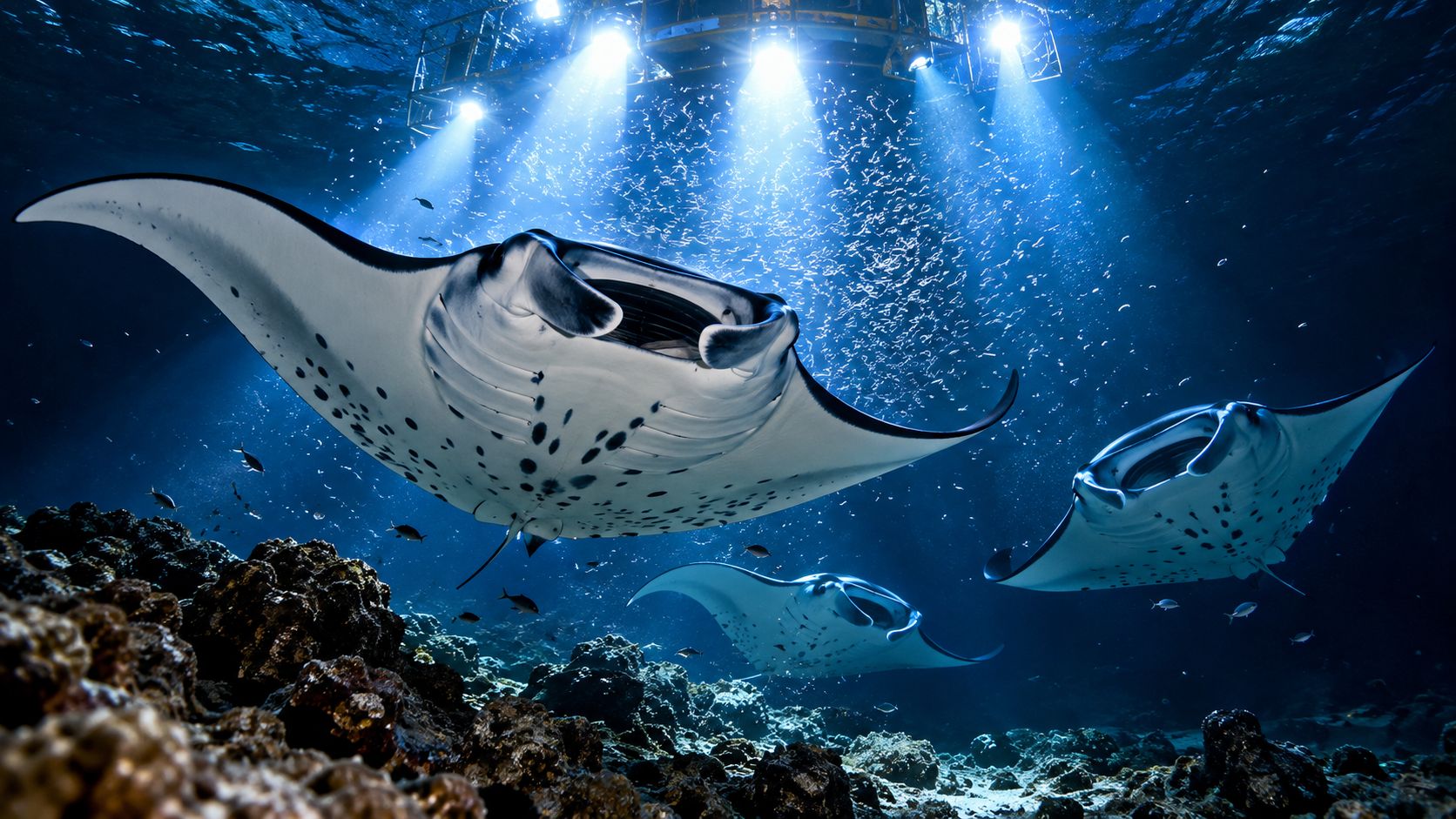
The feeding corridor
Mantas feed above the lights, so divers should remain near, but not directly beneath, the brightest point. Snorkelers occupy the surface and should avoid dropping into the same water column as the feeding animals. That separation gives the rays room to turn and reduces collisions between guests.
Research on manta behavior also shows that conditions such as sea state, moon illumination, time of day, current speed, and cloud cover can influence manta presence at cleaning stations (behavior and tourism research). Kona's night encounter is a feeding event, not a cleaning-station visit, so prey concentration and local water movement shape the quality of each evening.
The rule that produces the best view is also the easiest to ignore:
Stay still and let the manta do the approaching.
A controlled exhalation, well-organized equipment, and careful buoyancy create a cleaner feeding lane. Chasing, excessive finning, or shining a light directly into an animal's body makes the encounter worse for everyone, including the photographer trying to capture it.
For the operator's broader scuba options, see the Kona diving tours available around the island.
Garden Eel Cove or Keauhou Bay
Garden Eel Cove, also called Makako Bay or Manta Heaven, is my clear default recommendation for a first manta dive. It sits just north of Kona International Airport and is naturally protected from large open-ocean swells, which can make nighttime operations more comfortable and help maintain a consistent viewing area (Garden Eel Cove site description).
The site also offers more than a featureless light show. Its volcanic coral ridges and sandy patches support endemic garden eels during the day, while the nighttime feeding area gives divers a defined reef edge and open background for viewing mantas (Garden Eel Cove reef description). Garden Eel Cove generally supports larger aggregations than Keauhou Bay, and the open sand creates a cleaner visual backdrop.
Keauhou Bay remains a practical choice when convenience matters most. It's closer to many Kailua-Kona hotels and has a shallower reef setting, but it can feel busier and less visually clean when more divers occupy the viewing area. Keauhou isn't a poor site. It's just not my first choice when the goal is the strongest combination of manta density, protected conditions, and reef character.
| Factor | Garden Eel Cove, Manta Heaven | Keauhou Bay, Manta Village |
|---|---|---|
| Location | Just north of Kona International Airport | Near Keauhou Bay, south of Kailua-Kona |
| Conditions | Naturally sheltered from large swells | More exposed to the operational effects of site traffic |
| Viewing background | Sandy patches and open water above the reef edge | Reef setting with more visual structure |
| Aggregation pattern | Generally larger groups | More variable group sizes |
| Best fit | First-time divers, photographers, and guests prioritizing the clearest manta view | Guests prioritizing proximity and reef scenery |
Community-sourced research covering 2010 through 2022 recorded more than 23,000 sightings of 167 individual mantas at Kona's two principal nighttime sites. Garden Eel Cove consistently supported larger aggregations, while group size tracked zooplankton availability (Kona manta citizen-science research). For a detailed site comparison, review this guide to the Kona manta ray dive.
What a Manta Ray Dive Trip Looks Like Step by Step
The evening starts with check-in, gear preparation, and a briefing before the boat leaves. You'll want your mask fitted before departure, your wetsuit ready, and any seasickness plan handled early. The ride can feel easy at the dock and less comfortable once the boat reaches open water, especially after sunset.
Crew members explain where divers will settle, where snorkelers will remain, and how to use lights without disrupting other guests. That briefing should cover more than “don't touch.” You should know how entries and exits work, how to signal a guide, and where to position yourself once the manta activity begins.
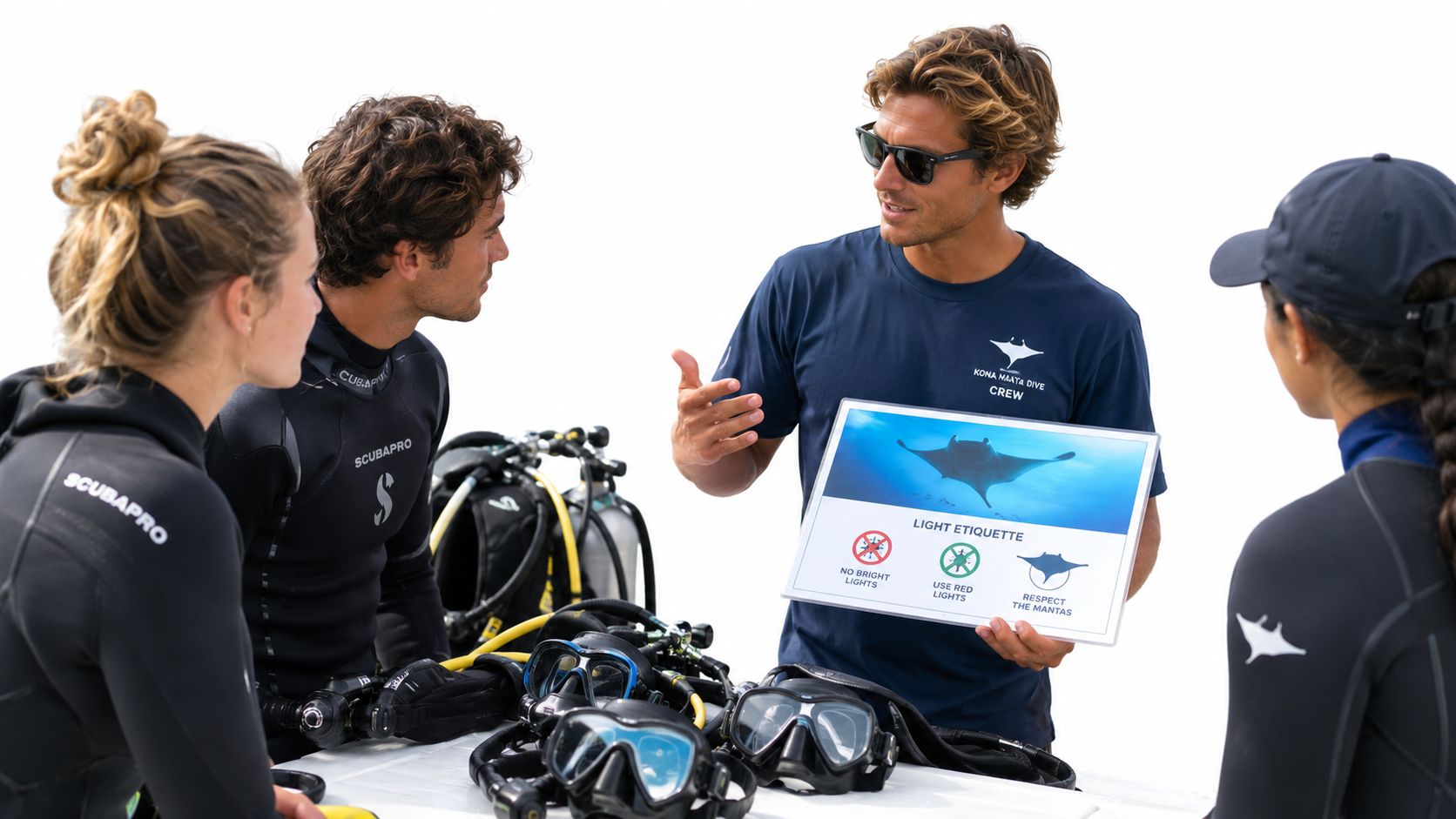
From the boat to the lights
At the site, the crew establishes the lighting and organizes the water entry. Divers descend to the designated bottom position, while snorkelers move to the surface viewing area. The first few minutes can feel anticlimactic because the water is dark outside the lights. Resist the urge to swim around looking for animals.
Mantas often arrive after the plankton gathers. When they do, they may pass close enough to fill your entire field of view. Keep your mask pointed toward the light corridor, but don't twist, kick, or rise into the feeding path to improve your angle.
The return ride
The water can feel comfortable while you're focused on the animals, then noticeably cool once the excitement fades. Bring a towel and a warm layer for the ride back, and tell the crew early if you're cold or seasick. The best operators treat the exit as part of the dive, not as an afterthought.
Practical rule: Prepare for the boat ride as carefully as you prepare for the underwater viewing. A dry layer, a calm stomach, and a properly fitted mask can change the entire night.
Crowding, Safety, and the Rules That Keep It Working
Kona's manta activity is popular enough that crowding isn't a theoretical concern. A 2015 safety assessment identified at least 42 commercial operators visiting the principal nighttime sites. Direct observations recorded 16 to 19 vessels per night and approximately 160 to 190 people in the water at the same time (Hawaiʻi County manta safety assessment).
Those figures explain why a compliant tour can still feel crowded. In participant research, 79% of snorkelers and 53% of scuba divers reported conflicts with other guests. Perceived crowding reached 78% for tour boats, 82% for snorkelers, and 69% for scuba divers (manta-tour participant survey). The research is older, so treat it as baseline evidence, not a current crowd count. Its practical lesson remains sharp: animal-welfare rules don't automatically create a comfortable guest experience.
| Factor | Garden Eel Cove | Keauhou Bay |
|---|---|---|
| Main concern | Traffic around a popular protected viewing area | Traffic near a highly convenient, heavily used site |
| Diver priority | Stay fixed near the bottom and protect the feeding corridor | Stay fixed near the bottom and avoid drifting into other groups |
| Snorkeler priority | Remain at the surface and keep lights controlled | Remain at the surface and avoid blocking the viewing area |
| Operator responsibility | Coordinate positioning and manage boat interaction | Coordinate positioning despite easier access and frequent use |
| Guest red flag | A guide allows chasing, touching, or uncontrolled movement | A rushed briefing leaves guests unclear about spacing and lights |
What good management looks like
A responsible crew keeps divers low, equipment uncluttered, and groups together. Guides should actively manage entries, exits, and positioning rather than disappearing while guests improvise around the lights. Operators should also explain what happens if boats converge and how they'll protect the viewing space.
The strongest diver etiquette guidance for Kona manta encounters is simple in practice. Don't touch, chase, block, or shine lights at a manta's body. Don't stir the bottom, because suspended sediment damages visibility and makes the feeding corridor harder for animals and people to use.
Snorkel, Scuba, or Sit This One Out
Choose snorkeling if you're comfortable floating at the surface, following directions in darkness, and entering and exiting a boat without panic. You'll watch from above while holding or staying near the light source, which gives a direct view of mantas rising into the illuminated water.
Choose scuba if you're already certified and prefer a fixed position on the bottom. The viewpoint is different, not automatically better. Divers look upward through the light beams, while snorkelers look down from the surface. The right choice depends on your comfort in the ocean, not on which label sounds more adventurous.
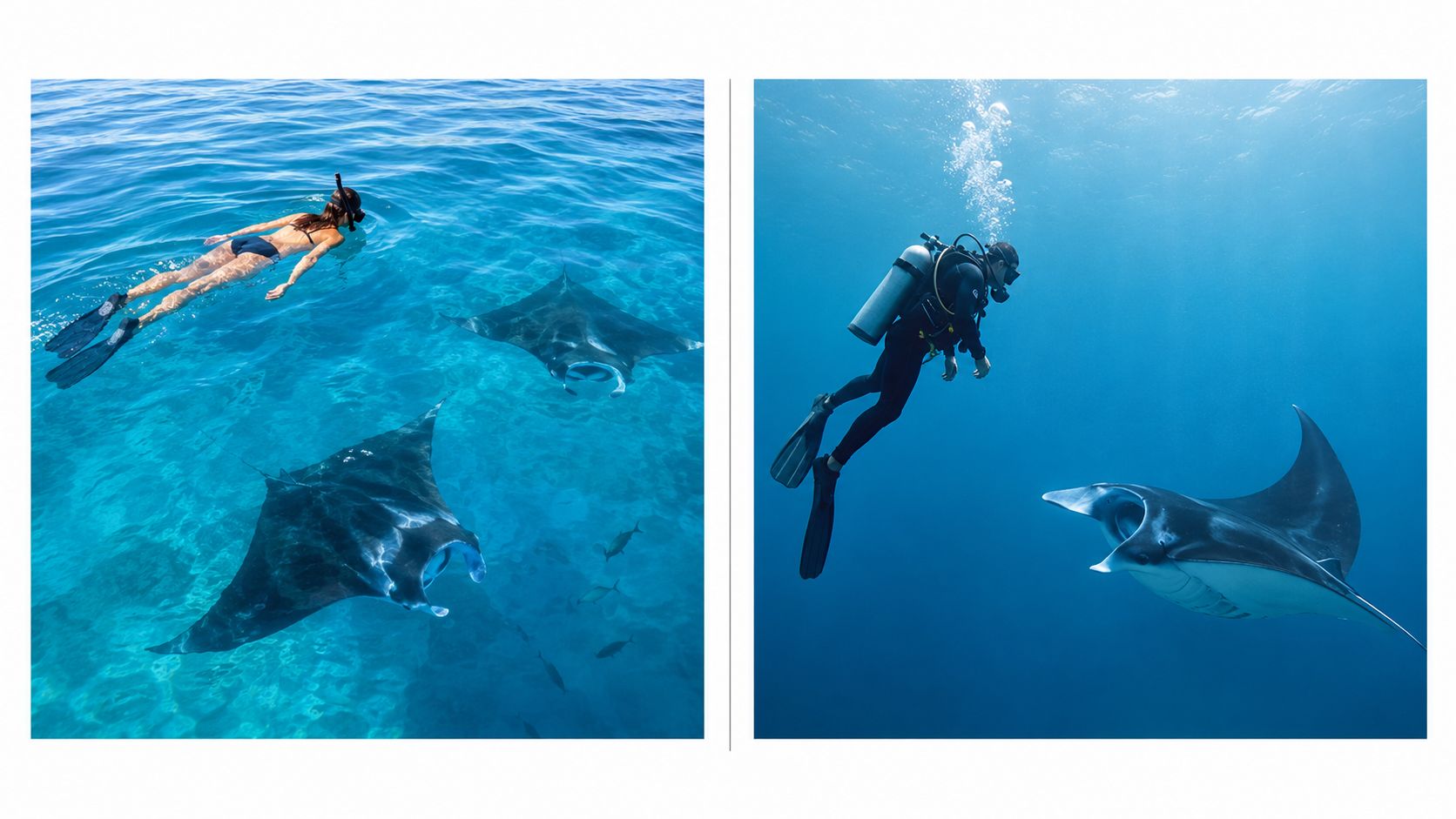
Be honest about readiness
Mantas are not the main safety concern. The genuine demands are darkness, open water, surface movement, cold, seasickness, limited visibility of other swimmers, and the physical effort of using a boat ladder. Nervous swimmers should tell the crew before entering, not after anxiety has taken over.
Families need to assess each child's actual ocean comfort rather than assuming a calm day at a pool translates to nighttime snorkeling. Guests with back, ear, mobility, or pregnancy concerns should speak with the operator and their medical professional before booking. If you can't remain calm in the water or can't manage the entry and exit, sitting this one out is the responsible decision.
Photographers need restraint
A camera can make you forget where your fins, light, and fellow guests are. Keep the rig close, avoid blocking another person's view, and let the manta enter your frame instead of swimming after it. A powerful focus light or video light can blind nearby participants, so follow the crew's light rules even when a shot looks tempting.
Your self-check: Can you float calmly, follow a fixed-position briefing, manage the boat ladder, and accept that the manta controls the encounter? If yes, choose the format that matches your certification and comfort. If not, don't force it.
This snorkel or scuba comparison for manta rays can help you make the final call without treating one option as universally superior.
Choosing an Operator Worth Your Vacation Day
The operator controls more of your experience than the manta does. A resident animal can still be difficult to see if guests are spread across the light field, guides fail to manage movement, or the boat arrives unprepared for competing traffic.
Look for a crew that gives a detailed briefing, enforces light etiquette, keeps groups together, and actively positions guests. Ask how they handle a crowded site, how many people they place around a viewing area, and whether guides stay engaged throughout the encounter. A packed boat and rushed briefing are not minor inconveniences. They're warning signs.
Signals of a well-run trip
A competent operation should make the plan obvious before anyone enters the water:
- Briefing quality: The crew explains diver and snorkeler zones, light direction, no-contact rules, and emergency signals.
- Guide presence: Guides remain available and correct poor positioning before it creates a collision or blocks a manta.
- Boat discipline: The captain and crew coordinate entries and exits instead of sending guests into a confused cluster.
- Equipment control: Lights and camera rigs stay directed where they belong, without blinding participants or scattering the viewing line.
- Guest honesty: The operator describes crowding and conditions plainly instead of promising a private encounter.
Kona Honu Divers offers a two-tank manta trip that combines a dusk reef dive with a nighttime manta dive, along with a manta snorkel using a custom light board. It's one option for guests who want a scuba-focused format and a crew-managed approach to the viewing area. Read broader comparisons in this Kona diving companies guide.
My recommendation is direct. Pick the operator that treats positioning, spacing, and light etiquette as core seamanship, not paperwork. If you want the experience to resemble the quiet opening scene, choose a crew that protects that quiet deliberately on every trip.
Booking Your Manta Ray Dive in Kona
Book early enough that you have room to move the trip if weather or surface conditions change. Kona's mantas are resident animals, and long-term monitoring shows that individuals return to established feeding areas, but no operator can control the water, prey distribution, or crowding on a particular night (Kona population research).
Use this booking sequence:
- Choose the site first: Make Garden Eel Cove your default if protected conditions, stronger reef character, and a cleaner manta backdrop matter most.
- Match the activity to your ability: Select scuba only if you meet the operator's certification and health requirements. Choose snorkeling if you're comfortable floating and climbing the ladder.
- Ask direct questions: Confirm departure point, group organization, weather policy, cancellation terms, equipment, and what happens if manta activity is limited.
- Prepare for the boat: Arrive early, bring a towel and warm layer, use reef-safe sunscreen before departure, avoid alcohol, and leave jewelry behind.
- Reconfirm before leaving: Check the trip details and conditions with the operator before heading to the harbor.
A good tour isn't a guaranteed private show. The published safety record shows how many vessels and people may share these sites, so the operator's management style matters as much as the location (Hawaiʻi County operational assessment).
Garden Eel Cove is the straight recommendation for most first-time guests. You get a protected setting, a stronger case for larger aggregations, and a better visual relationship between the lights, sandy bottom, and reef edge. Choose snorkeling or scuba based on your readiness, then book with an operator that manages people as carefully as it manages the animals.
Book a Garden Eel Cove-focused manta experience with Kona Honu Divers if you want a guided scuba or snorkel format built around controlled positioning and responsible viewing. Check your comfort, choose your format, and reserve early enough to keep flexibility around ocean conditions.