
The first time you watch a manta ray bank through the light column at night, the whole ocean seems to slow down. One pass becomes another, then a barrel roll right over your mask, and you stop thinking about technique, gear, even your own breathing for a moment.
The Underwater Ballet An Introduction to Kona's Manta Rays
The manta night dive off Kona isn't popular by accident. It works because the encounter is structured around how these animals feed. Divers settle into position, lights draw plankton into the water column, and the mantas come in to feed with a level of consistency that's rare in wildlife tourism.
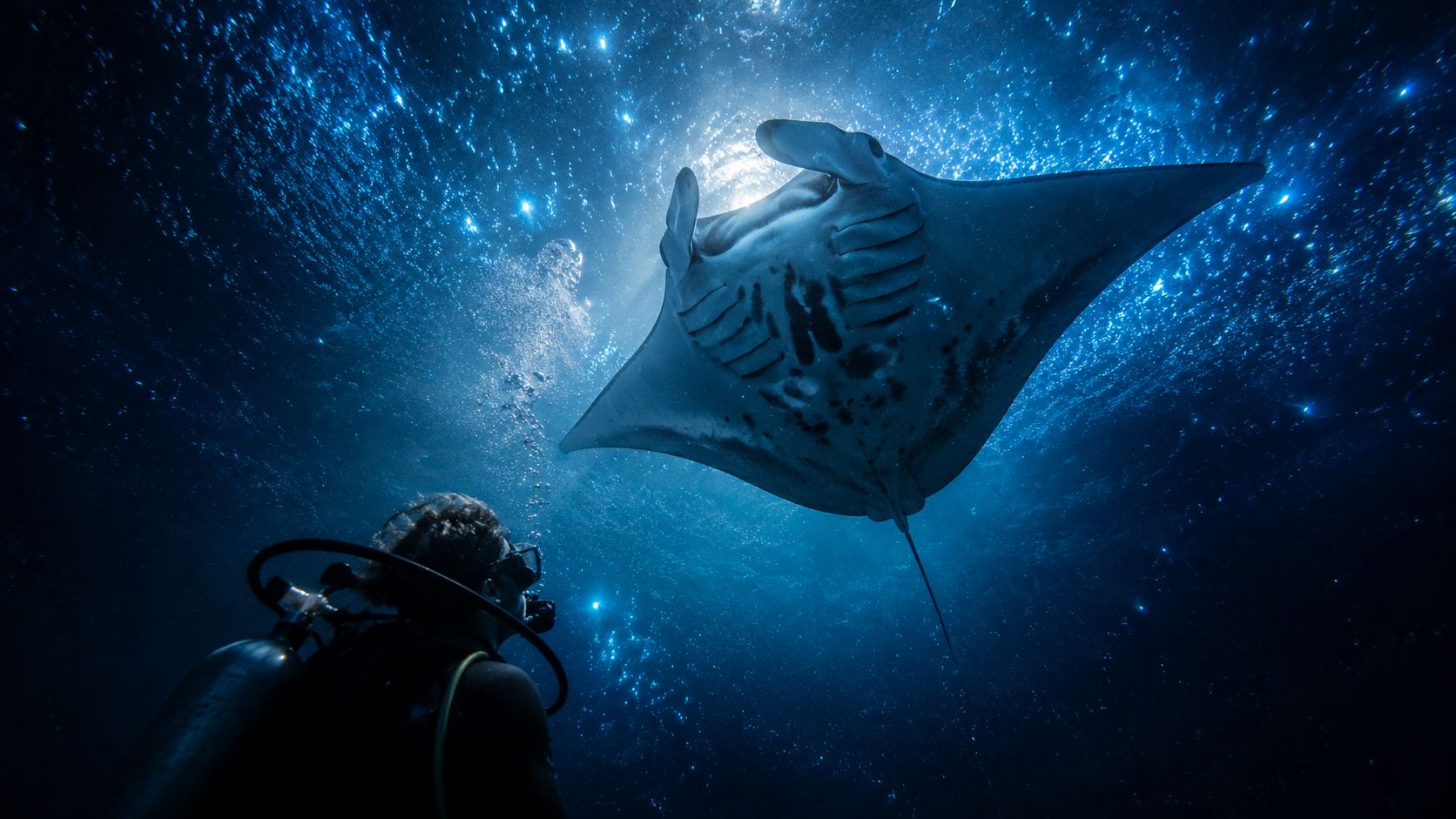
That reliability is a big reason manta ray diving in Hawaii has become synonymous with Kona. Local operators and tourism sources report manta sightings on about 80% to 90% of nights at the main Kona sites, with an average of about six mantas seen on a typical night and a record count of 36 in a single night, according to this Kona manta overview.
What makes this experience different
Most marine life encounters ask you to chase the moment. This one rewards the opposite. The divers who get the best experience are usually the calmest ones in the group. They stay still, keep their beam where the guide wants it, and let the mantas do the work.
Two things make that possible in Kona:
- Resident behavior: These are not just occasional pass-through animals. Resident reef mantas return repeatedly to the same feeding areas.
- A predictable format: The light setup creates a feeding zone that mantas recognize, which gives divers a much better chance of a close, sustained encounter.
The magic isn't in swimming harder to find a manta. It's in becoming quiet enough that the whole show happens above you.
If you're deciding whether this belongs on your trip, it does. If you want the water-level version instead of scuba, the Kona manta ray night swim gives you access to the same spectacle from the surface.
Why Kona is the World's Premier Manta Ray Destination
Kona stands apart because the manta experience here is repeatable. That sounds simple, but it matters. Plenty of places offer manta encounters. Very few offer a year-round, boat-based night experience where the animals regularly return to the same general sites and the in-water setup is built around passive viewing.
The two names you'll hear most often are Manta Village and Manta Heaven, also called Garden Eel Cove. Both are well known. Both can produce memorable nights. But if your goal is not just to see mantas, but to have a cleaner, calmer, more comfortable dive, I would steer most divers toward Garden Eel Cove.
Why Garden Eel Cove usually gives the better dive
Garden Eel Cove has a few practical advantages that matter once you hit the water.
- More protected feel: When the ocean isn't perfectly calm, a site with a bit more shelter can make a big difference in comfort.
- Better viewing layout: Divers want a site where the group can settle in cleanly, maintain the formation, and keep the viewing area from turning into a traffic jam.
- Stronger surrounding reef experience: On a two-tank night, the overall quality of the site matters, not just the manta passes.
Those details don't always show up in generic travel guides, but they shape the night. A site can have mantas and still feel messy. A good operator at the right site turns the experience into something far more elegant.
The season question people often misunderstand
Kona's manta encounters are available year-round, but conditions are not equally comfortable year-round. A neutral source notes that late spring through early fall has the best ocean conditions, while operators see the most canceled charters in winter from December to mid-March. That same source says there's still only about a 70% chance of seeing at least one manta ray, which is an important reality check for travelers planning one single night around the experience, as noted in this manta planning guide.
That doesn't mean winter is bad. It means winter demands better planning.
How to plan around the trade-offs
If you want the smoothest path to a great dive, this is what works:
- Book early in your trip: If weather cancels, you still have room to reschedule.
- Choose operators that brief well: Good guides improve the encounter even when conditions are only fair.
- Favor site selection over hype: A calm, well-managed Garden Eel Cove dive often beats a crowded boat chasing a dramatic sales pitch.
- Keep a backup activity: Conditions can change fast on the ocean.
For a broader look at local diving beyond the manta trip, this guide to diving Kona on the Big Island is useful context.
What to Expect on Your Manta Ray Night Dive
By the time the boat leaves the harbor, you should already know the plan. Good crews keep the mystery for the mantas, not the dive logistics. You'll get a briefing on entry, exit, light use, hand signals, where to position yourself, and what not to do once the animals arrive.
The ride out is usually relaxed. Gear gets checked. Lights get prepared. If you're new to night diving, this is the point where nerves tend to show up. That's normal. The dive itself is much calmer than people expect because this is not a roaming night hunt through dark water.
The profile is shallow and controlled
Kona's manta-ray dive is a shallow, controlled night profile rather than a deep dive. The main viewing sites are typically in 20–50 ft of water, with many scuba briefings describing the working depth as 25–45 ft. This keeps gas use and decompression risk low, making it suitable for certified recreational divers, as described in this depth guide for Kona manta dives.
That shallow profile changes the feel of the whole dive. You're not descending into a dark wall or swimming a long route. You're dropping into position, getting settled, and becoming part of the lighted feeding setup.
The campfire setup underwater
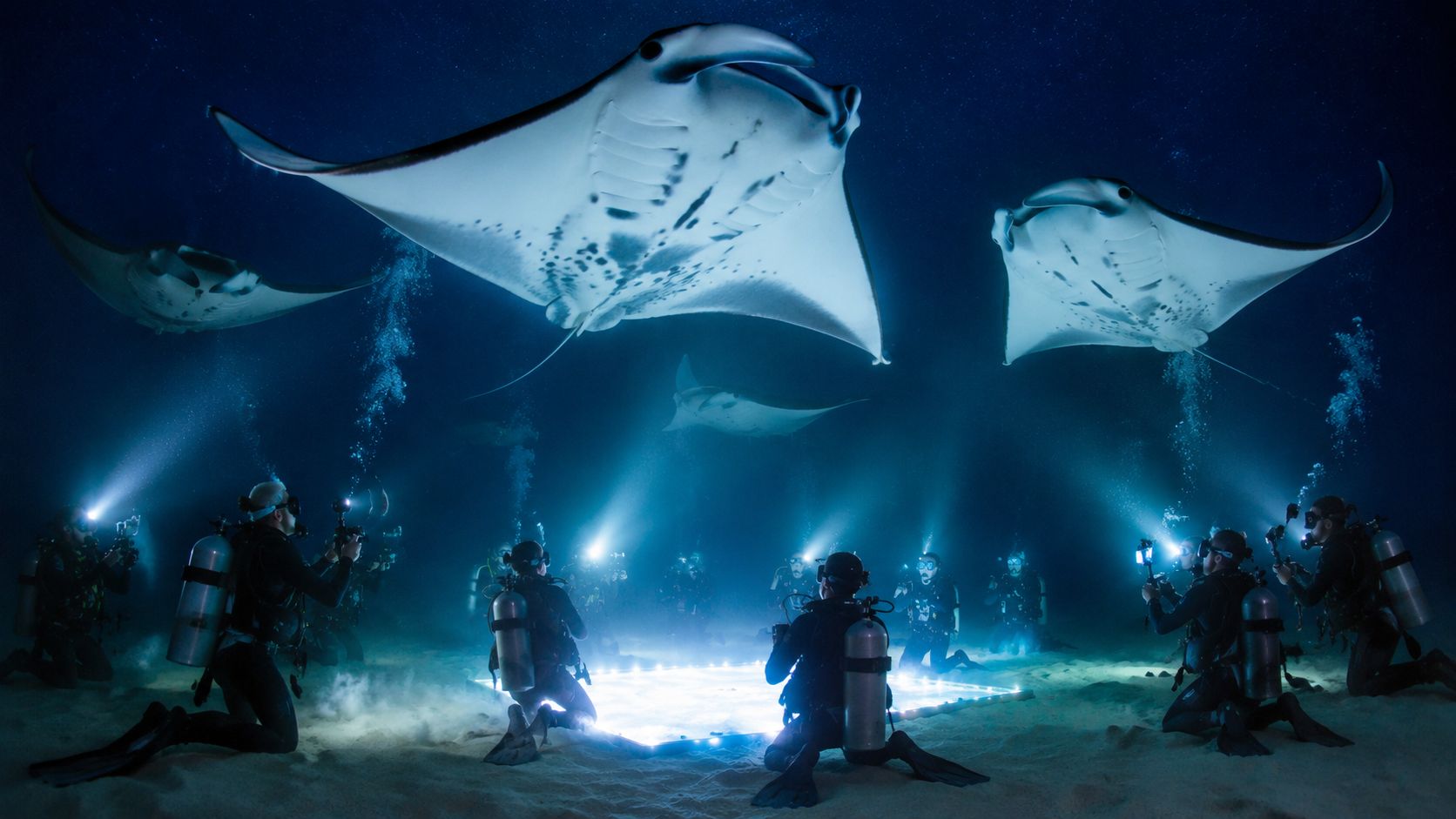
Most divers describe the formation as an underwater campfire. The group settles on the sand or in a designated area near the bottom. Lights are pointed upward. The beams create a vertical column that draws plankton. The mantas move through that column and feed overhead.
What matters most once you're down:
- Get stable early: If you're fiddling with trim or weighting after the mantas arrive, you'll miss the first passes.
- Keep your light where the guide wants it: Random waving scatters the visual field and can reduce the quality of the setup.
- Stay low and still: Your job is to become part of the background.
Practical rule: The divers who move the least usually see the most.
What the first manta pass feels like
At first, you usually see shape before detail. A shadow appears at the edge of the beams. Then the white underside catches the light and the whole animal seems to materialize. Once feeding starts, the movement becomes rhythmic. Mantas bank, loop, and roll through the column with very little wasted motion.
New divers often make one mistake here. They try to turn their whole body to follow every pass. Don't. Use your eyes first, then your head. Stay planted unless the guide asks you to shift.
What doesn't help
A few habits reduce the quality of the dive fast:
- Hovering above the group: You become an obstacle instead of an observer.
- Kicking up sand: Visibility is limited enough at night without adding your own silt cloud.
- Over-scanning with your torch: Wide, restless beams make the scene harder for everyone to watch.
- Trying to get closer: The mantas already come close. Forcing the issue usually makes the moment worse, not better.
When the dive is done, the ascent and exit are straightforward. Divers often come back on board quiet for a minute or two. That's usually the sign of a good manta night. It takes a moment for your brain to catch up.
Diver Etiquette and Manta Ray Conservation
The rules on a manta dive aren't there to make the trip feel controlled. They're there because the encounter only works if divers behave like quiet guests. Good etiquette protects the animals, protects the reef, and gives everyone in the water a better experience.
Kona's manta system is supported by a long-running sighting database with more than 28,500 manta sightings since 1991. The same source points out that the biggest variables for a good encounter are buoyancy control, light placement, and stillness, with divers commonly instructed to stay on the bottom and point lights upward, as noted in this overview of Kona manta diving behavior.
The three habits that matter most
Most of manta etiquette comes down to restraint.
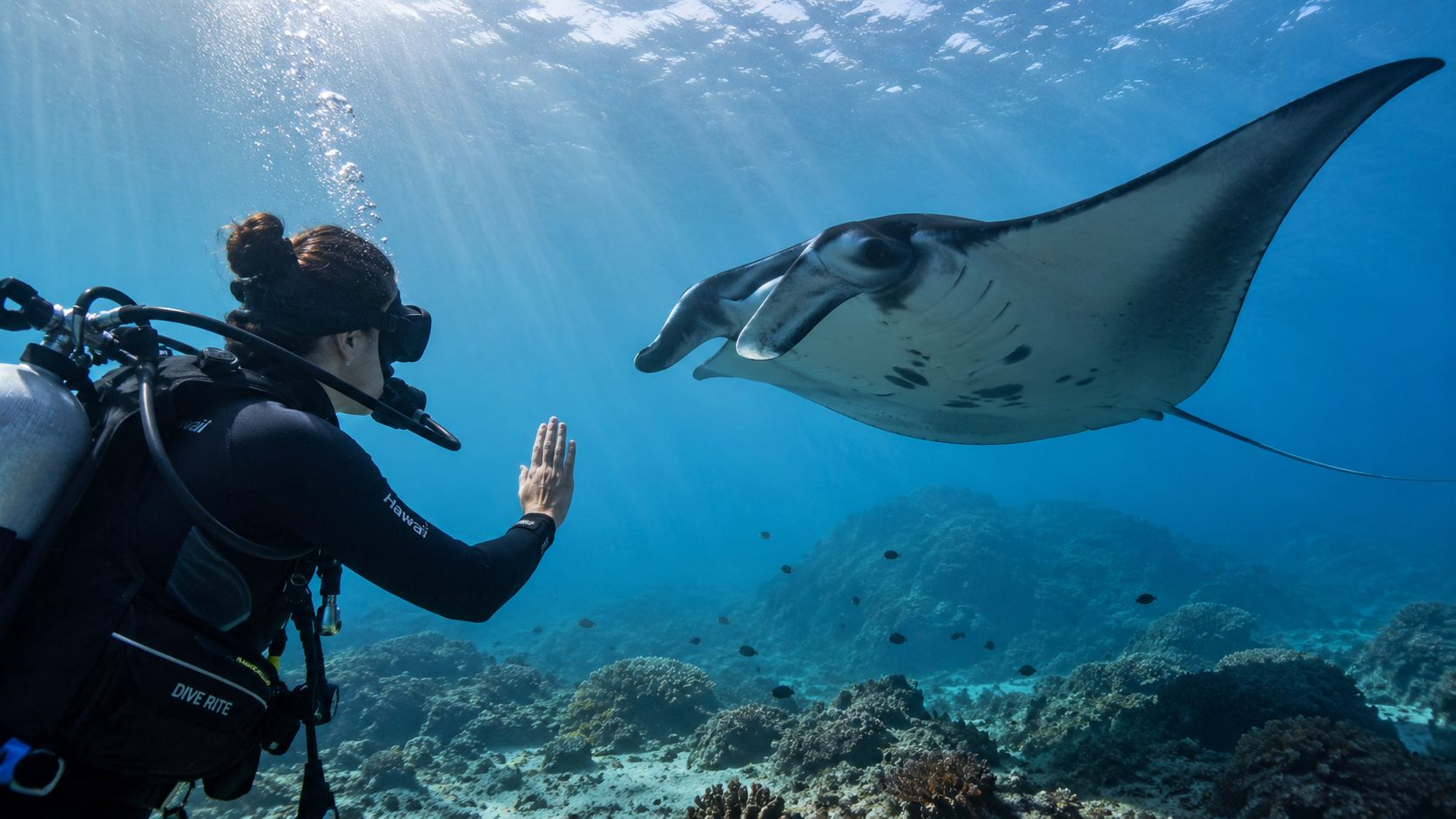
- Don't touch: Mantas should never be handled, even if they pass close.
- Don't chase: If you leave the formation to pursue one animal, you break the setup.
- Don't block the water column: Feeding mantas need a clear path through the light.
These aren't abstract conservation ideas. They're practical. When divers keep the lane open and the light field consistent, the mantas keep cycling through naturally.
Good buoyancy is conservation in action
A lot of divers think of buoyancy as a skill check. On this dive, it's also a conservation tool. Poor buoyancy can damage reef, stir up sediment, and create confusion in the group. Controlled divers make the whole site calmer.
If you want to improve your own part in the encounter, focus on this short checklist before the dive:
| Skill | Why it matters |
|---|---|
| Stable weighting | Keeps you from finning constantly to stay in place |
| Quiet finning | Reduces sand and accidental contact with others |
| Light discipline | Maintains the feeding column the mantas are using |
A respectful manta dive feels almost passive. That's the point.
For a broader look at in-water behavior that makes everyone safer and more considerate, review this guide to responsible diver etiquette.
Preparing for a Safe and Comfortable Dive
The manta dive isn't technically difficult, but it punishes poor preparation. The divers who have the smoothest night are usually the ones who show up rested, weighted correctly, and ready to follow a simple plan without rushing.
You don't need advanced certification for this type of dive. In most cases, a certified recreational diver with decent buoyancy and basic night-dive comfort can do very well. The challenge isn't depth. It's composure, task loading, and comfort in low light.
What to sort out before you book
A little honesty goes a long way here. Ask yourself three things.
Are you comfortable in the ocean at night?
You don't need to love darkness, but you should be able to stay calm and follow simple directions.Can you stay still underwater without constant adjustment?
This matters more than speed, fitness, or fancy gear.Does your mask fit well?
A leaking mask on a night dive turns a magical experience into a chore.
Gear choices that make the dive easier
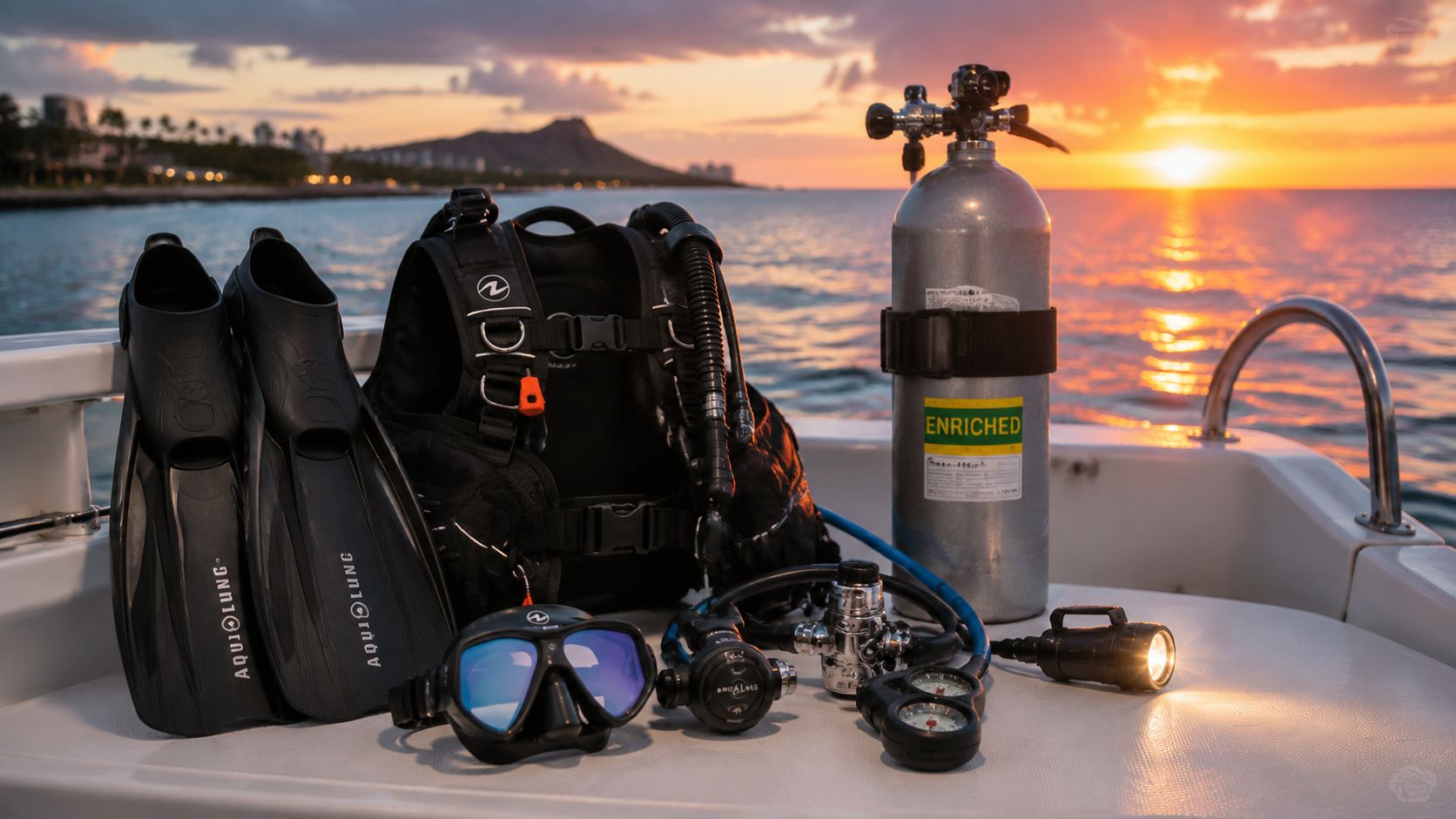
Most operators provide the essential setup, but a few gear details can improve your night:
- Well-fitting exposure protection: Even warm water feels cooler when you're stationary.
- A familiar mask: This is not the night to discover your rental mask leaks at the skirt.
- Clean, simple accessories: Clip off anything that dangles. Manta dives aren't the place for clutter.
- Nitrox if available: On a two-tank evening, some divers prefer it because they feel less fatigued afterward.
If you're interested in minimizing post-dive drag on multi-dive days, it can be worth asking whether Enriched Air Nitrox is offered and whether you are qualified to use it.
Seasickness is the issue many divers underestimate
The dive may be calm. The ride might not be. If you're even mildly prone to seasickness, deal with it before boarding. Waiting until you're queasy at the mooring doesn't work.
Some common over-the-counter and non-medication options include Ship-EEZ Seasickness Patch, Dramamine pills, Bonine pills, Sea Band wristbands, and Ginger chews. For a local rundown of what divers often use before Kona boat trips, this page on the best sea sickness medication options is worth reading.
If motion sickness has ruined boat days for you before, solve that problem first. The mantas deserve your full attention.
A short comfort checklist
Before you leave the dock, make sure you've done the basics:
- Eat light: Don't board on an empty stomach, but don't overdo it.
- Hydrate early: Start before the trip, not after the dive.
- Bring a dry layer: The ride home can feel cool after a night dive.
- Listen to the briefing: Most problems on this trip are solved before anyone enters the water.
How to Choose the Best Manta Ray Dive Operator
Choosing the operator matters almost as much as choosing the date. With roughly 80,000 snorkelers and divers participating in manta encounters each year and over 450 identified resident manta rays, how the trip is run affects whether the night feels orderly or crowded. Conservation guidance also makes an important point: the best trip is not always the one promising the most mantas, but the one that manages spacing, briefing quality, and in-water discipline most effectively, according to this guidance on manta interaction standards.
That tracks with what experienced divers notice right away. The encounter can be spectacular even on a modest manta night if the crew runs a clean operation. It can also feel chaotic on a high-activity night if the boat, briefing, and diver management are sloppy.
What to evaluate before you book
Start with the things that change your actual experience in the water.
| Operator trait | Why it matters on a manta dive |
|---|---|
| Briefing quality | Divers need a clear plan for positioning, lights, and behavior |
| Site choice | A thoughtful pick, often Garden Eel Cove, can improve comfort and visibility |
| Group management | Less crowding means cleaner viewing lanes and less stress |
| Guide control in water | Good guides settle the group fast and keep the formation intact |
What experienced divers should ask
If you're comparing trips, ask direct questions.
Which site do you prefer when conditions allow?
You want to hear a reasoned answer, not a scripted one.How do you handle diver spacing underwater?
This tells you whether they think about encounter quality, not just passenger count.How much emphasis do you place on light discipline and stillness?
Serious operators care about this because it changes the whole dive.Do you offer other night or advanced options?
If you're building a broader dive itinerary, that matters.
For travelers comparing local shops, this overview of a Kona diving company can help frame the differences.
One practical local option
One operator many divers look at is Kona Honu Divers manta ray dive and snorkel tours. They also list broader Kona diving tours and a premium advanced two-tank trip for divers seeking a more experienced profile on other days.
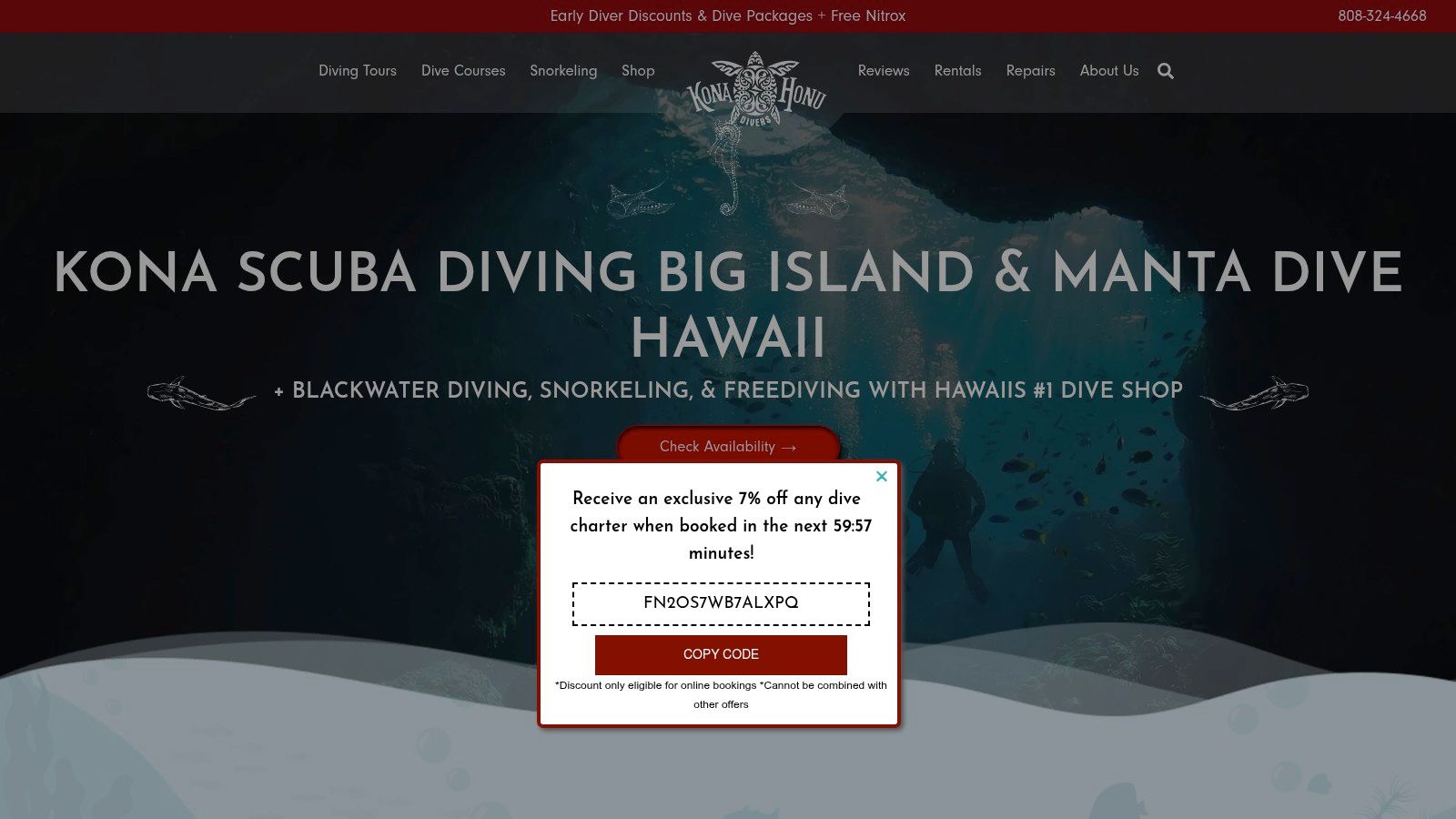
What I'd look for in any operator, including that one, is simple: a calm briefing, realistic expectations, a preference for clean in-water setups, and a willingness to favor a better site over a louder sales pitch.
Manta Ray Diving and Snorkeling FAQs
Can I do this if I'm not a certified diver
Yes. You don't need scuba certification to experience the mantas. Snorkeling gives you a surface view while you hold position at a light board and watch the rays feed below. If that's the better fit for your group, you can book manta ray night snorkel availability.
Is night diving with mantas safe
In a guided, structured setting, it can be a very manageable night dive for certified recreational divers. The profile is shallow, the group stays together, and the in-water task is simple. The biggest safety gains come from listening to the briefing, staying in position, and not turning the dive into a chase.
What is the best time of year to go
If you care most about comfort and fewer weather disruptions, late spring through early fall is generally the easier window. Winter can still produce good nights, but ocean conditions are less consistent and cancellations are more common. If your schedule allows it, book the manta dive early in your trip rather than on your last evening.
How far in advance should I book
Book as early as you can, especially if you're traveling during school breaks, holidays, or with a group. Good operators fill up. Last-minute availability tends to force people into whatever boat still has space, which isn't the best way to choose a wildlife experience.
Should I choose snorkeling or scuba
Choose scuba if you're certified, comfortable at night, and want the classic view from below while the mantas pass overhead. Choose snorkeling if you want a simpler experience, are traveling with family, or don't dive.
The better choice isn't the more technical one. It's the one that lets you stay relaxed and present for the whole encounter.
If you want a manta trip run by divers who understand that the best encounter comes from calm briefings, good site choice, and disciplined in-water positioning, take a look at Kona Honu Divers.