
You're probably here because you've seen the videos. Divers kneeling on the sand, beams of light cutting up through black water, then a manta ray the size of a small car gliding straight overhead. It looks unreal until you're the one dropping in off the Kona coast, checking your regulator, and watching that first shadow materialize out of the dark.
That moment is why manta ray diving in Hawaii stays with people. It's not fast, noisy, or chaotic. It's slow. Quiet. You settle in, hold position, and let the ocean come to you. When it's done right, the whole experience feels less like a chase and more like being invited into a feeding station that already knows exactly how the night will unfold.
If you're planning your trip, the details matter. Site choice matters. Operator choice matters. Your buoyancy, breathing, camera setup, and even what you eat beforehand matter. For divers looking at Kona options, it also helps to browse the full range of Big Island diving tours before locking in a plan.
The Magic of Manta Ray Diving in Hawaii
You hit the surface after sunset, hear the last check from the crew, and drop into black water with a pool of light waiting below. On the way down, the bottom comes into view, the beams start pulling in plankton, and the whole site settles into a rhythm that Kona crews know well.
Then the first manta arrives.
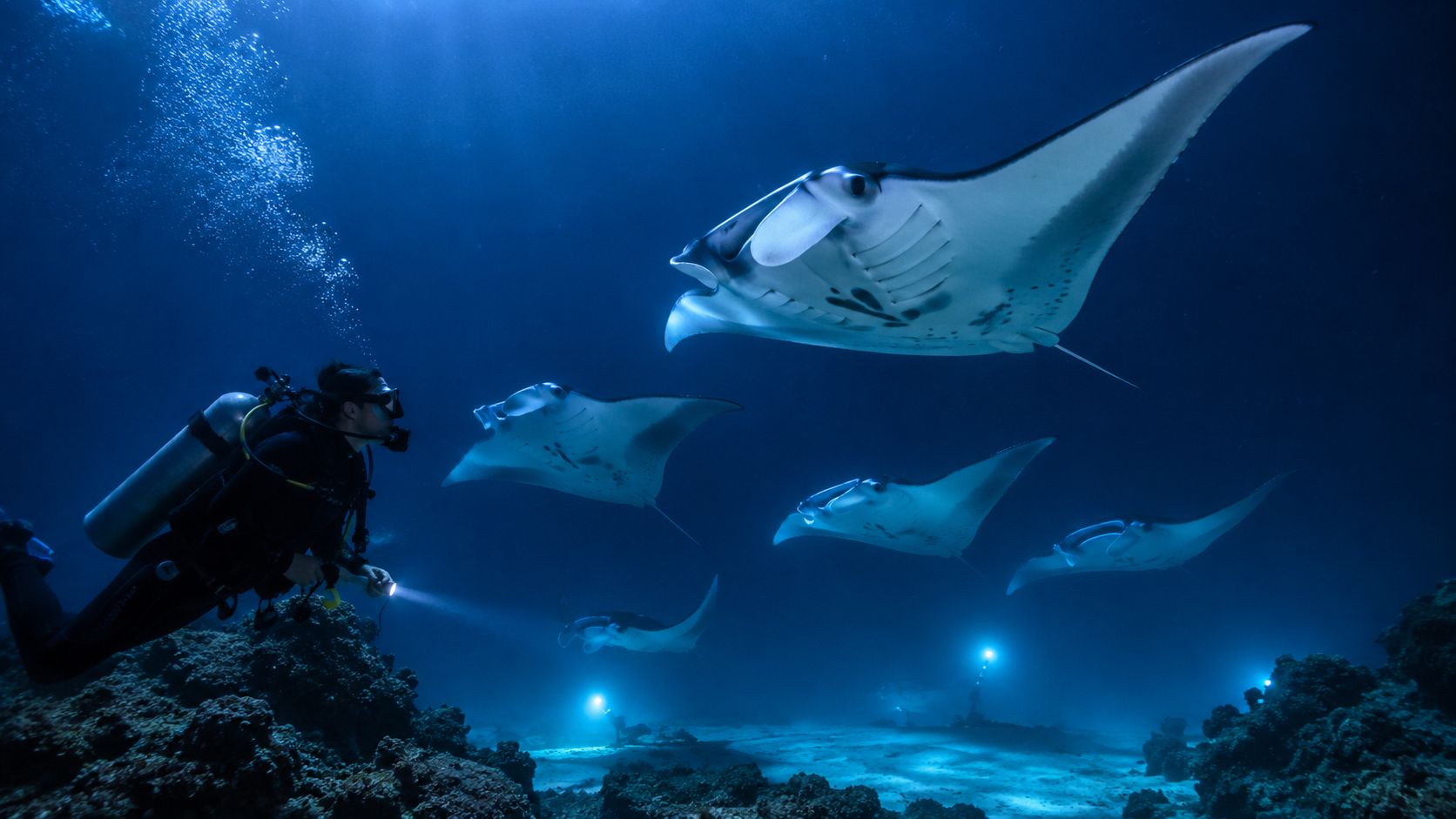
A good pass feels controlled from start to finish. The ray banks through the light, rolls into the feed, and comes over the group close enough that divers often freeze for a beat. I see that reaction all the time with first-timers. The fix is simple. Slow your breathing, keep your hands in, and hold your position so the animal has a clean lane.
Why Kona leaves such a strong impression
Kona stands out because the encounter is built around repeatable conditions and careful operator habits, not luck alone. The coast has protected nighttime sites, clear water much of the year, and a long history of guides running these dives in a way that lets mantas feed without pressure from chasing divers. That combination gives new divers a real chance to relax and watch behavior, instead of spending the whole dive searching.
The site you choose matters more than many visitors realize.
Some locations are better for training-level comfort. Others are better when the swell is down and the group can handle a little more exposure. Strong operators make conservative calls on entry, exit, current, and bottom positioning, because a manta dive works best when the group is settled and predictable. That is one reason experienced crews tend to produce better encounters. They are managing diver behavior as much as wildlife access.
Practical rule: Stay still, stay low, and let the mantas control the distance.
What makes the experience feel special
The magic is not just the size of the animals. It is the precision. Mantas move through the light with very little wasted energy, adjusting angle and speed as they feed on concentrated plankton. From the bottom, you get a front-row view of that pattern. You start noticing the mouth opening, the cephalic fins guiding water inward, the turn timing, and the way each pass lines up with the brightest water.
That is also why operator standards matter. Good briefings, disciplined light placement, and clear spacing rules protect the encounter for both divers and mantas. If you want a wider sense of local conditions before choosing a night charter, this overview of Hawaii scuba diving on the Big Island gives helpful context.
What the Manta Ray Night Dive Experience is Really Like
You back-roll into dark water, descend with your guide, and within a few minutes the whole dive settles into focus. Lights beam upward, plankton gathers, and the water above the group turns into a feeding lane that mantas use again and again.
A Kona manta night dive is a structured, stationary experience built around light. You are not covering much ground. You are getting into position, staying calm, and letting the animals come to you.
How the dive unfolds
The evening starts with a real briefing, not a quick formality. A good crew will cover entry and exit procedures, descent pace, hand signals, bottom positioning, light use, and what to do if you get separated from the group. That briefing matters because once everyone is underwater, the dive works best when divers act predictably.
After descent, divers gather on or just above the sand in a tight, organized area and aim their attention into the illuminated water column. The profile is usually moderate by Kona standards, with enough time to settle in, slow your breathing, and watch multiple passes without pushing recreational limits. The exact bottom time depends on your air use, the site, and how the operator runs the dive.
Why the light setup matters
The entire encounter depends on phototaxis. Bright lights attract plankton, and concentrated plankton attracts feeding mantas. This explanation of Kona manta diving and the phototaxis effect covers the basic chain clearly, but the practical part is what divers feel underwater. When the lights are placed well and the group holds position, the mantas have a clean route through the beam and keep returning to it.
That is one reason operator choices matter more than many visitors expect. The boat ride is the easy part. The hard part is organizing divers, lights, spacing, and bottom positions so the viewing lane stays open and the animals are not forced to adjust around a messy group.
Stay in your spot. Let the mantas decide how close the encounter becomes.
What divers actually do underwater
This dive is easy on the legs and demanding on discipline.
The divers who get the best experience are usually the ones who do less. They keep stable trim, breathe slowly, and resist the urge to chase a closer pass. A manta that looks like it is heading straight for your mask is usually lining up on plankton, not on you. If you hold still, you often get the closest fly-bys of the night.
Common mistakes are predictable. Divers scoot sideways for a better angle, lift too far off the bottom, wave lights around, or turn their whole body to track one ray. Each of those small movements disrupts the viewing area. From a divemaster's perspective, a calm semicircle on the bottom produces a better show than a group of strong swimmers trying to improve their position.
If scuba is not the right fit for everyone in your group, the setup for night snorkeling with manta rays in Kona follows the same light-plankton-manta sequence from the surface. For divers who want the scuba version specifically, the dedicated manta ray dive tour page shows the standard trip format.
Garden Eel Cove The Best Manta Viewing Location
Not all manta sites dive the same, even when both can produce sightings. If you care about comfort underwater, cleaner group positioning, and a better overall layout for organized tours, Garden Eel Cove gets the nod.
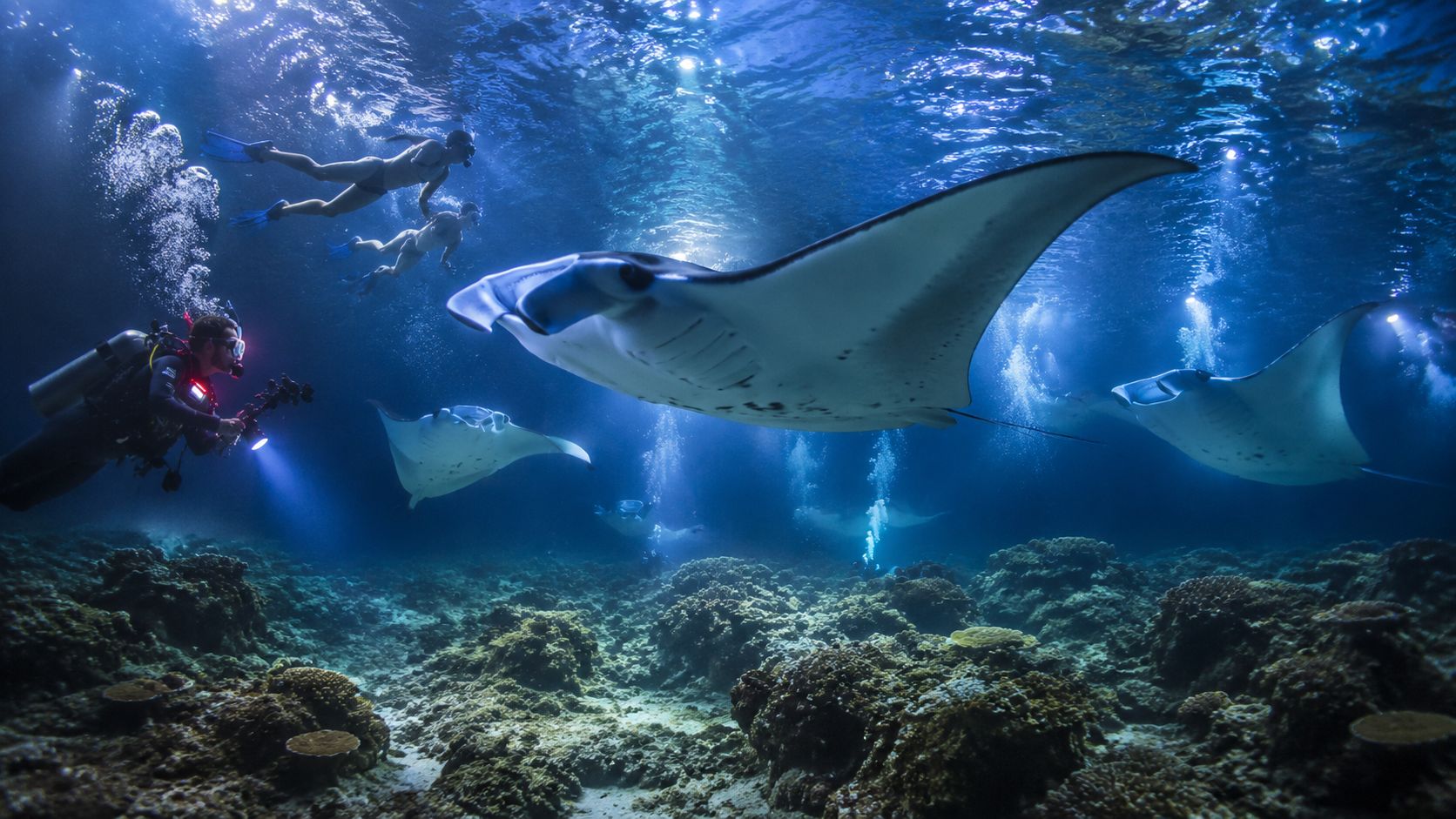
Why Garden Eel Cove stands out
Local operators generally separate the main night sites into Manta Village and Manta Heaven, with Manta Heaven also known as Garden Eel Cove. Garden Eel Cove is often considered the stronger choice because it's more protected, offers a larger and more comfortable viewing area on the seafloor, and tends to attract higher numbers of mantas when plankton blooms are strong, based on site comparison discussion for Kona manta venues.
That matters more than many visitors realize.
A better viewing area means guides can place divers in a way that keeps lights organized and avoids bunching. A more protected location usually means less task loading for newer night divers. Instead of fighting your position, you can pay attention to the animals.
What that means for the actual dive
Here's the practical difference from a divemaster's perspective:
| Site factor | Why it matters underwater |
|---|---|
| Protected layout | Easier entries and steadier positioning |
| Broader viewing area | Less crowding around the light field |
| Room on the bottom | Better separation between divers, cameras, and guides |
| Stronger reef setting | A more complete night-dive feel, not just a single focal point |
Manta Village still has a long history and can be a good site. But if someone asks where I'd rather take an organized group for the cleanest setup and the most comfortable bottom viewing area, Garden Eel Cove is the answer.
Pick the site that reduces diver workload. Lower stress usually leads to a better manta encounter.
How to Prepare for Your Manta Ray Adventure
Preparation makes a bigger difference on this trip than people expect. The dive itself is straightforward. The mistakes happen before you ever hit the water.
Know which version fits you
If you're scuba diving, you need an appropriate recreational certification and enough comfort in your gear to descend, hold position, and manage a night environment without getting overloaded. If that doesn't describe you yet, the snorkel version is usually the better call.
For either option, bring the basics:
- Swimsuit first: Wear it to check-in if possible.
- Warm layer for the ride home: Night breeze feels cooler after the water.
- Towel and dry clothes: You'll appreciate both more than you think.
- Minimal extras: Big bags, loose gadgets, and too much camera gear create clutter fast.
Manage seasickness before it starts
If you're prone to motion sickness, don't wait until you feel bad. Handle it early. A lot of ruined manta nights start with an empty stare on the ride out and someone saying, “I thought I'd be fine.”
Useful options include Ship-EEZ Seasickness Patch, Dramamine pills, Bonine pills, Sea Band wristbands, and Ginger chews. If you want a fuller breakdown of what tends to work for different travelers, this guide to the best sea sickness remedies for Kona boat trips is worth reading before your tour.
Divers need to think about gas, not just excitement
Night dives feel calm from the outside, but your breathing may say otherwise. Reported diver analytics note that excitement and simple nighttime tasks can raise air consumption by about 15 to 20% compared with a daytime dive at similar depth, according to PADI's manta diving overview.
That's the difference between finishing relaxed and signaling your guide early.
A few habits help:
- Start slow on descent: Fast descents spike breathing.
- Touch nothing you don't need to: Fewer hand tasks, less stress.
- Exhale fully: Many newer divers sip air and never settle down.
- Get weighted correctly: Fighting buoyancy wastes gas immediately.
If you're nervous, your SPG will show it before your face does.
Choosing the Best Manta Ray Tour Operator in Kona
You feel the difference before the boat leaves the harbor. The crew checks lights without rushing, gives a briefing people can follow, and answers the nervous diver's questions without brushing them off. On a manta night dive, that tone matters. It usually carries all the way to the bottom.
A lot of operators visit the same manta sites. The experience still varies quite a bit from boat to boat. Good crews keep the entry organized, settle divers onto the bottom efficiently, and build a clean light field that attracts plankton without turning the site chaotic. Sloppy crews create crowding, poor spacing, and unnecessary stress for both divers and mantas.
What to evaluate before you book
Safety and dive planning
A professional operator plans the dive around the group, the site conditions, and the realities of night diving. That means clear limits, a straightforward descent, and a guide team that can spot problems early, especially with weighting, buoyancy, and rising anxiety. The best briefings are simple enough that a new diver remembers them underwater.
Site discipline
This is the separator. At a manta site, one diver drifting out of position or waving a light around can affect everyone. Strong guides place people with purpose, keep the viewing area orderly, and correct small issues before they turn into a mess.
I pay attention to whether a crew talks about where divers will be positioned and why. Operators who understand the site know that manta behavior and diver behavior are tied together.
Boat and gear quality
Night diving exposes weak operations fast. If the deck feels disorganized, rental gear looks tired, or the crew is improvising basic procedures, that usually gets worse after dark. A clean setup, working lights, and a crew that moves with intention are not luxury details. They shape how calm the dive feels.
Conservation behavior
The right operator treats the mantas as wildlife, not entertainment props. That means passive observation, controlled group placement, and no pressure to chase a closer pass. The best manta encounters usually happen when the group stays still and lets the animals dictate the show.
One operator worth considering
Divers comparing companies should look closely at the team behind the trip, not just the price or the number of reviews. A respected Kona diving company with dedicated manta experience is often the safer choice because manta dives reward crews who know how to manage spacing, timing, and guest expectations in the dark.
Kona Honu Divers is one of the operators many visiting divers consider for exactly that reason. They also offer other night and advanced profiles, including the premium advanced long-range dive tour and the blackwater night dive. Those trips are very different from a manta dive, but they tell you something useful about an operator. A company that regularly runs varied offshore and night diving tends to have stronger procedures, more polished briefings, and a crew that is comfortable managing changing conditions.
Photography Tips and Manta Conservation Rules
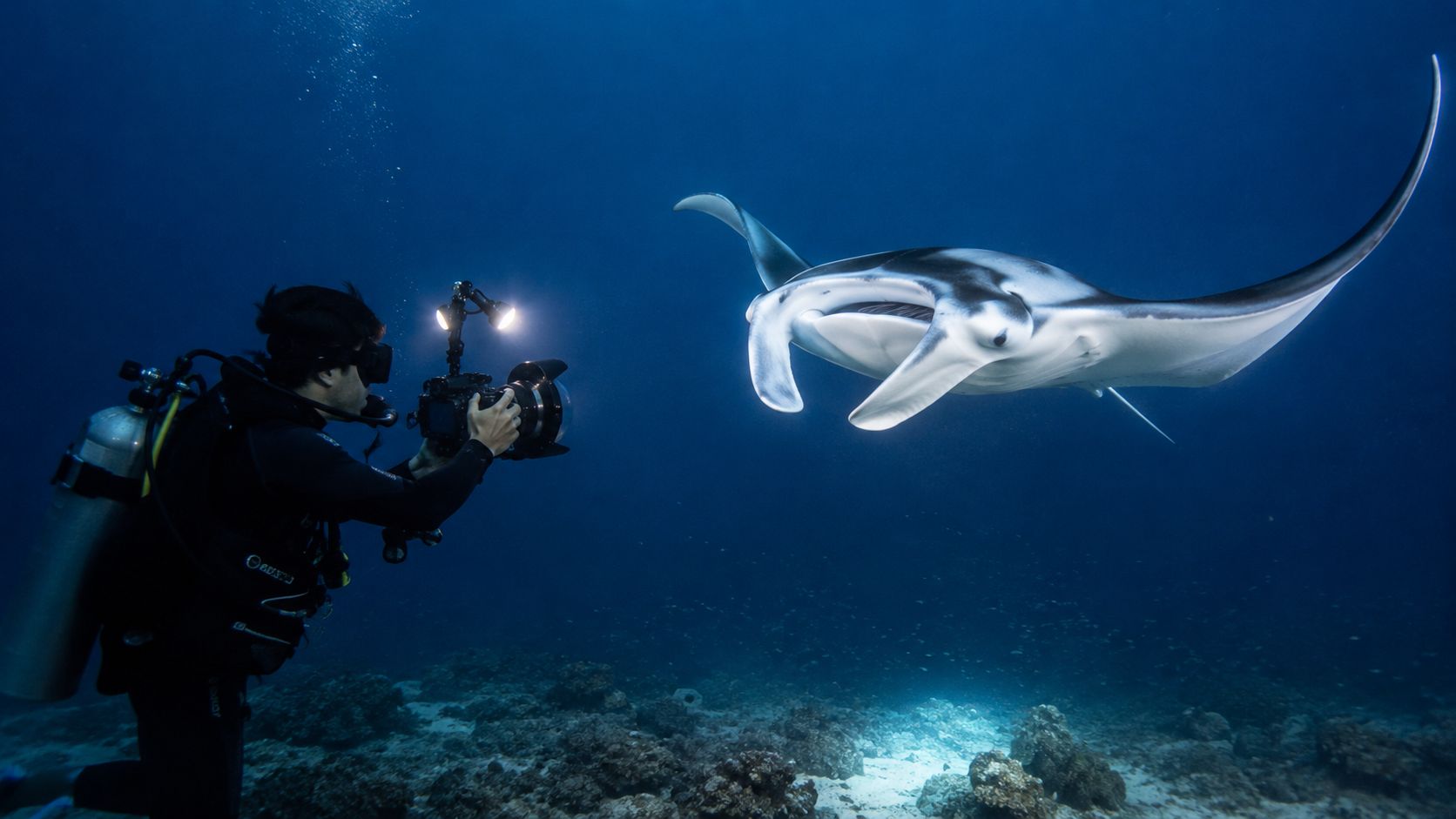
The best manta photos usually come from divers who stop trying so hard. Good images on this dive don't come from chasing action. They come from staying stable and letting the action pass through a clean frame.
Camera choices that help
Because the whole encounter centers on a bright plankton-rich beam in dark water, wide-aperture shooting helps. A low f-number such as f/2 to f/4 and a shutter around 1/30 to 1/60 s can pull in more ambient light, though motion blur becomes a trade-off if you're not stable. Off-axis lighting also helps reduce backscatter in particle-rich water, based on the technical guidance already covered earlier in this article.
For most divers, the practical setup is simple:
- Go wide: Mantas fill the frame fast.
- Hold position: A fixed reference point beats drifting every time.
- Keep lights slightly off-axis: That reduces illuminated particles in front of the lens.
Rules that are not optional
Kona's manta economy is substantial, contributing over $2.5 million annually, but marine conservation reporting also warns that overcrowding and improper conduct can put 100% of rays and participants at a congested site at risk. That's why strict no-touching and passive observation rules matter, according to Hawaii Ocean Watch's manta conservation overview.
Those rules are simple:
- Never touch a manta: Their skin and protective mucus layer matter.
- Don't block the approach path: Mantas need a clean feeding lane.
- Don't chase for a closer pass: You'll get worse behavior and worse photos.
- Stay where the guide places you: Predictability keeps the site safe.
The nice part is that good conservation behavior also improves the experience. A manta that feels unpressured is more likely to keep looping through the beam naturally. For a broader look at passive marine life interaction, this guide to responsible and considerate diver etiquette lines up closely with how the best manta dives are run.
Manta Ray Dive FAQs and Booking Your Trip
You finish dinner in Kona, head to the harbor, and realize the night dive is either going to feel calm and well-run or rushed from the first briefing. Booking decisions matter that much. The right crew sets expectations early, screens for comfort level, and runs the site in a way that protects both divers and mantas.
Is there a best time of year
Kona's manta dives run year-round, so the better question is not which month to chase. It is which night gives you the best ocean conditions and the operator you trust most.
As noted earlier, manta encounters here are known for strong consistency. If your dates are flexible, book around forecast, swell, and boat operations instead of trying to guess a secret season.
Is it safe for first-time night divers
It can be a good first night dive for a certified diver who is relaxed underwater and follows directions well. Depth is usually not the hard part. Task loading is.
A diver who can hover comfortably, clear a mask without stress, and stay settled in one spot usually does well. A diver who is still working hard on buoyancy in daylight often enjoys the snorkel option more, and that is a smart call, not a downgrade.
Should I dive or snorkel
Choose based on comfort and control.
Divers watch from below and get that classic view of mantas sweeping through the lights overhead. Snorkelers stay on the surface and watch the rays rise toward them. Both are excellent, but they are different experiences, and a good operator will tell you that clearly instead of pushing everyone into scuba.
I have seen guests switch to snorkeling after an honest pre-trip conversation and end the night thrilled they did. That usually leads to a better wildlife experience too, because calm guests make the whole site easier to manage.
How should I book
Book your manta trip early, especially if you want a specific operator, smaller group feel, or a certain night in your itinerary. Then protect that evening. Avoid stacking a long day of diving, too much food, or anything that leaves you tired, dehydrated, or prone to seasickness.
Look closely at how the company runs the dive, not just the price. Briefings, guide ratios, check-in process, site choice, and how they handle nervous divers all shape the night more than a discount ever will.
If you want a manta night built around clear dive planning, careful in-water supervision, and respectful wildlife interaction, take a look at Kona Honu Divers. Pick the trip that matches your actual comfort level, reserve it early, and show up ready to stay calm, hold position, and let the mantas make the show.