
You're probably in one of two places right now. You're either planning a Big Island trip and trying to decide whether the manta night dive is worth building an evening around, or you're already booked on a Kona dive trip and want to make sure you choose the right site, show up prepared, and get the kind of encounter people talk about for years.
That's the right way to think about manta ray diving Hawaii. This isn't just another night boat ride. Done well, it's one of the most controlled, reliable, and awe-inspiring wildlife dives anywhere in the world. Done poorly, it can still be memorable, but you'll feel the difference immediately in site choice, diver positioning, and how seriously the crew treats manta etiquette.
The details matter. Site layout matters. Your buoyancy matters. Even small choices like where you put your light and how still you stay can change the entire encounter.
The Unforgettable Magic of Kona's Manta Ray Night Dive
The Unforgettable Magic of Kona’s Manta Ray Night Dive
The boat ride usually starts in soft evening light, with the Kona coastline glowing behind you and the ocean flattening into dark blue glass. By the time the sun drops, everyone on board gets quieter. Divers check straps and gauges, but their true anticipation isn't about the gear. It's about that first moment when a shadow forms in the light and turns into a manta ray sweeping overhead.
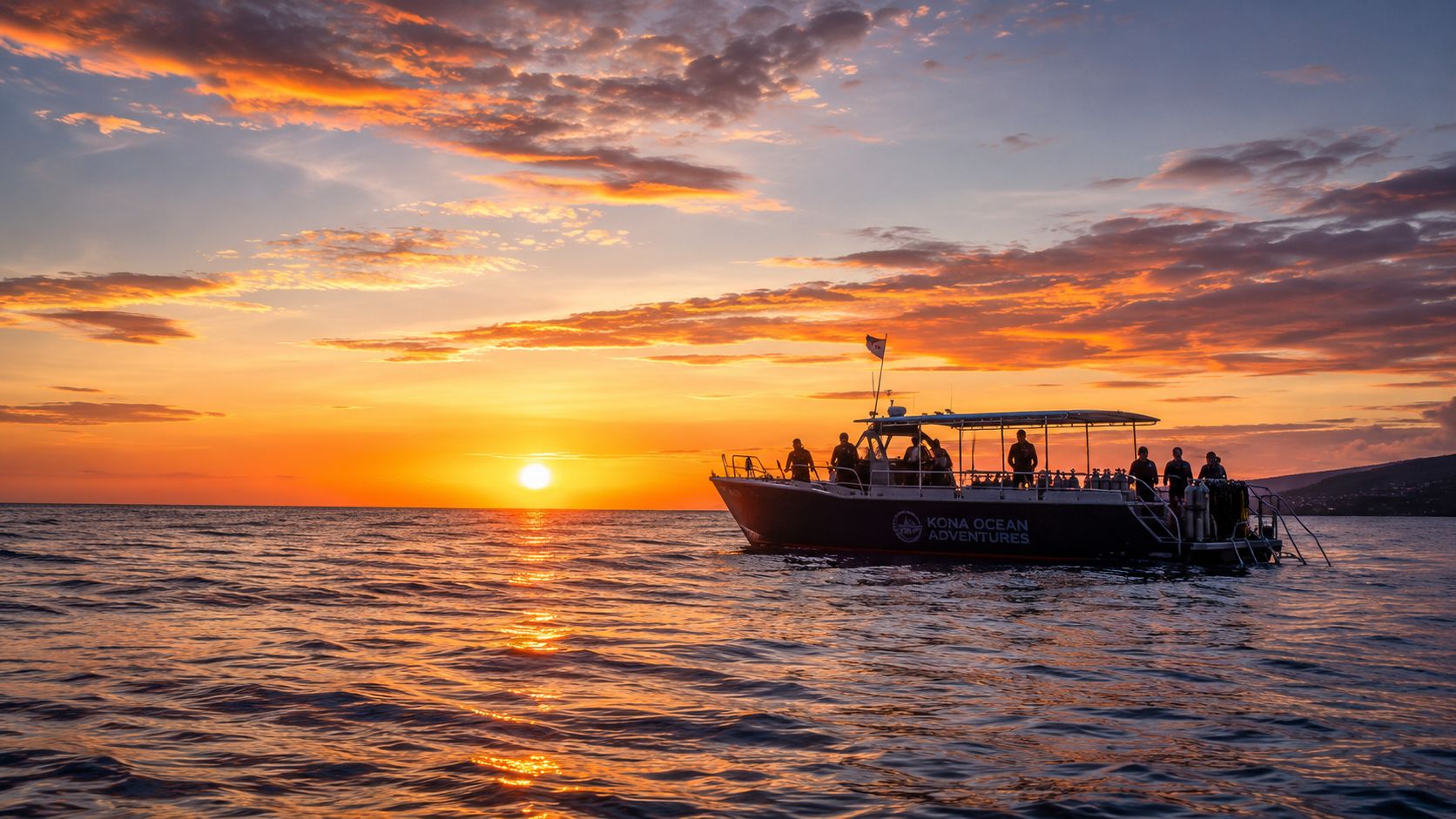
What makes Kona special isn't luck. The Kona Coast hosts a non-migratory population of reef manta rays that stay year-round, which gives operators an 85 to 90 percent sighting success rate and supports an estimated 80,000 participants each year, according to this Hawaiʻi manta overview from Outrigger. That's why this dive doesn't feel like a hopeful wildlife search. It feels like showing up to a place the mantas already know.
What the encounter feels like underwater
Once you descend, the darkness fades into the glow of dive lights. Then the plankton gathers. Then the mantas arrive.
A reef manta ray can reach about 14 feet across in wingspan in Hawaiʻi waters, and when one passes close over your mask, it fills your entire field of view in a way that photos never capture. They bank, roll, and glide with zero wasted motion. No rushing. No aggression. Just repeated passes through the light as they feed.
Practical rule: The best manta encounters happen when divers stop trying to make something happen and let the water settle around them.
For certified divers who want the full nighttime descent and the bottom-up view, the most useful first step is to look at a dedicated Kona manta ray night swim and dive overview. It helps to understand the rhythm before you ever step on the boat.
Why this stays with people
Most dives are about finding an animal. This one is about being still enough to watch a pattern unfold. The mantas aren't passing by in the distance. They're circling through the light above you, sometimes close enough that every spot pattern is visible.
That's why people who've done hundreds of reef dives still talk about this one differently. The water is warm, the depth is manageable, the setting is dramatic, and the animals are enormous without being threatening. It hits both ends of the spectrum at once. It feels peaceful and overwhelming at the same time.
Why Garden Eel Cove Is The Superior Manta Dive Location
Why Garden Eel Cove Is The Superior Manta Dive Location
If you have a choice of manta sites, choose Garden Eel Cove. For divers, it's the cleaner setup, the better viewing geometry, and the more dependable place to watch mantas feed without chaos.
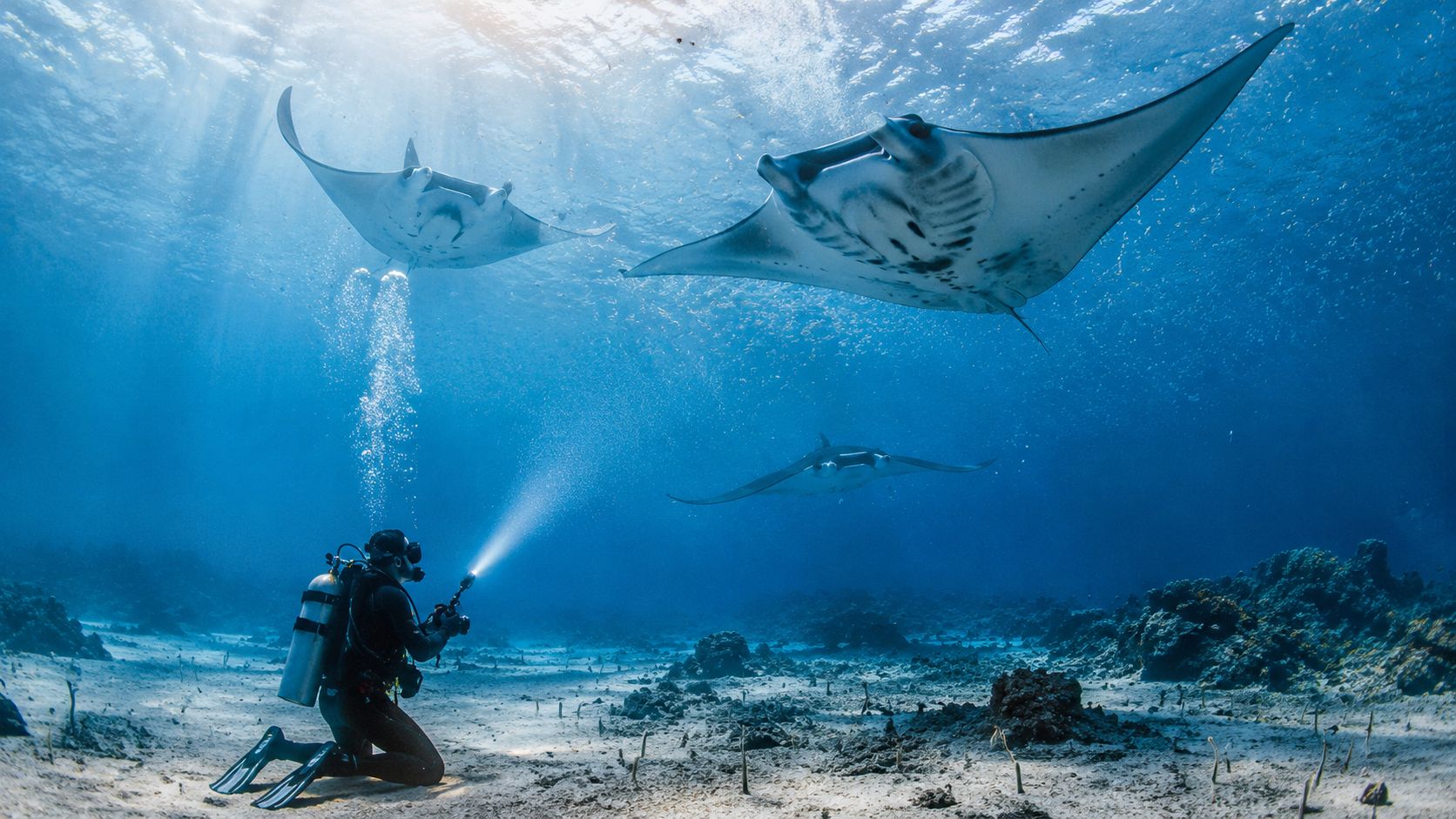
The site's structure is a huge part of the answer. Garden Eel Cove has an amphitheater-like layout in shallow water at 30 to 35 feet, with coral heads that act as cleaning stations. That combination creates predictable manta behavior, with typical nightly sightings of 10 to 20 mantas and records of 28 on a single night, according to this Garden Eel Cove breakdown.
Why the site works better for divers
Some manta sites are fine. Garden Eel Cove is built for the experience.
The sandy bottom and amphitheater shape make it easier to organize divers in a stable semicircle. That matters more than many visitors realize. When people can settle comfortably, the center of the light field stays open and the mantas have room to turn, climb, and barrel roll without weaving through a mess of moving fins.
The protected location helps too. Less surge and cleaner positioning usually mean less task loading for newer divers. Instead of fighting your trim and trying to avoid kicking coral, you can focus on breathing slowly and watching the mantas work the plankton column.
The reef quality matters too
A manta site shouldn't just be judged by whether mantas show up. It should also be judged by what kind of underwater environment supports the encounter.
Garden Eel Cove has a better natural viewing area and healthier reef structure than many visitors expect from a night attraction site. The coral heads aren't just scenery. They support cleaning stations, and cleaning behavior is one reason manta use becomes more predictable in the area.
A good manta site gives the animals room to behave naturally and gives divers a clean place to stay out of the way.
If you're comparing operators or trying to understand which location they're likely to use, start with a Big Island manta ray tour page focused on the Kona experience. The key question isn't just “Will I see mantas?” It's “Where will I be positioned when they arrive?”
What doesn't work as well
The weaker setups tend to share the same problems:
- Crowded diver placement that collapses the open water column the mantas need for feeding
- Poor bottom composition where people struggle to kneel without stirring up sediment
- Less protected conditions that turn a calm watch into a buoyancy exercise
- Inferior sight lines where some divers spend the whole dive staring through fins and bubbles
Garden Eel Cove avoids most of that when the dive is run properly. For manta ray diving Hawaii, that's why it stands out. Better site architecture usually leads to a better animal encounter.
Your Kona Manta Ray Dive Adventure Step by Step
Your Kona Manta Ray Dive Adventure Step by Step
Most manta dive evenings follow the same broad rhythm, and that's a good thing. Predictability on the human side creates calm in the water later.
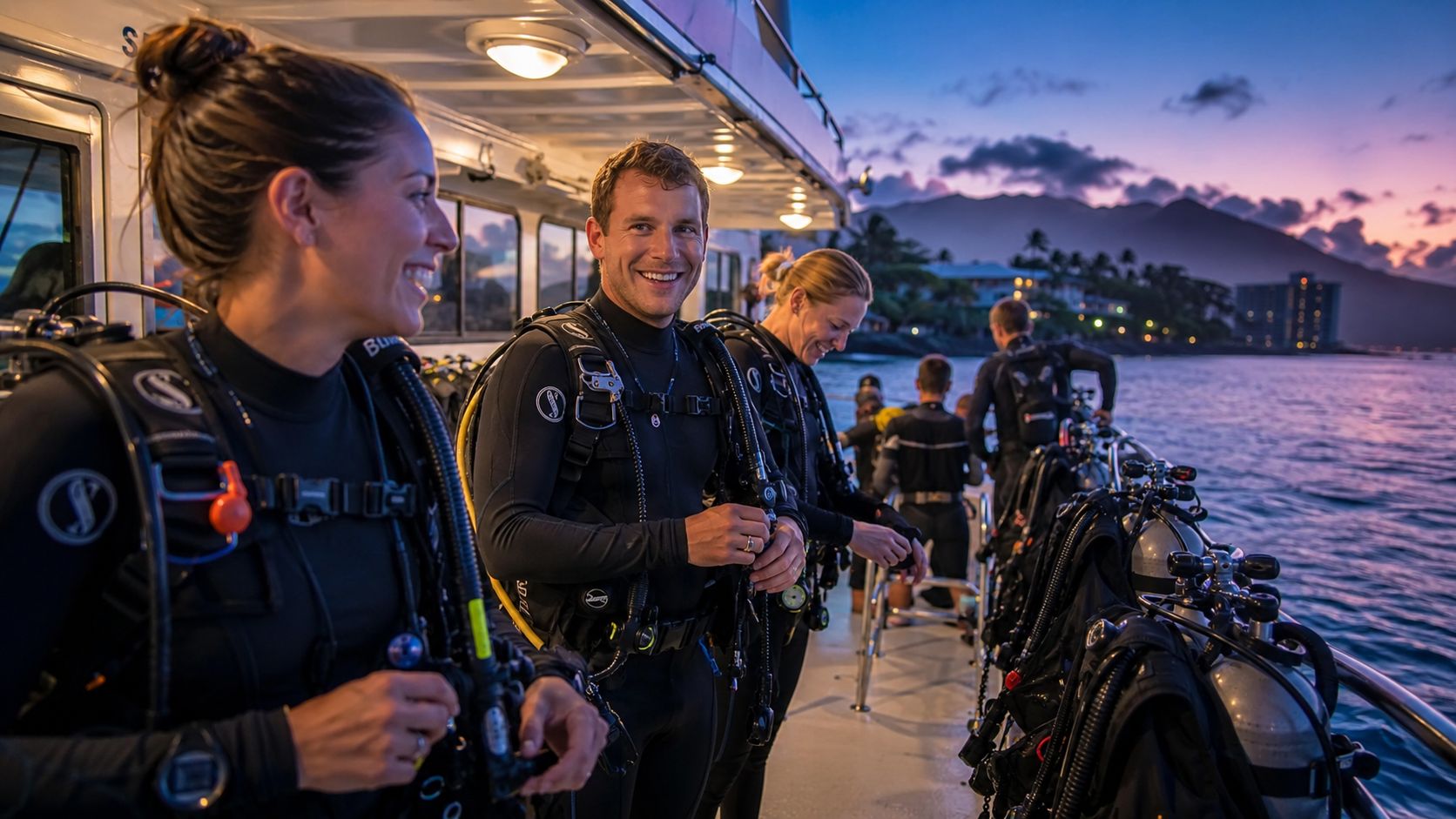
The manta sites themselves are usually 30 to 40 feet deep, with 45 to 60 minutes of observation time, water around 76°F, and visibility near 100 feet, based on the Hawaiʻi manta dive conditions described by Hamer In Hawaii. Those numbers explain why this dive is so approachable. You're not dropping into a deep technical profile. You're entering a shallow, warm, highly visual night environment.
Step one, arrive early and get settled
Don't sprint onto the boat at the last minute. Night dives are always better when you begin unhurried.
Show up with your basics already handled. Swimsuit on. Certification card ready. Dry clothes packed for the ride home. If you're renting gear, confirm sizing early so you're not fumbling with exposure protection while the briefing starts.
For a broader look at planning dives on the island, this Kona and Big Island diving guide is a useful planning resource.
Step two, take the first dive seriously
A lot of visitors focus so hard on the manta portion that they mentally skip the first tank. Don't.
On a two-tank evening, the sunset or dusk reef dive serves a real purpose. It gets your weighting sorted, lets you check your trim, and settles your breathing before the main event. Divers who use that first dive to slow down almost always have a better manta dive than divers who stay amped up and distracted.
Step three, build the light campfire correctly
The second dive is where the underwater choreography matters. Divers descend, settle on the bottom, and hold their lights upward to draw plankton into the water column above the group. The point isn't to sweep your beam around looking for animals. The point is to create a stable feeding zone and stay out of it.
When the formation is right, the water above the semicircle becomes the runway. The mantas pass through it again and again, often banking close enough that you can see the cephalic fins unfurl and the white underside markings flash in the beam.
Stay low, keep your fins still, and resist the urge to turn your whole body with every pass. Your eyes can follow more than your shoulders need to.
Seasickness can ruin an otherwise easy night
If you know you get motion sickness, treat that before the boat leaves. Waiting until you feel bad is usually too late.
Options people commonly use include Ship-EEZ Seasickness Patch, Dramamine pills, Bonine pills, Sea Band wristbands, and Ginger chews. Pick one approach you already trust rather than experimenting on the dock.
A few practical habits also help:
- Eat lightly: Go out hungry enough to feel normal, not stuffed.
- Hydrate through the afternoon: Dehydration and seasickness make each other worse.
- Keep your eyes on the horizon: It still works.
- Avoid heavy alcohol beforehand: The ocean usually wins that argument.
Step four, let the dive come to you
The biggest mistake I see is divers trying to improve the experience by doing more. More turning. More light movement. More hand signals. More camera repositioning.
That usually makes the encounter worse.
Once the mantas start feeding, your job gets simpler. Hold position. Control buoyancy. Protect the space above the group. Let the animals decide how close they want to come. When that happens, the dive gets quiet in the best possible way. Everyone settles in, and the mantas just keep flying.
Safety and Responsible Manta Interaction Etiquette
Safety and Responsible Manta Interaction Etiquette
This is the part too many manta articles rush through. They'll tell you not to touch the mantas, which is correct, but they often stop there. Good etiquette goes further than a rule sheet.
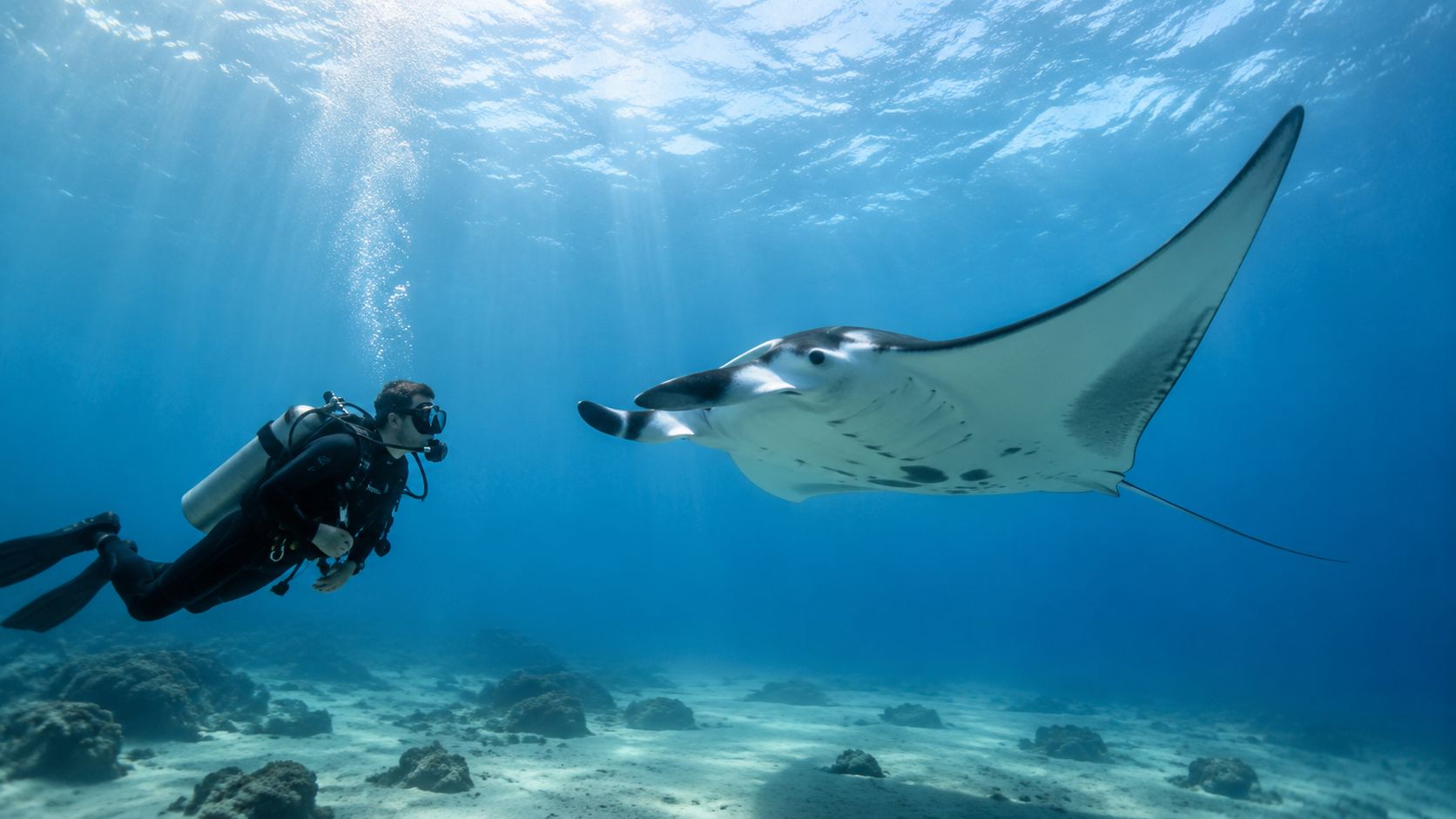
No-touch rules exist to protect the manta's mucus coating, and public guidance often misses how bubble frequency, sudden movement, and poor diver behavior may increase stress levels. That's why passive observation in the campfire circle matters, as outlined in this responsible manta interaction article.
Why the mucus coating matters
Mantas don't have armor. Their skin is protected by a mucus layer that supports their health. When people touch them, even with good intentions, they can compromise that protective coating.
That's the biological reason the no-touch rule is not optional. It isn't about keeping tourists polite. It's about not stripping away part of the animal's first line of defense.
The behaviors that create problems
Stress isn't always dramatic. More often, it comes from a pileup of small human mistakes.
Here's what tends to degrade the encounter:
- Chasing for a closer pass: Mantas need open water to feed. If divers push into the column, the whole formation breaks down.
- Sweeping lights into faces: The lights are there to attract plankton, not to spotlight the ray like a stage performer.
- Uncontrolled buoyancy: A diver rising off the bottom turns into an obstacle quickly.
- Sudden finning and arm movement: Fast movement changes the feel of the water and draws attention away from feeding.
The most respectful diver in the group is usually the one doing the least.
What responsible diving looks like in practice
A good manta diver settles in one place and stays there. Kneel or hover exactly where the briefing places you. Keep your gauge console, octo, camera rig, and fins tucked in. Think of your body as the edge of the amphitheater, not part of the show.
If you want a practical baseline for underwater manners beyond this one dive, this guide to responsible and considerate diver etiquette is worth reading.
A few habits make an immediate difference:
| Behavior | Good practice | What goes wrong when ignored |
|---|---|---|
| Light use | Aim upward and keep the beam steady | Mantas avoid chaotic light patterns |
| Body position | Stay low and compact | You drift into the feeding lane |
| Hands | Keep them to yourself | Touch can damage protective mucus |
| Awareness | Watch your fins and gear | You kick coral or crowd another diver |
Safety for people matters too
Manta rays are harmless to divers in the way many first-timers worry about. The actual safety issues on this dive are ordinary scuba issues. Buoyancy, spacing, awareness of the bottom, and calm problem-solving in low light.
That's why this dive rewards disciplined recreational divers. If your mask floods, clear it. If your fin strap slips, fix it without rushing. If you feel overloaded, focus on breathing and the next simple task. Most problems stay small when divers stay calm.
Gearing Up for Your Manta Ray Night Dive
Gearing Up for Your Manta Ray Night Dive
For most divers, this is a low-hassle prep dive. Bring the basics, avoid clutter, and don't overpack gadgets you won't use well in the dark.
The dive profile itself is straightforward. Technical parameters are around 35 feet, with water temperatures of 75 to 79°F, and underwater photography guidance commonly recommends a wide-angle fisheye setup, f/10, and ISO 500 to 640, according to this underwater photography guide for the Kona manta night dive.
What to bring yourself
You don't need a giant gear pile. You need the things that make the evening comfortable.
- Swimsuit and towel: Keep it simple.
- A warm layer for the ride back: Even after a warm dive, people cool off quickly on the boat.
- Certification card and essentials: Don't be the diver digging for paperwork at boarding time.
- Minimal personal extras: Lip balm, water, and any meds you already know you need.
What matters underwater
If you're using a handheld light, follow the briefing and hold it vertically near your head rather than waving it around. That helps create the plankton column and avoids blasting the manta's eyes.
Camera divers should be realistic about complexity. Night manta photography rewards restraint more than gear volume. A wide-angle lens is the right choice because these animals get close and the scene is about scale. Keep your setup simple so you don't turn into the busiest object on the bottom.
For photos, stable composition beats constant adjustment. Pick your angle, settle your buoyancy, and wait for the manta to enter the frame.
What not to bring mentally
Leave two things behind before you giant-stride in.
First, don't bring the expectation that this is a chase dive. It isn't. Second, don't bring daytime reef-dive habits that depend on covering ground. On the manta dive, your value as a diver comes from staying put and keeping the water column open.
That's why simple gear usually beats complicated gear here.
Book Your Unforgettable Dive with Kona Honu Divers
Book Your Unforgettable Dive with Kona Honu Divers
You step onto the boat at dusk, the sun drops behind Hualalai, and the crew is already thinking three steps ahead. That matters on a manta night. Good operators keep the schedule tight, the briefing clear, and the in-water plan calm so divers arrive at the site settled instead of rushed.
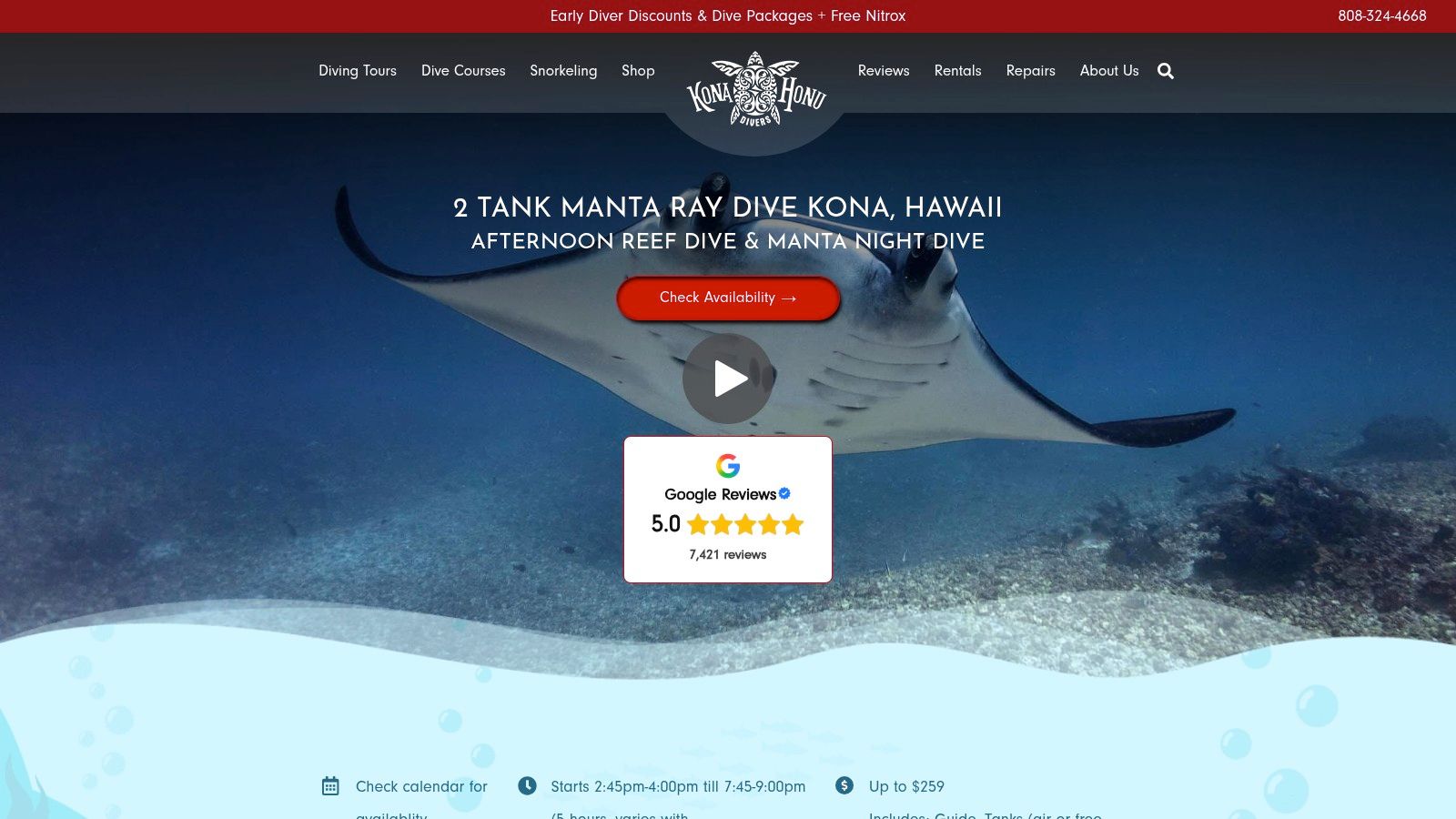
Kona Honu Divers runs a two-tank manta evening on the Kona Coast, and that format makes sense for this dive. A full evening gives the crew time to choose conditions carefully, organize lights and diver positions, and keep the experience focused on clean bottom placement and respectful animal encounters. At Garden Eel Cove, that matters more than people realize. The site works best when the whole group behaves like part of the setup, not a crowd of independent divers.
Booking and Contact Information
| Trip need | Best page to use |
|---|---|
| Questions before booking | Contact the dive shop directly |
| Ready to book the manta night | Reserve through the operator's manta trip page |
| Building a full Kona dive plan | Review their main tours page |
| Want a more advanced daytime charter | Ask the shop about the premium advanced 2-tank option |
| Curious about blackwater diving | Ask whether the blackwater trip fits your experience level |
If you are planning several days of diving, ask the shop to help sequence your dives instead of booking in isolation. The manta night is low effort underwater if your buoyancy is solid, but it still asks for discipline, good trim, and comfort in darkness. Divers who pair it with the right daytime dives usually enjoy it more because they arrive relaxed and ready to hold position without stirring up the bottom or crowding the light column.
That kind of planning is worth a quick conversation with the crew. Use the Kona Honu Divers contact page if you want help matching the manta dive to your certification level, recent experience, and the rest of your trip.
Frequently Asked Questions About Manta Ray Diving
Frequently Asked Questions About Manta Ray Diving
Are manta rays dangerous
No. Manta rays are harmless filter feeders, and Kona operators work with animals that have no stingers, barbs, or aggressive predatory teeth. That's one reason this encounter feels so calm underwater.
They're huge, but they aren't a threat. The larger risk factors are ordinary diving issues like buoyancy, awareness, and following the briefing.
What if I'm not a certified diver
You can still do the manta experience by snorkeling. That option works well for non-divers, families, and travelers who want the encounter without scuba training.
Snorkelers stay at the surface and watch mantas feed below the light source. It's a different perspective, but still a legitimate manta experience.
Diving or snorkeling, which is better
For immersion, scuba has the edge. A 2024 Kona Manta Project study found that scuba divers at 30 to 40 feet observed feeding sequences 2.3 times longer than surface snorkelers, according to this comparison of manta diving and snorkeling.
That doesn't mean snorkeling is the wrong choice. It means the better choice depends on your comfort in the water.
- Choose diving if you're certified, comfortable at night, and want the bottom-up view.
- Choose snorkeling if you want easier access, less gear, and no scuba task loading.
- Choose based on skill, not ego: The best experience is the one you can do calmly and well.
When is the best time of year
Mantas are seen year-round on the Kona Coast because the local reef manta population stays along the coast rather than migrating away. Summer is often the calmest period for ocean conditions, but the encounter itself isn't limited to one short season.
That's one of the reasons manta ray diving Hawaii is such a strong trip anchor. You don't have to build your whole vacation around a narrow wildlife window.
If you're ready to make this part of your Big Island trip, start with Kona Honu Divers. Look at the manta night dive schedule, choose the date early in your stay if possible, and give yourself the best chance to experience Garden Eel Cove in good conditions.