
The first manta always appears the same way. One moment you're kneeling in the dark on the Kona seafloor with nothing but your bubbles and a cone of light above you, and the next a white mouth opens out of the black water and a reef manta slides overhead so close you forget to breathe for a second.
An Unforgettable Night Under the Sea
I've watched this scene hundreds of times, and the moment right before it starts never gets old. The boat goes quiet after sunset. Kona's coastline fades into a thin string of lights, the deck lights throw a soft glow across the water, and everyone feels that mix of anticipation and focus that comes before a good night dive.
Then the ocean changes.
At first, all you notice is the darkness and the sound of your own breathing. A few minutes later, the water above the group starts to fill with suspended life, the light beams sharpen, and the site begins to work the way it has for years on this coast.
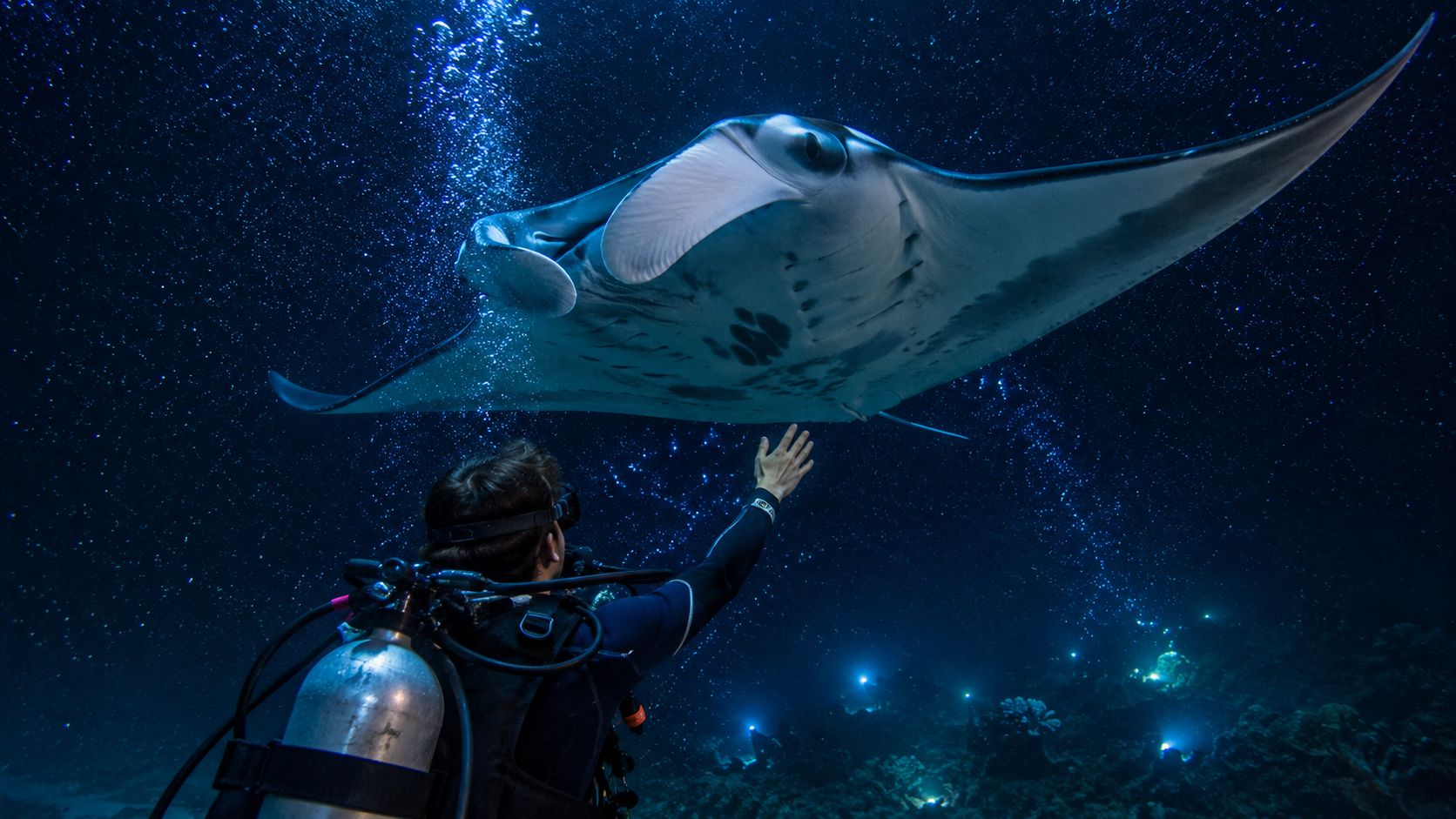
The first manta usually arrives without warning. One second you are scanning the edge of the light. The next, a reef manta glides in with its cephalic fins open, banks over the beams, and turns in a slow barrel roll that looks almost too precise to be wild. From below, you can see the white underside, the mouth open for plankton, and the easy control that makes these animals so different from anything else you'll encounter on a night dive.
What stays with divers is not just the size. It's the control.
The strongest manta encounters in Kona have a calm rhythm to them. Good operators set the group where divers can stay stable, keep their fins out of the water column, and give the mantas a predictable feeding lane. The magic is in the close passes. Hold position and the rays keep circling through the light. Reach out, kick upward, or drift out of place, and the whole interaction gets worse for everyone, including the animals.
Stay passive, keep your body quiet, and let the mantas choose the distance.
Kona stands apart because this is not a random wildlife sighting. Local manta encounters here are built on a long-established feeding pattern around dive lights, something crews on this coast have observed for decades. That consistency is why Kona draws divers from all over the world, and it's also why operator choice matters more than many visitors realize.
A well-run trip feels organized before you ever hit the water. Briefing quality, site selection, diver spacing, and guide control all shape what the encounter becomes. Garden Eel Cove, in particular, gives crews room to run a cleaner, more controlled dive when conditions line up, which is one reason experienced local divers often prefer it.
People come back to the boat grinning for a reason. For one night, you are not just watching marine life pass through. You are sitting inside a feeding pattern that Kona has refined into one of the most reliable and memorable night dives anywhere in the world.
How the Kona Manta Ray Night Dive Works
A good manta dive feels simple from the diver's side because the crew has already done the hard part. They choose the site, read the conditions, place the group, and build a light field the mantas are willing to feed through.
The feeding pattern is straightforward. Light draws plankton. Plankton draws manta rays. Divers stay low and steady so the water column above them stays clean and predictable.
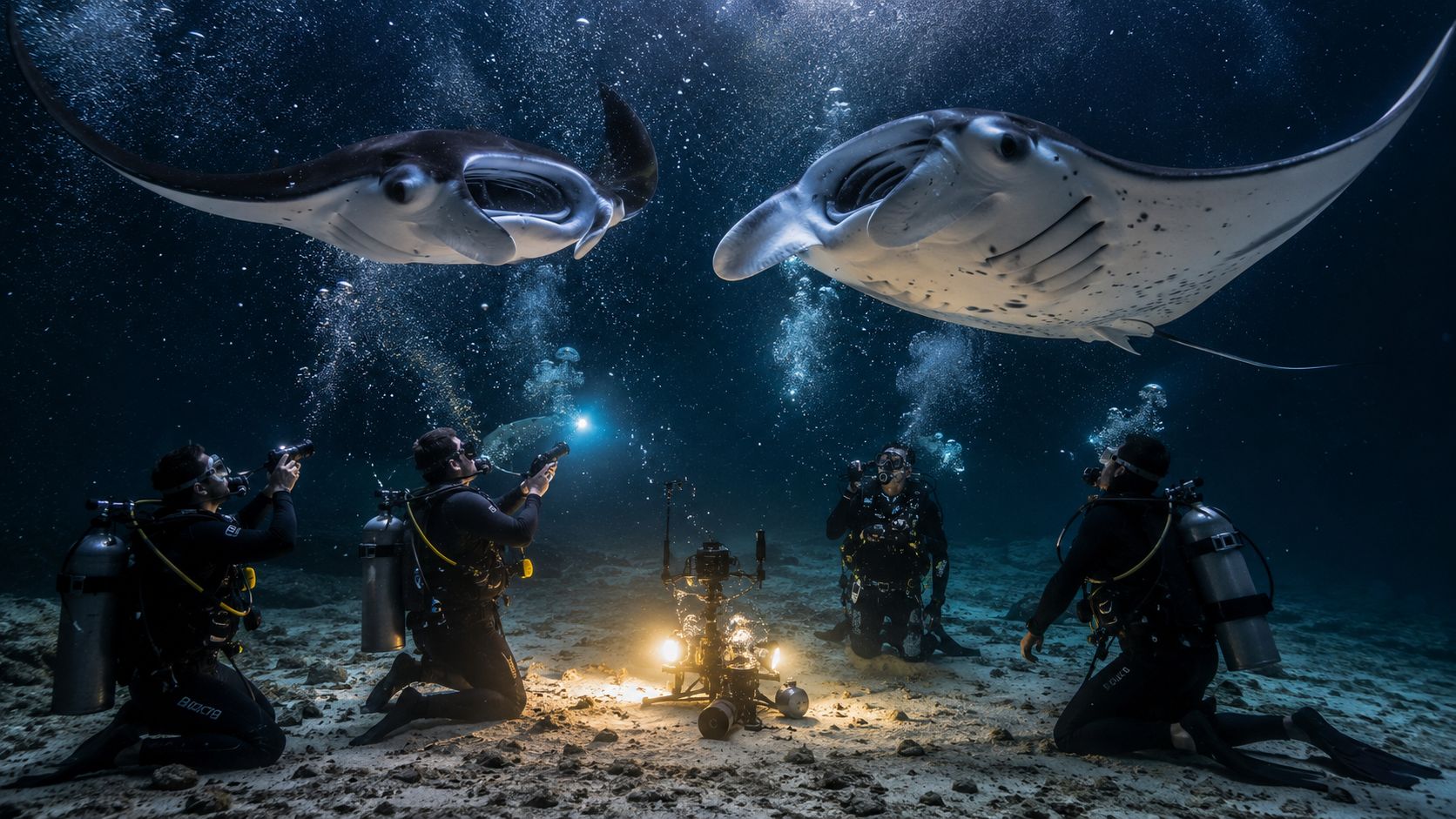
The underwater campfire
On the bottom, the group forms a circle or semicircle around the lights. From there, everyone points their beam upward and keeps their body position quiet. If you want a clear sense of the typical depth of the Kona manta ray night dive, it usually sits in an easy recreational range that lets divers settle in without rushing the profile.
That upward light creates the feeding lane. Mantas move through it over and over, sometimes gliding inches above your mask, sometimes banking out wide before coming back through the brightest part of the column. The closer the group sticks to the plan, the smoother those passes tend to be.
This is why experienced crews are strict about placement.
A scattered group kicks up sand, blows the lights out of alignment, and turns a graceful encounter into a loose wildlife chase. A disciplined group gives the rays one bright, stable target and gives every diver a better view.
What divers do
The job underwater is simple, but it still takes control.
You descend, settle where the guide places you, and stop trying to make the encounter happen. Good buoyancy matters. Good trim matters more than many divers expect. Even small fin movements can stir the bottom or push you into someone else's viewing lane.
A solid diver focuses on a few basics:
- Stay in your assigned spot: Sit or kneel without drifting through the circle.
- Keep your light aimed up: The beam helps hold the plankton above the group.
- Protect the viewing lane: Keep fins, gauges, and cameras tucked in.
- Let the rays set the distance: Close passes happen when divers remain predictable.
Practical rule: Calm divers usually get the best manta behavior.
I brief this point hard because first-timers often assume the dive involves swimming after animals. It does not. Kona's manta dive works because the divers become the stable part of the scene and the mantas do the moving.
Scuba versus snorkel
Scuba and snorkel both work, but they feel completely different in the water.
Divers watch from below. That gives you the cathedral view. You look up into the light as the mantas roll, bank, and feed overhead. Their size makes more sense from that angle, and the barrel rolls are easier to appreciate when you can see the full body line from wingtip to wingtip.
Snorkelers stay at the surface and watch down into the lights. That can still be excellent, especially for non-divers or mixed groups, but it is a different show.
The main trade-off is control. On scuba, the group can lock into position on the bottom and hold a clean viewing arena. On snorkel, surface chop, kicking, and crowding can change the experience fast. That is one reason operator standards matter so much on this dive. The manta rays are the stars, but the crew sets the stage.
Choosing Your Dive Site Why Garden Eel Cove is Superior
Site choice changes the whole night.
I've had divers come back from one manta trip saying it was pleasant, then do Garden Eel Cove on a different night and finally understand why Kona's manta dive has the reputation it does. Same island. Same animals. Very different feel underwater.
Garden Eel Cove, also called Manta Heaven, gives certified divers a bigger stage. The bottom layout creates a wider viewing arena, so the group can settle in without stacking divers shoulder to shoulder. That space matters more than first-timers expect. It keeps the light field cleaner, reduces accidental fin contact, and gives the mantas a better lane to circle and feed.
If you want a broader look at how Kona sites compare, this guide to the best place to dive on the Big Island gives useful local context.
What makes Garden Eel Cove dive better
The biggest advantage is room. At Garden Eel Cove, divers usually get a more open setup, which makes the experience feel organized instead of crowded. For a night dive, that is a real safety and comfort benefit, not just a preference.
Manta Village in Keauhou Bay can still produce good encounters. It is popular for a reason. The trade-off is that it often feels tighter, especially when several boats are working the same window and the underwater circle fills up with newer divers, bright lights, and extra movement.
Garden Eel Cove also tends to deliver the kind of viewing angle experienced divers want. You can settle, stay still, and watch rays make long, clean passes through the beams instead of seeing a lot of traffic compressed into a smaller patch of water. For photographers, that often means less visual clutter in the frame. For new night divers, it means fewer distractions and a clearer sense of where to be.
| Factor | Garden Eel Cove | Manta Village |
|---|---|---|
| Viewing area | Wider underwater arena | Often tighter setup |
| Diver spacing | Usually more spread out | Can feel crowded |
| Overall feel | Open, organized, calmer | More variable with boat traffic |
| Best fit | Divers who want a cleaner manta show | Divers who prefer a familiar bay site |
The real trade-offs between the two sites
The bay is not automatically the easier choice just because it is a bay. Conditions depend on the night, the surge, the current, and how many operators are on site. I've seen divers feel more relaxed at Garden Eel Cove because they had room to settle in and focus.
That said, no site is perfect every night. Ocean conditions can shift, and a good crew will choose the location that gives the group the safest and most respectful encounter available. That is one reason operator judgment matters as much as the site itself.
Choose Garden Eel Cove if you want:
- More space underwater: Easier positioning and less crowd pressure.
- A cleaner viewing arena: Better for photos and for following the mantas' full movement.
- A stronger classic Kona manta feel: The open setup delivers the dramatic overhead passes many divers came for.
For certified divers asking me where to go first, Garden Eel Cove is usually the answer. It shows why the Kona manta dive is famous worldwide, and with an operator like Kona Honu Divers that knows how to run the site well, it usually feels less like a tourist stop and more like a properly managed wildlife encounter.
Your Manta Ray Dive Preparation Checklist
A smooth manta dive starts before you leave the dock. Most problems I see aren't underwater problems. They're prep problems. Wrong clothing, skipped motion-sickness prevention, poor hydration, or divers showing up unsure what the night will involve.
Get the basics right and the whole evening feels easier.
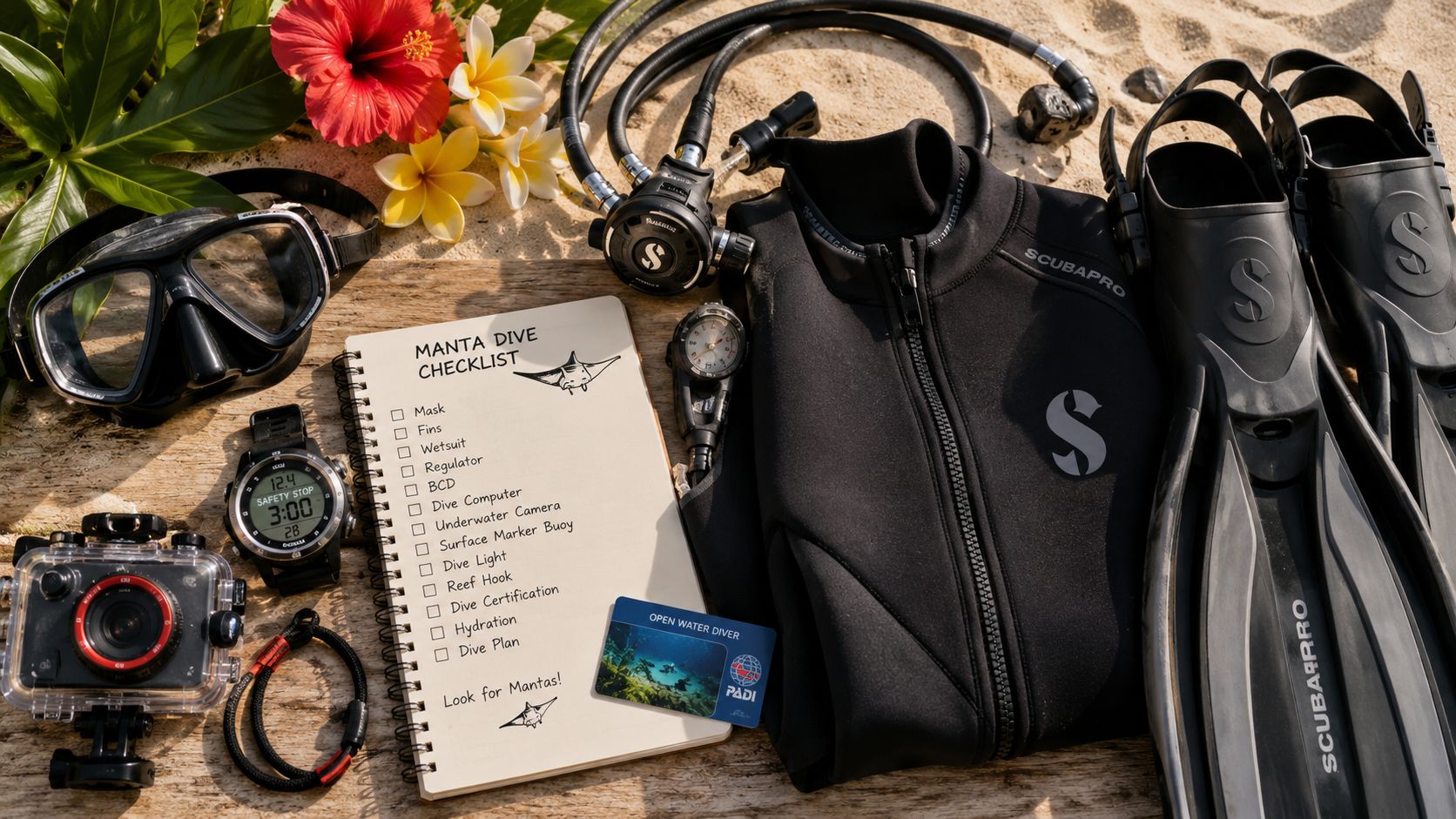
What to bring on the boat
For scuba, your operator usually handles the heavy gear. You still need to show up like someone who's diving at night off a boat.
Bring these:
- Certification card and basics: If you're diving, you need your Open Water certification at minimum.
- A towel and dry clothes: The ride back feels cooler after a night dive.
- A light layer: Even warm Kona nights can feel chilly once you're wet.
- Water and a light snack beforehand: Don't board dehydrated or hungry.
- Reef-safe sun protection for earlier in the day: You may check in before sunset.
If you want a deeper rundown on getting ready for the ride out, this guide on how to avoid sea sickness covers the practical side well.
Seasickness prep that actually helps
If you're prone to motion sickness, handle it before the boat leaves. Waiting until you feel bad is the classic mistake.
Useful options include Ship-EEZ Seasickness Patch, Dramamine pills, Bonine pills, Sea Band wristbands, and Ginger chews.
A few practical notes from years of watching guests manage this badly and well:
- Patch users: Put it on early, not while walking down the dock.
- Pill users: Follow the label timing so it's working before departure.
- Wristband fans: Put them on correctly and don't treat them like decoration.
- Ginger users: Good for mild stomach sensitivity, less reliable if you already know boats affect you.
If you even think you might get seasick, take that seriously. The ocean doesn't care that you “usually feel fine.”
Dive-readiness matters more than bravado
Night diving amplifies sloppy habits. If your buoyancy is rusty, if mask clearing still stresses you out, or if descending in the dark feels intimidating, say that during check-in. Good crews would rather place you well and brief you carefully than discover your comfort level after splash.
This dive rewards calm divers. It doesn't reward aggressive finning, over-weighting, or trying to turn the night into a personal photo mission.
A solid pre-trip checklist looks like this:
- Confirm your certification and recent diving comfort
- Pack warm dry clothes for after the dive
- Handle seasickness prevention before boarding
- Eat lightly and hydrate
- Arrive ready to follow the no-touch, stay-still briefing
That last point matters most. The divers who have the best manta nights are usually the ones who settle down fast and let the encounter come to them.
Booking Your Tour and Managing Expectations
I always tell divers the same thing at check-in after a blown-out night: the smart booking decision happened days earlier.
Book your manta dive early in your Hawaii stay. That gives you room if weather closes the site, the captain has to shift the schedule, or the mantas do not show on your first attempt. Kona usually delivers, but this is still a wildlife encounter in open ocean, and honest planning beats optimistic assumptions every time.
The no-encounter gap is real
Some nights are magic. Some nights are quiet.
That is not a failure of the dive. It is part of diving with wild animals that follow food, current, and conditions none of us control. Good operators say that clearly before you hand over a credit card. If a company talks like sightings are guaranteed, ask harder questions.
One of the first things to check is the make-good policy. A reputable crew usually offers a straightforward second-chance option if no mantas appear, and the terms should be easy to find before you book. If you are comparing Kona boat tours and dive outings, read the cancellation terms, rebooking policy, and site notes with the same attention you give the price.
Questions worth asking before you book
Skip broad questions that only invite a sales pitch. Ask the operational ones.
- Which site are you running, and why? If the answer is vague, that tells you something. Operators who know the dive well can explain the trade-offs between sites.
- What happens on a no-manta night? You want the policy in plain English.
- How do you separate new night divers from experienced ones? Placement, supervision, and pacing matter more at night than people expect.
- What conditions make you cancel instead of push it? Strong operators protect the dive and the divers.
- How many people are in the water at once? Crowding changes the whole feel of a manta dive.
That site question matters more than many visitors realize. If your goal is the classic Kona manta experience, ask specifically about Garden Eel Cove. It often offers the cleaner, more organized version of this dive, especially for divers who care about spacing, visibility, and a calmer in-water setup instead of just getting dropped wherever the boat happens to go.
What good booking strategy looks like
Use a simple filter.
| Booking choice | Why it helps |
|---|---|
| Early in your vacation | Leaves time to rebook around weather or a no-encounter night |
| Ask about the no-show policy before paying | Sets expectations and avoids arguments later |
| Confirm the planned site | Helps you target Garden Eel Cove if that is the experience you want |
| Be honest about your night diving comfort | Gets you better placement and a safer, calmer dive |
Price matters. So does departure time. But the better question is whether the operator runs the night with control and transparency.
The divers who come back happiest are rarely the ones who booked the cheapest seat. They are the ones who picked a crew with a clear site plan, a fair rebooking policy, and enough discipline to keep the encounter safe for both divers and mantas.
Why Choose Kona Honu Divers for Your Manta Adventure
After hundreds of manta briefings, the pattern is easy to spot. Guests step off the boat talking about the mantas, but what shaped the night was the crew. Good operators make the whole experience feel calm from the first safety talk to the final ladder climb. Weak operators turn a simple dive into a rushed, crowded scramble.
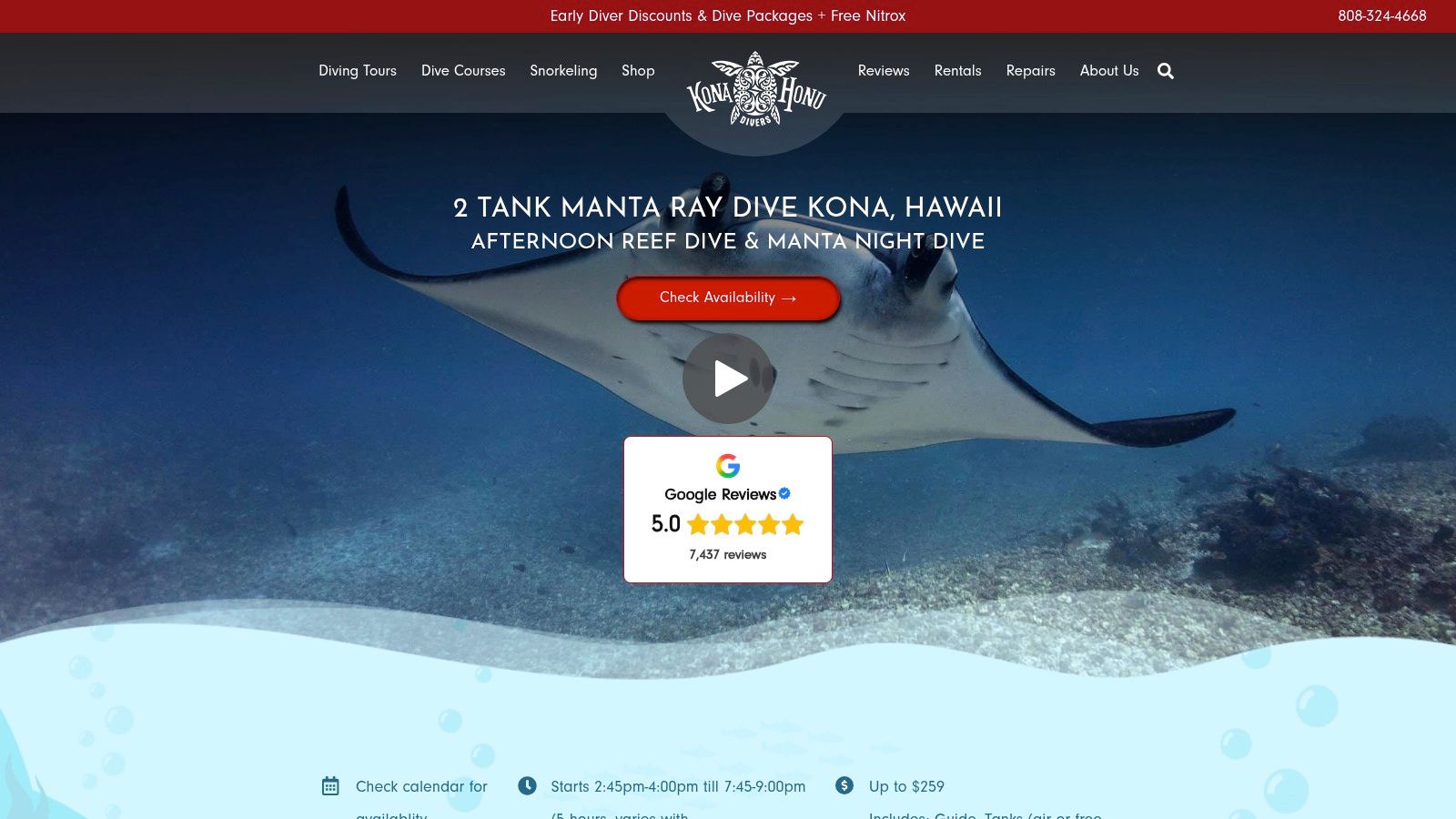
Kona is globally famous for manta encounters, but not every boat delivers the same night. The difference usually comes down to site discipline, diver handling, and whether the crew runs the encounter with respect for the animals. That is why many visiting divers compare operators carefully before they book with Kona Honu Divers.
What an experienced manta operator does differently
A strong manta crew does not try to impress you with hype. They run a controlled night dive. The briefing is clear. Entries are timed. Divers are placed where they can watch without kicking up the bottom or drifting into the light column. If someone is anxious or rusty, the crew catches it early and adjusts.
That matters more than marketing language.
The practical signs are easy to look for:
- They regularly run Garden Eel Cove: For many divers, that site offers the cleanest version of the Kona manta experience.
- They manage certified divers well at night: Descent pace, positioning, lighting, and exits should feel orderly.
- They enforce passive wildlife interaction: No touching, no chasing, no crowding the mantas.
- They have broad boat and dive experience: Operators who run a full range of charters usually have tighter logistics and more polished crews.
Kona Honu Divers stands out here because the operation is built around diving, not just selling a bucket-list wildlife stop. That shows up in the details. Crews tend to communicate clearly, move people efficiently, and keep the underwater setup organized enough that divers can settle in and watch the show instead of managing confusion.
Why that matters more at Garden Eel Cove
Garden Eel Cove rewards operators who know how to set the stage properly. The site gives enough room to build a clean viewing area, but only if the crew uses that space well. I have seen the same site feel serene with one team and cluttered with another.
That is the part broad travel guides usually miss.
If your goal is the classic manta ray diving Hawaii experience, site choice and operator choice are tied together. A well-run Garden Eel Cove trip gives divers better spacing, a more stable viewing position, and a cleaner water column for photos and video. Newer night divers usually feel that difference right away, even if they cannot name it.
The operator should make the night easier, not busier
For first-time manta divers, the best trips feel simple. You listen, gear up, descend, settle in, and let the mantas come to you. That only happens when the crew has enough control to reduce task loading underwater.
The better operators also know when to slow the group down. If someone needs help with weighting, mask nerves, or the descent, they handle it before it becomes a problem on the bottom. That protects the diver and keeps the encounter better for everyone else in the water.
| What to look for | Why it improves the dive |
|---|---|
| Clear pre-dive briefing | Reduces stress and confusion once it is dark |
| Controlled in-water positioning | Gives mantas room and improves viewing |
| Calm crew communication | Helps newer night divers stay settled |
| Strong site familiarity | Leads to cleaner setups at Garden Eel Cove |
I would choose that kind of operation every time over a cheaper seat with a loose plan. On a manta night dive, the crew is not background support. They are a major part of whether the experience feels polished, safe, and worth remembering.
Frequently Asked Questions About Manta Diving
Is manta ray diving safe for beginners
For certified divers, yes, if you're comfortable with basic buoyancy and can follow a night briefing without getting overloaded. This isn't a high-workload dive, but it is a night dive from a boat, so honesty matters. If you haven't dived in a while, say so.
For non-divers, snorkeling is the easier path because you stay on the surface and watch the action below.
Can you touch the manta rays
No. Don't try.
The manta dive operates in a gray area because lights attract plankton rather than directly feeding the animals, but ethical operators reduce impact with strict no-touching rules and conservation-minded practices, according to this overview of manta dive ethics and conduct. Touching can harm the protective mucus layer on the animal's skin.
Leave your hands in, keep your fins still, and let the manta control the encounter.
What's the best time of year to do it
Kona manta diving is known as a year-round activity. The better question isn't “Will mantas exist this month?” It's “What ocean conditions am I comfortable with?”
If you're sensitive to motion or uneasy about boat diving at night, prioritize calmer weather windows and book early in your stay so you have flexibility.
How do you get better photos on the dive
Night manta photography rewards restraint. Don't swing your lights around or drift out of position chasing a shot.
Use these habits instead:
- Stay planted: Stable divers get cleaner compositions.
- Shoot where the light cone is strongest: That's where the manta will usually present best.
- Go wider than you think: Close passes happen fast.
- Don't make the camera your whole dive: Watch first, shoot second.
The best manta photos usually come from divers who stop trying to force them.
If you want a calm, well-run introduction to Kona Honu Divers, start by comparing site choice, no-show policies, and how each crew handles night-diver positioning. For certified divers who want the classic Kona manta experience at Garden Eel Cove, their manta dive tour options are a practical place to begin.