
The first time you see a manta turn out of the dark and sweep through the lights, the whole boat goes quiet. Even people who've done plenty of night dives usually come up smiling like they just saw something from another planet.
Why Kona Is the Manta Ray Capital of the World
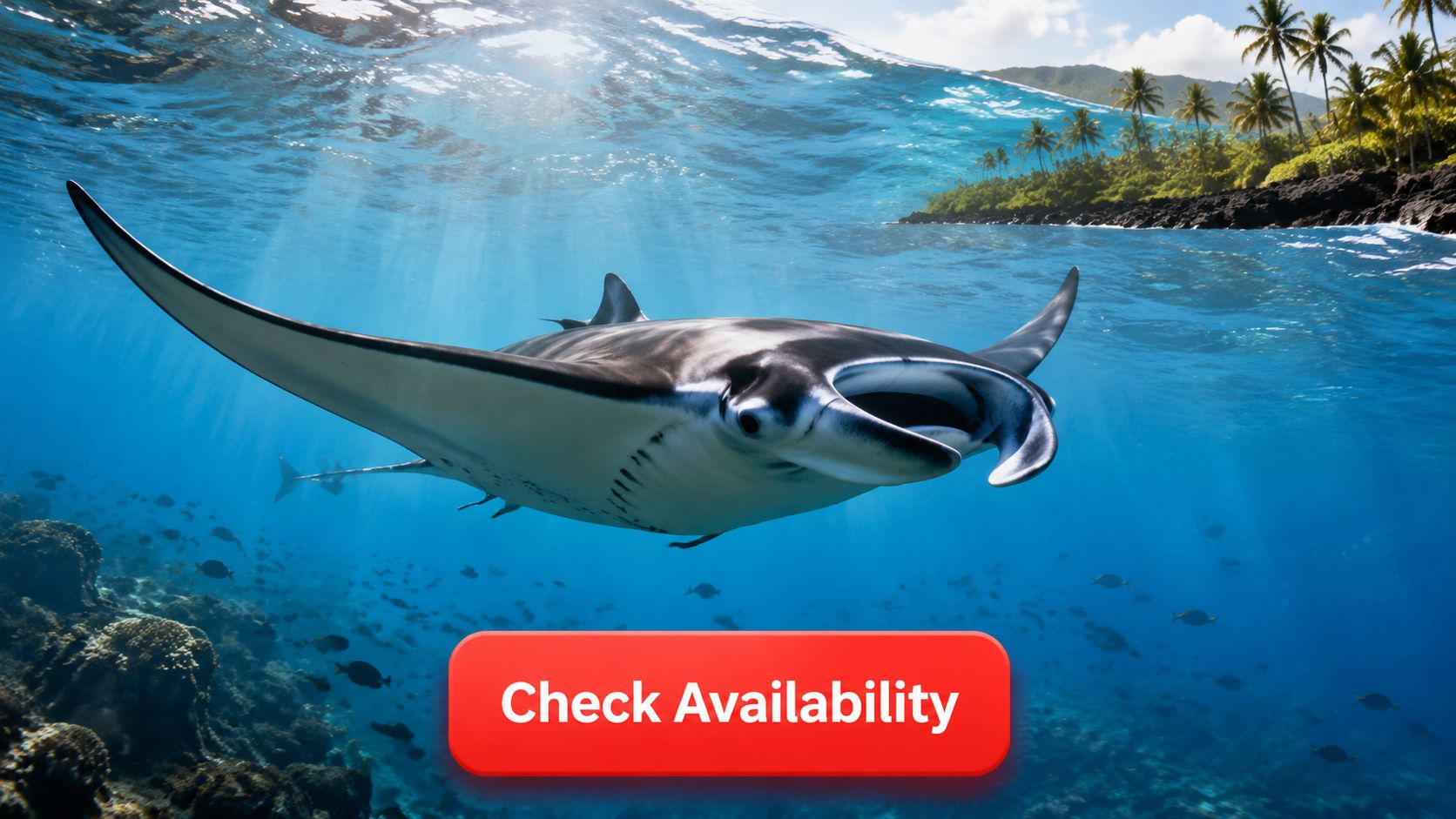
Kona earns that reputation because the encounter is dependable, not lucky. The Kona Coast has a resident population of over 450 individual manta rays that do not migrate, which allows diving and snorkeling here year-round with an 85 to 90 percent sighting success rate on a single dive according to this Kona overview of the local manta population.
That consistency changes everything. In many places, seeing a manta is a bonus. In Kona, it's a realistic expectation, which is why so many divers planning manta ray diving Hawaii trips build an entire evening around it instead of treating it like a long shot.
Why the site matters more than most visitors realize
A lot of first-timers assume any manta tour in Kona is basically the same. It isn't. Site choice affects comfort, visibility, spacing, and how natural the encounter feels.
Garden Eel Cove, also called Manta Heaven, stands out because it sits in a more protected north Kona area with a wider sandy bottom and better reef structure, and it typically sees 10 to 20 manta rays per evening with historic counts reaching 28 in a single night according to this comparison of Kona manta sites. That matters underwater. Divers need room to settle in without crowding each other, and the mantas need room to feed without weaving through a chaotic knot of fins and bubbles.
By contrast, the southern sites can feel busier. If your goal is the smoothest, clearest, least cramped version of the experience, Garden Eel Cove is the one I'd point you toward first.
Why Kona works so reliably
The local setup is unusually favorable for manta encounters. Nutrient-rich currents support plankton blooms, and plankton is exactly what reef mantas want to eat. Kona's reef mantas are the species most commonly seen on these tours, and they've made this coastline one of the world's most reliable places for repeated encounters.
Practical rule: If you're choosing between tours, don't just compare boat size or departure time. Ask where the operator usually runs the manta dive.
If you want a broader look at what makes this coastline different from other Hawaiian diving destinations, this guide on what is unique about diving in Kona is worth reading.
The Night Dive Experience What to Expect
The evening usually starts calmly. You check in before sunset, get fitted for gear, and head out while the shoreline is still glowing. By the time the boat reaches the site, the ocean has shifted from blue to black, and that's when the whole experience starts to make sense.
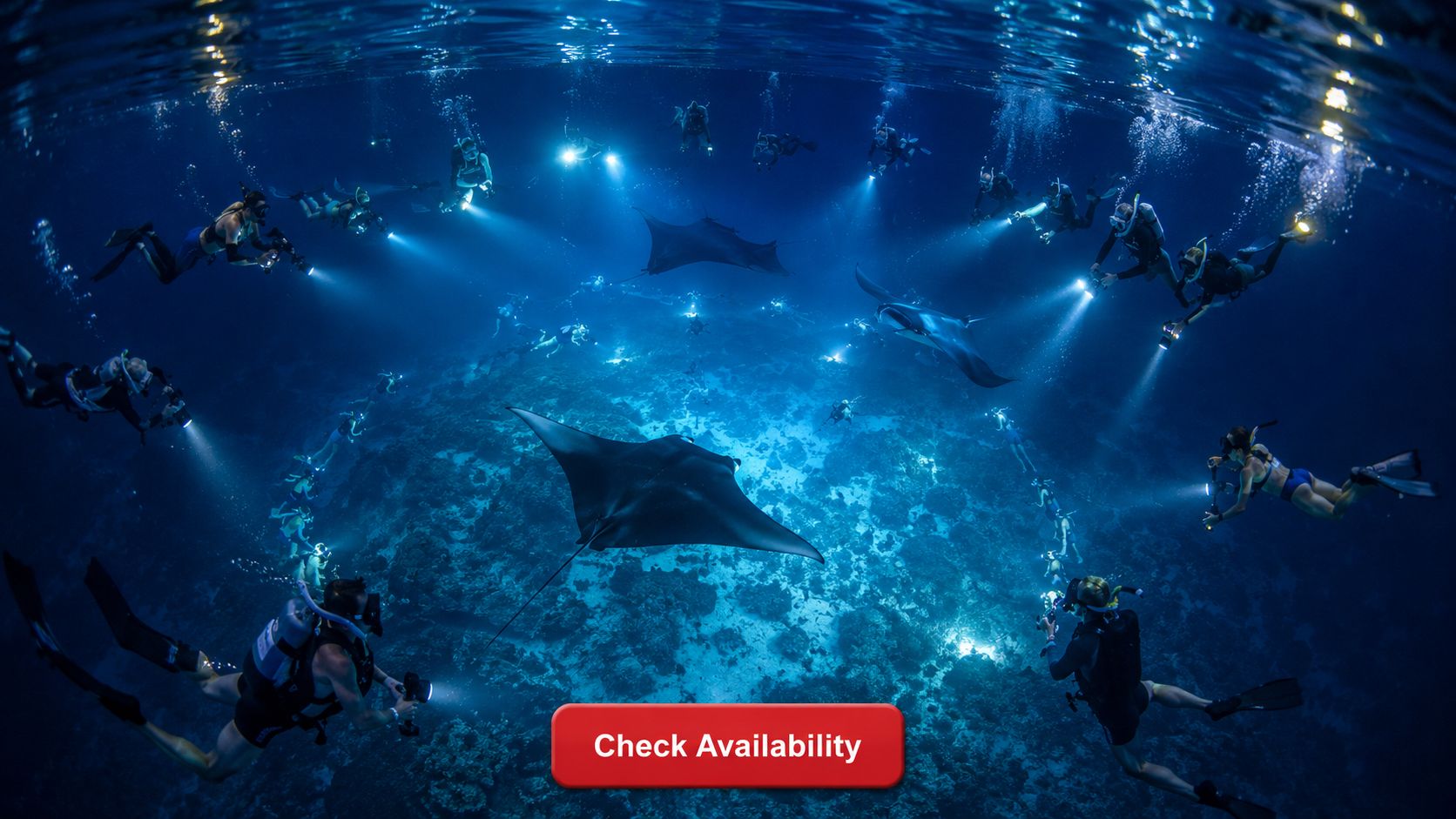
The dive only works at night because the darkness sets up the feeding chain. Operators place powerful eco-friendly lights in the water. Those lights attract plankton. The plankton attracts feeding mantas. The mantas then begin looping, swooping, and barrel rolling through the beams while everyone stays still and lets the show happen.
What divers and snorkelers actually do
The structure of the encounter is deliberate. A community rule established in 1993 set the basic format still used today: scuba divers sit or kneel on the sandy bottom at 30 to 35 feet with lights angled upward, while snorkelers lie horizontal on the surface to avoid startling the mantas feeding directly beneath them, as described in this video explanation of the manta setup.
That positioning is what makes the view so dramatic.
- For divers: you're below the action, looking up into a cone of light while mantas pass overhead.
- For snorkelers: you float on the surface and watch the rays feed just beneath you.
- For everyone: the less movement, the better the encounter tends to be.
The dive itself is usually quiet once everyone settles in. There's a little anticipation at first, then one manta arrives, then another, and suddenly the water column is alive.
What the feeding behavior looks like
This isn't hand-feeding. The lights create a concentrated plankton zone, and the mantas respond to that. Once they lock in, they often repeat tight feeding passes through the same area, sometimes swinging close enough that you can see the shape of the cephalic fins and the white markings on the belly as they bank overhead.
The best manta encounters don't feel rushed. They feel like you're in the middle of a routine the rays already know.
If you want a surface-focused version of the experience, this page on the manta ray night swim gives a good sense of how the snorkel format works.
Manta Encounter Etiquette and Safety
The rules are simple, and they're there for a reason. Mantas keep showing up because the encounter stays controlled, passive, and predictable. Once guests start chasing, reaching, kicking upward, or treating the dive like a petting zoo, the quality drops fast for both animals and people.
The non-negotiable rules in the water
The biggest rule is also the easiest to remember. Never touch a manta ray. Strict passive interaction protocols require divers and snorkelers to avoid touching the animals because contact can trigger avoidance behavior and remove the protective mucus layer on their skin, which can reduce feeding efficiency and shorten the encounter, as outlined by Manta Ray Advocates in their pre-swim guidance.
A few other habits matter just as much:
- Keep your body quiet: Hovering, flutter kicking, and waving your hands around makes you part of the disturbance.
- Mind your bubbles: If you're on scuba, don't send bubbles directly into a passing manta's face.
- Keep fins controlled: Snorkelers especially need to avoid dangling or bicycling their legs below the surface.
- Hold position: The mantas are coming to feed. Let them do the traveling.
What works: calm breathing, fixed position, eyes up.
What doesn't: chasing a manta for a better photo.
A lot of diver behavior problems come from excitement, not bad intent. The fix is to decide before you enter the water that your job is to observe, not interact. If you want a good refresher on that mindset, this guide to responsible considerate diver etiquette is useful.
Seasickness can ruin a great night if you ignore it
Even people who never get seasick during the day can feel off on a night boat. Darkness changes your horizon reference, and the wait at the site can feel rockier than the ride out.
If motion sickness is on your radar, deal with it before boarding. Useful options include the Ship-EEZ Seasickness Patch, Dramamine pills, Bonine pills, Sea Band wristbands, and Ginger chews.
A practical approach is simple:
- Pick one remedy early: Don't wait until the boat is moving.
- Eat lightly: An empty stomach can be bad, but a heavy meal is often worse.
- Stay on the horizon when possible: Looking down at gear the whole ride can make things spiral.
- Tell the crew: They'd rather help early than after you feel miserable.
Choosing Your Adventure Diving vs Snorkeling
The right choice changes the whole night.
I've seen plenty of first-time guests assume scuba must be the better option, then have a stronger experience snorkeling because they were relaxed, warm, and able to focus on the mantas instead of managing gear. I've also watched experienced divers drop into Garden Eel Cove, settle on the bottom, and get that unforgettable view of a manta filling the water above them. The better option is the one that fits your comfort in the water and the kind of encounter you want.
Garden Eel Cove is especially good for making that choice count. The site is set up for both divers and snorkelers to watch feeding behavior without crowding the animals, which leads to a cleaner, calmer encounter when the operator runs the briefing and in-water positioning well. That's one reason many guests who want a well-organized manta trip book with Kona Honu Divers for diving, while snorkel-only guests often prefer a dedicated snorkel boat instead of being added as an afterthought to a dive trip.
What scuba feels like
Scuba gives you the classic Kona manta view. You descend, kneel or settle into position on the sand, and look up into the light as the mantas sweep overhead. From below, their size stands out more, and each pass feels slower and more dramatic because you can watch the entire approach, turn, and glide away.
It also asks more of you.
Night diving is not the place to test brand-new skills. Divers should already be comfortable with buoyancy, calm enough to stay still, and aware of their fins so they do not stir up sand or drift into another diver's space. If that sounds easy on paper but shaky in practice, snorkeling is usually the smarter call for this particular tour.
What snorkeling feels like
Snorkeling is simpler logistically and often easier to enjoy on a first manta trip. You stay on the surface, hold onto the float or light board used by the group, and watch the mantas rise up through the beams to feed below you. The view is wide, so you can follow several animals at once and see the pattern of the whole encounter.
For families, mixed-skill groups, and anyone unsure about being underwater after dark, snorkeling usually delivers more comfort with less task loading. That matters. Calm guests see more because they spend less time fixing problems.
Side by side comparison
| Experience | Scuba diving | Snorkeling |
|---|---|---|
| Viewpoint | From below, looking up | From above, looking down |
| Who it suits | Certified divers who are comfortable at night | Non-divers, families, and mixed-skill groups |
| Task load | Higher | Lower |
| Feel of encounter | More immersive and theatrical | More accessible and often very close |
A practical rule works well here. Choose scuba if you are already a confident diver and you want the full under-manta view from the seafloor. Choose snorkeling if you want the easiest learning curve, less gear, and a very high chance of coming away thrilled.
If you want a fuller breakdown of the trade-offs, this guide on whether it's better to snorkel or dive with manta rays is worth reading.
If you want to browse scheduled options, you can look at the manta ray dive and snorkel tour page.
Gear Photography and Best Times to Go
A manta night dive isn't gear-heavy in the same way a technical dive is, but comfort matters. If you're cold, underweighted, over-finned, or fumbling with a camera you barely know, you'll spend the whole night solving problems instead of watching mantas.
What to prioritize with gear
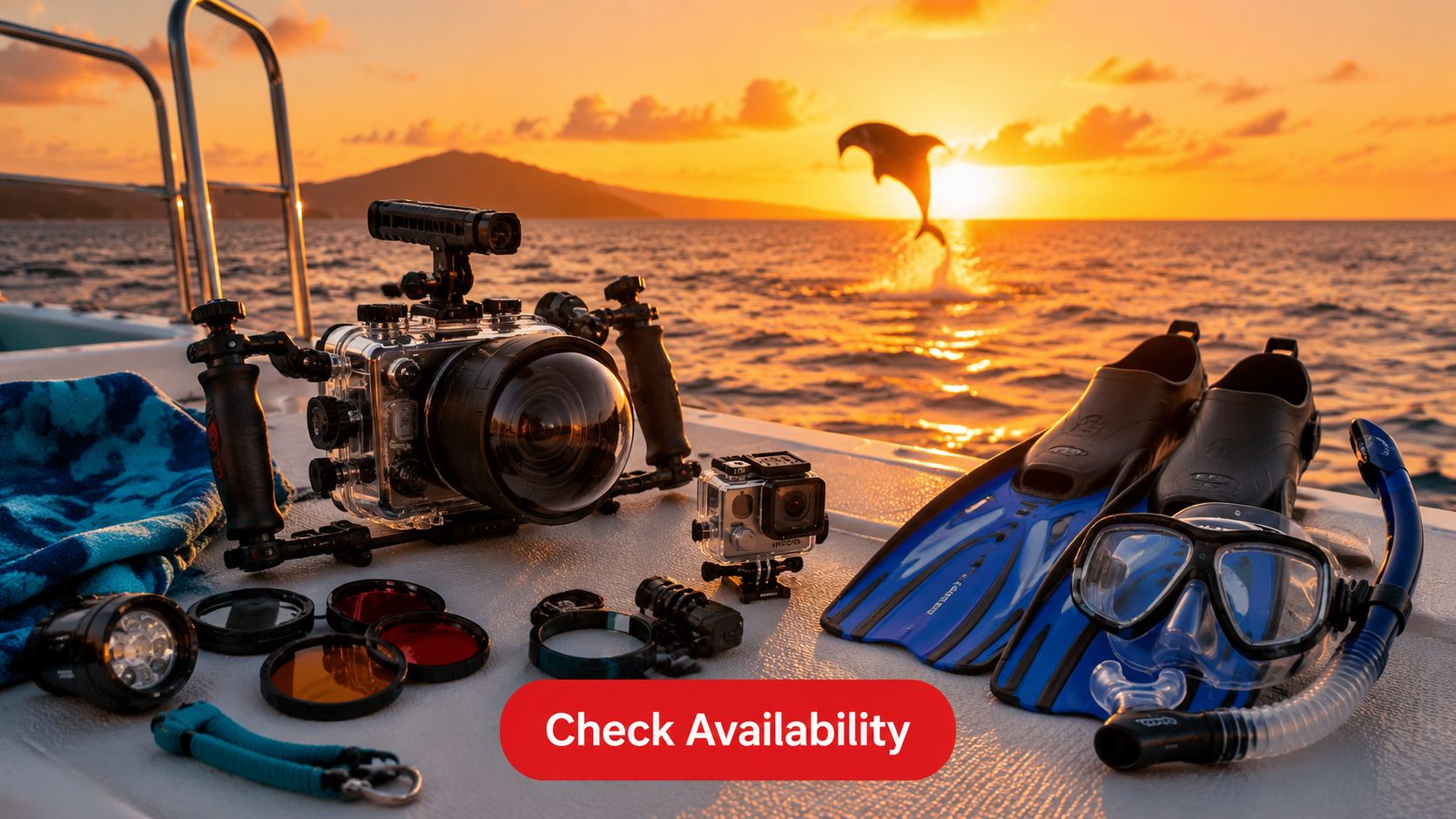
For snorkelers, the basics are fit and warmth. You want a mask that doesn't leak, fins that don't cramp your feet, and enough thermal protection to stay relaxed on the surface. Full-face masks are generally excluded for safety on these trips, so stick with a standard mask and snorkel setup.
For scuba divers, the main goal is stable positioning. The encounter works best when you can settle in at the assigned depth and stay there without constant adjustment. Good weighting, familiar exposure protection, and simple accessories beat overcomplicated setups every time.
A few practical choices help:
- Use gear you understand: Night is not the time to learn a new camera housing or unfamiliar fin style.
- Keep accessories simple: Dangling clips and bulky gadgets are distractions.
- Bring a dry layer for the ride back: The boat ride after a night swim can feel cool even in Hawaii.
How to get better photos without spoiling the experience
Low-light underwater photography is tricky. Mantas move smoothly but fast enough that weak settings turn them into blur. If you're shooting, use the widest lens you have, keep your framing simple, and spend more time watching than adjusting.
Don't spend the whole encounter behind a screen. Get a few shots, then put the camera down and watch the passes.
If your operator has photo-specific guidance, follow it. The best images usually come from photographers who stay still, anticipate the manta's loop, and shoot only when the animal is already moving through the light field.
The best season for conditions
Mantas are available any time of year in Kona, but conditions do shift. The activity is not limited by season, and May through September is often considered the optimal window for night dives because of more favorable conditions such as reduced wave action, according to this overview of Kona manta seasonality.
If your travel dates are flexible and your top priority is a calm ocean, that window is smart. If your trip falls outside it, don't overthink it. Kona's manta diving remains a year-round draw because the animals are resident rather than seasonal visitors.
Beyond the Mantas Other Epic Kona Dives
For many divers, the manta night dive is the reason they book Kona. For plenty of others, it's the gateway dive that makes them want another night in the water.
The blackwater dive is the next big leap
If you like unusual marine life more than big-animal predictability, blackwater is the move. Instead of settling on the bottom near a reef, you drift in deep open ocean at night and watch pelagic larvae and deep-water creatures rise toward the surface. It feels less like a reef dive and more like hovering in space with biology flying past your mask.
You can get a sense of that experience through this overview of the Kona blackwater dive and the dedicated Blackwater Dive tour page.
For advanced divers who want more range
Some visitors do the manta dive, then realize they also want reefs with less traffic and longer runs to more remote sites. That's where advanced long-range trips make sense. Those charters are built for divers who want stronger site selection and a more expedition-style day on the water.
One operator offering both manta trips and those longer advanced outings is Kona Honu Divers, which also lists its full range of dive tours here.
Frequently Asked Questions About Manta Ray Diving
Are manta rays dangerous to people
No. The reef manta ray has no stinger, barb, or predatory teeth and is completely harmless to humans. They're filter feeders that eat plankton, and the reef manta rays most commonly seen on Kona tours can reach a wingspan of about 14 feet, while oceanic mantas can grow up to 22 feet, according to the Hawaiian Association for Marine Education and Research information on manta rays.
They're large animals, but not aggressive ones. The right mindset is respect, not fear.
Is there a best month to book
If you're aiming for the calmest conditions, May often gets singled out as especially favorable, and the broader May through September window is widely preferred for reduced wave action. If you're visiting at another time, don't assume you've missed the season. Kona's manta activity remains a year-round draw because the local population stays on this coastline.
Is snorkeling enough, or should I only do the scuba version
Snorkeling is enough for a lot of people. In fact, many guests leave convinced they got exactly the view they wanted. Scuba gives you the dramatic bottom-up perspective, while snorkeling gives you a broad overhead view of the feeding pattern.
The “right” choice is the one that matches your comfort in the water.
Is the light attraction method ethical
This is the question more operators should answer directly. The encounter depends on lights attracting plankton, which in turn attracts mantas. That's different from hand-feeding the animals, but it still creates an artificial feeding focus, and some guides have pointed out the legal and ethical gray area around how that method is described in tourism marketing.
My view is practical. If you're going to join one of these trips, choose operators who run a passive encounter, keep guests controlled, and don't let the water turn into chaos. The less intrusive the human side is, the more defensible the activity becomes.
How long are you usually in the water
Most trips keep the in-water portion fairly focused rather than dragging it out. The time depends on operator procedure and conditions that night, but the encounter is usually long enough to settle in, watch the mantas find the light, and see several feeding passes before everyone heads back to the boat.
If manta ray diving is on your Big Island list, book with a crew that treats site choice, positioning, and animal etiquette seriously. Browse current trips and schedules with Kona Honu Divers and pick the option that fits your comfort level, whether that's a scuba night dive or a surface snorkel.