
You've got a night free in Kailua-Kona, a few manta tours open in your browser, and no clear reason to choose one over another. The photos look similar. The promises sound similar. But the site, your position in the water, and the operator's quiet-night policy matter more than the most dramatic photograph on a booking page.
For manta ray dives of Hawaii, Kailua-Kona, HI, my recommendation is straightforward: prioritize Garden Eel Cove, choose the format that matches your water skills, and read the wildlife policy before paying. A successful outing means watching wild mantas feed without obstructing them, not collecting a guaranteed number of close passes.
Choose Your Manta Dive Format and Eligibility
Night scuba, night snorkeling, and a two-tank manta charter offer different ways to spend the evening. Choose your water position first, then decide how much diving you want around the manta encounter.
On the night scuba dive, certified divers kneel on the sandy bottom inside a circle of dive lights, with a guide in the water. Reef mantas can loop through the illuminated feeding area above them. The appeal is the submerged perspective, but it requires calm breathing, controlled buoyancy, and the discipline to remain still.
Night snorkelers float at the surface above the same feeding area, without a tank or scuba certification. A two-tank manta charter adds another tank dive to the trip. It suits divers planning a substantial outing, but confirm departure and return times rather than assuming “two-tank” means an all-day charter.
Manta Dive Formats Compared
| Format | How You See Mantas | In the Water | Best For |
|---|---|---|---|
| Night scuba dive | Kneel on the sandy bottom inside the light circle | Dive with a guide and tank | Certified divers who want a closer view |
| Night snorkel | Float on the surface above the lights | Surface snorkel, no tank | Families, first-timers and non-divers |
| 2-tank manta charter | Manta encounter during the trip | Two tank dives from the boat | Divers who want a full day on the water, with charter timing confirmed |
Kona Honu Divers runs the manta night dive and two-tank manta charter. Review the manta dive and snorkel itinerary for the current trip structure and participant requirements.
Match the Format to Your Readiness
Certified divers with recent underwater experience are the strongest fit for scuba. Your certification establishes training, but your current comfort determines whether you can enjoy a stationary night dive without constant corrections. If your last dive feels distant, arrange a refresher rather than using the manta encounter to rediscover your equipment.
An uncertified beginner should discuss training before booking a scuba place. Snorkeling is the practical alternative for non-divers, provided they're comfortable floating, breathing through a snorkel, and following instructions in open water after dark. Families should confirm participant requirements before choosing a departure.
Tell our crew about nervous swimming before the briefing, not when you're already at the ladder. Logged dives without night experience aren't automatically a problem, but request a clear explanation of light signals, guide positioning, entry procedures, and the return to the boat.
Default choice: If you're certified and can remain calm and still throughout the dive, choose scuba. Otherwise, choose snorkeling only if you're comfortable at the surface.
For a closer look at those perspectives, compare snorkeling versus diving with manta rays. Neither format guarantees a closer animal pass, and neither removes the need for water confidence.
Why Garden Eel Cove Is the Best Place to Dive
Garden Eel Cove is my preferred manta dive site because it combines a protected location, a better viewing area, and a better reef setting. Garden Eel Cove and Keauhou aren't interchangeable just because both attract feeding mantas. For most divers choosing a first Kona manta encounter, Garden Eel Cove offers the stronger overall package.
A 2025 University of Hawaiʻi study analyzed 13 years of community observations, from 2010 through 2022, covering more than 23,000 sightings of 167 individually identified reef manta rays at Garden Eel Cove and Keauhou, and found consistently larger aggregations at Garden Eel Cove while Keauhou received disproportionately female visits.
That's a useful distinction for a guest. If watching a group circle through the feeding area is your priority, Garden Eel Cove is the more persuasive choice. The finding doesn't establish a personal sighting probability for your departure, but it gives the site recommendation more substance than a collection of spectacular tour photographs.
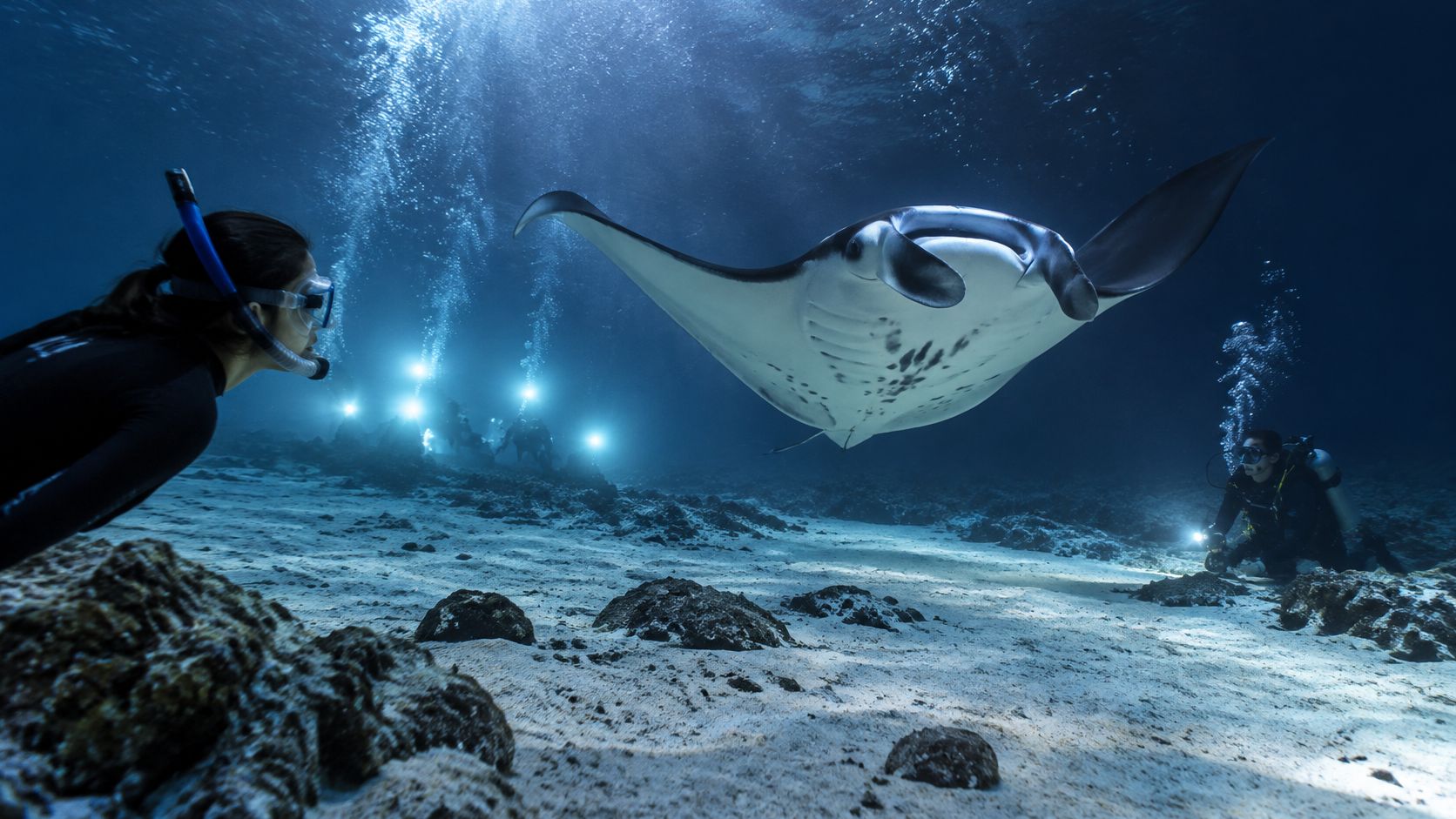
The Viewing Area Matters as Much as the Arrival
A protected setting helps with the less glamorous parts of the outing: getting organized, settling into position, and maintaining that position without unnecessary movement. It doesn't make the ocean immune to swell or current. The captain still needs to judge the conditions on the actual departure.
Our manta charters often visit Garden Eel Cove, where divers occupy a specific viewing area at a well-established dive site. That arrangement gives guests a clear place to settle instead of encouraging everyone to follow whichever animal appears first.
The better reefs around the edges also make Garden Eel Cove a more satisfying dive environment than an open-water viewing spot. Treat that reef setting as something to protect, not somewhere to brace a hand or park a fin. Use the assigned sandy area and leave the surrounding coral undisturbed.
Better Site Choice Doesn't Control the Animals
Kona's encounter depends on a localized population using established feeding areas. You're not waiting beside an unlimited stream of ocean travelers, and the lights don't oblige a manta to remain.
Food availability changes the intensity of the encounter. Even at Garden Eel Cove, you may spend time watching illuminated water before an animal enters, and a quiet interval isn't proof that the crew chose the wrong location.
Choose Garden Eel Cove for the stronger setting and documented group use, not because anyone can promise a crowded feeding circle.
Keep the site preference clear when booking, while allowing the crew to make a conditions-based decision. Check the full manta charter itinerary and current site plan on the tour page before selecting your departure.
How a Manta Night Dive Unfolds Hour by Hour
The evening follows a sequence, not a universal clock. Boat travel, equipment preparation, conditions, and animal behavior affect the pace, so don't schedule a tightly timed dinner immediately afterward.
Before Entry
The detailed briefing is the most useful part of the night for a first-timer. Our crew explains the science behind the feeding area and the rules of passive observation. Listen especially closely to where you'll sit, how you'll signal a problem, and what happens if you need to end your dive before the group.
During the transit, organize your equipment without blocking the working deck. Once the crew positions the boat, complete your buddy check, secure loose accessories, and confirm that your mask and exposure protection feel right. A small equipment annoyance becomes harder to fix once you're trying to remain stationary.
The light system has a specific purpose: the NOAA-hosted manta feeding document describes how lighting concentrates plankton locally, creating a feeding opportunity rather than forcing mantas to appear. On our night dive, powerful lights create a bright circle on the seafloor, so divers aren't sitting in complete darkness.
During the Encounter and Return
- Settle before searching. Follow your guide into the assigned viewing area, check your position, and let your breathing slow. Don't move around looking for a better seat.
- Let the arrival happen. A manta may circle repeatedly or make a single pass. Your job is to watch without turning its feeding path into an obstacle course.
- Follow the exit signal. The dive is stationary and closely supervised, but the return still requires attention. Keep your light under control and follow the guide's ascent instructions.
Back aboard, clear the ladder area, secure your equipment, and get dry before reviewing footage. Use the debrief to ask about behavior you noticed. If photos or video are available, they can help distinguish a feeding turn from what looked underwater like a direct approach toward a guest.
Diving in Kona is possible 365 days a year, but that doesn't mean every departure operates or every night produces the same encounter. Judge quiet-night handling by the policy you agreed to, not by whether the calendar said it was a good month.
Arrive rested, eat a light meal beforehand, and leave room in your evening. Preparation is easier when you're not hungry, hurried, or exhausted before entering the water.
Rules That Protect Mantas and Every Guest
Artificial lights and visitors aren't automatically proof of harm. Uncontrolled behavior is the more useful thing to examine. Lights create a concentrated viewing opportunity, which makes guest positioning and crew enforcement especially important.
The Kona manta conservation discussion summarizes genomic research estimating an effective population size of approximately 104 around Hawaiʻi Island, with a 95% confidence interval of 99–110, alongside long-term observations of stable aggregations through 2022. Effective population size is a genetic measure, not a head count, and stable attendance isn't proof that every individual encounter is harmless.
The sensible conclusion is neither to condemn all organized viewing nor to excuse every operator. Judge what the crew explains and enforces.
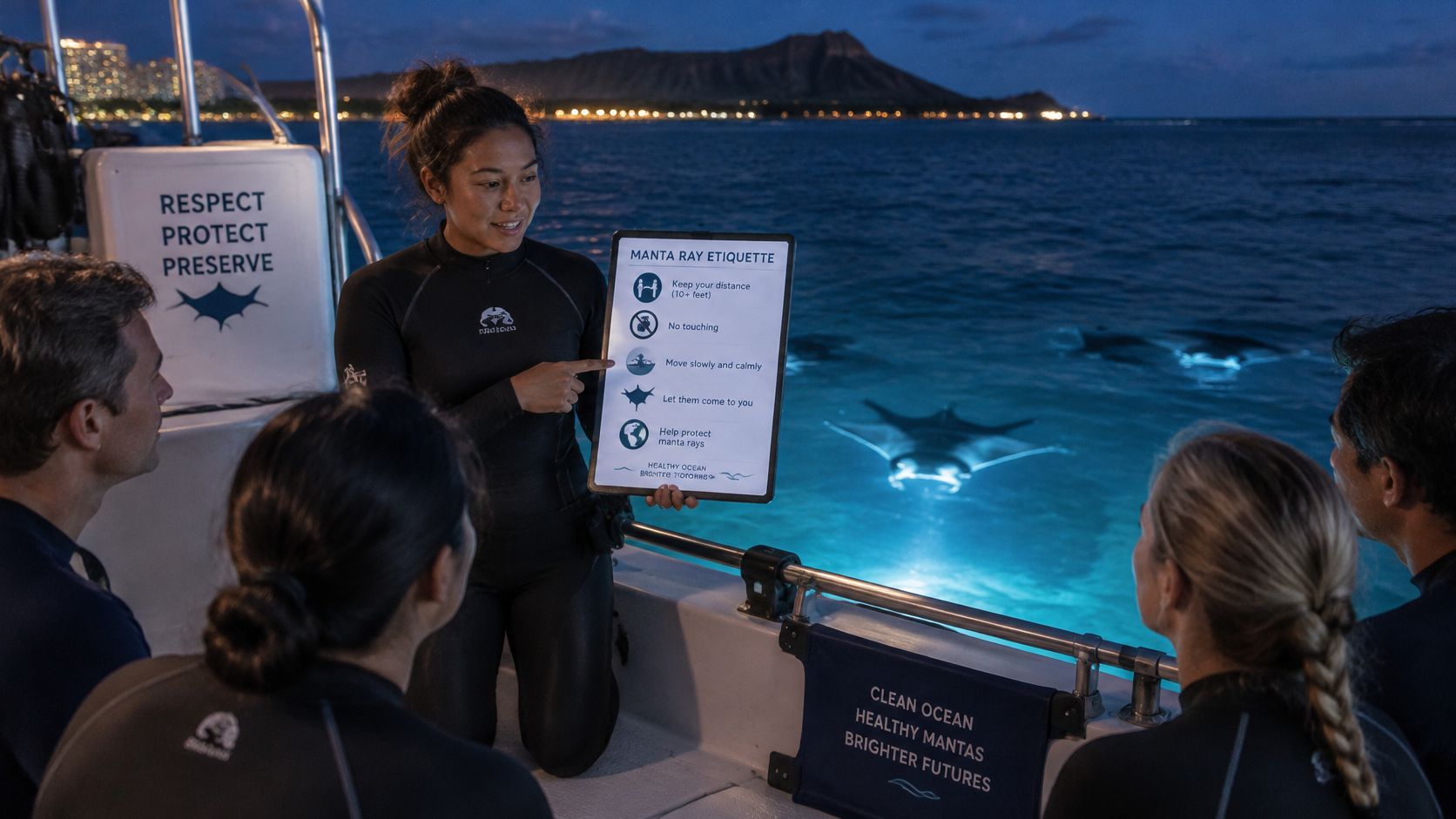
Keep the Feeding Corridor Open
- No touching. Contact can stress an animal. Keep hands close to your body, even when a manta passes within reach.
- No chasing or interception. Swimming after a manta or positioning yourself across its route can interrupt its feeding path.
- Hold your assigned position. Let the animal choose the distance. A close pass is something to receive, not something to manufacture.
- Keep lights over sand or rubble. Don't place equipment on live coral or reposition yourself onto the reef for a photograph.
- Use the instructed light direction. Bottom-based diver lights should point upward while the water column stays open. Leave the established lighting arrangement alone unless the guide directs otherwise.
Divers and snorkelers have different responsibilities because they occupy different parts of the water. Kneeling on the designated sand keeps a diver low and out of the feeding lane; it isn't permission to stand on coral or shuffle across the bottom. Snorkelers should remain near the surface and avoid kicking downward into the animals' space.
Supervision Must Be Active
Experienced divemasters and instructors are in the water with our divers. Their role includes watching positioning, responding to discomfort, and correcting behavior that interferes with the encounter.
Guests still have responsibilities. If your mask leaks or you feel unstable, signal the guide instead of grabbing a neighbor, reaching for coral, or rising into the feeding corridor. Photographers must keep housings and handles out of the route, too.
Review responsible and considerate diver etiquette before boarding. Good wildlife conduct is an active skill: you manage your body, equipment, and attention so the manta doesn't have to manage you.
What to Pack and How to Photograph Mantas
Pack for the return ride as carefully as you pack for the dive. Wet clothing, wind, and an exposed phone can spoil an otherwise excellent evening.
Packing List for a Manta Night Dive
| Item | Why It Matters | Night Dive Note |
|---|---|---|
| Reef-safe sunscreen | Protects skin while helping limit reef exposure to unsuitable products | Apply before boarding |
| Warm layer | Boat and water can feel cooler after dark | Keep it dry for the ride back |
| Towel and dry bag | Helps keep phones and cameras dry | Store valuables before the dive |
| Red or dim headlamp | Preserves night vision on the boat | Use only on deck, not in the water |
| Camera with secure mount | Helps stabilize shots and secure gear | Set up before entry and avoid flash |
Don't treat a reef-safe label as permission to apply sunscreen carelessly beside the water. Apply it before boarding and let it absorb. Put your warm layer somewhere you can reach without emptying your entire bag onto a wet deck.
For cameras, choose a compact setup you can control with gloves and limited visibility. A secure wrist attachment or suitable housing mount is more useful than extra accessories you haven't practiced with.
Photograph Without Changing the Encounter
- Start wide. A wide-angle lens makes it easier to include the manta's turn and the surrounding light without moving backward into another guest.
- Shoot upward from your assigned position. This can reveal the underside and feeding posture. Don't rise into the water column to improve the angle.
- Leave flash off. Avoid startling animals or interrupting feeding, and follow the crew's instructions for any continuous video light.
- Prioritize a usable shutter speed. A moving manta can blur quickly. Raise sensitivity as needed, test your settings, and wait for the animal to enter your frame instead of chasing it.
Our Kona manta photography guide can help you plan compositions before boarding. Underwater, steady buoyancy and quiet fins matter more than constantly changing camera settings.
Before entry: Camera set, attachment secured, buoyancy plan understood. Watch first and shoot second.
If operating the camera distracts you from the guide or your position, put it away. A clear memory beats footage obtained by obstructing the animal.
Frequently Asked Questions About Kona Manta Dives
Are Manta Sightings Guaranteed?
No. A quiet night can still produce a brief, worthwhile pass, or no sighting at all. Get the no-manta policy in writing before payment, including any return-trip conditions, availability restrictions, and exclusions.
For scheduling, use the guide to the best time to see Kona's manta rays as planning context, not a promise that a particular date will outperform another.
Do I Need to Be a Certified Diver?
Not for the night snorkel. Certified divers can choose the submerged viewing position, while non-divers remain at the surface.
Snorkeling still requires comfort in open water. If darkness, breathing through a snorkel, or floating away from shore makes you anxious, discuss that before reserving rather than assuming flotation will resolve every concern.
Can I Touch Mantas or Follow Them?
No. The no-touch and no-chase rules apply to everyone, including confident swimmers and photographers. If a manta comes close, remain still and let it pass.
Do These Dives Harm Mantas?
Well-managed viewing isn't automatically harmful, but the operation matters. Stable use of a feeding site doesn't excuse crowding, pursuit, poor light placement, or contact.
Evaluate visible practices rather than a conservation slogan. A crew should explain positioning clearly and correct guests who leave their assigned zones.
Is Flash Photography Allowed?
Plan to shoot without flash. Keep your camera setup unobtrusive and accept the crew's lighting instructions rather than treating photography as an exception to wildlife rules.
- Protect the ride-home essentials. Put phones and cameras in a dry bag before the deck gets wet.
- Keep a dry layer accessible. You'll appreciate it after removing wet equipment.
- Dim deck lighting. Avoid sweeping a bright white beam across other guests' eyes, especially near the ladder and equipment area.
Book Your Garden Eel Cove Manta Dive
A manta sighting is a reasonable expectation, not a contractual wildlife guarantee. Seeing several animals feeding together is a different expectation from seeing a manta at all. A brief pass on a quiet night remains a genuine encounter.
The Kona manta encounter planning guide connects encounter variability to food availability and emphasizes how visibility and current affect the guest experience. That's why I'd choose a transparent quiet-night policy over a sweeping claim about the best tour.
Get These Answers Before Paying
- No-manta outcome. What exactly happens if no manta appears? Don't assume a refund or complimentary return.
- Poor-visibility policy. Ask whether the written terms distinguish limited visibility from a canceled departure.
- Site selection. Confirm the intended site and the conditions that could change it.
- Guest management. Find out how many guests share the water and how the viewing zones are organized.
- In-water supervision. Our experienced divemasters and instructors accompany divers in the water.
My recommendation is Kona Honu Divers' Garden Eel Cove manta night dive, with the final site decision left to the crew's assessment. Call 808-324-4668 to discuss readiness or clarify the current itinerary.
Manta Options and Booking Details
| Option | Best For |
|---|---|
| Night scuba dive at Garden Eel Cove | Certified divers |
| Night snorkel | Families, first-timers and non-divers |
| 2-tank manta charter | Divers who want a full day on the water, with departure and return times confirmed |
| Blackwater night dive | Experienced night divers |
Confirm current prices on the booking page, along with equipment inclusions and cancellation terms. Don't compare headline prices without comparing what you're reserving.
For another night experience, review the blackwater night dive. Experienced divers considering a separate daytime outing can examine the premium advanced two-tank trip. Use the broader diving tours selection and Kona boat tour planning guide to organize additional water time without rushing your manta evening.
Check dates for the Garden Eel Cove manta night dive, choose the night that fits your itinerary, and book after confirming the terms.
Kona Honu Divers offers guided manta night diving and surface snorkeling in Kona, with Garden Eel Cove as the go-to dive site. Visit Kona Honu Divers to compare the current itinerary, confirm your readiness, and reserve the manta encounter that matches your skills and travel dates.