
The 2024 NOAA Fisheries summary reports that researchers had identified 318 unique reef manta rays around Hawaiʻi Island since 1979. That count helps explain what makes the manta ray dives of Hawaii distinctive: off Kona, guests aren't waiting for a passing migration. They're visiting feeding sites used by a resident island population, and the best nights still depend on the ocean.
Why Kona Night Dives Draw Mantas
A typical trip starts with a boat ride along the Kona coast of Hawaiʻi Island, then a careful setup at a known night site. Reef mantas filter-feed on tiny animals drifting in the water, rolling through dense patches of zooplankton to feed. After sunset, lights in the water gather plankton into a visible column, drawing mantas to a feeding lane instead of sending divers searching a dark reef.
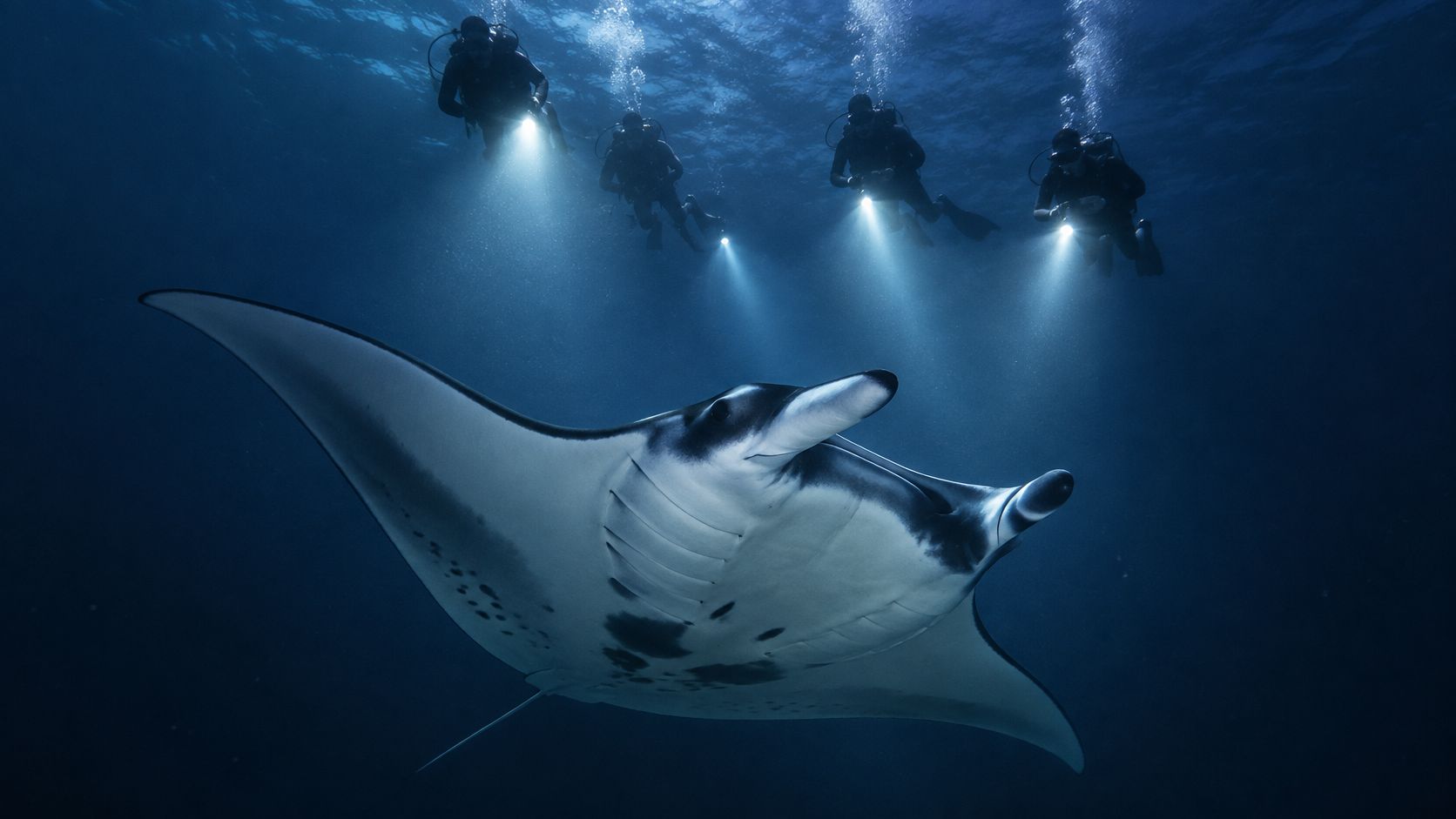
The two working night sites are Garden Eel Cove, also called Manta Heaven, and Keauhou, often called Manta Village. Organized Kona manta operations began in the 1980s and grew into a busy industry, which is one reason a well-run trip has a clear viewing area and asks guests to stay still. The lights create an opportunity to watch feeding, not a promise that rays will appear on cue.
If you're visiting for daytime reef diving as well, you can browse Kona diving tours. For the manta night, the practical decisions are which site to visit, whether you'd rather dive or snorkel, and how early to reserve. I'd use Garden Eel Cove as the default for its sheltered viewing layout, then let the crew adjust if current or sea conditions make another site the better call.
Garden Eel Cove Against Keauhou
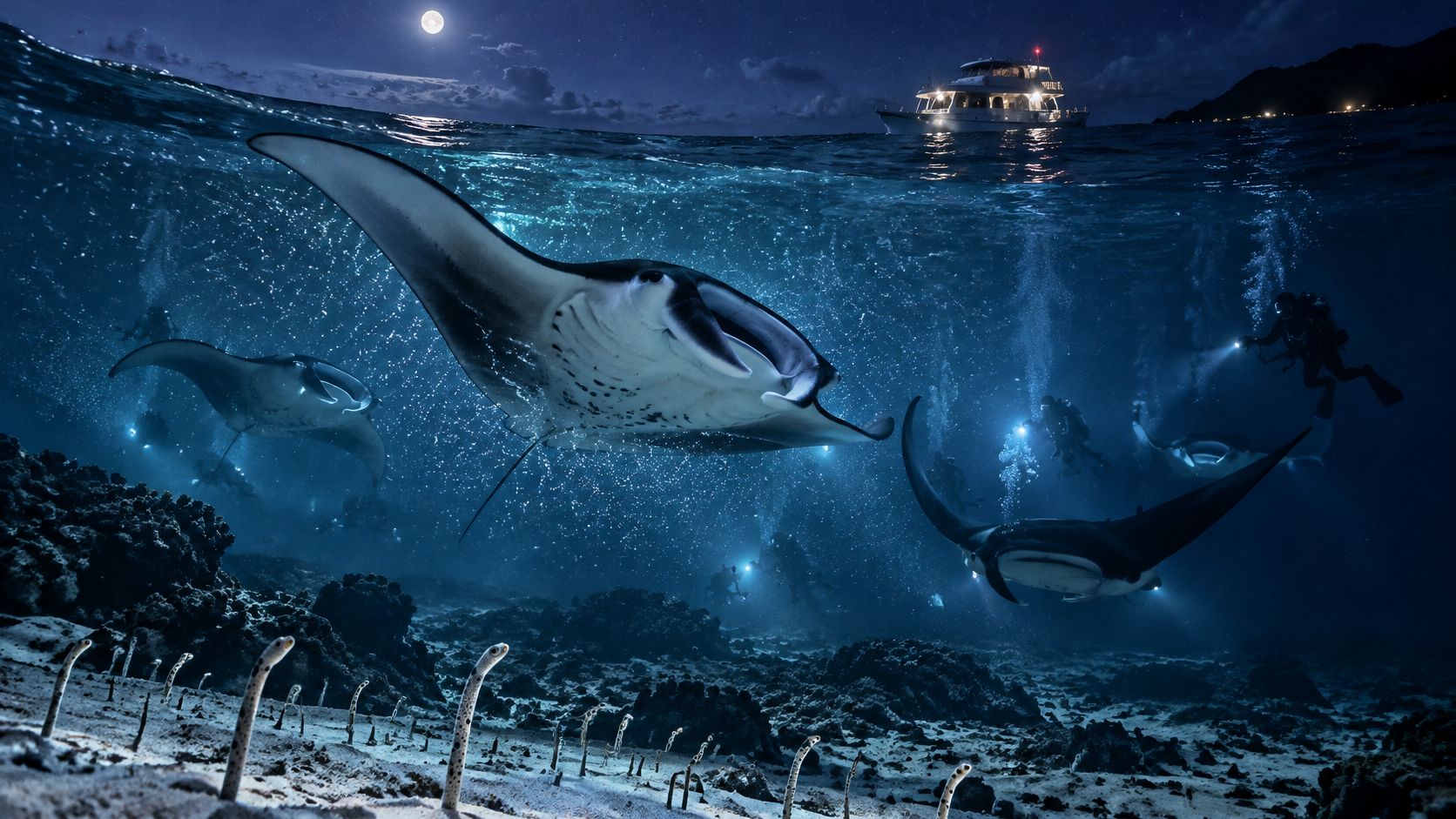
Garden Eel Cove is the superior default choice for a manta ray dive tour. Its protected location, broad viewing area, and surrounding reef make it easier to settle in and watch without turning the encounter into a search. The Garden Eel Cove site description compares its broad sandy area to an underwater amphitheater: divers can stay low while mantas feed in open water above, with reef around the viewing space.
The bottom helps explain how the site works. A gently sloping sandy plain extends from about 12 to 30 meters, interrupted by coral heads and lava-rock formations; garden eels occupy the sand, while the illuminated water above becomes the feeding lane. The Garden Eel Cove site guide describes this separation between bottom habitat and open-water feeding as a practical arrangement for stationary viewing. The reef also gives you something to look at before and after the rays arrive.
| Site | Also called | Bottom and shelter | Typical aggregation | Best default for |
|---|---|---|---|---|
| Garden Eel Cove | Manta Heaven | Sheltered sand about 12–30 m inside a reef amphitheater | Larger groups that vary with plankton | Divers and snorkelers who want calmer water and reef around the lights |
| Keauhou | Manta Village | Exposed night site, more open to swell | Smaller groups, strongly female in long records | A classic light show when sea state and recent activity favor it |
Keauhou is still a worthwhile working site, not a poor substitute. It has a different feel, and the long-term pattern there is smaller aggregations with a strongly female bias. Garden Eel Cove generally offers the more forgiving layout for guests who want a defined place to settle, while Keauhou can be a good choice when the conditions and recent activity point that way.
The default isn't a rule that overrides the ocean. Crews choose a site based on conditions such as current, visibility, and recent feeding activity. Kona Honu Divers often takes its manta charter to Garden Eel Cove for its shelter. For the Kona manta dive and snorkel charter, use Garden Eel Cove as your starting preference and accept a change if the crew has a sound reason.
Seasons Plankton and Quiet Nights
The calendar doesn't decide whether mantas show. A 13-year analysis of community-sourced observations from 2010 to 2022 at Garden Eel Cove and Keauhou found that aggregation size was positively correlated with zooplankton density, making prey availability a primary control on how many mantas gather on a given night. The peer-reviewed Kona aggregation analysis also found that Garden Eel Cove generally had larger, more variable groups, while Keauhou had smaller aggregations and a strongly female-biased pattern.
Highly predictable isn't the same as guaranteed.
Artificial lights concentrate plankton and make feeding visible, but they can't create prey where little is available or erase the natural variation in animal behavior. Current matters because it can shift the feeding lane away from where the lights are set. Moonlight and weather can also affect plankton and visibility, changing how clearly guests can watch the activity.
Winter north swell is a separate practical consideration. An exposed site can feel uncomfortable when the ocean is up, even if mantas are in the area; shelter becomes more valuable when conditions are rougher. Summer trade-wind days are often easier boat rides, while winter swell can make a protected bay the more comfortable option. There's no honest peak month that overrides prey and sea state, and there's no closed season on the Kona coast.
For planning details, use this guide to the best time to see manta rays in Kona. Then keep two possible evenings open rather than betting the whole experience on one sunset. If the water is quiet, that's a biological outcome, not proof that the crew or the trip failed.
Gear Light and Photo Choices
Your boat crew handles the large lights that make the feeding area visible. Certified divers use scuba equipment; snorkelers use a surface setup and float. Your own preparation is mostly about comfort, fit, and keeping your gear under control in the dark.
Bring: Test your mask seal in daylight before the trip. A mask that leaks during a quick practice swim will be more distracting at night, so fix the fit before you board. Pack reef-safe defog, and bring a prescription mask if you rely on one. A wetsuit in the 3 mm range may suit a calm summer evening; choose 5 mm if cooler water or a long period kneeling tends to chill you.
A small personal dive light can serve as a backup, but don't wave it around like a second spotlight. Divers should tuck gauges and secure accessories so nothing dangles into the flight path. For snorkelers, a secure mask strap and a steady grip on the float are more useful than adding a camera housing you haven't tried in the water.
Camera setup: A wide-angle lens is the practical choice when a manta may pass close enough to fill the frame. Favor video or available light over rapid strobe bursts, and hold the camera out to your side rather than above your head. That gives a passing ray more room and reduces the chance of clipping it with your gear. If you want examples of what the setting can look like, browse these Kona manta ray dive pictures.
Don't make the rays the only subject. The sandy amphitheater, garden eels, coral heads, and lava formations are part of Garden Eel Cove's character. Pack a dry bag for the boat, a warm layer for the ride back, and a camera you've already tested for leaks.
What Happens on a Manta Night
Check in while there's still light. Confirm whether you're diving or snorkeling, then sort your mask and wetsuit before darkness makes small adjustments awkward. You'll have time to get comfortable before boarding.
Ride along the Kona coast. The boat heads toward the chosen site, usually Garden Eel Cove when conditions suit it. The crew can use the ride to make sure guests are organized and ready to enter.
Listen to the briefing. The crew explains the science behind the feeding setup and the rules for passive observation. A guide to scuba diving at night can also help first-time night divers get familiar with the general feel of a dark-water dive.
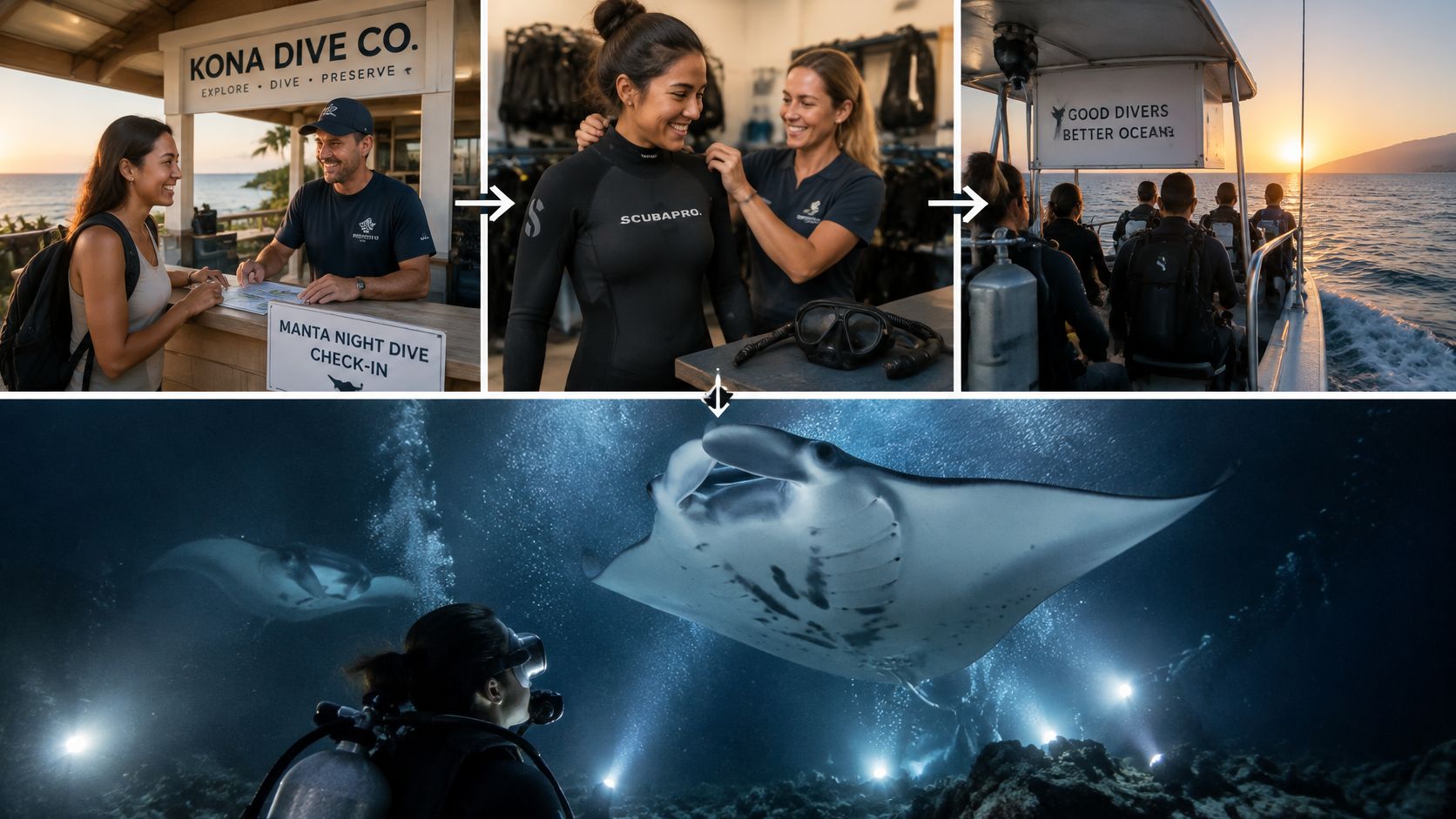
Enter after dark. Certified divers descend with the guide and settle in the designated sandy viewing area. Snorkelers stay at the surface on a lighted float, looking down into the same activity.
Settle into the light. Powerful lights create a bright circle on the seafloor, so divers aren't left in complete darkness. The beams draw plankton into the water above the group.
Watch the feeding passes. Mantas may loop and barrel-roll through the lit water, passing overhead as divers hold position and snorkelers watch from above. The trip is stationary and closely supervised, with experienced guides helping guests stay safe and comfortable.
Return together. When the planned in-water time ends, guests climb aboard, warm up, and head back to the harbor. The scuba version is for certified divers; snorkeling offers a surface view of the same light show.
The manta dive is not a swim around the reef. Divers are positioned in a specific viewing area at a well-established site, and the briefing covers what to expect before anyone enters the water. How often rays loop through the lights still depends on the conditions at the site that night.
Safety Rules That Protect Mantas
Kona's mantas are part of a small island-resident population, so repeated disturbance matters. NOAA's recovery status review for giant manta rays describes Hawaiian reef mantas as having strong island-scale residency and limited demographic interchange. The review notes their slow growth, late maturity, and low reproductive output, and explains that human interactions can make them alter or stop behaviors such as feeding and cleaning.
Keep the rules simple and follow the briefing:
- Stay where you're placed. Kneel or float in the assigned viewing area rather than moving around to find a closer angle.
- Keep clear of the feeding lane. Leave the route between the mantas and the lights open.
- Control your position and equipment. Hold steady buoyancy, keep fins, hands, and cameras out of the rays' flight path, and don't rise into a passing animal.
- Don't touch, chase, or ride. Let the manta choose its route and distance.
- Use light carefully. Follow the guide's direction on flash and avoid sudden strobe bursts in a ray's face.
You're the audience, not part of the act.
Guest comfort is its own safety issue. Night water can feel cooler than the beach in the afternoon, and a guest prone to seasickness should take their usual preventive steps before boarding. For divers, the bright circle on the seafloor and an in-water guide help the group stay oriented; snorkelers remain at the surface float. Divers shouldn't wander the reef looking for a private showing.
These habits improve the viewing as well as protect the animals. A manta that can keep feeding is more likely to continue looping through the lighted area than one repeatedly blocked or startled. Read the responsible diver etiquette guide before the trip, and expect a good crew to review and enforce the standard before anyone enters the water.
Book the Kona Honu Manta Night
Choose an operator that runs night manta trips on the Kona coast, explains where guests will be positioned, uses seafloor lights, and has an experienced guide in the water. Ask how it handles site choice when current or sea conditions change. Kona Honu Divers offers a 2-tank manta charter, often uses Garden Eel Cove, and runs a detailed briefing on the science and passive-observation rules before the dive.
The manta dive and snorkel charter details are the place to confirm current rates, what the trip includes, and eligibility before booking. The 2 Tank Manta Charter requires Open Water Certification or higher and diving within the past 2 years. Don't assume a certification alone settles eligibility; make sure your recent diving meets the stated rule.
Confirm what's included when you reserve. A manta trip's practical essentials are the lights, tanks for divers or a snorkel float for surface guests, a guide, and the briefing; verify the current rate and inclusions on the booking page rather than relying on an old price. The most popular trips can sell out weeks in advance, so don't wait until you're already in Kona to choose your date.
A simple evening plan works well: keep the afternoon free in Kailua-Kona, check in before sunset, spend the dark hours at the cove, and leave the following morning quiet if you can. If you're a frequent diver looking for a separate reef outing, the premium advanced 2-tank trip is a different long-range option, not a substitute for the manta night.
Book Garden Eel Cove as your default, with the understanding that the crew may select another site when conditions call for it. If seeing mantas is a major reason for your trip, reserve a second possible evening so natural variation doesn't leave your whole plan resting on one night.
Manta Night Questions Answered
Is the trip suitable for beginners? Snorkeling offers a surface option for guests who can use the float comfortably. Scuba guests need to meet the operator's certification and recent-diving requirements, and should be comfortable holding position underwater.
Do snorkelers need a certification card? No scuba certification is needed for the snorkel. Divers should confirm they meet the eligibility rule in the booking section before reserving.
What if no mantas appear? A quiet night is a natural outcome, not a failed crew. Keep a backup date and confirm the operator's cancellation or no-show policy before booking, since those terms can vary.
Can non-swimmers join the snorkel? Don't assume so. Confirm directly that the float and in-water guide support suit your swimming ability before you reserve.
Which part of Hawaii does this guide cover? It focuses on the Kona coast of Hawaiʻi Island, where the resident manta population is well documented. If you're deciding between the two formats, this snorkel or scuba manta guide can help you choose the view that suits you.
Kona Honu Divers offers guided manta night dives with a stationary viewing setup at Garden Eel Cove, along with a surface snorkel option for guests who'd rather watch from above. Choose your preferred evening and visit Kona Honu Divers to plan a manta trip that leaves room for the ocean's natural unpredictability.