
The first time you do a manta night dive off Kona, the water seems almost empty until the lights come on. Then a dark shape turns into a ray, then another, and suddenly you're watching giant animals loop overhead with the precision of a choreographed performance.
An Underwater Ballet The Magic of the Kona Manta Dive
You descend into warm, dark water, settle near the bottom, and wait. At first, your world is only your breath, the beam from the lights, and the pale patch of sand below you.
Then the mantas arrive.
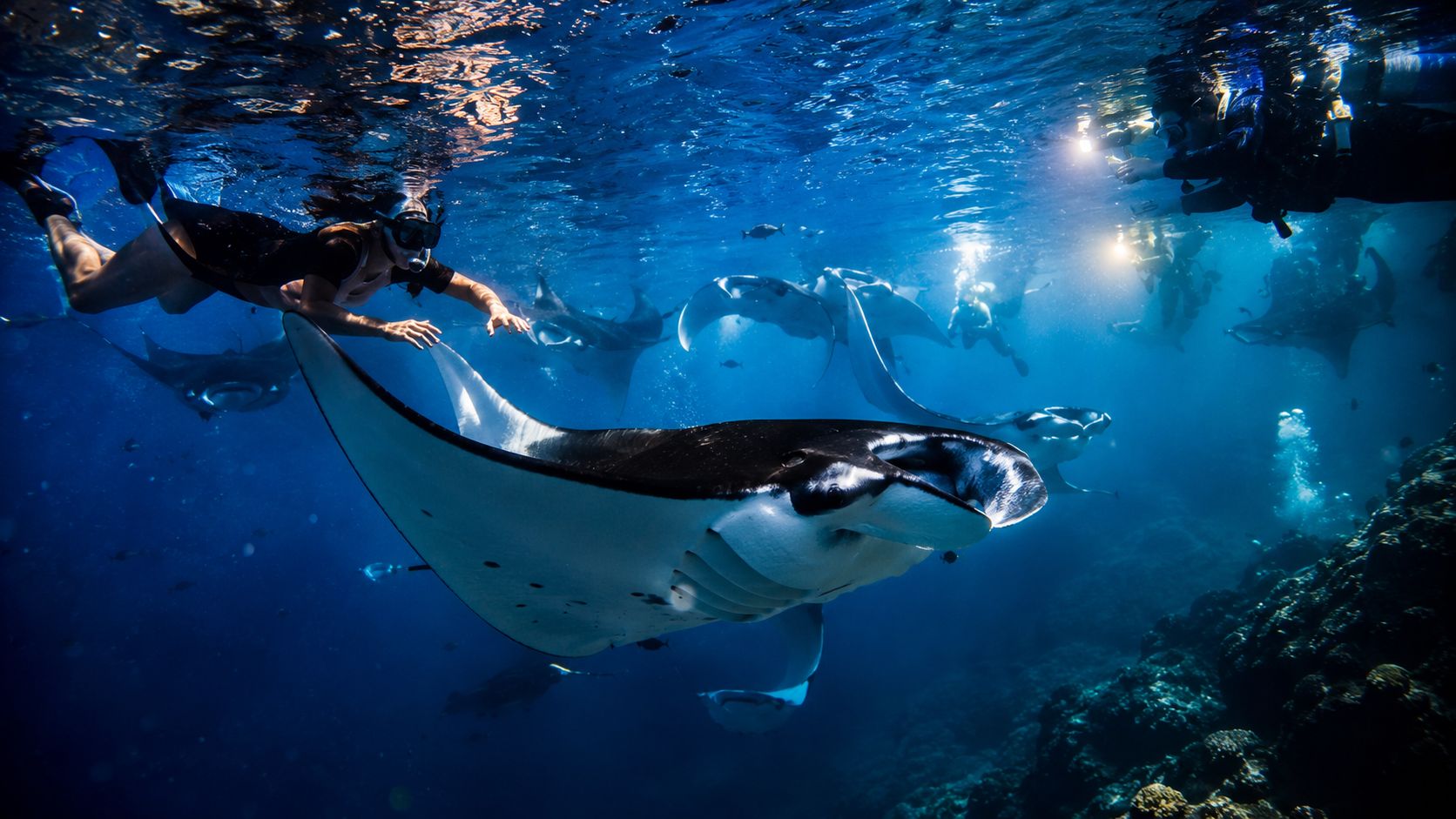
They don't charge in or act unpredictably. They glide. One circles through the light, banking like a silent aircraft, then opens its mouth to feed on plankton gathered in the beam. Another passes above your mask so closely that you can see the shape of its cephalic fins and the pale underside that helps guides identify individuals.
What makes it feel so different
Most wildlife dives involve searching. You're finning over reef, scanning ledges, and hoping to catch the right place at the right moment. The Manta Ray Dive Kona experience feels different because the encounter unfolds in a fixed viewing arena.
Divers stay low. The water column stays open. The mantas use that open space to feed, swoop, and turn.
Practical rule: The less you move, the more natural the encounter becomes.
That stillness is part of the magic. You aren't pursuing the animal. You're giving it room to do what it already came there to do. That changes the tone of the whole dive. It feels less like a chase and more like being invited to watch a nightly ritual.
Why people remember this dive for years
A reef manta ray is large, but what guests usually talk about later isn't size. It's grace. These animals move with astonishing control. They roll through the light in smooth arcs, sometimes making repeated passes over the same group as plankton concentrates above the beams.
A few details often surprise first-timers:
- The encounter is calm: Mantas aren't there for divers. They're there to feed.
- The setting is theatrical: The illuminated seafloor creates a stage effect that makes every pass easy to follow.
- The feeling is personal: Even in a group, the moment a manta loops overhead feels intimate.
For many divers, this is the rare night dive that converts nervous anticipation into complete focus within minutes. Once the first ray appears, people stop worrying about darkness and start watching the patterns. That's why this dive has become a signature Big Island experience for divers, snorkelers, underwater photographers, and anyone who wants to see marine life behaving naturally.
Why Kona is the Manta Ray Capital of the World
On many coasts, seeing a large wild animal feels like buying a lottery ticket. In Kona, the manta encounter works more like visiting a reef that happens to host the same evening dinner service again and again. The reason is not luck. It is geography, plankton, and a resident population of reef mantas that returns to the same productive areas often enough for divers to build careful, repeatable procedures around them.
Kona's local manta population is widely described as more than 450 identified individuals, as noted in this overview of what makes diving in Kona unique. That number matters because it helps explain why the experience is more dependable here than in places where mantas pass through only seasonally. A resident population gives operators and researchers time to learn patterns, identify individual animals, and choose sites where feeding behavior is already well established.
That predictability shapes the whole experience.
In Kona, operators are not trying to intercept a migration route or chase a rumor from another boat. They return to known feeding areas where light draws in plankton and plankton draws in mantas. The setup works like a porch light attracting insects on a summer night, except underwater and with far more care. Divers and snorkelers create a concentrated column of light. Plankton gathers. Mantas follow the food.
A few local factors make that system work unusually well:
- Resident mantas use the area regularly: The encounter does not depend on a short seasonal window.
- Feeding behavior is predictable enough to plan around: Boats head to places where mantas already have a history of showing up to feed.
- Local crews have refined the method over many years: The goal is not to force an encounter, but to create conditions that fit the mantas' natural behavior.
That last point is easy to miss. Kona is famous partly because the rules make biological sense. Guests stay in position so the water above remains open for feeding passes. People are told not to touch mantas because a manta's protective mucus layer helps shield its skin from infection. Rub that coating off, and you are not “petting” a friendly animal. You are removing part of its defense system. Good manta diving in Kona is built on understanding that the best wildlife encounters are the ones that ask the least of the animal.
This is also why broad claims about annual visitor counts or exact sighting percentages deserve caution unless a specific source is given. What experienced Kona crews can say with confidence is simpler and more useful. Sightings are frequent enough that the manta night dive has become one of the Big Island's signature wildlife experiences, but it is still a wild-animal encounter, not a performance on cue.
That balance is what gives Kona its reputation. The coast offers the rare combination of a resident manta population, feeding sites that can be visited consistently, and an operating style designed around safety and conservation rather than pursuit. Guests feel the magic. The structure behind it is what makes that magic repeatable.
Garden Eel Cove The Premier Manta Ray Viewing Arena
A great manta site does two jobs at once. It gives mantas a clear, predictable feeding space, and it gives divers a simple place to stay calm, stable, and out of the animals' way.
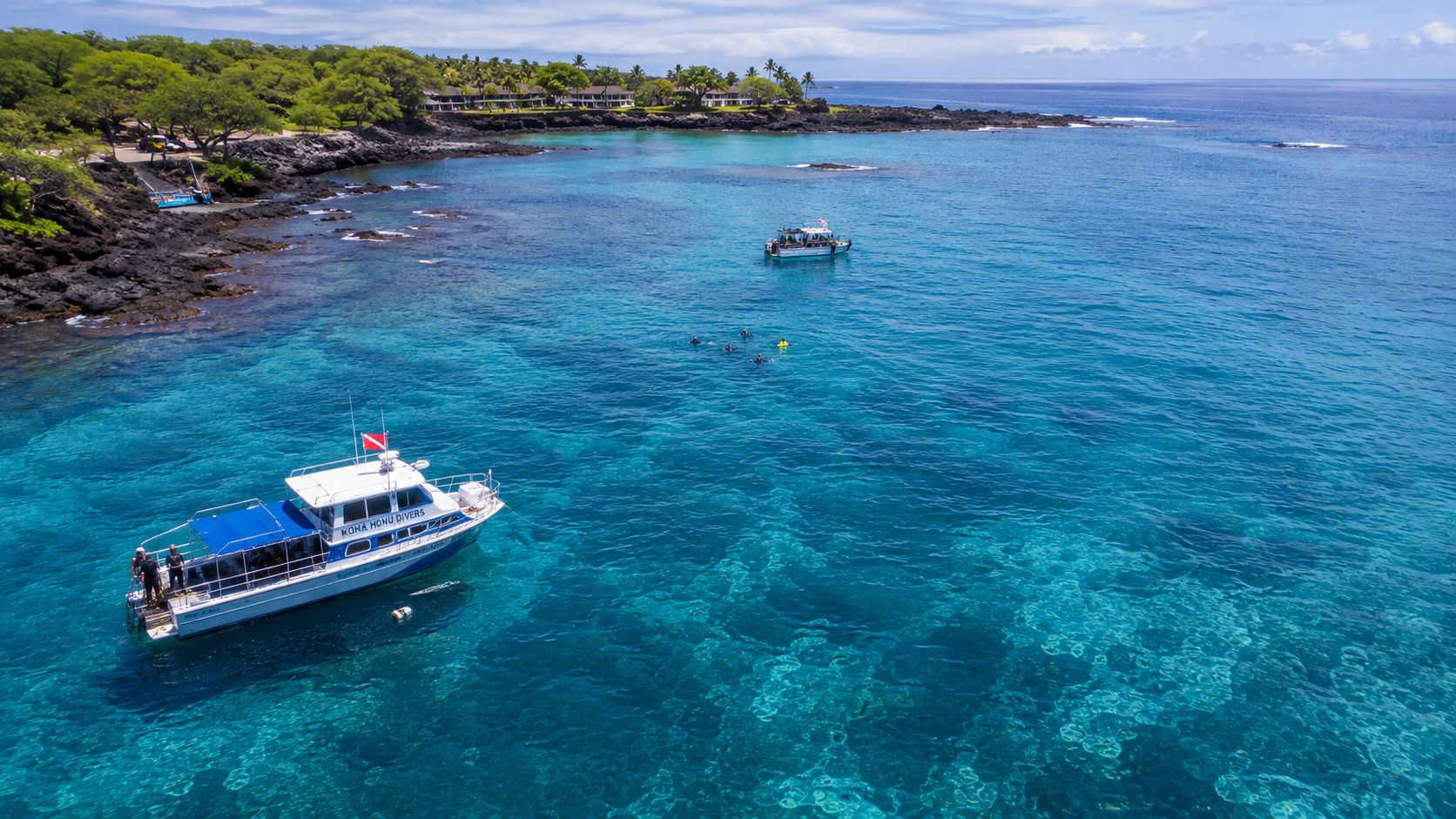
Garden Eel Cove, often called Manta Village, does both unusually well. Local crews know it as a relatively shallow site, often in the range many divers find comfortable for a night dive, while Manta Heaven is generally deeper. That depth difference matters because night diving is easier when the profile is forgiving and the group can settle in without rushing the clock.
Why the shallow profile matters
Shallower water reduces task loading.
That phrase can sound technical, so here is what it means underwater. At night, your brain is already managing more than it does on a daytime reef dive. You are watching your buoyancy, tracking your light, staying aware of the group, and adjusting to darkness. A site with a moderate depth gives divers more mental room to enjoy the encounter instead of fixating on gauges and time.
It also improves the viewing setup. Divers can settle on the bottom in a stable position and aim their lights upward. The mantas then have open water above the group for feeding passes. The result is a cleaner viewing lane for the animals and less accidental movement from divers.
Garden Eel Cove works like a well-designed theater. The divers form the audience area on the bottom. The water above becomes the stage. That layout is one reason the site has become so closely associated with the Kona manta experience, and it helps explain why many visitors first encounter the format through a Kona manta night swim overview, even though the in-water setup differs for snorkelers and scuba divers.
Why protected geography helps
Geography shapes behavior underwater.
Garden Eel Cove tends to feel more sheltered than more exposed sites, which helps crews build a stable light field and helps guests hold position without constant correction. That sounds like a comfort issue, but it is also a conservation issue. Divers who are fighting surge or chasing position are more likely to stir up sediment, drift into each other, or rise into the mantas' feeding path.
A workable manta site needs several pieces to fit together. The bottom has to let divers settle without turning the dive into a buoyancy exercise. The open water above has to give mantas room to bank, loop, and feed. The site also has to remain manageable after dark, when even simple tasks feel bigger.
Garden Eel Cove usually meets those conditions in a way that feels orderly underwater. You notice it in small ways. The group can stay compact. The light concentration stays where it should. The mantas' passes are easier to follow because the arena makes biological sense for feeding behavior, not just for human viewing.
That is why many experienced Kona crews favor it for guests who want a safe, approachable, and consistently strong manta encounter.
How the Kona Night Dive Works What to Expect
By the time the sun drops behind the Kona coast, the mood on the boat changes. The first-timers get quieter. Certified divers check their lights one more time. Then the crew starts the briefing, and the whole experience begins to make sense.
The manta dive feels magical, but the format is very deliberate. A common Kona setup is a 2-tank trip with a late-afternoon reef dive followed by the manta dive after dark. That first dive is not filler. It gives you a chance to settle your breathing, confirm your weighting, and get comfortable with the boat, the crew, and your gear before the night portion begins.
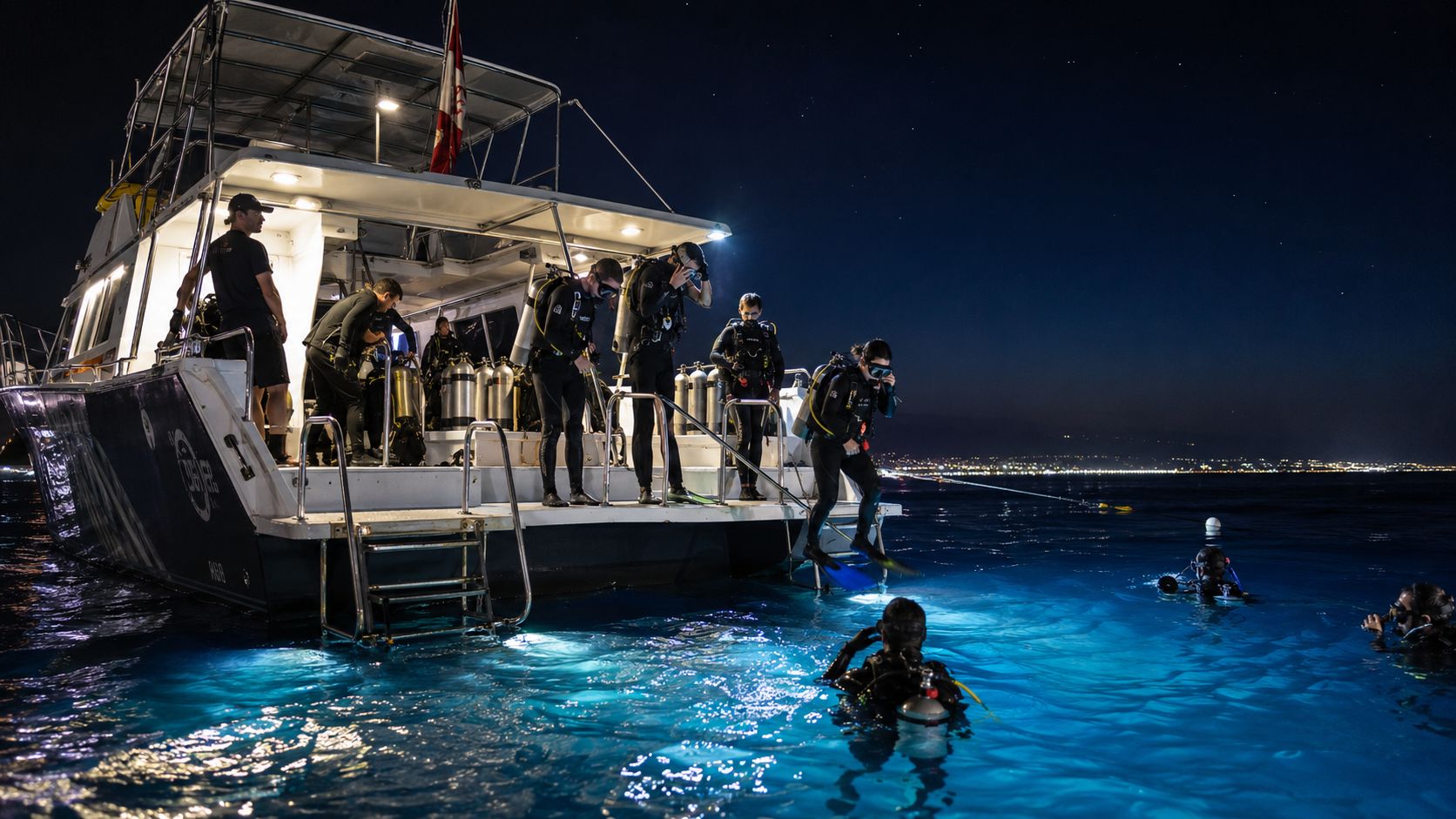
If you are deciding between scuba and snorkeling, this manta ray night swim overview for Kona visitors explains how the two experiences differ once everyone is in the water.
How the feeding setup works
The underwater arrangement works like a campfire that attracts insects, except the light draws plankton and the mantas come to feed on that concentrated food.
Crews place powerful lights so they shine upward into the water column. Plankton gathers in the glow. Mantas follow the food source, then circle, glide, and barrel roll through the lit area. That is why divers are asked to stay low and still. The animals need open water above the group so they can feed naturally without having to dodge people.
Guests are often surprised by how little swimming is involved.
A good manta dive is more like settling into front-row seats at an outdoor theater than going on a hunt. You descend, get into position, and let the action come to you.
What divers and snorkelers actually do
Divers and snorkelers share the same wildlife encounter, but they experience it from two different layers of the water.
| Feature | Scuba Divers | Snorkelers |
|---|---|---|
| Position in the water | Stay low on or near the bottom | Remain at the surface with the float setup |
| View of the mantas | Watch rays swoop overhead | Watch rays rise toward the light from below |
| Key skill | Buoyancy control and stillness | Comfortable surface swimming and holding position |
| Movement during encounter | Minimal once settled | Minimal once in place |
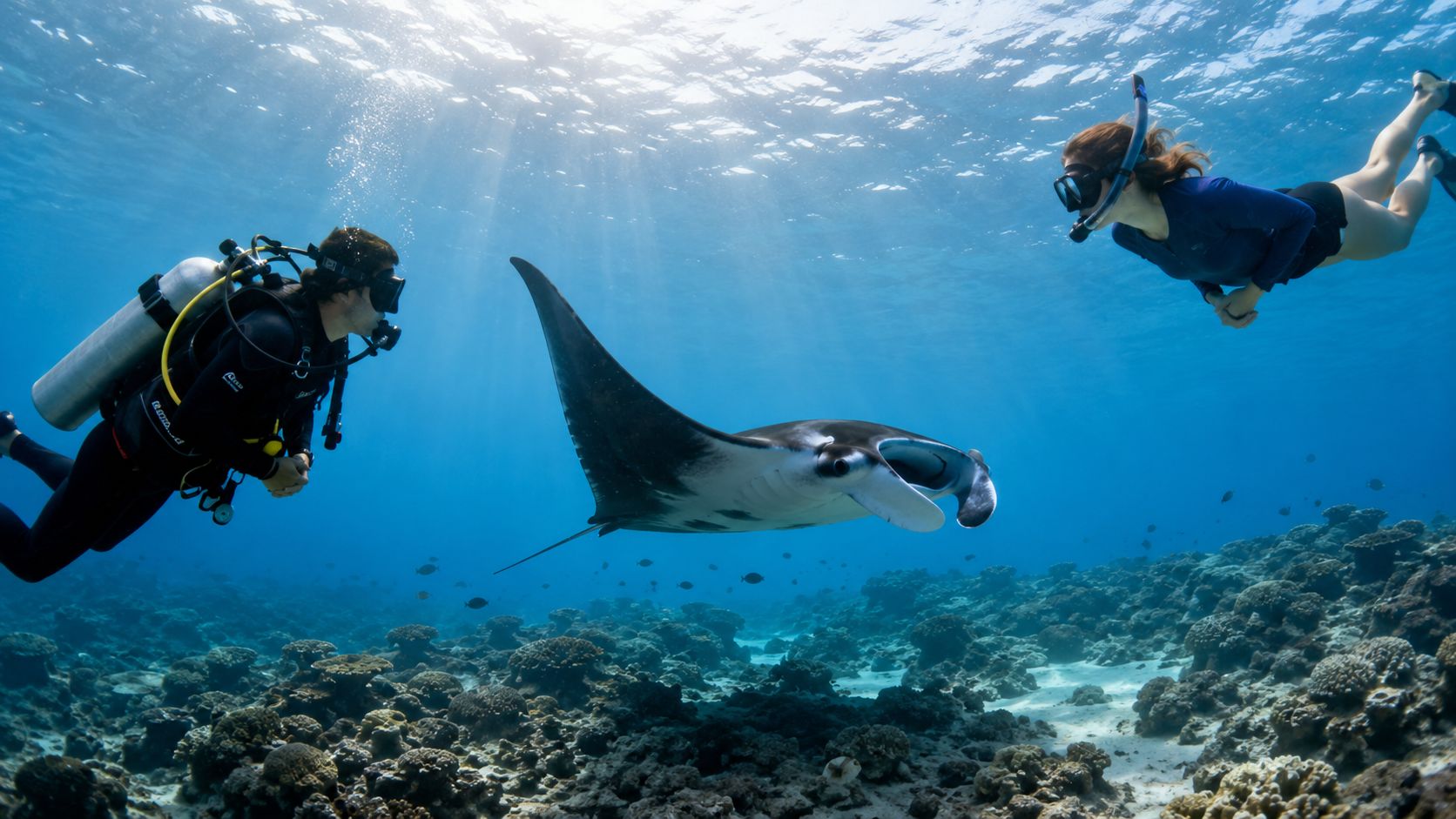
That difference matters for safety and for the mantas. Divers create the lower boundary of the viewing area. Snorkelers create the upper boundary with their lighted float. The feeding lane stays open in between, which gives the animals a predictable space to move through.
What the evening usually feels like
The flow is simple once you know the sequence:
- Check in and set up gear: You meet the crew, listen to the site briefing, and prepare equipment while there is still daylight.
- Make the first dive: On 2-tank trips, the reef dive helps you get comfortable in the water and lets the crew spot any weighting or gear issues early.
- Review the night plan: Before the manta portion, the crew explains entry procedures, underwater positioning, light use, hand signals, and exit order.
- Settle into the viewing area: Divers descend and kneel or hover low in the designated spot while the lights begin attracting plankton.
- Watch the encounter build: Some nights the first manta appears quickly. Other nights the food concentration builds first, then the rays arrive and the whole water column comes alive.
- Exit, warm up, and replay every moment on the ride in: That last part happens on almost every boat.
What you should expect underwater is stillness, patience, and sudden bursts of awe. One pass can feel graceful and distant. The next can bring a manta close enough that you see the white underside, the mouth open for plankton, and the cephalic fins guiding water in like soft, controlled wings.
For many divers, that shift is a surprise. You are not chasing wildlife. You are holding a respectful position inside a carefully managed feeding arena that was designed to be safer for guests and less disruptive for the animals.
Participation Requirements Safety and Conservation Rules
A manta night dive feels peaceful because the structure is strict. The rules are not there to make the experience rigid. They create a predictable feeding space for the mantas and a controlled environment for divers and snorkelers.
The main safety skill is buoyancy control. Mantas circle through the lighted water to feed on plankton, and that creates a clear travel lane above the viewing area. A diver who rises unexpectedly can drift into that lane, startle an animal, and create a chain reaction for the rest of the group. Good control keeps the encounter calm, keeps fins off the reef, and gives the mantas room to do what brought them in.
If you want a broader primer on respectful underwater behavior, this guide to responsible and considerate diver etiquette explains the habits that make wildlife encounters safer for everyone.
Who can do the dive
For scuba divers, Open Water certification is the usual starting point. The more meaningful question is whether you can descend comfortably, stay where you are asked to stay, and avoid popping upward when something exciting happens overhead.
For snorkelers, the requirement is different but just as important. You need to be comfortable in open water at night, able to listen closely to the crew, and able to hold position at the surface without splashing or swimming after the animals.
Calm beats experience level more often than guests expect.
The rules and the science behind them
The no-touch rule has a biological reason. Mantas are covered by a protective mucus coating that helps shield their skin from infection and irritation. Hands, gloves, and even a light brush from gear can disturb that layer. That is why guides are firm about watching only.
The rest of the rules follow the same logic:
- Stay low and stay put: Divers belong below the feeding activity, not in it. Your job is to become part of the background.
- Do not chase or reach up: A manta that has to avoid people spends less time feeding naturally.
- Protect the bottom: Kneeling or hovering carelessly can break coral, stir up sediment, and reduce visibility for the whole group.
- Use lights the way the crew instructs: The lights are set to concentrate plankton in a stable place. Random movement scatters that effect and makes the feeding pattern less consistent.
A good comparison is a theater stage. The lights draw the action to one area, the mantas are the performers, and guests get the best view by staying in their seats.
Seasickness and comfort
If boat motion tends to bother you, handle it before departure. A light meal, good hydration, and early prevention usually work better than trying to fix nausea once the boat is moving.
Common over-the-counter options guests often ask about include Dramamine, Bonine, Sea-Band wristbands, ginger chews, and prescription patches recommended by your doctor. Kona Honu Divers also has an internal guide on how to avoid sea sickness if you want help choosing an approach before your trip.
Comfort matters after the dive too. Night air can feel cool once you are wet, and guests who bring a towel and a dry layer usually enjoy the ride home a lot more.
Planning Your Manta Dive Booking Tips and What to Bring
A manta dive usually feels effortless once you are in the water. The easy part starts much earlier, with a smart booking choice and a small bag packed for the ride home.
Kona's manta trips run throughout the year, so your planning goal is not chasing a tiny seasonal window. It is choosing a date that gives you flexibility, enough daylight to arrive without rushing, and the trip format that matches your real comfort level in the ocean at night. If you are comparing options, the broader Kona diving tours page is the right place to start. If boat motion has spoiled trips for you before, read this guide on how to avoid sea sickness before your dive while you are planning, not after you are already queasy at the harbor.
Booking early helps for a simple reason. Good dates go first, and last-minute choices can leave you picking around your schedule instead of choosing the experience that fits you best. That matters even more for mixed groups, where one person may be a confident diver and another may be happier snorkeling.
What to bring
Pack for the part guests often underestimate. The ride back.
Warm water does not always mean a warm boat ride after dark, especially once you are wet and the wind picks up. A towel and dry layer can change the whole mood of the trip from shivery to comfortable.
- Bring a towel: You will appreciate it as soon as you get out of the water.
- Pack dry clothes: A sweatshirt, light jacket, or dry shirt makes the ride back much nicer.
- Use reef-safe sunscreen before departure: Apply it for sun exposure on the boat and during check-in, with enough time for it to absorb before you enter the water later.
- Take seasickness prevention early if needed: Motion sickness is much easier to prevent than fix once the boat is moving.
Booking advice that actually helps
Ask a few direct questions before you reserve. Confirm the check-in time, what gear is included, and whether the trip is structured as a two-dive evening. That tells you a lot about the pace of the night and how much energy you should budget.
Be honest about skill and comfort level too. Night diving adds task loading, even at a site known for predictable manta encounters. Guests have a better time when they choose the format that matches their current experience, not the version of themselves they hope to be on vacation.
Why Dive with Kona Honu Divers
When you choose an operator for a manta night dive, the important questions are practical. Do they run the trip format you want? Do they explain positioning clearly? Do they make the experience easy for both newer and experienced divers to follow?
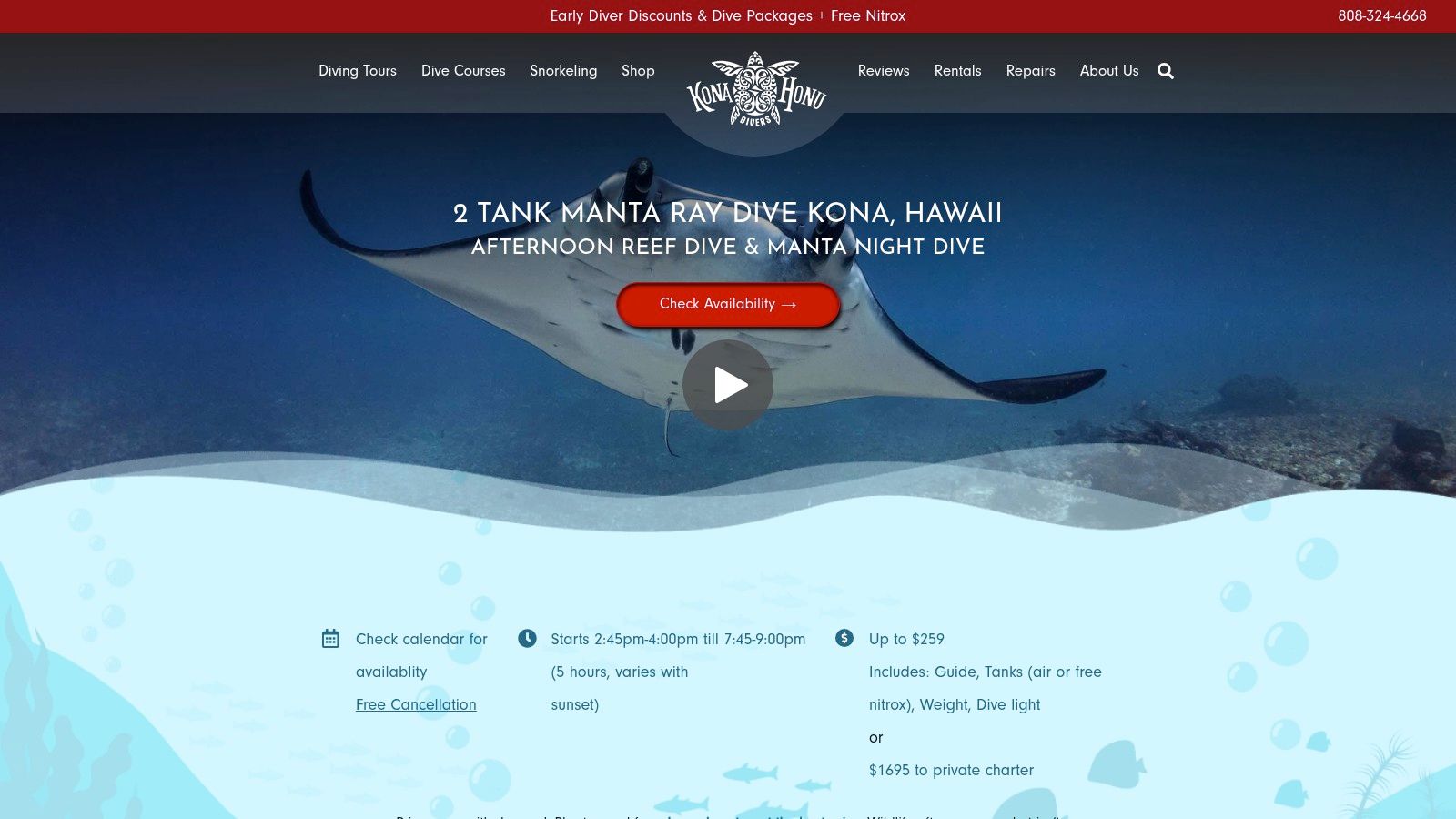
Kona Honu Divers offers a 2-tank manta dive and snorkel trip, along with other Big Island diving options. For divers interested in a very different style of night experience, they also list a Blackwater Dive for more experienced participants.
What to look for in any operator
Even if you're comparing several companies, the checklist stays about the same:
- Clear pre-dive briefings: You should know exactly where to position yourself and why.
- Strong conservation messaging: Good operators don't treat the mantas like props.
- Comfortable boat logistics: Easy entries, exits, and organized gear handling matter more at night.
- Experience with mixed groups: Many trips include divers with very different confidence levels.
The quality of the briefing often predicts the quality of the dive. If the crew can explain the rules in plain language and connect them to manta behavior, guests tend to relax and perform better underwater.
If you're ready to experience the Manta Ray Dive Kona for yourself, Kona Honu Divers offers a straightforward way to book the trip, compare dive options, and plan a safe, respectful night with Kona's manta rays.