
You're probably deciding between a lot of Big Island activities right now, and the manta ray dive keeps floating to the top of the list. That's for good reason. Few dives give you such a clean combination of accessibility, consistency, and sheer spectacle.
The mistake I see most often is treating every manta tour as basically the same. They aren't. The site matters. The operator's in-water discipline matters. The way the group is managed matters. If you want a world-class manta ray dive Kona experience, those details are what separate a magical night from a merely decent one.
The Magic of the Kona Manta Ray Dive
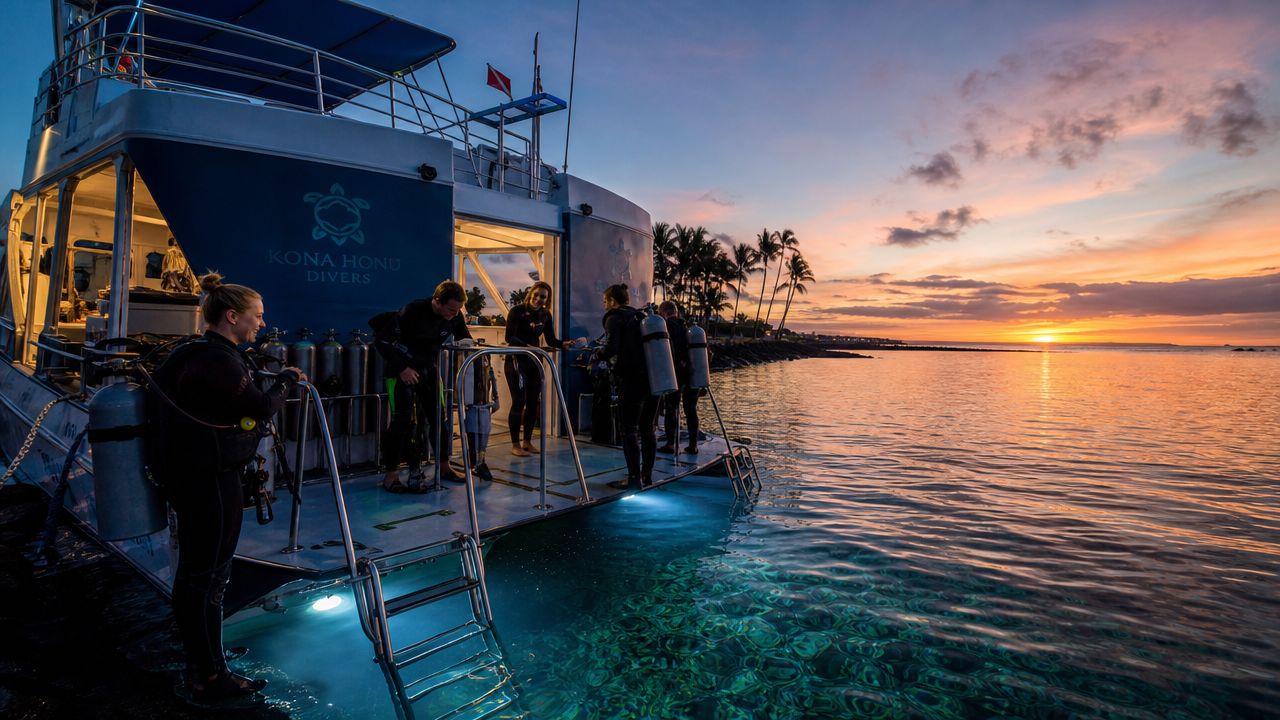
Sunset is when the mood shifts. The harbor starts to glow gold, everyone checks gear one more time, and the conversation gets quieter as the boat heads out. By the time the sky goes dark, you know you're not heading to a standard night dive. You're heading to one of Kona's signature wildlife encounters.
What makes this dive special isn't hype. It's consistency. Kona's manta ray night dives report sighting success rates of about 80% to 90% year-round, supported by a resident population of over 300 catalogued individuals, and the destination draws about 80,000 participants annually, according to Kona manta dive statistics and site background. That's why this dive has become the benchmark people compare everything else to.
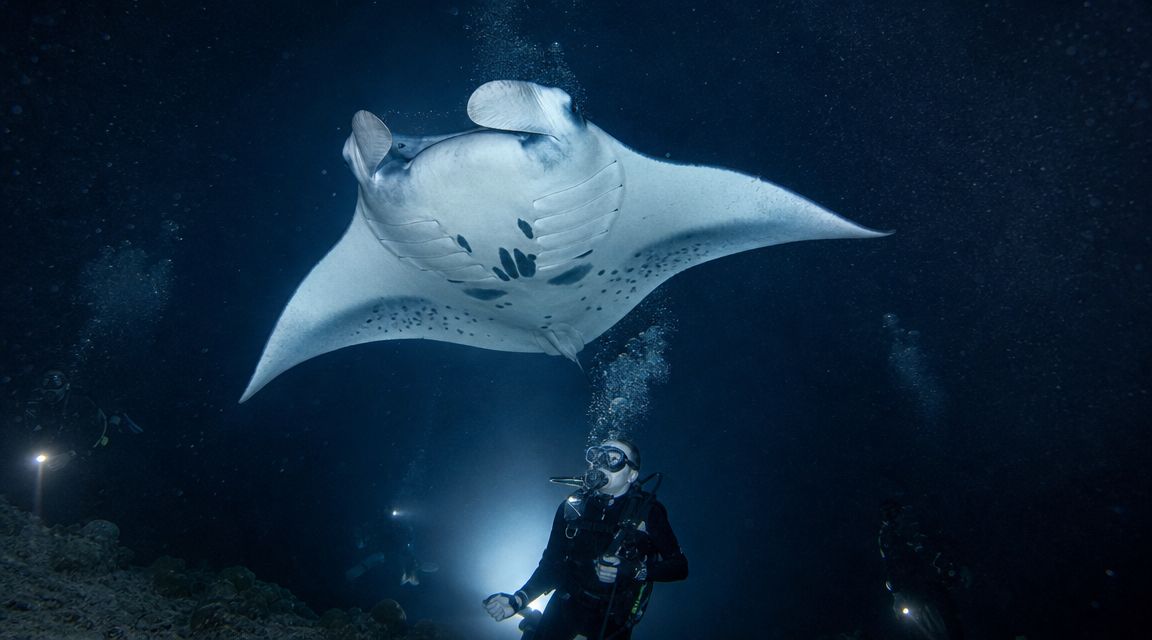
Why Kona works so well
In many destinations, manta encounters depend on timing a migration or getting lucky. Kona is different. The mantas seen here are part of a resident local population, which is a big reason the encounter stays reliable across the year.
That changes how you plan the trip. You're not trying to hit a narrow seasonal window. You're choosing the right conditions, the right boat, and the right site.
Practical rule: If you want to stack the odds in your favor, book the trip for the experience quality, not just the idea of “seeing mantas.”
What the experience feels like
The first good pass from a manta usually resets everyone's expectations. Even people who've seen sharks, turtles, and big pelagics tend to come up talking about how calm the animals look. They don't rush. They glide. Then they turn through the light column and the whole scene starts to make sense.
That's why the manta ray dive Kona experience has such a strong reputation with divers and snorkelers alike. It isn't random chaos. It feels organized by nature itself, with the lights drawing plankton and the mantas using that setup to feed right in front of you.
If you want a deeper look at the tour style that built this reputation, take a look at the Big Island manta ray tour overview. It gives you a clear sense of how the evening is structured and what kind of encounter you're signing up for.
What to Expect on Your Night Dive Adventure
Most divers are more relaxed after they understand the sequence. This trip isn't a free-swim night hunt through dark water. It's a controlled, shallow, stationary encounter designed around observation.
The Kona manta ray night dive is typically set up with divers settling on a sandy bottom at about 30 to 40 feet, where underwater lights attract plankton into a feeding column that brings the mantas overhead, making it suitable for Open Water level divers, as described in this overview of the Kona manta ray dive setup.
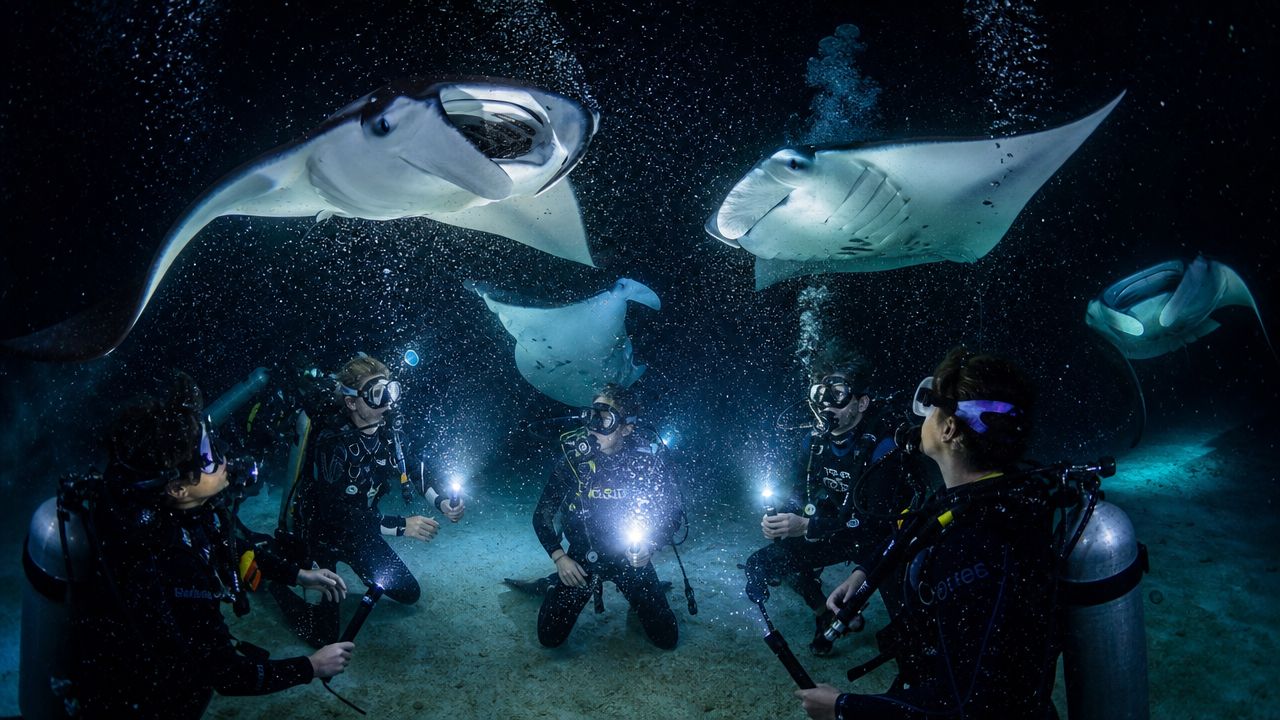
The evening flow
Here's the rhythm most divers can expect:
Check-in and gear setup
You'll handle paperwork, confirm equipment, and get briefed before departure. This is the time to ask direct questions, especially if it's your first night dive.Boat ride out at dusk
This part is often more relaxing than people expect. You get a little time to settle in, organize your kit, and adjust to the pace of the trip.Briefing with clear in-water roles
A good briefing covers entry, descent, light placement, where to position your body, and what not to do around the mantas.Descent to the viewing area
Once underwater, divers move into position on the sand. This isn't a dive where you're navigating a reef with a torch and trying to track animals in the dark.
The manta campfire
The “campfire” idea is simple and effective. Divers form a viewing group on the bottom while lights are aimed upward. Those lights concentrate plankton. The mantas come to feed in the illuminated water above.
What works well here is the low task load. You're not managing a complicated route, fighting current, or trying to keep up with a guide through darkness. You settle in, control your buoyancy, stay compact, and watch the show unfold.
Stay still, keep your fins clear of the bottom, and look up. New divers who follow those three instructions usually have a much easier time than divers who overthink it.
Why this dive feels easier than people expect
Night diving sounds intimidating until you understand that this one is built around stability. The best operators keep the process simple because simplicity is safer and gives guests more time with their eyes on the mantas instead of on their instruments.
A few things help:
- Shallow profile: You're not managing a deep technical-style dive.
- Stationary format: Once you're in place, there's little movement required.
- Clear visual reference: The light field gives you a strong focal point.
- Guided structure: Everyone knows where to be.
If you're traveling with non-divers, that matters too. A lot of groups split between diving and snorkeling on different nights when they don't need to. If you want to see how the surface experience compares, the Kona manta ray night swim option is worth reviewing before you book.
Choosing Your Site Why Garden Eel Cove is Superior
If you only remember one piece of inside advice from this article, make it this. Site choice matters more than most first-time visitors realize.
Garden Eel Cove, often called Manta Heaven, is a 30 to 35 foot site with strong visibility that often exceeds 100 feet, and guide reports from the area include encounters with 8 to 12 manta rays in a single dive and records of more than 36 at once, according to this Garden Eel Cove site profile. Those numbers don't promise your exact night, but they tell you what the site is capable of.
Why I favor Garden Eel Cove
Garden Eel Cove gives divers a cleaner viewing layout. The bottom topography and viewing area tend to create a better theater for the encounter. You can settle in, get stable, and keep a broad field of view without the whole thing feeling cramped.
That matters more than people think. A manta dive gets better when the site lets the group spread out in an orderly way while still focusing the action overhead.
Where it outperforms other options
Here's the practical comparison:
| Factor | Garden Eel Cove |
|---|---|
| Depth profile | 30 to 35 feet, which is comfortable for many certified divers |
| Visibility | Often 100+ feet |
| Viewing style | Broad, open viewing area with strong sightlines |
| Manta potential | Known for large congregations on strong nights |
The other major site in Kona has its place, especially for guests who prioritize very sheltered conditions. But if your goal is the most impressive dive setting, not just the easiest logistics, Garden Eel Cove is the stronger choice.
Better reef, better stage, better dive
This part gets overlooked. A manta night dive isn't only about the moment the rays arrive. The quality of the reef and the feel of the site matter too. Garden Eel Cove gives you a setting that feels more like a real dive, not just a waiting area for an attraction.
If you want the manta encounter to feel like a dive first and a spectacle second, Garden Eel Cove usually delivers that more convincingly.
That's why I steer experienced guests, underwater photographers, and divers who care about site quality toward this option whenever conditions line up. If you want more context on how local divers rank standout sites, the guide to the best dive in Kona is a useful next read.
For anyone booking a manta ray dive Kona trip, this is the actionable takeaway. Don't just book “a manta tour.” Book the site you want.
Safety Etiquette and Manta Conservation
A good manta dive feels calm because everyone follows the same rules. That includes the crew, the divers, the snorkelers, and the boat captain. Once one part of that system gets sloppy, the experience gets worse for both people and animals.
Crowding is a real concern on busy nights. Public-facing coverage often skips that trade-off, but the issue is straightforward. The encounter can feel crowded, and responsible operators reduce that pressure by managing group size, enforcing strict no-touch rules, and using designated moorings to control boat density, as noted in this discussion of manta crowding and responsible operations.
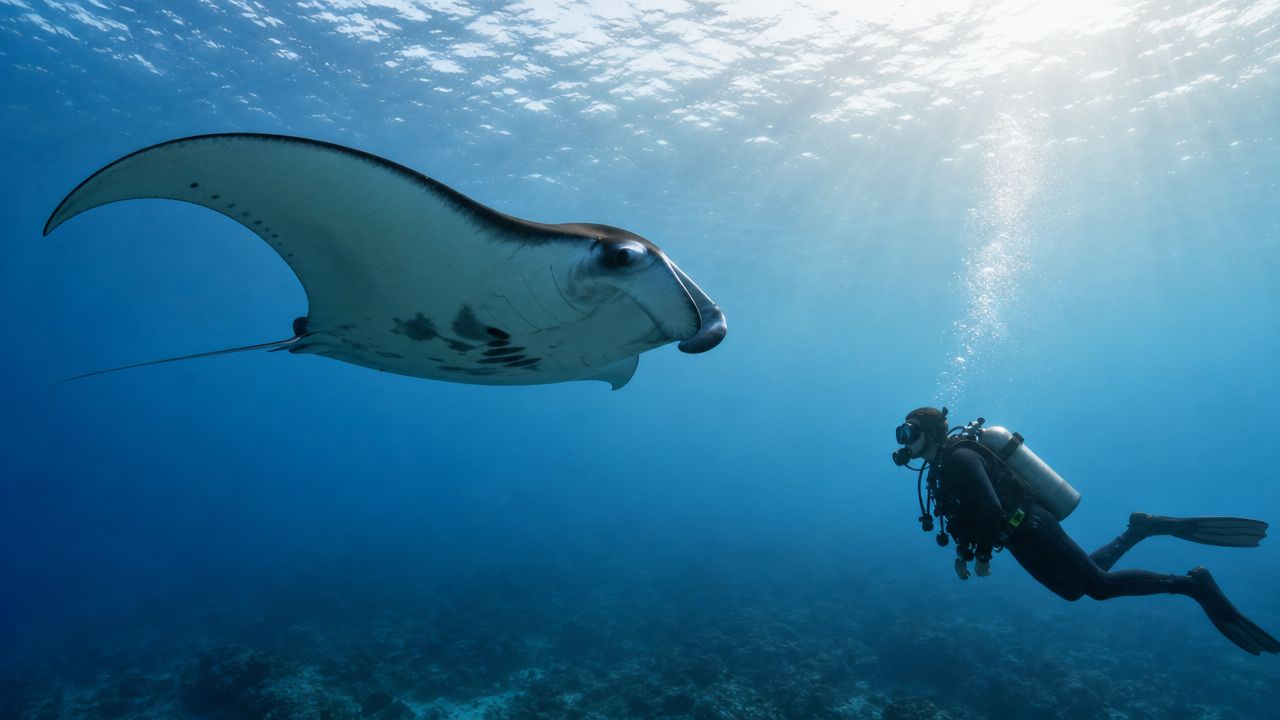
The rules that matter most
These are the essentials:
- No touching: Mantas aren't there for contact. Passive observation protects the animal and keeps the encounter natural.
- Don't chase: If you swim after a manta, you break the entire rhythm of the dive.
- Stay low and stable: Divers belong on or just above the sand in the designated viewing area.
- Leave the flight path open: Mantas need room to approach, feed, and turn.
A lot of guests assume the main safety issue is the dark. Usually it isn't. The bigger issue is poor diver discipline. Good buoyancy and stillness solve most problems before they start.
How better operators handle crowds
There's no such thing as a perfectly private manta night on every evening. This is a popular wildlife experience. What you can control is how well the operation handles that reality.
Look for crews that do these things well:
- Use moorings correctly
- Keep the briefing short and clear
- Position guests consistently
- Correct bad behavior immediately
- Prioritize the mantas' path over guest selfies
That's the difference between organized and chaotic.
Respect for mantas isn't abstract. It looks like still hands, quiet fins, and no one trying to force the encounter.
Handling seasickness before it ruins the night
The boat ride is easy for many guests, but if you know you're prone to motion sickness, plan ahead. Don't wait until you feel bad. That's usually too late.
Options people commonly use include Ship-EEZ Seasickness Patch, Dramamine pills, Bonine pills, Sea Band wristbands, and Ginger chews.
For in-water etiquette beyond the manta dive itself, the broader guide to responsible and considerate diver etiquette is worth your time. Divers who already practice those habits usually have the smoothest manta nights.
How to Prepare for Your Kona Manta Dive
The guests who enjoy this dive the most usually arrive with the right expectations and a few small details handled before they step on the boat. A manta night is not technically hard, but it is much better when you are warm, calm, and booked on the trip that fits you.
Be realistic when choosing the format. Divers sometimes push themselves onto a scuba trip when the better call is snorkeling, especially in mixed groups or families. If you are certified and comfortable in the water, the dive is a good fit for many Open Water divers because the profile is shallow and the group stays in a controlled viewing area. If you are uneasy at night, rusty after a long break, or bringing non-divers, say so when you book. A good crew can help you pick the right option before that becomes a problem at check-in.
Boat comfort matters more than people expect. Guests who are prone to motion sickness should treat that early, not after the ride starts. The practical advice in this guide on how to avoid sea sickness before a Kona boat dive can save the evening.
Pack for the ride back, not just the dive itself.
- Swimsuit: Wear it to the boat if you can.
- Towel: You will want it as soon as you get out.
- Warm layer: A sweatshirt or light jacket makes a big difference after dark.
- Certification card: Bring it if you are diving.
- Personal medications: Keep them with you, including anything for motion sickness.
Leave the extra gear mentality at home. You do not need a long checklist of advanced equipment to have a great manta dive. You need a mask that fits, exposure protection that keeps you comfortable, and the discipline to settle in calmly once you are in position.
Cameras are optional. Good buoyancy, easy finning, and a clear head are what improve the experience.
One more point from years of running this trip. If Garden Eel Cove is the site you chose because you want the strongest chance at a clean, well-managed encounter, prepare to be a cooperative diver, not a busy one. The site does its job well when guests keep their movements controlled and let the mantas own the water above the lights. That is how a crowded night still feels organized, and how a good manta dive turns into a memorable one.
Why Choose Kona Honu Divers
Operator choice changes the whole tone of a manta trip. Boats can feel rushed or calm. Briefings can be cluttered or sharp. In-water groups can feel controlled or messy. Those aren't small differences on a night dive.
One option to review is Kona Honu Divers' manta tour page, especially if Garden Eel Cove is the site you want to prioritize. The company also offers broader Big Island scuba diving tours, plus the Blackwater Night Dive for divers who want a very different night experience, and the premium advanced long-range trip for guests looking for more experienced diving opportunities.
What to evaluate in any operator
Use this checklist before you book any manta ray dive Kona trip:
| Question | Why it matters |
|---|---|
| Which site do they prefer? | Site selection shapes the quality of the dive |
| How do they manage group behavior? | Good discipline improves safety and animal interaction |
| Are they clear about diver requirements? | Honest screening avoids bad-fit bookings |
| Do they also offer snorkel options? | Useful for mixed groups and families |
What separates a strong operation from a weak one
Good operators don't just promise mantas. They manage the entire environment around the encounter. That includes boat handling, clear briefings, proper in-water positioning, and crews who correct problems early instead of letting the group drift into disorder.
That same judgment matters when you branch out beyond mantas. A crew that runs a clean manta night often runs cleaner advanced trips too, because the habit is the same. Set expectations clearly. Keep people where they belong. Protect the site.
Manta Ray Dive Kona FAQ
Is this a good dive for a new diver
Yes, for many certified new divers it is. The setup is shallow and stationary, which removes a lot of the workload that makes other night dives feel harder. You still need solid basic control and the ability to follow instructions, but this isn't the same as doing a dark reef navigation dive in moving water.
Can non-divers come too
Yes. That's one of the strengths of this activity. Families and mixed groups don't have to split up if some members dive and others don't.
Snorkelers watch from the surface around the lighted viewing setup, which gives them a very different but often excellent perspective on the mantas.
Is a manta sighting guaranteed
No wildlife encounter can be guaranteed. These are wild animals, and that's part of the value of the experience.
What you can do is choose a destination and operator with a strong track record, understand the site choice, and book the trip that fits your comfort level. That's how you improve your odds without pretending nature runs on schedule.
What if I'm nervous about the dark
That's common. Participants settle down quickly once they realize the dive isn't built around swimming through darkness looking for mantas. It's structured around a fixed viewing area with clear guide support.
The fastest way to feel comfortable is to stop thinking of this as a “night adventure” and start thinking of it as a controlled underwater theater.
Should I dive or snorkel
Choose scuba if you're certified and want the bottom-up view. Choose snorkel if you want an easier entry, you're traveling with family, or you prefer staying on the surface. Neither choice is the “wrong” one. They're just different angles on the same animal behavior.
If you want a manta trip built around sound site choice, clear safety practices, and a respectful in-water approach, take a look at Kona Honu Divers. The right operator won't just get you to the manta site. They'll make sure the whole night is run properly from briefing to final ladder climb.