
You're probably here because the manta ray dive in Kona sounds amazing, but you also want the full picture. Not just the dreamy photos. You want to know what occurs, whether it's safe, whether you'll be cold, whether snorkeling is enough, and what separates a smooth night from a miserable one.
That's the right mindset.
A good manta night is one of the most memorable things you can do in Hawaiʻi. A bad one usually comes down to simple mistakes: showing up underdressed, underestimating the chill after sunset, bringing the wrong camera setup, or booking without understanding how the site works. The details matter.
An Unforgettable Night with Gentle Giants
Often, the first thing noticed isn't the manta. It's the contrast.
The ocean is dark, the sky is dark, and then the water below starts glowing. Divers settle in, lights point upward, and the black water turns into a bright feeding zone. Then a shape appears overhead and stops feeling like a fish at all. It feels more like watching a bird fly underwater.
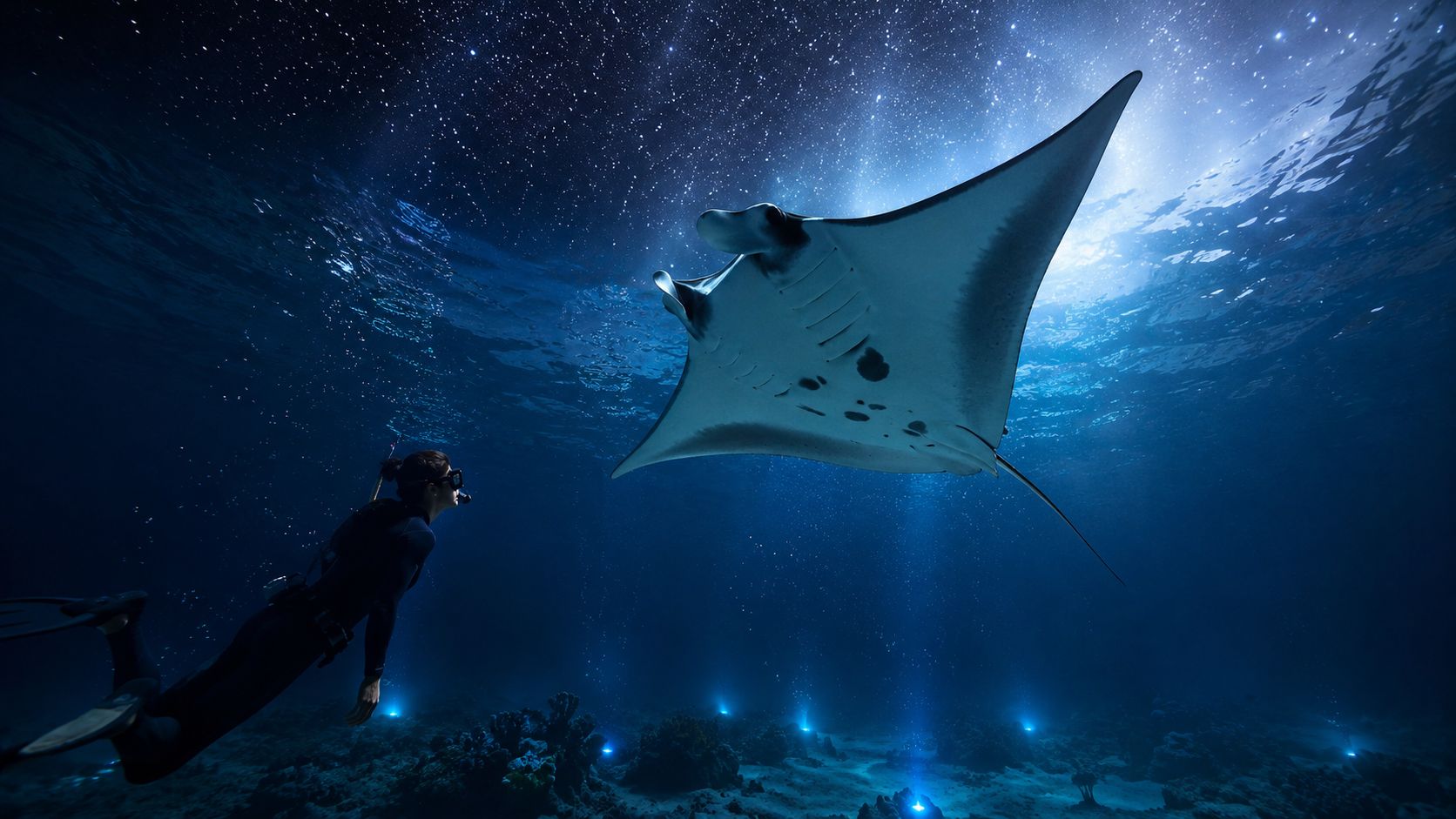
That's why the manta ray dive Kona has such a strong reputation. It isn't built around a short migration or a lucky season. The Kona coast is widely described as one of the most reliable manta viewing destinations in the world because the local reef manta population is resident year-round, and sighting success is commonly reported at about 80% to 90% of nights according to this overview of Kona mantas.
Why people travel so far for this one dive
In many places, seeing large marine life means hoping you happen to be there on the right day.
Kona is different. The encounter is repeatable enough that travelers often build an entire evening around it with confidence. That doesn't make it guaranteed. These are wild animals. But it does mean you're not gambling on a brief window the way you are with many other wildlife experiences.
Practical rule: Treat the manta dive like a wildlife encounter with unusually strong odds, not like a theme park show.
There's also a reason divers and snorkelers both love it. The experience works from two very different viewpoints. Divers watch from below as mantas sweep overhead. Snorkelers watch from the surface as the rays rise into the light. Both can be spectacular.
If you're already looking at trip options, this Big Island manta ray tour page gives a useful starting point for understanding the format.
What first-timers usually get wrong
Most first-timers expect adrenaline. What they feel is stillness.
You're not chasing anything. You're not kicking hard across a reef. You're holding position and letting the animals do the work. That surprises people in a good way. It turns nerves into focus very quickly.
How the Kona Manta Ray Dive Works
You arrive after dark, step into black water, and then the ocean starts glowing under the boats. A few minutes later, wide mouths and white bellies appear in the light column above you. It feels dramatic in the moment, but the system behind it is simple and carefully controlled.
Operators create a feeding station with light. Light attracts plankton. Plankton attracts manta rays because mantas feed by filtering tiny organisms from the water. The whole experience works like a porch light drawing insects on a summer night, except the visitors here are giant, graceful rays.
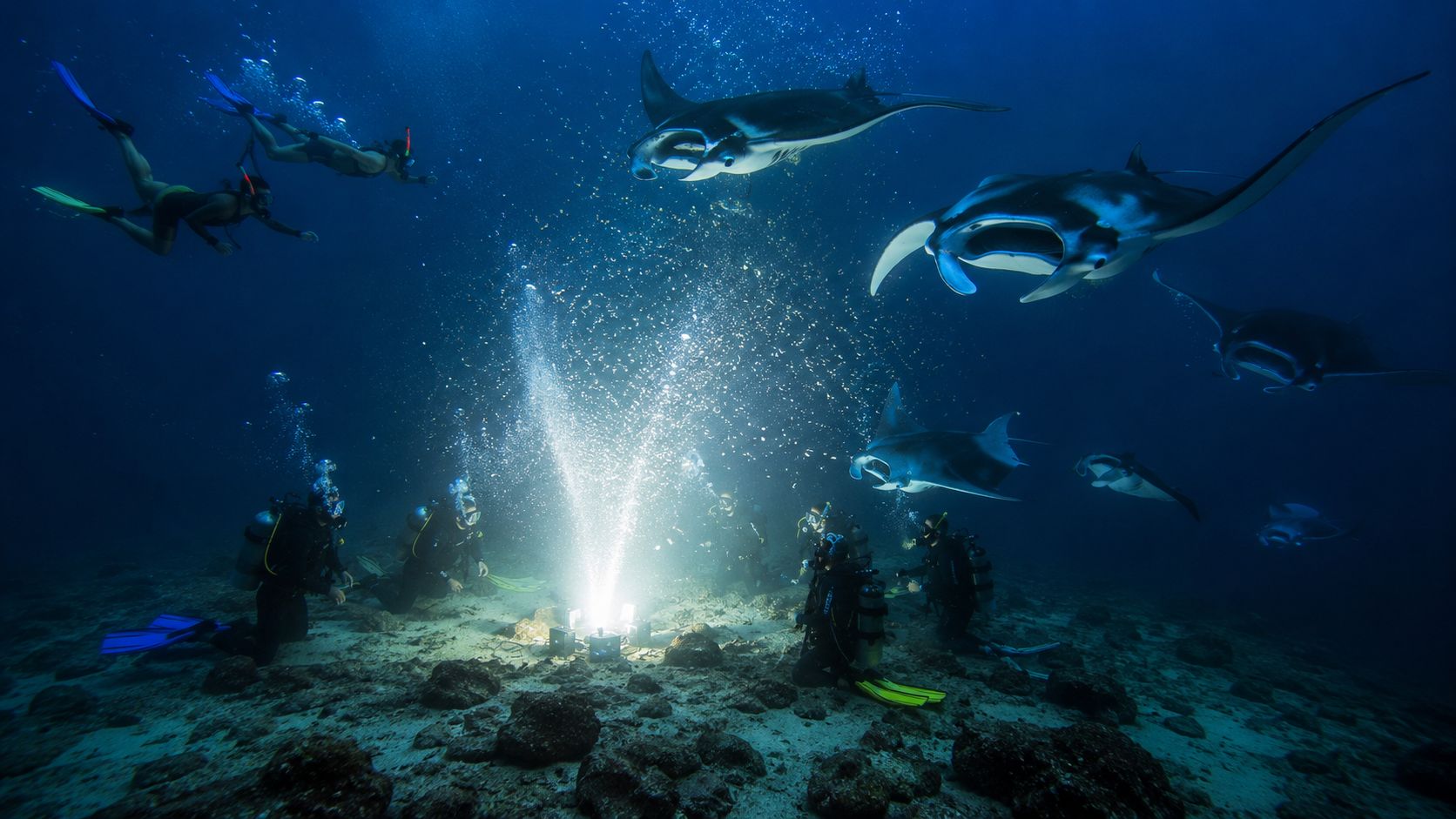
The basic sequence
Boats arrive after sunset
The crew checks everyone in, explains hand signals and rules, and separates divers from snorkelers so each group enters in an organized way.Lights are placed in the water
Those lights concentrate plankton into a brighter, denser patch of water that mantas can feed through efficiently.Guests hold one position
Divers stay low on the bottom in a tight viewing area. Snorkelers stay on the surface with a float and look down into the light.Mantas move through the beam
Once feeding starts, the rays pass overhead, bank, turn, and sometimes barrel roll through the plankton cloud.
The layout matters as much as the animals do. Divers are usually set in a shallow zone where they can kneel or settle calmly, while the water above stays open for the mantas to fly through. The State of Hawaiʻi's manta ray viewing guidance explains the same basic rule set from a management angle. Keep people predictable, keep the animals unblocked, and avoid any contact or pursuit (Hawaiʻi manta ray interaction guidance).
What divers do
Divers are not swimming laps around the site. They descend, find their place, and stay still with lights aimed upward.
That upward beam does two jobs. It helps gather plankton, and it creates a bright stage ceiling where the mantas can feed above the group instead of weaving through fins and bubbles. From a divemaster's perspective, still divers make the whole encounter safer and better. Air use drops, buoyancy stays under control, and the mantas get a clean approach path.
If you want a broader sense of local training and charter options beyond the manta trip itself, Kona scuba diving on the Big Island is a useful reference.
What snorkelers do
Snorkelers stay at the surface and hold onto a lighted float rather than diving down into the viewing zone. That float is more than a convenience. It is the top half of the feeding station.
From below, the float and lights create a fixed dinner table. From above, it gives snorkelers a stable place to watch without kicking all over the area. That fixed position also helps explain a common surprise. Snorkelers often feel colder than expected because they are floating still at the surface, where nighttime heat loss can be noticeable, and the upper layer can feel cooler once wind and evaporation are added. Divers usually notice the cold differently because they are submerged, moving less at the surface, and wearing thicker exposure protection.
Stay where the guide places you, keep your hands close, and let the mantas come to the light.
A good manta night does not depend on chasing wildlife. It depends on structure, patience, and clean positioning. Once guests understand that, the experience gets easier to relax into, and the rays often come closer on their own.
Choosing Your Manta Adventure at Garden Eel Cove
Not all manta sites feel the same once you're on the water.
For many guests, Garden Eel Cove stands out because the location is more protected and the viewing layout tends to feel cleaner and calmer. That matters at night. A protected site usually means easier entries, more stable viewing, and less time spent dealing with surface movement instead of enjoying the encounter.
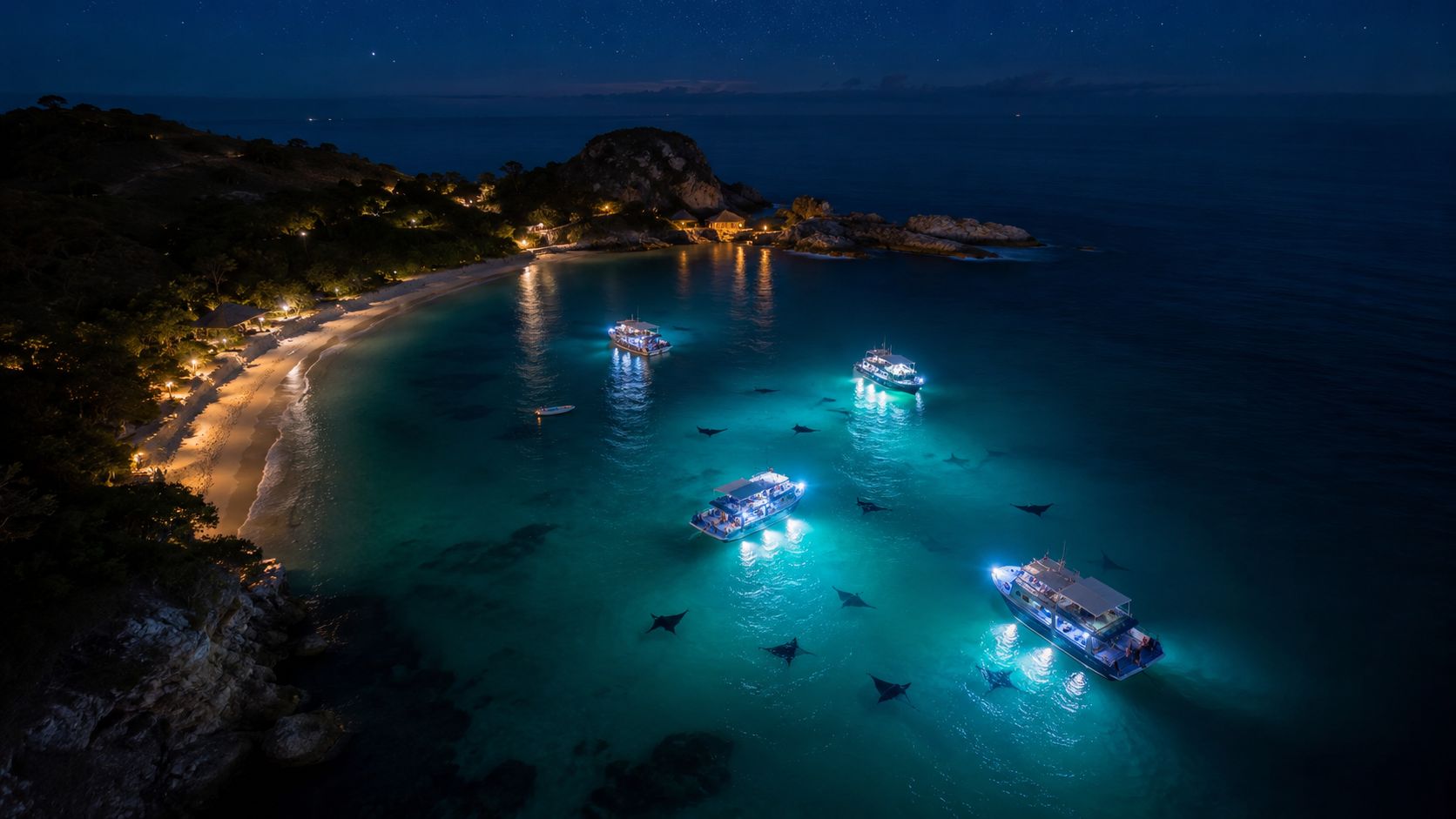
Why Garden Eel Cove works so well
Think about the experience from a guest's point of view.
You're boarding at dusk, switching into night mode, and trying to stay relaxed in open ocean after dark. A site with better protection from swell gives the whole evening a different feel. People breathe slower. Entries go more smoothly. Once in the water, the viewing zone feels more organized.
The reef setting also helps. A good manta site isn't only about seeing mantas. It's also about where guests wait, how guides position the group, and whether the underwater terrain supports a natural amphitheater effect.
This is a major attraction, so operator choice matters
Kona's manta-night industry isn't a niche side activity. It's estimated to attract about 80,000 people each year in Hawaiʻi and support a $4 million+ annual economy on the Big Island according to this overview of Kona manta dive tourism. That scale is one reason experiences can vary. A high-demand wildlife attraction will always include a wide range of operations.
So what should you look for?
| What to look for | Why it matters |
|---|---|
| Site selection | A protected site can make the whole night more comfortable |
| Clear briefings | Night water magnifies confusion if rules aren't simple |
| Guest spacing | Crowding ruins sightlines and raises stress |
| Wildlife handling | Mantas should approach on their own terms |
One option many travelers consider for snorkeling is this manta snorkel page, especially if the group includes non-divers.
A note on company mentions
If you're comparing operators, focus less on marketing language and more on process. Boat comfort, briefing quality, guide control in the water, and respect for manta behavior matter more than flashy promises. Kona Honu Divers is one local operator offering manta-focused tours and related night experiences through its manta ray dive tours page.
Preparing for Your Trip What to Expect and Pack
Preparation changes this trip more than people expect.
The boat ride is usually straightforward. The in-water plan is structured. The part that catches people off guard is comfort. If you're comfortable, you watch mantas. If you're cold, queasy, or fumbling with gear, your attention goes somewhere else.
What the evening usually feels like
Most trips meet in the late afternoon or early evening. You check in, get fitted if needed, listen to the briefing, and ride out near sunset. After the dive or snorkel, you come back wet, salty, and usually a lot cooler than you expected.
That last part is why packing matters.
What to bring
- Swimsuit already on so you're not changing awkwardly at the harbor
- Towel for the ride home
- Warm dry layer like a hoodie, sweatshirt, or light jacket
- Dry clothes if you get chilled easily
- Certification card if you're diving
- Reusable water bottle for before and after the dive
- Camera without strobe if you plan to shoot
- Reef-safe sunscreen for the boat ride, if you're heading out before dark
Bring more warmth than you think you need. Almost nobody complains about having a dry hoodie on the way back.
If you get seasick easily
A short boat ride can still feel long when you're sitting on a mooring after sunset. If you know you're prone to motion sickness, it's smart to handle it before boarding.
You can also review additional suggestions on how to avoid sea sickness.
Some common options people use include:
- Ship-EEZ Seasickness Patch for a patch-style option
- Dramamine pills if you prefer a familiar over-the-counter remedy
- Bonine pills as another common choice
- Sea Band wristbands if you want a non-medication option
- Ginger chews if you prefer a simple natural backup
Simple prep mistakes to avoid
Some guests skip dinner entirely and feel worse on the boat. Others eat too much right before departure and feel just as bad. Keep it simple and light.
And don't board in street clothes assuming Hawaiʻi nights stay warm forever. The post-water boat ride is where people usually wish they'd packed better.
The Underwater Experience Safety and Etiquette
Your first minute in the water usually feels simple. Lights glow below or on the surface, everyone settles in, and then a manta appears out of the dark and turns what looked like black water into a stage.
That calm only lasts if guests stay predictable.
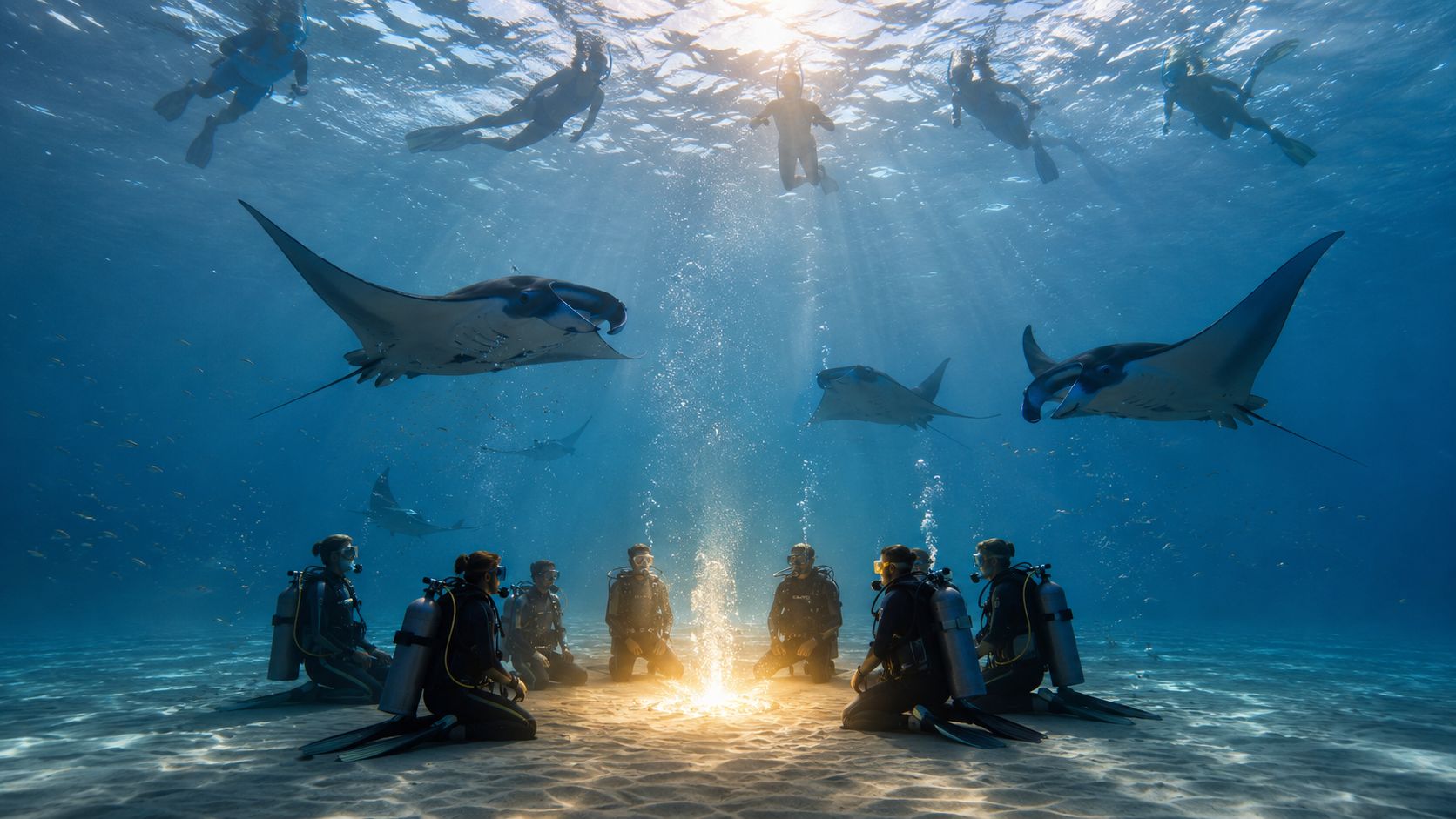
The rules that matter most
Don't touch the mantas
Their skin is covered by a protective mucus layer. Contact can damage that barrier and leaves the animal more exposed.Don't chase them
Mantas are coming to the plankton concentrated in the light. If you swim after them, they change course, the feeding pattern breaks up, and everyone gets a worse view.Hold your position
Divers stay low on the bottom. Snorkelers stay on the float. It works like lanes on a highway. Everyone knows where to expect people, so the mantas can keep looping through the light column.Listen to the guide immediately
At night, clear and quick responses matter because visibility is limited and small problems grow fast if the group spreads out.
Guests often assume safety is mainly about the animal. In practice, the bigger issue is usually human behavior. Good manta etiquette is really position control, patience, and awareness.
If you are diving, keep your fins tucked in and your beam aimed where the guide instructs. If you are snorkeling, keep your body long and still rather than kicking to “help” the encounter. Mantas are efficient feeders. They do better with a stable wall of light and a calm group than with excited movement.
Cold is the other surprise, especially for snorkelers.
People ask why they feel fine at first, then chilled twenty minutes later even in Hawaiʻi. The short answer is that water removes heat from the body far faster than air, and snorkelers lose more warmth because they are floating relatively still at the surface. After sunset, the surface layer can also feel cooler and wind exposure adds to the heat loss once your suit, hood, or hair is wet. That combination fools a lot of first-timers because the entry feels comfortable.
Mild chilling changes behavior before it feels serious. Guests tense up, breathe faster, lift their heads more often, and stop watching where their fins are. That is one reason guides want snorkelers settled early and divers relaxed on the bottom.
For a broader look at respectful in-water behavior, this responsible and considerate diver etiquette guide is worth reading.
If you're planning more than one dive on the Big Island, these Kona diving tours include a range of reef and night options. Divers wanting a more demanding charter can also look at advanced long-range trips.
Tips for Photographers and Snorkelers
The common mistake starts before the first manta arrives. A guest brings a powerful camera rig, another guest keeps popping their head up for air and reassurance, and both end up making the view worse for themselves.
Good manta technique is simpler than it looks. The water column at Garden Eel Cove works like a stage lit from below. Your job, whether you are shooting photos or floating on the surface, is to stay steady and let the animals move through the light.
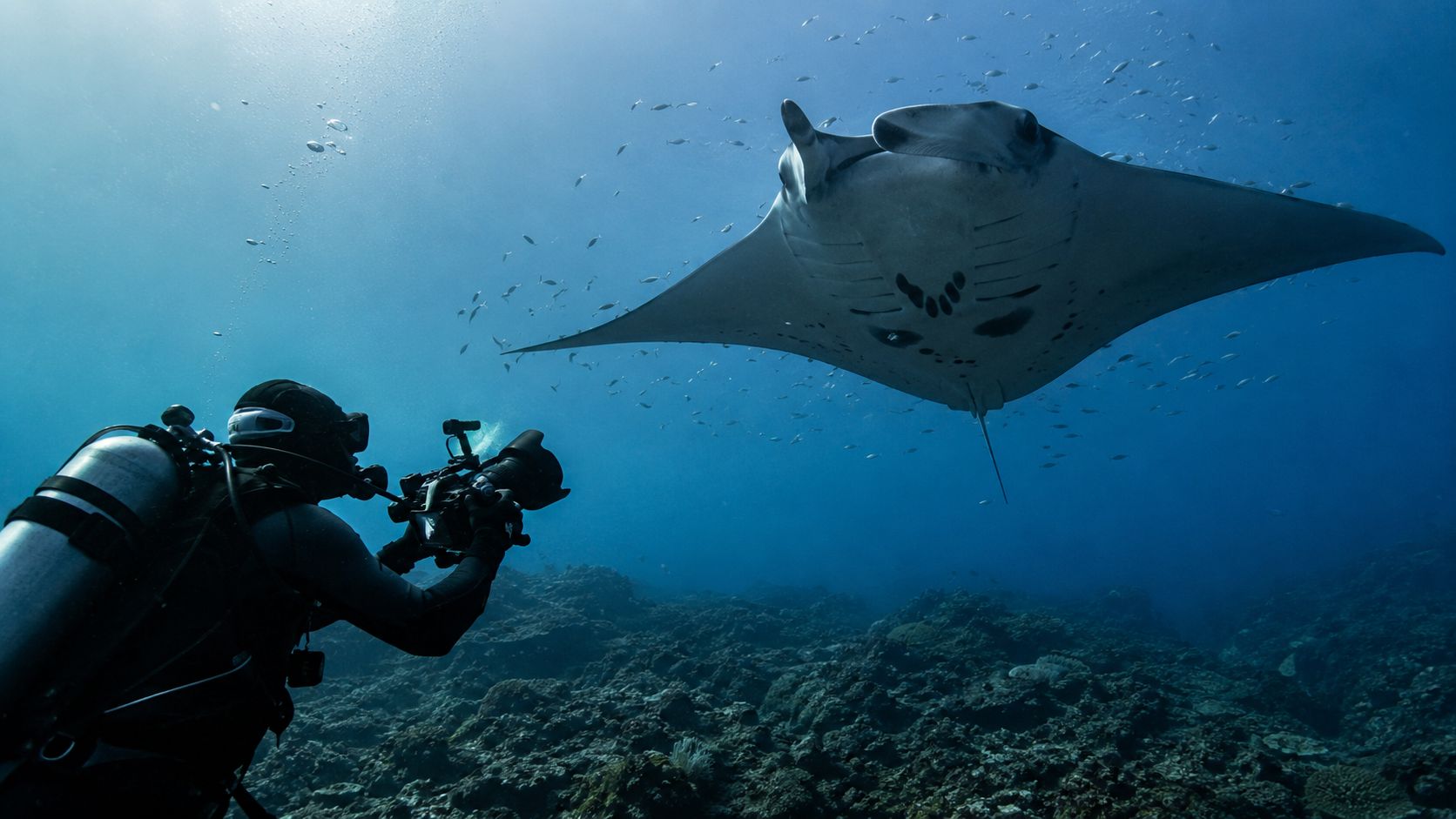
For photographers
Strobes sound helpful on paper. In Kona's manta water, they often create the opposite result.
The reason is backscatter. The same plankton that draws mantas into the lights also fills the water between your lens and the animal. A strobe lights up those suspended particles first, so the frame can end up looking like an underwater snowstorm. Instead of a clean manta silhouette, you get a cloud of bright specks competing for attention.
That is why experienced guides ask photographers to use the available light and compose for motion, shape, and timing.
Try this instead:
- Use ambient light from the site lights rather than flash
- Open your aperture wide to collect more light
- Raise ISO carefully until shutter speed is fast enough for a passing manta
- Shoot slightly upward when possible, so the manta stands out against brighter water
- Wait for the manta to enter the strongest beam before pressing the shutter
- Keep your rig compact and close so you do not crowd other guests or drift out of position
If your images look darker than daytime reef photos, that is normal. Night manta photography is less about perfect detail and more about capturing the glide, the wingspan, and the moment the animal rolls through the light.
For snorkelers
Surface guests usually get the best show when they stop trying to chase it.
A snorkeler who keeps lifting their face out of the water loses the view, breaks their breathing rhythm, and tires out faster. They also expose wet skin and hair to the night air over and over, which makes cooling happen faster. Even a small drop in comfort changes behavior. People kick more, tense their shoulders, and start watching themselves instead of the mantas.
A calmer approach works better. Let the float do the work, keep your face in the water, and watch one lane of light instead of scanning everywhere at once. Mantas are large, smooth movers. You do not need to search for them the way you would search for a small reef fish.
A few habits help a lot:
- Keep your face in the water unless the guide asks otherwise
- Grip the float lightly but steadily
- Let the board support your chest and shoulders
- Kick only when you need to reposition
- Breathe slowly through the snorkel to avoid that rushed, anxious feeling
- Watch the lit water just ahead of you because mantas often appear from the edges and sweep inward
The guests who see the most usually look the least busy.
If snorkeling with mantas is the goal for your group, this booking option is the one tied to the manta snorkel experience:
Kona Manta Dive FAQs
Is seeing a manta guaranteed
No. They're wild animals, and no honest operator should promise a certainty.
What makes Kona unusual is reliability. As noted earlier, sighting success is commonly reported in the 80% to 90% range year-round at Kona manta sites, which is why people plan trips around it with confidence.
What's the best time of year
The main appeal is that this isn't a short seasonal event. The local reef manta population is resident year-round, so visitors can plan a manta night in any season rather than waiting for a migration window.
Is it scary to be in the ocean at night
For some people, the idea is scarier than the actual experience.
Once you're in position, the site is organized around lights, guides, and a fixed viewing plan. Most guests settle down quickly because they're not wandering through dark water. They're participating in a controlled wildlife viewing setup.
Can non-divers still do it
Yes. The snorkel version exists for exactly that reason.
You don't need scuba certification to watch manta rays feed in the light. If you're comfortable in the water and can follow directions, snorkeling is often the simplest path to a great night.
If you want a well-run way to experience Kona's manta rays, explore the available trips at Kona Honu Divers. Pick the format that matches your comfort level, pack for warmth, skip the strobe, and give yourself the chance to enjoy one of Hawaiʻi's most memorable nights in the water.