
You're probably here because the manta ray dive in Kona sits at the top of your Big Island list, but the choices all blur together after a while. Every website says the dive is amazing. Fewer tell you what the experience feels like, why some sites work better than others, and what small decisions make the difference between a stressful night and one you'll remember for years.
That's where local judgment matters.
A good manta trip isn't just about seeing a ray. It's about calm conditions, a clean briefing, disciplined divers, and an operator who understands that the mantas come first. If those pieces are in place, the whole thing feels effortless. If they aren't, even a night with manta activity can feel crowded, awkward, or chaotic.
An Unforgettable Underwater Ballet in Kona
You drop below the surface after sunset, settle onto the sand, and wait while your breathing slows down. The beam from the dive lights rises through the dark water above you. Then a shadow takes shape, turns broad and white underneath, and a manta banks over the group close enough to fill your mask.
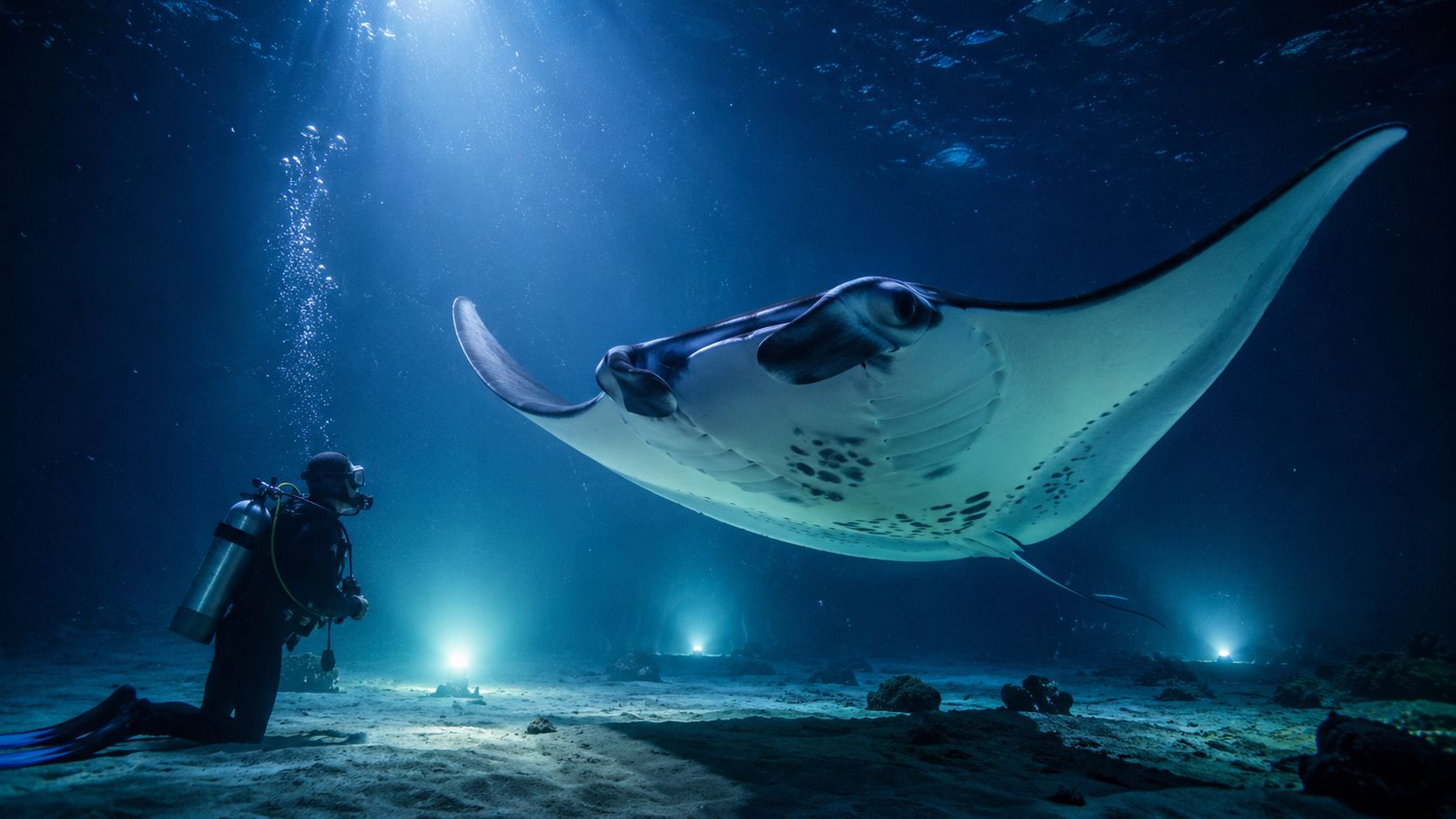
Many divers are surprised by the sound, or lack of it, once everyone is in position. You hear bubbles, the occasional rattle of gear, and not much else. That quiet matters because it changes the pace of the dive. Instead of swimming after wildlife, you hold your spot and let the animals work the light above you.
What it feels like underwater
Mantas do not read like fish underwater. They move more like gliders, with slow wingbeats, tight turns, and sudden passes that look effortless even on a big animal. On a good night, one ray circles once, then another joins, then the whole water column starts to feel alive.
The discipline of the group is a big part of what makes the experience special. Stay low. Keep your hands in. Aim your light where the guide tells you. Those small choices keep the feeding lane open, which is one reason the encounter at Garden Eel Cove is often so clean and so memorable. Divers who want a better sense of how the encounter is structured can read more about scuba diving with manta rays in Kona.
A close pass changes people fast. I've watched nervous divers forget the awkwardness of kneeling still the moment the first manta rolls overhead, mouth open, feeding in the light.
Why visitors keep coming back
Kona's manta dive has earned its reputation because the encounter is repeatable, organized, and unusually intimate when the site and operator are chosen well. That does not mean every trip feels the same. Some nights are calm and slow, with one or two extended passes. Other nights turn into a constant rotation overhead.
That variability is part of the appeal.
What brings people back is not just the chance of seeing mantas. It is the quality of the viewing. At the right site, with a crew that sets divers correctly and keeps the group controlled, you spend less time adjusting to the dive and more time watching the animals do what you came for. That is the difference between a trip that is merely good and one you talk about for years.
What Is the Kona Manta Ray Night Dive
The Kona manta night dive works because it's built around a simple food-chain response. Operators place bright lights in the water. Those lights attract microscopic plankton, and the plankton attract the mantas. It's not random luck. It's a managed wildlife encounter built around behavior the animals already recognize.
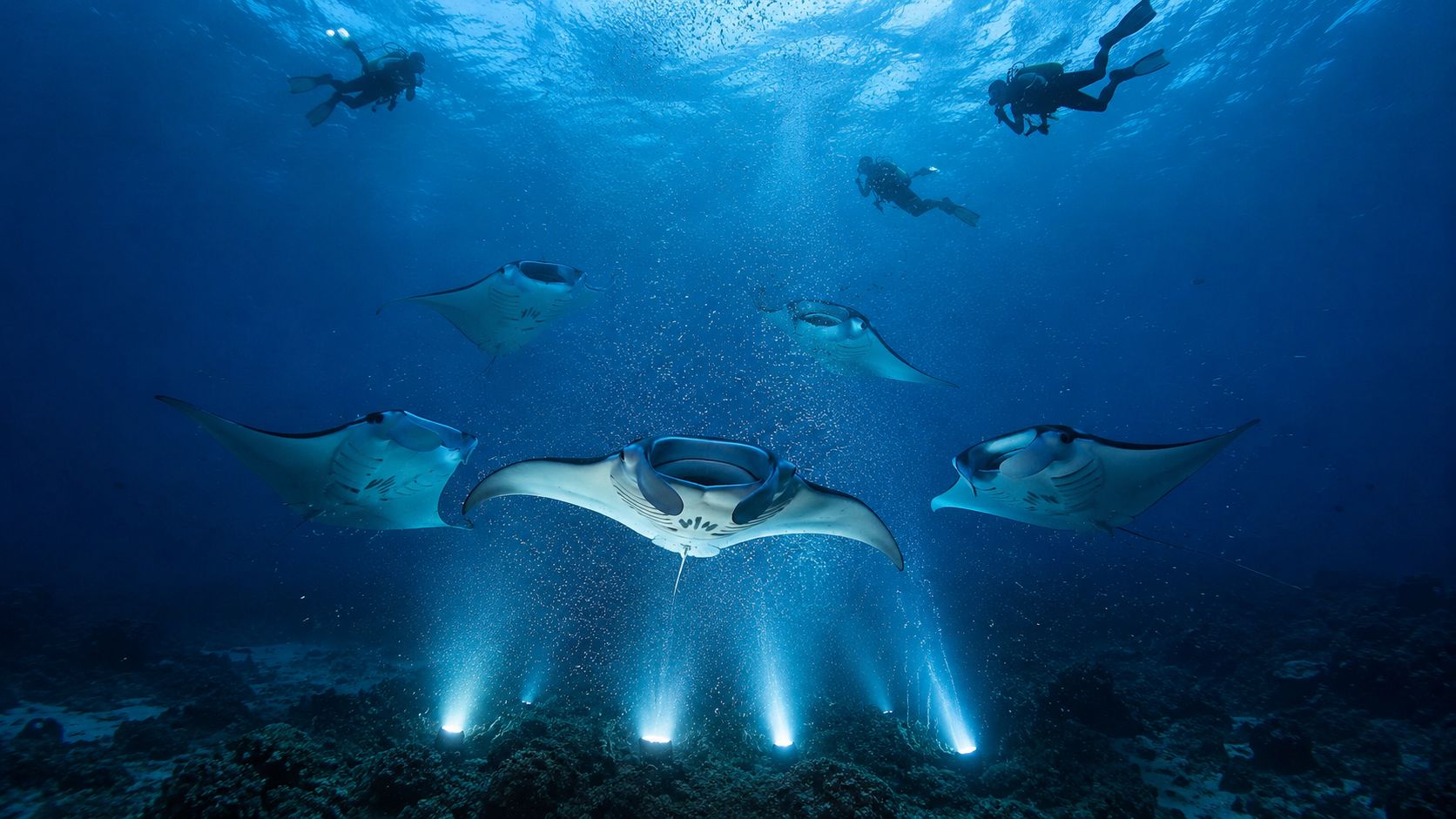
The easiest way to understand it is as an underwater campfire. The light creates a concentrated feeding zone. Plankton gathers in the beam. The mantas come to feed in the illuminated water, often within close range of the divers and snorkelers who stay in their assigned positions.
Why the sightings are so consistent
One verified description of the system explains it plainly: the artificial lights used by operators attract microscopic plankton, creating a feeding station that draws mantas to congregate within 100 yards of the shore. That cause-and-effect setup results in a 70 to 80% sighting probability, and the model has been used for a booking guarantee since 2002 (more context on scuba diving with manta rays in Kona).
That's the key expectation to set before you go. Reliable does not mean guaranteed. The mantas are wild animals. No ethical operator should describe them as a guaranteed performance.
Managed does not mean fake
Some travelers hear “engineered” and worry the experience will feel staged. It doesn't. The lights shape where the plankton concentrates, but the mantas decide whether to show up, how long to stay, and how they feed. You're not watching a trained animal. You're watching a wild one take advantage of a predictable food source.
Here's the trade-off in plain language:
| Approach | What it means for you |
|---|---|
| Purely natural encounter | More uncertainty, less predictability |
| Managed light-and-plankton encounter | Higher odds, more structure, more rules |
Practical rule: Go in wanting a wild encounter with unusually strong odds, not a scripted show.
That mindset helps. People who expect a theme-park guarantee tend to miss what makes Kona special. People who understand the setup usually appreciate the encounter more, because they can see the ecology and the discipline behind it.
Why Garden Eel Cove Is the Premier Manta Dive Site
You feel the difference at Garden Eel Cove within minutes of dropping in. The descent is usually calmer, the bottom area is easier to organize, and once everyone settles, the water column above the lights reads clearly. For a manta night dive, that matters more than many visitors expect.
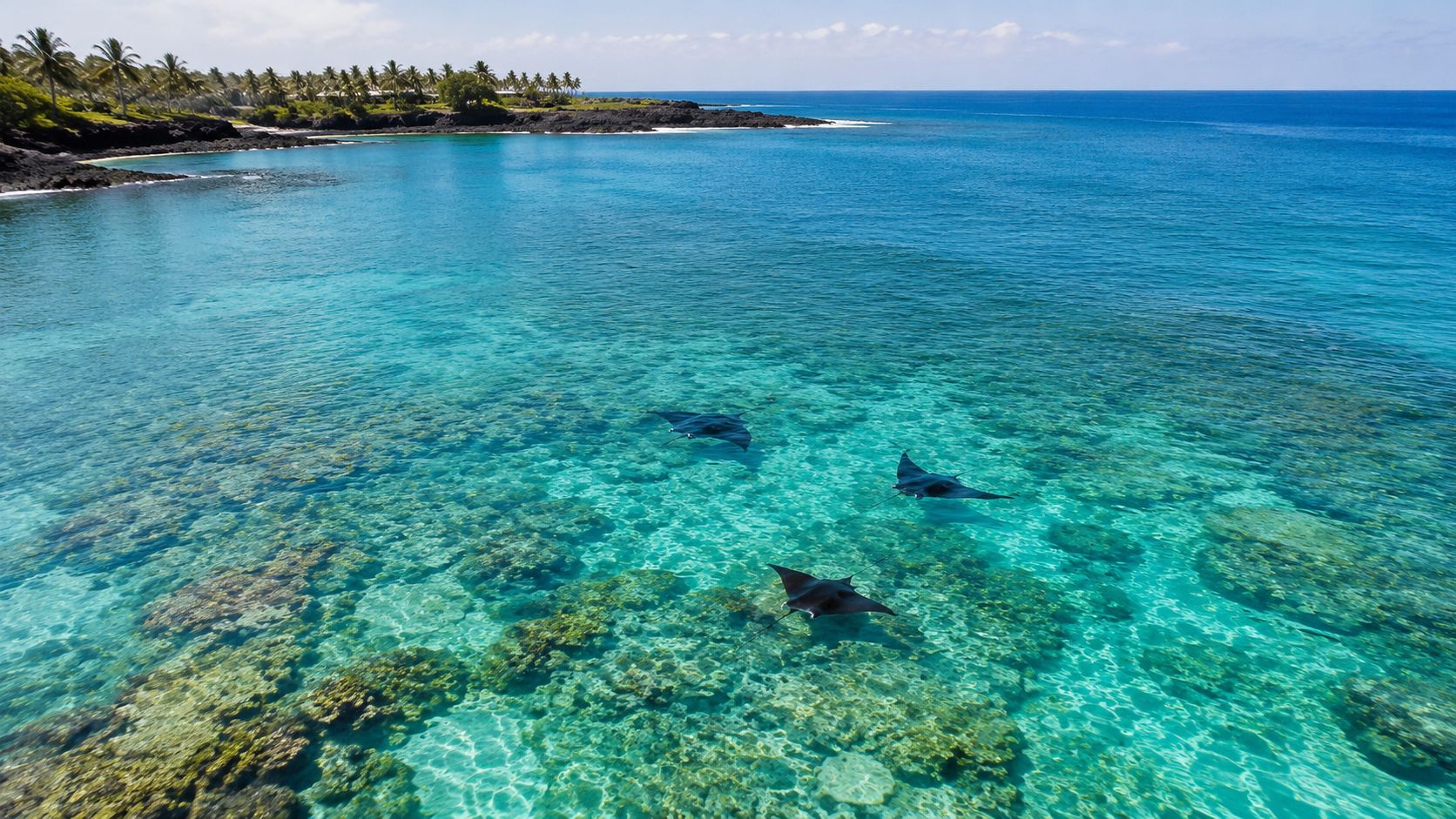
Garden Eel Cove earns its reputation because the site supports good decisions underwater. The bay is naturally sheltered, and the working depth is manageable for a wide range of certified divers. That combination makes it easier for guides to place the group correctly, keep lights focused where they should be, and reduce the small mistakes that can disrupt the encounter.
Why the site layout matters
A great manta site is not just the place where mantas sometimes show up. It is the place where divers can stay still, maintain good buoyancy, and avoid drifting into the animals' flight path.
Garden Eel Cove does that well. The viewing area is easy to read, even at night. Divers can settle on the bottom with a clear upward sightline, snorkelers remain on the surface, and the feeding zone stays open in the middle where it belongs. That separation is one of the biggest reasons the experience often feels more organized here than at less cooperative sites.
Calmer structure also improves the human side of the dive. Newer night divers use less air when they are not fighting surge. Photographers have a better chance of holding position without crowding others. Guides can spend more attention on the group and the mantas, instead of constantly fixing spacing problems.
Why Garden Eel Cove often outperforms other options
Some manta sites can produce a beautiful night. I would never claim Garden Eel Cove is the only place worth diving. But if the goal is a consistent, well-run experience for visiting divers, this site gives operators more to work with.
Independent coverage of Kona manta viewing identifies multiple established sites and notes real differences in access, depth, and predictability, including Manta Village, Manta Heaven, and Manta Point. Those differences matter for travelers choosing between an easy, orderly dive and a site that may feel more exposed or less intuitive underwater (independent breakdown of Kona manta viewing sites).
That trade-off is practical, not theoretical. On a well-chosen night at Garden Eel Cove, the site helps the crew run a cleaner operation. On a weaker site, even experienced guides may spend the first part of the dive getting people repositioned.
For a broader sense of how site conditions vary along the coast, this guide to diving Kona and the Big Island gives useful context beyond the manta trip.
What visitors actually gain from the better site
Garden Eel Cove tends to deliver four advantages that guests notice right away:
- A calmer start: Descents are usually less chaotic, which helps nervous night divers settle in faster.
- Cleaner viewing lines: You spend more time watching mantas loop overhead and less time adjusting your position.
- Better group control: Guides can keep divers where they belong without turning the dive into a traffic drill.
- A more respectful encounter: The site layout supports the basic rule of manta diving in Kona. Stay low, stay still, and let the animals control the interaction.
That last point is the one I care about most. The best manta site is not the loudest or the most heavily marketed. It is the site that lets the animals feed naturally while guests get a safe, memorable view. Garden Eel Cove does that exceptionally well, and a skilled operator can make the most of every one of those advantages.
Your Manta Ray Dive Experience Step by Step
The night feels smoother when you know the rhythm before you leave the dock. Most first-time guests aren't worried about the mantas. They're worried about the unknowns. What time do we gear up? How dark is it? How long are we underwater? What happens once we reach the site?
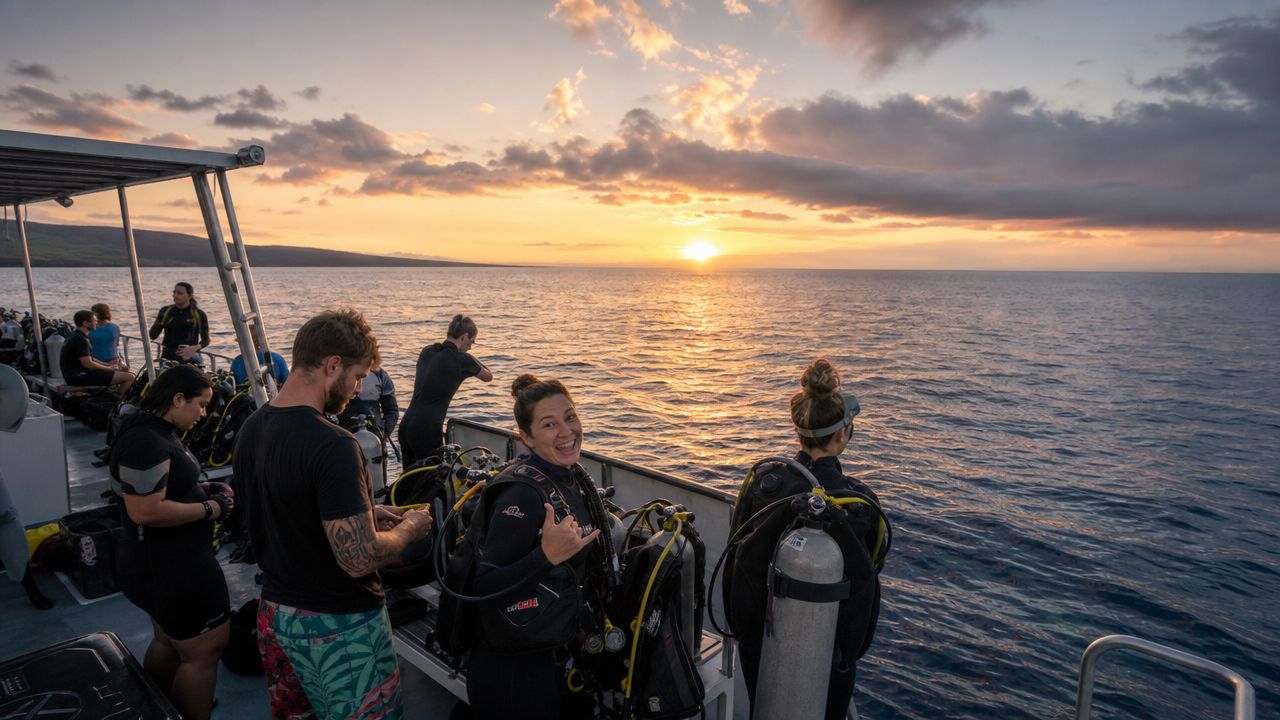
The exact sequence varies by operator, but the flow is usually straightforward. If you've reviewed the local depth and layout in this guide to how deep the Kona manta ray dive is, the briefing will make more sense when you hear it onboard.
Before the boat leaves
You check in, handle waivers and gear details, and meet the crew. This is when a good operation starts earning trust. Staff should ask about your certification, recent dive history, and comfort level at night. If they don't, that's a bad sign.
Most divers are already wearing a swimsuit. Bring a towel, a dry layer for the ride back, and any personal gear you prefer to use. Keep the extras light. Night boats get cluttered fast when people overpack.
During the ride out
The boat ride is usually when the sun is dropping or already down, and the crew gives the briefing. Pay attention here. Here you'll learn entry order, descent procedure, hand signals, light placement, and where to position your body once you're on the bottom.
A strong briefing should explain the manta behavior as clearly as the dive plan. You should leave it knowing three things:
- Where to stay
- What not to touch
- How your light supports the viewing setup
If you're still confused after the briefing, ask before you enter the water. Night diving punishes hesitation more than day diving does.
In the water
Once you descend, the pace slows down. You move to the designated bottom area, settle on sand or rubble as directed, and point your light into the water column if that's part of the operator's protocol. Then you wait.
The first few minutes can feel long if you've never done it. Then the shape of the dive changes. A manta passes through the beam, banks, loops, and returns. If several rays are feeding, the whole experience becomes rhythmic. Your job is simple: breathe slowly, stay low, and don't break the pattern.
How long it lasts
The core manta portion is built around stationary observation rather than swimming a route. That's one reason recent experience matters. You need to be comfortable holding position, controlling your buoyancy, and staying disciplined instead of chasing action around the site.
The dive often feels shorter than it is because you're focused upward the whole time. That's normal. Good dives have that effect.
Back on the boat
The ride home is part decompression, part storytelling. People compare close passes, ask about manta behavior, and usually realize they stopped thinking about the dark as soon as the mantas arrived.
Bring something warm for this part. Hawaii nights on a boat can feel cool after a long water session. A dry shirt or hoodie makes a bigger difference than most visitors expect.
Essential Safety and Preparation Checklist
This is the part experienced divemasters care about most. The manta rays are the headline, but the quality of the night depends on your preparation and your discipline in the water.
The manta dive requires Open Water certification with recent experience because you need to maintain stationary buoyancy control for about 45 minutes. The no-touch rule is not symbolic. Contact can damage the manta's protective mucus coating and leave the animal vulnerable to infection.
What you need before booking
Don't treat this as a casual “I got certified years ago, I'll be fine” dive. You should be comfortable with low-light diving procedures, mask clearing, regulator recovery, buoyancy control, and following instructions without needing constant correction.
Use this checklist:
- Certification: You need Open Water certification for the scuba dive.
- Recent experience: If you haven't been diving lately, do a refresher before booking.
- Comfort at night: You don't need to love darkness, but you do need to stay composed in it.
- Ability to stay still: This is the whole dive. Fidgety divers make the experience worse for everyone.
The golden rules in the water
These rules protect both the manta rays and the group:
- No touching: Their mucus coating matters. Hands off, always.
- No chasing: Let them choose the pass. Chasing pushes mantas away and ruins the natural feeding behavior.
- Stay in position: Divers belong low. The water column above is for the mantas.
- Watch your fins and gauges: Loose movement creates unnecessary problems in a dark, shared space.
Respect on this dive is physical. It shows up in your trim, your fins, your hands, and whether you stay where you're supposed to stay.
If you get seasick
A lot of guests worry more about the boat than the dive. Fair enough. If you're prone to motion sickness, plan ahead instead of hoping for the best. This guide on how to avoid sea sickness covers the basics, and if you want over-the-counter options or simple preventatives, these are the common picks:
- Patch option: Ship-EEZ Seasickness Patch
- Classic medication: Dramamine pills
- Another medication choice: Bonine pills
- Non-medication option: Sea Band wristbands
- Natural option: Ginger chews
If the manta dive leaves you wanting more night diving, Kona also offers the very different blackwater night dive. Divers looking for more demanding sites can also look at advanced long-range dive tours.
The Kona Honu Divers Difference
A manta night dive can feel either calm and controlled or crowded and sloppy. The site matters, and Garden Eel Cove gives crews a strong setup, but the operator is what turns that setup into a clean, respectful encounter once everyone hits the water.
Operator choice shows up in small details that guests notice right away. The boat leaves on time. The briefing answers real questions instead of rushing through hand signals. Gear is staged so divers are not climbing over each other in the dark. In the water, guides keep the group low, stable, and out of the mantas' feeding path. That is the difference between watching manta rays settle into natural behavior and watching them veer off because the group was poorly managed.
One solid example is Kona Honu Divers' manta ray dive tour, which sits within their broader Kona diving tours page.
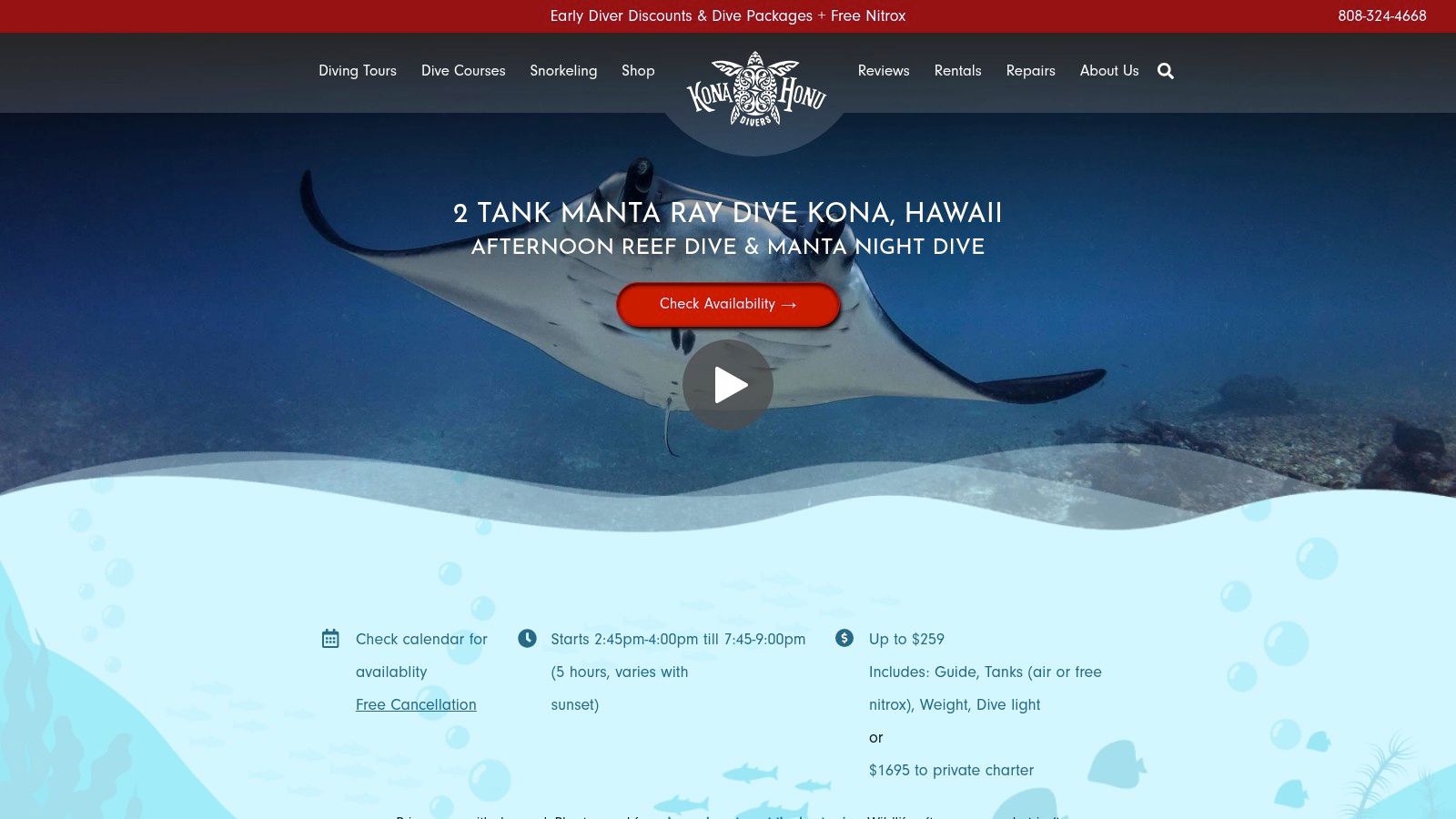
For certified divers, free nitrox is a practical plus. It is not the reason to book a manta dive, but it can make the second dive or the overall night more comfortable for divers who use it regularly. Crew experience matters more. A disciplined team knows how to space divers, read current and visibility, and keep the lights arranged so the animals come to the buffet instead of the group drifting into the animals. If you want to know who is running the trip, the Kona Honu diving team is listed online.
What to look for in an operator
Strong manta operators tend to share the same habits:
- They screen guests: They ask about recent dive experience and comfort in low-light conditions.
- They brief with specifics: Entry, descent, light placement, hand signals, and exit are all clear before anyone gears up.
- They use the site well: At Garden Eel Cove, that means setting divers where they can watch without clogging the water column.
- They manage the group in the water: Good guides correct spacing early, before small problems turn into a messy dive.
- They protect the encounter: The manta rays get room to feed, and guests get a better show because of it.
That last point is the one visitors often miss. A quieter, better-controlled operation usually produces the more memorable night, not because the crew can promise wildlife, but because they remove the avoidable mistakes that spoil the experience.
Check Availability Check AvailabilityManta Ray Conservation and Responsible Viewing
A good manta night starts long before anyone rolls into the water. It starts with how the boat is run, how the briefing is delivered, and whether guests understand that the encounter works only when humans stay predictable.
That matters in Kona because these rays return to feed, not to interact with divers. Light draws in plankton. Plankton draws in mantas. The job of the crew and the guests is to keep that feeding lane calm and consistent so the animals can pass overhead without getting crowded, blocked, or stressed.
Garden Eel Cove has earned its reputation because the site supports that kind of controlled viewing. The bottom layout allows groups to settle in one area instead of drifting around the water column, and that makes responsible behavior easier to maintain. Site quality helps, but operator discipline is what protects the experience over time.
What responsible viewing looks like
Responsible guests and crews do a few things right every time:
- Stay in the assigned position and avoid spreading out across the site
- Keep hands off the mantas and all marine life
- Never chase, kick toward, or try to intercept a passing ray
- Use calm finning and controlled buoyancy so the water stays clear
- Accept the encounter the animals choose to give that night
The payoff is immediate. Mantas feed more naturally around organized groups, and guests usually get longer, cleaner passes when the water is quiet and the lights stay where the guide placed them.
Kona also has a long history with these animals. As noted earlier, records collected over many years show that this is a well-established wildlife encounter, with individually recognized reef mantas returning to the coast again and again. That history is exactly why standards should stay high. A manta that gets a predictable, low-stress feeding environment is more likely to keep using the site. A chaotic group can disrupt the whole pattern for that evening.
I tell divers the same thing on every briefing. Your best manta encounter usually comes from restraint, not pursuit.
If you're ready to experience the manta ray dive with a crew that focuses on safe procedures, clear guidance, and respectful wildlife viewing, book with Kona Honu Divers.