
Picture this: you're floating in the warm, dark Pacific Ocean off the Kona coast. Suddenly, a colossal, winged creature with a wingspan wider than a car glides silently out of the gloom, somersaulting in a mesmerizing underwater ballet just inches away. This isn't a scene from a movie. It's the world-famous Kona manta ray night dive, an experience that consistently tops lists of the best night dives on the planet.
This isn't just another snorkeling trip; it’s a front-row seat to one of nature's most magnificent and reliable spectacles.
What Makes The Kona Manta Ray Dive A Must-Do
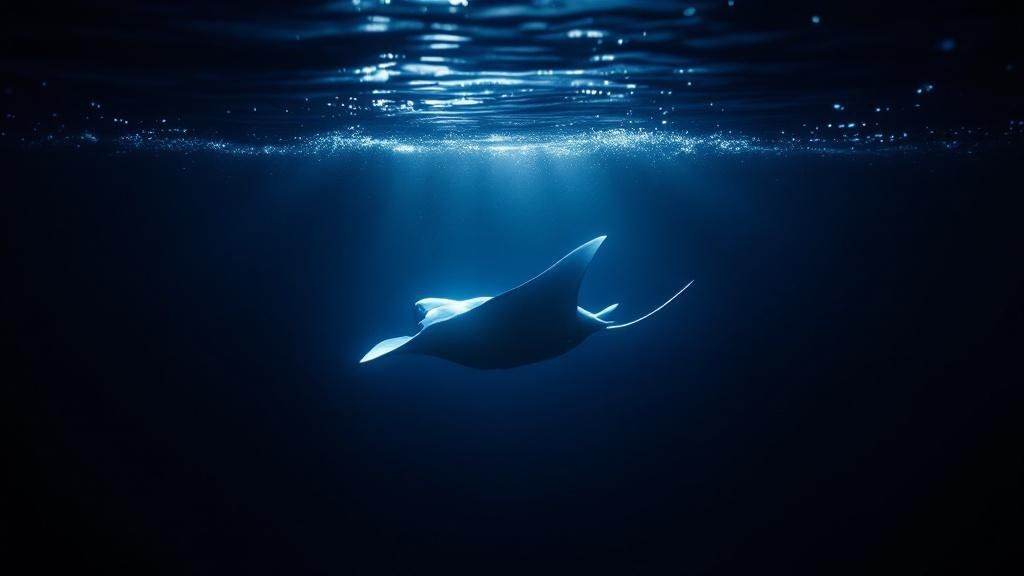
The Kona manta ray experience is truly a phenomenon. The secret lies in a perfect blend of unique underwater geography and plankton-rich waters, creating an all-you-can-eat buffet that draws these gentle giants to the same spots, night after night.
This isn’t a "cross your fingers and hope you see something" kind of tour. The success rate for spotting mantas here is over 90% year-round, making it one of the most dependable and awe-inspiring wildlife encounters anywhere in the world. This incredible consistency has turned the Big Island into a global hotspot for this adventure, drawing around 80,000 people every year to iconic sites like 'Manta Village' and 'Manta Heaven'.
An Underwater Ballet for Everyone
One of the greatest things about the manta ray dive Kona offers is that almost anyone can do it. You don't have to be a seasoned scuba pro to get in on the action. Local operators have fine-tuned the experience, offering two fantastic ways to witness the magic, depending on your comfort in the water.
Deciding between floating on the surface or sitting on the ocean floor is the biggest choice you'll have to make. Here's a quick rundown to help you figure out what's best for you.
Choosing Your View: Snorkeling vs. Scuba Diving
| Feature | Manta Snorkeling Experience | Manta Scuba Diving Experience |
|---|---|---|
| Your Position | Floating on the surface, holding a light board. | Kneeling or sitting on the sandy ocean floor. |
| Depth | At the surface (0 feet). | Around 35-40 feet deep. |
| Perspective | A bird's-eye view, looking down on the mantas. | An immersive view, looking up as mantas glide overhead. |
| Requirements | Basic swimming ability. Great for all ages. | Open Water Diver certification is required. |
| Manta Proximity | Inches away as they feed at the surface. | Inches away as they swoop and barrel-roll above you. |
Ultimately, both snorkeling and diving offer unforgettable, up-close views of the feeding frenzy. It really just comes down to your personal preference and certification level.
A Powerful, Passive Encounter
No matter which option you choose, the core principle is the same: passive observation. You simply become part of the scenery. Whether you’re holding onto a light board on the surface or settled on the sand below, your stillness allows the mantas to carry on their nightly ballet completely undisturbed.
There's something profoundly humbling about seeing these gentle giants, some with wingspans stretching up to 18 feet, move with such impossible grace. These are wild animals, not captives. They show up because they want to, drawn by the light and the promise of a meal. It's this authentic, voluntary interaction that sears the memory into your mind forever.
While any night is a great night to go, some people like to plan their trip down to the last detail. If that’s you, checking out our guide on the best time of year to see manta rays in Kona can offer some extra insight. In the end, it’s the combination of near-guaranteed sightings, raw natural beauty, and the sheer majesty of the mantas that makes this an essential Hawaiian adventure.
How to Choose the Right Manta Ray Tour
Picking your tour operator is easily the biggest decision you'll make when planning your Kona manta ray dive. It’s the difference between a truly unforgettable, safe, and ethical encounter and one that feels rushed, crowded, or commercialized.
With the dive's popularity, dozens of operators are vying for your business. Your job is to sift through the options and find a company that genuinely cares about the mantas, your safety, and providing a real educational experience—not just getting you in and out of the water.
Look for Manta-SAFE Certified Operators
Your very first filter should be Manta-SAFE certification. This is non-negotiable in my book. The program was created by local experts to establish a gold standard for responsible manta ray tourism in Hawaii.
Choosing a Manta-SAFE recognized operator isn’t just a nice-to-have; it's how you ensure this incredible natural wonder continues for years to come. These companies have voluntarily agreed to follow strict guidelines that put the animals' welfare first. If you want to dive deeper into why this matters so much, you can read our full breakdown on why you should go on a manta ray dive in Kona.
Here’s what you get with a Manta-SAFE operator:
- Passive Viewing: They enforce a strict "no touching, no chasing" rule. The guides are trained to manage guests and make sure no one disturbs the feeding mantas.
- Smart Lighting: Their crews know how to use lights to attract plankton without blinding or disorienting the rays.
- Real Education: You'll get a solid briefing on manta biology and conservation before you ever hit the water.
- Smaller Groups: They manage group sizes to avoid stressing the animals and creating a "combat diving" scenario for guests.
When you book with a certified company, you're casting a vote with your dollars for the long-term protection of Kona's famous manta ray population.
Vessel Type Matters for Your Experience
The boat itself plays a huge role in how your evening feels. There's no single "best" boat—it really comes down to what you're looking for in terms of comfort versus adventure.
Large, stable catamarans are a great choice for families, bigger groups, or anyone who gets seasick. They usually offer more space to move around, onboard restrooms, and a much smoother ride. The potential downside is that they often carry more people.
On the flip side, you have smaller, zippier vessels like rigid-hull inflatable boats (Zodiacs). These offer a much more thrilling ride and a more intimate experience with fewer passengers. But be prepared for a bumpier journey and fewer creature comforts.
Pro Tip: When you're reading reviews, zoom in on comments about the boat. Did people feel cramped? Was the ride rough? Were there bathrooms? This is where you get the real story.
Key Questions to Ask Before You Book
Once you have a shortlist of a few Manta-SAFE operators, it’s time to get specific. A good company will be totally transparent and happy to answer your questions.
Here’s what I always recommend asking:
- What's your guide-to-guest ratio? You want a low ratio, something like one guide for every 6-8 guests. This means more personalized attention and better safety oversight.
- How much actual time will we be in the water with the mantas? Tour duration can be misleading. What you want is the in-water time. Look for a company that gives you at least 40-45 minutes with the mantas.
- Are thick, high-quality wetsuits included? Even in Hawaii, you'll get cold floating for that long. A good wetsuit is essential for staying comfortable. Make sure it's included and not a surprise up-charge.
- Do you have a manta sighting guarantee? Sightings are incredibly consistent—over 90%—but these are wild animals. A reputable operator will almost always have a "manta guarantee," meaning you can come back another night for free if the mantas don't show.
Asking these direct questions helps you cut through the marketing fluff and truly compare your options. You're not just booking a trip; you're investing in an experience run by professionals who are passionate about making the manta ray dive Kona is known for a truly magical event.
The Science and Conservation Behind the Encounter
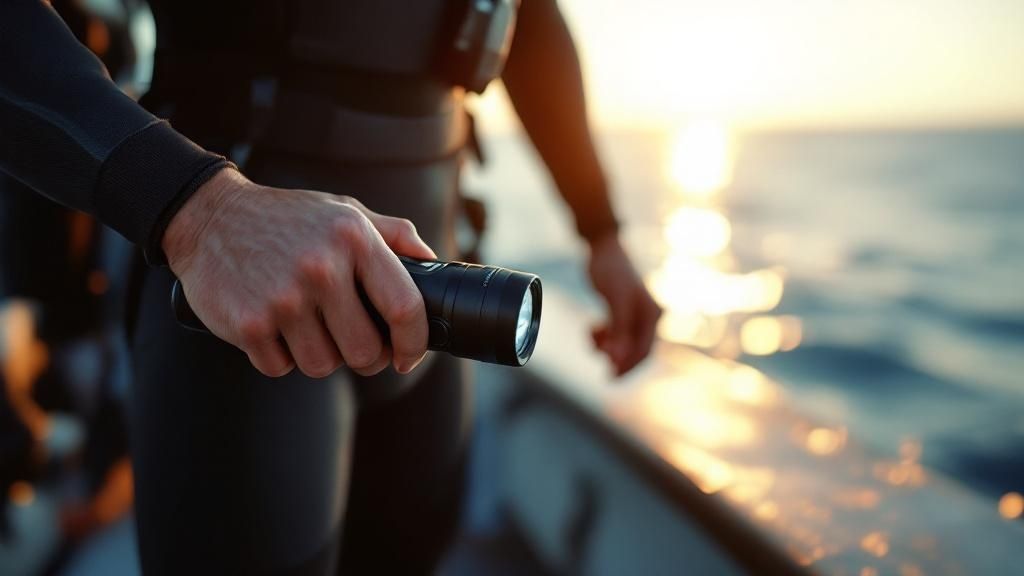
The incredible spectacle you're about to witness on a Kona manta ray dive isn't some happy accident. It’s a beautiful intersection of marine biology and dedicated conservation that has been refined over decades. When you understand the "why" behind what's happening, the experience transforms from a simple tour into something much deeper.
It all boils down to a clever and ethical replication of a natural feeding event. The powerful underwater lights used by tour boats don't actually attract the mantas themselves. Instead, they draw in dense clouds of phytoplankton and zooplankton—the tiny organisms that make up the mantas' primary diet.
The boat essentially becomes a floating, all-you-can-eat buffet. Manta rays are incredibly intelligent and have learned over the years to associate these lights with an easy meal, which is why they return to the dive sites so reliably.
Fingerprints of the Sea
One of the most amazing things about Kona's manta population is just how well we know them. But how can you possibly tell one of these massive animals from another? The secret is on their bellies.
Each manta ray possesses a unique pattern of black spots on its underside. This pattern is as distinct as a human fingerprint, serving as a natural I.D. tag.
Researchers, and even the local dive guides, use these spot patterns to identify, name, and track individual mantas over time. This method, called photo-identification, allows for the long-term monitoring of their health, growth, migration, and life events. So, when your guide points out a manta by name, it’s because they recognize its unique “fingerprint.”
Meet the Local Celebrities
Over the decades, some of Kona's resident mantas have become genuine underwater celebrities, known for their impressive size, unique markings, or curious personalities. Hearing your guide get excited about spotting a particular individual adds a whole new layer to the dive.
Here are a few of the famous residents you might have the privilege of meeting:
- "Big Bertha" A truly massive female, she's easily identified by her sheer size and a noticeable notch in her right cephalic fin.
- "Lefty" One of the very first mantas identified in Kona, he's named for a tangled left cephalic fin and has been a regular since the early 1990s.
- "Amanda Ray" A smaller and famously curious manta, she's known for performing graceful barrel rolls very close to snorkelers and divers.
Knowing these individuals have names and stories makes the experience so much more personal. You're not just observing a manta ray; you're meeting a specific personality with a known history in these waters.
This deep, personal connection is the driving force behind the passionate conservation efforts here. To get the full picture of this world-class adventure, we've put together a complete guide breaking down everything about the manta ray night dive.
The strict "passive observation" rules are there to protect these named individuals, ensuring they continue to thrive and enchant visitors for generations to come. By choosing an ethical tour, you're directly supporting the research and protection that makes it all possible.
Getting Ready for Your Kona Manta Ray Adventure
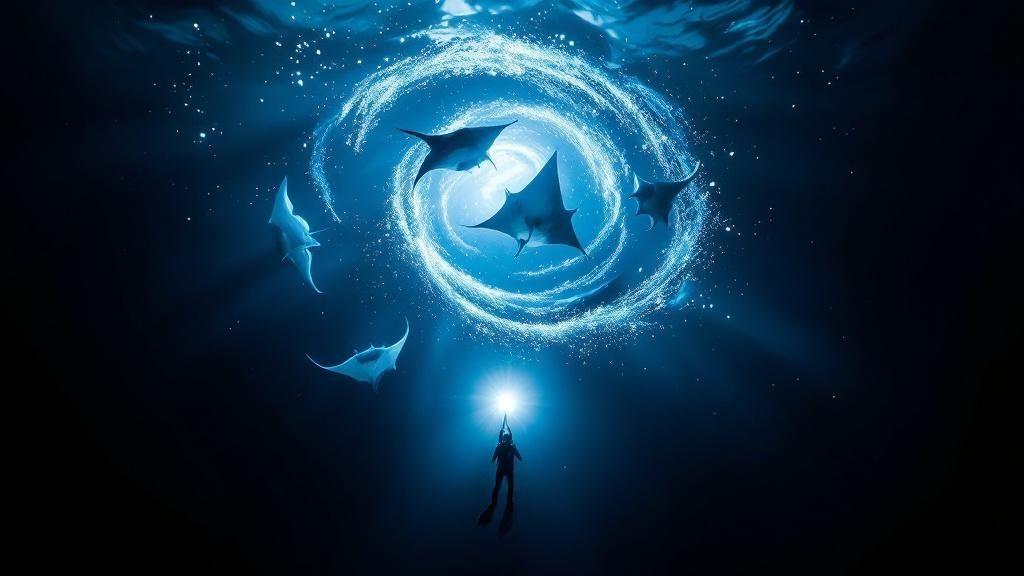
A little bit of prep work can make all the difference between a good night and an unforgettable one. Getting the small things right beforehand means you can focus completely on the gentle giants gliding through the water, not on being cold, seasick, or fumbling for gear.
The whole point is to arrive at the harbor relaxed and ready for an incredible experience. This way, you can truly soak it all in—from the spectacular Kona sunset on the ride out to that final, jaw-dropping moment a manta ray soars right beneath you.
What to Wear and What to Pack
Your prep starts before you even leave your hotel. The simplest trick I've learned is to wear your swimsuit under your clothes. It saves you the awkward shuffle of changing in a tiny boat bathroom (the "head") and gets you into your wetsuit much faster.
Space is always tight on a boat, so packing light is key. A small dry bag is your best friend here. It’ll keep your essentials safe from the inevitable ocean spray and everything neatly organized.
Here’s my go-to checklist for what to toss in your bag:
- A Towel and Warm Layers: You will be so glad you have a dry towel and something warm for the boat ride back. A simple hoodie or a windbreaker is perfect for cutting the chill after you get out of the water.
- Seasickness Medication: If you have even a hint of motion sickness, take your preferred remedy before you board the boat. Conditions can change, and it's always better to be prepared than to feel miserable.
- Reusable Water Bottle: Staying hydrated is always smart. Most eco-friendly tour companies have a water station where you can get refills.
- Underwater Camera (Optional): Got a GoPro? Make sure it's fully charged with a clear memory card. But a word of advice: focus on the experience first and photos second. You don't want to miss the magic because you're messing with a camera.
Packing smart ensures you’re comfortable from start to finish. For a much more detailed list, we've put together a complete guide on how to prepare for your manta ray dive in Kona. You can find it at https://konahonudivers.com/preparation-for-manta-ray-dive-kona/.
Set Your Expectations (But Keep Them High!)
The Kona manta ray dive has a phenomenal success rate—we're talking over 90%! That said, it’s vital to remember you’re a guest in a wild, natural habitat. These aren't trained performers in an aquarium; they are magnificent, free-roaming creatures.
Tour operators are experts at using lights to attract plankton, which essentially rings a dinner bell for the mantas. But nature is, and always will be, unpredictable. On rare nights, the mantas just don't show up. That's why booking with an operator that offers a "manta guarantee" is a smart move—they'll usually rebook you for free if you don't see them.
This isn't to dampen your excitement—it's to heighten it. Knowing this makes it even more magical when that first dark, winged shape materializes from the depths. Your patience and respect are part of what makes the encounter so special.
Listen Up: The Safety Briefing Matters
Finally, the most important part of your preparation happens right on the boat. Pay close attention during the crew's safety briefing. This isn't just a formality they have to get through; it contains the essential information for a safe and successful swim for both you and the mantas.
These guides have done this thousands of times. They know what they're talking about. They'll explain how to get in and out of the water safely and, crucially, how to position yourself. For snorkelers, this means holding onto the light board; for divers, it's about staying on the sandy bottom.
They'll also hammer home the golden rule: do not touch the manta rays. Touching them can damage the delicate protective mucus layer on their skin. By following the briefing, you become a passive, welcome observer in their world—and that’s the real secret to getting those breathtakingly close encounters.
What to Expect During Your Manta Encounter
The boat ride out is half the fun. You'll pull away from the harbor just as the Kona sunset starts painting the sky, creating a real sense of excitement. It’s not just a quick trip to a dive site; it’s the opening act for an incredible underwater show. The crew is usually buzzing with energy, getting everything ready for the main event.
Once the boat is anchored, the crew gets to work setting up powerful, submerged lights. These aren't just for seeing—they're a dinner bell. The bright lights attract swarms of microscopic plankton, which in turn creates a dense, all-you-can-eat buffet for the real stars of the show: the manta rays.
As the last bit of light fades from the sky, you’ll get geared up and listen to one final briefing from your guide. Then, it's time to slip into the surprisingly warm, dark water. For a moment, it’s just you, the glow of the lights below, and the vastness of the Pacific.
Your Front Row Seat to the Ballet
Whether you're snorkeling or diving, the whole setup is designed to give you the best possible view. Snorkelers hold onto a large, custom-built floatation board with lights shining down into the water. Divers settle onto the sandy ocean floor, often in a semi-circle, pointing their dive lights up to create a "campfire" of light.
And then, you wait. Sometimes it’s just a few seconds, other times a few minutes. All of a sudden, a massive, dark shape glides gracefully out of the blackness and into the light. The first manta has arrived. It's a moment that will absolutely take your breath away.
What happens next can only be described as an underwater ballet. The mantas swoop, glide, and perform effortless barrel rolls with their giant mouths open to filter plankton from the water. They often come incredibly close—sometimes just inches away—their massive wingspan soaring right over your head or just beneath your body.
The secret to an unforgettable encounter is simple: be still. The more you become a calm, stationary part of the underwater landscape, the more comfortable the mantas will feel. They are naturally curious, and your stillness invites them to come check you out on their own terms.
The Golden Rule: Passive Observation
Your guides will repeat this over and over, and for good reason. The most important rule of any manta ray dive kona offers is this: no touching, no chasing. Manta rays are covered in a delicate, protective mucus layer that is essentially their immune system. When a person touches them, that layer can be rubbed off, leaving the manta vulnerable to nasty bacteria and infections.
Staying completely still is, paradoxically, the best way to have these gentle giants approach you. The less you try to interact, the more meaningful the interaction becomes.
- For Snorkelers: Keep your hands firmly on the float board and try to keep your fins out of the water. This prevents you from accidentally kicking a manta and keeps the "stage" clear for them to perform.
- For Divers: Find a spot on the sandy bottom and stay there. Resist the urge to swim up into the water column, as it can disrupt the mantas' feeding patterns and scare them off.
Following these guidelines is what keeps this experience safe and sustainable for the animals we're all there to see. The reward is a truly authentic and awe-inspiring display of nature. If you're looking for an incredible dive experience, our team at Kona Honu Divers specializes in creating a memorable and safe manta ray night dive in Kona.
The Ride Home and the Lasting Impression
After about 40-50 minutes in the water, your guide will give the signal, and it'll be time to head back to the boat. You’ll climb aboard, buzzing with a mix of adrenaline and pure awe. A dry towel and a warm jacket will feel amazing for the ride back to the harbor.
The trip back is never quiet; everyone is excitedly sharing their favorite moments. While sightings are never guaranteed, conditions are often fantastic. Between April and October, for instance, the water is a comfortable 75–80°F, and the average number of manta rays seen per night is between 8 and 12. This kind of reliable data is fascinating and helps guide the conservation strategies that protect these incredible animals. You can explore more statistics and learn about these manta ray findings on mantarayadvocates.com.
Pulling back into the harbor under a sky full of stars, you'll carry with you the profound feeling of having witnessed something truly magical—a peaceful, powerful connection with one of the ocean’s most graceful inhabitants.
Answering Your Top Questions About the Kona Manta Dive
https://www.youtube.com/embed/YJ5F5ExOISs
It's completely normal to have a few questions swirling around before you commit to a big adventure like this. I've heard them all over the years, and getting the right answers is key to feeling prepared and truly enjoying your time in the water. Let’s walk through the things most people wonder about.
Is This Experience Safe for My Family?
This is probably the number one question, especially from families with kids or those who aren't confident swimmers. The short answer is yes, the snorkel version is incredibly safe and well-managed.
You aren't just thrown into the open ocean. Snorkelers hold onto a large, custom-built flotation board. This board is very stable and has bright lights pointing down into the water, so you are fully supported on the surface the entire time.
The wetsuits they provide also make you extremely buoyant, which is a huge help. For this reason, many non-swimmers can comfortably participate. That said, you should always be upfront about your comfort level with the tour operator when booking. Most companies welcome kids as young as 5 to 7 years old.
For scuba divers, the rules are stricter—you absolutely must have a valid open-water certification.
When Should I Go? And Can I Touch Them?
People often ask about the best time of year, but the great news is that this is a year-round spectacle. Kona’s manta rays are a resident population, meaning they don’t migrate. They show up to feed just about every single night, which is why operators boast a success rate of over 90%. If you're chasing the warmest water and calmest seas, the months between April and October are generally ideal.
Now, for the most important question of all: "Can I touch the manta rays?"
The answer is a simple, absolute no.
This is the golden rule of the manta ray encounter. Manta rays have a delicate mucus layer on their skin, which is their primary defense against infection. Touching them can rub this protective coating off, making them susceptible to disease. Every responsible tour operator in Kona enforces a strict "passive observation" policy.
By staying still and keeping your hands to yourself, you signal to the mantas that you aren't a threat. This allows them to relax and swim incredibly close, giving you that truly breathtaking, up-close view you came for.
What if the Mantas Don't Show Up?
It's a valid concern—these are wild animals, after all, and nature doesn't offer a 100% guarantee. So what happens on that rare night when the mantas decide not to come to the party?
This is where choosing a good company really matters. Nearly all reputable operators offer what's known as a "manta guarantee."
If you don't see any mantas on your tour, they will typically let you come back and try again on another night for free (based on availability, of course). This policy shows how confident they are in the experience and gives you fantastic peace of mind when booking. Just make sure to ask about the specifics of their guarantee when you make your reservation.
Ready to see this underwater ballet for yourself? The crew at Kona Honu Divers is fantastic and deeply committed to a safe, ethical, and mind-blowing manta ray tour. Book your adventure with them and get ready for a night you'll never forget.