
You're planning your Kona evenings, and the manta trip is the one you don't want to get wrong. The photos look extraordinary, but they don't tell you whether you should dive or snorkel, how dark the water feels, or what happens if the mantas take their time arriving.
The most useful thing to understand is that this isn't a swim after wildlife. You take a designated position and let the animals approach. For scuba divers, Garden Eel Cove's protected setting and defined viewing area make that simple idea work especially well.
Manta Ray Dive Kona at a Glance
The manta ray dive in Kona is a nighttime encounter in which reef manta rays (Mobula alfredi) enter shallow feeding areas to eat zooplankton concentrated around underwater lights. You watch from a fixed position rather than swimming alongside them.
Visitors have two ways to participate: scuba divers settle at a designated bottom viewing spot, while snorkelers float at the surface. Both groups can watch the same animals, but the perspective and equipment differ.
Night manta options compared
| Option | Where You Are | Gear Needed | Best For |
|---|---|---|---|
| Manta Ray Night Dive | Kneeling on the sandy bottom at a fixed viewing spot | Scuba gear with dive certification | Divers wanting the closest view |
| Manta Ray Night Snorkel | Floating at the surface, lights pointed downward | Mask, snorkel and fins | Snorkelers and non-certified guests |
If you hold a scuba certification and want the bottom-up, potentially close view, choose the dive; if you don't, choose snorkeling and still watch the same mantas. Neither option guarantees a particular distance, because the animals choose their route.
Choose the experience, not just the photograph
From below, divers can watch a manta emerge from the edge of the light and pass overhead. From the surface, snorkelers look down into the illuminated feeding area. Snorkeling isn't a lesser version of the encounter, just a different vantage point.
The encounter runs year-round in Kona and is the signature night activity many visitors plan around. A morning reef dive is the daytime alternative if your priority is coral habitat and reef exploration rather than a stationary manta encounter.
Before committing, get comfortable with the practical decisions: the site, eligibility, onboard sequence, waiting, wildlife rules, equipment, and booking arrangements. Those details matter more than trying to reproduce someone else's photograph.
Who Can Join and What You Need
Choose according to your training and comfort in the water, not how adventurous the trip sounds. Being comfortable enough to stay still is more useful here than being eager to swim farther.
No scuba certification? Choose the night snorkel. You'll remain at the surface rather than descend into the viewing area. Our comparison of snorkeling versus diving with manta rays can help you decide which perspective suits you.
Newly certified? Confirm the entry requirements before reserving. Tell the booking team whether you've dived at night and how recently you last used scuba equipment. Where available, a manta or marine-life specialty completed beforehand can give you useful grounding in biology, behavior, and conservation.
Already certified? Have your certification details ready. Most of our regular dive charters require at least an Open Water Diver certification from a recognized agency. Confirm the requirements for your selected departure rather than assuming every charter has identical eligibility rules.
Experienced diver? Assess comfort rather than your logbook total. Beginner through advanced divers can enjoy this format when they're comfortable holding position in dark water. If you also want a more exploratory daytime outing, consider the Premium Advanced Two-Tank Trip for remote reef diving.
Bringing children? Start with the snorkel option. Confirm age limits and swimming expectations before paying. Inexperienced snorkelers should tell the crew they'd appreciate extra attention in the water.
A practical readiness check
For scuba, ask yourself whether you can settle over an appropriate sandy patch, hold position without drifting into other guests, and remain calm when your surroundings are dark beyond the lights. If any answer is uncertain, explain that before departure.
Comfort check: Needing help isn't the problem. Keeping quiet about something that could affect your safety is.
Don't use a wildlife encounter to troubleshoot unfamiliar equipment. A daylight practice dive gives you space to sort out weighting, mask leaks, and buoyancy before the evening.
Why Garden Eel Cove Gives the Best View
Garden Eel Cove is the better choice for a controlled scuba encounter because its advantages match what divers need: protection, a defined viewing area, and good surrounding reef habitat. Also called Manta Heaven, it lies west of Kailua-Kona International Airport within the West Hawaiʻi Ocean Recreation Management Area, as described in this Garden Eel Cove site guide.
The important difference isn't the name of the bay. A defined observation area gives divers somewhere predictable to settle while leaving the central water column open. You can look upward into the feeding lane instead of constantly adjusting your position to find a view.
What that changes underwater
Say a manta approaches from beyond the illuminated area. From a stable bottom position, you can follow its approach, watch it bank, and see its underside as it crosses overhead. You don't need to swim toward it or compete for space in its path.
The surrounding reefs also make the location more appealing as a dive setting. Better reef surroundings and a better viewing layout are useful together, but the reef isn't somewhere to brace your hands or rest your fins.
A University of Hawaiʻi study analyzed more than 23,000 sightings of 167 individually identified reef mantas from 2010–2022 at Garden Eel Cove and Keauhou, finding consistently larger aggregations at Garden Eel Cove. That supports choosing this site, but it doesn't predict how many animals will enter the lights on your evening.
Choose Garden Eel Cove for its viewing setup, not a promise that every night will be busy.
Our manta charter often visits Garden Eel Cove, but conditions still govern the final decision. Confirm the planned site before booking, and review the two-tank manta dive and snorkel option for the trip format.
How the Night Dive Works and Best Conditions
Think of a lit doorway at night gathering moths. Underwater lights create a similar gathering point for zooplankton, and mantas move through that concentrated prey.
The comparison explains the attraction, not every detail of plankton behavior. The key distinction is that the lights gather food; they don't directly feed the mantas.
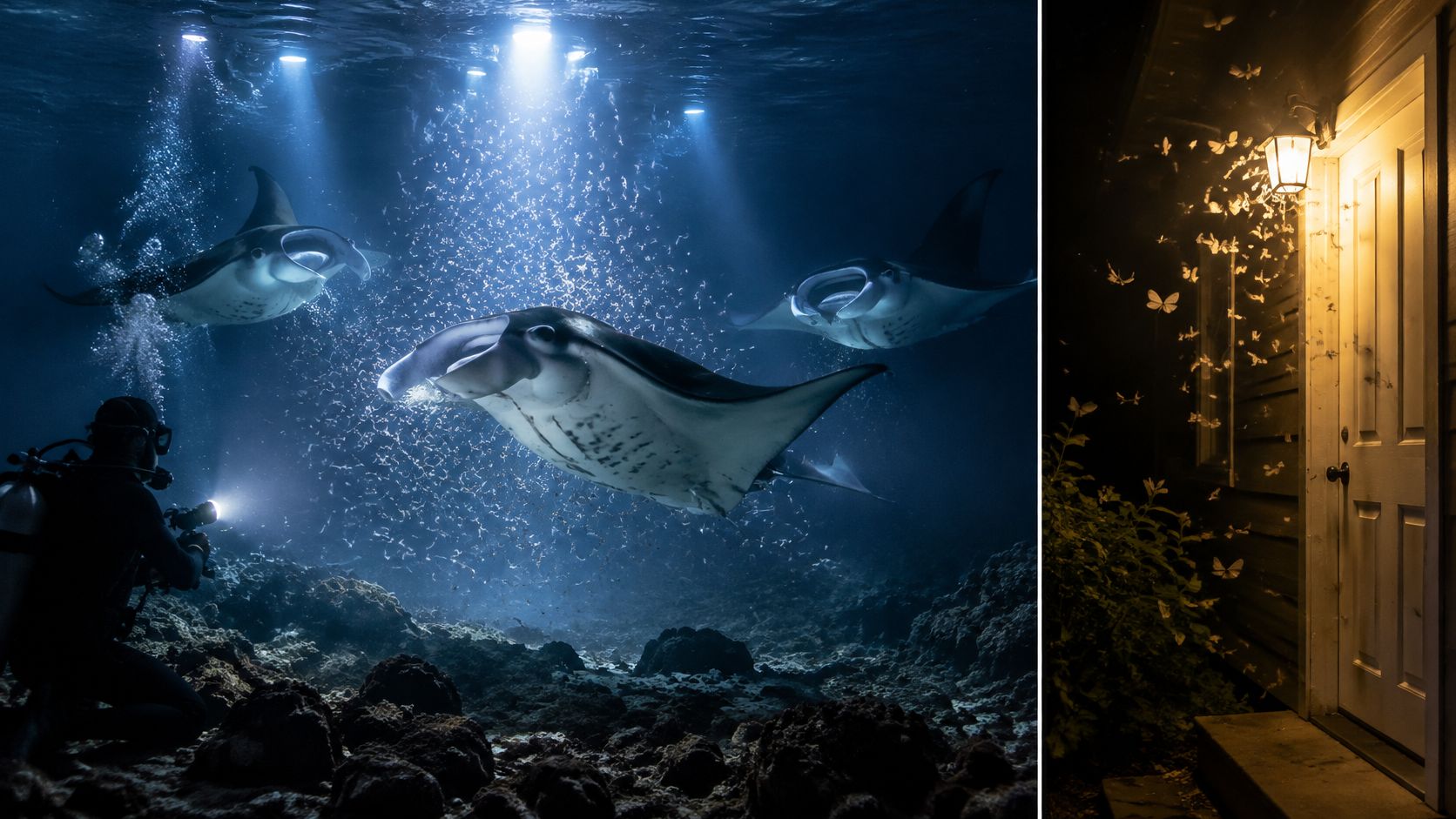
NOAA's manta species assessment connects nighttime feeding with the upward movement of zooplankton. Currents, water mixing, and prey distribution help determine whether the illuminated water contains a worthwhile meal.
That's why brighter lights alone don't guarantee more mantas. When plankton is concentrated, animals may make repeated feeding circuits; when food is sparse or dispersed, the scene can be much quieter.
What a good night actually depends on
Seasonal and annual differences in Kona aggregation size have tracked zooplankton availability. For planning, that means you shouldn't treat a calendar month as a guarantee. Ask how recent evenings have gone and what conditions are expected for your departure.
Our guide to the best time to see Kona's manta rays can help you think about timing without confusing year-round availability with identical conditions every night.
Powerful dive lights create a bright circle on the seafloor, so divers aren't sitting in complete darkness. Beyond that circle, the water can look very dark, which makes staying oriented to the guide and viewing area important.
- Expect a wait. The crew can arrange the observation area, but nobody can schedule an animal's arrival.
- Read quiet periods realistically. Few passes can mean limited feeding activity, not that someone has done the dive incorrectly.
- Keep a flexible window. If your itinerary allows, leave another evening available rather than making your final night the only opportunity.
When mantas begin looping through the light, resist the urge to improve the encounter by moving closer. A clear feeding lane gives them room to continue.
What Happens From Arrival to the Water
Arrive at the stated check-in time with your certification information and personal essentials ready. After boarding, get your equipment organized before the briefing so you can listen rather than search through a bag.
The crew's detailed briefing covers the science of the encounter, feeding behavior, and passive observation. Pay particular attention to entry procedures, guide signals, and what to do if you feel uncomfortable.
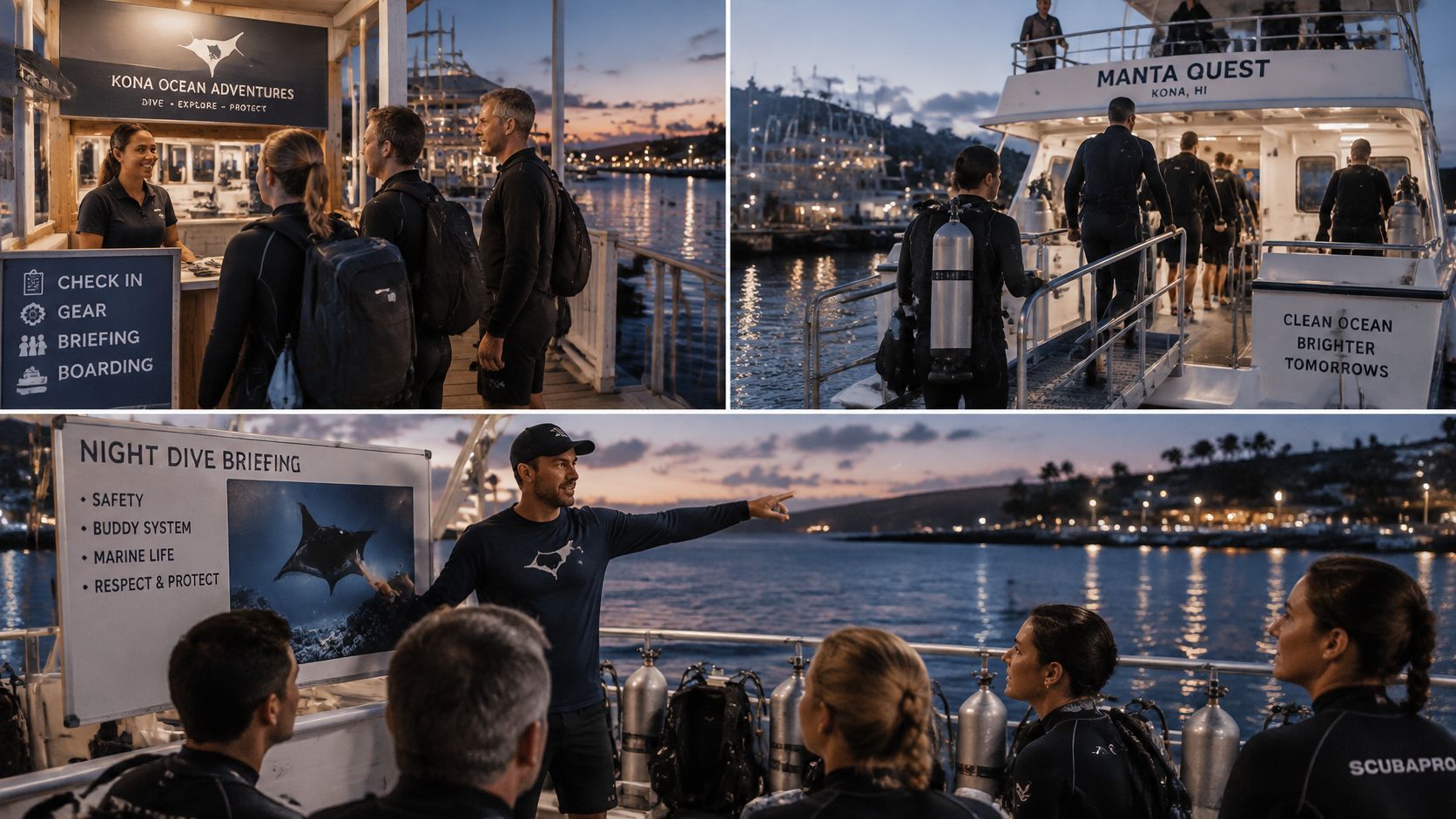
Entry, observation, and return
Divers enter with their lights on and follow the guide toward the sandy viewing area. Settle only where directed, arrange your fins and equipment, and establish comfortable breathing before concentrating on photography.
Experienced divemasters and instructors are in the water with our divers. The encounter is stationary and closely supervised, allowing guides to monitor positioning, safety, and comfort rather than lead a moving reef tour.
Snorkelers remain above the feeding area at the surface. Follow the surface guide's directions instead of copying what the scuba group does below.
- During the wait: Watch the illuminated water, check your instruments, and remain aware of the guide. Mantas may appear shortly after setup or take much longer.
- When you need assistance: Signal early if you're cold, anxious, or having equipment trouble. Don't wait for an animal to arrive before deciding whether you're comfortable.
- At the end: Follow the guided exit, return to the boat, and listen to the debrief.
Plan for a late dock return rather than a tightly scheduled dinner afterward. Eat something light beforehand, bring a dry layer, and keep the rest of the evening uncomplicated.
Safety and Etiquette Rules for Manta Encounters
Hawaiʻi law protects rays in state marine waters. Hawaiʻi Revised Statutes §188-39.5 prohibits intentionally or knowingly capturing, taking, possessing, abusing, or entangling a ray, as explained in Love Big Island's manta-dive guide. Touching, restraining, or interfering with an animal can therefore have legal consequences, not just earn a correction from the guide.
Keep the conservation language accurate, too. The giant manta ray, Mobula birostris, is listed as threatened under the U.S. Endangered Species Act, as noted in this manta species overview; Kona's documented feeding aggregations involve reef mantas, Mobula alfredi. Don't confuse the species when explaining their protection.
Keep the feeding lane clear
NOAA's voluntary manta-interaction standard sets out the practical observation arrangement: divers remain on or near the bottom, snorkelers stay at the surface, and the open water column remains available to mantas.
- Aim lights correctly. Divers hold lights above their heads pointing upward; snorkelers direct theirs downward. Follow the crew's setup rather than sweeping beams around.
- Never touch, chase, grab, or ride. Keep hands and camera equipment out of the animal's path, even when it passes close.
- Avoid bubble interference. Don't deliberately position yourself so your exhaled bubbles enter an approaching manta's path. Keep breathing normally and follow guide positioning.
- Protect the bottom. Maintain controlled buoyancy, keep fins still, and avoid stirring sediment or contacting coral.
- Secure your equipment. Loose hoses, straps, and accessories shouldn't hang into the viewing lane.
Hands rule: Keep your hands on your own equipment or calmly tucked in, never reaching toward a passing animal.
Stay with the group and apply the same responsible diver etiquette you would on a sensitive reef. Ignoring these boundaries can disturb feeding, harm wildlife, and undermine the conditions that make future encounters possible.
Gear and Photography Tips for Night Mantas
Pack for a relatively still underwater experience and a cool ride back, not just a tropical boat trip. Check what's supplied before packing duplicates.
- Personal essentials: A well-fitting mask, appropriate thermal protection, a rash guard, and your dive computer if you have one.
- Sun protection: Apply reef-safe sunscreen before the boat trip if you'll be exposed to daylight; consider protective clothing as well.
- Camera protection: Use a properly sealed underwater housing rated for your intended depth, not merely a splash-resistant phone pouch.
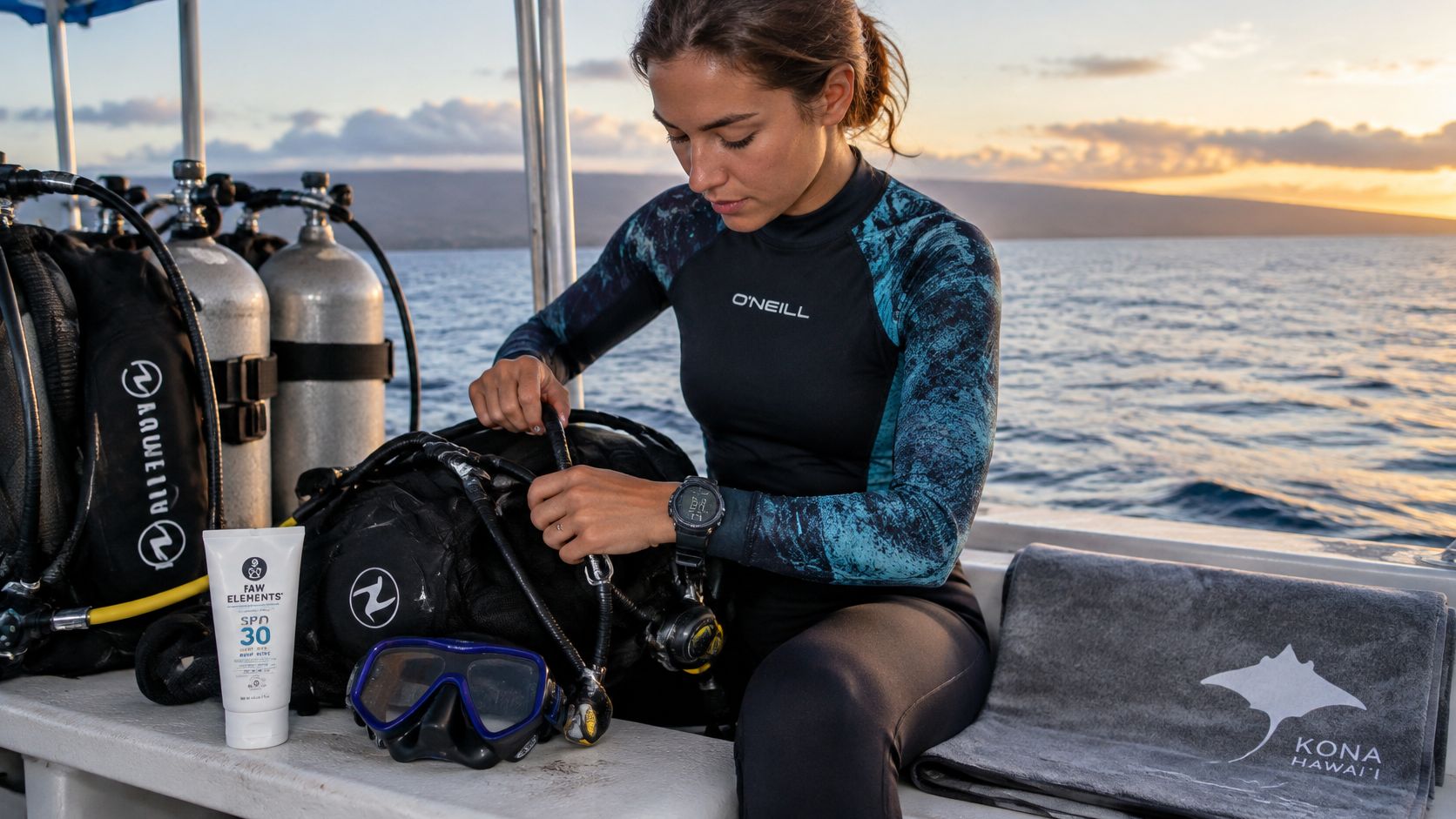
Set up before the first approach
Choose a wide-angle lens so a close animal can fit in the frame without you backing away into another diver. Leave unobstructed space in front of the housing, and keep the camera close enough to control without extending it into the feeding lane.
Start with a wide aperture and raise ISO as needed for the available light. Try continuous autofocus, check whether it holds focus reliably, and shoot short bursts during an approach. Review a test frame for motion blur before you become absorbed in the action.
Avoid rapid flash bursts directed at the animals. Use the provided lighting and follow crew instructions about any additional lights or strobes. These Kona manta photography examples and tips can help you plan a realistic composition.
A steady diver with a modest camera has a better starting point than a moving diver with an elaborate rig.
Save this packing list: certification details, mask, thermal layer, computer, secured camera, towel, and dry clothing. Leave bulky bags and dangling accessories out of the water.
Book Your Manta Ray Dive Kona
Make the booking decision around your comfort and the viewing setup. Garden Eel Cove is our go-to manta site, and our divemasters and instructors accompany divers in the water, but the evening still depends on ocean conditions and wild animals.
Manta sightings in Kona often exceed a 90% success rate. That's encouraging, not a promise for a particular departure, and it shouldn't replace a conversation about weather, recent activity, or what happens after a no-sighting evening.
Before you reserve
- Choose your viewing position. Decide between scuba below and snorkeling above based on certification and comfort.
- Confirm eligibility. Check certification, any specialty requirements, and family age limits for the selected departure.
- Confirm the site and date. Ask whether Garden Eel Cove is planned and leave room in your itinerary for changing conditions.
For other outings, compare our Kona scuba tours and the practical choices in our Big Island boat tour guide. Experienced divers considering another nighttime environment can also review the Black Water Night Dive, which is a different experience from the stationary manta encounter.
Call 808-324-4668 if you need help matching your training or comfort level to a departure. Describe any concerns directly so the booking conversation resolves them before you arrive.
Check your certification, choose your site, and book a date that leaves you some flexibility. Arrive ready to observe rather than pursue, and you'll be prepared for the encounter on the animals' terms.
Kona Honu Divers offers guided manta ray night encounters with a defined viewing area and experienced dive professionals in the water. Visit Kona Honu Divers to choose your dive or snorkel option, confirm the planned site, and reserve your Kona evening.