
You're comparing boat trips, wondering whether to scuba dive or snorkel, and trying to work out what “reliable” means when the stars of the show are wild animals. The Kona manta night is easier to choose when you know how the light setup works, what separates the two main sites, and which boat and guest habits make the experience safer and less disruptive.
For a concentrated viewing area and a sheltered setting, Garden Eel Cove is my pick. The encounter isn't a chase through open water. Guests hold position while mantas come to feed, so choosing a trip with a clear plan for lights, boat traffic, and in-water supervision matters as much as choosing the site.
Table of Contents
- What the Kona Manta Ray Night Dive Gives You
- Why Lights Pull Mantas Into a Circle
- Garden Eel Cove Against Keauhou
- Skills, Gear and the Hours Before Dark
- How a Manta Night Unfolds in the Water
- Boat Practices That Lower Risk and Impact
- Questions Before You Book
- Book the Garden Eel Cove Manta Night
What the Kona Manta Ray Night Dive Gives You
| Detail | Scuba dive | Surface snorkel |
|---|---|---|
| Certification | Open Water or equivalent | None required |
| Where you watch | Kneeling on sand near 36 feet | Floating at the surface |
| View of the rays | From below as they loop overhead | Looking down into the same light field |
| Typical sighting chance | 60-80 percent | 60-80 percent, same aggregation |
| Best if | You're certified and steady on your knees | You want the encounter without a card |
| Your job in the water | Stay still inside the light circle | Hold position and don't chase |
After dark, a first-time diver settles on sand inside a bright circle of light. A reef manta ray, Mobula alfredi, glides into view, then loops overhead as it feeds on plankton. The group isn't searching the open ocean for a fleeting shadow. It's holding a viewing position and letting the animals approach.
A 2023 Manta Ray Advocates fact sheet estimates a 60%–80% chance of seeing manta rays during a Kona night dive. That's an estimate, not a promise. These rays can have wingspans of about 12 feet and sometimes more, so the view from below can feel close even when guests keep their hands to themselves.
Garden Eel Cove is the default site in this guide because it has a protected location, a defined viewing area, and reef habitat around the viewing lane. The working depth is near 36 feet at the preferred site, shallow enough for divers to settle in place rather than tour a reef. The comparison with Keauhou comes later, because the sites differ in the kinds of aggregations they tend to support.
If you're also planning daytime dives, Kona offers a different kind of underwater outing, with reef and other dive options listed on the Kona diving tours page. The distinctive features of diving in Kona are a useful starting point for comparing those daytime experiences with a stationary night encounter.
Why Lights Pull Mantas Into a Circle
A porch light attracts insects without baiting them. Underwater lights work on a related principle: they illuminate the water column, plankton gathers around the light, and mantas arrive to feed. The crew isn't feeding or baiting the rays. The show is a plankton trap, not a chase.
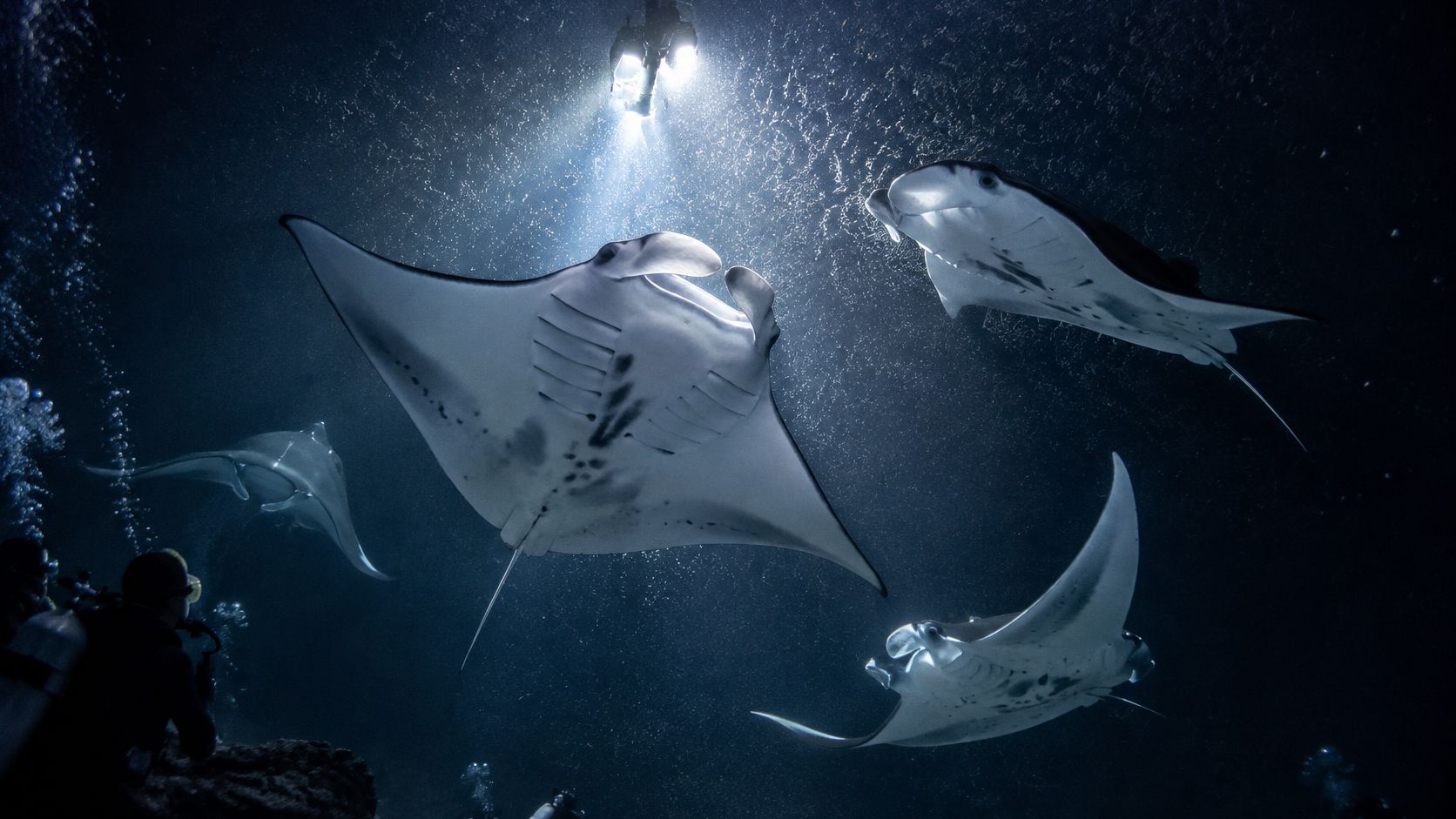
The reef manta, Mobula alfredi, filter-feeds as it passes through the illuminated water. A ray may make repeated passes or barrel rolls through a concentrated patch of plankton, then turn and feed again. It isn't a single, scripted flyby. The animals choose their own route through the light field.
Kona feeding research describes lights drawing zooplankton into the water column at aggregation sites, while feeding intensity depends on localized zooplankton biomass. That biomass can be affected by tidal currents interacting with island topography, internal waves, and surface convergence, as explained in the NOAA-hosted Kona manta feeding study. Those ocean processes can bunch prey together or spread it out, which helps explain why the same site can have a crowd one night and fewer rays another.
Set the lights, then stay put
Divers should point their lights upward into the water column, hold the assigned position near the bottom, and leave the open water above the group clear. Mantas need room to turn and repeat their feeding passes. Chasing them cuts across that flight path and doesn't improve the viewing.
A bright shared light circle also means the bottom isn't pitch black. Guests can see the viewing area and one another, provided they keep their lights directed where they belong and stay within the group's formation. The useful work is done by steady positioning, not by sweeping beams around or trying to follow each ray.
Garden Eel Cove Against Keauhou
For a focused viewing night, Garden Eel Cove is the stronger choice. It generally has larger manta aggregations than Keauhou, so guests seeking a concentrated viewing area should favor this site.
| Feature | Garden Eel Cove | Keauhou |
|---|---|---|
| Aggregation size | Larger aggregations | Smaller aggregations |
| Who shows up | Males and females in broadly similar numbers | Predominantly females, with stronger female site fidelity |
| Bottom and depth | Reef setting with a defined viewing area | Second principal night-feeding site |
| Setting | Protected cove near Kona airport | Less sheltered than Garden Eel Cove |
| Known as | Manta Heaven | The other long-studied night site |
| Choose it when | You want a concentrated viewing area | Female site fidelity matters more than group size |
A 13-year study analyzed community-sourced observations collected from 2010 through 2022, including more than 23,000 sightings of 167 individually identified reef manta rays at the two principal night-feeding sites. The University of Hawaiʻi study found larger aggregations at Garden Eel Cove, with males and females visiting in broadly similar numbers. At Keauhou, visits were predominantly female, and females showed stronger site fidelity.
Garden Eel Cove sits just west of Kailua-Kona International Airport, within the West Hawaiʻi Ocean Recreation Management Area. Its protected cove and reef setting give divers a defined place to settle below the feeding lane. The site is Kona Honu Divers' go-to location for its Manta Ray Night Dive, with generally calmer conditions and a good viewing area. For a practical pre-booking check, ask where the boat plans to dive, how the crew positions divers, and whether snorkelers can join from the surface.
Neither site guarantees a particular number of mantas. Prey availability influences how many gather, so a larger-aggregation site can still produce a quieter night. Garden Eel Cove is the pick when a concentrated viewing area is your priority; Keauhou may appeal more if female site fidelity is the feature you care about. Compare the details of the two-tank manta dive and snorkel tour before booking.
Skills, Gear and the Hours Before Dark
This is a shallow, stationary night dive, not a demanding reef tour. A newly certified Open Water diver can be ready if they can kneel without crushing coral and maintain neutral buoyancy when a manta passes close. If you still stir up sand every time you stop, this is a poor choice for your first night dive.
A practical same-day checklist
Confirm your certification and any rental gear that afternoon, rather than discovering a missing item during check-in. Do a quick mask, weight, and light-battery check before departure so the briefing can focus on the animals and the site, not a leaking hose or a dead light.
Eat a normal early dinner and skip alcohol before diving. Bring a warm layer for the ride back; the wind can feel colder after you've been in the water. If you want a quick refresher on boat comfort, use this guide to avoiding seasickness.
Pack a primary light, backup light, and signaling device. Trim gauges, clips, and dangling straps so nothing drags across the reef. Reef-safe behavior starts with keeping your body and equipment clear of coral, then holding position without touching or pursuing wildlife.
Non-divers can skip the skill test and join the surface snorkel option, watching the same light field from above. Guests who already dive comfortably and want longer daytime range can consider a separate advanced long-range dive trip, but that's a different outing from the stationary manta night.
How a Manta Night Unfolds in the Water
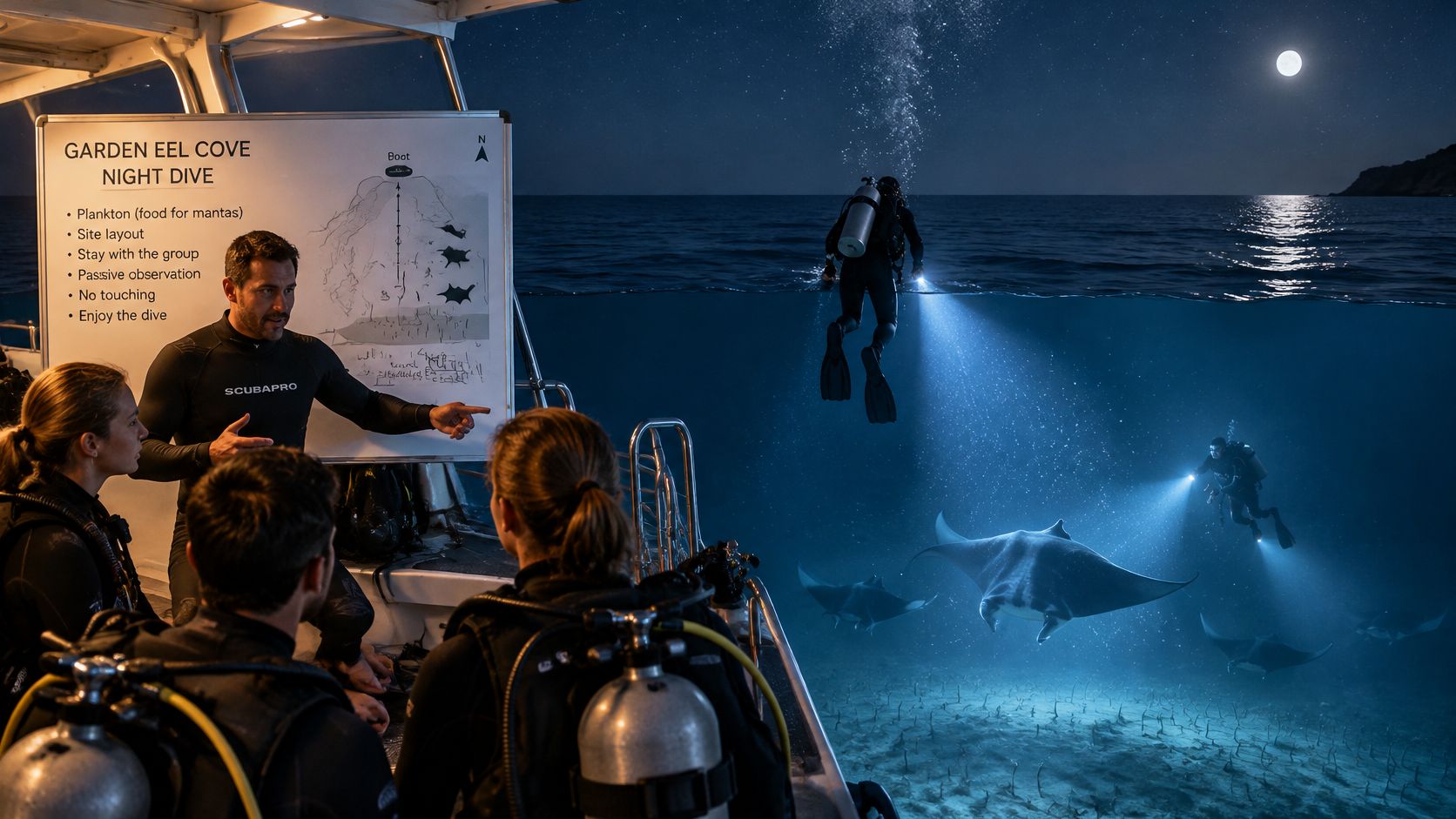
A well-run Garden Eel Cove dive has a clear sequence. Each step keeps the group together, gives mantas room to feed, and limits contact with the reef.
Listen to the briefing. The crew explains plankton, the site layout, and passive observation before anyone gears up. A clear plan keeps divers from improvising in the dark.
Enter and descend as a group. Carry a primary light and a backup, then descend to the sand beside the reef rather than touring the wall. That puts the group in the planned viewing area.
Hold your place and point your light up. Kneel on the sand or maintain neutral buoyancy inside the viewing lane. The lights concentrate plankton overhead, so guests don't need to swim around to attract the rays.
Let the mantas choose their route. Keep hands in, don't touch rays or coral, and don't swim up into the flight path. The animals approach to feed; chasing them disrupts their passes.
Stay with your buddy and light circle. If a ray's wake stirs sand, keep buddy contact and remain inside the illuminated area. It's easier to stay oriented when the whole group remains together.
Ascend on the operator's line. Surface at the vessel, never off to the side in the dark. Following the line and the crew's direction keeps the group connected to the boat.
The Garden Eel Cove site guide describes the encounter as passive feeding: divers remain stationary, lights draw plankton, and mantas approach to filter-feed. It also emphasizes buddy contact, the primary and backup light setup, and ascending only on the operator's line. For a general refresher on scuba diving at night, review the basic orientation habits before the trip.
Snorkelers hold a float at the surface above the same lights and watch down into the feeding area. A good pass is a silent ray gliding overhead while the group and light circle remain intact. Chasing, silting, or wandering away from the light breaks that calm, organized viewing pattern.
Boat Practices That Lower Risk and Impact
Boat handling shapes the encounter before guests enter the water. Independent assessments have documented boats traveling too fast, passing within 10–20 feet of unlit snorkelers, and traveling directly over submerged divers. The SFGATE report on Kona manta-tour practices also describes reported manta injuries, including propeller scars and collisions with boats or divers. For a calmer, lower-impact trip, judge the operator by specific practices rather than broad sustainability language.
| Practice | Lower-risk pattern | Higher-risk pattern |
|---|---|---|
| Anchoring | Stay outside the viewing zone | Anchor inside the viewing area |
| Time in the water | Set a clear time limit | Linger without a planned limit |
| Guests per guide | Keep groups small and well supervised | Take large groups with few guides |
| Engines | Shut down while guests are in the water | Run engines beside swimmers |
| Boat path | Move slowly and keep clear of people | Pass close to swimmers or over divers |
| Lights | Aim lights into the water column | Sweep lights across rays or add hull lights underwater |
These are proposed management practices, not a guarantee that every operator follows them. Use them to assess how a trip is run: a responsible operator should be able to explain where the boat waits, how lights are positioned, and how the crew keeps swimmers and divers clear of its path. A sustainability claim alone does not answer those questions.
Questions worth asking before paying
Ask where the lights are placed and whether they point into the water column rather than sweeping across the animals. Confirm whether the engine is shut off while guests are in the water, how many guides will be in the water with the group, and how the boat avoids the float line and divers. Clear answers should describe the actual plan for positioning the boat and responding to an emergency.
Guest behavior matters too. Avoid contact with coral and mantas, and follow crew instructions about where to stay in the water. Review responsible and considerate diver etiquette before the trip, especially the habits that protect the viewing area and the people sharing it.
A well-run night gives guests a defined place to observe while leaving mantas room to feed. Careful boat handling and respectful guest behavior make that arrangement work. Ask about both before paying, and choose an operator that can explain its practices plainly.
Questions Before You Book
Do I need a certification card? Scuba divers need Open Water or equivalent certification; snorkelers don't need a dive card. Choose the format that matches your training and comfort in the water.
How likely am I to see mantas? A 2023 estimate puts the chance at 60%–80%, but no night is guaranteed. Manta numbers can change with plankton availability.
Can I touch the rays? No. Keep your hands in and avoid contact with both mantas and coral.
Which lights do I need? Scuba divers should carry a primary light and a backup. If you're bringing a light as a snorkeler, ask the operator what type is appropriate and follow the crew's directions.
Is it suitable for children and beginners? Confirm age minimums, swimming ability, and session length with the operator before booking. Proposed management measures include limiting sessions to about 2.5 hours, but that isn't a universal tour schedule.
What should I wear and bring? Bring a warm layer for the boat ride back and wear reef-safe swimwear. Eat a normal early dinner and skip alcohol before the trip.
What if the mantas don't show? Ask about rebooking, weather and sea-state cancellations, and whether a snorkel option is available on the same trip. Don't assume every operator uses the same policy.
What time and where do I meet? Confirm the meeting point, departure time, and dusk check-in when you book. Leave enough time for gear checks before the boat leaves.
If you're still weighing the two water-level options, this guide to whether it's better to snorkel or dive with manta rays can help you choose the view that fits your skills.
Book the Garden Eel Cove Manta Night
For a manta night, I'd choose a crew that explains the feeding behavior, sets lights on the sand, and keeps divers in a defined viewing area with guides in the water. Garden Eel Cove is Kona Honu Divers' go-to site because its protected location offers a good viewing area, healthier reef, and generally calmer conditions. The crew briefs guests on the science and the rules of passive observation before the dive.
The two-tank manta dive and snorkel tour is open to certified divers and snorkelers who don't need a certification card. Kona Honu Divers also offers other Kona diving tours for visitors comparing daytime trips. The Black Water Night Dive is a separate offshore night experience, not a substitute for the manta feeding site.
Kona Honu Divers offers a guided Garden Eel Cove manta night for certified divers and snorkelers, with a crew-led briefing and a stationary viewing setup. Choose the dive or surface option that fits your experience, then visit Kona Honu Divers to plan your manta night.