
Kona's manta ray dive happens primarily at night off the Kona Coast, where artificial lights attract plankton and reef manta rays that feed on it. At Garden Eel Cove, manta sightings occurred on approximately 80% of dives, and by 2002, nine Kona operators were taking about 11,000 snorkelers and divers on manta excursions each year. Historical Kona manta-diving records document how this unusual wildlife encounter became a dependable part of the island's visitor experience.
You may be looking at a tour schedule in Kailua-Kona, wondering whether a night entry into open water is worth the effort. The short answer is yes for a prepared diver, but the experience makes more sense when you understand what draws the animals in, why Garden Eel Cove, also known as Manta Heaven, is the superior dive-tour choice, and how your behavior affects the feeding scene.
Understanding the Kona Manta Ray Night Dive Experience
The boat leaves the Kona coast as daylight fades. By the time you reach the viewing site, the reef has changed character. Familiar daytime colors recede, your dive light becomes the main reference point, and the group settles into a designated position above the seafloor. You aren't searching across a large reef for a lucky glimpse. You're joining a carefully managed wildlife observation built around a localized feeding area.
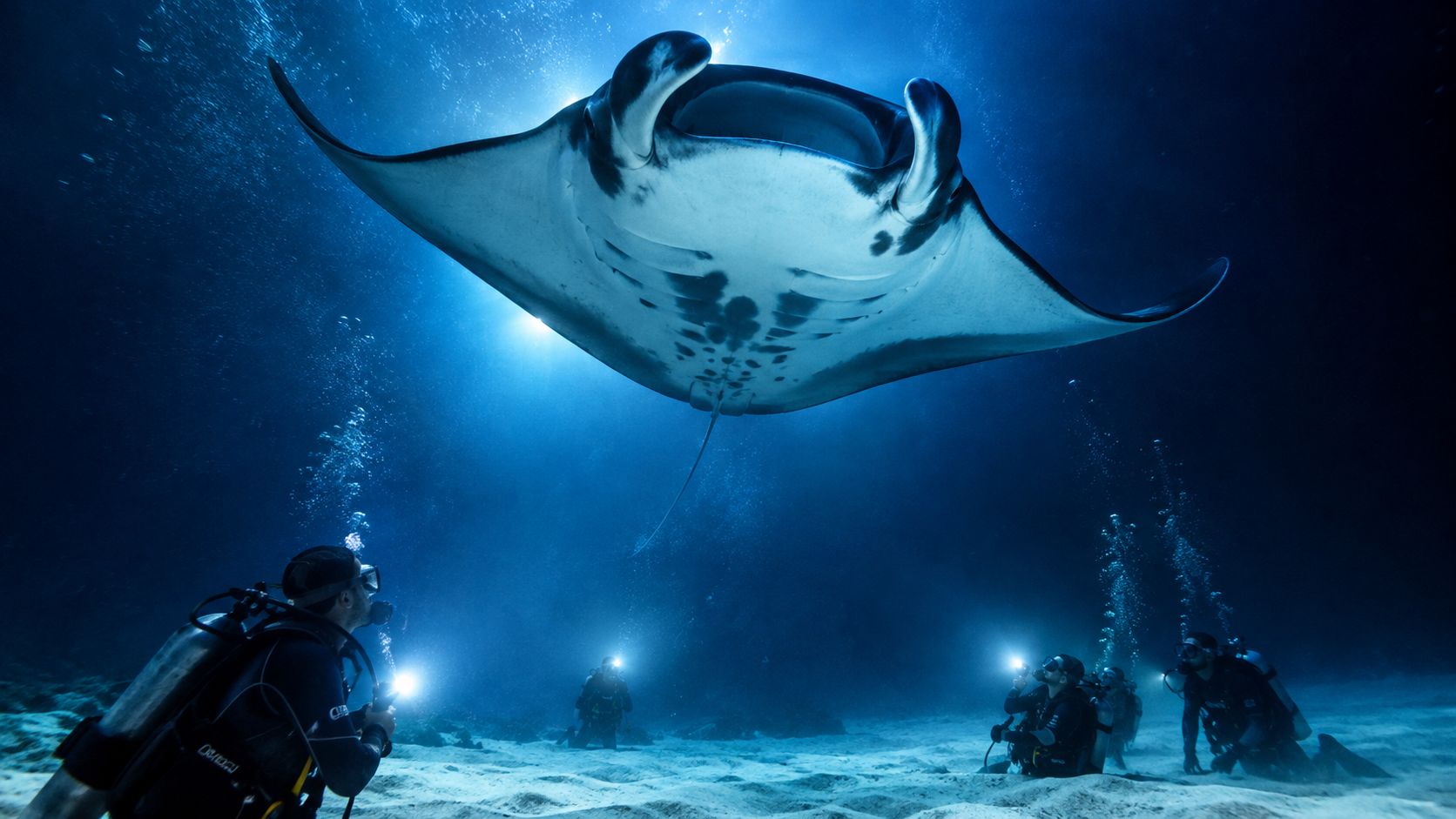
The first manta may appear as a pale shape at the edge of the light. Then it turns, and its white underside passes overhead. Another ray may follow in a smooth chain, or roll through the illuminated water with its broad cephalic fins extended. The scene feels choreographed, but the animals aren't performing for divers. They're responding to food concentrated by the lights.
Why the lights bring mantas close
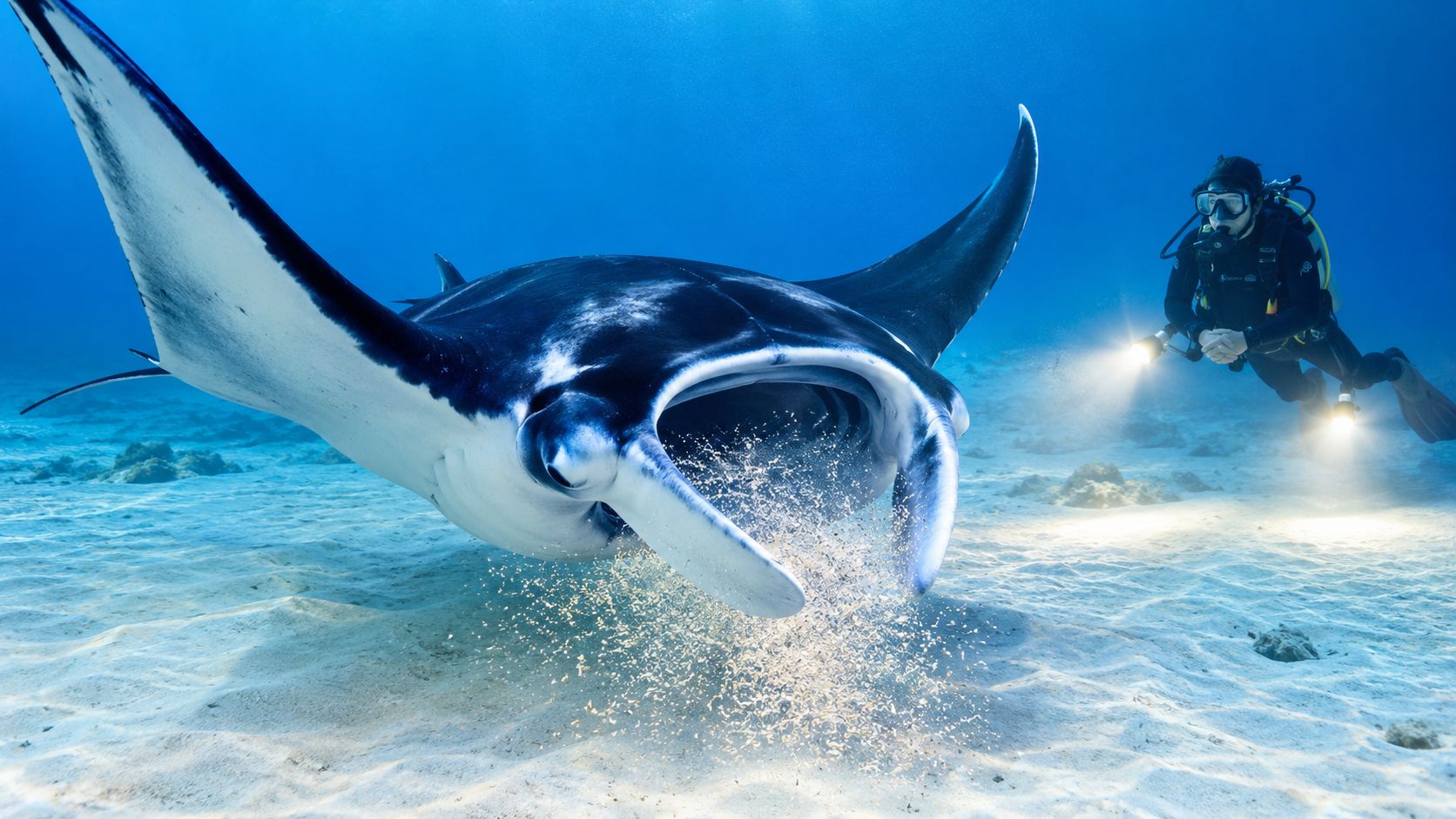
The mechanism is called phototaxis. Artificial underwater lighting increases local concentrations of zooplankton, the small drifting organisms that reef manta rays (Mobula alfredi) eat. Mantas then swim through the plankton-rich water, using their cephalic fins to funnel it into their mouths. Their gill rakers retain the food while filtered water exits through the gills. Hawaiʻi's protected-species overview of reef mantas explains why this is a feeding aggregation rather than a baited encounter.
That distinction matters. The tour doesn't need to feed the rays directly or chase them across the reef. The light creates a temporary concentration of their natural prey, and the mantas choose whether to enter the area. Water movement, plankton density, visibility, and light placement all influence the quality of the encounter.
Practical rule: Stay still at the designated viewing position. The mantas control the distance, while your calm, predictable position keeps the feeding zone intact.
Kona's experience has a long local history. Artificial lighting near Keauhou Bay attracted zooplankton and feeding reef mantas to predictable nighttime locations during a documented shift in the early 1990s. Organized manta tours were operating along the Kona Coast by the 1990s, and researchers recorded manta encounters during 3,208 surveys from 1992 through 2007 at Kona night-diving sites. A historical account of Kona's manta-ray night dive places today's trip within that broader story.
Best Dive Sites and Essential Conditions
At dusk off Kona, site choice shapes the whole night. You want a place where the boat can set up cleanly, divers can settle into position without crowding the reef, and mantas have room to feed in the lighted water column. For that combination, Garden Eel Cove, also known as Manta Heaven, is often the clearest fit. It sits north of Kailua-Kona near Kona International Airport, and Details about Garden Eel Cove and its setting describe why operators value it for its relative protection from swell and its practical layout.
Its bottom profile is a big part of the appeal. The site is generally about 30–40 feet deep, shallow enough to organize a controlled viewing area and deep enough to leave open water above the lights for feeding passes. A flat, sandy bottom works like a natural viewing platform. Divers can kneel or hover in a defined zone, while the mantas loop through the plankton-rich beam instead of being funneled through reef structure or tight terrain.
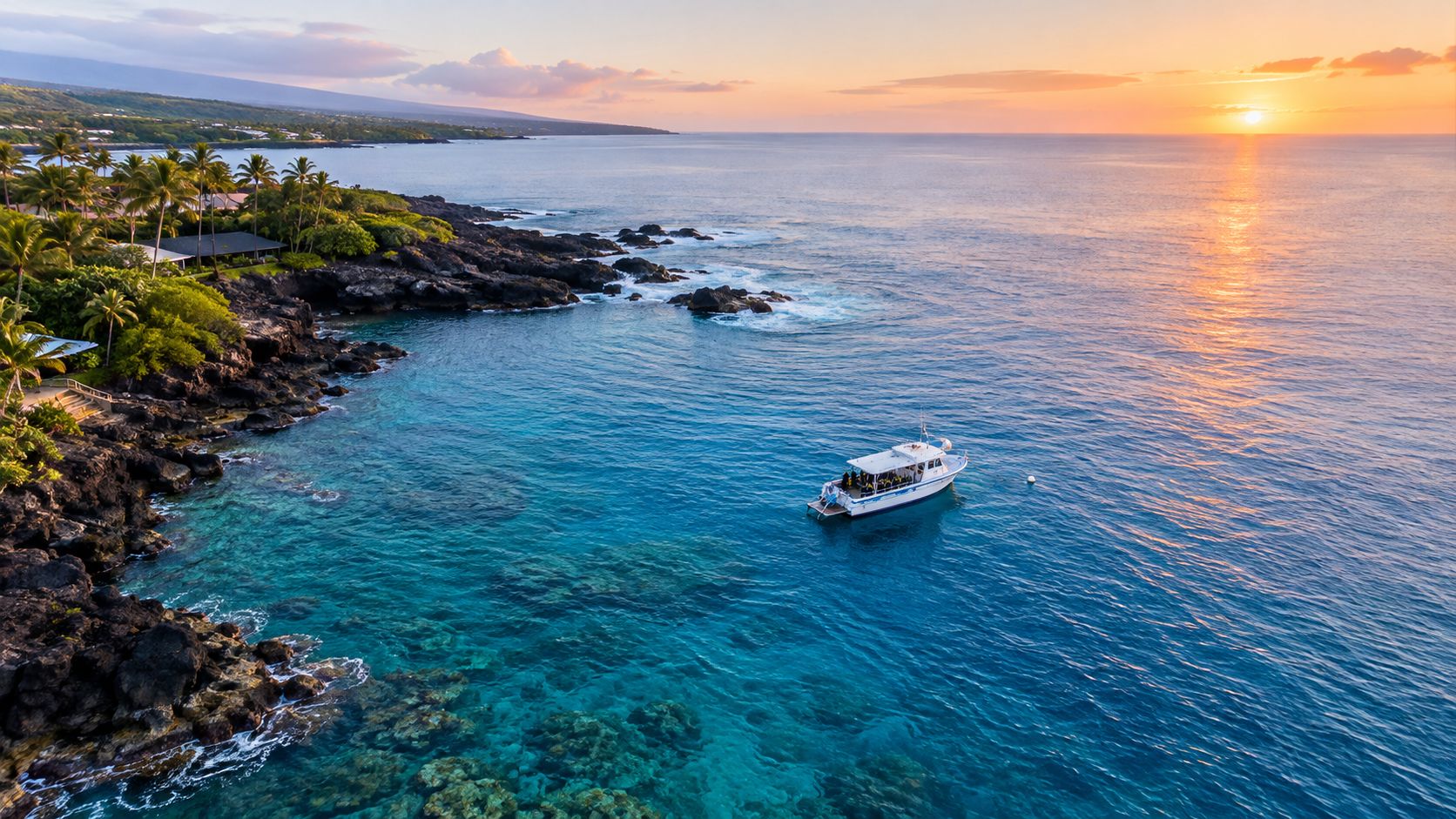
Protection is relative, not absolute. Even at a favored site, wind, swell, current, and visibility can change the feel of the dive from one night to the next. A protected cove gives the crew a steadier starting point. That matters because the encounter depends on precision: lights draw in zooplankton through phototaxis, zooplankton concentration attracts feeding mantas, and the whole setup works best when divers stay still and the water remains manageable.
Why Garden Eel Cove stands out
Manta Village near Kaukalaelae Point is also a well-known Kona aggregation site, but Garden Eel Cove often suits this style of tour better because its protected location, stable bottom, and open viewing area support a more orderly operation. That benefits guests, crew, and the animals. Divers can hold a predictable formation, and mantas can choose broad, repeated passes through the light field without dodging scattered swimmers.
Research helps explain why even a reliable site never guarantees the same show every night. A six-year study recorded 25,444 observations of 118 individual reef manta rays at Manta Heaven in Makako Bay and Manta Village near Kaukalaelae Point. More recent community-sourced research documented over 23,000 sightings of 167 unique mantas at Garden Eel Cove and Keauhou from 2010 through 2022. The same work found that aggregation size changed with zooplankton density, females showed particularly strong site fidelity at Keauhou, and males appeared more mobile. The population and site-use research shows why a strong site can still produce changing nightly conditions.
Water temperature and exposure protection
Reported water temperatures are approximately 24–28°C, or 76–82°F. A 3 mm exposure suit works for many divers, but comfort is personal. Night dives involve long periods of limited movement, so a diver who feels warm on a daytime reef cruise may cool off faster while staying in one viewing position.
Good crews judge more than the forecast. They watch entry and exit conditions, how easily guests can stay settled, and whether visibility supports a controlled wildlife encounter. If the ocean stops cooperating, the plan has to adjust. You can review the Kona manta night dive experience and site logistics before booking so the setup makes sense before you ever step on the boat.
Participant Requirements and Safety Protocols
The manta dive is technically accessible to recreational scuba divers because the principal activity occurs in shallow water, generally about 8–12 m, or 25–40 ft, with much of the viewing around 10–12 m, or 33–40 ft. That depth limits decompression exposure, but it doesn't remove the demands of night diving. Darkness reduces visual references, close manta passes can distract you, and other divers may be nearby.
Think of the trip as a fixed-position wildlife observation, not a conventional reef tour. You won't spend the main portion of the dive swimming from feature to feature. You'll establish neutral buoyancy, keep your equipment tidy, monitor your gas, and allow the animals to choose their path. A practical explanation of Kona manta-dive depth and preparation helps set that expectation before booking.
A sensible preparation sequence
-
Assess your comfort in open water. Darkness, swell, boat traffic, and low visibility can challenge a diver who feels confident in a sheltered daytime environment. The mantas aren't the primary hazard. The setting is.
-
Review night communication. Before entering, confirm hand signals, light signals, entry procedures, the viewing position, and how the group will return to the boat. Keep your light pointed where instructed so you don't blind other divers or interfere with the viewing area.
-
Secure your equipment. Dangling gauges, loose clips, and long camera straps can contact the bottom or an animal. Streamline everything before descent, then check that your mask, regulator, exposure suit, and weighting feel right.
-
Hold position without finning constantly. Use your buoyancy control rather than your hands or fins to hover above the bottom. Excessive movement can disturb feeding passes and increase the chance of accidental contact.
-
Monitor gas and separation. Your attention may follow a manta across the light, but your normal dive responsibilities continue. Check your pressure, stay with your buddy or assigned team, and keep enough awareness to respond to the guide.
Snorkeling and scuba serve different participants. A snorkeler must be comfortable floating in open water after dark and holding a stable position at the surface. A scuba diver needs appropriate certification, buoyancy control, and the ability to manage equipment while watching wildlife. Neither option guarantees a sighting, because the animals and conditions remain variable.
Sea sickness deserves honest planning. The sites are offshore and reached mainly by tour boat, so anyone prone to motion sickness should discuss preventive options with a qualified medical professional before travel. Arrive rested, follow the operator's instructions, and tell the crew early if you feel unwell. A diver who is nauseated, anxious, or cold should end the dive rather than push through for a wildlife encounter.
The Ethics and Wildlife Welfare of Manta Diving
Your light hits the water, a cloud of plankton gathers, and a manta turns through the beam to feed. That moment can feel magical. It is also a human-made feeding stage, and ethics start by understanding that mechanism. Mantas are not showing up to entertain divers. They are responding to concentrated food, because light draws zooplankton toward the surface and into the water column where the animals can feed efficiently.
That is why a no-touch rule, while necessary, is only the starting point. A manta may approach on its own and still be affected by how people behave around it. Repeated close passes, bright lights, boat traffic, and a crowded viewing circle can change an encounter from simple observation into pressure.
A Hawaiʻi County testimony summarizing peer-reviewed research links manta tourism with possible stress, disease, injury, altered feeding behavior, and habituation. The point is not that every Kona night dive causes harm. The point is that voluntary approach alone does not settle the welfare question, which is why operators and guests need a stricter standard of care. The testimony and research summary on manta-tourism impacts
What lower-impact behavior looks like
Good manta etiquette is simple to describe and harder to practice once the animals start looping overhead. Stay in the designated viewing area. Follow responsible considerate diver etiquette by avoiding pursuit and encirclement, keeping your hands off the animals, and making sure fins, cameras, and lights do not enter a manta's path. Guides should control spacing so guests do not box in an animal from several directions.
Watch the mantas the way a good captain watches current. Small changes matter. If animals begin veering away, making abrupt turns, or leaving the lit area again and again, the group should back off, reposition, or end the interaction. A careful operation treats those responses as signs to reduce disturbance.
The goal is to watch natural feeding behavior without turning curiosity into pressure.
This matters more in Kona because the local population is limited and individually recognizable, and long-term protection only helps if daily tourism behavior stays controlled. Garden Eel Cove supports that structure well because the viewing layout can keep people predictable and the water column open. But the site design only works when guests use restraint. That restraint protects the mantas first, and it also preserves the quality of the experience for everyone in the water.
Why Choose Kona Honu Divers for Your Adventure
You feel the difference before you get in the water. On a night manta trip, the right operator keeps the evening orderly: clear timing, clear instructions, enough deck space to gear up without bumping into other guests, and in-water supervision that keeps people predictable around wild animals. That matters at a site where the whole encounter depends on light, plankton, and mantas choosing to stay in the feeding lane.
Kona Honu Divers runs boat trips from Honokohau Harbor to Garden Eel Cove and offers several formats instead of treating every guest the same. The manta dive program includes a twilight reef dive followed by the night manta portion, and the snorkel trip uses custom light boards that draw in plankton near the surface, which in turn brings mantas up to feed. If you want options beyond the manta schedule, the broader Kona diving tours include training, daytime charters, blackwater dives, and more specialized outings.
Compare the trip with your own readiness
Trip choice should match how you dive, not how you hope to feel after sunset. A certified diver who wants a longer underwater evening may prefer the two-tank manta dive and snorkel tour. A traveler who is uneasy with scuba, current, or mask work in the dark should ask about the snorkel format first. If you want a wider sense of the operation, Kona Honu Divers' company overview outlines the team, boats, and day-to-day setup.
The company states that its staff brings over 60,000 collective dives and 200 years of combined staff experience. Those numbers are useful only if they show up in practice. Ask how the crew organizes entries and exits, where divers and snorkelers wait once in position, how guides handle a guest who is overloaded or anxious, and what changes when mantas stop making comfortable feeding passes through the light.
Kona's manta tours also sit inside a longer local economy, not a one-off attraction. The historical record of the Kona manta-tour economy describes an established industry tied to local jobs and repeat visitation over time. That history helps explain why operator choice matters. Good logistics protect guests, and disciplined wildlife handling helps keep the encounter stable for the animals that make the trip possible.
Photography Tips and Final Booking Considerations
Your best manta photo usually happens when you stop trying to hunt for it. At night, the whole setup works like a feeding station. Lights draw in zooplankton, zooplankton draws in mantas, and the animal often circles back through the same column of water. If you stay calm, hold position, and keep your camera tucked in close, the encounter comes to you.
That approach also protects the animal.
Use the crew's light pattern instead of adding your own harsh beam to the manta's face. A bright light aimed into the eyes can disrupt a natural pass, and chasing for one more frame often turns a clean overhead glide into an avoidance turn. The better image is usually the quieter one. When a manta passes above, frame the belly and cephalic fins, get the shot, then lower the camera and let the ray continue feeding.
The underside matters because reef mantas carry individual ventral markings. A clear, low-impact photograph can help distinguish one animal from another without touching, restraining, or tagging it. For travelers who want more than a souvenir shot, that is part of the value. You are documenting an identifiable wild animal while leaving its behavior as undisturbed as possible.
Booking decisions deserve the same honesty. Choose scuba or snorkeling based on how comfortable you are with darkness, open water, holding position, and getting cold while you wait for activity to build. Sea conditions can make an easy-looking trip feel demanding, and wildlife is never on cue. Kona Honu Divers offers guided scuba and snorkel trips to Garden Eel Cove with boat-based logistics and crew support. Review the tour details on the Kona Honu Divers site, confirm participant requirements, and ask practical questions about certification, equipment, seasickness, and current conditions before you reserve.