
The first manta usually appears without warning. One moment you're settled in the dark over sand, looking into a cone of light, and the next a white belly rolls through the beam so close that everyone forgets to breathe for a second.
An Unforgettable Night Under the Sea
Kona's manta night dive earns its reputation the first time a ray glides overhead. Divers sit low and still, lights angled up, while the water above turns into a feeding lane. Then a reef manta swings through the glow, banks, and comes back again with the kind of control that makes the whole scene feel choreographed.
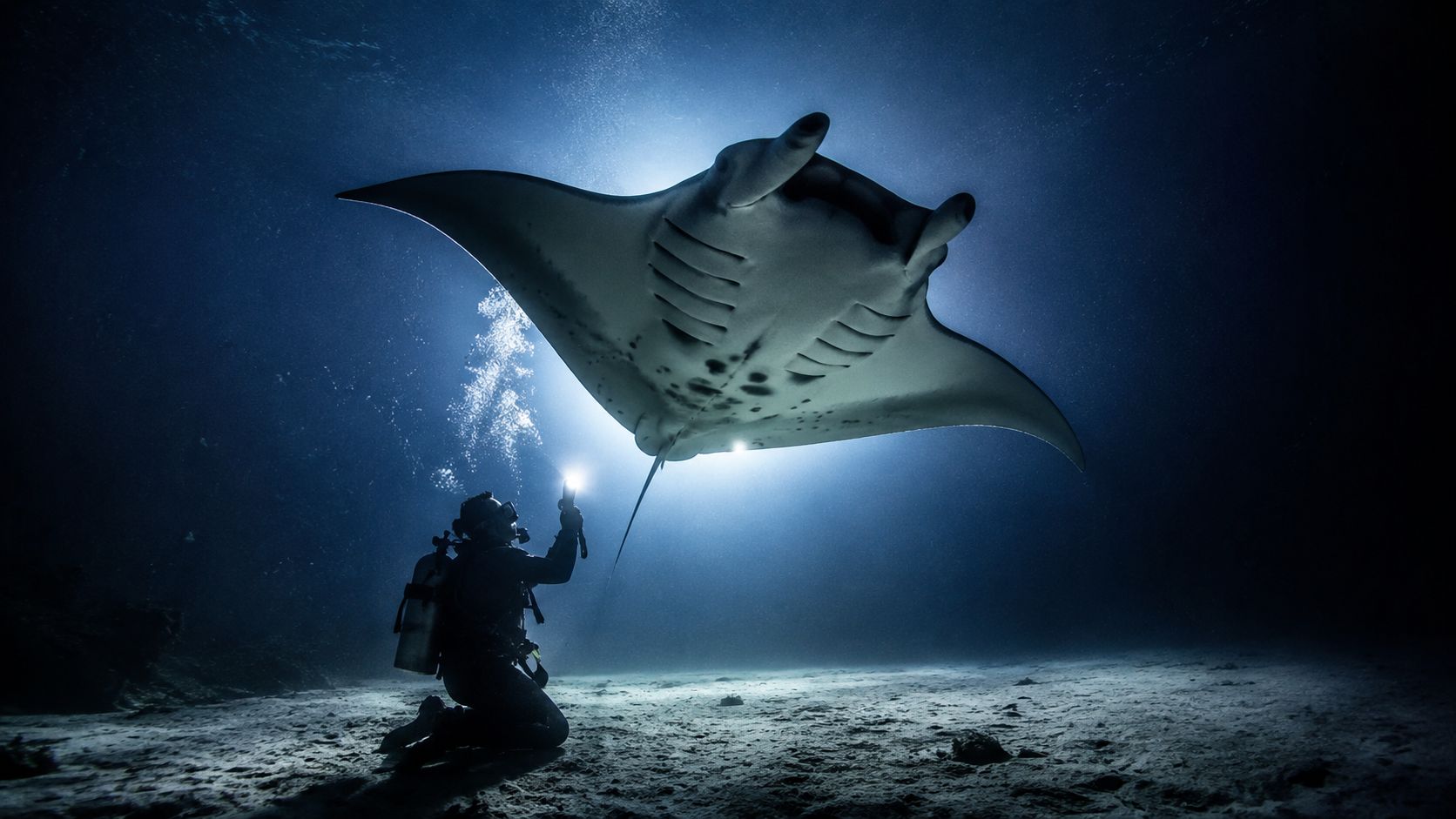
This isn't a long swim through the reef hoping to get lucky. It's a structured wildlife encounter built around feeding behavior, careful diver placement, and patience. If you want a good overview of how the in-water experience is set up, the manta ray night swim guide gives a solid sense of the format.
The part first-timers underestimate is how much time you get with the animals once the show starts. Encounters during manta ray night dives in Kona typically last 45 to 60 minutes, allowing participants to watch wild Hawaiian reef manta rays with 10 to 14 foot wingspans feed on plankton, as described in this Kona manta dive write-up.
What the moment feels like
The dive is quiet in a way most ocean experiences aren't. You hear your own bubbles, you see the beam from the lights, and then you realize these huge animals are flying a few feet above your mask.
Practical rule: The better you hold position, the better the mantas use the water column above you.
That's what makes the manta ray dive Kona experience different from a lot of bucket-list dives. You're not chasing the encounter. You're setting the stage correctly, then letting wild animals decide how close they want to come.
Who this dive works for
This trip fits certified divers who don't need a high-workload dive to have a memorable night underwater. It also works well for travelers who want one signature Big Island experience that feels distinctly Kona, not something you could swap out with any generic reef dive anywhere else.
What Makes the Kona Manta Ray Dive So Special
Most famous wildlife encounters depend on timing, migration, or luck. Kona works differently. The system is simple, repeatable, and based on food.
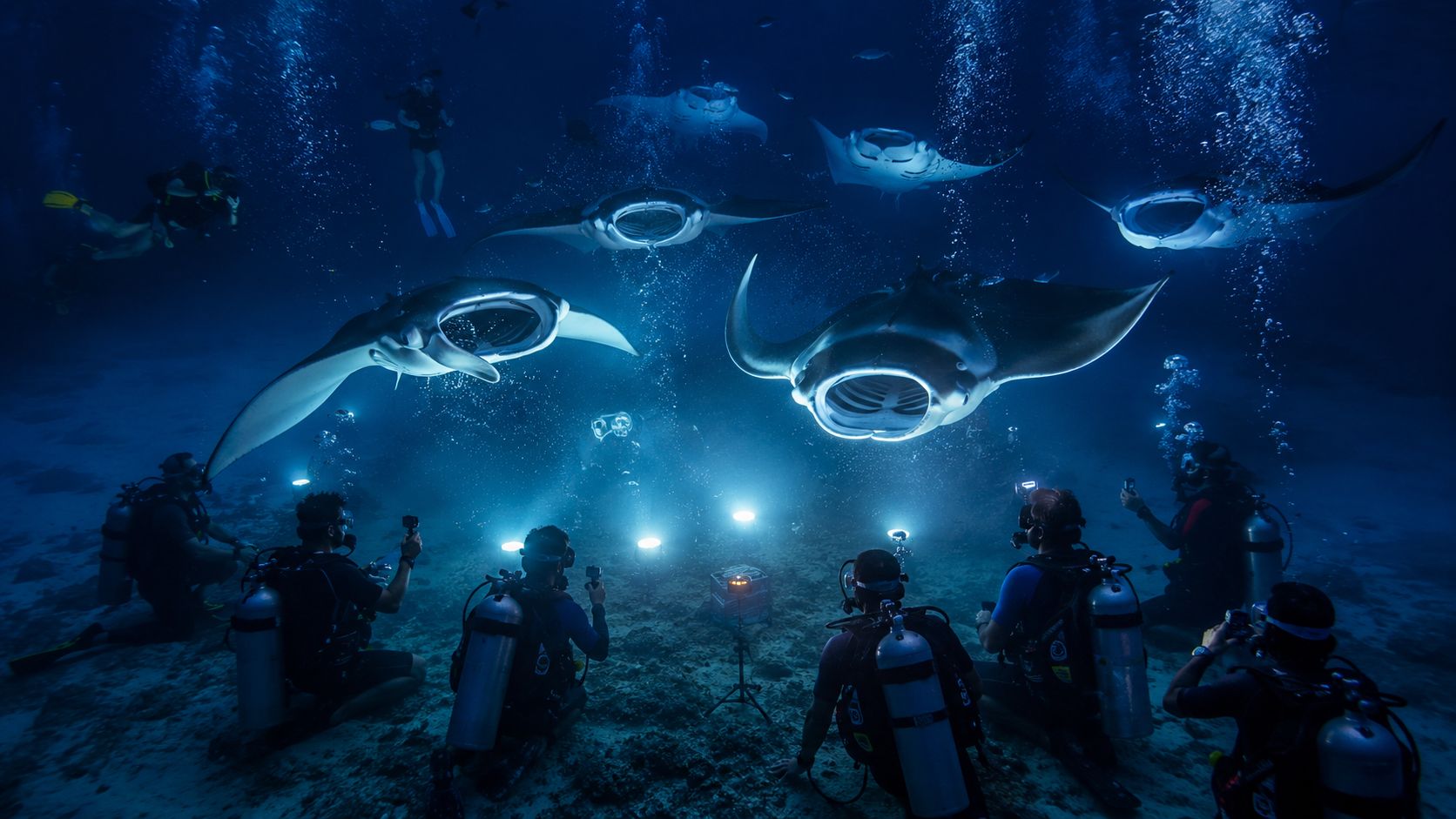
Operators place strong lights in the water. Those lights attract plankton. Mantas learn that the light means feeding opportunity, then circle and barrel-roll through the illuminated water to filter food. If you want context on why local diving is set up the way it is, this piece on what makes diving in Kona unique connects the conditions and marine life well.
The underwater campfire effect
Divers often call the setup an underwater campfire. That's the right image. Everyone gathers around a bright focal point, and the mantas come in because the food gathers there.
The reliability is what puts Kona in a different category from most places. The manta ray night dive in Kona has a sighting success rate between 80% and 90% year-round, with an average of six individual mantas per trip and a record of 36 on a single night, according to Manta Ray Night Snorkel Hawaii.
Why the encounter stays consistent
This isn't only about lights. It's also about resident animals that use the coastline regularly. The mantas seen on these dives are primarily reef mantas, Mobula alfredi, and the local population has been tracked through photo identification over many years in Kona. That long-term familiarity is why the manta ray dive Kona experience is famous for consistency rather than occasional surprise.
When people ask why Kona is different, the short answer is that the mantas already know the feeding stations.
A few practical points matter here:
- Stationary divers help: The less traffic in the water column, the cleaner the feeding lane stays.
- Light placement matters: A scattered group with poor light discipline doesn't produce the same clean viewing pattern.
- Expectation matters: This is a spectacle dive, not a hunt.
What works and what doesn't
What works is accepting the format. You descend, settle in, keep your gear tidy, and watch the pattern develop.
What doesn't work is showing up expecting a normal roaming night dive. Divers who want to fin around, chase the action, or constantly reposition usually enjoy this less and interfere more with everyone else.
Choosing Your Dive Site Why Garden Eel Cove is Superior
Not all manta sites feel the same once you're in the water. That matters more than most first-timers realize.
Garden Eel Cove, also called Manta Heaven, is the site many experienced local divers prefer because it gives the encounter more breathing room. The big practical advantage is the setting. Garden Eel Cove is in a protected location, and that usually makes the entire experience calmer and easier to manage from descent to exit.
The case for this site isn't vague. Garden Eel Cove offers a superior manta ray night dive experience due to its protected location, resulting in a 90% success rate while avoiding the crowding of 50 to 100 people often found at Manta Village, according to Sunlight on Water's site comparison.
Kona Manta Ray Dive Sites Compared
| Feature | Garden Eel Cove (Manta Heaven) | Manta Village (Keauhou Bay) |
|---|---|---|
| Setting | Protected location | More crowd pressure on busy nights |
| Viewing feel | Better viewing area | Can feel packed |
| Reef impact | Less disturbed reefs | More traffic around the site |
| Crowd level | More manageable | Often 50 to 100 people |
| Reported success rate | 90% | Crowding is the bigger trade-off |
If you're comparing operators and departure plans, it helps to understand the broader Kona diving scene first. This overview of diving Kona on the Big Island is useful for that.
Why site choice changes the whole dive
A crowded manta dive can still produce mantas. It just won't feel as controlled. More divers in one patch of sand means more lights, more fin movement, more bumping during setup, and a bigger chance that someone drifts where they shouldn't.
Garden Eel Cove usually solves that problem better. You get a better viewing area, a cleaner runway for the mantas, and less distraction from other groups. For photographers, that also means cleaner backgrounds and fewer stray beams in your frame.
The best manta dive isn't the one with the loudest briefing or the biggest boat. It's the one where the site gives the animals room to feed and gives divers room to stay still.
Who should choose Garden Eel Cove
Choose this site if any of the following sound like you:
- You dislike crowds: You'll feel the difference immediately.
- You're nervous about night diving: A more orderly site lowers stress.
- You want better composition for photos: Fewer people in the water helps.
- You care about reef condition: Lower crowd pressure is a meaningful advantage.
If your goal is the cleanest possible version of the manta ray dive Kona experience, Garden Eel Cove is the stronger choice.
Your Dive Profile and What to Expect Underwater
This dive is shallow, structured, and very specific in how it works. That's exactly why it works so well.
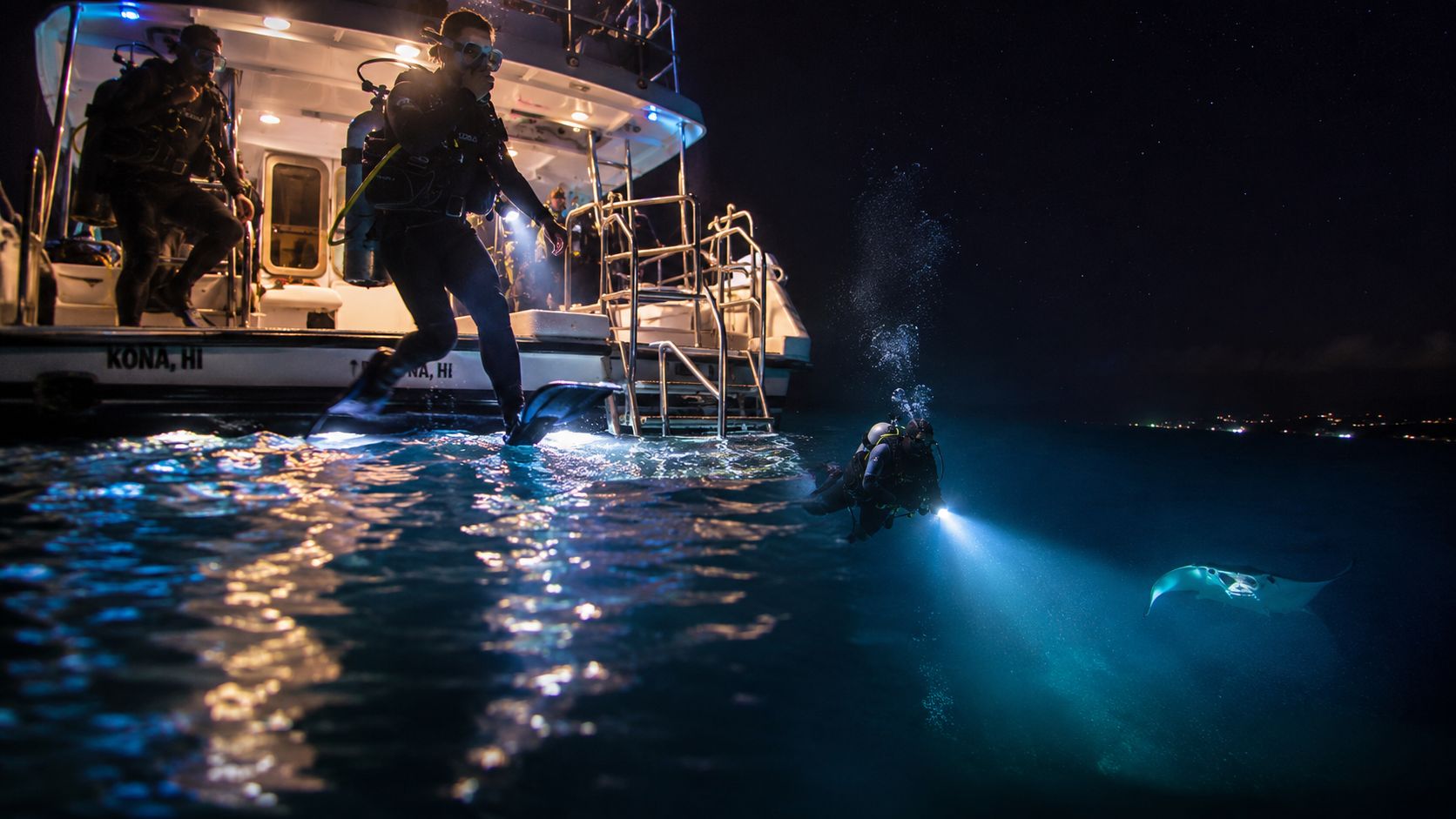
The manta night dive occurs in a shallow, 25 to 40 foot (8 to 12 meter) stratum, where divers maintain a stationary position at approximately 35 feet on a soft sandy bottom, creating an unobstructed runway for the mantas, as explained in this breakdown of Kona manta dive depth.
How the dive usually unfolds
You'll start with a boat briefing that covers entry, descent, hand signals, light use, and the biggest rule of the night, which is to stay put once the group is in position.
Then the sequence is usually this:
Night entry from the boat
The entry is straightforward, but it feels different at night if you haven't done one in a while. Listen for the timing, keep your mask and regulator secure, and don't rush.Controlled descent with the guide
Once the group drops, everyone moves to the sandy bottom together. This isn't a dive where you want to arrive late and sort yourself out in midwater.Settle into the light formation
Divers kneel or stay low on the sand, with lights angled upward. The open water above becomes the feeding lane.Watch the runway, not your computer every ten seconds
You still monitor your gas and follow standard dive practice, but the whole point is to get stable and watch above you.
What you'll actually see
The mantas don't usually arrive once, do a pass, and leave. When the plankton density is right, they cycle through the beams repeatedly. They come from above, below, and the side, then roll through the light cone with their mouths open to feed.
Snorkelers experience the same feeding behavior from the surface using light boards. Divers get the amphitheater view from below. Neither is fake. They're just different vertical angles on the same event.
Stay low, keep your fins quiet, and let the water column above you stay open. That's when the mantas start using it confidently.
Common mistakes underwater
A few things consistently make this dive worse:
- Overweighting yourself: You don't need to pin yourself to the sand.
- Using your fins too much: A steady posture beats constant adjustment.
- Pointing your light everywhere: Keep the beam where the guide wants it.
- Looking around for other wildlife: This dive rewards focus.
Beyond Certification Preparing for a Comfortable Night Dive
A certification card proves you completed training. It doesn't prove you're ready to relax underwater in the dark with a lot of sensory input.
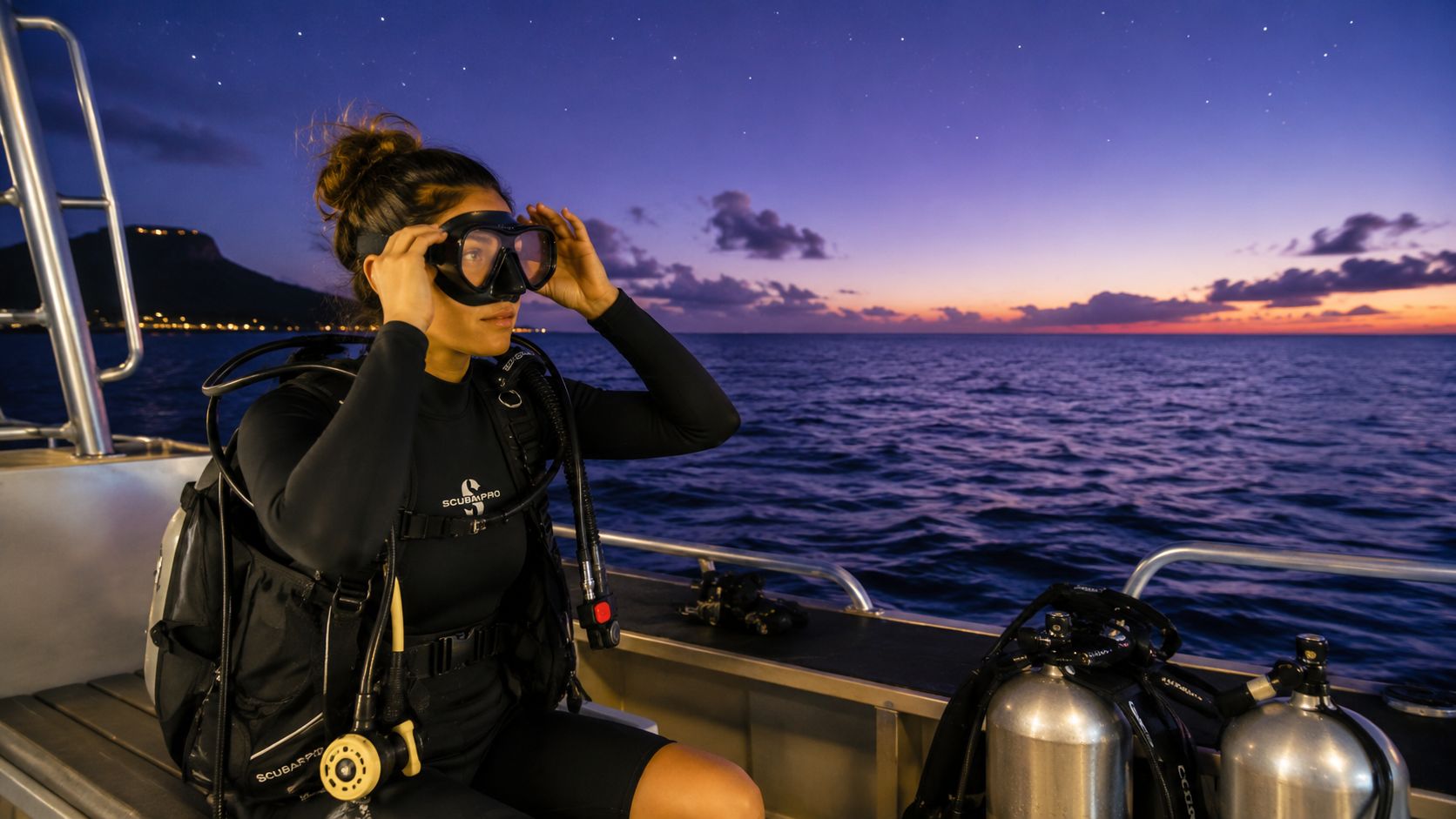
That gap catches people every week. They're legally qualified to do the dive, but they haven't handled their own kit recently, they haven't practiced buoyancy in months, or they haven't done a calm night descent before. If seasickness is one of your issues before a night charter, this guide on how to avoid sea sickness is worth reading before your trip.
The most useful piece of advice in this entire topic is also the least glamorous. Even for certified divers, the single most important thing to master for the manta night dive is being comfortable with scuba equipment, and practicing with your gear beforehand can make all the difference, as noted by Manta Ray Advocates.
What comfort with gear actually means
It means you can do these things without stress:
- clear a mask calmly
- hold a stop without bicycling your fins
- adjust your buoyancy without overthinking it
- check your computer and pressure gauge without losing awareness
- manage a flashlight, inflator, and your own trim at the same time
If any part of that list feels rusty, fix that before the manta dive.
The prep that helps most
The smartest move for many visiting divers is a daytime warm-up dive first. It doesn't have to be dramatic. You're just checking that your weighting is right, your mask is reliable, and your basic in-water rhythm feels automatic again.
A pool session can also help if ocean time isn't available before your charter. The goal isn't to impress anyone. The goal is to lower task loading so your brain is free when the mantas start passing overhead.
Certified is the minimum. Comfortable is what makes the dive enjoyable.
If you're already an experienced diver and want a very different challenge on another day, Kona also has advanced long-range dive tours that are built for divers looking for more demanding sites and conditions.
Safety Etiquette and Manta Ray Conservation
The manta dive works because reputable crews keep people disciplined in the water. Good etiquette isn't an optional extra. It's the reason the encounter remains clean, safe, and repeatable.
The animals themselves are not the danger. The manta ray dive industry in Kona generates over 80,000 visitor visits annually, and the mantas are harmless filter feeders that lack barbs, stingers, or teeth, according to this Big Island manta dive overview.
The rules that matter most
Follow these every time:
- Don't touch the mantas: Their skin has a protective mucus coating. Human contact can damage it.
- Don't chase them: The whole setup depends on keeping the feeding lane open.
- Stay in your assigned position: Divers stay low. Snorkelers stay at the surface.
- Keep your gear compact: Long dangling accessories create clutter in the water column.
- Watch your bubbles and fins: Careless movement can disrupt a close pass.
Why passive behavior gets you a better encounter
First-timers sometimes think staying still means doing less. In reality, staying still is what brings the mantas close. The cleaner and calmer the water column, the more confidently they feed through it.
That's also why operators insist on briefing discipline. A diver who pops up into the lane, shines a light erratically, or kicks across the formation doesn't just hurt their own experience. They degrade the whole setup for everyone nearby.
Seasickness is a real planning issue
The boat ride can be easy or choppy depending on the night. If you know you get seasick, handle it before departure rather than hoping for the best.
Common options include the Ship-EEZ Seasickness Patch, Dramamine pills, Bonine pills, Sea Band wristbands, and ginger chews.
If you're deciding whether to medicate after the boat starts moving, you waited too long.
A small comfort choice can decide whether the night feels smooth or miserable.
Booking Your Tour with Kona Honu Divers
When you book a manta charter, focus on fit and logistics. Boat design, group management, the site used, and whether the trip includes an earlier reef dive all matter more than marketing language.
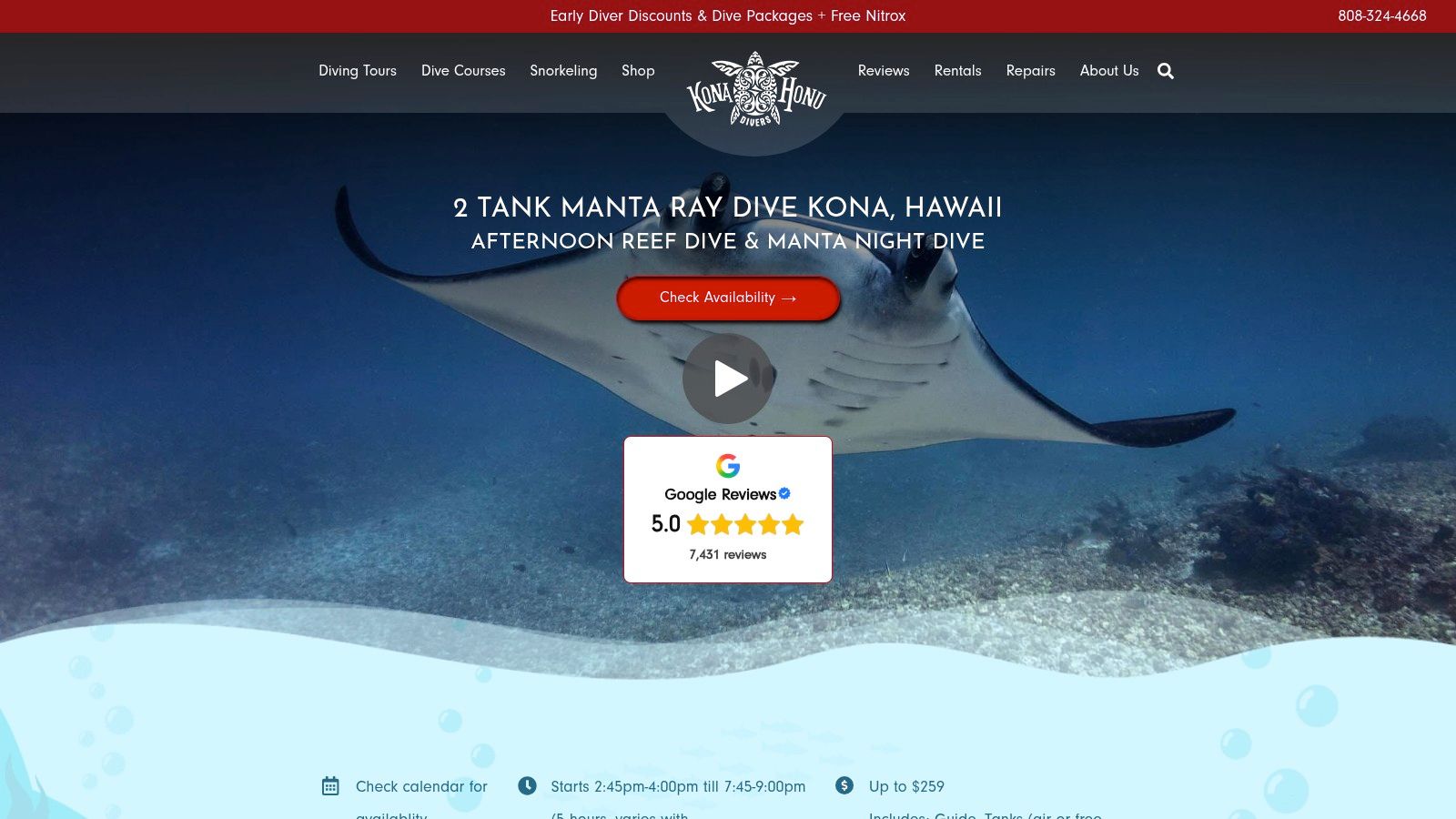
One practical option is the Kona Honu Divers manta ray tour page, which lays out a two-tank format built around a twilight dive followed by the manta dive. If you want to compare that with other local offerings, their broader diving tours page is the place to start.
What to look for when booking
A solid booking checklist is simple:
- Site choice: If Garden Eel Cove is available, it's often the stronger pick for the reasons covered earlier.
- Tour format: Many divers prefer a twilight reef dive before the main event.
- Included gear support: Tanks, weights, guide support, and warm post-dive drinks all affect comfort.
- Photo approach: For night work, a wide-beam video light is usually more useful than an aggressive strobe setup.
If night diving sparks your interest, Kona also offers a very different advanced night experience through the Blackwater Dive tour.
Check AvailabilityKona Manta Ray Dive FAQ
What's the best time of year to do the dive
The manta encounter runs well year-round, but ocean feel does change with the season. Environmental data indicates that summer (June to August) offers the most glassy conditions and the highest probability of sightings with strong visibility, while the dive itself is a stationary spectacle at 30 feet, according to this Kona manta conditions guide.
Can non-divers still do the manta experience
Yes. Snorkeling is a legitimate option, not a consolation prize. Snorkelers hold onto a stable light board at the surface and watch mantas feed below them. If that's the better fit for your group, you can check manta snorkel availability.
How deep is the scuba dive
It's shallow by scuba standards. Divers stay on the sand in a defined depth band rather than swimming a full profile around the reef. That's one reason newer certified divers can do well on it if they're relaxed and current.
Is the manta ray dive Kona experience good for nervous divers
Yes, if the nerves are about darkness and not about basic scuba skills. This isn't a navigation-heavy night dive. It is, however, still a night dive. If your anxiety comes from mask issues, buoyancy problems, or rusty gear handling, fix those first.
What should you bring
Bring the usual personal dive items plus something warm for the ride back. At night, even a short boat ride can feel chilly once you're out of the water.
If you want a clean, well-run night dive built around the manta experience, start with Kona Honu Divers. Check the site used, choose the format that matches your comfort level, and book early enough that weather or scheduling changes won't wreck the rest of your trip.