
The first time I watched a manta ray rise out of the dark off Kona, the whole group forgot to breathe for a second. One white belly caught the light, the wings tilted, and suddenly the ocean felt less like night and more like a stage.
The Most Magical Night Dive in the World
There's a reason divers fly across the Pacific for a manta ray dive Kona experience. You drop into warm black water, settle yourself, and then giant shapes begin to circle through the glow above you with the calm precision of birds riding an updraft. Nothing about it feels rushed. The rays don't charge in. They glide, bank, and roll through the light as plankton gathers in the beam.
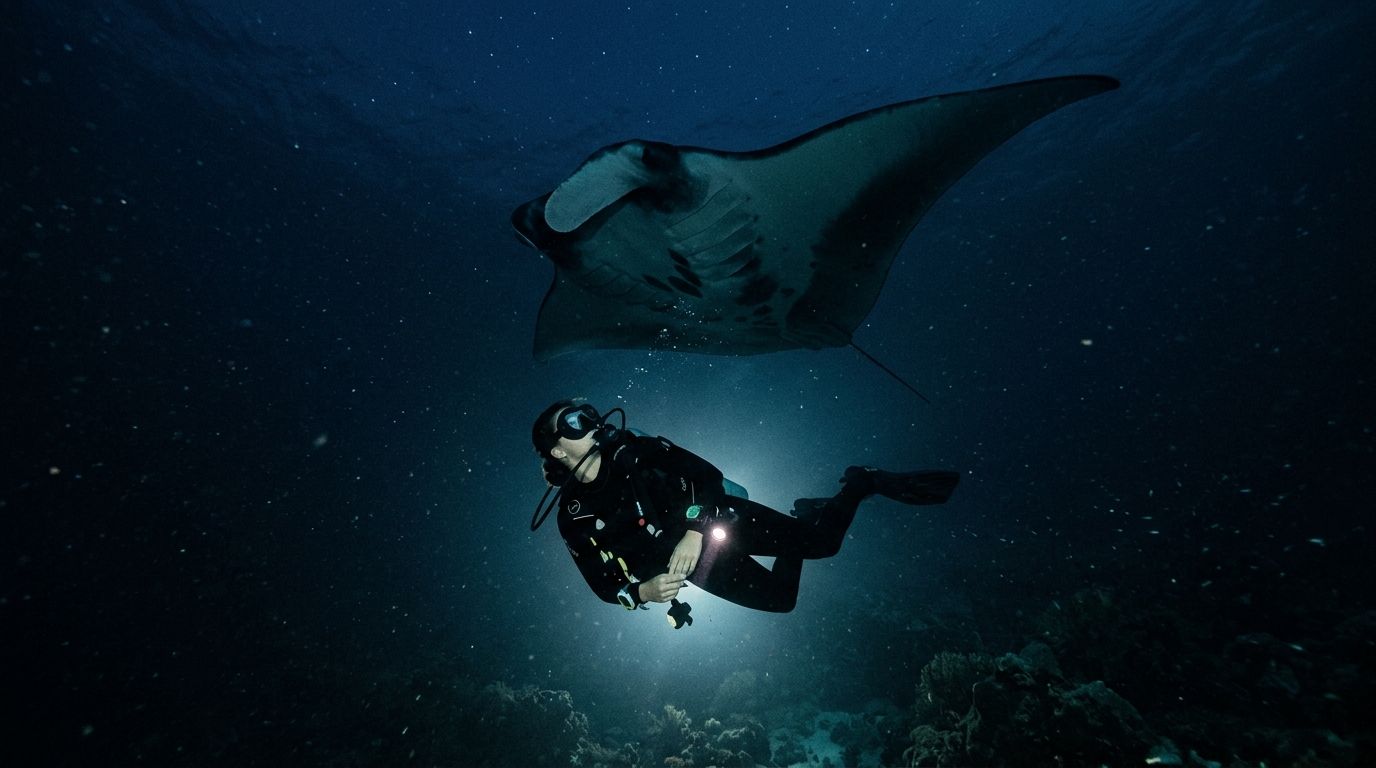
What surprises first-timers is the mood. People expect adrenaline. What they remember is the silence. Every diver is looking up, almost motionless, while mantas pass so close that you can see the shape of the mouth and the soft curve of the cephalic fins.
Why This Encounter Feels So Different
Most wildlife encounters depend on luck. Kona is different because the local manta experience is remarkably consistent. The Kona coast of Hawaii's Big Island has an 80% to 90% sighting success rate on most nights, which makes it one of the most reliable wildlife encounters globally, according to this overview of Kona manta ray dives.
That reliability changes how you plan the trip. You're not booking a vague “maybe.” You're choosing an encounter with real structure, real site history, and a very specific underwater setup. If you want a broader look at local conditions and diving options before you book, this guide to diving Kona on the Big Island is a useful place to start.
What makes it memorable: you're not chasing the animals. You hold position, and the animals come to a feeding pattern that unfolds right over your head.
What Divers Usually Remember Most
A few details tend to stick with people long after the trip:
- The scale: Mantas look huge when they appear from darkness and fill your entire field of view.
- The grace: Even when multiple rays are feeding, the movement feels smooth, not chaotic.
- The closeness: The best passes don't feel distant or observational. They feel personal.
- The setting: Night water, strong light beams, and volcanic seafloor create a scene that barely feels real.
If your bucket list has one dive that blends drama, predictability, and animal behavior in a single night, this is the one.
How the Kona Manta Ray Dive Works
The manta dive only looks magical from the outside. Underneath that feeling is a very deliberate system. Boats position divers in a sandy viewing area, lights shine upward, plankton gathers in the beam, and manta rays move in to feed where the food is concentrated.
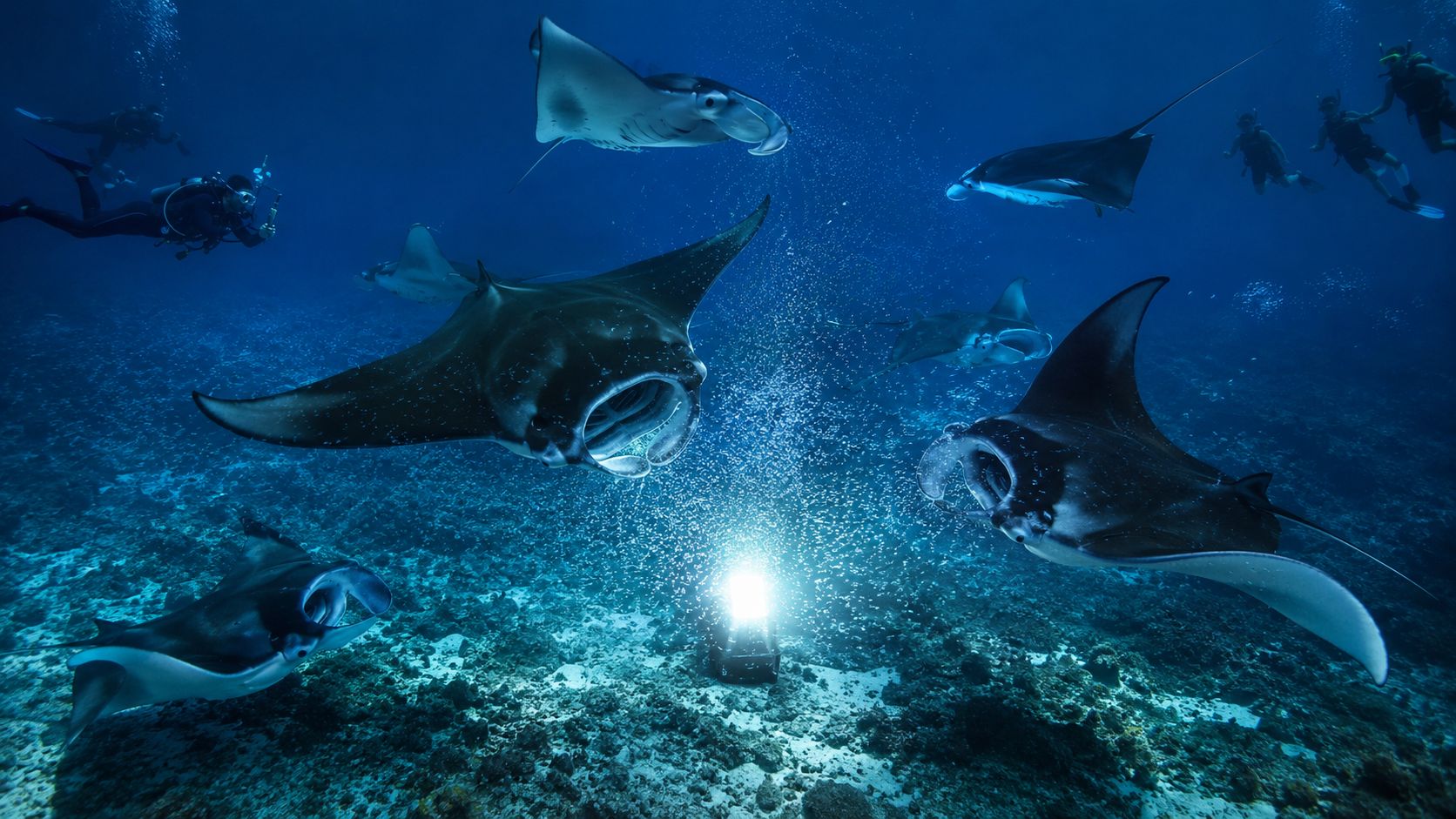
The core idea is simple. Think of the lights as an underwater campfire. Instead of people gathering around heat, plankton gathers in the glow. Then the mantas arrive for the meal.
The Underwater Campfire
The Kona manta ray night dive works because of a precisely engineered lighting system that attracts zooplankton, creating a concentrated feeding “campfire” in a 30 to 40 feet deep sandy bottom viewing zone, as described in this explanation of the manta lighting system.
For divers, that means a very specific job. You descend, take your place on the bottom, keep good buoyancy, and point your light upward with the rest of the group. Your beam becomes part of the feeding arena.
For snorkelers, the structure is different. They stay at the surface and watch down into the lighted water. If you're comparing the two options, this page on snorkeling with manta rays gives a clear sense of the surface experience.
Scuba Versus Snorkel
People often ask which option is “better.” That's the wrong question. The key question is which perspective fits you.
| Experience | What you see | Best for |
|---|---|---|
| Scuba dive | Mantas feeding overhead from below | Certified divers who want the classic bottom-up view |
| Snorkel | Mantas rising beneath you from the surface | Families, non-divers, and guests who want a simpler setup |
The scuba version is the iconic amphitheater view. You're on the bottom looking up while mantas barrel roll through the light above you. The snorkel version is more accessible and still dramatic, but it feels different because you're floating at the surface rather than settled inside the scene.
Stay still and let the system work. Divers who try to “improve” the encounter by moving around usually make it worse for themselves and everyone else.
If You Want Another Night Dive
Some divers come to Kona for the mantas and then realize the coast offers another very different nocturnal experience. The Blackwater night dive isn't about a fixed feeding station at all. It's a pelagic drift in deep offshore water, built for divers who want something stranger and more advanced than a structured manta site.
For the classic manta format itself, the main tour option is this 2-tank manta dive and snorkel trip.
Why Garden Eel Cove Is the Superior Manta Dive Site
Not every manta site gives divers the same night. Site choice changes comfort, visibility, crowd feel, and how the encounter unfolds underwater. If your goal is the strongest dive experience rather than an effort to complete a list, Garden Eel Cove deserves your attention.
The first advantage is the layout. Garden Eel Cove, also called Manta Heaven, gives divers a natural sandy arena where everyone can settle in and look up without turning the dive into a scramble. That sounds like a small detail until you've watched a group try to hold position on a less forgiving bottom. A clean viewing area means less finning, less sand kicked up, and a clearer feeding lane for the rays.
Why the Site Itself Matters
Garden Eel Cove also stands out for the density of animal activity. It typically hosts 10 to 20 manta rays on many evenings, with historic peak counts of up to 28 in a single night, according to this review of the best Kona manta tour locations. That's the key reason many experienced local divers view it as the stronger choice for a high-energy manta show.
More rays doesn't just mean more animals in the water. It changes the rhythm of the dive. Instead of waiting for long gaps between passes, you may see overlapping loops, repeated approaches, and a more active feeding ballet over the group.
What Makes the Viewing Better
A good manta site needs more than mantas. It needs conditions that help people enjoy the encounter without fighting the environment.
Here's why Garden Eel Cove works so well:
- Protected feel: The site is known for a more comfortable setup that helps divers stay relaxed and stable.
- Defined sandy bottom: That bottom gives divers a clear place to settle rather than hovering all over the water column.
- Better viewing lane: Mantas have open space to move above the group without constant interference.
- Reef surroundings: The area offers more than a single spectacle. The broader dive environment feels richer and more complete.
If you want a bigger-picture read on standout local sites, this article on where to dive on the Big Island adds helpful context.
A manta dive gets better when the site reduces workload. Calm divers notice more, breathe easier, and stay in position long enough for the real magic to happen.
Why Divers Notice the Difference
First-time guests often focus on the animals. Returning divers often focus on the site. They notice whether the bottom is comfortable, whether the group settles quickly, and whether the mantas have room to feed naturally without divers drifting into the action.
That's why Garden Eel Cove keeps coming up in serious conversations about the manta ray dive Kona experience. It gives you more than a chance sighting. It gives you a stage where the encounter can unfold cleanly.
Preparing for Your Underwater Ballet
Preparation is what turns this dive from stressful to smooth. You don't need complicated planning, but you do need the basics dialed in before the boat leaves the harbor.
The first question is certification. If you're doing the scuba version, you should already be certified and comfortable following instructions at night. You don't need to be an expert, but you do need stable buoyancy and enough awareness to settle on the bottom without flailing, kneeling on coral, or drifting into the feeding lane.
When to Go and What Conditions to Expect
Mantas live in Kona year-round. That's one reason the area has such a loyal following among repeat visitors. The seasonal difference is less about whether mantas are present and more about how pleasant the overall conditions feel.
According to this Kona manta season guide, resident reef mantas inhabit these waters year-round, and summer months from June through August often bring calm seas and visibility that exceeds 100 feet. If you like easier boat rides, flatter surface conditions, and clearer water, summer is a smart target.
A Simple Pre-Dive Checklist
Use this checklist before your tour day:
- Certification card: Bring proof if you're diving.
- Basic comfort at night: If night diving makes you anxious, tell the crew before the briefing.
- Exposure gear: Most operators provide what's needed, but bring a towel and something warm for the ride back.
- Hydration: Start early in the day. Don't wait until boarding.
- Light meal: Eat enough to feel steady, but don't board stuffed.
If You Get Seasick
Even on the leeward Kona coast, some guests feel motion sickness on the ride out or while waiting at the site. Deal with that before it starts. Once you're nauseated, it's much harder to recover.
You can also read this practical guide on how to avoid sea sickness for planning tips.
Helpful options people commonly use include:
- Patch option: Ship-EEZ Seasickness Patch
- Classic medication: Dramamine pills
- Another medication choice: Bonine pills
- Non-medication option: Sea Band wristbands
- Gentle backup: Ginger chews
Before the boat leaves: if you know you're prone to motion sickness, don't “wait and see.” Take your prevention step early.
Skills That Matter Most
People sometimes assume the manta dive is hard because it happens at night. However, its difficulty is more confined. It's only difficult for divers who struggle to hold position, rush their breathing, or ignore the briefing.
Good guests usually do three things well:
- They descend calmly.
- They settle without stirring up the bottom.
- They watch the mantas instead of trying to chase the perfect angle.
That's enough to make the whole night easier.
Your Manta Ray Dive Tour from Start to Finish
A good manta tour feels organized from the moment you arrive. You check in, sort out gear, listen to the briefing, and head down the coast while the sun fades behind the island. By the time the boat reaches site, the mood has shifted from daylight chatter to quiet anticipation.
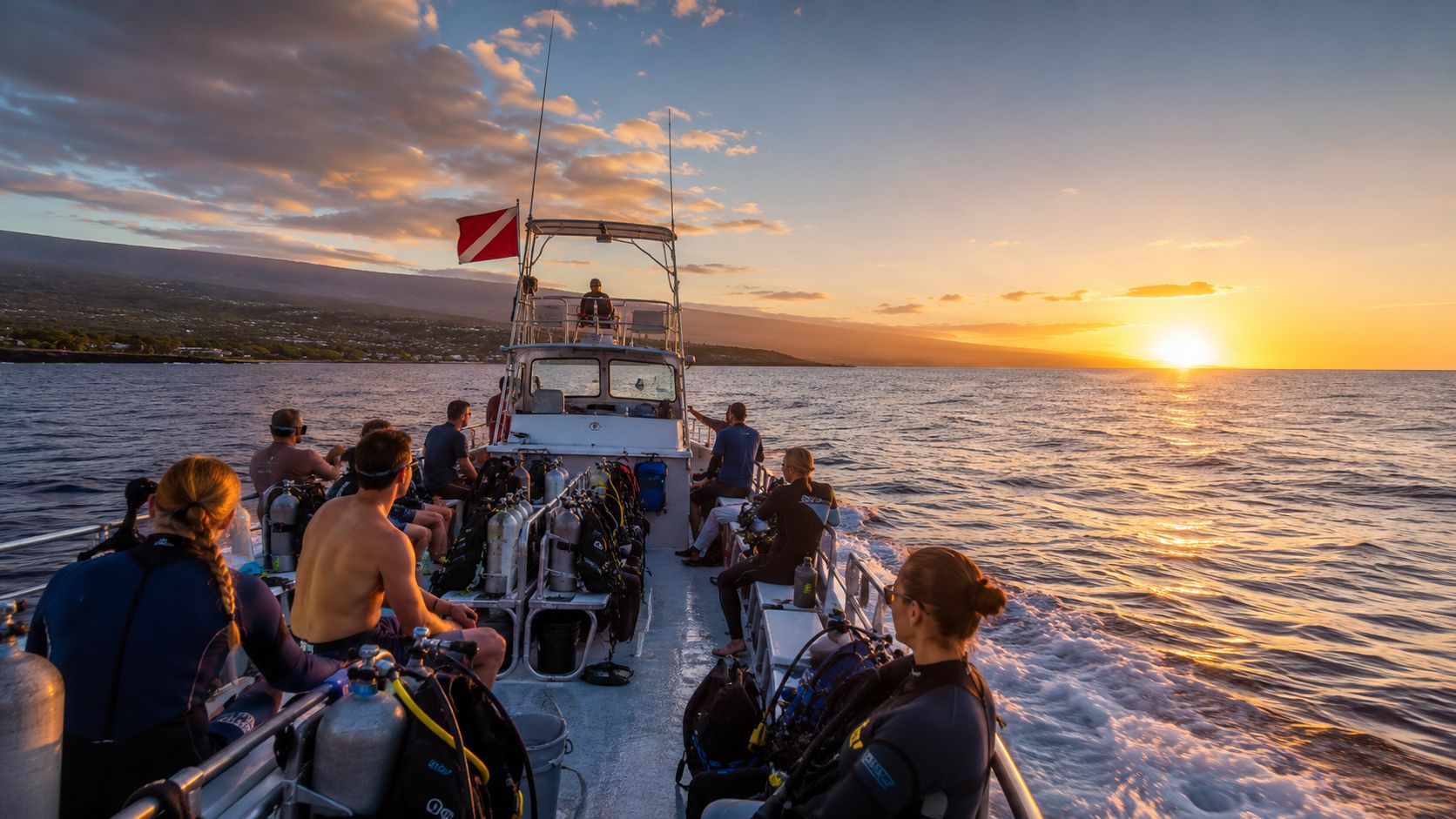
The boat ride is part of the experience. Kona sunsets tend to soften people. First-timers ask practical questions. Returning divers smile because they know what's coming.
On the Boat
Before anyone gets wet, the crew goes over the rules, teaching you your entry, your exit, your light use, and your underwater position. Pay attention here. The divers who have the smoothest night are usually the ones who listen hardest during the dry briefing.
Then you gear up. At this stage, keep things simple. Check your mask, confirm your straps, and avoid rushing because everyone else is moving.
The Descent and Setup
Once you hit the water, the dive becomes more focused. You descend with the group, move into the sandy area, and settle into position. At Garden Eel Cove, the manta dive takes place at 35 feet, where scuba divers kneel on the sandy bottom while lights attract plankton and mantas feed directly above them for 45 to 60 minutes, according to this account of the Garden Eel Cove night dive.
That bottom time doesn't feel long in the usual sense. It passes in waves. First there's waiting. Then the first manta arrives. After that, your sense of time gets fuzzy because your whole attention is locked upward.
The Moment It Clicks
The first close pass changes everything. You stop thinking about your gauges, your fins, the darkness, and the boat overhead. You just watch. Sometimes the rays come in low enough that the movement of the wings fills your mask.
A lot of divers expect one or two quick sightings. What they get is a repeated pattern. The manta loops through the beam, banks away, and returns through another arc.
Back on the Boat
After the dive, the ascent feels strangely ordinary compared with what you just watched. Then you climb the ladder and everyone starts talking at once. That's always the giveaway that the dive landed well.
Common post-dive moments include:
- Reliving the closest pass: Someone always motions with their hands to show how near a manta came.
- Comparing viewpoints: Divers on opposite sides of the light circle often saw different approaches.
- Settling back in: Warm drinks, snacks, and dry layers matter more than people expect after a night dive.
The ride back to harbor usually feels shorter than the ride out.
Safe Responsible and Photogenic Manta Encounters
The manta dive only stays good if divers protect the animals and the feeding pattern. This is one of those experiences where etiquette isn't extra. It's the foundation of the whole encounter.
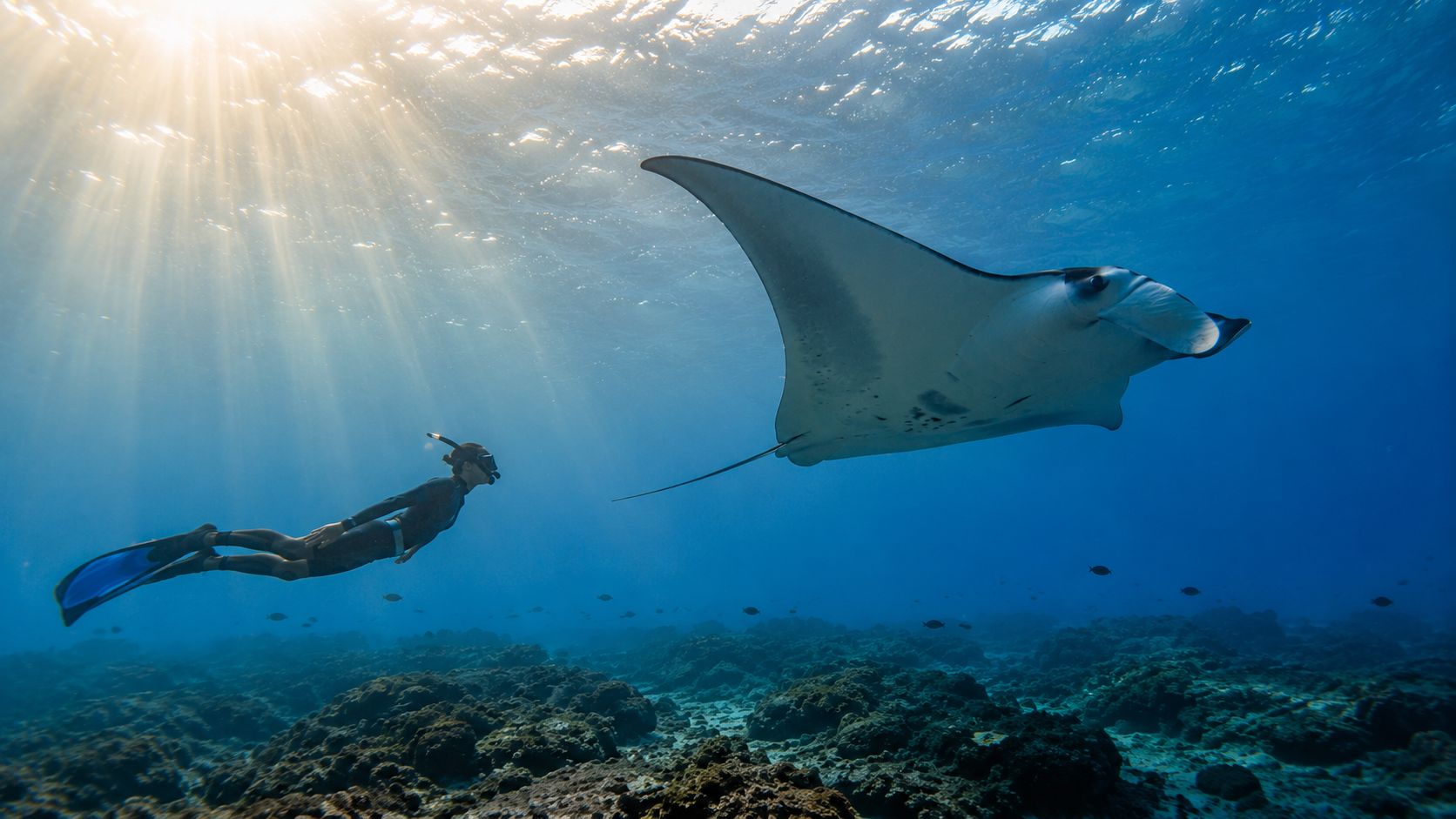
The biggest rule is simple. Don't touch the manta rays. Touching can damage the mucus coating that helps protect them. That point matters even more in Kona, where researchers have identified over 240 individual manta rays, each recognized by unique markings, as noted in this guide to Kona manta safety and photography.
Rules That Protect the Encounter
If you want a manta dive that feels close, respectful, and calm, follow these rules:
- Stay in position: Divers should remain where the guide places them.
- Keep the water column clear: Mantas need room to maneuver through the feeding lane.
- Never chase: If a ray banks away, let it go.
- Hands off: Touching is strictly forbidden.
The best manta encounters happen when people become part of the scenery instead of part of the action.
How to Take Better Photos
Night wildlife photography frustrates a lot of divers because they try to use daytime habits in very low light. Start with realistic expectations. You're shooting a moving animal in darkness with bright artificial lights and a lot of contrast.
The same Kona manta photography guide recommends ISO 800 to 1600 and a shutter speed of 1/100s to 1/125s. Those settings help freeze motion without making every frame too dark. If your camera allows it, keep your setup simple and test before the dive rather than underwater.
A few practical habits help:
- Aim for silhouettes and belly passes: Those often create the cleanest composition.
- Use controlled lighting: Continuous light is often easier to manage than a complicated strobe routine.
- Don't over-fiddle: If you spend the whole dive adjusting settings, you'll miss the actual encounter.
- Shoot a little, then stop: Some of your best memories won't be on the card.
Respect Over Content
Social media has made some divers chase shots instead of experiences. That mindset causes most of the bad behavior people complain about at wildlife sites. If you drift upward, swim after a ray, or push forward for one more frame, you reduce the quality of the encounter for the entire group.
Kona's manta rays are a local treasure because people have studied them, identified them, and built rules around observing them without direct interference. Follow those rules and you'll still come home with something far better than a forced interaction. You'll come home with a real one.
Why Choose Kona Honu Divers for Your Manta Dive
Operator choice matters more on a night dive than many guests realize. The strongest crews make the evening feel calm before you enter the water, orderly while you're underwater, and comfortable again once you're back on deck. That matters for new night divers, but it matters just as much for experienced guests who don't want a sloppy operation.
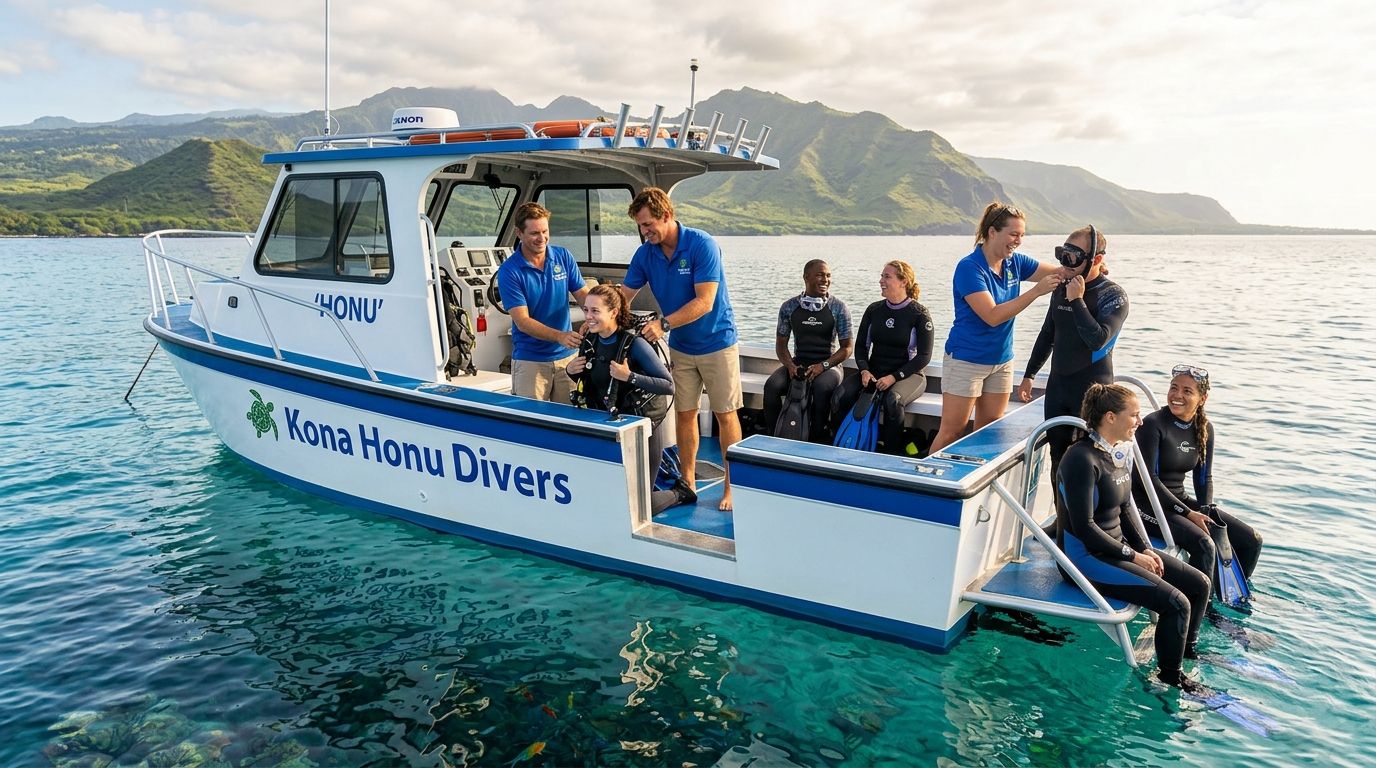
One practical option is Kona Honu Divers, which offers Kona diving tours including the manta night dive format discussed here. If you want to know who's running the trip, you can browse the Kona Honu Divers team.
What to Look For in Any Manta Operator
The right operator usually gets the basics right without drama:
- Clear briefings: You should know exactly where to be and what not to do.
- Comfortable boats: Night dives are easier when boarding, gearing up, and ladder exits feel straightforward.
- Well-maintained gear: Rental gear should feel ready, not improvised.
- Strong in-water supervision: Guests need positioning and reminders, especially at night.
Those details have a big effect on the quality of a manta ray dive Kona trip. The animals may be the headline, but the crew sets the tone.
Booking and Reviews
Frequently Asked Questions About the Manta Dive
Is the manta ray night dive scary
For most divers, it's less scary than expected. The site is structured, the briefing is detailed, and the main viewing area is lit by the group's lights. Once the first manta appears, most nervous energy disappears and gets replaced by focus.
What if I'm not a certified scuba diver
You can still see the mantas by snorkeling. Snorkelers stay at the surface and watch the rays gather beneath the lights rather than sitting on the bottom with scuba gear.
What happens if no mantas show up
Many reputable operators offer a free re-ride policy if no mantas are sighted. Ask about the exact terms before booking so you know how that policy works.
Are there other advanced dives in Kona
Yes. Experienced divers who want a different challenge often look beyond the manta site to deeper reefs, longer-range trips, and pelagic night dives. If that sounds like you, the advanced long-range dive tour is worth a look.
If you're ready to plan your manta night, Kona Honu Divers is a straightforward place to start. Choose the format that matches your comfort level, show up prepared, and treat the mantas with respect. That combination gives you the best chance at a night you'll remember for years.