
You're probably here because you've seen the videos. Divers kneeling in the dark. Blue water lit from below. A manta ray the size of a small car gliding overhead like it's flying.
That scene is real. On a good Kona night, it feels less like a dive and more like sitting in the front row of a silent underwater theater. The trick is knowing what makes the experience work, what site gives you the strongest odds, and how to show up prepared so you can enjoy the encounter instead of fumbling through it.
An Otherworldly Kona Experience Awaits
The first thing most divers remember isn't the boat ride or the briefing. It's the moment the lights come on underwater and the ocean changes shape. What looked black from the surface turns into a glowing column full of drifting plankton, and then a shadow peels out of the dark and banks overhead.
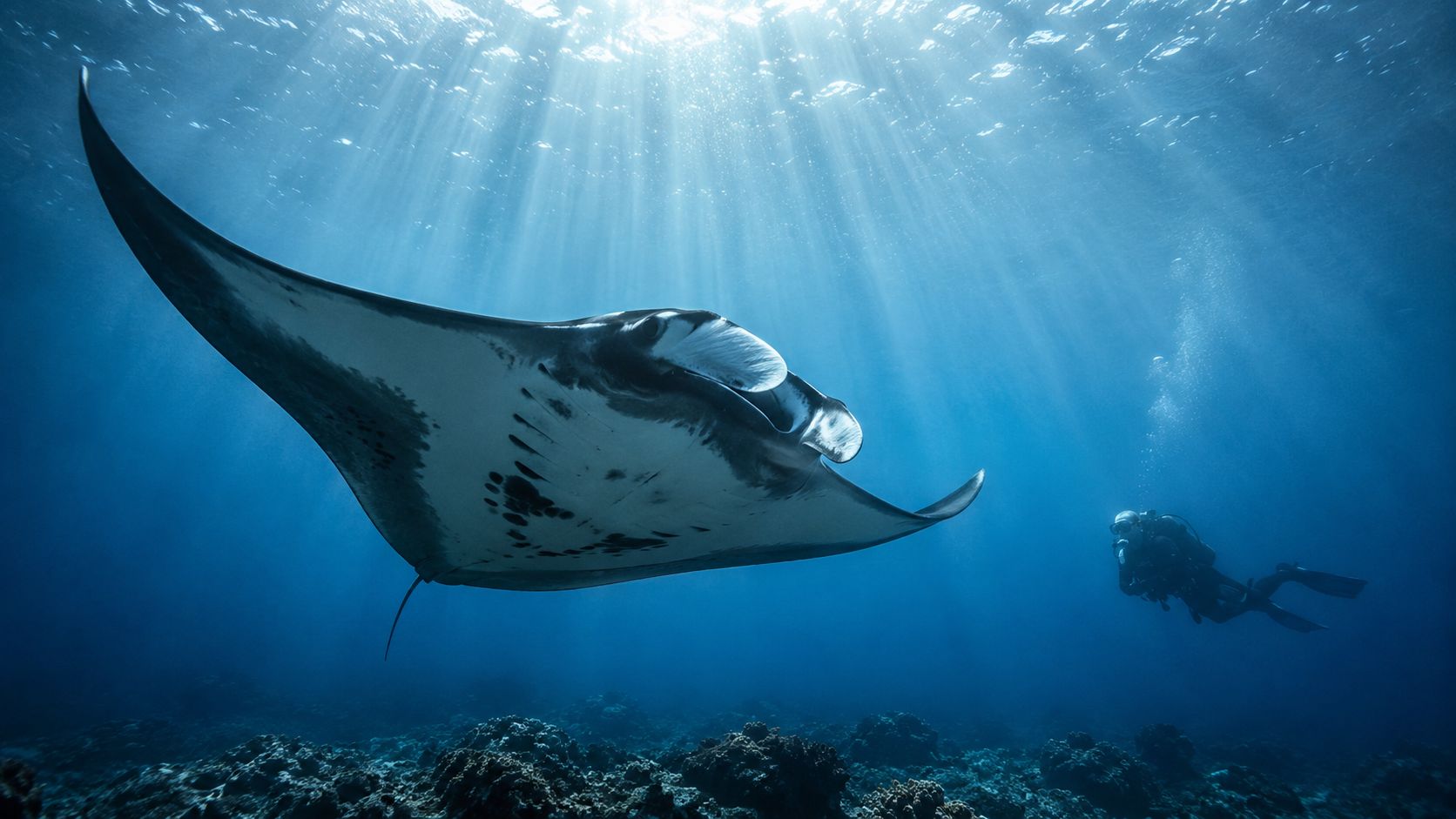
A manta ray dive in Kona stands apart because it's not a lucky wildlife sighting. It's one of the most dependable marine encounters anywhere. The Kona Coast offers the world's most reliable manta ray night dive encounters, with tour operators reporting sightings on 85–90% of nights according to this Kona manta dive overview.
That reliability changes how you plan. Instead of hoping for a brief pass-by, you can book this trip as a serious part of your Big Island diving itinerary. If you're building out the rest of your trip, it helps to start with a broader look at diving Kona and the Big Island, then anchor one evening around the manta experience.
What makes it feel so different
Most night dives ask you to search. This one asks you to settle in and watch.
The best encounters happen when everyone gets into position, keeps movement controlled, and lets the rays decide how close they want to come. When conditions line up, they sweep through the beams, loop back, and pass so close that even experienced divers stop thinking about cameras for a second.
Practical rule: The less you try to force the encounter, the better the encounter usually gets.
Who this is for
The manta ray dive Kona experience works for several kinds of travelers:
- Certified divers who want the classic bottom-up view.
- Non-divers who'd rather snorkel and watch from the surface.
- Families or mixed groups where some people dive and others don't.
- Marine life fans who care as much about behavior and ethics as spectacle.
Why the Kona Manta Ray Dive is Legendary
Kona didn't become famous for manta encounters by accident. The encounter works because local conditions and learned manta behavior line up in a way that's unusually consistent.
Underwater lights attract zooplankton. The plankton gathers in the beams. The mantas have learned that these lit areas create a predictable feeding opportunity, so they return to use it. The result is a wildlife encounter that feels choreographed, even though it's still wild animal behavior.
Why there isn't a manta season
One of the biggest planning mistakes visitors make is assuming they need to hit a narrow seasonal window. They don't.
There is no manta ray season in Kona. The acquired feeding behavior linked to artificial lights ensures reliable, 90%+ sighting rates year-round, making booking time flexible and based more on your travel schedule than migration timing, as discussed in this thread on whether Kona has a manta season.
That matters because it changes how I'd book the trip. Pick a night that fits your itinerary, then focus on operator quality, site choice, and ocean conditions rather than chasing a mythical “best month.”
Why the night dive beats daytime hoping
You can see mantas during the day in Hawaii, but daytime sightings are opportunistic. The night dive or snorkel is different because the feeding setup creates a repeatable viewing window.
A simple comparison helps:
| Experience | What you're relying on | What you'll see |
|---|---|---|
| Daytime manta sighting | Chance encounter | Brief pass, if you're lucky |
| Night snorkel | Surface float and downward view | Whole feeding scene from above |
| Night scuba dive | Bottom position and upward view | Mantas passing overhead in the light |
For many people, the dive is the most dramatic version because of the perspective. You're on the seafloor looking up while these rays turn and sweep through the beams.
If you're comparing options for the rest of your trip, the full range of Kona diving tours is worth reviewing before you lock in dates.
Dive or snorkel
Both formats work. The right choice comes down to your comfort in the water and what kind of view you want.
- Choose scuba if you're certified and want the iconic upward view.
- Choose snorkel if you want easy access and a broader look at the whole feeding area.
- Choose based on your group if you're traveling with non-divers. A mixed boat can solve a lot of logistics.
Most people don't need a better season. They need a better explanation of how the encounter actually works.
The Kona Honu Divers Difference Garden Eel Cove
Site choice matters more than most first-time visitors realize. People often compare companies first, when the smarter question is where the boat is taking you.
For the manta ray dive Kona experience, Garden Eel Cove, also called Manta Heaven, deserves serious attention because the layout of the site shapes the whole night. The area is protected, the viewing zone is comfortable for divers, and the surrounding reef adds value before the main event even begins.
Why Garden Eel Cove stands out
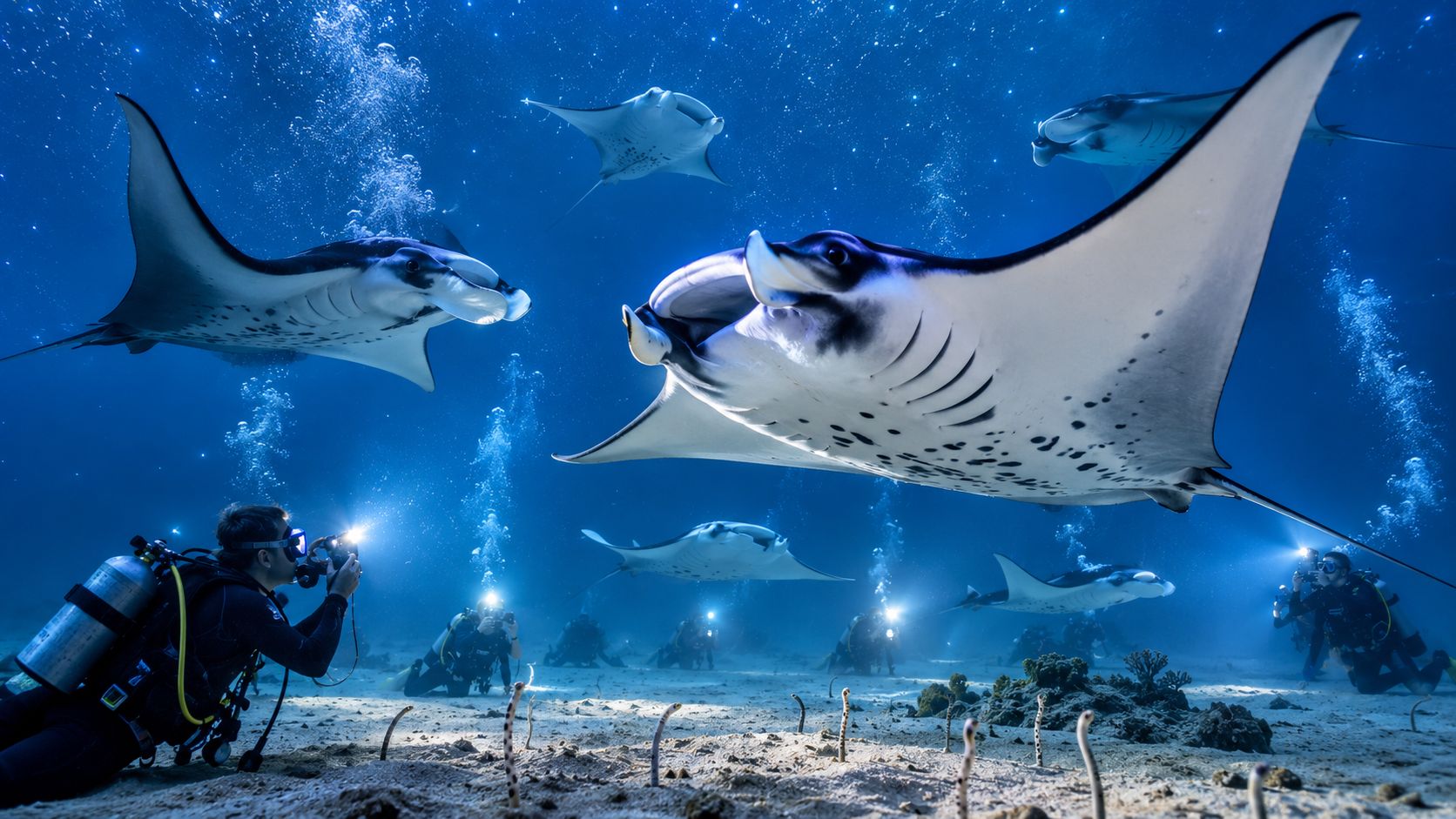
Garden Eel Cove frequently hosts 10–20 manta rays and has recorded historic nights with up to 28 individuals, according to this write-up on Kona manta tour locations. That's the key practical point. More mantas in the arena usually means more passes, more feeding activity, and fewer long stretches of waiting.
The site also works well from a comfort standpoint. Protected water helps guests settle in faster. A good viewing area reduces the chaos that can ruin night wildlife experiences. If divers can get stable, maintain position, and keep lights aimed correctly, the whole interaction smooths out.
What works and what doesn't
What works at this site:
- Stable positioning: Divers who can settle on the sandy area and stay low get a clean viewing angle.
- Controlled lights: Aim the beam upward and let the plankton do the rest.
- Calm movement: Mantas respond better when the scene stays predictable.
What doesn't work:
- Constant repositioning: If divers keep shifting around, the viewing line breaks down.
- Crowding the water column: That takes space away from the mantas.
- Picking a tour without asking where it goes: “Manta tour” isn't specific enough.
A manta trip can be memorable at several Kona sites. It becomes easier, calmer, and more watchable when the site itself helps the group.
Operator choice starts with site choice
If you want to book around Garden Eel Cove specifically, one option is the 2 tank manta dive and snorkel tour. It's also worth reading about eco-friendly dive practices before you book any wildlife-focused excursion.
What to Expect on Your Manta Ray Tour
A well-run manta night usually feels smooth from the start. Check-in is straightforward. Gear gets sorted before anyone rushes. The crew briefs the plan clearly, because confusion on a night dive compounds fast.
If you're prone to motion sickness, deal with it before you board. Useful options include the Ship-EEZ Seasickness Patch, Dramamine pills, Bonine pills, Sea Band wristbands, or Ginger chews. If seasickness is a recurring issue for you, read through these practical tips on how to avoid feeling sick on a Kona boat trip.
The typical flow of the evening
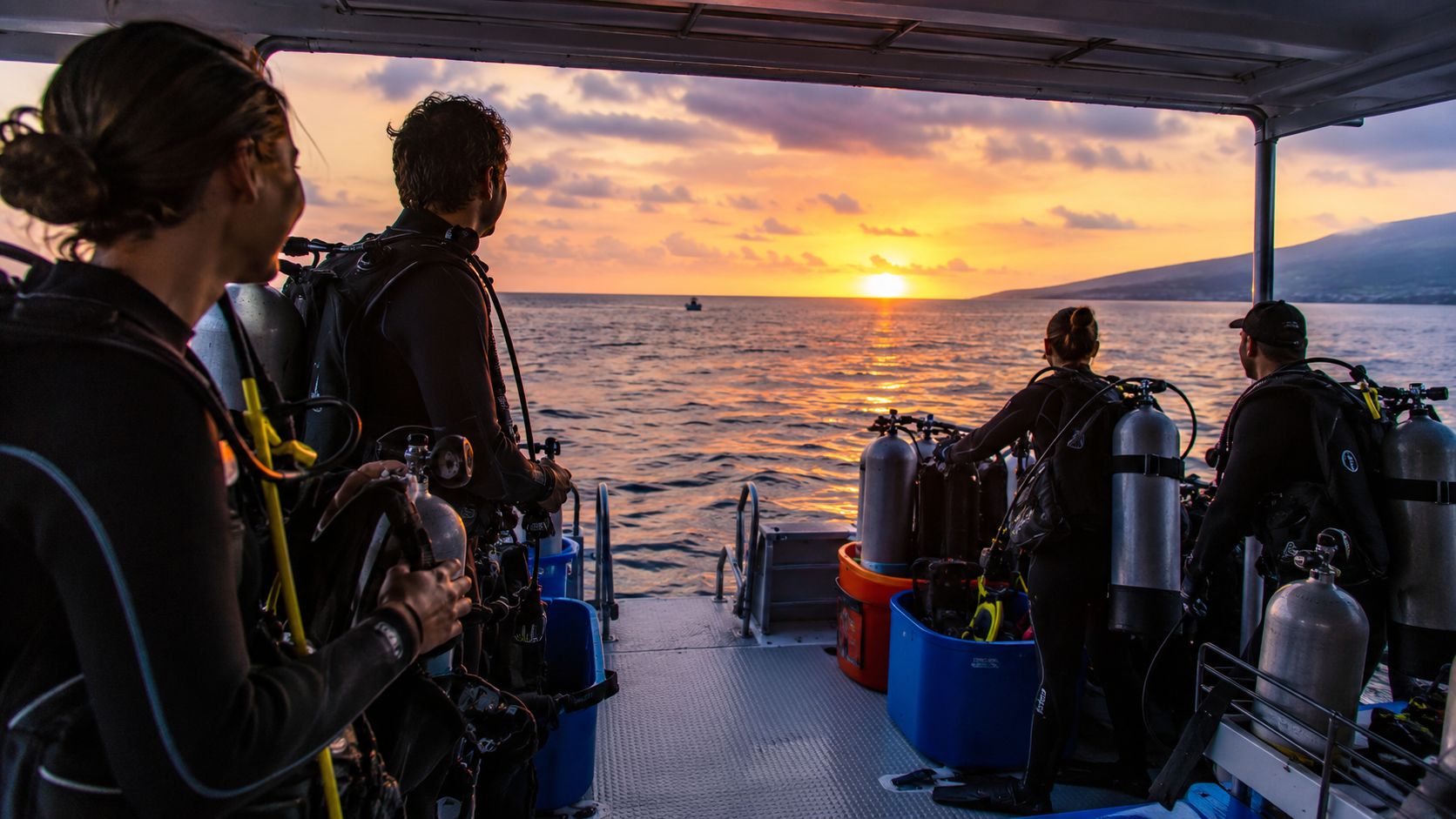
Many manta scuba charters use a two-tank structure. The first dive happens around dusk and usually focuses on the reef. That's a smart format because it lets divers get comfortable, check weighting, and settle into the night environment before the main event.
Then comes the surface interval, final briefing, and repositioning for the manta dive itself.
A typical sequence looks like this:
Arrival and setup
You check in, confirm gear, and listen closely to the briefing. Night diving rewards attention.Boat ride to site
Keep your mask, fins, and exposure gear organized. Loose gear becomes annoying fast after sunset.Dusk reef dive
This first dive is often underrated. It helps you transition into the dark calmly.Manta dive or snorkel
This is the feeding encounter everyone came for.
What divers do underwater
At Garden Eel Cove, scuba divers are positioned on a sandy bottom at a comfortable depth of approximately 30–40 feet, pointing lights upward to create a plankton-attracting “campfire” that brings mantas in to feed just inches away, as described in this account of the Garden Eel Cove manta dive.
That setup is simple, but it only works when divers keep it disciplined. You descend, get into place, shine your light up, and stay out of the water column. The mantas do the rest.
What snorkelers do differently
Snorkelers usually hold onto a lighted float at the surface and watch downward. The angle is different, but it's still a strong experience because you can see the whole feeding pattern unfold below you.
A few practical tips help both groups:
- Wear your swimsuit to the boat: It saves time and frustration.
- Bring a warm layer: The ride back feels cooler after being in the water.
- Secure your camera setup: Night entries and exits punish loose accessories.
- Listen to the guide's positioning instructions: Small changes in where you hold or kneel matter.
The best guests aren't the ones who move most. They're the ones who get settled early and let the mantas own the stage.
Manta Manners Safety and Sustainability
Night manta encounters work because people follow rules that protect the animals and keep the viewing space usable. The guidelines aren't there to make the tour feel strict. They're there because the rays need a clean water column and predictable human behavior.
The basic manta manners
These rules matter every night:
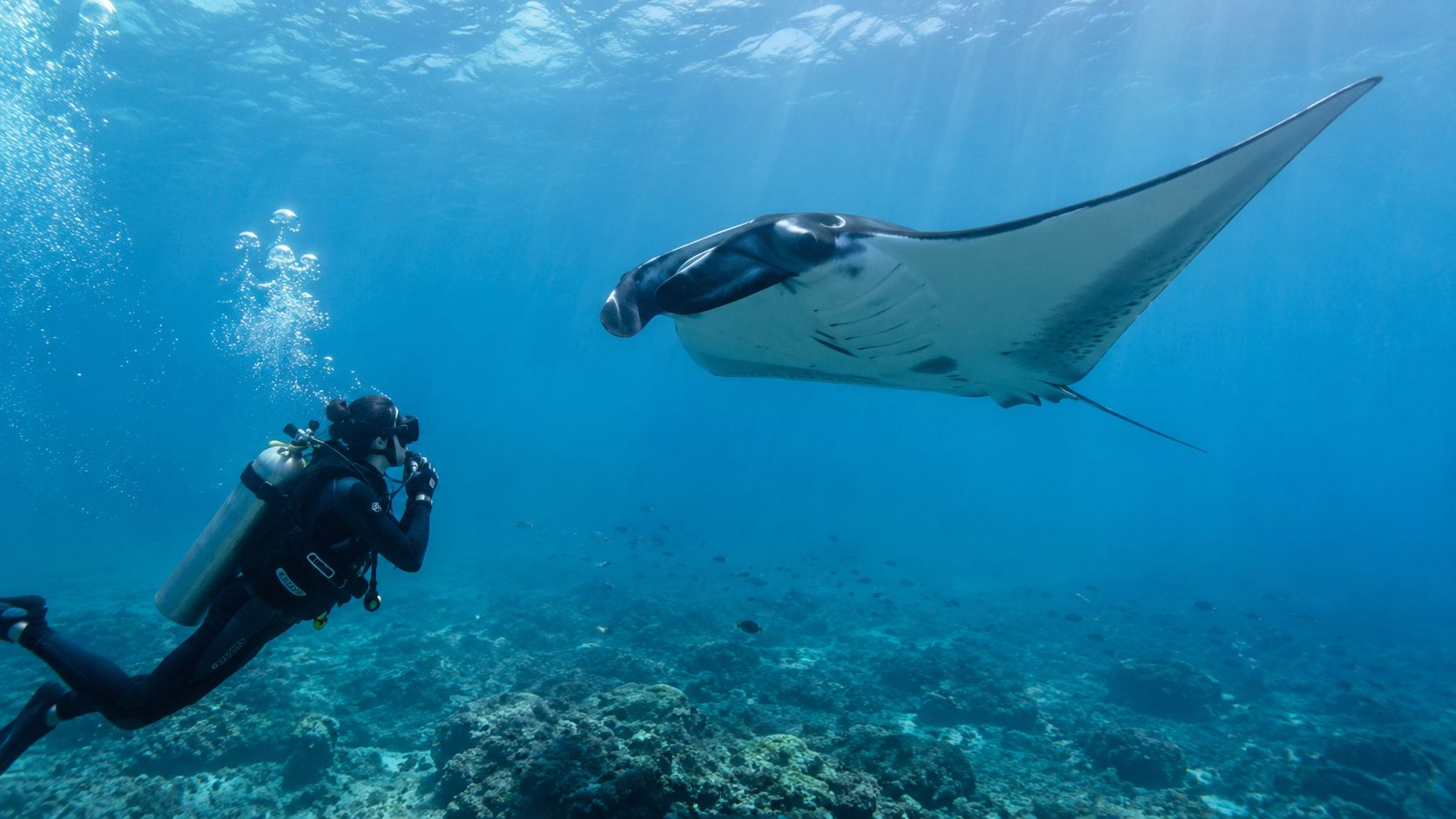
- No touching: Mantas need to stay completely hands-off.
- No chasing: If you pursue them, you break the feeding pattern.
- No blocking their path: They need room to turn and feed.
- Stay in your assigned position: Divers low, snorkelers at the surface.
- Keep gear secure: Dangling equipment creates problems fast.
For a broader rundown of underwater conduct, this guide to responsible and considerate diver etiquette is useful reading before any marine life dive.
The ethics question people ask
A fair concern comes up often. If lights attract plankton and plankton attracts mantas, is this illegal feeding?
The better answer is more specific. The manta encounter is not illegal feeding. The lights attract naturally occurring zooplankton, creating a concentrated food source, and long-term observations show mantas learned to exploit this setup decades ago rather than becoming dependent on direct human feeding, as discussed in this ethics discussion about Kona manta tours.
That distinction matters. Nobody is handing food to the rays. The system concentrates what's already in the water.
Why identification and long-term care matter
This encounter also has a research value. Individual mantas can be recognized by their unique belly spot patterns. Those markings function like fingerprints, which is why guides and researchers can track specific animals over time.
What that means for guests is simple: you're not just watching anonymous animals pass through. You're entering a place where repeated observation, careful conduct, and photo identification all support long-term understanding of the local manta population.
Preparing for Your Kona Manta Dive
Preparation is what turns this from a stressful night outing into a smooth one. You don't need to overpack, but you do need the right expectations.
Certified divers should be comfortable with basic scuba skills and night diving procedures. Snorkelers don't need scuba training, but they do need to be comfortable in the ocean at night and able to follow instructions from the guide.
What to bring and what to leave alone
The smartest packing list is short.
Bring:
- Swimwear already on: It makes boarding easier.
- A towel and dry clothes: The ride back is better when you can warm up.
- A lightweight jacket or hoodie: Night air hits differently after a dive.
- Your own mask if it fits you well: Familiar gear reduces distraction.
- A compact camera setup: Only if you can manage it without fuss.
Leave behind the idea that more gear always helps. Large camera rigs, extra accessories, and poorly secured clip-ons can get in your way on a night dive.
Photography tips that actually help
Manta photography is rewarding, but night conditions punish bad habits. The water often holds visible plankton, so backscatter can become the biggest problem in your frame.
A few practical habits work better than fiddling nonstop:
- Use a wide view: The animals are large and close.
- Keep your movements slow: Quick repositioning stirs the scene and ruins angles.
- Don't shoot through a cloud of bubbles: Wait for a cleaner moment.
- Prioritize one or two strong passes: Don't try to document every second.
Good manta photos usually come from patience, not from chasing the shot.
If you want more than the manta night
Some divers book the manta trip and then realize they want a second, more demanding day in the water. If that's you, Kona also has stronger options for experienced divers, including advanced long-range dive tours.
For anyone worried about getting queasy on the ride, this practical page on avoiding sea sickness before a dive is worth reading before your trip.
Your Kona Honu Divers Manta Ray FAQ
A few questions come up on almost every booking call, especially from travelers trying to choose between diving and snorkeling or deciding whether the experience is right for their group.
Why do divers care so much about location?
Because location changes the whole feel of the encounter. A protected site with a usable viewing area makes it easier to settle divers, manage lights, and give mantas space to feed naturally. That usually produces a calmer, cleaner experience in the water.
What's usually included on a manta scuba trip?
Most guided scuba outings include the core dive setup, lights for the manta portion, and guide support throughout the evening. On two-tank formats, divers usually get a reef dive first and the manta dive second.
Can non-divers still share the experience?
Yes. That's one of the strongest parts of this activity. Divers can do the scuba version while non-divers join the snorkel format from the same outing, so mixed groups don't have to split their evening.
How big are the mantas?
The resident reef mantas you're likely to meet have wingspans typically reaching 14 feet, can live for 50 to 100 years, and have unique belly spot patterns that function like fingerprints for researchers, according to this overview of manta rays in Hawaiʻi.
If you're ready to book a manta ray dive Kona experience with a crew that also offers a full range of Big Island diving, take a look at Kona Honu Divers.