
Picture this: you’re floating in the warm, inky black waters off the Kona coast. Suddenly, a colossal shadow emerges from the darkness, a majestic manta ray with a wingspan stretching over 12 feet, gliding and barrel-rolling just inches from your face. This isn't a once-in-a-lifetime fluke; it's the world-famous manta ray dive in Kona, and I'm here to show you how to experience it for yourself.
What Puts the Kona Manta Dive in a Class of Its Own
The Kona manta ray night dive isn’t just another dive; it’s consistently ranked as one of the best underwater encounters on the planet. There's a very good reason for that. It's a reliable, awe-inspiring spectacle—an underwater ballet that happens nearly every single night. The secret sauce is a unique blend of biology and geography that has turned this specific stretch of coastline into a five-star restaurant for these incredible animals.
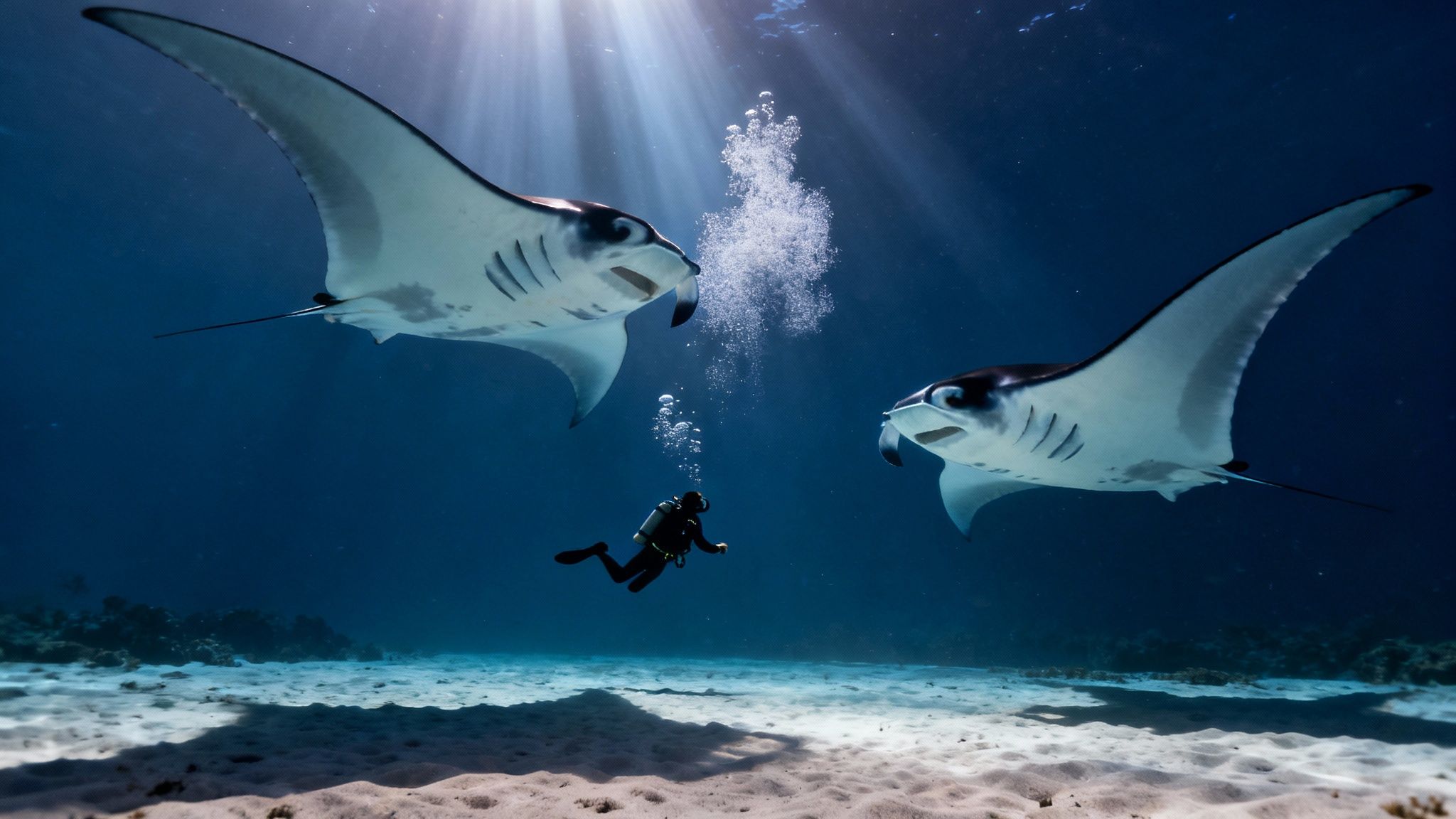
Most places where you see mantas are "cleaning stations," where they go to get parasites picked off by smaller fish. The Kona experience is different because it’s all about feeding. Dive operators have learned to shine powerful lights into the water, which attracts a thick cloud of plankton—the mantas' favorite meal.
The rays show up for the buffet and put on a show, swooping and somersaulting through the beams of light to gulp down the plankton. This behavior creates a predictable and stunningly close encounter that you really can't find anywhere else in the world.
An Unbelievably Reliable Encounter
The sheer consistency of this dive is what blows people away. Local dive operators report sighting rates hovering between 85% and 90% on their night dives. It’s statistics like that that have cemented Kona's reputation as the go-to destination for manta encounters. In fact, around 80,000 people come here every year, drawn by the near-guarantee of a mind-blowing experience. You can read more about the success rates of the Kona manta dive to see just how dependable it is.
When you're ready to book, going with a top-rated operator like Kona Honu Divers makes all the difference. Their expert guides not only ensure you have an incredible dive but also that the interaction is done responsibly. Their commitment to conservation means you're supporting a sustainable operation that helps protect these magnificent animals for generations to come.
Choosing the right tour is your first real step toward an encounter you’ll be talking about for the rest of your life. Let's dive into what you need to know, from picking the best site to understanding the do's and don'ts of interacting with the mantas.
Why Garden Eel Cove Is Kona’s Premier Manta Dive Site
When you're planning the manta ray dive in Kona, where you go matters. A lot. While there are a couple of different locations, Garden Eel Cove stands out as the superior choice for discerning divers. It’s not just another dive site; it’s an experience often called Manta Heaven, and its unique advantages make it the premier spot for this incredible underwater encounter.

One of the biggest practical advantages is its location. Tucked away near the Kona International Airport, the cove is naturally shielded from the big open-ocean swells that can roll in and spoil the fun at other, more exposed sites. This protection means calmer water and fewer cancellations due to rough seas. For divers, that translates to a more comfortable boat ride and a smoother, safer experience from start to finish.
An Underwater Amphitheater for Manta Rays
But the real magic of Garden Eel Cove is what’s happening on the ocean floor. The bottom is a huge, sandy patch that creates a perfect natural amphitheater for viewing the mantas. This is where operators set up the "campfire"—a collection of powerful lights placed in the middle of the sand. Divers get to settle in on the bottom, forming a semi-circle around the lights for an incredible front-row seat.
This unique layout is what sets the dive apart:
- Everyone Gets a Great View: Unlike other sites that can feel crowded, this setup gives every single diver a wide-open, panoramic view. No one is stuck in the back, and you're not fighting for a good spot.
- It’s Safer for Everyone: Having divers stay in one place on the sand is crucial. It minimizes the chances of accidentally bumping into a manta or damaging the fragile reef nearby.
- Insanely Close Encounters: The light attracts the plankton, and the mantas come to feed, performing incredible acrobatics right over your head. We're talking passes so close you could feel the water move.
The "stadium seating" at Garden Eel Cove is an absolute game-changer. You can just relax on the bottom and get completely lost in the moment, watching these gentle giants glide inches above you in a silent, mesmerizing ballet.
More Than Just a Manta Dive
Don't forget, the main event is only part of the experience. The reef surrounding Garden Eel Cove is healthier and more vibrant than other areas, buzzing with life. Most manta ray dive charters are two-tank trips, and your first dive happens at twilight. Drifting along the reef as the sun goes down is a dive worth doing all on its own. You get to see the whole ecosystem shift as the daytime critters head to bed and the nocturnal ones start to come out.
We’ve written a whole piece on what makes this spot so incredible, which you can read in our deep dive on Manta Ray Heaven at Garden Eel Cove.
Going with an operator like Kona Honu Divers, who makes Garden Eel Cove their regular spot, just makes sense. You're setting yourself up for a comfortable, safe, and truly unforgettable night under the sea.
Your Manta Ray Night Dive Adventure From Start to Finish
So, you're booked for the world-famous manta ray dive in Kona—what's it really like? Knowing the play-by-play helps turn those pre-dive jitters into pure excitement. The whole adventure kicks off at the marina. You'll meet the Kona Honu Divers crew, get sized up for your gear, and run through a solid safety briefing. They cover everything, so you’ll feel comfortable and ready before you even leave the dock.

Most operators, including us, run this as a two-tank trip, which is the perfect way to build up to the main event. Your first dip is a twilight reef dive, and honestly, it’s an incredible experience all on its own. You'll descend onto a gorgeous coral reef just as the sun is setting, getting a front-row seat to the daily shift change. The daytime critters are tucking in for the night, and the nocturnal ones are just starting to wake up. It’s also the perfect time to dial in your weighting and get comfortable with your gear before it gets fully dark.
If you’re wondering what to pack, we’ve put together a full list of the gear you will need for your Kona diving adventure.
The Main Event: The Manta Ray Ballet
Once the last bit of light disappears, the real magic begins. Your guide will lead the group to what we call the "campfire"—a big, bright circle of lights placed on the sandy ocean floor. These lights are the secret sauce. They attract a massive cloud of plankton, which is exactly what the mantas are there to eat. The industry's move to these specialized light arrays has been a total game-changer, boosting plankton concentration by 300-500% and making manta encounters more incredible than ever.
This single, spectacular dive has created a thriving local industry that brings in around 80,000 participants annually and generates an estimated $10 million in revenue for the Kona economy. You can dive deeper into the economic and conservation impact of this dive to see just how important it is.
From here, your job is pretty simple, but it’s crucial to get it right:
- Dial in Your Buoyancy: Get yourself perfectly neutral so you can hover effortlessly.
- Find Your Spot: Settle onto the sand where your guide directs you, usually in a circle around the lights.
- Point Your Light Up: Aim your dive light straight up into the water column. This helps attract even more plankton to the dinner table.
- Enjoy the Show: Just breathe, relax, and watch the breathtaking aerial display as mantas swoop and barrel-roll inches above your head.
This is passive observation at its finest. Think of yourself as a quiet spectator in a massive underwater theater, where the mantas are the undisputed stars. The biggest challenge is resisting the urge to reach out. Just being present and still is the best way to enjoy this unbelievable interaction.
Your dive guide will go over all the essential night diving signals and the simple rules for respectfully observing the manta ballet. By following their lead, you’re not just getting an unforgettable experience—you’re helping protect these gentle giants for years to come.
Getting to Know the Famous Kona Manta Rays
The incredible creatures you'll meet on a manta ray dive in Kona aren't just random wildlife; they're local celebrities. We're talking about one of the most studied manta populations on the entire planet, and each one has a name and a story. This turns what could be a simple dive into a genuine, personal encounter.
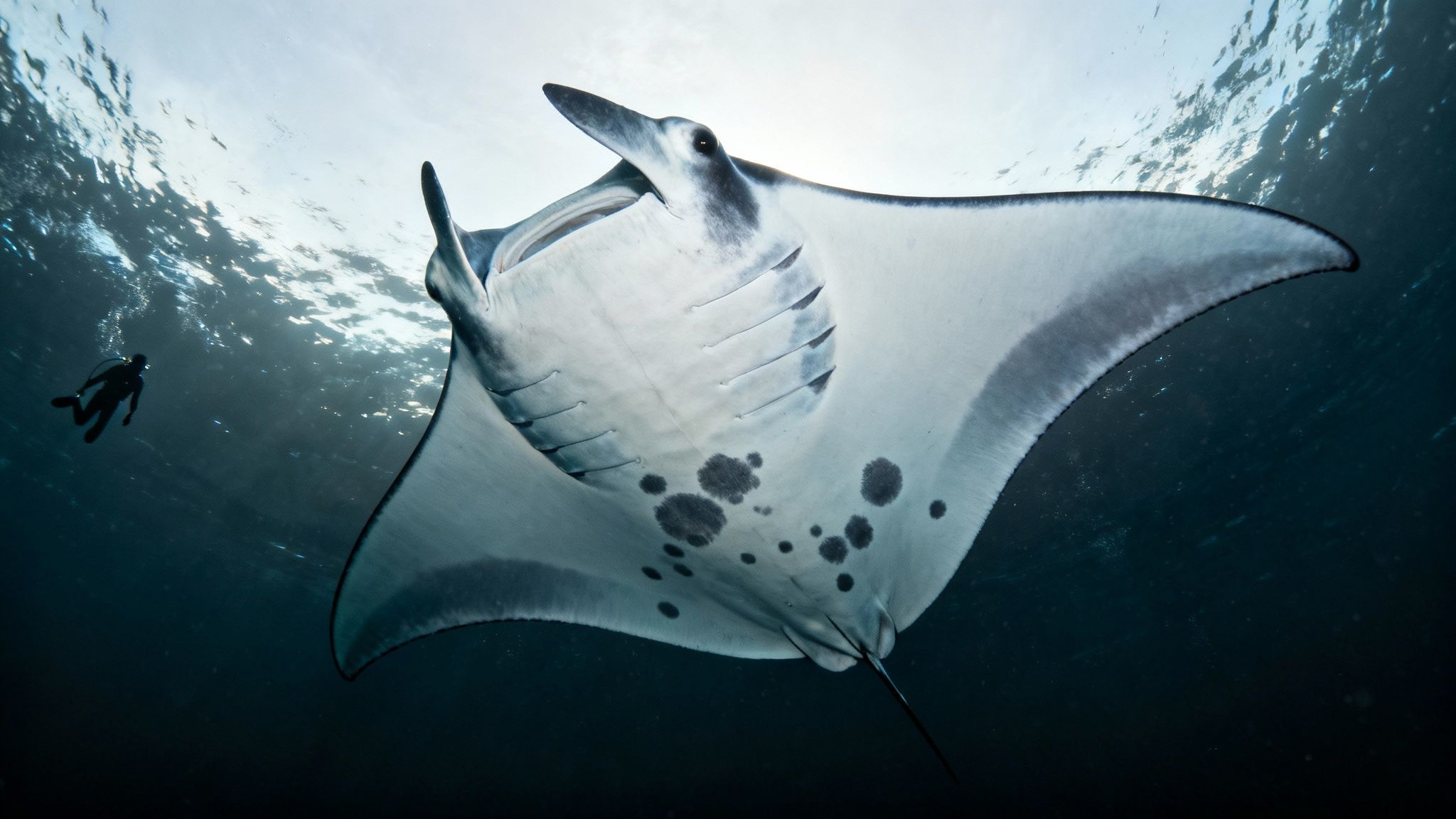
So, how do we know them so well? It’s all thanks to the tireless work of local researchers and conservation groups. They figured out that the unique pattern of black spots on each manta's white belly is basically a fingerprint. No two are alike.
This breakthrough in identification lets scientists and dive guides recognize specific mantas on sight. It allows them to track their health, migrations, and behaviors over years—sometimes even decades.
Meet the Local Legends
This cataloging effort has been going on since 1991, and the local database now includes more than 290 unique individuals. You might hear your guide call out a name during the dive. They could be pointing out a local legend like "Lefty," easily recognized by a damaged cephalic fin, or the massive "Big Bertha," a regular visitor for decades. Getting to know the fascinating history of Kona's manta identification really adds to the experience.
Knowing the names and personalities of the mantas completely changes the dive. It’s one thing to see a manta ray; it’s another to meet Koie, a famously curious ray known for her graceful barrel rolls right over the lights.
This personal connection is what makes the Kona manta ray dive so special. It’s not just an animal sighting; it’s an introduction to a community of gentle giants, fostering a deep appreciation for the importance of conservation.
When you book with a responsible manta ray dive tour, you're doing more than just witnessing a natural wonder. You're actively supporting the ongoing work to protect these magnificent, intelligent animals. You'll leave with more than just great photos; you'll have a real connection to the ocean and its most amazing residents.
How to Be a Responsible Manta Ray Diver
Seeing the Kona manta rays up close is a privilege, and every diver who enters the water shares the responsibility of keeping it a safe, sustainable, and truly magical encounter. A great dive isn't just about what you see; it's about how you act. Following the established guidelines protects these gentle giants and ensures this world-class experience is around for generations to come.
The golden rule is incredibly simple: passive observation. That’s it. Think of yourself as a quiet guest in their underwater dining room. You’re there to witness the spectacle, not participate in it.
The Do's and Don'ts of Manta Interaction
To make sure the experience is positive for everyone (mantas included!), operators like Kona Honu Divers strictly follow the Manta Tour Operator Standards. These aren’t just suggestions; they’re essential for the well-being of the rays and the future of the dive.
- No Touching. Ever. This is the big one. Manta rays are covered in a protective mucous coating, which is their primary defense against infection. Touching them strips this layer off, leaving them vulnerable to nasty diseases.
- Don't Chase or Block Them. Let the mantas come to you. Chasing after them or getting in their way causes stress and can scare them away from their food source. Give them the space to move freely and do their thing.
- Master Your Buoyancy. Staying low to the seabed is crucial. You want to stay out of the "water column" where the mantas are swooping and feeding. If you float up into their path, you risk startling them or even causing a collision.
The whole encounter is built on trust. When divers stay calm and still on the bottom, the mantas learn we aren't a threat. That’s when they feel comfortable gliding just inches over your head, giving you those breathtakingly close passes you came for.
Night Diving Light Etiquette
Diving at night brings its own set of rules, especially when it comes to your dive light. It's a powerful tool, and how you handle it affects everyone in the water.
The standard procedure is to shine your light straight up from your position on the seafloor. This column of light attracts plankton, creating a concentrated buffet for the mantas. It's also critical to avoid shining your light into another diver's eyes or directly at a manta ray—it’s blinding and disorienting for both.
Here is a quick checklist to keep in mind. Following these simple rules makes the dive better and safer for you, other divers, and most importantly, the manta rays.
| Action | Reason | What to Do |
|---|---|---|
| No Touching | Removes their protective slime coat, risking infection. | Keep your hands to yourself. Let the mantas initiate any close approach. |
| Stay Low | Avoids collisions and interrupting feeding patterns. | Find a spot on the sand or rock and maintain neutral buoyancy. |
| Don't Chase | Stresses the animals and can drive them away. | Remain stationary and let the mantas' natural curiosity bring them to you. |
| Aim Lights Up | Attracts plankton for the mantas to eat. | Point your dive light directly up into the water column, not at other people. |
| Breathe Slowly | Conserves air for maximum bottom time. | Relax and take slow, deep breaths to make your tank last longer. |
Ultimately, being a responsible diver means you become a partner in conservation. You're actively helping to protect one of the most incredible marine encounters on the planet.
A Few Practical Tips for a Great Dive
Beyond the in-water rules, a couple of pro tips can make your entire manta ray dive kona experience smoother. Air consumption is a big one. You’ll want to maximize your bottom time, and the best way to do that is to simply relax. Breathe slowly, move minimally once you're settled, and just enjoy the show.
Also, don't forget it can get chilly on the boat ride back, even in Hawaii. Tossing a warm beanie or a windbreaker in your dry bag will make the trip back to the harbor much more comfortable while you're buzzing from the incredible dive you just had.
Don’t Stop at the Mantas—Kona Has More to Explore
The manta ray night dive is an unforgettable experience, and for many, it's the highlight of their trip to the Big Island. But trust me, you don't want to pack up your gear just yet. The same volcanic coastline that creates the perfect manta habitat is also home to some other truly world-class scuba diving on the Big Island.
Ready for Something Completely Different? Try a Blackwater Dive
If you're an advanced diver and have a taste for the weird and wonderful, you have to try a Kona Blackwater Dive. This isn't your typical reef dive. You're tethered to a boat, drifting over thousands of feet of pitch-black water, watching some of the ocean's most bizarre creatures rise from the abyss.
Think tiny, transparent squid, otherworldly jellies, and larval-stage fish that look like something out of a sci-fi movie. It's an experience that’s hard to describe but impossible to forget.
Go Deeper into Kona's Volcanic Past
For those who love dramatic underwater topography, an advanced dive tour is the way to go. You'll get to explore the incredible structures the lava flows left behind—think massive underwater archways, deep-cut canyons, and ancient lava tubes you can swim right through.
These sites are magnets for marine life, and it's where you'll often find the bigger fish and maybe even a few sharks cruising by. Whether you’re just starting out or have hundreds of dives under your belt, Kona Honu Divers has a trip that will show you the very best of what these waters have to offer.
Your Top Manta Ray Dive Questions Answered
It's completely normal to have questions when you're planning a bucket-list trip like a Kona manta ray dive. We get them all the time! To make sure you feel totally prepared and excited, let's go through some of the most common things people ask.
What Certification Level Do I Need?
For the scuba version of the tour, you'll need at least your Open Water Diver certification.
The single most important skill you'll use isn't a complex one, but it's vital: solid buoyancy control. You'll be settled in one spot on the ocean floor for the whole show, so being able to stay put without kicking up sand or accidentally floating up into the action is key. It makes the dive safer and more enjoyable for everyone—you, your fellow divers, and the mantas.
If it's been a year or more since you've been underwater, we seriously recommend doing a quick refresher dive first.
Is the Manta Ray Dive Safe?
Yes, absolutely. This is one of the safest and most well-managed night dives you can do anywhere in the world.
From the moment you check in, safety is the top priority. Operators like us at Kona Honu Divers run detailed briefings before the boat even leaves the harbor. The dive site itself is a calm, protected bay, and since you’re stationary the whole time, the usual risks of a moving dive are practically eliminated. You just get to relax and watch the spectacle.
What Happens if We Don't See Mantas?
This is the big question, isn't it? While we can't ever make a 100% promise—it's wild nature, after all—Kona's track record is phenomenal. We see mantas on about 85-90% of our trips.
On that rare, unlucky night when the mantas decide to dine elsewhere, most reputable companies have your back. They'll typically invite you to come back another night for free. Just be sure to ask about the specific "manta guarantee" policy when you book.
Can I Snorkel Instead of Diving?
You bet! Snorkeling is an incredible way to experience the magic, and it's perfect for anyone who isn't a certified diver.
Snorkelers hang out on the surface, usually holding onto a custom light board that shines down into the water to attract the plankton. You get an amazing bird's-eye view of the mantas as they swoop and barrel-roll right below you.
Diving just gives you a different perspective—a full, immersive, floor-seat view from underneath the action. To get a better sense of the two experiences, you can learn more about how deep the Kona manta ray dive is.
An unforgettable underwater ballet is waiting for you. Here at Kona Honu Divers, we're committed to making your manta ray experience safe, respectful, and absolutely mind-blowing. Come join our crew and see the magic for yourself.