
Imagine this: you slip into the warm, dark Pacific waters just as the sun disappears below the horizon. The world goes quiet, filled only by the rhythmic sound of your own breathing. Then, a powerful beam of light cuts through the darkness, and massive, graceful shadows begin to emerge from the deep. This is the world-famous manta ray dive in Kona—an otherworldly underwater ballet that has become a rite of passage for adventurers in Hawaii.
Why Kona is the Manta Ray Capital of the World
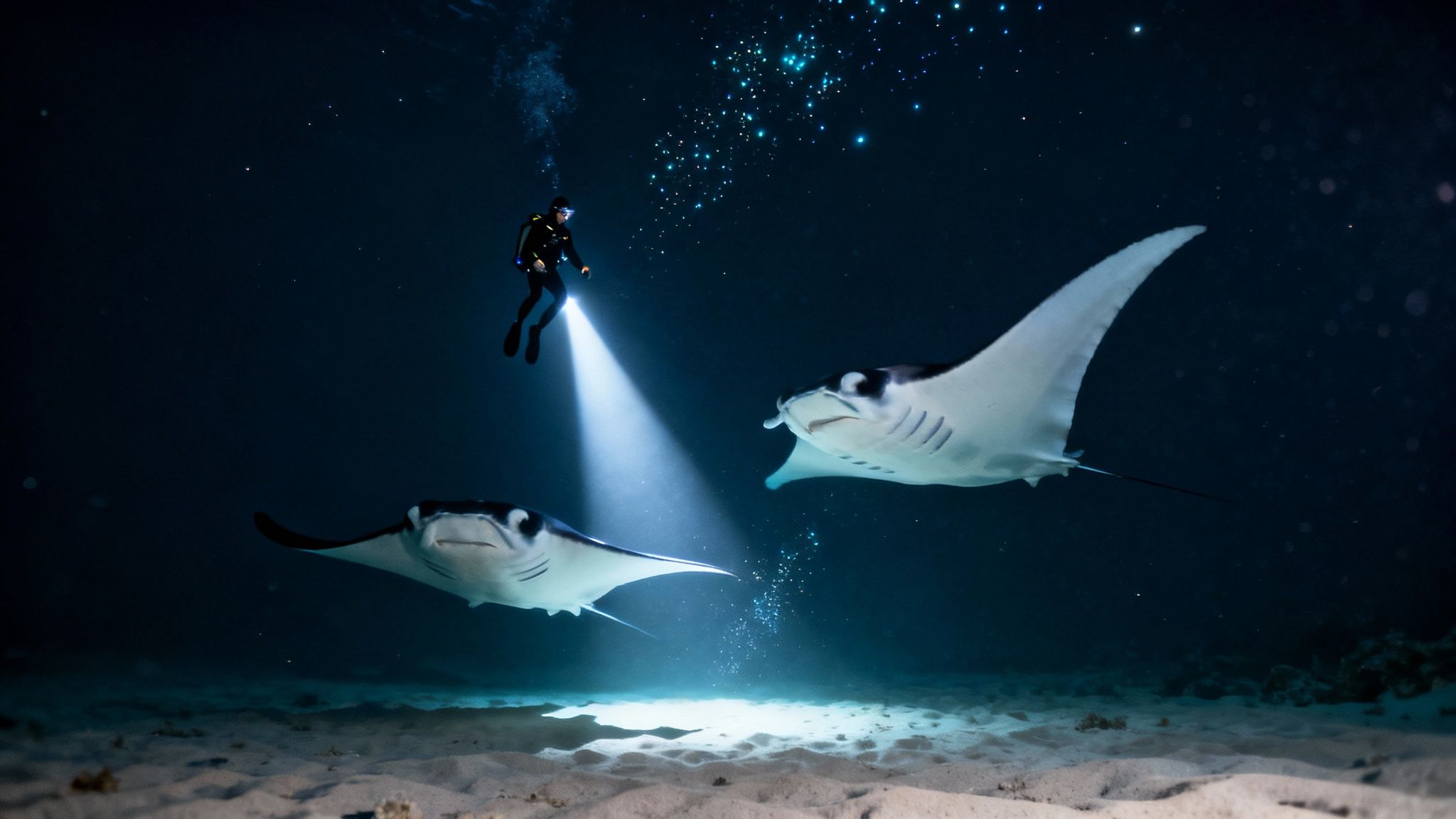
The Kona coast isn't just a good spot for seeing manta rays; it’s hands-down the most reliable place on the planet for this incredible encounter. While other global hotspots have seasons or hit-or-miss sightings, Kona delivers a year-round spectacle with an unbelievably high success rate. That consistency is what put this place on the map.
But this isn't just a happy accident. It's the result of a perfect storm of natural geography and a little human ingenuity. Kona's unique volcanic underwater landscape and nutrient-rich currents create the ideal feeding ground for plankton, which is the manta rays' favorite meal. Over decades, these gentle giants have learned that the lights from boats and shoreline hotels mean one thing: an all-you-can-eat buffet.
The Unmatched Sighting Success Rate
Kona's reputation isn't just talk; the numbers back it up. Manta ray diving here has become one of the most dependable wildlife encounters you can book anywhere. For the last ten years, the chance of seeing mantas on a night dive has consistently hovered between 80% and 90% all year long. This makes it a bucket-list trip you can actually plan on.
This guide will walk you through everything you need to know to plan your own unforgettable adventure. We’ll get into what makes this dive so special, why choosing the right operator is key, and how to book the ultimate manta ray dive tour.
Here at Kona Honu Divers, we've fine-tuned this experience to make sure every guest has a safe, respectful, and mind-blowing time. Our crew lives and breathes these waters, and they know the resident mantas by name, ensuring you get a premium adventure from start to finish.
Why Garden Eel Cove Is The Premier Manta Dive Location
When you're planning your manta ray dive in Kona, you quickly learn that not all dive sites are created equal. You’ve got a couple of main spots, but one of them, Garden Eel Cove, stands head and shoulders above the rest as the superior choice for comfort, safety, and an absolutely mind-blowing show.
Located just north of Kailua-Kona, this spot—also known as Manta Heaven—consistently delivers a superior experience. Why? It's all about its protected location.
Garden Eel Cove is tucked into a naturally protected bay. This means it’s shielded from the big ocean swells and winds that often batter the more exposed southern site, Manta Village. That protection translates to calmer water, which is a game-changer for a night dive. Less surge makes for a much more stable and relaxing time in the water for everyone, from beginners to seasoned pros.
Think about it: from the moment you roll into the water to the second you settle on the bottom, everything is smoother. Those calm conditions let you focus 100% on the incredible spectacle in front of you instead of fighting to stay put.
An Unmatched Front-Row Seat
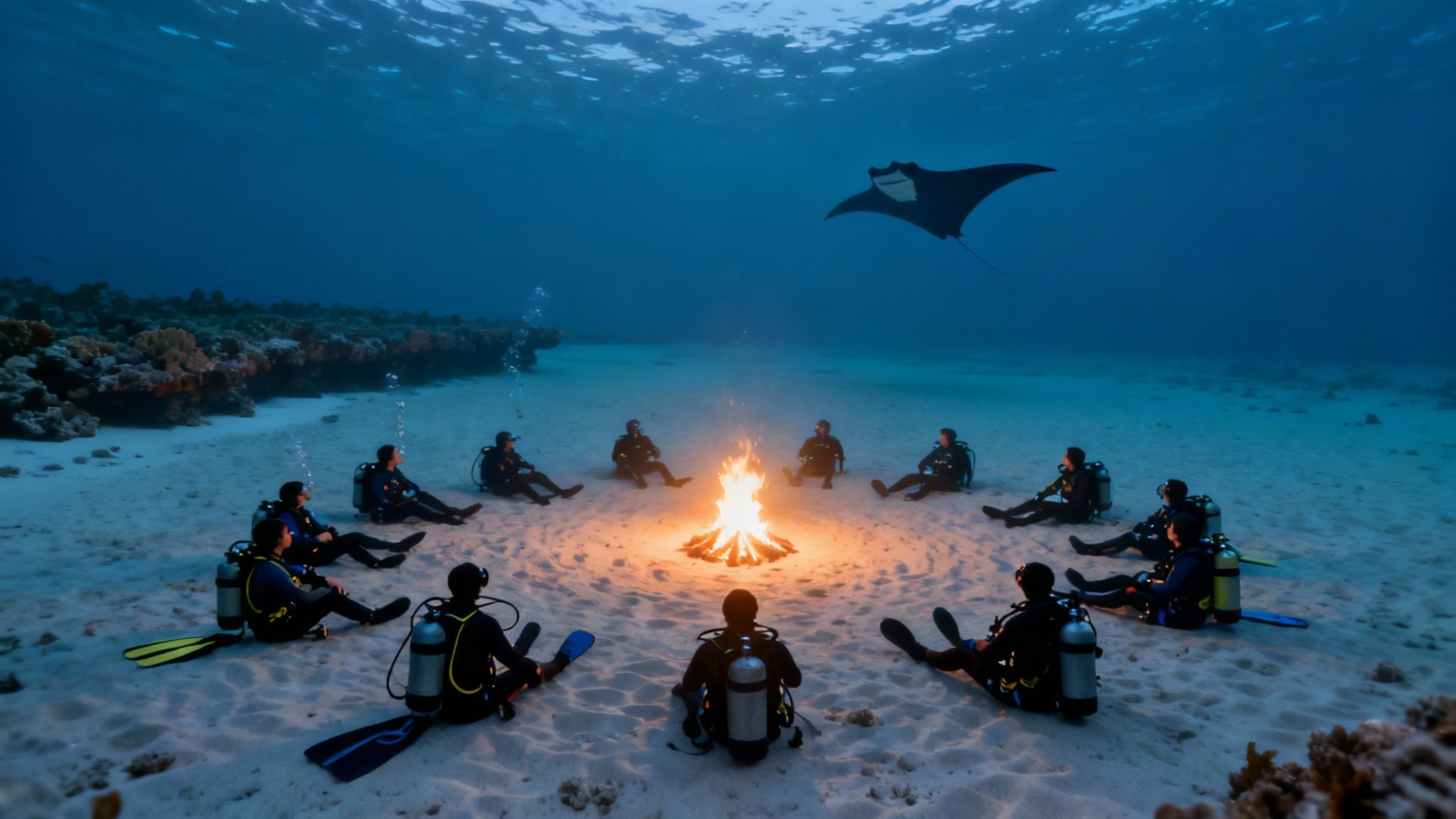
What really makes Garden Eel Cove special is its superior viewing area. Unlike other sites where divers might be scattered about, this spot has a big, sandy patch right in the middle of a healthy reef. This natural arena is perfect for divers to settle in a semi-circle on the ocean floor, creating what we affectionately call the underwater "campfire."
This unique arrangement has some serious perks:
- Unobstructed Views: Everyone gets a front-row seat. Period. Kneeling on the sand, you have a wide-open view looking straight up as the mantas swoop and glide just inches above you.
- Enhanced Safety: Keeping everyone in one organized spot is simply safer. It prevents accidental contact with the delicate coral reef and, just as importantly, with the manta rays themselves.
- A Theater Under the Sea: All the divers' lights point upward, creating a brightly lit stage. This light attracts a buffet of plankton, which in turn draws the mantas right over the group for an intimate, jaw-dropping performance.
This campfire method isn't just cool—it's the gold standard for responsible and awe-inspiring manta encounters. It minimizes our impact on the environment while maximizing the visual spectacle for every single person.
More Than Just Mantas
A trip to Garden Eel Cove with us is a full two-tank adventure, and the first dive is just as amazing as the main event. We start with a twilight dive on the vibrant reef that surrounds the sandy viewing area. It's a chance to explore one of Kona’s most beautiful and healthy coral ecosystems as the sun goes down, spotting colorful fish, eels, and octopus. The reefs at Garden Eel Cove are simply better, offering a more pristine and lively environment.
You can get a deeper look at what makes this place tick in our guide to Manta Ray Heaven at Garden Eel Cove.
This two-part experience gives you incredible value. You get to see the reef completely transform from day to night before settling in for the breathtaking manta ballet.
A Clear Comparison
To help you see the difference, here’s a quick rundown of Kona's two main manta dive sites. It quickly becomes clear why one is the preferred choice for a top-tier experience.
Kona Manta Dive Site Comparison
| Feature | Garden Eel Cove (North Site) | Manta Village (South Site) |
|---|---|---|
| Location | North of Kona Airport, in a protected bay | South of Kailua-Kona, near the shoreline |
| Conditions | Generally calm and protected from swell | Often exposed to open ocean swell and surge |
| Viewing Setup | Organized "campfire" on a sandy bottom | Divers and snorkelers positioned over rock/coral |
| Reef Quality | Excellent, pristine coral reef | Good reef, but less protected |
| Best For | All experience levels, especially new divers | More experienced divers comfortable with surge |
| Kona Honu | Our exclusive choice for the best experience | We do not operate at this location |
Ultimately, choosing Garden Eel Cove is key to the best manta ray dive in Kona. We exclusively use this site because we’re committed to giving you the safest, most comfortable, and most unforgettable dive possible. The calm bay, the superior viewing setup, and the world-class reef make it the undeniable best choice on the island.
What to Expect on Your Dive with Kona Honu Divers
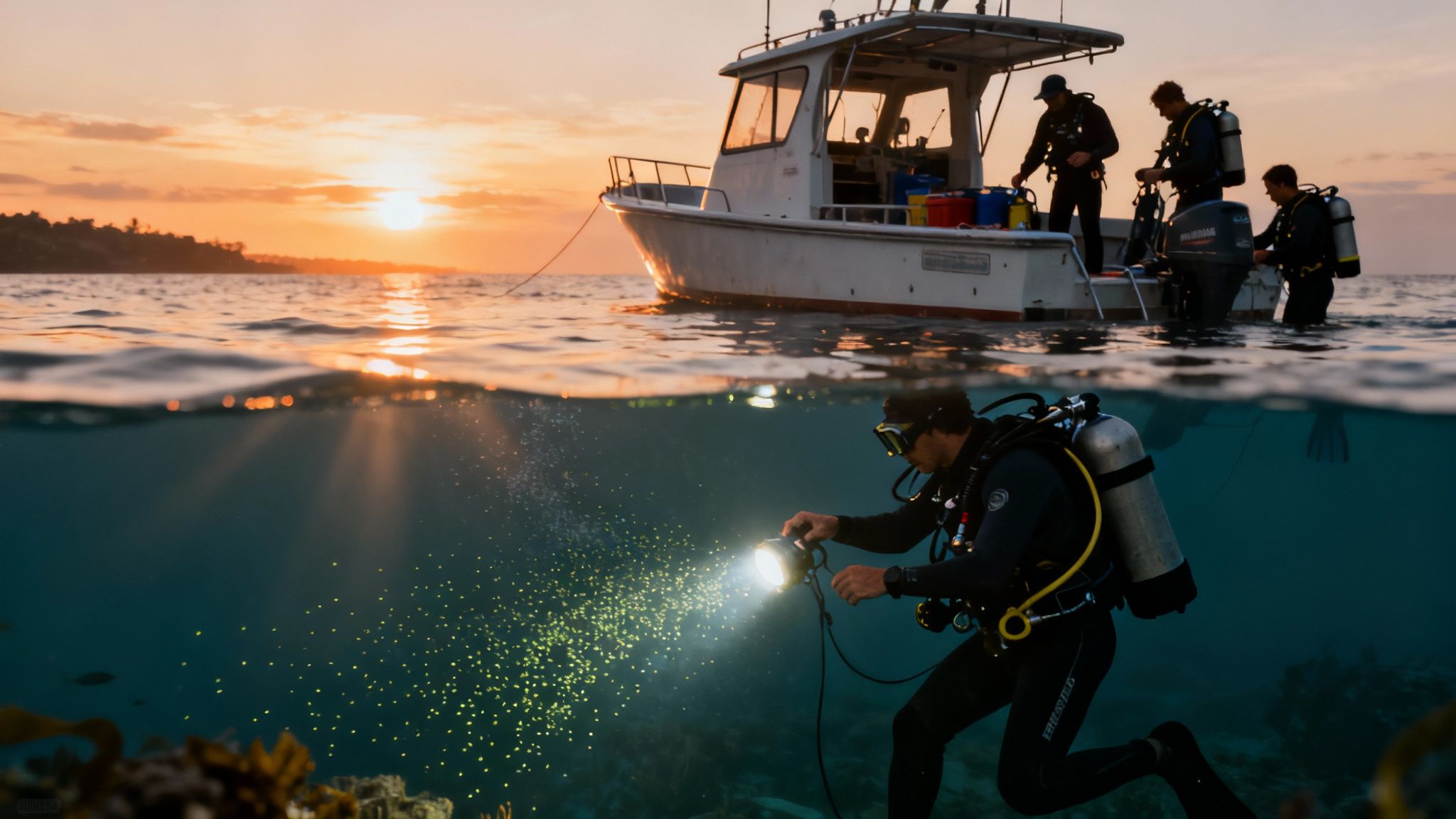
A manta ray dive in Kona with us is more than just a tour—it's a complete adventure. We’ve fine-tuned every part of the experience for maximum awe, comfort, and safety. The moment you step on the boat, our crew takes care of everything so you can just relax and get excited for what's to come. It all starts with a thorough briefing where we'll cover the dive plan and share our deep commitment to protecting these amazing animals.
This is a two-tank charter, designed to give you the full experience of Kona’s underwater world as it transitions from day to night. We’ve found the main event feels even more special when it's preceded by a beautiful, relaxing dive. You’ll feel completely prepared as our team gets you set up with top-notch, well-maintained rental gear and walks you through every safety step.
We truly want you to feel like part of our ohana (family). Our crew aren’t just divemasters; they're passionate ocean lovers who know these waters and the resident mantas by heart. That personal touch is what turns a great dive into a memory you’ll never forget.
The Twilight Reef Dive
Your adventure kicks off with the first of two dives: a stunning twilight exploration of the reef at Garden Eel Cove. As the Hawaiian sun starts to dip toward the horizon, casting that perfect golden light, you'll descend into a world that's absolutely buzzing with life. This isn't just a warm-up dive; it's a fantastic experience all on its own.
The reef is incredibly active at this time of day. You’ll get to see:
- Schools of colorful reef fish getting ready to tuck in for the night.
- Curious eels poking their heads out from their coral hideouts.
- Octopuses starting their nightly hunt, changing color and texture right before your eyes.
This first tank is a great way to get comfortable with your gear and reacquainted with being underwater in calm, clear conditions. As the last bit of sunlight disappears, you'll see the reef begin to change, setting a truly magical stage for the main event. Back on the boat, we'll have snacks and drinks waiting for you while the crew preps for the grand finale.
The Main Event: The Manta Ray Spectacle
After a relaxing break on the surface, enjoying the stars, it's time for the dive you've been waiting for. Our crew carefully lowers a powerful light onto the sandy bottom, creating what we affectionately call the underwater "campfire." This light attracts swarms of plankton—the manta rays' favorite food—and basically rings the dinner bell for these gentle giants.
Once the stage is set, you and your group will descend again. This time, we'll settle in a semi-circle on the ocean floor around the campfire. We have a very specific, stationary viewing arrangement, and for good reason. It ensures:
- Everyone gets an amazing, front-row seat for the show.
- The delicate coral reef is kept safe from any accidental bumps.
- The mantas have a clear, safe path to swoop in and feed right above you.
From this spot, you'll watch in total awe as the mantas glide out of the darkness. They perform a weightless, acrobatic ballet, sometimes just inches above your head. Their massive wingspans create graceful shadows as they somersault through the light beams. It’s an incredibly intimate and humbling encounter that’s hard to put into words.
To get a better idea of how this incredible encounter works, you can read more about the unforgettable manta ray night dive with Kona Honu Divers. Our dedication to a hands-off, respectful interaction ensures the mantas are never bothered, which makes for a natural and truly magical experience.
Time and time again, our guests tell us this dive is the absolute highlight of their trip to Hawaii.
Getting to Know Kona’s Famous Manta Rays
When you slip into the water for a manta ray dive in Kona, you're not just meeting random wildlife. You're being introduced to a cast of local celebrities, each with a name, a personality, and a history that local guides and researchers have tracked for decades.
This isn't just about seeing a cool animal; it's about connecting with individuals. It transforms the dive from a simple encounter into something truly personal and reminds us how critical it is to protect these magnificent creatures.
A Fingerprint of Spots
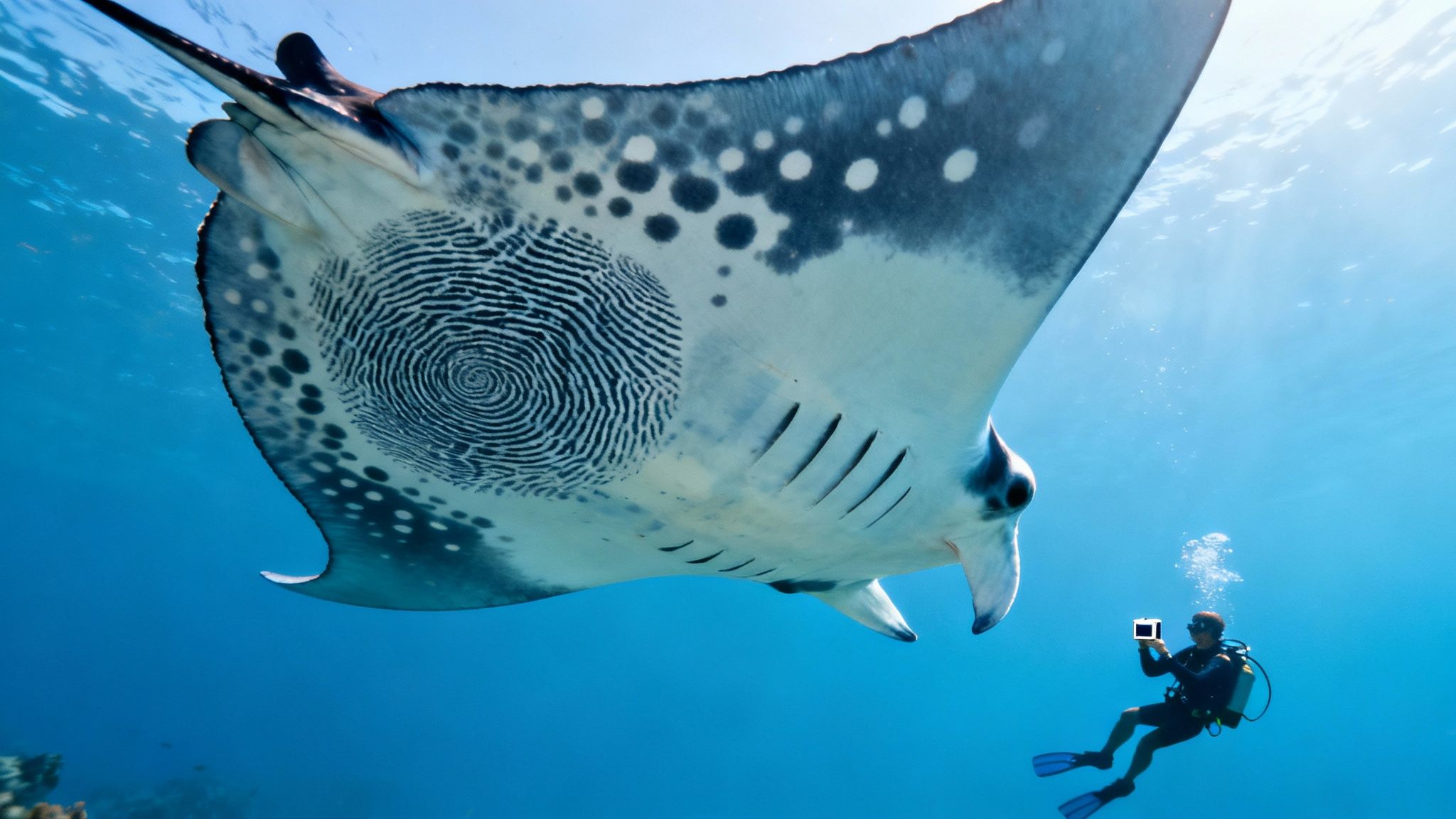
So, how in the world do we tell them all apart? The secret lies right on their bellies.
Every single manta ray has a one-of-a-kind pattern of black spots on its white underside. This pattern is as unique as a human fingerprint and stays with them for their entire lives. It’s their permanent name tag.
This natural marking is a game-changer for non-invasive research. By simply snapping a photo of a manta’s belly, we can identify them, track their health, and learn about their movements without ever needing to tag or handle them.
This incredible database of manta "fingerprints" started back in the early 1990s. The very first manta identified here was nicknamed 'Lefty.' Since then, the catalog has exploded to over 330 known individuals who frequent Kona’s waters.
Meet the Local Legends
After years of diving with these same mantas, you really start to get to know their personalities. Recognizing a familiar face (or belly!) adds a whole other layer of magic to the experience.
Here are a few of Kona’s most famous regulars:
- Lefty: The OG! She was named for a damaged cephalic fin and has been a reliable sight since 1991, making her one of our longest-known residents.
- Big Bertha: She lives up to the name. As one of the largest females, her grand, sweeping entrances can leave an entire group of divers breathless.
- Kailey: Known for being incredibly graceful and curious, Kailey seems to enjoy getting up close and personal, showing a real sense of trust around divers.
Knowing these animals by name changes everything. It’s a powerful reminder that we are guests in their home, watching the lives of individuals unfold. That perspective is the absolute core of responsible, respectful ecotourism.
Your Role in Citizen Science
Here's the coolest part: you can be a part of this research. Every diver on a manta ray dive in Kona has the potential to contribute.
The photos and videos you take are more than just souvenirs—they're valuable data. If you get a clear shot of a manta's belly, you might just have captured an image of a brand-new, uncatalogued individual.
By submitting your photos to local research groups, you become a citizen scientist. You're no longer just watching from the sidelines; you’re actively helping us understand and protect the very animals you came all this way to see. It’s an amazing way to make sure your adventure has a real, lasting impact.
When you sign up for a manta ray dive in Kona, you’re doing so much more than just booking an incredible underwater adventure. You're becoming a direct part of the conservation solution. This kind of regulated ecotourism provides a powerful, sustainable economic alternative to harmful practices like overfishing.
By demonstrating that these gentle giants are worth far more alive than dead, every diver who enters the water sends a clear message. Your participation helps protect the local manta population for generations to come, ensuring this magical experience endures.
Choosing a responsible operator like Kona Honu Divers means you're putting your money where it counts—right back into protecting the marine environment. The revenue from our tours helps fund local conservation initiatives, supports vital research, and creates jobs that depend entirely on a healthy ocean. This gives the whole community a powerful reason to protect its most precious natural resource: the manta rays and the vibrant reefs they call home.
The Golden Rule of Passive Interaction
At the heart of sustainable manta ray tourism is one simple but non-negotiable principle: passive interaction. We are visitors in their world, and our behavior has to reflect that. It’s all about respect.
To keep both the mantas and our guests safe, we follow a few strict guidelines on every tour. They're simple, but they're absolutely critical:
- Look, Don't Touch: This is the big one. Manta rays have a delicate mucus coating on their skin that acts as their immune system. Touching them can strip away this protective layer, leaving them vulnerable to nasty infections.
- Hold Your Spot: Divers find a comfortable spot and stay on the sandy bottom, while snorkelers remain at the surface. This simple act creates a wide-open, predictable space for the mantas to glide through as they feed.
- Never Chase or Block: We let the mantas control the entire interaction. Chasing after them or getting in their way can spook them. The best part? When you stay still, their natural curiosity often brings them incredibly close on their own terms.
Following these rules ensures the encounter is positive and stress-free for the animals, which is exactly why they feel safe enough to return to our dive site night after night.
Your Dive and the Bigger Picture
The importance of this responsible approach really hits home when you understand the threats manta rays face on a global scale. This dive has become an incredible educational tool, opening people's eyes to the fragile status of these animals.
The two species we see here off the Kona Coast are the reef manta (Mobula alfredi) and the giant oceanic manta (Mobula birostris). Sadly, both are listed as vulnerable to extinction due to threats like commercial fishing, boat strikes, and habitat loss. You can learn more about the conservation status of Hawaii's mantas and the specific challenges they face.
By taking part in a well-managed manta ray dive in Kona, you are casting a vote for conservation. Your presence sends a powerful message that a living, thriving marine ecosystem is invaluable, helping to shield these gentle giants from the pressures they face worldwide.
Here at Kona Honu Divers, we are completely committed to upholding the highest standards of responsible ecotourism. Our crew doesn't just enforce these rules; we take the time to explain why they matter. We truly believe that an educated diver is the best possible advocate for our oceans.
This dedication to education and sustainability is woven into everything we do.
Join us on a spectacular and meaningful manta ray dive tour and become part of the solution.
Essential Tips for Planning Your Manta Dive
Alright, you're hooked on the idea of swimming with these gentle giants. Let's talk logistics. Planning your manta ray dive in Kona is actually pretty simple, but a little bit of know-how will make the whole experience that much smoother and more enjoyable. We'll walk through the best time to visit, what you'll need, and what to pack.
The first question on everyone's mind is, "When's the best time to see the manta rays?" The answer is one of the things that makes Kona so special: anytime! Our local manta ray population is here year-round, so they aren't going anywhere. This means you can book your trip for January or July and have an equally amazing shot at a spectacular show.
While the mantas are always ready for their close-up, the ocean conditions do shift a bit with the seasons. Summer typically brings flatter, calmer seas and slightly warmer water. But don't let that deter you from a winter trip—the sightings are just as consistent. For a deeper dive into what each month looks like, check out our guide on when to dive with manta rays in Kona.
Preparing for Your Night Dive Adventure
If you're planning to scuba dive with the mantas, you'll need to be a certified diver. A basic Open Water certification is all it takes. The dive itself is fairly shallow, usually between 35-45 feet, and we stick to a calm, protected area. Not certified? No problem. The snorkel experience is just as breathtaking from the surface.
You can also leave your thickest wetsuit at home. The water here stays in that perfect 75-80°F (24-27°C) range. We provide quality wetsuits to keep everyone warm, which you'll appreciate once the sun goes down. Visibility is also typically fantastic, often clear for 100 feet or more.
Here are a few things you'll want to toss in your bag for the trip:
- Proof of Certification: Your C-card is your ticket to dive, so don't leave it behind!
- Swimsuit and Towel: Simple enough. Come ready to get wet and have a towel for afterward.
- Warm Layers: A dry sweatshirt or a light jacket feels amazing on the boat ride back under the stars.
- Reusable Water Bottle: Diving is thirsty work, so it's always good to have water on hand.
- Seasickness Medication: If you even think you might get seasick, it's best to take something beforehand. You don't want to miss a moment of the action.
This dive isn't a workout, but you do need to be comfortable in the water after dark. Our expert guides will give you a full briefing and stick with you the entire time, making sure you feel completely safe and confident.
Beyond the Mantas: More Kona Diving
The manta ray dive in Kona is the headliner, for sure, but it’s just the beginning of the world-class diving tours the Big Island has to offer. Once you've seen the mantas, there are other incredible underwater worlds to explore.
If you enjoyed the night dive, you have to try the Kona Blackwater Dive. It's a totally different experience where you drift over deep ocean water at night, suspended in the dark. It’s a front-row seat to the planet's largest migration, as strange and wonderful bioluminescent critters rise up from the abyss. It’s wild.
For our more seasoned divers, our advanced dive charters are the way to go. These trips head to more remote sites to explore stunning lava tubes, deep-water pinnacles, and untouched reefs that most visitors never get to see.
Frequently Asked Questions About the Manta Ray Dive
We've talked a lot about the magic of the manta ray dive in Kona, but it's natural to still have a few questions rolling around. Let's tackle some of the most common ones we hear from our guests so you can feel completely ready for this adventure.
Is the Kona Manta Ray Night Dive Safe?
Absolutely. Safety is our top priority, and it’s something we take very seriously. When you dive with a seasoned, reputable operator like Kona Honu Divers, you're in the best possible hands. We start every trip with a detailed safety briefing, our guides know these waters like the back of their hand, and we stick to strict protocols to keep the entire experience controlled and secure.
What If I Am Not a Certified Scuba Diver?
No problem at all! You don't need a scuba certification to see this incredible underwater show. We offer a fantastic manta ray snorkel trip that happens at the very same spot, at the same time as the divers.
Snorkelers get to float comfortably on the surface, holding onto a specially designed light board. The light attracts the plankton, and you get a front-row, top-down view of the mantas as they feed right below you. It's every bit as breathtaking.
How Close Will I Get to the Manta Rays?
You'll get closer than you can probably imagine—often just inches away! The mantas are completely focused on feeding, so they gracefully glide and barrel-roll right through the beams of light, right up to the divers and snorkelers.
The golden rule here is passive interaction. We look, but we never, ever touch, chase, or get in their way. This simple respect ensures the mantas feel safe, allowing for a truly natural encounter that we can continue to enjoy for years to come.
What Is the Water Temperature for the Night Dive?
One of the best parts about diving in Kona is the wonderfully warm water. It stays pretty consistent year-round, typically hovering between 75-80°F (24-27°C). We also provide everyone with a high-quality wetsuit, so you’ll stay nice and comfortable for the entire dive.
Choosing Kona Honu Divers means you're choosing a team that’s genuinely passionate about the ocean and dedicated to giving you a safe, world-class experience. We truly love what we do, and it shows on every tour.
We can't wait to share this amazing underwater ballet with you. Book your spot and get ready for the dive of a lifetime!