
Picture this: you're floating weightlessly in the dark, silent ocean. Suddenly, giant, graceful shadows with massive wingspans begin to glide just inches above your head. This isn't a dream; it's the world-famous Kona manta ray dive, an otherworldly underwater ballet that truly has to be seen to be believed.
If this experience is on your bucket list, you've come to the right place. This guide will walk you through everything you need to know to witness the magic for yourself. For general information on all the amazing scuba diving tours Kona has to offer, check out our main page.
Experience Kona’s Unforgettable Manta Ray Ballet
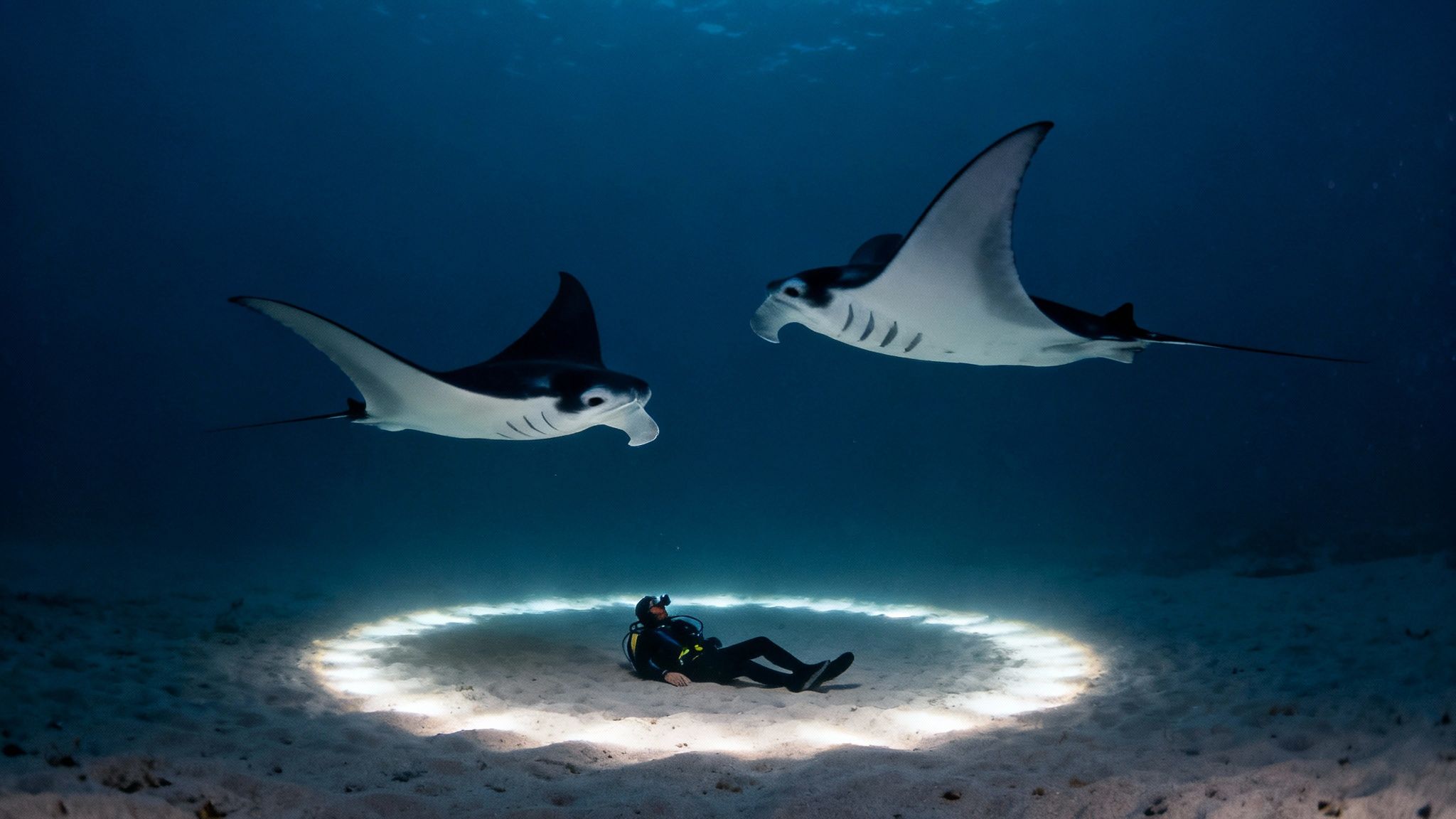
The Kona coast of the Big Island is famous for a lot of things, but nothing quite compares to its nightly manta ray spectacle. This isn't just another dive. It's a front-row seat to one of nature’s most mesmerizing feeding rituals.
Here’s how it works: as the sun dips below the horizon, we set up powerful underwater lights on the seafloor. These lights attract massive clouds of plankton—the manta rays' favorite meal—creating a glowing, all-you-can-eat buffet.
What happens next is pure, unadulterated magic. Drawn in by the feast, giant reef manta rays emerge from the darkness, some with wingspans reaching an incredible 14 feet. They perform effortless barrel rolls and graceful loops, filtering the plankton-rich water right over your head.
Why Is This Dive So Special?
Manta encounters happen all over the world, but the Kona dive is different. Most other sightings occur at "cleaning stations," where the animals are relatively still. Here, you're witnessing an active, dynamic feeding event. It's a show.
Divers and snorkelers simply settle in and become part of the audience in an underwater theater, witnessing a truly wild and unfiltered natural phenomenon. And the best part? This incredible performance happens almost every single night, all year long.
The consistency here is just astounding. We see a success rate exceeding 90% for manta sightings. This reliability is all thanks to a large, resident population of manta rays who have learned to associate our lights with an easy meal over the decades.
In this guide, we're going to get specific and explain why one location, Garden Eel Cove, consistently delivers a more reliable and breathtaking encounter than any other spot on the island. We'll dive into how its unique underwater geography and healthier reefs create the perfect stage for this performance.
Ready to see one of nature's greatest shows? You can explore our premier manta ray dive tour and book your adventure with us at Kona Honu Divers.
Why Garden Eel Cove Is The Ultimate Manta Dive Site
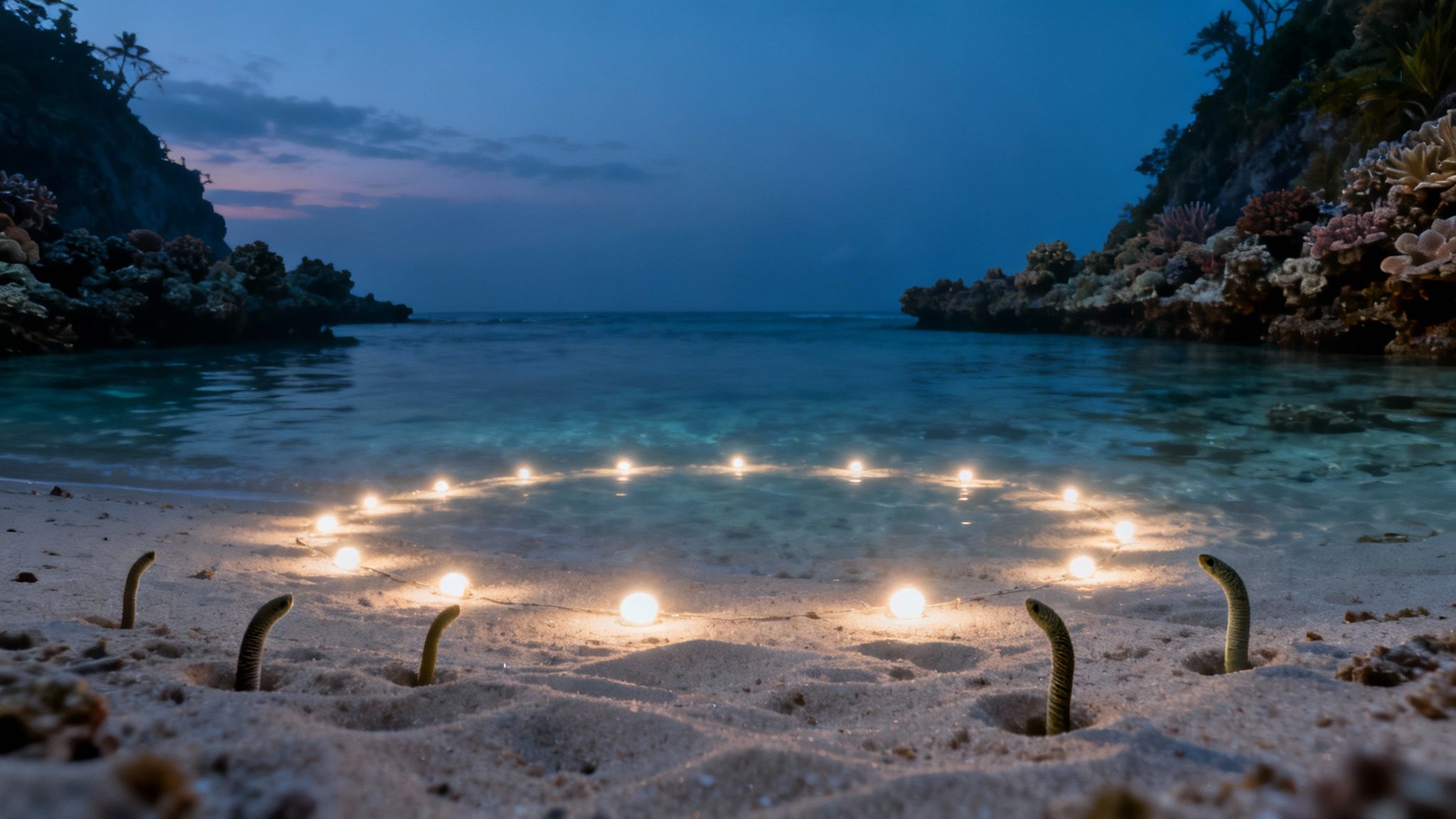
When you start planning your manta ray dive in Kona, you’ll quickly hear about two main spots: Manta Village in Keauhou Bay and our personal favorite, Garden Eel Cove, located a bit further north. While you can see mantas at both, Garden Eel Cove is the superior choice for a magical, comfortable, and visually spectacular experience.
A big reason for its superiority is its location. Tucked away and naturally sheltered from the big ocean swells, the cove almost always has calmer water. This protected setting translates to better visibility and a much more relaxed, enjoyable time in the water for both divers and snorkelers. The viewing area is also better, allowing for a more comfortable and immersive experience.
The Underwater 'Campfire'
What really makes Garden Eel Cove special is how the dive is structured. It’s an experience you won’t find anywhere else. We gather on a wide, sandy patch on the ocean floor, about 35-40 feet down. There, powerful lights are set up in a circle, all pointing up toward the surface.
We call this the underwater 'campfire,' and it’s the perfect way to attract massive clouds of plankton—the mantas' favorite food. You simply settle onto the sand, get comfortable, and become part of the scenery. This allows the manta rays to put on their show, swooping and barrel-rolling right over your head in a silent, mesmerizing ballet. It’s the best way to get breathtakingly close without ever disturbing their natural feeding.
Manta Ray Dive Site Comparison
To really see the difference, it helps to put the two main sites side-by-side.
| Feature | Garden Eel Cove (Recommended) | Keauhou Bay (Manta Village) |
|---|---|---|
| Water Conditions | Calm & protected, less surge | Exposed to open ocean, can be rough |
| Visibility | Consistently clearer | Often lower due to surge & boat traffic |
| Viewing Area | Spacious sandy bottom, easy to settle | Rocky bottom, harder to position |
| First Dive Quality | Vibrant, healthy coral reef | Less pristine reef, less marine life |
| Crowds | More regulated, feels more intimate | Can be very crowded with many boats |
| Accessibility | Boat access only | Boat and shore access |
While both sites offer a chance to see mantas, Garden Eel Cove's calmer conditions, better viewing area, and healthier ecosystem provide a far more premium and reliable diving experience from start to finish.
A Healthier Reef Means a Better Two-Tank Dive
Another huge plus for Garden Eel Cove is the incredible quality of the reef itself. Most of our 2-tank manta dive tours include a twilight dive before the main event, and this is where the cove’s vibrant ecosystem truly shines. The reefs here are simply better and more alive.
On that first dive, you'll explore a flourishing coral garden teeming with life. As the sun sets, you'll spot eels, octopuses, and a whole spectrum of colorful reef fish. It adds a completely different, wonderful dimension to your evening, making the entire trip feel richer and more rewarding.
The reef at the other site, by comparison, just isn't as dynamic. For an all-around superior night out on the water—from the first dive to the grand finale—Garden Eel Cove is the hands-down winner. You can learn more about what makes it so special by reading our post on Manta Ray Heaven Garden Eel Cove.
Meet The Gentle Giants Of The Kona Coast
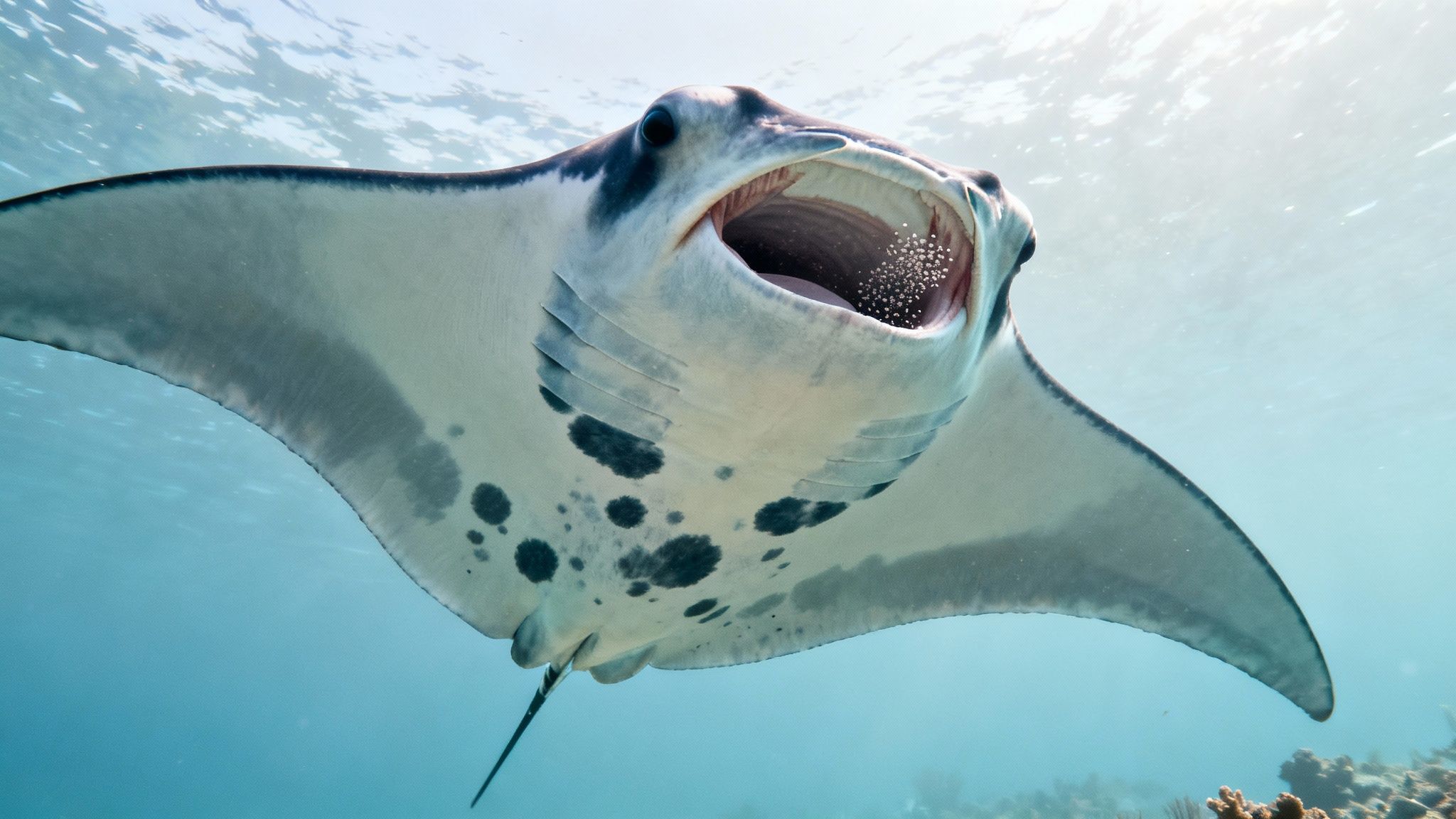
The real stars of the show in Kona are the resident reef manta rays (Mobula alfredi). These are magnificent animals, commanding the ocean with a gentle, intelligent presence that’s hard to describe until you’ve seen it for yourself.
It’s completely normal for first-timers to feel a bit nervous about being in the water with such massive creatures. But a huge part of appreciating the manta ray dive in Kona is knowing just how peaceful and harmless they are. These are filter-feeding giants, not predators.
A lot of people mix them up with their cousins, the stingrays. Here's the key difference: manta rays have no teeth, no stingers, and no barbs. Their only defense is their sheer size and speed. This makes your encounter one of the safest and most serene wildlife interactions you could ever hope for.
Because they’re so gentle, we can have a really special, respectful viewing experience. You just settle down on the ocean floor and watch them perform their incredible feeding ballet just a few feet above your head.
Getting to Know Kona's Manta Rays
The Kona Coast is a truly special place, home to two main types of manta rays: the reef manta (Mobula alfredi) and the much larger, more elusive giant oceanic manta (Mobula birostris). The reef mantas you’ll see on the night dive are the local celebrities, typically boasting a wingspan of around 14 feet. Their oceanic relatives can reach an astounding 22 feet across, though they're a rarer sight. For more insights, you can check out some amazing manta ray facts on seaquesthawaii.com.
Recognizing the Locals
What’s really cool about the Kona mantas is that we know so many of them individually. For decades, local researchers and dive guides have been identifying and tracking the regulars. So, how do we tell them apart?
- Unique Spot Patterns: Every manta ray has a one-of-a-kind pattern of black spots on its white belly. Think of it as their fingerprint.
- Naming the Mantas: Once a new manta is identified, it gets a name. On any given night, you might meet "Big Bertha," "Lefty," or "Kailey."
- Citizen Science: Every diver gets to be part of the research. When you snap photos of the mantas' undersides, you can help us track the population, their movements, and their overall health.
This turns your dive into something more personal. You're not just observing a manta ray; you're being introduced to a well-known local with a life story. It adds a whole other layer to an already magical experience.
Choosing The Best Manta Ray Dive Tour
Let's be honest, picking the right company for your manta ray dive in Kona is probably the biggest decision you'll make for this trip. It's the one thing that can make or break your entire experience. A great operator does more than just ferry you out to a dive site; they curate a safe, respectful, and truly jaw-dropping encounter with these gentle giants.
When you start looking around, pay close attention to group sizes. A company that crams as many people as possible onto a boat is a red flag. Smaller groups almost always mean a more personal, intimate experience where you actually get an unobstructed view of the action.
What Defines a Top-Tier Operator
The best operators aren't just in it for the money; they have a genuine passion for marine conservation. Think of them less as tour guides and more as educators and guardians of the ocean. They follow strict guidelines to make sure the mantas are never touched or stressed, helping protect this amazing natural wonder for years to come.
So, what should you look for? Here’s a quick checklist:
- Expert Guides: You want divemasters and instructors who live and breathe this stuff—people who can tell you about manta behavior and biology, not just point them out.
- Manta Guarantee: The top outfits often have a "manta guarantee." It's simple: if no mantas show up, you get to come back for free on another night.
- Focus on Garden Eel Cove: As we covered earlier, operators who stick to Garden Eel Cove are serious about giving you a calmer, more reliable, and all-around better dive.
- Strong Safety Record: This is non-negotiable. Briefings should be thorough, and all the gear should look modern and well-cared-for.
At Kona Honu Divers, this philosophy is at the core of our 2-tank manta dive tour. We run our trips exclusively at Garden Eel Cove and deliberately keep our groups small for that personal, unforgettable vibe. Our team is incredibly passionate about sharing the magic of the mantas while putting their safety first. And while you're planning, you might also want to discover other highly-rated Kona snorkeling experiences for your vacation.
Hearing From Fellow Divers
Don't just take our word for it—do your homework! Reading recent reviews is one of the smartest ways to get a real feel for a company. Honest feedback from other divers gives you the inside scoop on what to actually expect.
See what people are saying about their nights out with Kona Honu Divers below. For a wider look at what's out there, check out our guide on the top 5 manta ray night dive tours to see how different operators compare.
Ready to book your adventure with a trusted, top-rated operator?
How To Prepare For Your Night Dive Adventure
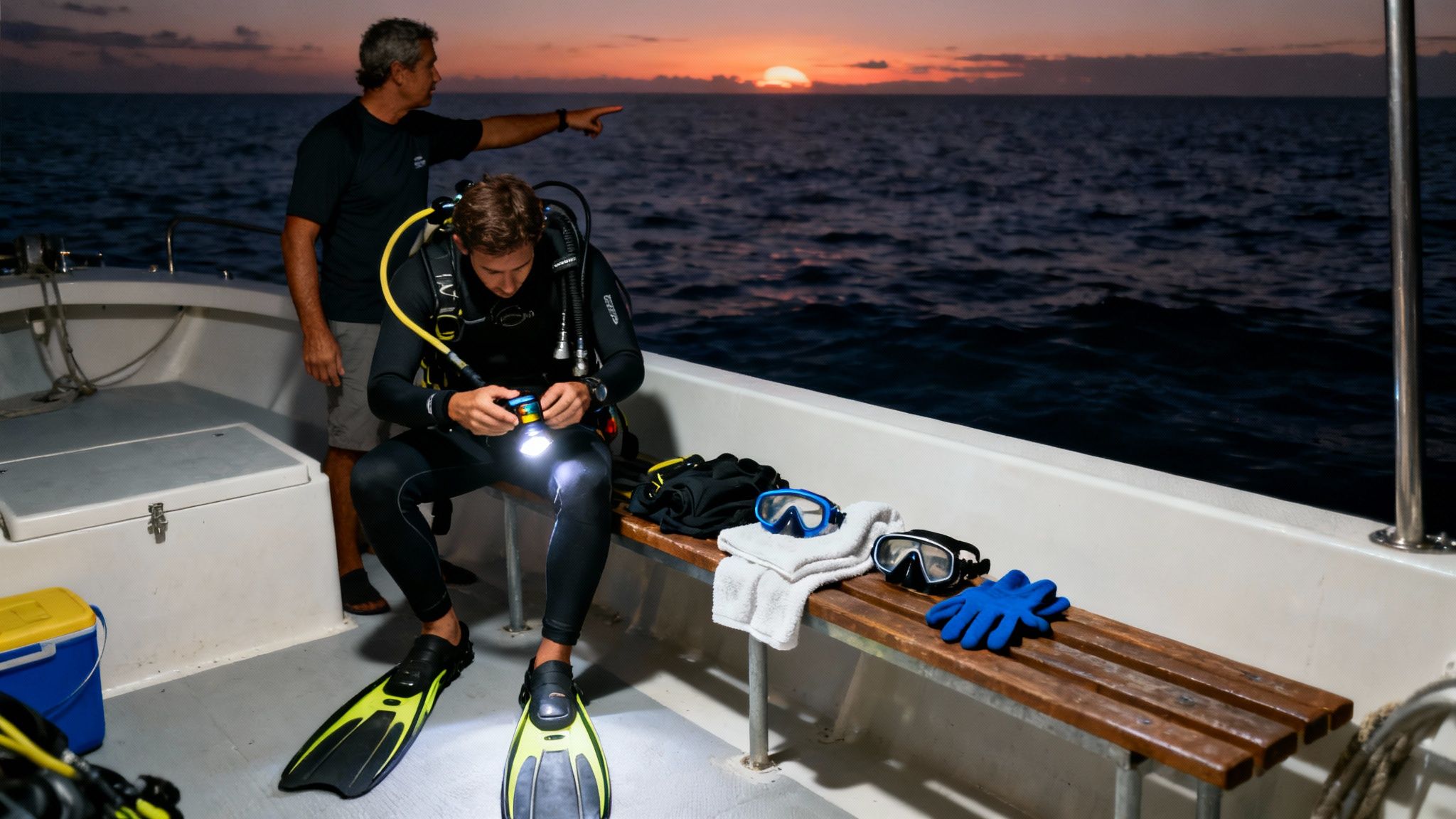
A little preparation goes a long way toward turning a great dive into a truly unforgettable one. When you feel ready for your manta ray dive in Kona, you can relax and soak in the magic without sweating the small stuff.
Think of the evening as a two-part adventure. Most trips kick off with a beautiful twilight reef dive. This first dip is the perfect warm-up, letting you get comfortable with your gear and the underwater world just as the sun sets. You'll get to see the reef transition from day to night. After a short break on the surface, it’s time to descend again for the main event.
What To Bring On The Boat
Knowing what to pack makes for a much smoother, more comfortable trip. We've got you covered with all the essential scuba gear, lights, and snacks, but a few personal items will make a world of difference.
- Towel and Dry Clothes: This is a big one for the boat ride home. A warm hoodie or a windbreaker is a brilliant idea, as it can get surprisingly chilly once the sun is down.
- Reusable Water Bottle: Staying hydrated is key, both on and off the water.
- Motion Sickness Medication: If you're even slightly prone to seasickness, it's smart to take something before leaving the harbor. For a comfortable journey, check out these helpful motion sickness prevention tips.
For a more detailed list of what to bring, take a look at our guide on the gear you will need for your Kona diving adventure.
Respectful Manta Ray Interaction
The golden rule of the manta dive is simple: passive observation. We are just visitors in their underwater dining room. Following a few easy guidelines keeps both the divers and the mantas safe, protecting this incredible encounter for years to come.
The most important rule is to never touch a manta ray. Their skin is coated in a protective mucus layer that acts like a shield against infection. Touching them can strip this layer away, leaving them vulnerable.
Your guide will walk you through a thorough briefing on proper conduct before you hit the water. This includes staying near the bottom, keeping your movements slow and deliberate, and never chasing or blocking a manta's path.
When you remain calm and still, you create a safe space for the mantas to perform their mesmerizing feeding ballet just inches above your head. It's this respectful approach that is so crucial for preserving the health of Kona's resident manta population.
Answering Your Kona Manta Ray Dive Questions
We've gone over the essentials of the Kona manta ray dive—what it is, where to go, and how it all works. But I know you probably still have a few questions swirling around. Let's tackle the most common ones so you can feel totally prepared for this incredible adventure.
What’s The Best Time Of Year For The Manta Ray Dive?
This is the best part: there is no "off-season"! The manta ray dive in Kona is a year-round spectacle. Thanks to the island's calm, protected leeward coast and a healthy resident population of mantas, your chances of a great encounter are always high.
The success rate for sightings consistently stays in the 80-90% range, no matter when you visit. So, the best time to go is simply whenever you can get here.
Do I Need To Be An Advanced Diver?
Nope! This experience is perfectly suited for any certified open water diver. It's a relatively shallow dive, usually around 35-40 feet, and you're not swimming all over the place. You'll settle in one spot and let the show come to you.
The most important skills are solid buoyancy control (so you can stay put without kicking up sand) and being comfortable in the water at night. Your guide will go over everything in detail during the pre-dive briefing. If you are looking for more experienced diving opportunities, check out our premium advanced dive tours.
What's The Difference Between Diving And Snorkeling With The Mantas?
It all comes down to your point of view. As a diver, you get a front-row seat on the ocean floor, looking up as these gentle giants swoop and barrel-roll right over your head. It’s an incredibly immersive, almost jaw-dropping perspective.
Snorkelers get a bird's-eye view, floating on the surface and watching the action from above. Both experiences are amazing, but nothing quite beats having a manta ray glide inches from your face.
So, what happens if the mantas don't show? They are wild animals, after all. That's why top-tier operators like Kona Honu Divers offer a "Manta Guarantee." If you don't see any mantas on your trip, you can come back for free on another night (on a standby basis).
This commitment gives you the best possible shot at witnessing one of the most awe-inspiring sights in the entire ocean.
Ready to see this underwater ballet for yourself? Kona Honu Divers runs a top-notch 2-tank manta dive and snorkel tour focused on creating an intimate and responsible encounter. Book your spot and get ready for an unforgettable night.