
Picture this: you’re floating in the warm, dark Pacific waters off the Kona coast. Suddenly, a shadow emerges from the deep. A magnificent manta ray, with a wingspan stretching over 12 feet, glides silently, gracefully, just inches above your head. This isn't a dream; it's the world-famous manta ray dive kona, an underwater ballet that truly has to be seen to be believed.
Experience Kona’s World Famous Manta Ray Dive
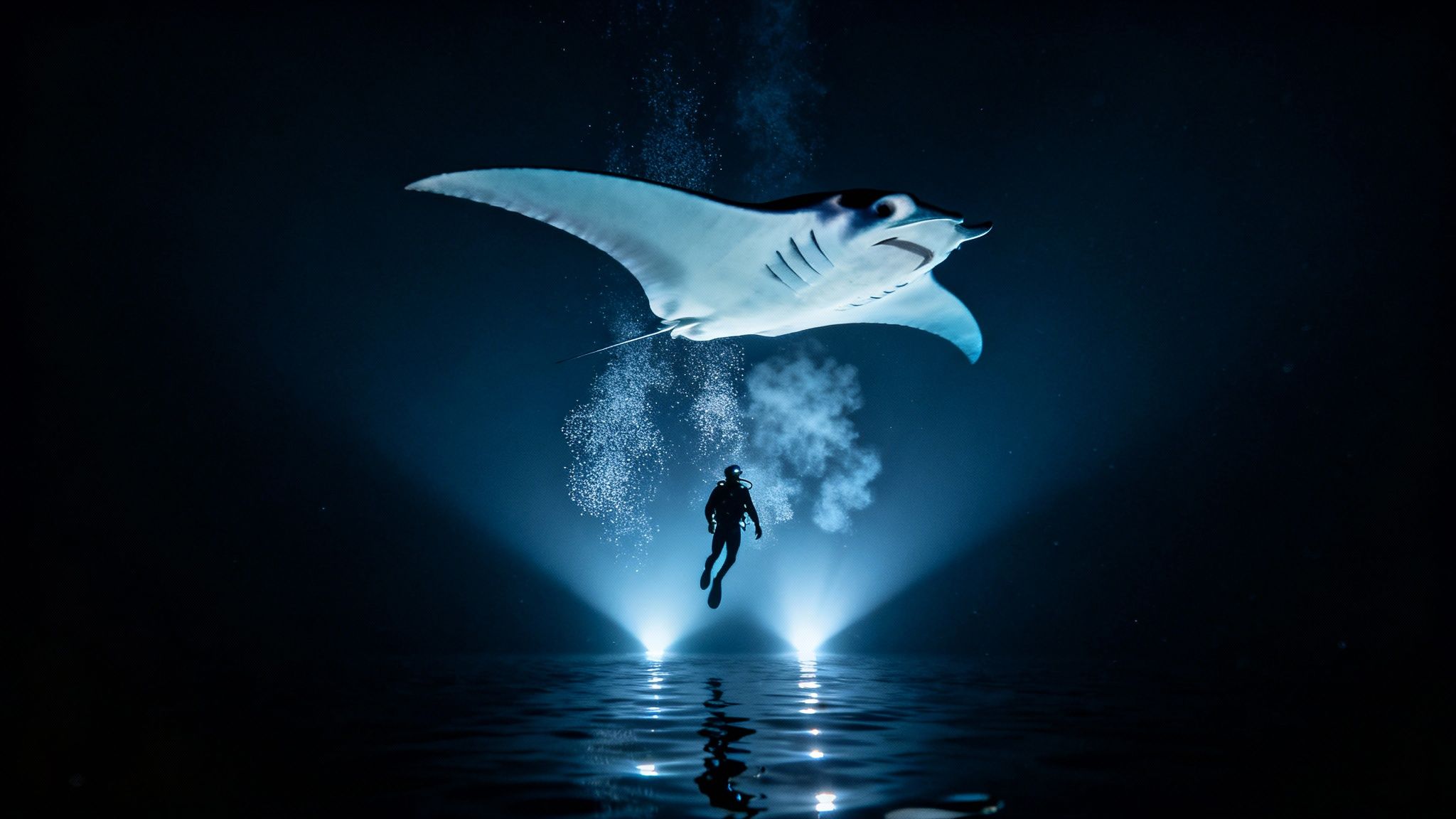
So, how does this incredible spectacle happen every single night? The secret is a beautifully simple idea affectionately known as the "underwater campfire." Local dive operators have set up specific sites where they place powerful, eco-friendly lights on the ocean floor after the sun goes down.
These bright lights act like a massive bug zapper, but for the ocean. They attract huge clouds of zooplankton, the microscopic critters that are the foundation of the marine food web. For Kona’s resident manta rays, this concentrated cloud of plankton is an all-you-can-eat buffet they simply can't resist.
The Underwater Ballet Unfolds
As a diver, you'll settle onto the sandy bottom and point your dive light straight up. If you're snorkeling, you'll hold onto a specially designed float on the surface with lights pointing down. This creates a "light sandwich" effect, concentrating the plankton right in the middle.
That's when the show really starts. Drawn in by the feast, the gentle giants arrive. They perform mesmerizing barrel rolls and effortless somersaults, their huge mouths wide open to filter the water. This isn't some quick fly-by; it’s a full-on performance, with mantas swooping past you over and over again.
One of the most amazing things about this dive is its consistency. Sighting success rates often top 90% year-round, making the Kona manta ray dive less about luck and more about a guaranteed, profound connection with these incredible animals.
A Reliable and Unforgettable Adventure
Unlike so many other wildlife tours where you just cross your fingers and hope for a sighting, the manta encounter here is practically a sure thing. The local manta population has learned that these lights mean an easy meal, and they show up almost every night with incredible regularity.
If you want to learn more about what makes this nightly ritual so unique, check out this deep dive on the manta ray night dive in Kailua-Kona. This remarkable reliability is what transforms the experience from just another dive into a memory you’ll carry with you forever.
Why Kona Is a Global Manta Ray Hotspot
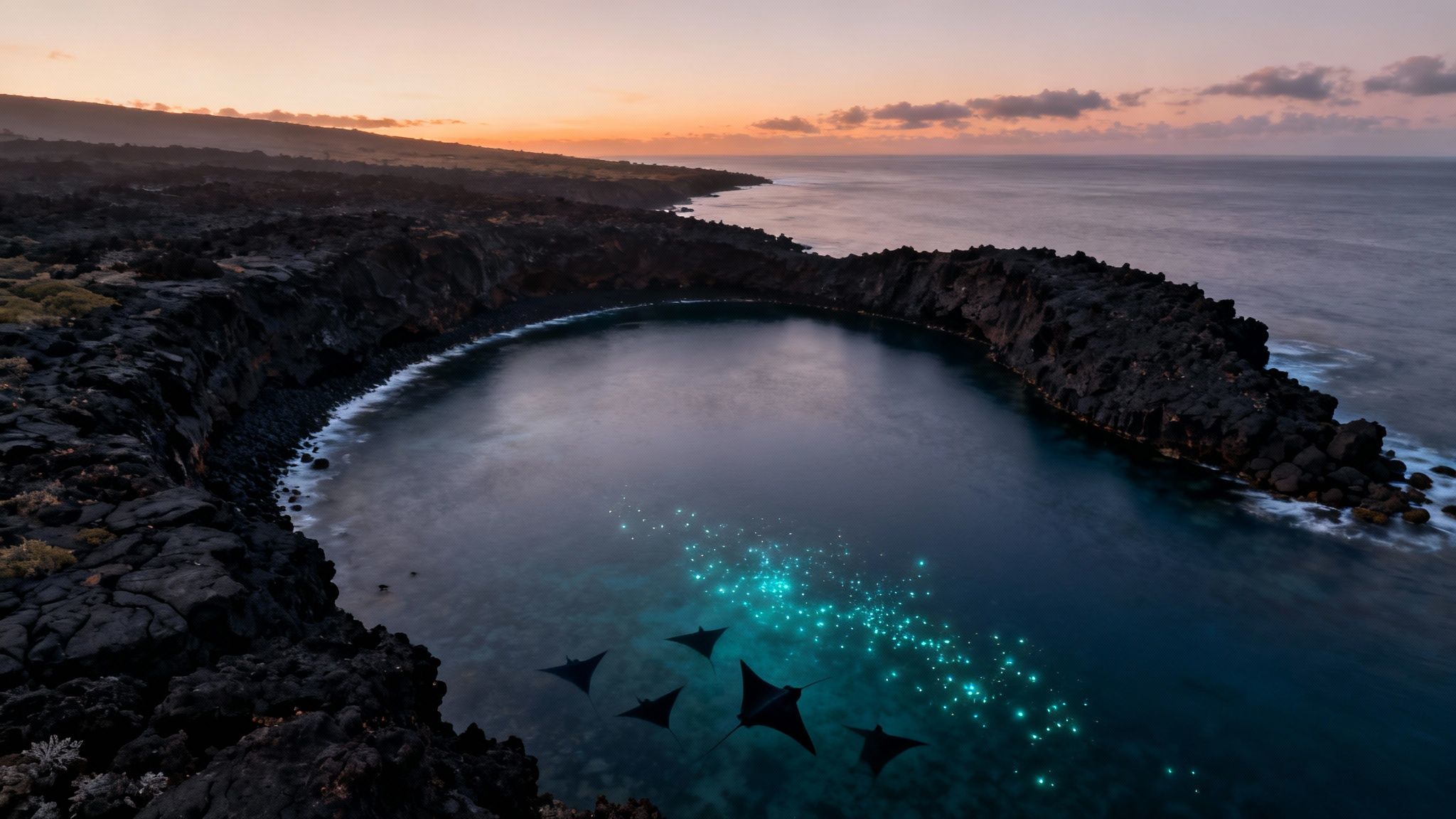
The Kona coast isn't just a pretty good spot to see manta rays—it's the world's most famous and reliable place for this exact encounter. And it’s no accident. A perfect storm of geography, biology, and even a little human ingenuity created the ideal setting for this incredible nightly show.
It really all comes down to the island’s volcanic past. Ancient lava flows sculpted the underwater terrain, creating sheltered bays and coves that are protected from the harsh currents of the open ocean. This gives us calm, predictable water that’s perfect for both divers and the marine life they come to see.
These bays are like a giant, well-stocked pantry for manta rays. The gentle water allows microscopic zooplankton, the mantas' favorite meal, to gather in huge numbers. Because there's a steady, year-round buffet, the mantas simply have no reason to go anywhere else. This is why the manta ray dive kona isn't a "maybe" or a seasonal thing—it happens every single night.
A Resident Population with Names
This non-stop food supply has convinced a whole population of reef manta rays to stick around. Unlike other places where you have to hope a migratory manta swims by, the Kona mantas are true locals. Researchers have been studying this group for years and have identified over 330 unique individuals. They can tell them apart by the one-of-a-kind spot patterns on their bellies, which are as unique as a human fingerprint.
Many of the regulars even have names, like "Big Bertha," "Lefty," and "Melainey." This long-term relationship between scientists, dive operators, and the mantas says everything about the health of this ecosystem. When you get in the water, you aren't just seeing a manta ray; you're meeting a neighborhood regular who's been showing up for dinner for years.
The fact that this resident population is always here is what makes the experience so dependable. The Kona coast is famous for its unique and highly reliable manta ray night dives, bringing in about 80,000 snorkelers and divers every year. These trips have an incredible success rate, often hitting 80-90% year-round, making Kona one of the very few places on Earth where you're almost guaranteed to see these amazing animals. To get a sense of just how big this adventure is, you can learn more about the unforgettable manta ray snorkel in Kona.
The Role of Conservation and Community
The success of the Kona manta ray dive is also a story about people doing the right thing. It all started decades ago when a hotel pointed lights into the water, unknowingly creating the first manta "campfire." Once local operators figured out what was happening, they built a sustainable model around the mantas' natural feeding habits.
Today, local operators follow a strict set of self-enforced rules to protect the animals. These guidelines dictate exactly how divers and snorkelers should act in the water, ensuring the experience is passive and doesn't disturb the mantas.
This commitment to conservation is what keeps the nightly buffet safe and reliable, giving the mantas every reason to keep coming back. It’s this fantastic balance between nature and responsible tourism that has made Kona the global destination for manta ray encounters. It's more than just a tour; it's a chance to see a thriving marine ecosystem that the local community works hard to protect.
Understanding Kona’s Gentle Giants
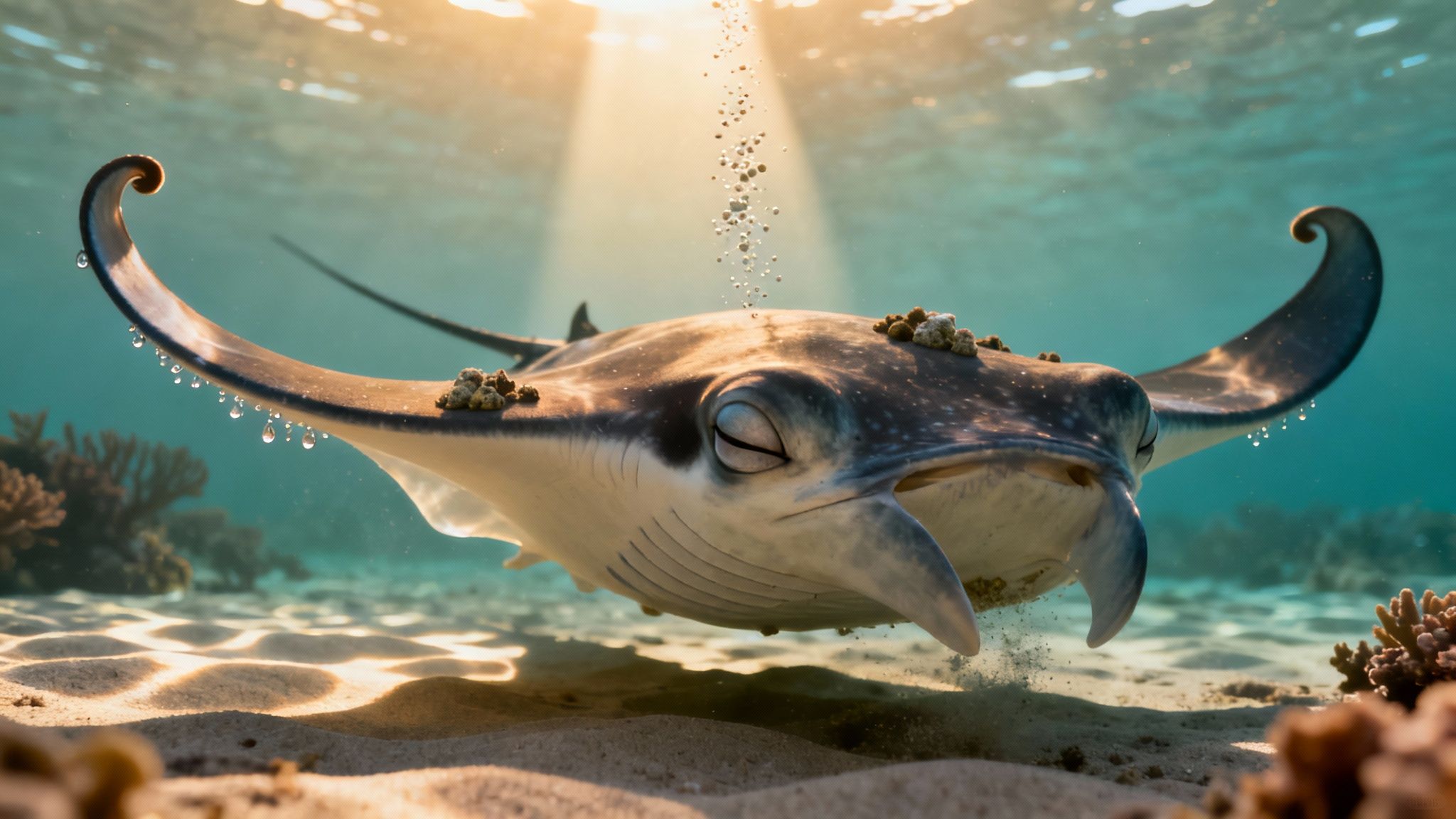
There's nothing quite like the moment a creature the size of a small car glides silently over your head. It’s a truly humbling experience. When you first see a Kona manta ray, its sheer size is breathtaking, but that initial shock quickly melts away, replaced by pure awe. Let's get to know these incredible animals, so you can go into your dive with fascination and respect, not apprehension.
First things first: they are called "gentle giants" for a very good reason. Despite their massive size, manta rays are completely harmless to people. They are filter feeders, which means their diet is made up of tiny plankton. You are not on the menu.
This simple fact is the secret behind the entire Kona manta ray night dive. The mantas cruise through the water with their cavernous mouths open, filtering out microscopic life. They don't have teeth for biting or stingers on their tails like their stingray cousins, and they aren't aggressive.
The Graceful Giants of the Reef
The mantas you'll meet are Reef Manta Rays (Mobula alfredi), the second-largest ray species in the world. Their scale is hard to comprehend until you see it firsthand, but what’s even more striking is how they move. They don't so much swim as they fly through the water, propelled by effortless beats of their huge pectoral fins.
The reef mantas here in Kona have an average wingspan of around 14 feet—that's wider than most cars! But again, there's zero physical threat. To learn even more about their biology, check out these fascinating manta ray facts before your Kona adventure.
Knowing this allows you to truly relax and soak in the experience without an ounce of fear.
To help you get acquainted, here's a quick rundown of what makes these creatures so special.
Kona Manta Ray Fast Facts
| Feature | Description |
|---|---|
| Species | Reef Manta Ray (Mobula alfredi) |
| Average Wingspan | 14 feet (4.2 meters) |
| Diet | Zooplankton (microscopic animals) |
| Threat to Humans | None. They have no stinger, barb, or teeth for biting. |
| Key Behavior | Graceful "barrel rolls" while feeding in light beams. |
| Conservation Status | Listed as "Vulnerable" by the IUCN. |
This table covers the essentials, but the real magic is seeing their unique feeding behavior up close.
The Mesmerizing Barrel Roll
The absolute highlight of the dive is watching the mantas feed. The bright underwater lights we set up attract huge clouds of plankton, and the mantas swoop in for the feast. To get as much food as possible in one pass, they perform a breathtaking maneuver: the barrel roll.
A manta will glide straight into the column of light and do a graceful, looping somersault, scooping up plankton the entire time. It's beautiful and incredibly efficient. When several mantas are feeding at once, it becomes a synchronized, swirling underwater ballet.
It's crucial to remember what you're seeing. The mantas aren't putting on a show for you; they are simply having dinner. This is why passive observation is the golden rule. By staying still and letting them come to you, you become part of the scenery, not a threat.
This perspective changes the encounter from a simple tourist activity into a genuine, respectful connection with wildlife.
When you understand their harmless nature, their diet, and why they behave the way they do, you develop a deep appreciation for them. It helps every diver and snorkeler realize we are guests in their world, which is key to ensuring these encounters remain safe and sustainable for generations to come.
How to Choose the Best Manta Ray Tour
With so many boats heading out each night for a manta ray dive kona, picking the right one can feel a little daunting. The trick is to look past the price and focus on what really matters: safety, respect for the mantas, and the overall quality of your time in the water. A bit of homework upfront makes all the difference.
The single most important thing is finding an operator who puts the mantas' well-being first. While the official Manta Ray Green List program isn't active anymore, its core principles are still championed by the best companies. They stick to strict guidelines for passive observation, which keeps the experience safe and stress-free for both the mantas and the guests.
What to Look for in a Tour Operator
When you're comparing your options, a few key things should jump out. For starters, smaller group sizes are a huge plus. It means you get a more intimate, less crowded view of the action and have better access to your guides.
You also want a crew that really knows their stuff. An experienced captain and divemaster don't just keep you safe; they make the entire trip better. They can answer your questions, point out cool behaviors, and make the complex logistics of a night dive feel totally effortless.
Here’s a quick checklist of what to look for:
- Eco-Friendly Practices: Do they brief you on the rules? Things like no touching, staying in your designated spot, and how the lights are set up are all signs of a responsible crew.
- Experienced Crew: Look for operators who have been doing this for years and have glowing reviews for their guides. On a night dive, experience is everything.
- Small Group Sizes: A lower guest-to-guide ratio almost always translates to a better, more personal experience with an unobstructed view.
- Safety Record and Equipment: Read reviews! Look for comments about safety briefings, the condition of the boat, and the rental gear. A great operator never skimps on safety.
Why Kona Honu Divers Stands Out
One company that consistently gets high marks across the board is Kona Honu Divers. They've built their reputation on a deep respect for the ocean, rock-solid safety protocols, and a genuine commitment to giving their guests a world-class experience. They get that a great manta ray dive kona is as much about respecting the ocean as it is about the thrill of seeing the mantas.
Their team is packed with passionate and knowledgeable pros who are dedicated to protecting the very ecosystem they're showing you. That commitment means every trip is run responsibly, helping preserve this incredible natural spectacle for years to come.
Of course, the best way to get a feel for a company is to hear from people who have been out with them.
Making the Right Choice for You
Ultimately, the "best" tour comes down to your own comfort level and what you're hoping to get out of the night. Whether you’re an experienced diver or this is your first time putting on a snorkel mask, there’s an amazing experience waiting for you. For a deeper look at the pros and cons, check out our guide on whether it's better to snorkel or dive with manta rays.
The right operator transforms a good trip into an unforgettable one. They handle all the details—from high-quality gear to expert guidance—so you can simply relax and immerse yourself in the magic of the underwater ballet.
Choosing a company like Kona Honu Divers means you're investing in a safe, ethical, and top-tier adventure. Their proven track record and focus on conservation make them a leading choice for anyone wanting to experience the best manta ray dive kona has to offer. You can book their award-winning manta ray dive tours directly and know you're in good hands.
How You Can Help Manta Ray Conservation
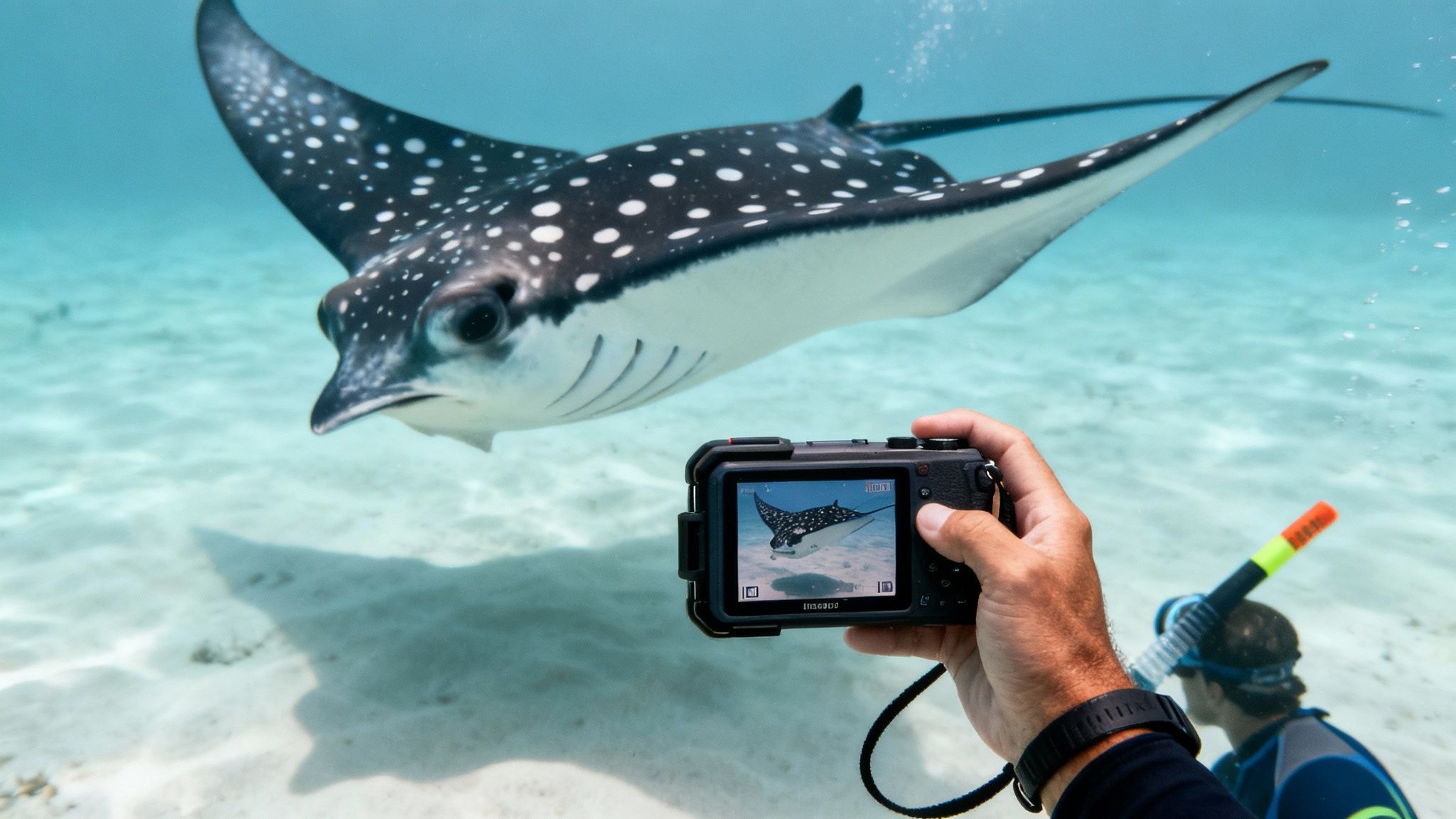
That incredible feeling of watching a manta ray glide inches above you doesn't have to end when you climb back on the boat. It can be more than just a memory; it can be your personal contribution to protecting these magnificent animals. You have a chance to step into the role of a citizen scientist and play a part in keeping Kona's gentle giants safe for years to come.
So, how does it work? It all comes down to the unique patterns on each manta ray’s belly. Think of the constellation of dark spots on their white undersides as a human fingerprint—no two are exactly alike. This natural marker is what allows researchers to identify, name, and track individual mantas throughout their lives.
Your Photos Are Valuable Data
Every clear picture you snap of a manta’s belly is a priceless piece of scientific data. When you submit those images, you’re helping researchers build a comprehensive database of the local population. This is the information they need to understand manta behavior, migration patterns, social circles, and overall health.
This citizen-driven approach has been a game-changer. Since 1991, divers just like you have been helping document and identify Kona's mantas by their spot patterns. Today, the database features over 330 unique manta rays, making this one of the most well-studied manta populations on the planet.
Simply by sharing a photo, you transform your dive from a spectator sport into a meaningful act of marine science. You're helping to write the life story of the very manta ray you just met.
How to Participate in Citizen Science
Getting involved is surprisingly easy. After your dive or snorkel, you can submit your photos and videos of the mantas' undersides to local research groups. Most of the top Kona dive operators, including our team at Kona Honu Divers, can point you in the right direction and show you exactly where to upload your shots.
To make your photo as helpful as possible for identification, keep these tips in mind:
- Clarity is Key: Make sure the spot pattern is as sharp and in-focus as you can get it.
- Get the Whole Picture: Try to capture the entire belly, from one pectoral fin all the way to the other.
- Note the Details: Don't forget to include the date, time, and specific location of your dive.
Even if you only manage a partial shot, don't discount it! It could be the final puzzle piece a researcher needs to confirm an ID.
Supporting Conservation Beyond Your Dive
Of course, data isn't the only thing conservation efforts need—they also run on awareness and funding. You can make a huge difference just by sharing your experience and telling others why it's so important to protect these vulnerable animals.
You can also support the non-profits and organizations working tirelessly on marine research to ensure their vital work continues. If you’re passionate about taking that support to the next level, understanding the financial side is a great start. You can explore different funding avenues by looking into the top grants for environmental nonprofits. Your passion can truly spark a ripple effect of positive change.
Getting Ready for Your Manta Ray Adventure
A little bit of prep work is what separates a good manta ray dive from an absolutely incredible one. When you know what to bring and how to act in the water, you can let go and just soak in the magic. It’s all about making sure you’re comfortable, safe, and respectful of Kona’s famous gentle giants.
Your biggest comfort-related hurdle? The boat ride back. Even in Hawaii, zipping across the water at night can get surprisingly chilly once you’re out of your wetsuit. A few simple items will make that return trip so much more pleasant.
What to Pack for the Boat
Thinking ahead means you can relax and just enjoy the main event. Your dive operator will handle all the heavy-duty dive and snorkel gear, but you’ll want to have a few personal things on hand for before and after.
Here’s a quick checklist to make sure you’re covered:
- A Towel: This is non-negotiable. You’ll need it to dry off.
- Warm, Dry Clothes: A hoodie, sweatshirt, or even a light jacket is perfect. Trust me, you’ll be so happy you have it for the ride back to the harbor.
- Reusable Water Bottle: Always a good idea to stay hydrated.
- Reef-Safe Sunscreen: This is mainly for those on a two-tank trip that starts with a late afternoon dive before the main manta event.
- Underwater Camera: If you want to capture the memory, bring your GoPro or camera. Pro tip: make sure it has a red light filter for better night footage.
Most boats provide snacks and drinks, so you can probably leave the food at home. While your operator has the essential equipment covered, you can get a better sense of what they'll provide by checking out this guide on the gear you will need for your Kona diving adventure.
The Golden Rule of Manta Interaction
The entire manta ray experience is built on a foundation of respect. There's one simple, unbreakable rule that ensures these amazing animals will continue to grace us with their presence for years to come: look, but don't touch.
Manta rays have a protective mucus layer covering their skin, which acts as their immune system, warding off infections. When a person touches them, that slime gets rubbed off, leaving them exposed to harmful bacteria and parasites. Passive observation isn't just a polite suggestion—it's critical for their survival.
Your divemaster will give you a thorough briefing, but the core idea is simple. As a diver, you'll have an assigned spot on the seafloor. As a snorkeler, you'll hold onto a floating light raft. Your job is to stay put, avoid chasing or blocking the mantas, and let them put on the show. Relax, and they will come to you.
Beyond the Mantas: An Even Wilder Night Dive
If you’re a certified diver and the manta dive ignites a love for Kona’s dark waters, the adventure doesn’t have to end there. For a completely different kind of thrill, you can try the Kona blackwater dive.
This is a truly advanced dive where you're taken miles offshore to drift in the deep, open ocean. Here, you'll witness the strange, bioluminescent creatures that migrate up from the abyss only under the cover of darkness. It’s a mind-bending experience that reveals a side of the ocean most people never see. To book this unique dive, check out the Blackwater Dive tour. And for other more experienced diving opportunities, consider an advanced dive tour.
Your Manta Ray Dive Questions Answered
Even after getting all the details, it's totally normal to have a few questions rattling around before you commit. Think of this as the final check-in, where we tackle the most common questions people ask before booking their manta ray dive in Kona. We want you to feel completely confident and ready for this incredible experience.
We’ve heard all the questions over the years, so let's get right to the ones that are probably on your mind.
When Is the Best Time of Year to See Manta Rays in Kona?
Here’s the fantastic news: there’s no bad time to see the manta rays in Kona. The population here is resident, which means they don’t migrate—they live here all year long.
Because the ocean conditions are so stable and the dive lights create a dependable food source, your odds of a spectacular encounter are incredibly high no matter when you visit. Tour operators consistently report success rates around 90% throughout the year, making this one of the most reliable wildlife adventures on the planet.
Do I Need Scuba Certification to See the Mantas?
Not at all! While getting scuba certified offers a pretty amazing perspective—sitting on the ocean floor and watching these gentle giants glide overhead—the snorkeling experience is just as breathtaking.
Snorkelers get to hang onto a custom-built float on the surface. This float is equipped with powerful lights that beam down into the water, attracting plankton like a magnet. The mantas swim right up to the surface to feed, often getting just inches away. You get a front-row seat to all the action without needing any certification.
Both diving and snorkeling offer jaw-dropping, up-close views of the feeding manta rays. The best choice for you just comes down to personal preference—whether you'd rather watch from the surface or from the seabed.
What Happens If No Mantas Show Up?
It’s extremely rare, but we have to remember these are wild animals, so a sighting can never be 100% guaranteed. The good news is that nearly every reputable tour operator in Kona understands this and offers some kind of "manta guarantee."
Usually, this means if your tour strikes out and doesn't see any mantas, you can go again on another night for free (just be aware it's based on availability). It's always smart to double-check the specific policy with the company you book with.
Is It Safe to Be in the Ocean at Night?
Yes, the Kona manta ray dive is a very safe and highly controlled activity. The dive sites are well-established, not too deep, and protected from major currents.
Every trip is led by professional divemasters and guides who know these waters like the back of their hand. They give everyone a detailed safety briefing and keep a close watch throughout the entire experience, creating a secure environment for everyone. For a lot of people, this turns out to be their first—and most unforgettable—night dive or snorkel.
Ready for the adventure of a lifetime? Kona Honu Divers offers a world-class, safe, and unforgettable manta ray dive tour that will leave you with memories to last forever.