
Imagine this: you're floating in the warm, dark Pacific Ocean. Suddenly, giant, ghost-like figures begin to glide and barrel roll just inches below you. It’s not a dream. It’s the world-renowned manta ray dive Kona, an experience that consistently tops the charts as one of the most unforgettable wildlife encounters you can have.
The World-Famous Kona Manta Ray Night Dive
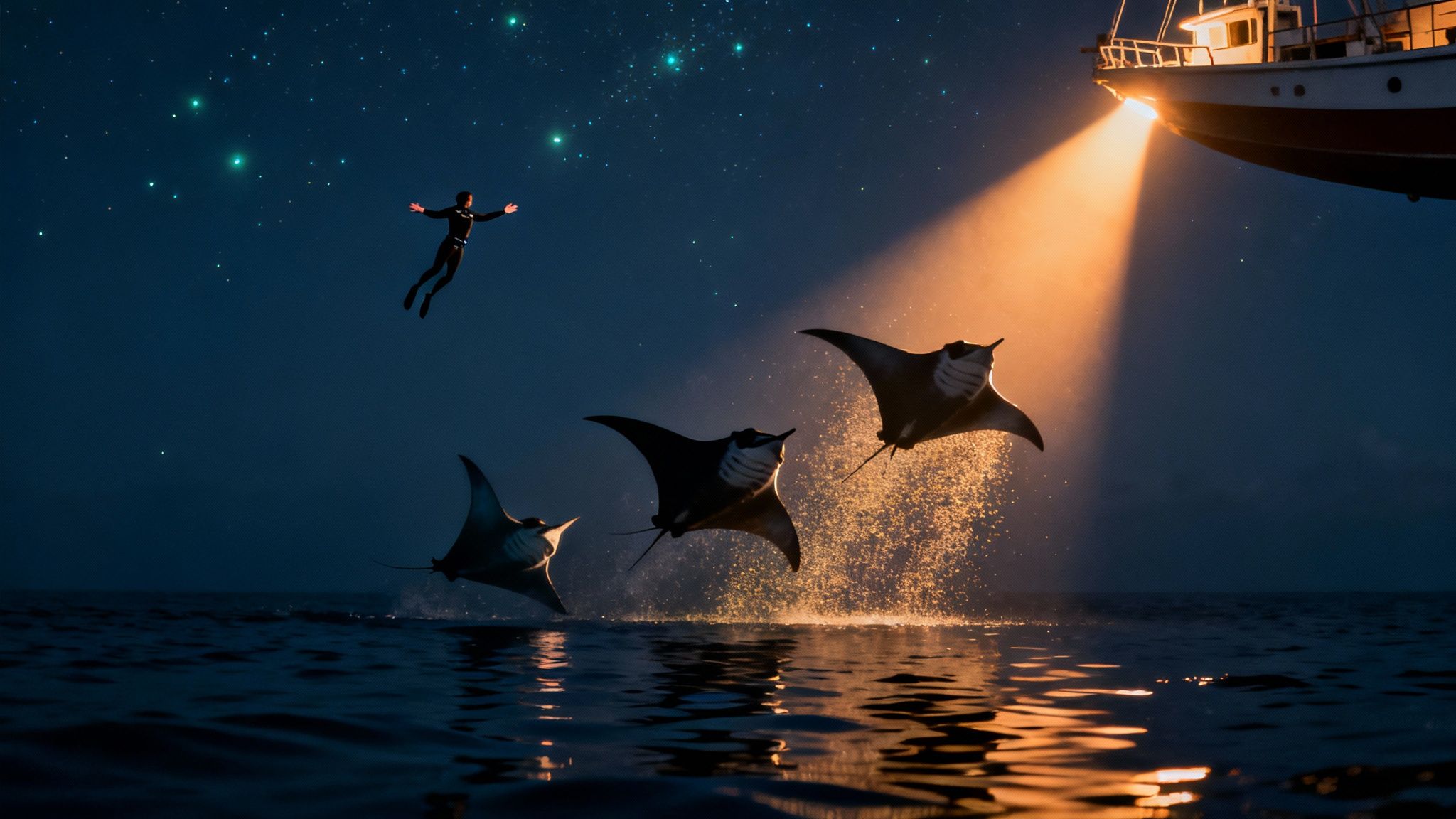
Off the Kona coast of the Big Island, a truly unique spectacle unfolds every single night—what many have called an "underwater ballet." The magic starts right after the sun dips below the horizon. That’s when powerful lights are submerged, lighting up the ocean floor and attracting swarms of plankton, the manta rays' favorite meal.
What happens next is nature’s most graceful feeding frenzy. Drawn in by the all-you-can-eat plankton buffet, giant manta rays emerge from the deep. They soar through the beams of light with their mouths wide open, performing a mesmerizing dance. They glide, swoop, and somersault in a silent, perfectly choreographed performance that will leave you absolutely breathless.
Why This Encounter is So Reliable
Since 2013, Kona has become famous for this incredible experience, drawing around 80,000 people each year. The real reason for its fame, though, is how incredibly consistent it is. Tour operators report a year-round success rate for manta sightings between 80-90%, making it one of the most reliable big-animal encounters on the planet.
This isn't just about watching marine life from a distance; it's about having a front-row seat to one of nature's greatest shows. Seeing the sheer size and effortless grace of these animals up close is a truly humbling experience. The thrill of a night snorkel with manta rays Hawaii is something you have to see to believe.
Here at Kona Honu Divers, our experienced crew is with you every step of the way, making sure your adventure is both safe and magical. We provide everything you need to witness this incredible sight, whether you're an experienced diver or trying snorkeling for the very first time. You can learn more about our manta ray dive tours and see what makes them so special.
Meet Kona’s Famous Gentle Giants
So, who exactly are these incredible animals you’ll be sharing the water with on your manta ray dive in Kona? These aren’t just any fish. They are intelligent, curious, and completely harmless giants, and watching them move through the water is an experience that stays with you forever.
The first thing you’ll notice is their size. It’s one thing to read about it, but it’s something else entirely to see a creature with a wingspan wider than a car glide right over your head. They move with such a slow, deliberate grace, more like an eagle soaring on the wind than a fish swimming in the sea. It's this silent, powerful presence that makes the whole encounter so special.
Understanding Kona's Manta Rays
The waters off the Kona coast are a magnet for manta rays. While two species are found here—the reef manta (Mobula alfredi) and the much larger oceanic manta (Mobula birostris)—your night dive will almost certainly bring you face-to-face with the resident reef mantas. These guys have an impressive wingspan averaging around 14 feet. For perspective, their oceanic cousins can stretch up to a jaw-dropping 22 feet across! The warm, plankton-rich waters of the Big Island are the perfect habitat, which is why Kona is one of the best places on the planet for this experience. You can discover more insights about these amazing creatures on seaquesthawaii.com.
One of the biggest myths we hear is that manta rays are dangerous. That couldn't be more wrong.
Manta rays are completely harmless to humans. They are filter feeders with no teeth, stingers, or barbs like their stingray relatives. Their only defense mechanism is their incredible speed to simply swim away if they ever feel threatened.
This gentle nature is why being a calm, passive observer works so well. When you relax and float still, their natural curiosity often takes over, and it's not uncommon for them to glide just inches away.
Individuals with Unique Identities
Here’s what makes the Kona dive truly unique: you're not just seeing random mantas. You're meeting specific individuals.
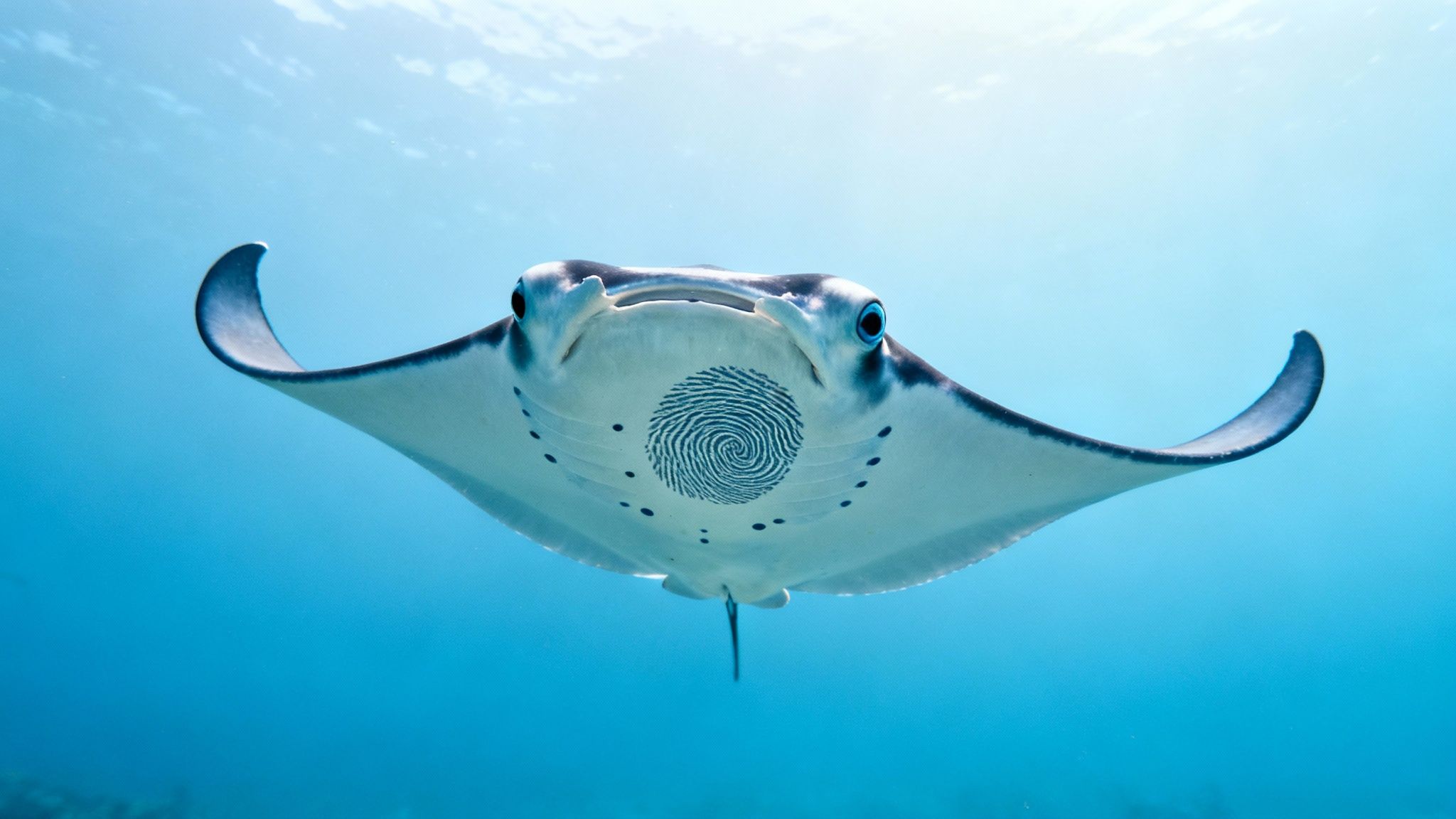
Local researchers and dive guides have gotten to know these animals so well that they can identify them by the unique spot patterns on their bellies, which work just like a human fingerprint.
That means each manta has a name and a story. You might get to see local celebrities like "Lefty," "Big Bertha," or "Koie." This turns a simple wildlife viewing into something much more personal. You're being introduced to a creature with a known history in these very waters.
Your Manta Ray Adventure From Start to Finish
So, what’s it really like to be in the water with these gentle giants? Knowing the play-by-play helps take the mystery out of the experience, letting you relax and soak in every incredible moment. Let’s walk through what a typical manta ray tour looks like, from leaving the harbor to that first awe-inspiring encounter.
Your adventure kicks off late in the afternoon at the harbor. After a quick and friendly check-in, you'll find your spot on the boat and we’ll head out along the breathtaking Kona coast. This boat ride is a treat in itself. Watching the Hawaiian sun dip below the horizon, lighting up the sky with fiery colors, is the perfect start to the evening.
As we cruise to the dive site, our crew will give you a full safety briefing. We'll cover everything—how to get in the water, what to expect, and the most important rule of manta etiquette: look, but don't touch. This ensures everyone, including the mantas, has a safe and respectful experience.
The Underwater Campfire
Once we anchor, the crew gets to work setting up what we call the "underwater campfire." This is the secret to the whole show. A powerful light source is carefully placed on the ocean floor, sending brilliant beams of light straight up towards the surface.
This light is like a dinner bell for plankton. Almost immediately, it attracts a thick, shimmering cloud of these microscopic creatures. With the buffet now open, the stage is set for our guests of honor.
Diving and Snorkeling Setups
This is where the experience splits, giving everyone the best possible view.
- Divers make their way down to the ocean floor. You'll find a comfortable spot in the sand to kneel or sit in a circle around the light, looking up in anticipation.
- Snorkelers stay on the surface, holding onto a specially designed light board. This board also shines light down, attracting plankton from above and giving you a bird's-eye view of the action.
No matter which you choose, you’re getting a front-row seat to one of nature’s most spectacular ballets.
Deciding between scuba and snorkeling really comes down to your comfort and certification level. Both offer an absolutely unforgettable view of the mantas. To help you choose, here's a quick comparison of the two experiences.
Manta Ray Encounter Options Comparison
| Feature | Scuba Diving Experience | Snorkeling Experience |
|---|---|---|
| Perspective | Bottom-up view; mantas glide directly overhead | Top-down view; watch the mantas swoop and feed below |
| Proximity | Mantas can get within inches as they feed | Mantas often come right up to the surface to feed |
| Equipment | Full scuba gear (BCD, regulator, tank) | Mask, snorkel, and fins |
| Certification | Open Water Diver certification required | No certification needed; basic swimming ability is sufficient |
| Physical Position | Kneeling or sitting stationary on the sandy bottom | Floating on the surface, holding onto a light board |
Ultimately, there's no wrong way to see the mantas. Whether you're looking up from below or down from above, the experience is equally mesmerizing and will stick with you for a lifetime.
The Grand Entrance
And then, it happens. Out of the dark, silent, graceful shapes begin to appear. The giant manta rays have arrived. They’re drawn in by that massive plankton feast you’ve helped create.
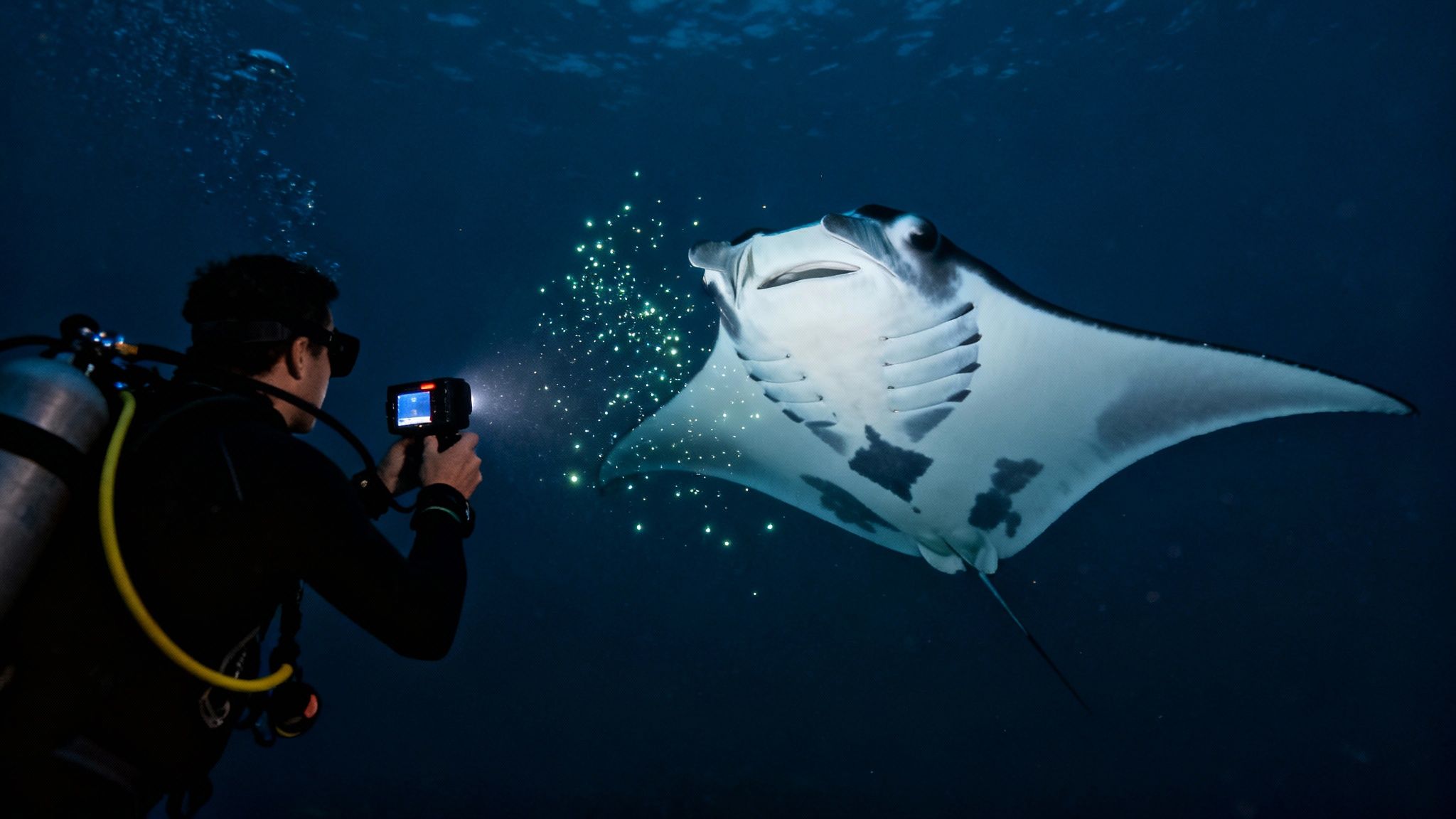
With their giant mouths open, they put on an acrobatic display, swooping, gliding, and doing barrel rolls right through the beams of light. It’s a powerful, humbling, and utterly moving thing to witness these massive animals soar just inches from your face. The only sounds are the quiet hiss of bubbles and the collective gasps of wonder from everyone in the water.
You'll spend about 45 minutes in the water with the mantas before climbing back on board for a cozy ride home. Wrapped in a towel, sipping on hot cocoa, and sharing stories under a sky full of stars—you’ll be replaying that incredible encounter over and over in your head.
It’s so much more than a tour. It’s a core memory in the making. For all the details on our trips, check out the 2-Tank Manta Dive & Snorkel tour page.
How to Prepare for Your Manta Ray Adventure
A little bit of prep work can make a world of difference between a good trip and an absolutely unforgettable one. When you've got the logistics handled ahead of time, you can relax and just soak in the magic of the underwater ballet without any distractions.
Most top-notch tour operators, like our friends at Kona Honu Divers, have you covered with all the essential gear. You can expect them to provide a nice thick wetsuit (the water gets cooler at night!), a mask, snorkel, fins, and the full scuba setup if you're a certified diver. They'll usually have some light snacks and drinks waiting for you back on the boat, too.
What to Pack
Throwing a small bag together with a few key items is a smart move. The name of the game is comfort, both before and after you hit the water.
- Swimsuit: The easiest thing to do is just wear it under your clothes when you show up. No changing in a tiny boat bathroom required.
- Towel: Seems obvious, but you’ll be glad you have a dry towel waiting for you.
- A Warm Layer: Even on a balmy Hawaiian evening, that boat ride back can feel surprisingly chilly once you’re wet. A sweatshirt or light jacket is your best friend.
- Reusable Water Bottle: Always a good idea to stay hydrated, especially before a big adventure in the ocean.
- Seasickness Medication: If you even think you might get seasick, it’s best to take something beforehand. The boat will be anchored, but there can still be a bit of a swell.
The Golden Rule: Look, Don’t Touch
If you take away only one thing from this guide, let it be this: passive observation is everything. We are guests in their world, and our job is simply to watch in awe. You must never, ever touch a manta ray.
Manta rays are covered in a delicate, protective mucus coating. It’s like their immune system, shielding them from nasty bacteria in the water. When a person touches them, that slime layer gets rubbed off, leaving them exposed to potentially serious infections.
By keeping your hands to yourself and simply observing, you're doing your part to protect these gentle giants. It ensures these incredible encounters can continue for generations to come, ethically and sustainably.
For certified divers, this experience is truly next-level. You’ll need at least an Open Water certification to join the scuba portion of the tour. And if you get hooked on night diving after the mantas (it happens!), you absolutely have to check out the famous Kona Blackwater Dive. It’s a completely different kind of thrill, like floating through outer space surrounded by bizarre deep-sea creatures. For more experienced divers looking for a challenge, Kona offers incredible advanced dive tours that explore deeper reefs and more remote locations.
Ready to book your front-row seat to one of nature's greatest shows?
How Your Dive Supports Manta Ray Conservation
Diving with manta rays in Kona is so much more than just ticking off a bucket-list item. It's a chance to actively participate in the conservation of these incredible animals. When you book with a responsible, eco-minded company, your dive adventure directly helps protect the mantas for years to come.
This kind of ecotourism sends a powerful message: these animals are worth far more to the local community alive and thriving than they are in any other capacity. It creates a sustainable economy built around protecting the mantas and their ocean home. Many dive operators even partner with research groups, essentially turning every trip into a mission for science.
Your Role as a Citizen Scientist
It might sound surprising, but the photos and videos you take on your dive are incredibly useful. Researchers use them to identify individual manta rays by the unique spot patterns on their bellies—think of it as a manta's fingerprint.
Every time a new manta is identified or a familiar one is re-sighted, it’s another piece of the puzzle. This data helps scientists track the population's health, figure out their social circles, and map their movements along the Kona coast.
This teamwork between divers, operators, and scientists provides a constant flow of information that would be almost impossible for researchers to gather on their own. It turns your dive from a simple sightseeing trip into a real contribution to marine science.
Decades of Dedicated Research
The effort to track Kona's manta rays is one of the longest-running studies of its kind on the planet. This amazing research project kicked off back in 1991 with the identification of the very first manta, a local legend named 'Lefty'.
Since then, the database has exploded. Researchers now have a catalog of over 290 unique individuals, built from nearly 6,000 reported encounters and more than 28,500 sightings. This massive amount of data gives us priceless insight into their lives. You can learn more about these long-term manta ray findings on mantarayadvocates.com.
Good tour operators are all-in on these conservation efforts and are the biggest advocates for rules that keep the mantas safe. Their dedication is what makes this magical interaction sustainable and respectful. To get a better sense of why these rules are so important, you can read an open letter regarding manta rules in Hawaii.
By choosing your tour carefully, you're supporting an entire system that puts the health of the ocean first, making sure this incredible experience will be around for a long, long time.
Choosing the Right Manta Ray Tour in Kona
With so many companies offering the world-famous manta ray dive kona, how do you pick the right one? This is probably the single most important decision you'll make, as it directly shapes your entire experience. Your choice determines the safety, ethics, and ultimate magic of the encounter.
Think of it this way: a great tour operator is your guide to another world. They need to have safety dialed in, of course—that means a stellar track record, professional guides who know these waters like the back of their hand, and boats and gear that are in top shape. But beyond the basics, you want a crew that’s genuinely passionate about marine life and committed to protecting the mantas.
Finding a Top-Tier Operator
When you start looking into different outfits, pay close attention to the ones that put education and conservation front and center. A truly great guide does more than just point and say, "There's a manta." They'll share fascinating details about manta behavior and explain why passive observation—just watching without interfering—is so crucial. This respectful approach is what separates a tourist attraction from a genuine, sustainable wildlife encounter.
One operator that consistently gets this right is Kona Honu Divers. They've built an incredible reputation for their professional crew and deep commitment to manta conservation. Their emphasis on smaller group sizes and guest education really elevates the experience, making it feel more personal and impactful. But don't just take my word for it—see what other divers have to say.
Of course, Kona is home to a handful of other fantastic dive shops. Companies like Jack's Diving Locker and Big Island Divers are also pillars of the local dive community, known for their professionalism and decades of experience. The best way to find the perfect fit for you is to dig into real customer feedback and see which company’s values and style resonate with you the most.
Taking a little time to choose wisely ensures your adventure is not only breathtaking but also contributes to the protection of Kona's magnificent gentle giants. And if this experience gets you hooked on exploring the Big Island's underwater world, there are plenty of other incredible Kona diving tours to check out.
Your Kona Manta Dive Questions, Answered
Planning a trip to see the mantas is exciting, and naturally, a lot of questions come up. It's a truly unique adventure! Here are the answers to some of the things we're asked most often to help you get ready for the experience of a lifetime.
Is the Manta Ray Dive Safe?
It’s incredibly safe. Your safety is the number one priority for any professional crew out on the water.
First off, the manta rays themselves are gentle giants. They're filter feeders, meaning they don't have teeth, stingers, or barbs. They are completely harmless to people. Before you even get your fins wet, your guides will give you a detailed safety briefing. They stick with you the entire time in the water, making sure everyone is comfortable and everything goes off without a hitch.
Do I Need to Be a Certified Scuba Diver?
Not at all! And that’s one of the best parts—this spectacular show is open to almost everyone, whether you’re a diver or not.
- Snorkelers get an amazing view from the surface. You'll hold onto a specially designed light board, which attracts the plankton, and watch the entire underwater ballet unfold just a few feet below you. It's like having a front-row seat from above.
- Scuba divers get to experience it from a different perspective, kneeling on the ocean floor and looking up as these massive, graceful creatures soar right over their heads.
What Is the Best Time of Year to See Manta Rays?
Honestly, any time is a great time. The Kona manta ray dive is famous for being one of the most consistent wildlife encounters on the planet, with a success rate of over 90% all year long. Our local manta population sticks around, so you don't have to worry about a "migration season." Whenever you’re visiting the Big Island, the mantas are likely here.
If you have more questions, this detailed Manta Ray FAQ is another fantastic resource.
Will I Get Cold During the Night Dive?
The water is surprisingly comfortable, and the tour operators provide you with a thick wetsuit to keep you warm while you’re watching the show.
What people often don't think about is the boat ride back to the harbor. After getting out of the water, the night air can feel a bit brisk. My pro tip? Always bring a warm, dry towel and a jacket or hoodie. You’ll be glad you have something cozy to wrap up in for the trip back under the stars.
Ready to witness the magic for yourself? Kona Honu Divers offers expertly guided tours that are safe, respectful, and absolutely unforgettable. Book your spot on our world-famous manta ray dive tour today.