
Ask anyone who's done it, and they'll tell you: the manta ray dive in Kona is hands-down one of the most incredible wildlife encounters on the planet. It's a night dive, but not just any night dive. This is a front-row seat to an underwater ballet, where massive, graceful reef mantas perform acrobatic barrel rolls just inches from your face, feeding on plankton drawn to the lights.
An Otherworldly Underwater Ballet
Picture this: you slip into the warm Pacific just as the sun dips below the horizon, painting the sky with its final fiery strokes. Below the surface, a circle of powerful lights transforms the dark seafloor into a brilliantly lit stage. This is the setting for the world-famous manta ray dive in Kona.
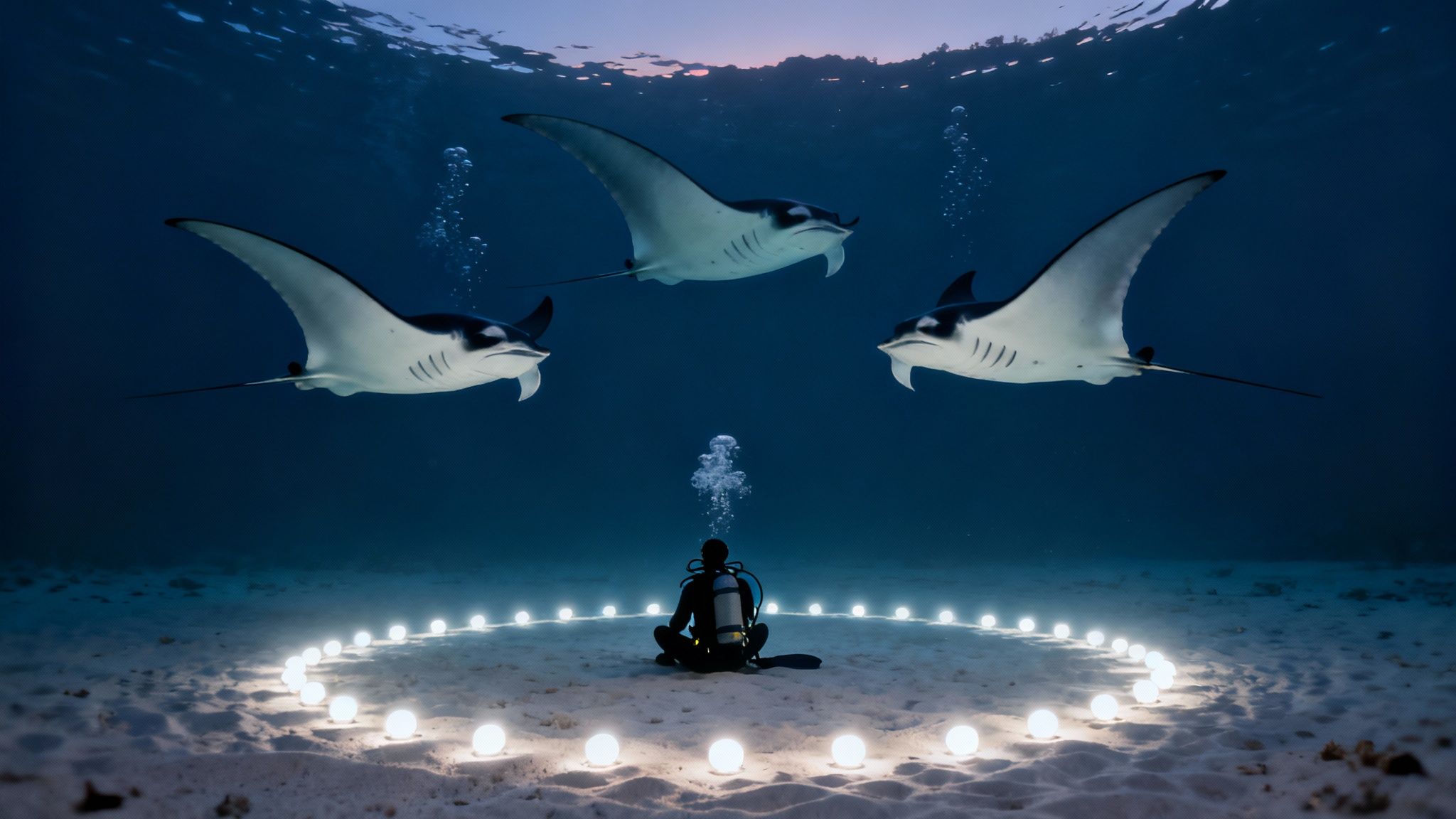
What happens next feels like something out of a dream. These gentle giants, some with wingspans stretching 12 feet, emerge from the blackness. They're drawn to the clouds of plankton congregating in the light beams, and they put on a show. The mantas glide, loop, and somersault with an elegance that defies their size, often getting so close you could almost touch them (but don't!). It's a surreal, peaceful, and absolutely thrilling experience all at once.
Why Kona Is The Manta Capital Of The World
There's a reason Kona, on the Big Island of Hawaii, has earned its reputation as the best place on Earth for reliable manta ray sightings. It's no accident. A perfect storm of geographic and biological factors has created a consistent, year-round feeding ground for these magnificent creatures.
The numbers speak for themselves. An estimated 80,000 people flock to the Kona Coast each year for this adventure, making it a true bucket-list item for ocean lovers. You can learn more about how this phenomenon has shaped local tourism by checking out the story at Kona Honu Divers.
Best of all, you don’t need to be an expert scuba diver to join in. Whether you're a certified diver wanting to sit on the ocean floor or a snorkeler holding onto a floating light board, you get an amazing view of the action.
The feeling of watching a massive fish the shape of a stealth bomber coming into vision is impossible to describe. It's a must-do experience that connects you directly with the ocean's magic.
Here's a quick look at what makes this dive so special.
Kona Manta Ray Dive At a Glance
This table gives you a snapshot of why the Kona Manta Ray Dive is a world-famous attraction, covering everything from who can participate to how likely you are to see these incredible animals.
| Aspect | Details |
|---|---|
| Activity Types | Scuba diving, snorkeling |
| Best Time To Go | Year-round; mantas are resident |
| Manta Wingspan | Up to 12 feet or more |
| Depth | 25-35 feet for divers; surface for snorkelers |
| Sighting Reliability | Very high, around 90% success rate |
| Annual Visitors | Approximately 80,000 people |
Simply put, the combination of accessibility and the sheer spectacle of the event makes it an experience you'll be talking about for years to come.
Ready to see it for yourself? Booking your spot is the first step toward an evening you will never forget.
Why Do Manta Rays Show Up in Kona Every Night?
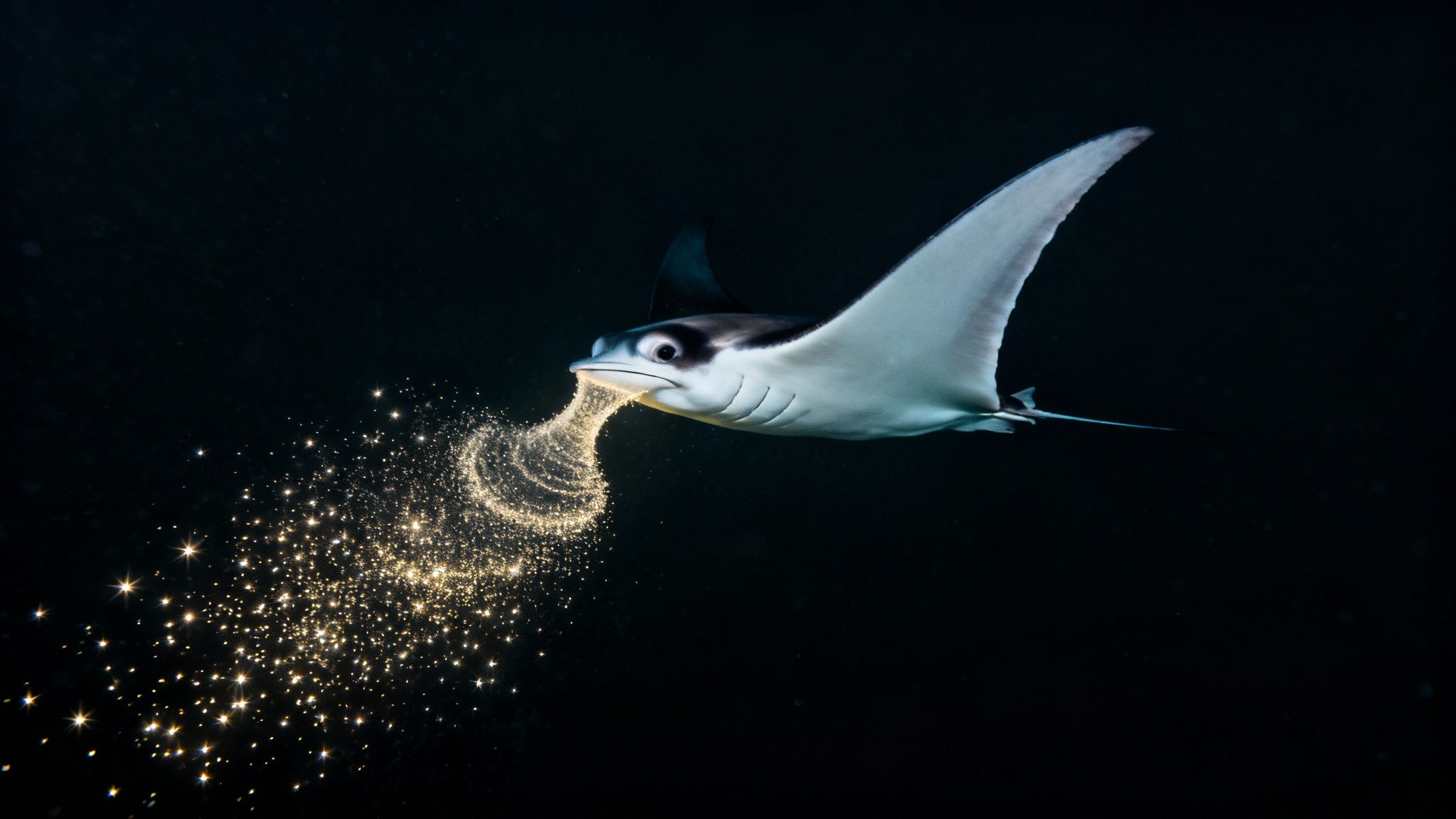
The nightly manta ray gathering in Kona isn't just a happy accident. It's an incredible story of learned behavior that’s been unfolding for decades—a perfect example of Pavlovian conditioning, but out in the wild.
Think of it as a massive, all-you-can-eat buffet that opens for business every single night. The main dish on the menu is zooplankton, microscopic creatures that manta rays love to eat. And these tiny organisms have one simple instinct: they're drawn to light.
Years ago, dive and snorkel boats started anchoring in the same spots and shining powerful lights into the ocean. This simple act created a dense cloud of plankton, basically ringing a dinner bell for any mantas nearby. The mantas figured it out pretty quickly. They learned that the bright lights meant a guaranteed, easy meal, and they’ve been coming back for it ever since.
Meet Kona's Resident Reef Mantas
The gentle giants you’ll see on a manta ray dive in Kona are a specific species called resident reef mantas (Mobula alfredi). They're the second-largest manta species on the planet, and some of the regulars here have wingspans stretching over 12 feet!
Unlike other mantas that roam the open ocean, Kona’s population tends to stick around the Hawaiian Islands all year. This is a huge part of why the sightings are so reliable. In fact, the local population is so well-known that many of the mantas have names. Researchers and guides can identify them by the unique spot patterns on their bellies, which are like human fingerprints.
It's worth clearing up a common misconception: manta rays are completely harmless. They are gentle giants that filter-feed on plankton. They have no teeth, no stingers, and no barbs—just pure, graceful curiosity that might bring them within inches of you.
When you understand what's really happening under the surface, the dive becomes so much more than a tourist attraction. You're stepping into a real-life display of animal intelligence and marine ecology. You get to witness a learned behavior that has created a one-of-a-kind connection between humans and wildlife. To see it for yourself, a manta ray dive tour is the way to go.
What to Expect During Your Manta Ray Adventure
Knowing what your manta ray tour will be like helps turn a good trip into a truly incredible one. From the moment you arrive to the final, breathtaking moments with these gentle giants, the whole experience is designed to be smooth, safe, and absolutely magical.
So, let's walk through what a typical evening looks like.
Your adventure kicks off with a detailed pre-trip briefing from the crew. This is where you'll learn all the essential safety procedures and get introduced to "Manta Manners." These are super important guidelines for interacting respectfully with the animals—like never touching them—to protect their delicate skin. It’s all about making sure both you and the mantas have a safe and positive encounter.
After the briefing, you’ll hop on the boat for a short, scenic ride to one of Kona's world-famous manta spots. The sense of anticipation really builds as the sun dips below the horizon, painting the Pacific with color. During the ride, the crew will help you get fitted with your gear and answer any last-minute questions, making sure you feel completely at ease before it's time to hit the water.
Your Underwater Perspective
Once the boat is anchored and the big lights are switched on, the show is ready to begin. There are two fantastic ways to experience this underwater ballet, and they cater to different comfort levels and certifications.
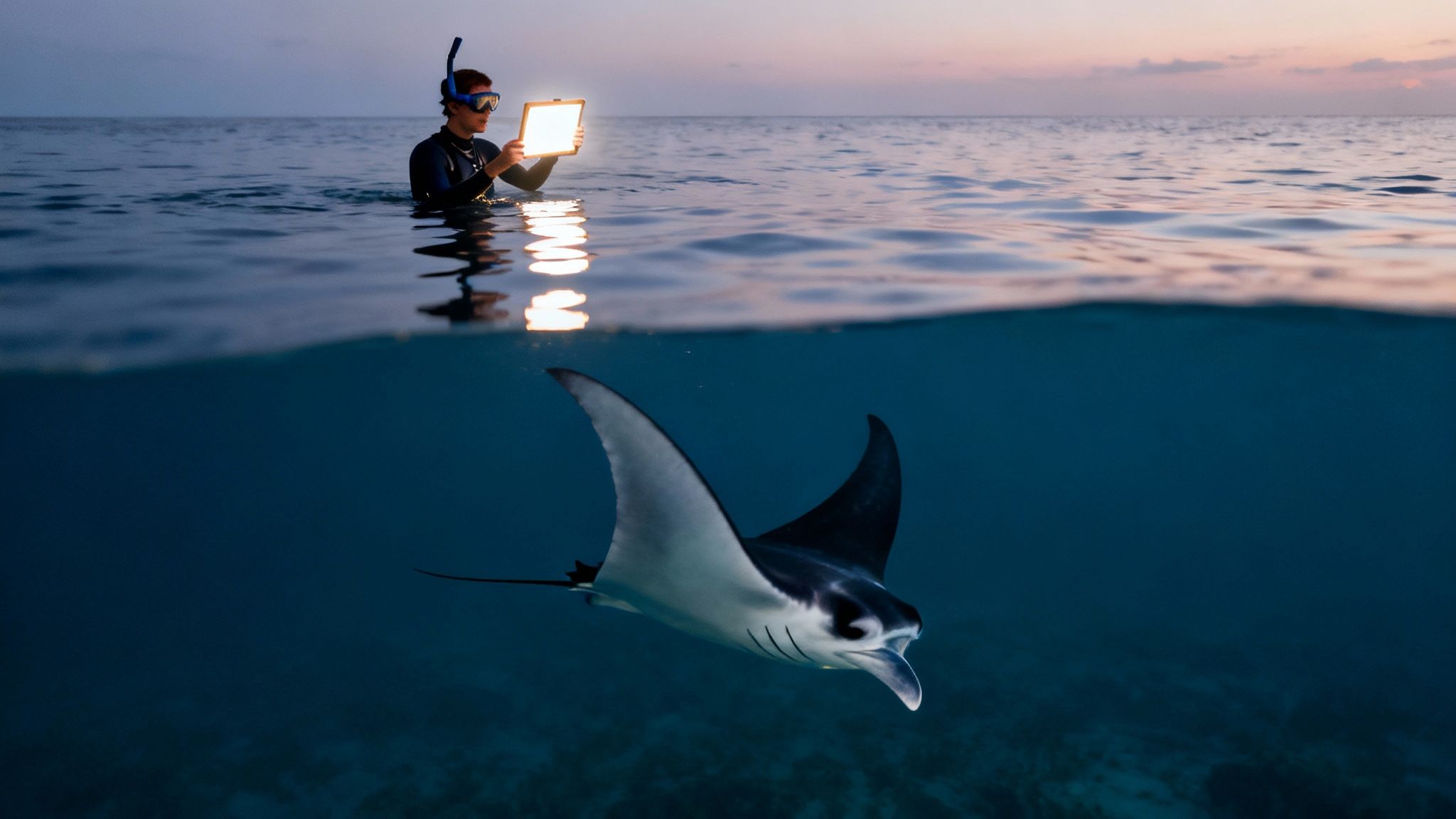
- For Snorkelers: You'll slip into the water and hold onto a specially designed floatation board equipped with high-powered lights. These lights shine down into the depths, attracting plankton to the surface. You just float comfortably, watching the mantas glide, swoop, and perform barrel rolls just inches below you. It's an unbelievably up-close view that requires no diving experience at all.
- For Scuba Divers: If you're a certified diver, you'll descend with a guide to the sandy bottom, usually around 25-35 feet deep. Down there, you'll settle into a designated spot, often in a semi-circle around a central light source nicknamed "the campfire." From this unique perspective, you look up as the mantas dance in the light beams above, silhouetted against the glow from the surface.
Both options offer absolutely breathtaking views. If you're trying to figure out which one is right for you, you can read more about the differences between snorkeling and diving with manta rays. No matter which you choose, the feeling of being that close to these majestic creatures is something you'll carry with you forever.
The moment that first manta ray appears out of the darkness is pure magic. It’s a quiet, almost surreal experience as they effortlessly glide through the light, holding everyone in the water completely spellbound.
This carefully structured approach makes the experience unforgettable for visitors while keeping the well-being of Kona's resident manta ray population the number one priority.
How to Choose the Best Manta Ray Dive Operator
Picking the right operator for your manta ray dive in Kona is hands-down the most important decision you'll make. It’s what separates a pretty good trip from a truly unforgettable—and safe—wildlife encounter. With so many boats heading out each night, how do you know which one to choose?
The best outfits put the health of the mantas and the safety of their guests above everything else. They don’t just know the Manta Ray Tour Operator Standards; they live by them. That means enforcing critical rules like keeping a respectful distance and absolutely no touching, which keeps the manta population healthy for generations to come.
Key Factors for Your Decision
When you're weighing your options, a few things really matter. First, look at the crew. You want experienced guides who are more than just dive masters—they should be genuine marine life nuts who can tell you the names and stories of the mantas you're meeting. That passion makes the whole experience richer.
The boat itself is a big deal, too. A comfortable, clean vessel with a hot shower waiting for you after a night dive is a game-changer. Finally, pay attention to group sizes. Smaller groups nearly always equal a better, more personal dive. You get more room to yourself and a clearer view of the underwater light show.
For a deeper dive, take a look at our complete guide on how to choose a Kona dive shop.
A great operator doesn’t just show you the mantas; they introduce you to them. Their commitment to conservation and education turns a simple tour into a real connection with the ocean.
Why Kona Honu Divers Stands Out
At Kona Honu Divers, we've built our reputation on an absolute dedication to safety, education, and delivering a world-class adventure. Our crew's expertise and genuine aloha spirit make sure every single guest feels safe and looked after, from the moment you step on board to the moment you leave.
The manta population here is one of the most reliable in the world. Local operators report successful sightings on 85–90% of all tours, which is incredible. On any given night, you might see anywhere from four to over twenty different individuals, a real testament to the health of this unique ecosystem. You can even nerd out on the data with Jack's Diving Locker's manta report.
But don't just take our word for it. See what other divers are saying about their nights with us.
When you're ready to dive with an operator that puts you, the mantas, and the environment first, booking your spot is easy.
Become a Citizen Scientist and Help Manta Rays
Your manta ray dive in Kona is more than just a spectacular show. It’s a genuine opportunity to pitch in as a citizen scientist and make a real difference for the animals you’ve come to see. Every dive, and every photo you snap, becomes part of a much bigger effort to research and protect these gentle giants.
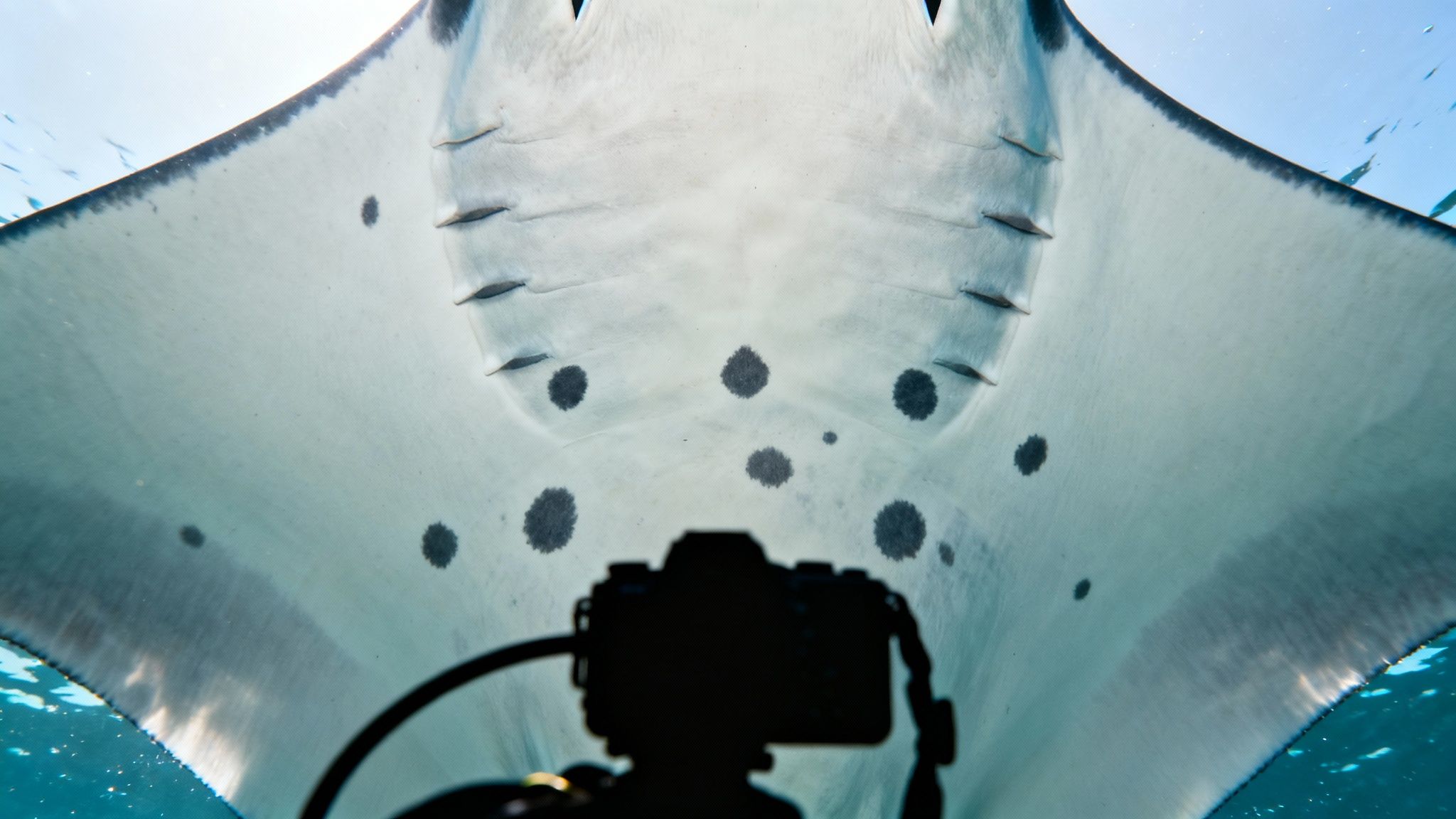
This whole effort hinges on a remarkable fact: every single manta ray has a completely unique pattern of black spots on its white belly. Think of it like a human fingerprint—no two are alike. This natural marker is what allows researchers, local dive guides, and even visiting divers to identify and track individual mantas over their entire lives.
Your Role in Manta Conservation
Once you're in the water, you'll probably hear your guides calling out the names of mantas as they swoop in, almost like they’re greeting old friends. They might point out local celebrities like "Lefty," "Big Bertha," or "Uhane." This is only possible because the entire Kona dive community is part of a long-running Manta Ray Identification Project.
The photos and videos taken by divers are the lifeblood of this research. When you submit a clear shot of a manta’s belly, you're providing a data point that helps scientists keep tabs on the health of the entire population. This information is used to understand:
- Population Size: Tracking how many individual mantas are visiting the area.
- Migration Patterns: Learning where they travel throughout the Hawaiian Islands.
- Behavioral Habits: Observing their social interactions and feeding routines.
- Injury and Healing: Documenting wounds from boat strikes or fishing line entanglement to better advocate for their protection.
This citizen science initiative turns everyone in the water from a spectator into a valuable contributor. Your dive directly helps ensure the future of Kona's beloved manta ray population.
Thanks to this community-driven program, the Kona Coast has become a global model for manta research. It all started way back in 1991 with the very first cataloged manta, the famous Lefty. Since then, the database has exploded to include over 330 uniquely identified mantas, all recognized by their spot patterns. Thousands of these sightings have been logged by divers just like you.
You can learn more about this incredible work and even browse the manta catalog at MantaRays.info. When you choose a responsible operator for your manta ray dive in Kona, you’re not just going for a swim—you’re supporting this vital conservation effort.
Planning Your Dive: What to Bring and When to Go
A successful manta ray dive in Kona is all about great planning. While Kona’s resident manta rays put on a show every night of the year, timing your visit can make a good experience a truly incredible one. For the best conditions, think summer.
From about April through October, the Pacific waters off the Kona coast are typically at their warmest and most tranquil. This season usually means fantastic visibility and smoother boat rides, which is a huge plus, especially if you're a first-time night diver or snorkeler.
Best Seasons for Your Manta Dive
Even though the mantas don't take a vacation, Hawaii's weather does have seasons that can stir up the ocean. The winter months, from November to March, sometimes bring bigger swells and choppier seas. It's not a deal-breaker, but it does increase the chance of a tour being canceled for safety.
While you can see mantas any night of the year, booking your trip between late spring and early fall gives you the best shot at calm, clear, and comfortable water.
To help you choose the perfect time for your trip, here’s a quick look at what the ocean is doing throughout the year. For an even more detailed month-by-month guide, be sure to check out our article on when to dive with manta rays in Kona.
Seasonal Diving Conditions in Kona
Here's a simple breakdown of the water temperature and surface conditions to help you plan your manta ray dive.
| Season | Water Temperature | Typical Sea Conditions |
|---|---|---|
| Summer (Jun-Aug) | 79-81°F (26-27°C) | Calmest seas, excellent visibility |
| Fall (Sep-Nov) | 78-80°F (25-26°C) | Generally calm, good visibility |
| Winter (Dec-Feb) | 75-77°F (24-25°C) | Can be choppy with larger swells |
| Spring (Mar-May) | 76-78°F (24-25°C) | Improving conditions, becoming calmer |
As you can see, the water is always warm enough for a great dive, but the surface can be a different story in the winter.
Your Essential Packing Checklist
Packing for your manta adventure is pretty straightforward, especially since we provide all the in-water gear. Still, bringing a few personal items will make your trip much more comfortable.
Here’s a quick list of what you should have in your bag:
- Swimsuit: The easiest thing to do is wear it under your clothes to the boat.
- Towel: You’ll definitely want this for drying off and warming up after your dive.
- Reef-Safe Sunscreen: If you're on an earlier charter, apply it before the sun goes down.
- Warm Layer: A hoodie or jacket is a game-changer for the boat ride back. Even on a warm night, the breeze can be chilly.
- Certification Card: Certified divers, don't forget it! You'll need to show proof of certification.
A professional operator will handle everything else—wetsuits, masks, snorkels, fins, and even some snacks and drinks.
Your Manta Dive Questions, Answered
It’s completely normal to have a few questions before embarking on an adventure like this. Let's clear up some of the most common ones to make sure you feel totally ready for your night with the mantas.
Is the Manta Ray Dive Actually Safe?
Absolutely. The first thing you should know is that these magnificent creatures are true gentle giants. Manta rays don’t have teeth, stingers, or barbs—they are peaceful filter feeders.
Every reputable tour operator in Kona is serious about safety. You'll get a thorough briefing before you even touch the water, and you'll be accompanied by experienced guides the entire time. They're there to make sure both you and the mantas have a safe, respectful, and incredible encounter.
Do I Have to Be a Certified Diver?
Not at all! You don’t need any scuba experience to witness this spectacle. Snorkelers get an equally amazing, if not sometimes better, view from the surface.
You'll hold onto a custom-built light board that floats on the water. These lights attract the plankton, which in turn draws the mantas right up to you. It's a brilliant system that makes the experience accessible to just about anyone, regardless of their diving credentials.
What Happens If No Mantas Show Up?
It's a valid question—after all, we're dealing with wild animals here. While the Kona coast has an incredibly high success rate (we're talking around 90% on most nights), sightings are never a 100% guarantee.
The good news is that most top-tier operators stand by their tours with a "manta guarantee." If your trip is one of the rare few where the mantas decide not to come out and play, they'll typically invite you back for another night, completely free of charge (though it's usually subject to availability). It’s their way of making sure you don't miss out on this truly magical experience.