
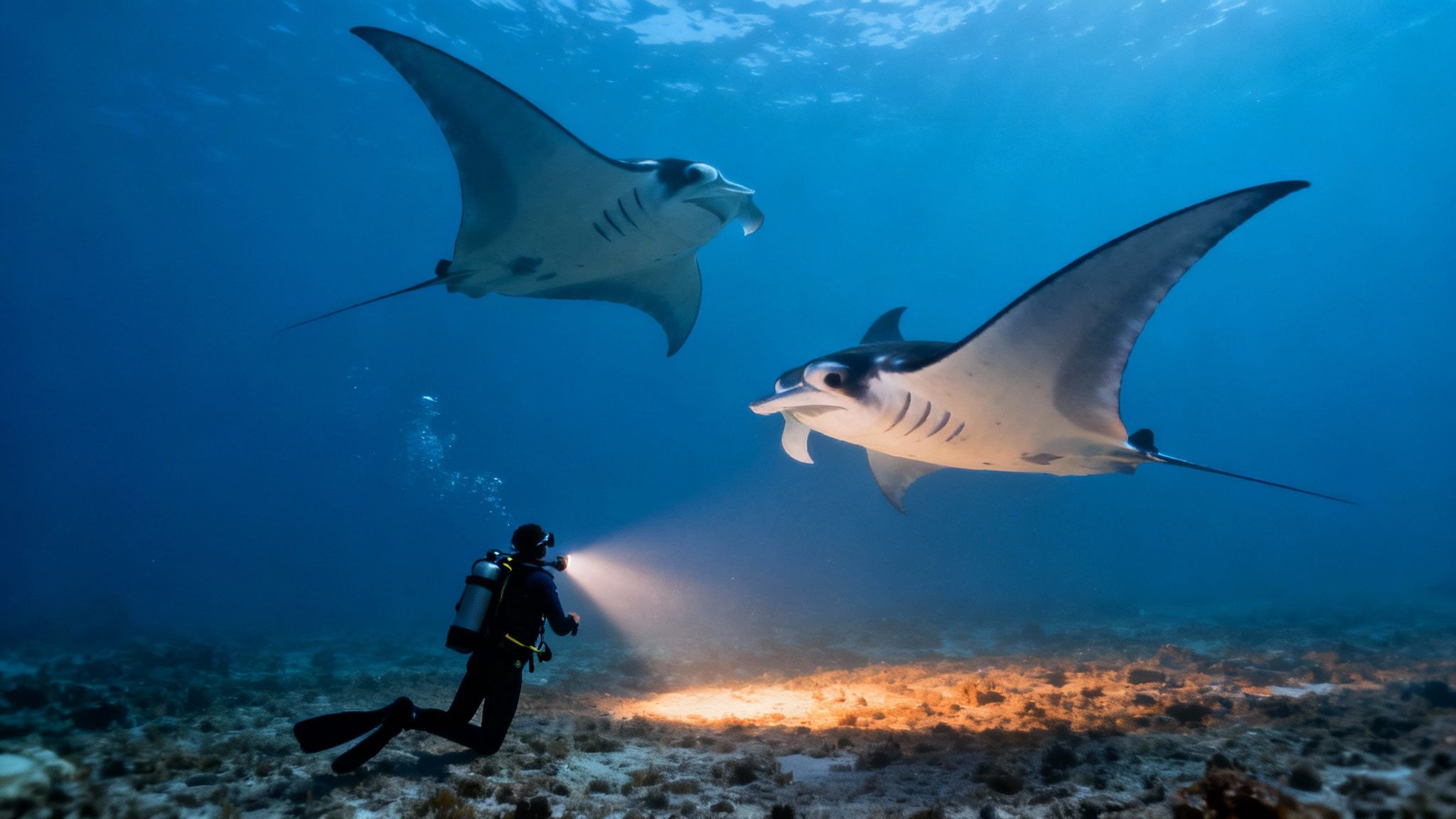
Picture this: you're weightless in the warm Pacific Ocean as giant, graceful manta rays glide inches from your face. Their movements are like an underwater ballet, and it's happening right in front of you. This isn't a scene from a nature documentary; it’s the magical reality of the manta ray dive in Kona, easily one of the planet's most awe-inspiring wildlife encounters.
The best part? This experience is incredibly reliable, with sighting success rates often soaring above 90% year-round.
Embark on Kona's World-Famous Manta Ray Dive
This guide is your complete playbook for this bucket-list adventure. We'll get into the science that makes this nightly spectacle happen, share practical tips for booking the right tour, and walk you through exactly how to prepare. By the end, you’ll see exactly why Kona is a global hotspot for these gentle giants.
Experiences like this are made possible by top-notch operators like Kona Honu Divers, who have perfected the art of creating safe, ethical, and unforgettable encounters. Their expert guides and genuine commitment to marine conservation ensure everyone—divers and mantas alike—is in good hands.
Why This Dive is a Must-Do
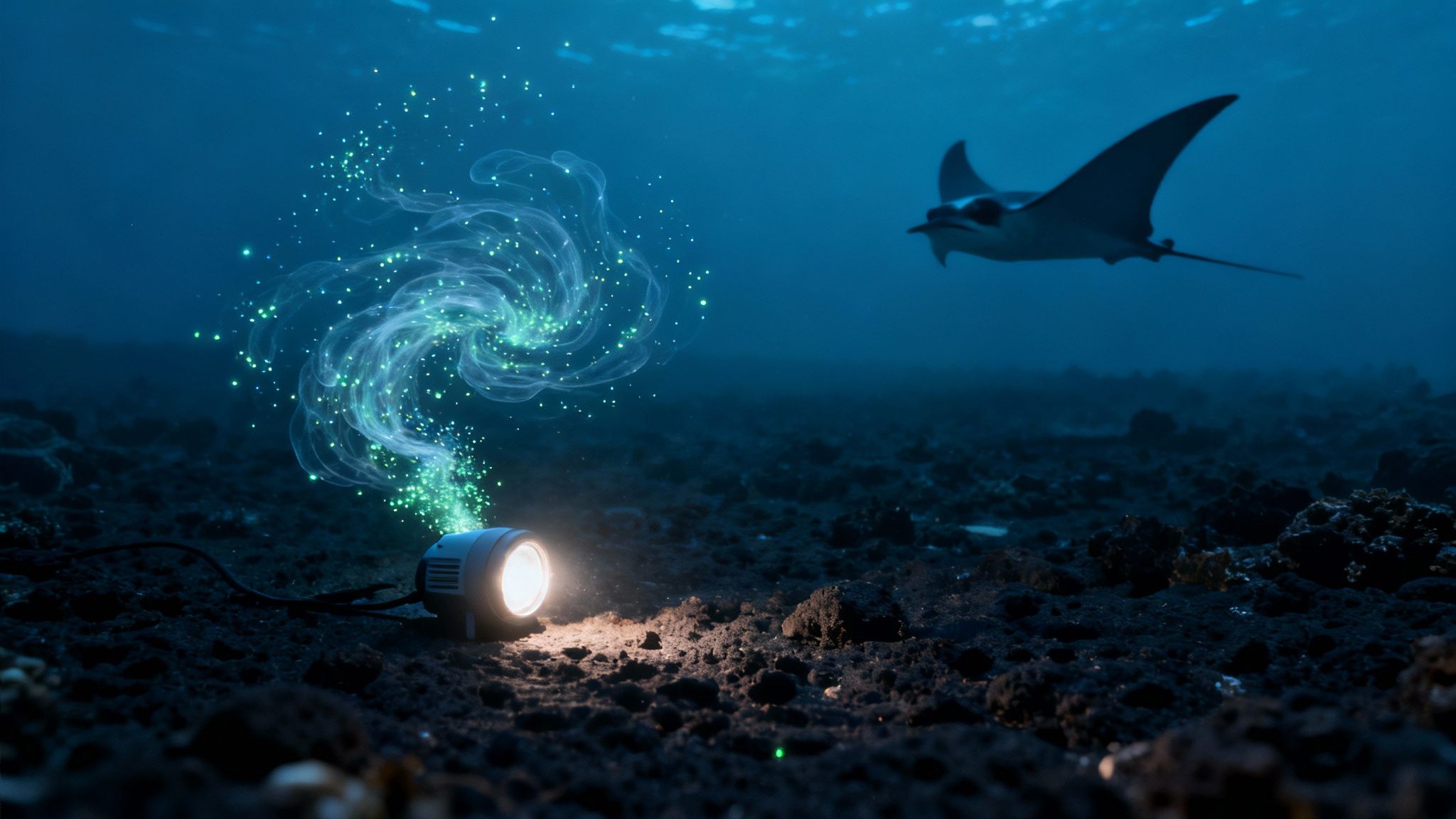
The Kona manta ray night dive isn't just an activity; it's a front-row seat to a mesmerizing natural performance. The whole thing hinges on a simple but brilliant concept. After the sun goes down, powerful lights are set up on the ocean floor, which attract huge clouds of plankton—the manta rays' favorite meal.
Essentially, the dive operators create a reliable, concentrated buffet that draws the mantas in for their nightly feeding.
This unique symbiosis between responsible tourism and a natural feeding cycle has made the Kona manta ray dive one of the most reliable and spectacular large-animal encounters in the world.
This setup lets you be a passive observer. If you're a certified diver, you'll settle on the sandy bottom. If you're snorkeling, you'll float on the surface, holding onto a light board. The mantas then perform effortless barrel rolls and graceful loops right through the light beams to scoop up the plankton, often coming within inches of you. It’s peaceful, mesmerizing, and an experience that will stick with you forever.
Kona Manta Ray Dive At a Glance
To give you a quick snapshot of what to expect on your adventure, I've put together a summary of the key details.
| Aspect | Details |
|---|---|
| Best Time to Go | Year-round experience with consistently high success rates. |
| Sighting Success | Extremely reliable, typically around 80-90%. |
| Primary Dive Sites | Manta Village (Keauhou Bay) & Manta Heaven (Garden Eel Cove). |
| Average Water Temp | Comfortable 75-80°F (24-27°C) year-round. |
| Who Can Participate | Certified scuba divers and snorkelers of all skill levels. |
This table should help you plan your trip with a little more confidence, knowing the basics before you even book.
Why Kona Is a Global Manta Ray Hotspot
There are beautiful dive spots all over the world, but Kona’s coastline is something special. It's hands-down one of the most reliable places on the entire planet to encounter manta rays, and it's no happy accident. This incredible nightly show is the result of a perfect marriage between unique marine ecology and decades of responsible tourism.
Think of it as a standing dinner reservation that the local manta rays almost never miss. The ocean currents along the Kona coast are naturally teeming with plankton—the mantas' absolute favorite food. This creates a dependable, year-round food source that keeps a resident population of rays right on our doorstep.
Over many years, local operators figured out how to ethically "set the dinner table." By placing powerful, eco-friendly lights on the seafloor (or on floating rafts for snorkelers), they create an irresistible beacon for plankton, and in turn, for the mantas.
The Science of the Spectacle
This simple yet brilliant setup works like a giant magnet for marine life. The bright lights attract massive clouds of microscopic zooplankton, essentially creating a concentrated, all-you-can-eat buffet in one predictable spot. Manta rays are incredibly smart, and they’ve learned that these lights mean an easy, guaranteed meal.
It's this nightly gathering that has made the manta ray dive Kona experience a world-famous phenomenon. As a diver or snorkeler, you become a motionless spectator to a breathtaking underwater ballet. You'll watch in awe as these gentle giants swoop, glide, and barrel-roll through the light beams, scooping up plankton with their cavernous mouths.
This unique, human-assisted feeding aggregation is what truly separates Kona from other manta destinations. You can dive deeper into what makes this spot unique in our guide on the best place to dive with manta rays.
A Cornerstone of Ecotourism and Research
The consistency of this encounter is just staggering. Manta ray sightings in Kona have a success rate of 80-90% year-round, which is almost unheard of for wild animal encounters. This reliability has become a cornerstone of the Big Island’s ecotourism, drawing around 80,000 people annually.
Sites like 'Manta Village' and 'Manta Heaven' are now legendary for this nightly spectacle. It's why so many people travel here specifically for this one adventure.
This incredible symbiosis between responsible tourism and a natural feeding cycle has turned Kona into a living laboratory for manta ray research and a world-class wildlife encounter.
This nightly event isn't just for tourists; it's a golden opportunity for science and conservation. Researchers and operators have been tracking individual mantas since at least 2013, identifying them by the unique spot patterns on their bellies—it’s like a fingerprint!
Some famous locals, like a massive female named 'Big Bertha,' have been returning to these feeding grounds for decades. This long-term monitoring gives scientists invaluable insight into manta behavior, population health, and the local marine ecosystem as a whole.
Choosing a reputable operator is key to ensuring this delicate balance is maintained. The best dive shops aren't just tour guides; they are stewards of this precious environment, actively participating in conservation and teaching visitors how to be respectful observers.
Where to Go: Choosing Your Kona Manta Ray Dive Site
When you start planning your manta ray dive in Kona, you’ll hear two names pop up again and again: Manta Village and Manta Heaven. Think of them as two world-class stages for the same incredible underwater show. Both are fantastic, but they offer distinctly different vibes. Picking the right one for you can make an amazing experience even better.
So, how do you choose? It really comes down to what kind of night you're looking for. One spot feels like a cozy, intimate theater, while the other is more like a grand, bustling arena.
Manta Village: The Intimate Theater
Just south of Kailua-Kona, tucked into the protected waters of Keauhou Bay, you'll find Manta Village. This is the original, the classic, the place where it all began. Because it's sheltered and relatively shallow, the conditions are almost always calm and predictable.
This makes Manta Village a fantastic option for:
- Newer Divers: If you're a bit nervous or just want to focus on the mantas without battling any current, this is your spot. The calm water lets you relax and just soak it all in.
- Snorkelers and Families: The gentle conditions are perfect for those on the surface and for groups with a mix of experience levels. Everyone can feel comfortable here.
- Photographers Needing Stability: Trying to get that perfect shot is a lot easier when you're not getting jostled around. The lack of surge provides a steady platform for great photos and video.
You might see a few fewer mantas here compared to the other site, but the encounters often feel more personal and up-close.
Manta Heaven: The Grand Arena
Head a bit north, just off the coast from the Kona Airport, and you'll find Manta Heaven (also called Garden Eel Cove). This site is a little more exposed to the open ocean, meaning the water can be deeper and the currents a bit more energetic. But that energy is exactly what can make it so unbelievably spectacular.
Manta Heaven often draws in huge groups of manta rays, creating a swirling, breathtaking ballet that's pure adrenaline. For more experienced divers who are comfortable with a little more motion in the ocean, this site can deliver a truly mind-blowing show.
Kona's dive sites, Manta Village and Manta Heaven, each offer something special. Manta Village in Keauhou Bay is the go-to for a serene experience perfect for all skill levels, especially beginners hoping to see the graceful 'manta ballet.' On the other hand, Manta Heaven’s deeper, more active waters often result in jaw-droppingly close encounters, making it a dream for seasoned divers and photographers. The best time to go is from April to October, when the water is a pleasant 75–80°F and you can expect to see an average of 8–12 mantas a night. You can get a better sense of the experience on Kona's premier manta dive.
At the end of the day, the choice is yours: Are you looking for a calm, predictable, and personal encounter? Or are you craving a high-energy spectacle with the biggest possible cast of mantas?
Honestly, you can't make a bad decision. The local operators for both sites are pros who put the safety of both divers and the mantas first. They know these waters inside and out and will get you the best seat in the house for one of the most magical experiences in the underwater world.
Preparing for Your Manta Ray Adventure
A little prep work can be the difference between a good trip and an absolutely unforgettable one. Getting ready for your manta ray dive Kona experience starts well before you ever set foot on the boat, and it’s the key to making sure everything goes smoothly, safely, and is just plain incredible.
The first, most important step? Booking with the right crew. You’ll want to find a reputable, Manta Ray Green Listed operator who genuinely puts the well-being of the mantas first. Companies like Kona Honu Divers have built their reputation on sustainable tourism, and that commitment makes all the difference.
Booking ahead is a smart move, as these tours are incredibly popular and fill up fast, especially during peak travel times. For more on timing your trip, check out our guide on when to dive with manta rays in Kona.
What to Bring on the Boat
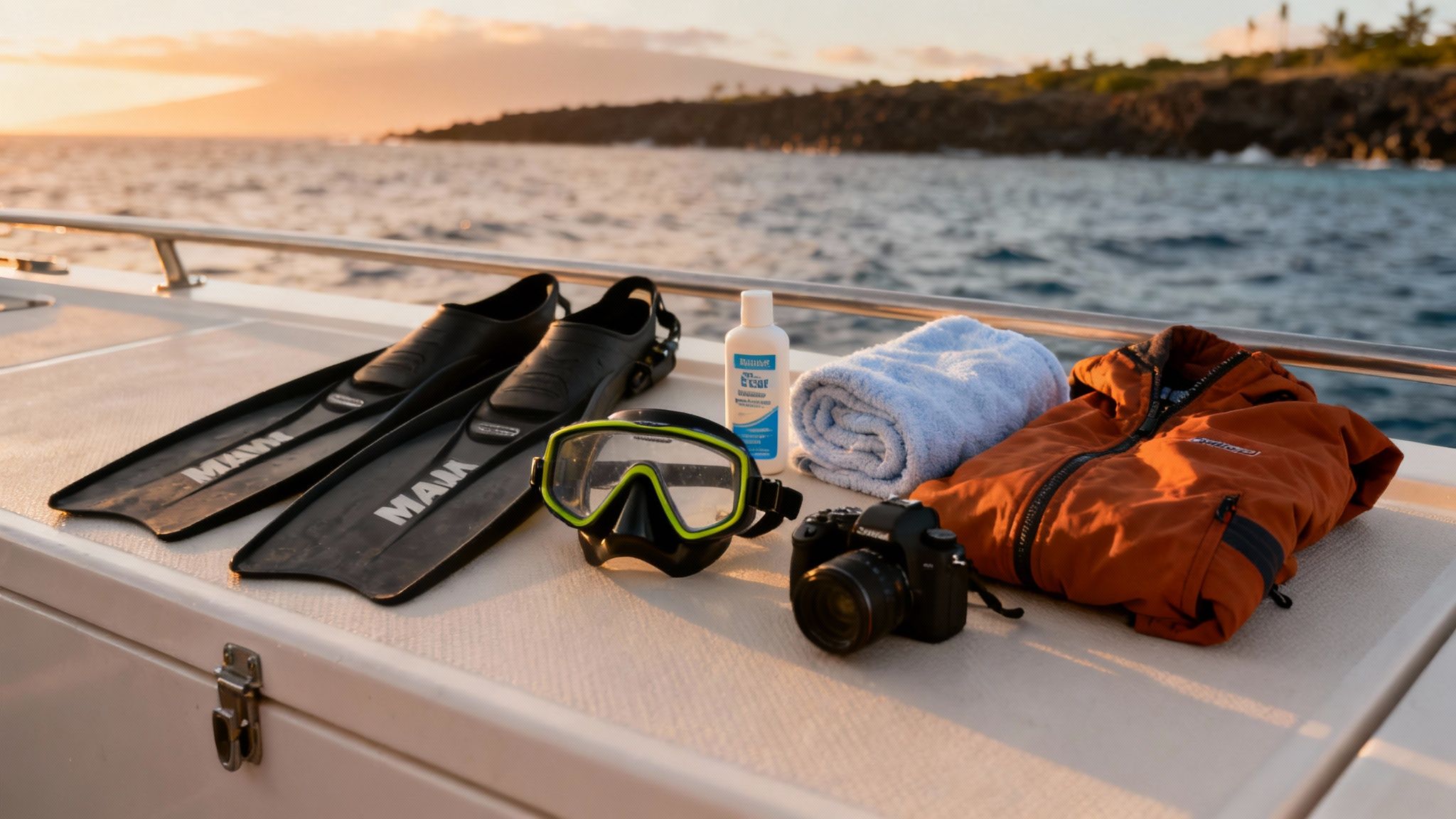
Once you're booked, it's time to think about packing your personal gear for the trip. The dive company handles all the heavy equipment, but a few small items of your own will make the adventure much more comfortable.
Here’s a quick checklist of what to throw in your bag:
- Reef-Safe Sunscreen: The Hawaiian sun is powerful, even in the late afternoon on the ride out. Protect your skin and the fragile reef by choosing a mineral-based sunscreen.
- A Towel and Warm Clothes: Trust me on this one. You’ll be so happy to have a dry towel and a warm sweatshirt for the boat ride back to the harbor. The air gets surprisingly chilly after you've been in the water at night.
- Reusable Water Bottle: Staying hydrated is always a good idea. Most operators have water, but bringing your own bottle is a great way to cut down on plastic waste.
- Seasickness Medication: If you even think you might get seasick, take some medication before you leave the dock. A larger, more stable boat can also make for a much smoother ride.
Understanding Dive Gear
Knowing what the tour provides versus what you might want to bring can help you pack light. Your operator will supply all the essential scuba or snorkel gear, which takes a huge weight off your shoulders (literally).
What Operators Typically Provide:
- Tanks and weights
- Buoyancy Control Device (BCD) and regulators
- A wetsuit (usually 3mm or 5mm, depending on the water temp)
- Mask, snorkel, and fins
- High-powered underwater lights to attract the plankton
What You Might Want to Bring:
- Your Personal Mask: If you have a prescription mask or just one that fits your face perfectly, bring it! A good, comfortable seal makes all the difference.
- Underwater Camera: You won’t want to miss capturing this. A GoPro or a similar camera that handles low light well is perfect for the job.
- Dive Computer: While your guide will be tracking everything, many certified divers feel more comfortable using their own computer to log their dive.
The All-Important Pre-Dive Briefing
Finally, the most critical part of your preparation happens right there on the boat: the pre-dive briefing. This isn’t just a formality—it’s absolutely essential for your safety and for the well-being of the manta rays. Your guide will walk you through the golden rules of passive observation.
The number one rule of a responsible manta ray encounter is to be a polite guest in their underwater dining room. That means no touching, no chasing, and never blocking their path as they glide by.
Listen closely during this briefing. You’ll learn exactly where to position yourself—whether on the sandy bottom as a diver or at the surface as a snorkeler—to get the most spectacular view without disturbing the animals. Following these simple rules ensures the mantas stay comfortable and relaxed, allowing them to perform their beautiful feeding ballet for many years to come.
What to Expect During the Dive Experience
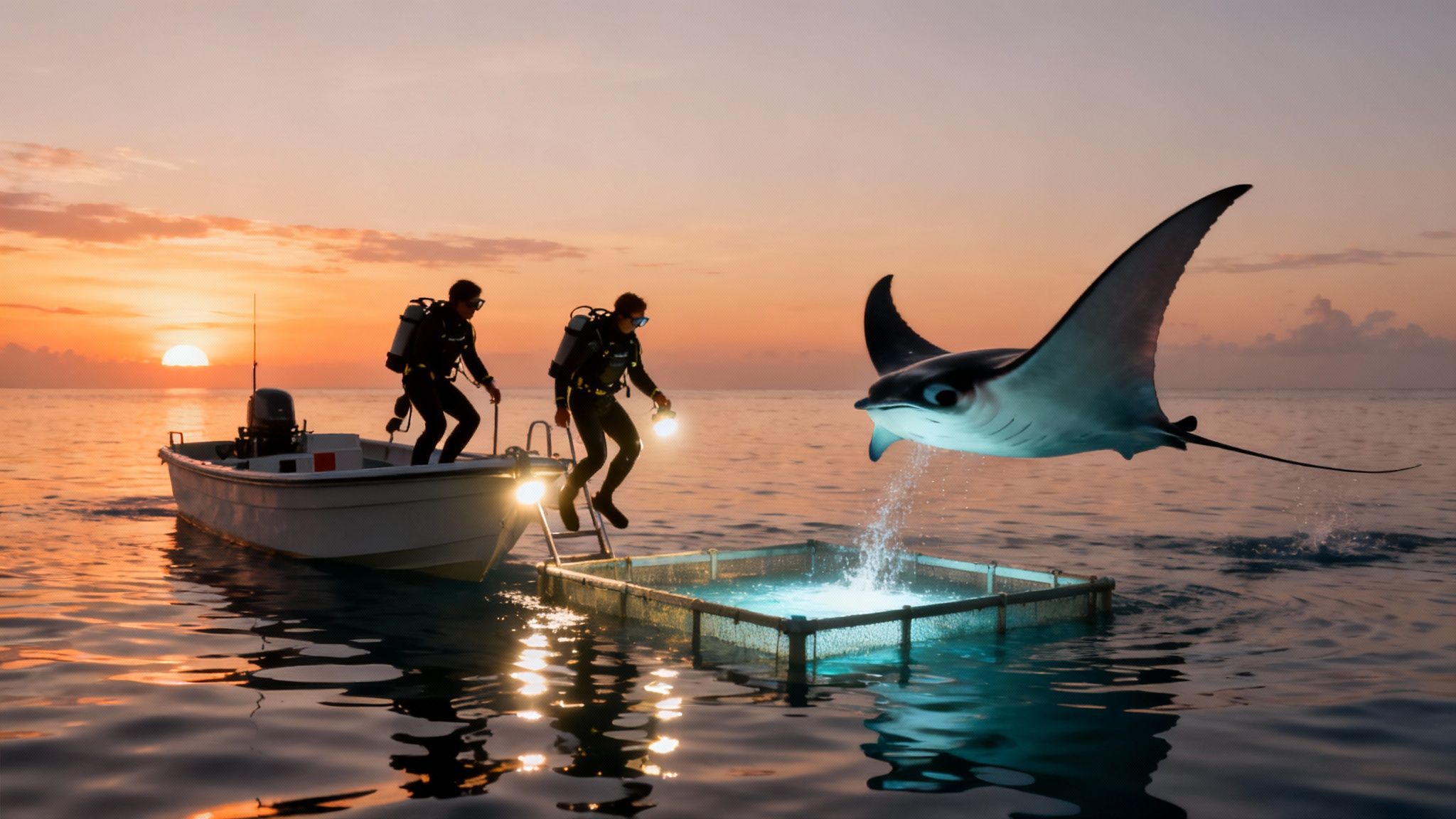
The build-up to the manta ray dive in Kona is half the fun. It all starts with a beautiful boat ride out along the Kona coast as the sun begins to set. Watching a Hawaiian sunset from the water is an experience in itself, and as the sky catches fire, your guide will walk you through the dive plan and final safety checks. There's a real buzz of anticipation in the air.
Once the sun dips below the horizon and the ocean turns from sparkling blue to a deep, mysterious indigo, it's time to gear up. You'll slip into the surprisingly warm Pacific waters just as the last hints of daylight fade. This is where the world you know disappears and a new one opens up.
Setting the Underwater Stage
After descending, your group will find a spot on the sandy ocean floor. This is where the crew sets up the main attraction: a powerful array of lights, often called "the campfire," that points straight up toward the surface. It cuts a massive, brilliant circle out of the darkness, creating an illuminated underwater stage.
This light isn't just for show. Its intense beam attracts countless microscopic plankton, which is exactly what the manta rays come here to eat. It's like turning on a giant neon "DINER OPEN" sign. As the plankton cloud thickens under the light, you’ll start to see massive, shadowy shapes moving just at the edge of the darkness. The show is about to start.
Your job? It's wonderfully simple: just be a calm, quiet observer. You'll kneel or sit on the sand, becoming part of the underwater landscape. Staying still helps the mantas feel comfortable, allowing them to carry on with their natural feeding ballet just feet, and sometimes inches, away from you.
It's a feeling of pure awe. You're not just watching a nature documentary; you're sitting in the middle of it, a silent guest at an ancient underwater feast.
The Manta Ballet Begins
Nothing prepares you for the moment the first manta ray glides into the light. A huge, impossibly graceful creature emerges from the dark, soaring on its massive wings. Before you know it, another joins, and then another, until the water above is a whirlwind of these gentle giants.
They perform a mesmerizing dance of barrel rolls and sweeping turns, their cavernous mouths open to scoop up the plankton-filled water. They'll swoop right over your head, so close you could almost touch them (but don't!). You can see their intelligent eyes seeming to look right at you before they bank and soar back up. It’s a completely immersive experience—the only sound is your own breathing as you watch these magnificent animals dance in the lights.
It’s this close, profound connection with such a wild and ancient creature that makes the manta ray dive in Kona an experience people never forget. And if you're hooked on night diving after this, the Kona Blackwater Dive offers a totally different kind of thrill, dropping you into the deep open ocean to find strange and beautiful bioluminescent creatures from the abyss.
Safety Guidelines and Manta Ray Conservation
A great manta ray dive in Kona isn't just about what you see; it's about how you see it. The best encounters are incredible for you and completely safe for the mantas. Think of yourself as a guest in their underwater dining room. Adhering to a few simple rules is your way of showing respect.
These guidelines aren't just about protecting the animals; they're about preserving this magical experience for everyone who comes after you.
The golden rule is simple: do not touch the manta rays. Ever. These gentle giants are covered in a special mucous coating that works like their immune system. When you touch them, you strip that protective layer away, leaving them open to nasty skin infections. It's like putting a crack in their armor.
To give everyone the best—and safest—view, dive operators have a clear set of rules. When you follow them, the mantas can relax and behave naturally, which is what gives you that unforgettable, up-close show.
Rules of Engagement for a Responsible Dive
The whole dive is set up to make you a passive observer. You essentially become part of the scenery, allowing the mantas to swoop and barrel-roll right over your head without feeling threatened.
Here’s what you’ll be asked to do:
- Stay Put: As a diver, you'll get settled on or near the seafloor. If you're snorkeling, you'll hold onto a lighted raft at the surface. This creates a stable, predictable environment for the mantas.
- Don't Block Their Path: The mantas have their feeding routes down to a science. It's so important that you stay out of their way. Never swim above, below, or in front of them to get a better look. Just let them come to you.
- Point Your Lights Up: Divers will shine their lights straight up towards the surface to draw in the plankton. Snorkelers' lights will point down. The one thing to avoid is shining a bright light or a camera strobe directly into a manta's eyes or mouth—it can really disorient them.
These simple acts of courtesy are the bedrock of all ethical scuba diving in Kona, Hawaii, helping us protect the reefs and all their amazing inhabitants. To learn more about being a great underwater guest, check out our guide on responsible and considerate diver etiquette.
Your Dive is a Contribution to Science
Believe it or not, your dive does more than just create lifelong memories. It actually contributes to vital conservation work.
Every single manta ray in Kona has a unique pattern of black spots on its white belly, just like a human fingerprint. This allows researchers to identify and track individual animals. This incredible monitoring project has been running since 1991, starting with the very first identified manta, a local legend named 'Lefty.'
The information gathered over the decades has been priceless. So far, the database includes nearly 6,000 reported encounters and over 28,500 individual sightings. Researchers now have a catalog of more than 330 unique mantas, which helps them understand behavior, track population health, and monitor the entire ecosystem. You can read more about these amazing discoveries and the ongoing research in Kona on Outrigger.com.
By choosing a good operator and following the rules, you become a citizen scientist for the night. Your respectful visit helps collect data that directly contributes to protecting Kona's beloved manta ray population.
Following these guidelines ensures every manta ray dive in Kona isn't just an adventure, but a positive force for conservation.
Answering Your Manta Ray Dive Questions
Even after you've planned everything out, a few questions might still be swirling around in your head. That's totally normal. The manta ray dive in Kona is unlike anything else, and being prepared means you can just relax and enjoy the show. Let's tackle some of the most common questions we get from both divers and snorkelers.
Think of this as the final briefing before you step on the boat, ready for one of the most incredible wildlife encounters you'll ever have.
Do I Need to Be a Scuba Diver to See the Mantas?
Absolutely not! Snorkeling is an equally breathtaking way to witness the manta ballet. You'll float comfortably at the surface, holding onto a specially designed light board.
These powerful lights illuminate the water below, attracting the plankton that manta rays feed on. This brings the mantas right up to you, sometimes gliding just inches beneath the surface. It’s a fantastic option for non-divers, families, and anyone who wants to see these amazing creatures up close without the scuba gear.
Is the Manta Ray Night Dive Safe?
Yes, it is incredibly safe, especially when you choose a professional, experienced operator like Kona Honu Divers. They have certified guides in the water with you, run through a detailed safety briefing before the dive, and make sure everyone follows strict guidelines for respectful interaction.
These dive sites are well-established and have a stellar safety record. Besides, manta rays are true gentle giants. They have no teeth, no stingers, and no barbs—they are completely harmless and are only interested in the plankton.
What Happens If No Manta Rays Appear?
This is a great question. While sightings are incredibly consistent—often with a 90% success rate or higher—these are wild animals, and their appearance is never a 100% guarantee. Any reputable operator will be upfront about this.
Most top-tier companies, including Kona Honu Divers, offer a "manta guarantee." If your tour doesn't have a manta sighting, they'll usually let you come back on another night for free (subject to availability). It’s always smart to double-check the specific policy when you book your manta ray dive tour.
What Other Advanced Diving Is Available in Kona?
Kona is a diver's paradise with something for every experience level. If you're an advanced diver looking for another unique thrill, the Kona Blackwater Dive is an absolute must. You'll drift in the deep, dark open ocean at night, watching bizarre and beautiful bioluminescent creatures rise up from the abyss. It’s otherworldly.
Beyond that, there are fantastic advanced dive tours that take you to deeper reefs, through intricate lava tubes, and along dramatic underwater walls where you can spot sharks, turtles, and massive schools of fish.
Ready for your own unforgettable underwater adventure? At Kona Honu Divers, we're passionate about sharing the magic of Kona's marine world safely and responsibly.