
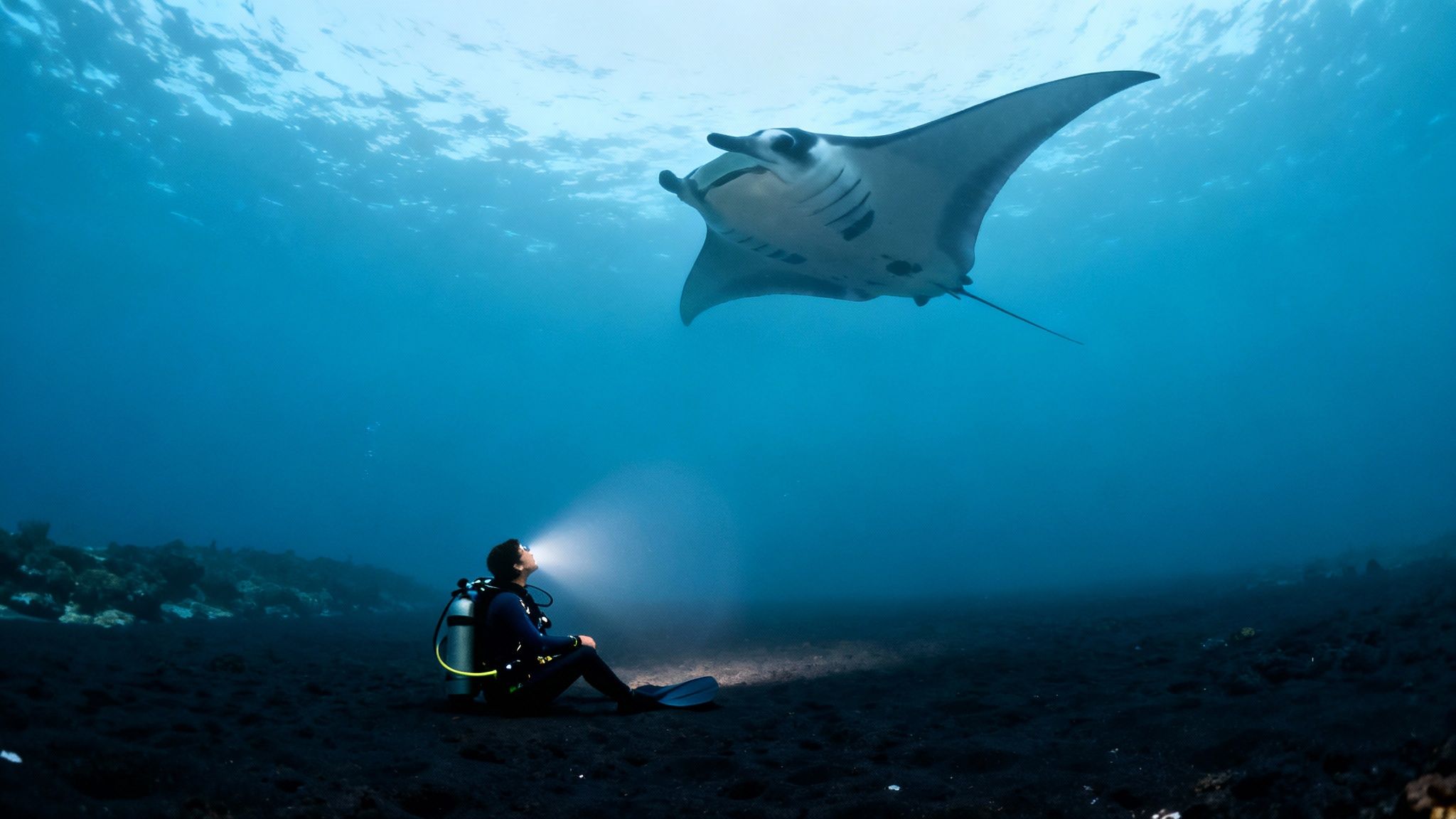
The manta ray night dive in Kona isn't just another dive; it's consistently ranked as one of the most unforgettable underwater encounters on the entire planet. Imagine being in the water with gentle giants as they glide, loop, and feast on plankton drawn to underwater lights. It’s an otherworldly ballet, and it happens almost every single night off the Big Island's coast.
This experience is so reliable and breathtaking that it has become a true must-do for anyone visiting Hawaii.
Your Essential Guide to the Kona Manta Ray Night Dive
Picture this: you're floating in the warm, dark Pacific Ocean. Suddenly, a massive, graceful creature with a wingspan of up to 18 feet swoops in, performing an aquatic dance just inches from your face. This isn't a scene from a documentary—it's the reality of the manta ray night dive in Kona.
What makes Kona so special? In many parts of the world, seeing a manta ray is a lucky break. Here, the encounters are so consistent that they're practically guaranteed. This guide will walk you through everything you need to know to plan this magical adventure, from picking the right tour operator to understanding the gentle nature of these magnificent animals.
Planning Your Adventure
Let's start with a quick overview to get you oriented. Whether you're a seasoned scuba diver or have never even worn a snorkel mask, there’s a way for you to experience this. For a comprehensive look at the snorkeling side of things, this Ultimate Guide to the Kona Manta Ray Night Snorkel is an excellent resource.
Here's a snapshot of the key details to help you start planning.
Kona Manta Ray Dive At a Glance
| Aspect | Details |
|---|---|
| Best Time to Go | Year-round with an incredible 80-90% success rate. Summer has warmer water. |
| Activity Options | Scuba Diving (for certified divers) or Snorkeling (for all experience levels). |
| Key Locations | Manta Village (near Keauhou Bay) and Manta Heaven (near the airport). |
| What to Bring | Swimsuit, towel, and a warm jacket for the boat ride back. |
| Interaction Rules | Passive observation only. No touching, chasing, or blocking the mantas. |
Our goal here is to give you the practical info you need to book your trip with total confidence. By following the local guidelines, we ensure this incredible encounter remains safe for both people and the mantas, protecting this natural wonder for years to come.
Ready to dive deeper? Let's get into the specifics so you're fully prepared for the adventure of a lifetime.
What Makes the Kona Manta Ray Dive So Special?
The manta ray dive kona isn't just another square to check off on a diver's bucket list; it's a world-famous phenomenon. Sure, you might get lucky and see a manta ray in other tropical waters, but what Kona offers is something else entirely: incredible reliability. The success rate for spotting these gentle giants here is around 90% year-round, a kind of consistency you just won't find anywhere else on the planet.
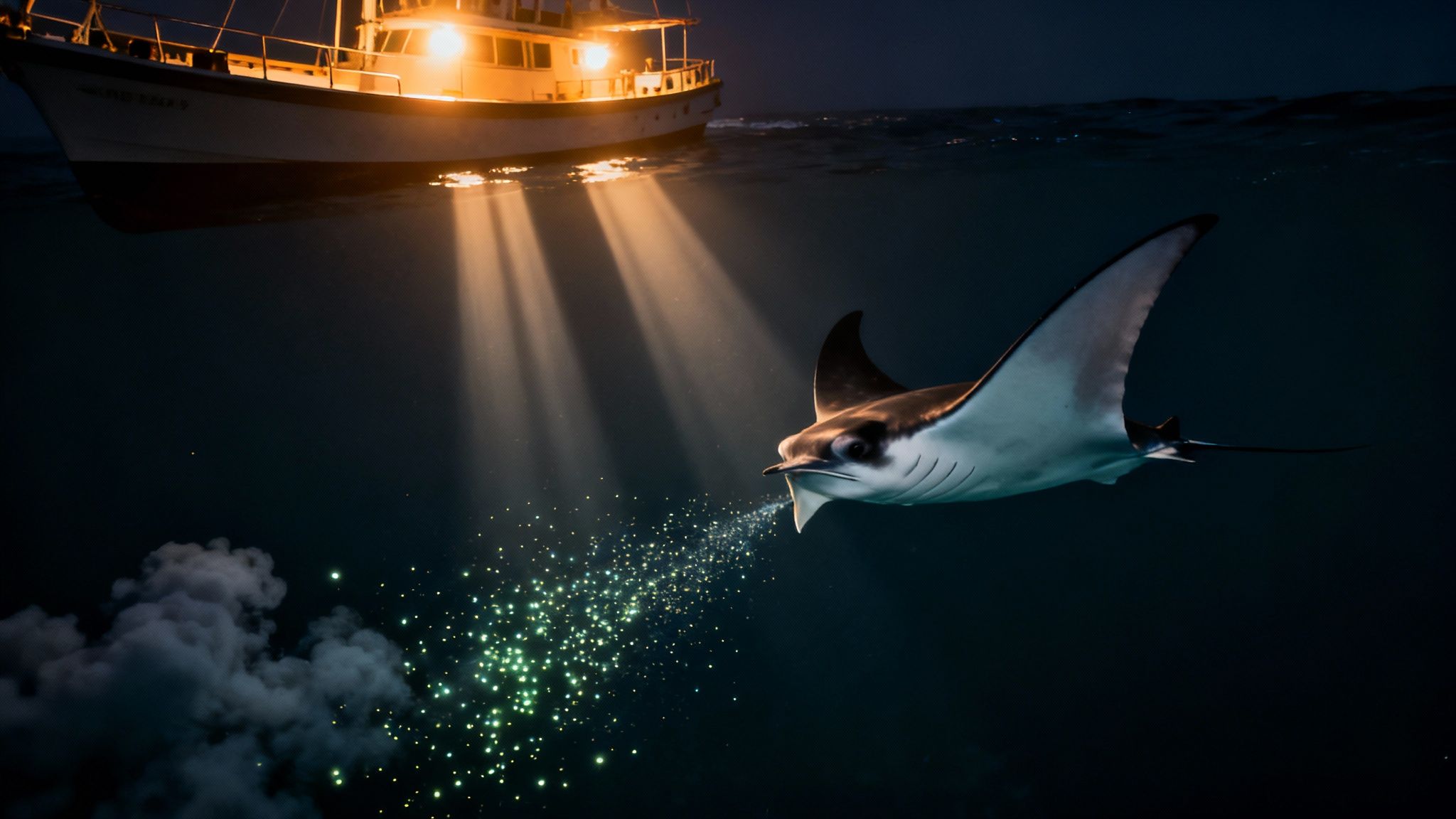
This isn't just a happy accident. It’s the result of a fascinating mix of biology and local history. Decades ago, a hotel on the coast installed bright lights that beamed into the ocean, and those lights attracted huge swarms of plankton—the manta ray's favorite food. It didn't take long for the local mantas to figure out that this glowing spot was an all-you-can-eat buffet, open every night.
Dive operators have since perfected this idea, turning it into a magical and sustainable encounter. Today, dive boats bring powerful, eco-friendly lights to the sites, setting up what we call a "campfire" on the seafloor. The light draws in the plankton, the plankton draws in the mantas, and divers get a front-row seat to an underwater ballet.
The Science Behind the Spectacle
So, what really makes Kona the global hotspot for manta encounters? It all comes down to learned behavior. The resident manta population has been conditioned over generations to connect light with an easy meal. These aren't just mantas passing through on a migration; they're locals. Many have been identified, named, and tracked by researchers for years.
This unique relationship is what makes the experience feel so intimate and dependable. The mantas aren't baited or forced to be there. They show up because they want to, night after night.
"Seeing mantas feed is far more spectacular than seeing them get groomed, and this is why Hawaii is such a good place to see manta rays." – lovebigisland.com
What you see in Kona is completely different from the "cleaning stations" where most manta encounters happen elsewhere. Instead of watching a manta get a quick spa treatment from smaller fish, you get an hour-long show of them swooping and doing graceful barrel rolls right over your head as they feast on plankton in the light beams.
More Than Just a Dive—It's a Conservation Story
When you join a manta ray dive kona tour, you’re doing more than just making an unforgettable memory. You're actually playing a part in protecting these amazing animals. Kona has become a major center for manta ray research, and the local dive community is right at the heart of it.
How Your Dive Helps:
- Funding Research: A portion of what you pay to a reputable operator often goes to support local conservation groups like the Manta Pacific Research Foundation.
- Data Collection: Your dive guides are trained to identify individual mantas by the unique spot patterns on their bellies, contributing vital data for population studies.
- Advocacy and Education: These tours are a powerful way to raise awareness about why we need to protect our marine ecosystems and the threats mantas face worldwide.
By choosing a responsible operator like Kona Honu Divers, you become part of a genuine conservation success story. You're not just a tourist; you're helping as a citizen scientist to ensure the well-being of the very creatures you came to see.
This powerful commitment to eco-tourism helps ensure the Kona manta ray population continues to thrive, guaranteeing that this incredible experience will be around for future generations. It's this blend of reliable sightings, spectacular feeding behavior, and meaningful conservation that truly sets the Kona manta dive apart.
Booking one of these incredible manta ray dive tours lets you witness this natural wonder for yourself.
Choosing Your Adventure: Diving vs. Snorkeling
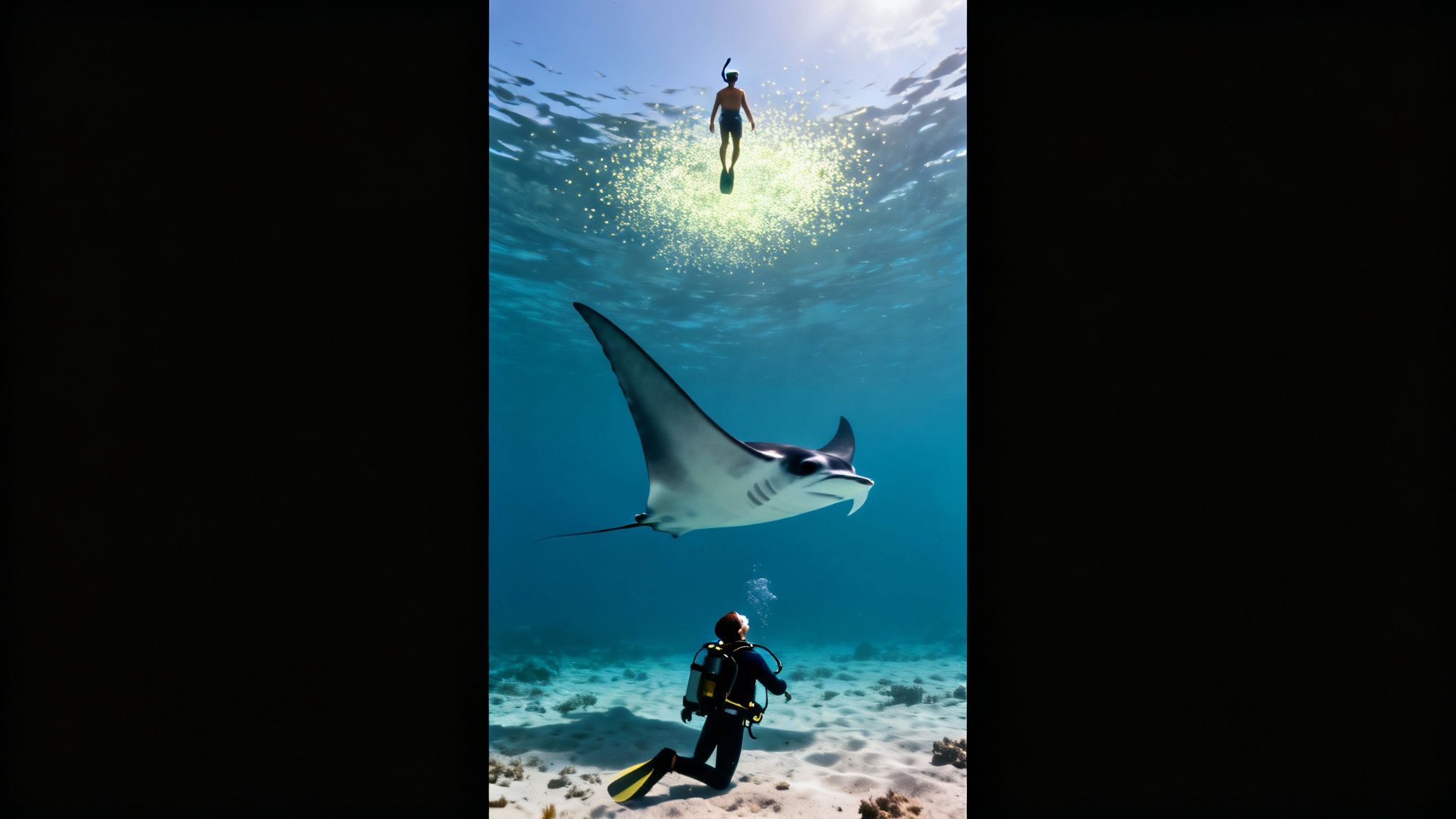
One of the greatest things about the Kona manta ray experience is that almost anyone can do it. You don’t need to be an expert scuba diver to witness the magic firsthand. Both diving and snorkeling offer incredible—though very different—views of the nightly manta ballet. The right choice for you really just boils down to your comfort in the water and the kind of perspective you're hoping for.
This spectacular eco-attraction is a massive draw for the Big Island, bringing in an estimated 80,000 people each year. Why? Because the chances of seeing mantas are incredibly high, with tour operators reporting an 80-90% success rate year-round. It's one of nature's most reliable shows.
So, how will you experience it? Let’s look at what you can expect from both a diver's and a snorkeler's point of view.
The Diver's Perspective: A View From the Ocean Floor
For certified divers, this is the ultimate front-row seat. After gearing up and descending with your guide, you’ll settle onto the sandy bottom, usually around 35-40 feet deep. You and your group will form a semi-circle around a collection of powerful lights often called the "campfire," pointing your own dive lights up toward the surface.
From here, the view is simply breathtaking. You’re looking up as these gentle giants, some with wingspans over 12 feet, glide just inches above your head. You truly feel like a guest in their world, feeling the soft push of water as they perform graceful barrel rolls to scoop up plankton in the beams of light. It’s an intimate, humbling encounter that connects you to the ocean in a profound way.
There's nothing quite like the feeling of a massive, silent creature gliding right over you in the dark. It’s a moment that will stick with you forever and put the sheer majesty of the ocean into focus.
Keep in mind, you'll need to be a certified diver to join the dive tour. Every operator will ask for proof of your certification. It’s also a great idea to have been on a recent dive so your skills feel fresh, especially for a night dive.
The Snorkeler's View: Looking Down From Above
Not a diver? No problem. Snorkeling is an equally thrilling way to see the mantas, and many people actually prefer it. As a snorkeler, you'll float on the surface, holding onto a large, custom-made light board. These boards have powerful lights that shine down into the water, creating that same "campfire" effect that attracts the plankton.
You just put your face in the water and watch the show unfold from a bird's-eye view. The mantas swim up from the darkness to feed, often coming within inches of the surface as they perform their elegant somersaults right beneath you. It’s a fantastic perspective that lets you see the whole scene at once.
Why snorkeling is a great choice:
- No Certification Needed: If you're comfortable in the water, you're good to go.
- Perfect for Families: It's an ideal activity for kids, teens, and groups with different experience levels.
- Simple and Easy: No heavy gear to worry about. The tour provides everything you need—just show up ready for an adventure.
Whether you're looking up from the seafloor or down from the surface, it’s an experience you won’t forget. For a deeper dive into the pros and cons, check out our guide on whether it is better to snorkel or dive with manta rays.
For a truly top-notch tour, we always recommend the Kona Honu Divers Manta Ray Dive & Snorkel. Their crew is professional, fun, and absolutely dedicated to making sure everyone has a safe and amazing time.
You can see their stellar reviews above and book your own adventure when you're ready to witness this natural wonder for yourself.
Kona’s Premier Manta Ray Dive Sites
When you start planning your manta ray dive kona adventure, you'll hear two names pop up again and again: Manta Village and Manta Heaven. These aren't just clever nicknames—they are the two main underwater stages where Kona's world-famous manta ballet unfolds every night.
While both spots offer incredible encounters, they each have their own personality and feel. Knowing the difference helps you understand what to expect when you get in the water. Tour operators will usually pick the site for the evening based on ocean conditions and where the mantas have been most active, giving you the best shot at a magical night.
Manta Village: The Original Classic
Just off Kaukalaelae Point near the Sheraton Kona Resort & Spa, you’ll find Manta Village. This is where it all started. Decades ago, the hotel's lights attracted a buffet of plankton to the water's surface, and the mantas soon followed. This is the OG manta night dive spot.
It tends to be shallower and more sheltered than other locations, which makes it a fantastic choice for everyone, from first-time snorkelers to very experienced divers. But don't let its "classic" status fool you—the show here is consistently breathtaking.
Manta Heaven: The Dynamic Deep
A bit further north, closer to the Kona Airport, is Manta Heaven (also known as Garden Eel Cove). This site is a little deeper and can sometimes have a bit more current. Why is that a good thing? It often attracts an even larger number of mantas, leading to seriously high-energy feeding frenzies.
The underwater landscape here is almost like a natural amphitheater, perfectly set up for the show. Manta Heaven is often a favorite for seasoned divers and photographers looking for those massive, swirling congregations of mantas.
What makes Manta Heaven so thrilling is the sheer scale of the encounters it can host. On a good night, the number of mantas can be truly staggering, creating a swirling vortex of gentle giants that fills your entire field of vision.
Both of these sites are the reason Kona is famous as the best place on Earth to see these animals. To dive even deeper, check out our article on where to see manta rays in Hawaii.
Which Site Is Better for Your Dive?
So, what’s the final verdict? Which spot is the "best"? The honest answer is, there isn't one. You can't go wrong. Both locations deliver a phenomenal, once-in-a-lifetime experience. The final call usually comes down to the conditions on the day of your tour.
Here’s what influences the nightly decision:
- Ocean Conditions: Swell, current, and water clarity can make one site much more comfortable and safe than the other.
- Recent Manta Sightings: The local dive community is tight-knit. Guides share info, and boats will often head to where the mantas were putting on the best show the night before.
- Boat Traffic: To give everyone a better experience and avoid crowding the animals, operators may opt for the less busy site.
Ultimately, you have to trust the pros. The experienced crew at a company like Kona Honu Divers lives and breathes these waters. Their top priority is finding you the best manta action while keeping everyone safe and comfortable. You can see what fellow divers say about their experiences with them below.
No matter which location your captain chooses, get ready for an unforgettable evening. Both Manta Village and Manta Heaven are pillars of the legendary manta ray dive kona experience. When you're ready for your front-row seat, book one of these amazing manta ray dive tours.
Meet Kona’s Famous Manta Rays
The gentle giants you'll encounter on your manta ray dive in Kona aren't just passing strangers. They're locals—each with a name, a distinct personality, and a history in these waters. And incredibly, you can get to know them on a first-name basis.
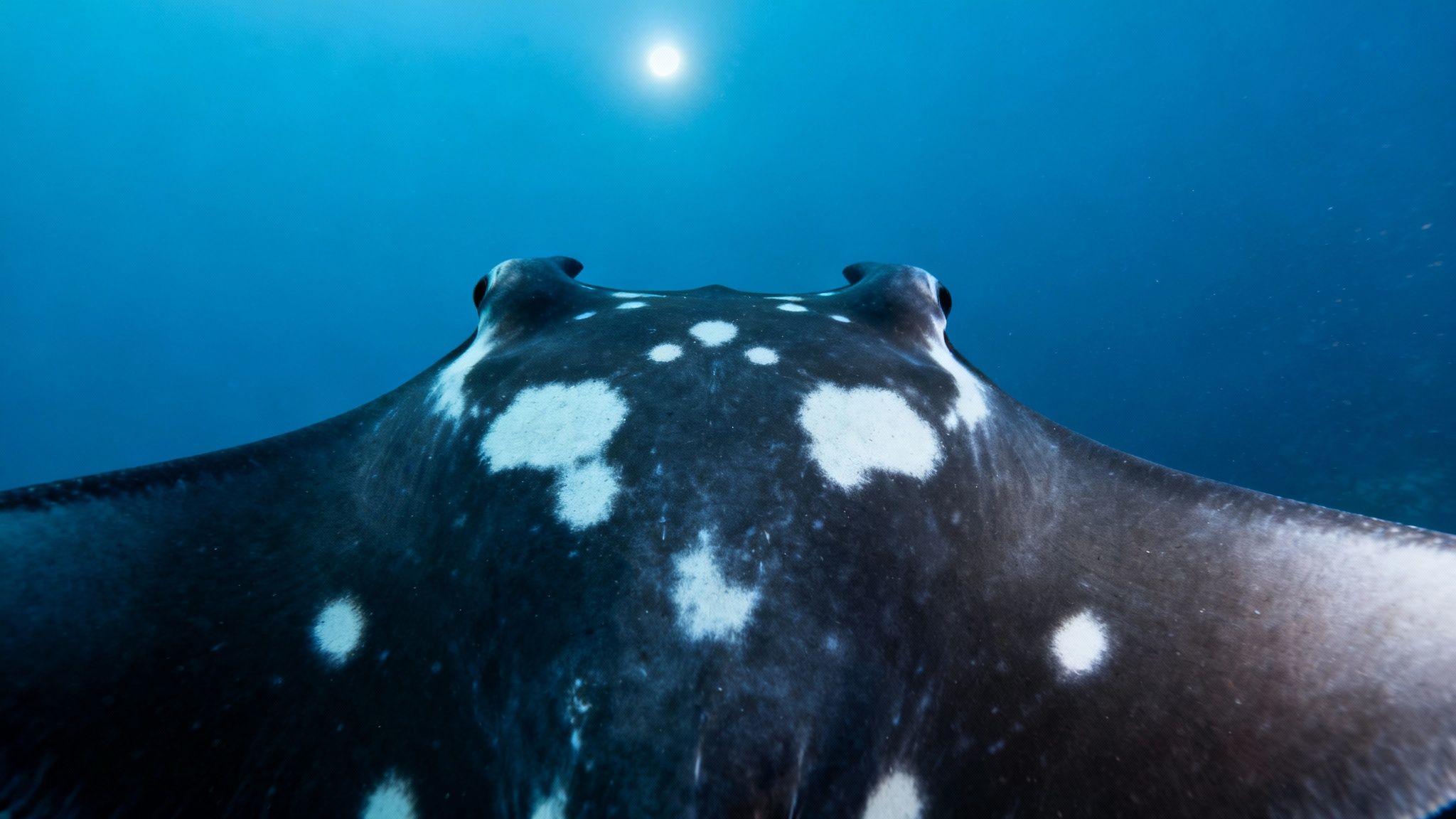
How? Every single manta ray has a unique constellation of black spots on its white belly. Think of it like a fingerprint. No two are ever the same. This natural ID tag allows local guides, researchers, and even everyday divers to recognize individual mantas over months, years, and even decades.
This simple yet brilliant method has turned the Kona dive community into a massive citizen science project. It transforms an already incredible dive into something deeply personal, turning a "manta ray" into a specific individual you can recognize and connect with.
A Legacy of Citizen Science
The effort to catalog Kona's manta population is really a story about the community's passion. For decades, locals have been documenting these amazing animals. It all started back in 1991 when researchers first identified 'Lefty' by the unique spots on his belly, making him the first officially cataloged Kona manta.
Fast forward to today, and that grassroots effort has exploded. The citizen science database now tracks nearly 6,000 manta ray encounters and over 28,500 sightings, identifying more than 330 individual rays. You can dive into this amazing research yourself over at mantarays.info. This isn't just for fun; it's vital for conservation, helping us understand their health, migration, and life stories.
Kona's Underwater Celebrities
Getting to know the "regulars" makes every manta ray dive in Kona feel like a reunion. Here are just a few of the local celebrities you might be lucky enough to meet:
- Lefty: The OG, the one who started it all back in 1991. He's easy to spot because his left cephalic fin (the horn-like fin near his mouth) is permanently curled, which is how he got his name. Seeing him is like meeting a living legend.
- Big Bertha: She absolutely lives up to her name. As one of the largest mantas in Kona, her sheer size and graceful presence are breathtaking. She’s a crowd favorite for a reason.
- Koie: Named after a legendary Hawaiian fisherman, Koie is famous for his curiosity. He loves putting on a show, often doing spectacular barrel rolls right in the dive lights.
- Melainah: An elegant and beautiful female who has been a regular at the feeding sites for years. Her calm, graceful movements make her a dream for underwater photographers.
Knowing the names and stories of these mantas completely changes the experience. You're not just observing wildlife; you're visiting a community of individuals that call these waters home. It adds a layer of depth and respect to the entire encounter.
The team at Kona Honu Divers are experts at identifying these famous residents. Their passion for the mantas is contagious, and their briefings often include fun facts and stories about the specific individuals you're likely to see. You can check out what other divers have said about their experiences with them.
When you're ready to meet these underwater stars for yourself, booking one of the best manta ray dive tours is your next step.
Getting Ready for Your Manta Ray Dive
A little bit of prep work goes a long way in making sure your manta ray encounter is absolutely unforgettable. The great news is that getting ready is a breeze, because your dive operator handles almost everything. Your main job? Just show up excited and ready to get in the water.
The boat crew will have all the gear you need, from scuba tanks and regulators to snorkel masks and fins. They'll also provide a wetsuit perfectly sized for you and suited for the current water temperature. Most importantly, they bring the powerful underwater lights that attract the plankton, which is the key to kicking off the whole magical feeding frenzy.
What to Pack for the Boat
Think of this as your personal comfort checklist. While the dive essentials are covered, a few small items can make a huge difference, especially for the boat ride back to the harbor after you’ve been in the ocean.
- Swimsuit: The easiest thing to do is wear it under your clothes when you head to the marina.
- Towel: You'll be glad you have a dry towel waiting for you as soon as you climb back on board.
- Something Warm: This is a non-negotiable. A hoodie or a windbreaker is a must-have. Even on a balmy Hawaiian evening, the wind on the boat ride home can feel surprisingly chilly.
- Dry Clothes: A quick change into something dry will make the trip back to shore so much more comfortable.
Interacting with the Mantas: The Golden Rule
The single most important part of your preparation is understanding how to interact with these magnificent creatures. The whole Kona manta ray experience is built on a foundation of respect, and it all comes down to one simple, non-negotiable rule.
Passive Observation Only: This is the absolute golden rule of the manta dive. You're a guest in their underwater world. That means no touching, no chasing, and never, ever blocking a manta’s path as it glides overhead.
Touching a manta ray can strip away the protective mucous layer on its skin, which acts like an immune system, leaving it vulnerable to dangerous infections. By simply staying in your designated spot—whether that’s on the seafloor as a diver or holding onto the light board as a snorkeler—you help keep the mantas safe and comfortable. And honestly, that’s what leads to the best, most mind-blowing encounters for everyone.
It's also good to remember that while sightings are incredibly consistent—we're talking over a 90% success rate on most nights—these are still wild animals. Every night is different, and that unpredictability is part of what makes this experience so special.
If you're a certified diver and this night dive gets you hooked on Kona's after-dark magic, you should definitely check out the world-famous Blackwater Night Dive. It’s a completely different kind of adventure, drifting in the deep open ocean to see some of the planet's weirdest and most wonderful creatures.
Your Manta Ray Dive Questions, Answered
It’s completely normal to have a few questions before you commit to a once-in-a-lifetime adventure like this. Let's clear up some of the most common things people ask before joining us for a manta ray dive in Kona.
Is the Kona Manta Ray Dive Safe?
Absolutely. When you book with a professional, experienced crew, your safety is their number one priority. They’ll give you a thorough briefing before you even touch the water, provide top-notch gear, and have expert guides with you the entire time.
And what about the mantas? They're called gentle giants for a reason. Unlike stingrays, mantas do not have stingers or barbs, so they pose no threat to people. Your only job is to relax, watch, and follow your guide's directions for a safe, passive viewing experience.
What Is the Best Time of Year to Go?
Here’s the great news: any time is a good time! The local manta population sticks around all year, so we see them consistently every month. Sighting success rates are typically between 80-90%, no matter when you book.
That said, if you prefer warmer water and glassy-calm seas, the summer months from April to October are fantastic. But don't count out the winter! The experience is just as magical, and every operator provides thick, cozy wetsuits to keep you comfortable in the cooler water. To dig a little deeper, check out our guide on when to dive with manta rays in Kona.
Do I Need to Be a Certified Diver?
You only need scuba certification if you plan on doing the actual dive. For the snorkel trip, no certification is required at all.
You don't even have to be a great swimmer. The snorkel groups use custom-built light boards or other flotation devices that you just hang onto. It’s an incredibly accessible adventure for almost everyone, making it a perfect family outing.
Can I Take Photos and Videos?
Of course! We highly recommend bringing an underwater camera. Seeing these massive, graceful animals somersault through the light beams is a sight you'll definitely want to relive.
There's nothing quite like nailing the shot of a manta barrel rolling just inches from your lens. The trick is to stay put, be patient, and let the mantas come to you—never chase them or disrupt their feeding.
Just be sure to check your tour operator's rules for camera equipment. If you don't have your own gear, many companies have a professional photographer on board or offer camera rentals so you can get incredible shots of your manta ray dive kona experience.