
Picture this: you're floating in the warm, dark Pacific Ocean off the coast of Hawaii. Suddenly, a shadow emerges from the deep. A giant, graceful manta ray, with a wingspan wider than you are tall, glides just inches above your head, performing a silent, hypnotic ballet.
This isn't a scene from a documentary. It's the world-famous Kona manta ray night dive, and it’s one of the most reliable and awe-inspiring wildlife encounters on the planet.
The Unforgettable Kona Manta Ray Night Dive Experience
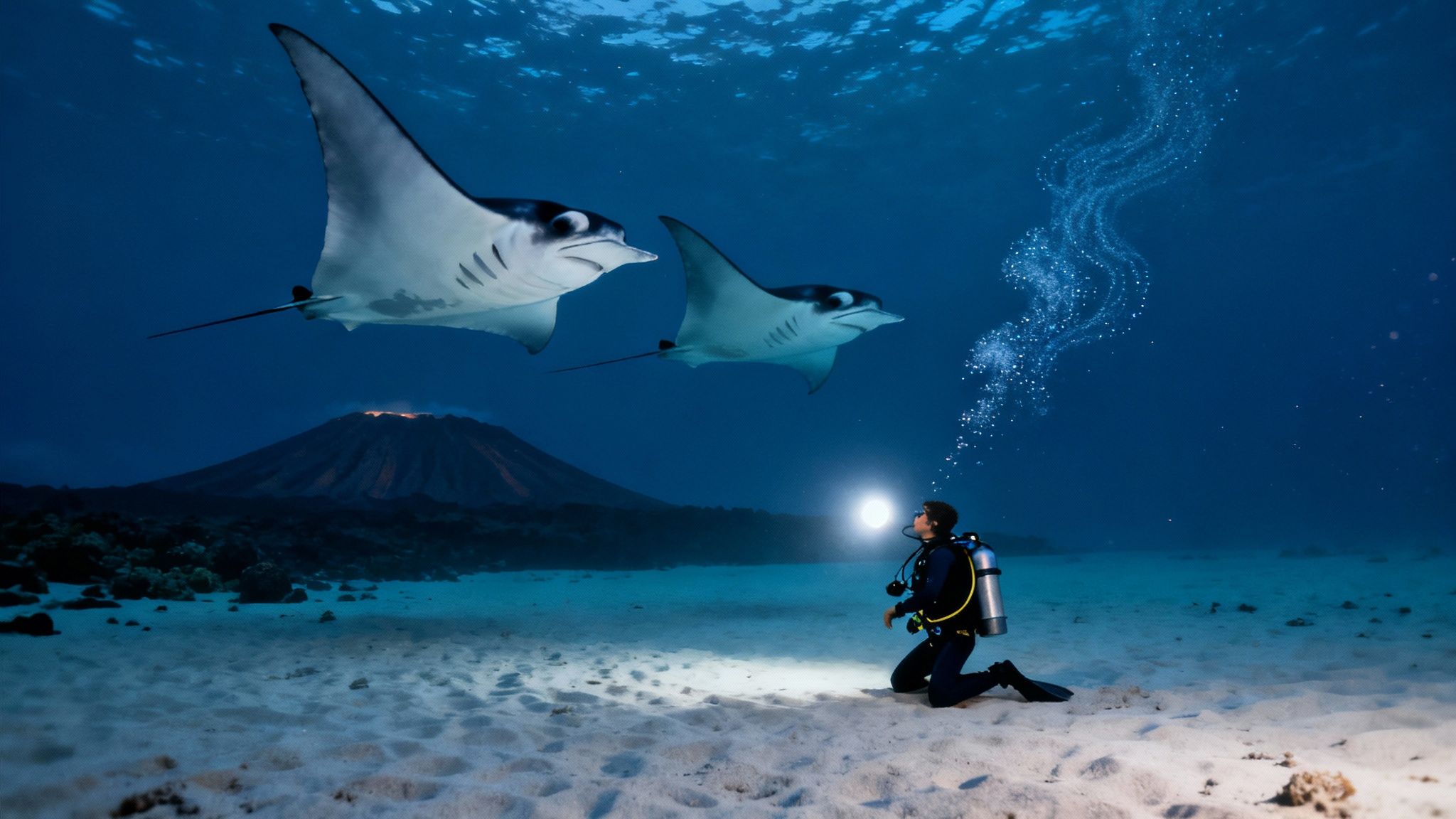
The secret behind this nightly spectacle is beautifully simple. Dive operators shine powerful lights into the water, which act like a massive bug zapper for the ocean's tiniest creatures: plankton. This creates a concentrated buffet that the mantas just can't resist.
They show up night after night to feast, swooping and barrel-rolling through the beams of light in a breathtaking display of filter-feeding. What started decades ago has now become a dependable natural phenomenon, turning Kona's coastline into the world's premier stage for this incredible performance.
Why Kona is a Manta Ray Hotspot
So, what makes Kona so special? It's a perfect storm of geography and biology. The two main sites for the dive, affectionately known as "Manta Village" and "Manta Heaven," have become consistent feeding grounds.
Kona's reputation is built on an almost unbelievable success rate. Local operators report seeing mantas on 85–90% of their night dives—a staggering figure for any wild animal encounter. This reliability has cemented the Kona manta dive as a must-do adventure, drawing thousands of divers and snorkelers every year. It's a fantastic example of sustainable wildlife tourism in action, as you can learn more about Kona's manta ray success story and its impact on ecotourism.
The single most important decision you'll make is choosing an experienced and ethical operator. A great company prioritizes your safety and, just as importantly, the well-being of the mantas, ensuring these encounters remain sustainable for generations to come.
Booking your trip with a respected local outfitter like Kona Honu Divers ensures you get a safe, educational, and truly mind-blowing experience. Their guides live and breathe this stuff, and their passion for the marine life here is contagious. Take a look at what other divers have said about their trips.
Ready to see the underwater ballet for yourself? Check out the available manta ray dive tours and book a spot for a night you'll be talking about for the rest of your life.
Choosing Your Perfect Kona Manta Ray Adventure
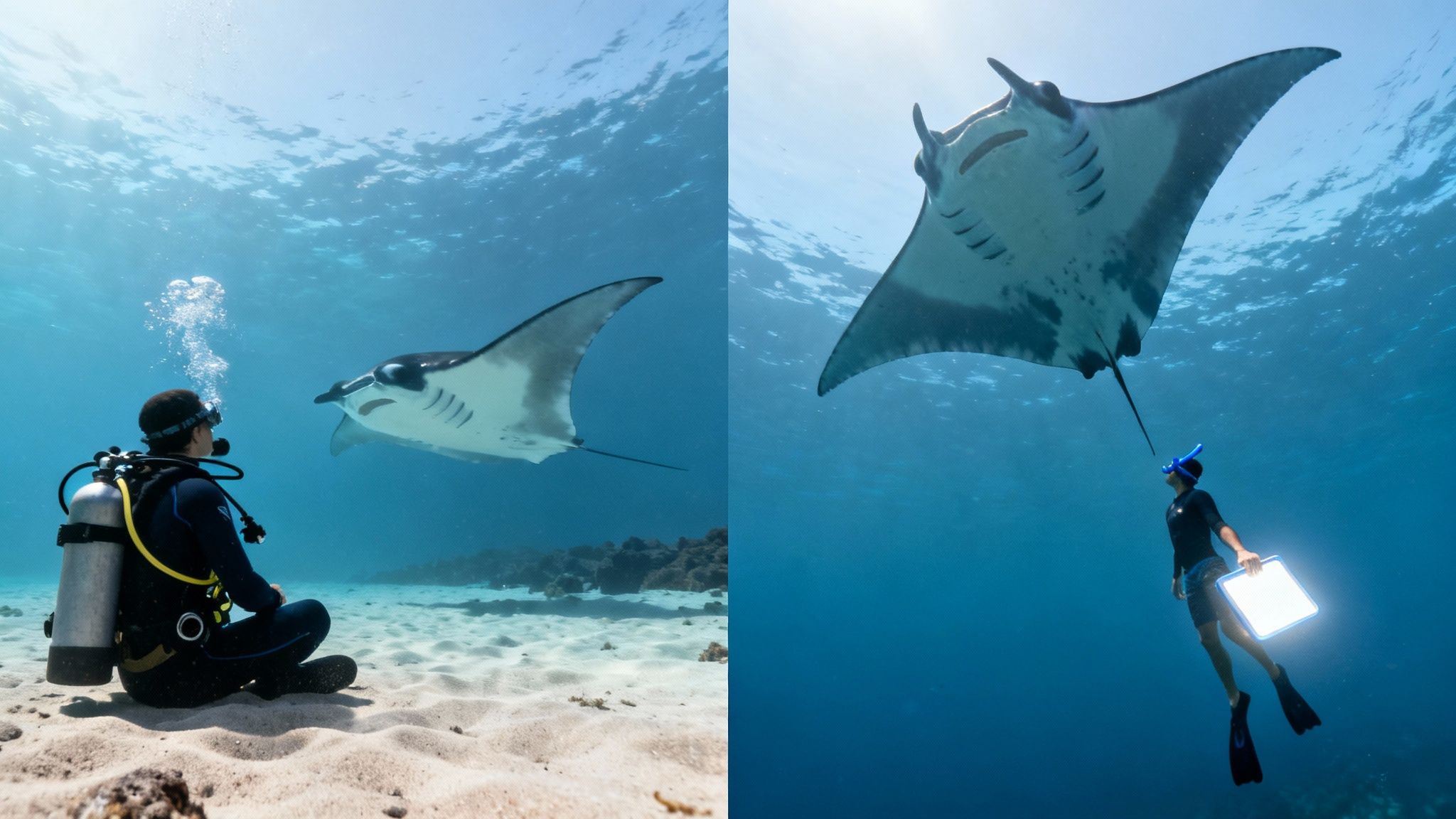
So, you’re ready to see Kona’s famous manta rays. Fantastic. The first big decision you’ll make is how you want to experience this underwater ballet. It really boils down to two main options: scuba diving or snorkeling.
Both give you a spectacular front-row seat, but from completely different angles. One isn’t necessarily better than the other; it’s all about the kind of encounter you’re hoping for.
Scuba Diving vs. Snorkeling: Picking Your Perspective
If you’re a certified diver, you get to experience the show from the seafloor. You’ll descend with your group to a designated sandy spot, usually around 35 feet down, and shine your dive light straight up. From this underwater amphitheater, you get to watch the mantas perform their hypnotic, swooping barrel rolls right above your head. It’s an incredibly humbling and immersive feeling to be on their level as they glide just inches away.
Snorkelers get an equally breathtaking view, just from the surface. You'll hold onto a specially designed flotation board that has bright lights pointing down into the dark water. This light attracts the plankton, which in turn brings the mantas up from the depths. They feed right below you, often coming so close you feel like you could reach out and touch them (but don't!). It's a fantastic choice for families, non-divers, or anyone who just wants to stay on the surface.
To help you choose the right fit, it’s worth comparing the two experiences side-by-side.
Manta Ray Dive vs Snorkel: Which is Right for You?
| Feature | Scuba Diving Experience | Snorkeling Experience |
|---|---|---|
| Perspective | Bottom-up view from the ocean floor | Top-down, "bird's-eye" view from the surface |
| Depth | Seated on the sand at approximately 35 feet | Floating on the surface |
| Requirements | Scuba certification is mandatory | No certification needed; basic swimming ability |
| Proximity | Mantas glide and barrel roll directly overhead | Mantas swoop up from below to feed near the surface |
| Best For | Certified divers wanting an immersive, seafloor view | Non-divers, families, and mixed-skill groups |
Ultimately, both options provide an unforgettable encounter. If you’re still on the fence, we break it down even further in our guide on whether it's better to https://konahonudivers.com/is-it-better-to-snorkel-or-dive-with-manta-rays/.
Location, Location, Location
Next up is deciding where to go. Kona is lucky enough to have two world-class sites for seeing manta rays, and each has its own vibe.
- Manta Village (Keauhou Bay): This is the classic, original spot located in a protected bay just south of Kailua-Kona. The boat ride is typically shorter, and the conditions are often calmer. It’s a fantastic, reliable location for both divers and snorkelers.
- Manta Heaven (near the airport): Also known as Garden Eel Cove, this site is north of town. It can sometimes draw a larger number of mantas, creating a truly mind-blowing spectacle. However, being more exposed to the open ocean means it can get a bit choppier depending on the day's conditions.
Honestly, you can't go wrong with either. The success rate at both sites is incredibly high. Most nights, the decision on which site to visit comes down to the captain's call based on the current ocean conditions to ensure you get the absolute best show possible.
Ready to pick your adventure? All our Kona manta ray tours are designed for both divers and snorkelers, so everyone in your group can share in the magic.
How to Prepare for Your Manta Ray Dive
A little prep work can be the difference between a good manta ray dive and a truly mind-blowing one. While your dive operator handles the heavy lifting, showing up with the right personal gear and mindset lets you relax and soak in every second of the show.
Don't worry about packing your own dive kit. The pros have you covered with all the scuba or snorkel essentials—wetsuits, fins, masks, and tanks. They also bring the super-bright underwater lights, which are the secret sauce for attracting the plankton that the mantas come to feast on. You can get a better sense of the gear you will need for your Kona diving adventure to feel fully prepared.
Your Personal Checklist
With the big stuff out of the way, here are a few personal items I never leave shore without. They seem small, but they make a huge difference in comfort.
- Towel & Dry Clothes: Nothing feels better than wrapping yourself in a dry towel after emerging from the ocean.
- A Warm Sweatshirt: Even on a perfect Hawaiian evening, the boat ride back can get surprisingly chilly once you're wet. Trust me on this one.
- Reef-Safe Sunscreen: The trip out to the dive site often doubles as a gorgeous sunset cruise, so you'll want protection from that late-afternoon sun.
- Seasickness Medication: If you even think you might get seasick, take your preferred remedy well before the boat leaves the dock. The open ocean can be unpredictable, and it's far better to be safe than sorry.
It’s best to travel light. Leave expensive jewelry or anything you’d be heartbroken to lose back at your hotel. The crew will have a small dry box for essentials like keys and a phone, but simplicity is your friend here.
What to Expect Onboard
Your adventure usually kicks off with a late-afternoon check-in at the harbor. As you cruise to the dive site, you're treated to a stunning sunset view of the Kona coast. Once the boat is anchored, the crew will gather everyone for a pre-dive briefing.
Pay close attention here. This is where they'll explain the golden rules of the encounter: how to position yourself in the water, what to do, and, most importantly, why you can never touch the mantas. It's crucial for their safety and yours.
You’ll spend about 45 minutes in the water, face-to-face with these incredible creatures. After the dive, you’ll climb back on board to warm up. Most outfits offer hot chocolate and snacks for the ride home, which is the perfect way to cap off the night.
Just remember, these are wild animals in their natural habitat. While Kona's success rate is famously high, sightings are never 100% guaranteed. Go with a spirit of adventure and be ready for whatever the ocean decides to share with you that night.
Meeting the Famous Manta Rays of Kona
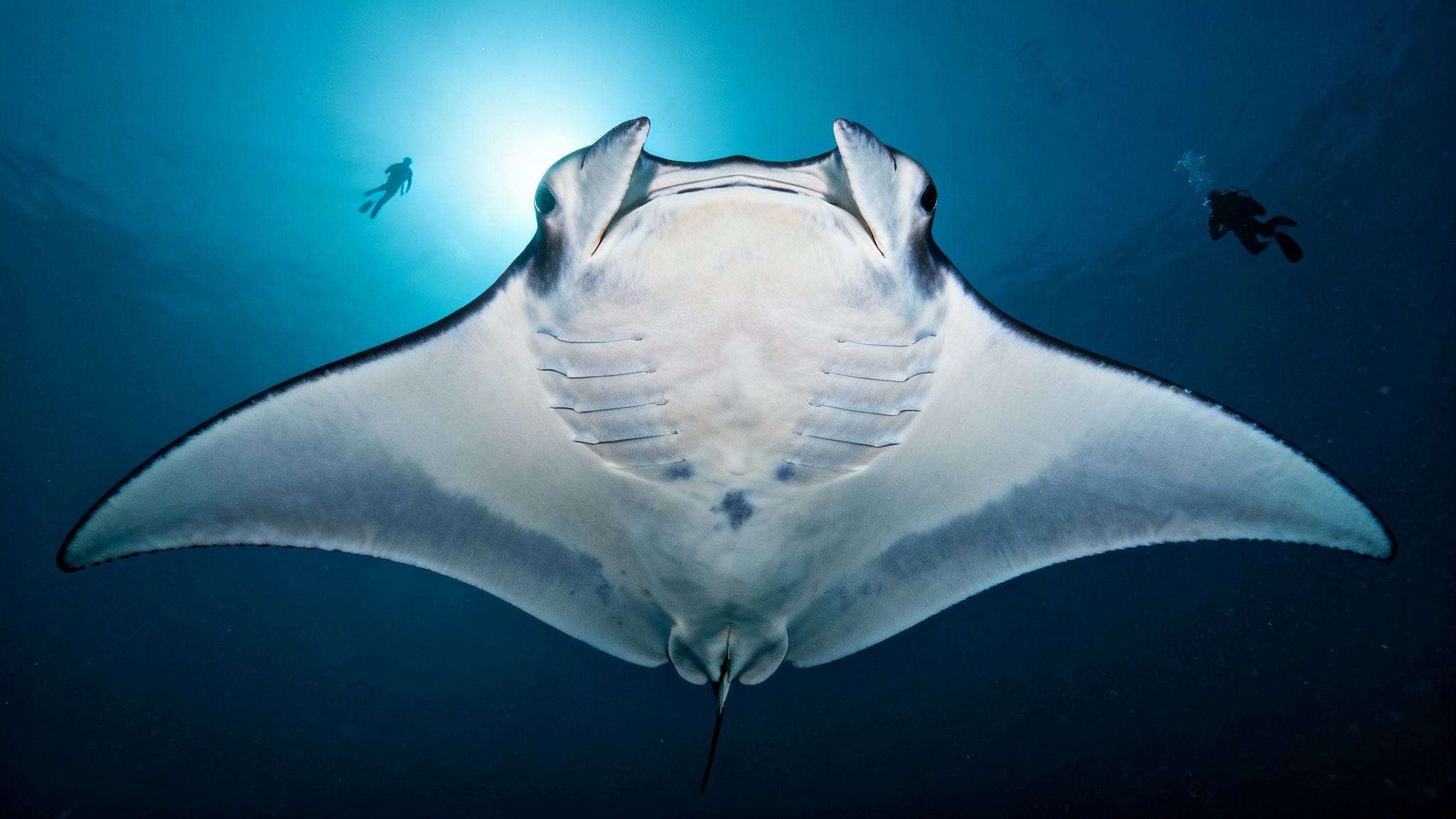
When you slip into the dark Kona waters for a manta ray dive, you’re doing more than just observing marine life. You're actually being introduced to a well-known community of locals, each with a name, a distinct personality, and a life story that’s been carefully documented for decades.
Believe it or not, Kona's manta ray population is one of the most studied on the planet. This is thanks to a massive citizen science effort that’s been running for over thirty years. Since 1991, local dive operators and researchers have been meticulously cataloging individual mantas. The result? A comprehensive database of more than 330 individual rays, each one identifiable by its unique markings.
This incredible project has given us a deep understanding of their behavior and population dynamics. You can learn more about this fascinating work on manta ray identification. Every diver who visits becomes a small part of this ongoing conservation story.
How We Know Who's Who
So, how does a dive guide recognize a specific manta in the middle of the night, surrounded by a half-dozen other giants? It all comes down to their bellies.
The underside of a manta ray is covered in a pattern of black spots that’s as unique as a human fingerprint. No two are alike. This allows for a non-invasive and surprisingly accurate way to identify, name, and track each animal throughout its life.
On any given night, guides and researchers are using photos and video to:
- Spot old friends: Matching the spot patterns against the massive database of known residents.
- Welcome newcomers: When an unfamiliar manta shows up, it gets photographed, named, and added to the official catalog.
- Check on their well-being: This long-term tracking helps monitor injuries, pregnancies, and other life events.
So when your divemaster points and mouths the name "Big Bertha" or "Lefty," they’re not just making it up—they’re greeting an old friend they’ve known for years.
Meet the Local Celebrities
Just like any community, the Kona manta population has its own celebrities. Certain individuals have become famous for their sheer size, quirky habits, or just how often they show up for the nightly plankton buffet.
One of the most legendary is 'Lefty,' easily recognized by his bent cephalic fin. He was one of the very first mantas identified back in the early 1990s and remains a regular, reliable visitor to this day.
Seeing a manta you can identify by name adds a profound layer to the experience. It shifts your perspective from simply observing wildlife to connecting with an individual animal whose life story is intertwined with the very dive site you're visiting.
Your Dive Makes a Difference
That feeling of awe you get watching them is powerful, but your participation does something even more important: it directly supports their conservation. The ecotourism industry built around these magnificent animals creates a powerful economic reason to protect them and their fragile marine home.
When you book with a reputable operator, you’re casting a vote for ethical, sustainable tourism. These companies follow strict guidelines to ensure the mantas' well-being is always the top priority. Your incredible night on the water helps ensure Kona's most amazing residents will be here for generations to come.
Safety Rules for a Responsible Manta Encounter
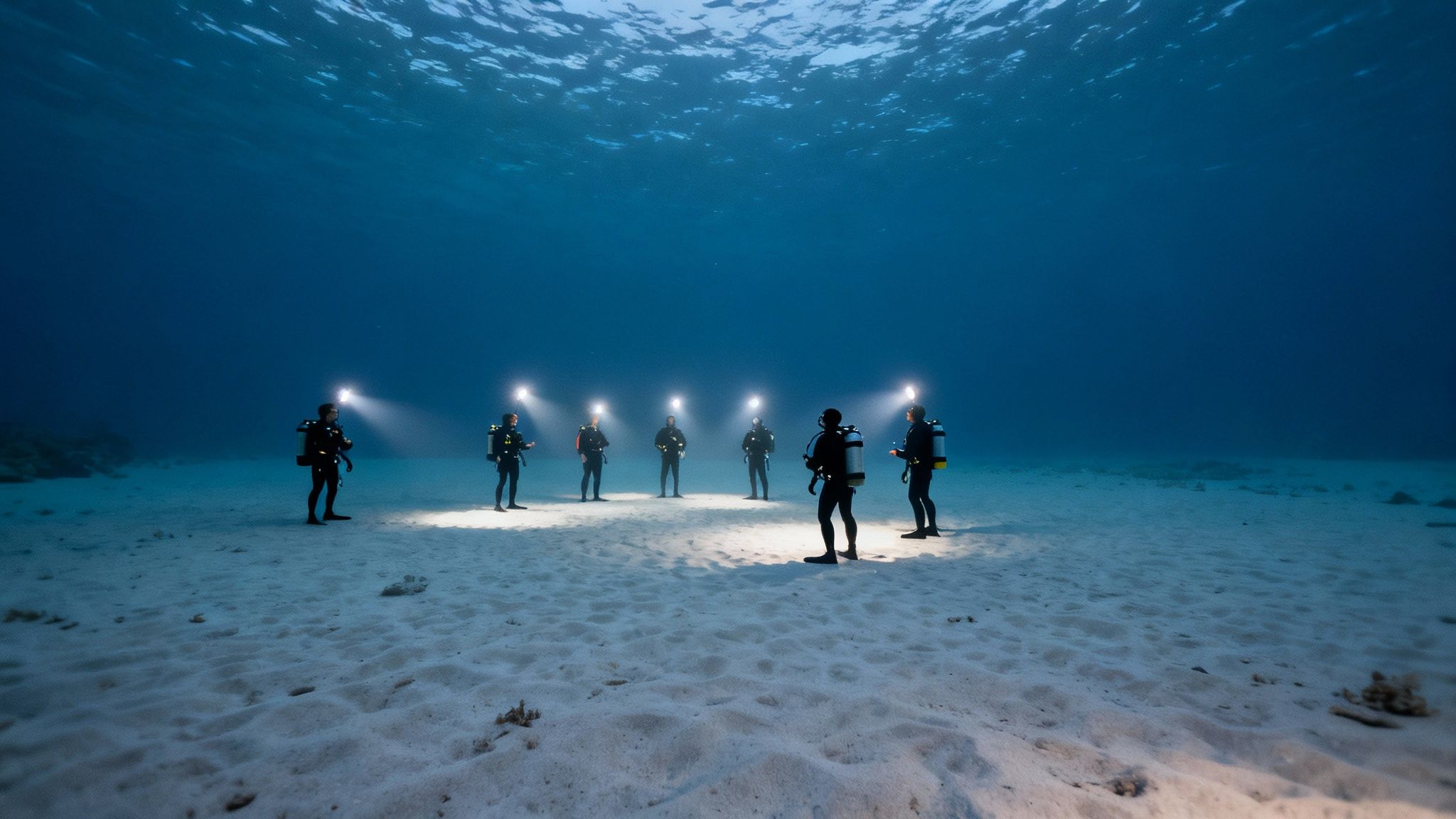
A Kona manta ray dive is more than just a spectacular show; it's an interaction built on mutual respect. To keep this experience sustainable and safe for these incredible animals, we all have a part to play. The number one, absolute golden rule is simple: do not touch the manta rays.
It might be tempting when one of these gentle giants glides inches overhead, but it's critically important to resist. Mantas have a delicate mucus layer covering their skin. This isn't just slime—it's their immune system, protecting them from nasty bacteria and parasites in the water.
Touching them, even with the lightest brush of a finger, can strip off this protective coating, leaving them vulnerable to potentially deadly infections. This is why every reputable dive operator in Kona has a strict hands-off policy. Think of yourself as a quiet observer, becoming part of the underwater scenery and letting the mantas come to you.
This is just one piece of the puzzle. Being a mindful guest in their world involves a broader commitment to good underwater manners. You can get a great overview by reading up on what it means to be a responsible and considerate diver.
The Rules of Engagement
Your dive guide will walk you through all the specifics during your pre-dive briefing, but the guidelines are straightforward and designed for the safety of everyone—divers, snorkelers, and especially the mantas.
Here’s what to expect:
- Divers, Find Your Spot: If you're on scuba, you'll be directed to find a comfortable place on the sandy ocean floor and stay put. This creates a stable "viewing gallery" for everyone and, more importantly, keeps the water column clear for the mantas to swoop and glide without obstruction.
- Snorkelers, Stay on the Surface: For those snorkeling, the plan is to hold onto the light board and float. Diving down from the surface can easily startle the mantas and disrupt the feeding patterns that make the whole experience possible.
- Let Them Approach You: Never, ever chase a manta ray. Your only job is to be a calm, stationary presence. Trust me, their own curiosity and the buffet of plankton will bring them closer than you can imagine.
- Lights Up! As a diver, your flashlight is a powerful plankton magnet. By pointing it straight up toward the surface, you're helping create a concentrated beam of food. This not only attracts the mantas but also puts on a better show for everyone watching.
Choosing an Operator Who Cares
The single best way to ensure your manta ray dive in Kona is ethical is to book with an operator who lives and breathes these principles. Look for companies that are Manta Ray Green List Approved or those who clearly advertise their commitment to manta conservation on their website.
These are the businesses that see the bigger picture. They know the long-term health of Kona's manta population is far more valuable than a single night's profit.
This commitment is so important because manta rays are at risk globally. While Kona's population is a rare conservation success story, both reef and giant manta species are classified as vulnerable to extinction. The local dive industry creates a powerful economic reason to protect them, proving that responsible wildlife tourism can be a force for good.
By following the rules and choosing your operator wisely, you're not just a tourist—you're an active partner in conserving these magnificent creatures for generations to come.
Your Kona Manta Ray Dive Questions Answered
If you're gearing up for a manta ray dive in Kona, you probably have a few questions floating around. It's totally normal. Let's walk through some of the most common ones so you can feel confident and ready for this incredible experience.
What Is the Best Time of Year to See Manta Rays in Kona?
Here's the best news you'll get all day: there is no bad time of year to see manta rays in Kona!
Our local manta population sticks around all year long, so you have a fantastic shot at seeing them no matter when you visit. We consistently see sighting rates between 85-90%, which is pretty amazing.
That said, if you're looking for the absolute ideal conditions, many divers prefer the stretch from April to October. The ocean tends to be calmer and the water a touch warmer during these months. Winter can bring bigger swells, which sometimes causes a trip to be rescheduled for safety, but the mantas are still out there doing their thing.
Ultimately, the most important factor isn't the calendar—it's choosing a top-notch operator who runs trips consistently and knows these waters inside and out.
Do I Need to Be Scuba Certified to See the Manta Rays?
Not at all! You can have just as spectacular of an experience snorkeling. In fact, for many people, it's the preferred way to see the show.
As a snorkeler, you'll hold onto a large, custom-made float board. This board has incredibly bright lights that shine down into the water, attracting the plankton. The mantas then swim right up to the surface to feed, often coming within inches of you. It's a breathtaking view from above.
This makes it a perfect adventure for families, folks who aren't certified divers, or anyone who just feels more comfortable on the surface. Both divers and snorkelers truly get a front-row seat.
Is the Manta Ray Night Dive Safe?
Yes, it's an incredibly safe activity, provided you go with a professional, reputable dive company. Manta rays are often called "gentle giants," and for good reason—they have no teeth, no stingers, and no barbs. They are filter feeders, completely uninterested in anything but the tiny plankton drawn to the lights.
Any good operator will give you a detailed safety briefing before you ever get in the water. They provide all the right gear and have experienced guides right there with you the entire time. The main risks are the same you'd find with any boat trip, like the chance of getting seasick. The actual encounter with the mantas is completely passive and safe.
What Other Unique Dives Can I Do in Kona?
Kona is so much more than just the mantas! In fact, the Big Island offers some of the best scuba diving tours in Hawaii. If you're an advanced diver looking for something that will blow your mind, you have to try the Kona Blackwater Dive. It’s an experience that’s hard to describe—you drift in the deep, dark open ocean at night while some of the ocean’s most bizarre and rarely seen creatures rise up from the abyss. You can see what this wild trip is all about on the Blackwater Dive tour page.
For certified divers just looking for more adventure, we also have advanced dive trips that explore Kona's other underwater treasures, from ancient lava tubes to deep, dramatic reefs teeming with life. And for anyone curious about how the marine tourism world works behind the scenes, looking into how companies use Boating Industry Keywords to reach people provides some interesting insight.