
Imagine floating in the dark, warm waters off the Kona coast. Suddenly, a giant, graceful shadow glides right through the beam of your dive light, close enough to see every detail. This isn't a scene from a movie; it's the world-famous manta ray dive in Kona, an incredible spectacle that's become a global must-do for any ocean lover. It's consistently ranked as one of the most memorable underwater encounters on the planet, and for very good reason.
Why Kona is the Global Capital for Manta Ray Dives
The Big Island of Hawaii isn't just one of the places to see manta rays; it's arguably the best. While other locations might offer seasonal sightings or glimpses at deep cleaning stations, Kona provides a unique and stunningly reliable nightly feeding frenzy. That consistency is what truly sets this experience apart from anywhere else in the world.
So, what’s the secret sauce? It's a perfect storm of biology and geography. The Kona coast is home to a large, resident population of reef manta rays (Mobula alfredi). These gentle giants, with wingspans that can stretch up to an incredible 18 feet, don't migrate. They live here year-round, drawn by the rich supply of plankton that thrives in the local waters. Better yet, the unique underwater topography, formed by ancient lava flows, creates natural funnels that concentrate their food source, making for predictable and spectacular feeding grounds.
The Kona Honu Divers Experience
Choosing the right operator is crucial for turning a good dive into an unforgettable one. Kona Honu Divers has built a stellar reputation as a premier guide for the Kona manta ray dive. They're known for their commitment to safety, their preference for small group sizes, and a profound respect for the marine life they introduce you to. Their experienced crew makes sure every guest feels comfortable and clued-in, which makes all the difference.
But don't just take our word for it; see what fellow divers have to say.
This powerful combination of a healthy resident manta population and responsible tourism has created a truly world-class wildlife encounter. Its popularity is staggering—every year, around 80,000 people snorkel and dive with these majestic creatures off the Kona Coast. This easily makes it one of the most sought-after aquatic adventures in the world. If you're curious, you can discover more fascinating facts about Hawaii's manta rays to get even more excited.
Ready to witness this underwater ballet for yourself?
Meet Kona’s Gentle Ocean Giants
Before you jump in the water, it helps to know a little about the stars of the show. The animals that make the manta ray dive Kona so legendary aren't just big fish—they're curious, intelligent, and completely gentle giants. Knowing a bit about them beforehand changes the experience from just looking at wildlife to truly connecting with one of the ocean's most incredible creatures.
What makes Kona so unique is that it’s a reliable home for two different types of manta rays. As they soar through the water, they might look the same at first glance, but there are a few key distinctions.
- Reef Manta (Mobula alfredi): These are the ones you're almost certain to meet. Think of them as the "locals" of Kona. They stick around the coastal waters all year and have impressive wingspans reaching up to 18 feet.
- Giant Manta Ray (Mobula birostris): These are the more worldly travelers. As their name suggests, they're bigger and more migratory, making them a much rarer sight. Spotting a giant oceanic manta is a truly special moment.
Don't let their massive size fool you—manta rays are completely harmless to people. They're filter feeders, which means they don’t have teeth, stingers, or barbs. Their diet is made up entirely of tiny zooplankton, which they gracefully filter from the water with their huge, gaping mouths. Your job is just to float and enjoy the ballet.
How We Tell Them Apart
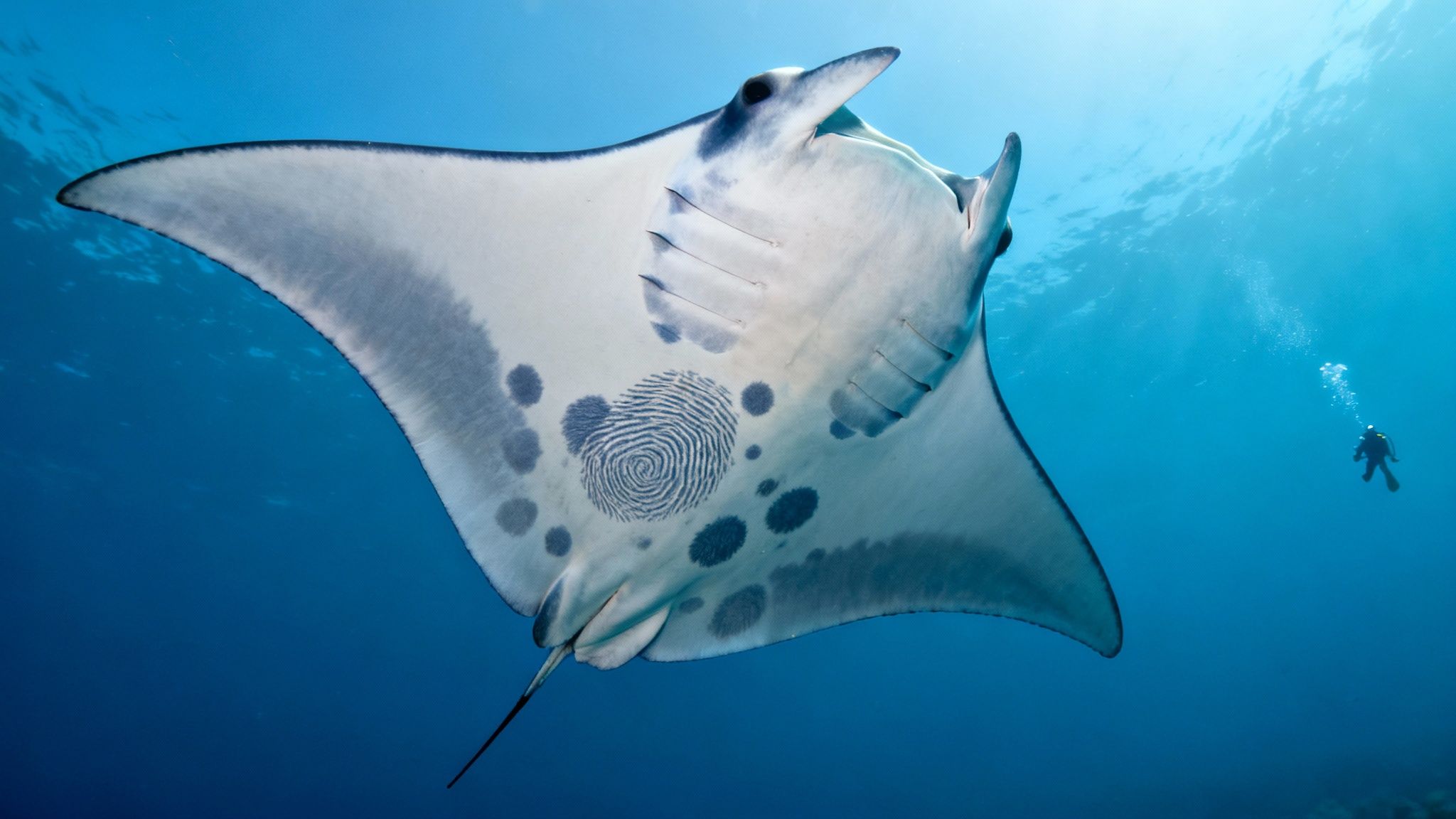
One of the coolest things about the Kona mantas is that every single one is unique. Just like a human fingerprint, each manta has a distinct pattern of black spots on its white belly. This natural "barcode" is a huge deal for scientists and conservationists.
It’s this simple identification method that allows researchers to track individual mantas over their entire lives. We learn about their migration, their social circles, and how long they live, turning every dive into a potential citizen science project.
Since 1991, researchers have been using these spot patterns to build a detailed catalog of the local population. Thanks to this effort, we've identified over 330 individual manta rays right here in Kona. You can actually see the official manta catalog and learn about the individuals yourself. When you go on a manta ray dive in Kona, you’re not just seeing a manta ray; you might be meeting a local celebrity with a name and a story that goes back decades.
Ready to see these amazing animals up close? A great guide makes all the difference in having a safe and unforgettable encounter.
What to Expect on Your Manta Ray Night Dive
The excitement really starts to build as you head out from the harbor, the sky shifting from twilight to deep indigo. You're about to witness one of the most mesmerizing underwater spectacles on the planet. Knowing what’s coming helps turn any pre-dive jitters into pure, unadulterated thrill.
Every manta ray dive Kona tour is a carefully planned production, designed from the ground up to be safe, respectful, and absolutely awe-inspiring.
Your adventure kicks off on the boat. As you cruise out to the dive site, the crew will give you a full rundown—not just of the plan, but of the mantas themselves. You’ll learn about their behavior, why they’re here, and the crucial rules we follow to keep them safe. Think of it less as a list of "don'ts" and more as the key to ensuring this amazing experience can continue for years to come.
Entering the Underwater Theater
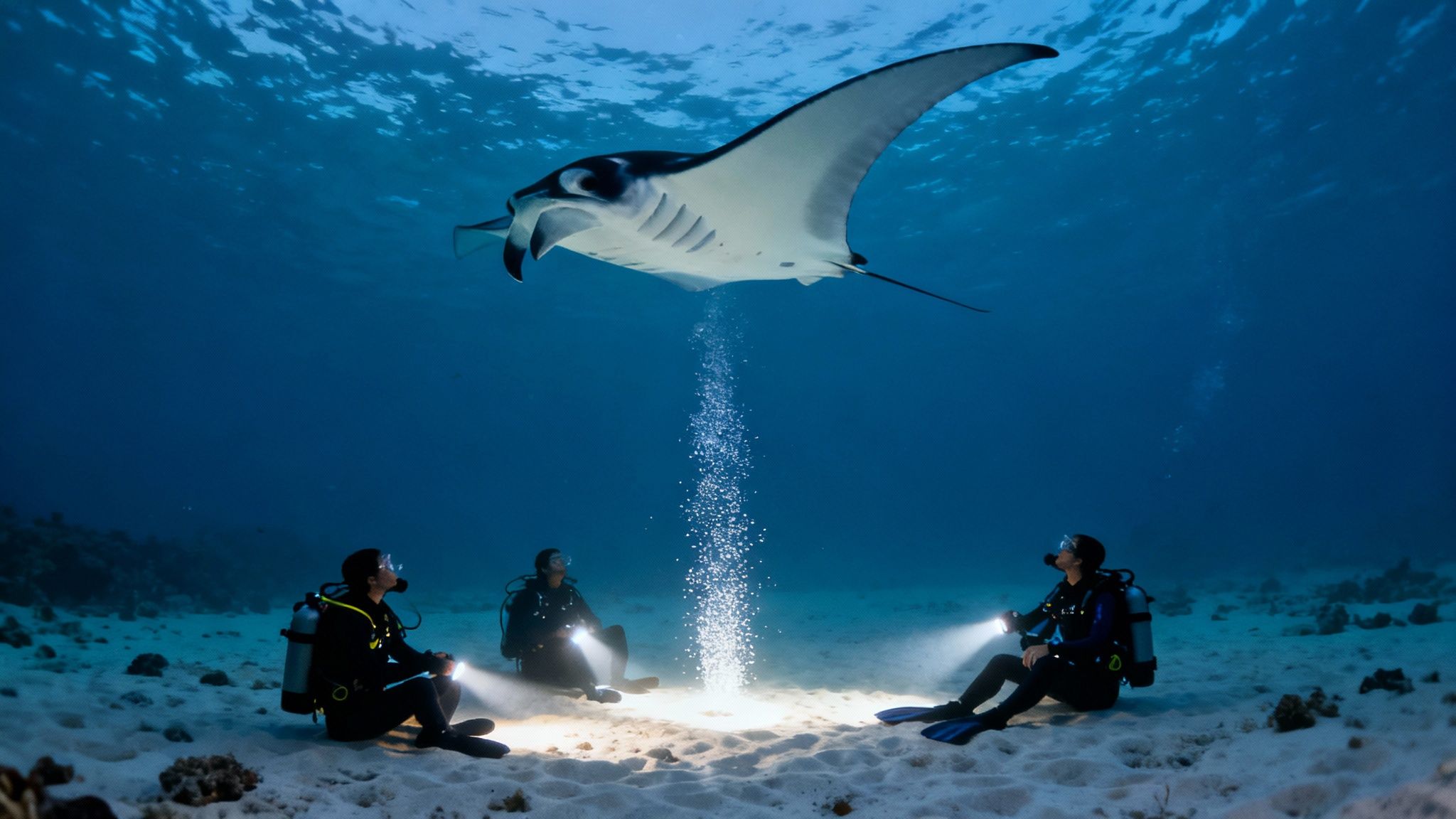
Once the boat anchors, it’s time to gear up and slip into the warm, dark Pacific. As you descend with your group, you'll see the lights of other divers below, guiding you to a sandy patch on the ocean floor, usually around 30-40 feet deep. This is your front-row seat.
Your divemaster will get everyone situated, typically in a circle on the bottom. We call this the underwater "campfire." On their signal, you’ll point your powerful dive light straight up, creating a massive beam that shoots toward the surface.
This column of light is the dinner bell. It attracts swarms of microscopic plankton, the manta rays' favorite meal. You're essentially creating a concentrated, irresistible buffet that draws the mantas in from the surrounding darkness.
It rarely takes long. First, you might see a shadow, then another. Soon, the stars of the show make their grand entrance. Giant mantas glide effortlessly into the light, performing graceful barrel rolls and somersaults as they scoop up the plankton, their huge mouths wide open.
Your Role as a Respectful Observer
During this incredible ballet, your job is simple but critical: stay still, stay low, and just watch. By remaining on the seabed and keeping your hands to yourself, you become part of the environment, allowing the mantas to swoop and feed naturally without feeling threatened.
There's truly nothing like the feeling of a 12-foot manta ray gliding inches over your head, its massive wingspan momentarily blocking out everything else. They know you're there, but they are completely focused on their meal, putting on a show that feels like it’s just for you.
This is what makes the manta ray dive in Kona a core memory for so many people. After about 45 minutes of pure wonder, you'll slowly ascend back to the boat, your mind buzzing with what you just witnessed.
Ready to claim your spot at the campfire? Booking a top-tier manta ray dive tour is the first step toward making that memory a reality.
How to Plan Your Perfect Manta Trip
Let’s be honest, timing can make or break an adventure. When it comes to planning an unforgettable manta ray dive in Kona, a little insider knowledge goes a long way. While these incredible animals grace us with their presence all year, understanding the nuances of the seasons, weather, and even the moon can turn a great dive into a truly life-changing one.
One of the best things about Kona is that you can see mantas pretty much any day of the year. They're residents, not just passing through. That said, many of us who are on the water daily find that the stretch from April to October often brings the calmest seas and consistently high activity. The water is a comfortable 75-80°F (24-27°C), but trust me, you'll still want a wetsuit for a night dive to stay warm while you're floating and watching the show.
Choosing the Best Time to Go
Here's a pro tip that not everyone knows: try to schedule your dive around the new moon. Think about it—a darker night means less light from the moon piercing the water's surface. This makes our powerful dive lights the main event, creating a super-concentrated beacon for plankton. And where the plankton go, the mantas follow. A bigger plankton buffet usually means a more spectacular feeding frenzy.
For a more detailed look at the best times, check out our guide on when to dive with manta rays in Kona.
To help you get everything straight, we've put together this quick planning guide.
Kona Manta Ray Dive Planning Guide
This table breaks down the most important factors for scheduling your manta ray dive to get the best possible experience.
| Factor | Recommendation | Notes |
|---|---|---|
| Best Time to Go | Year-round activity | Mantas are here 365 days a year, but many guides find April through October offers the calmest conditions. |
| Water Temperature | 75-80°F (24-27°C) | A 3mm or 5mm wetsuit is a must for staying comfortable during the night dive. |
| Ideal Moon Phase | New Moon (Darker Nights) | The lack of moonlight makes the dive lights more effective at attracting plankton for the mantas. |
| Booking Lead Time | 2-4 weeks in advance | During busy seasons like holidays or summer, book even earlier to guarantee your spot on the boat. |
A little foresight makes all the difference when you're thousands of miles from home.
What to Pack for Your Trip
Making sure you have the right gear means you can relax and fully immerse yourself in the experience. Besides your swimsuit, here are a few things you’ll be glad you brought along.
- Reef-Safe Sunscreen: It's crucial for protecting both your skin and Hawaii's fragile coral reefs.
- A Warm Jacket or Sweater: The boat ride back to the harbor after a night dive can feel surprisingly chilly.
- Towel and Dry Clothes: Nothing beats changing into something warm and dry after you get out of the ocean.
- Seasickness Medication: If you're even a little prone to motion sickness, take it before the boat leaves the dock. Better safe than sorry!
- Reusable Water Bottle: Staying hydrated is key, and you'll be helping us reduce plastic waste on the islands.
With just a bit of planning, you can set the stage for a perfect manta ray dive in Kona and make some memories that you’ll be talking about for years to come.
Responsible Manta Interaction and Conservation
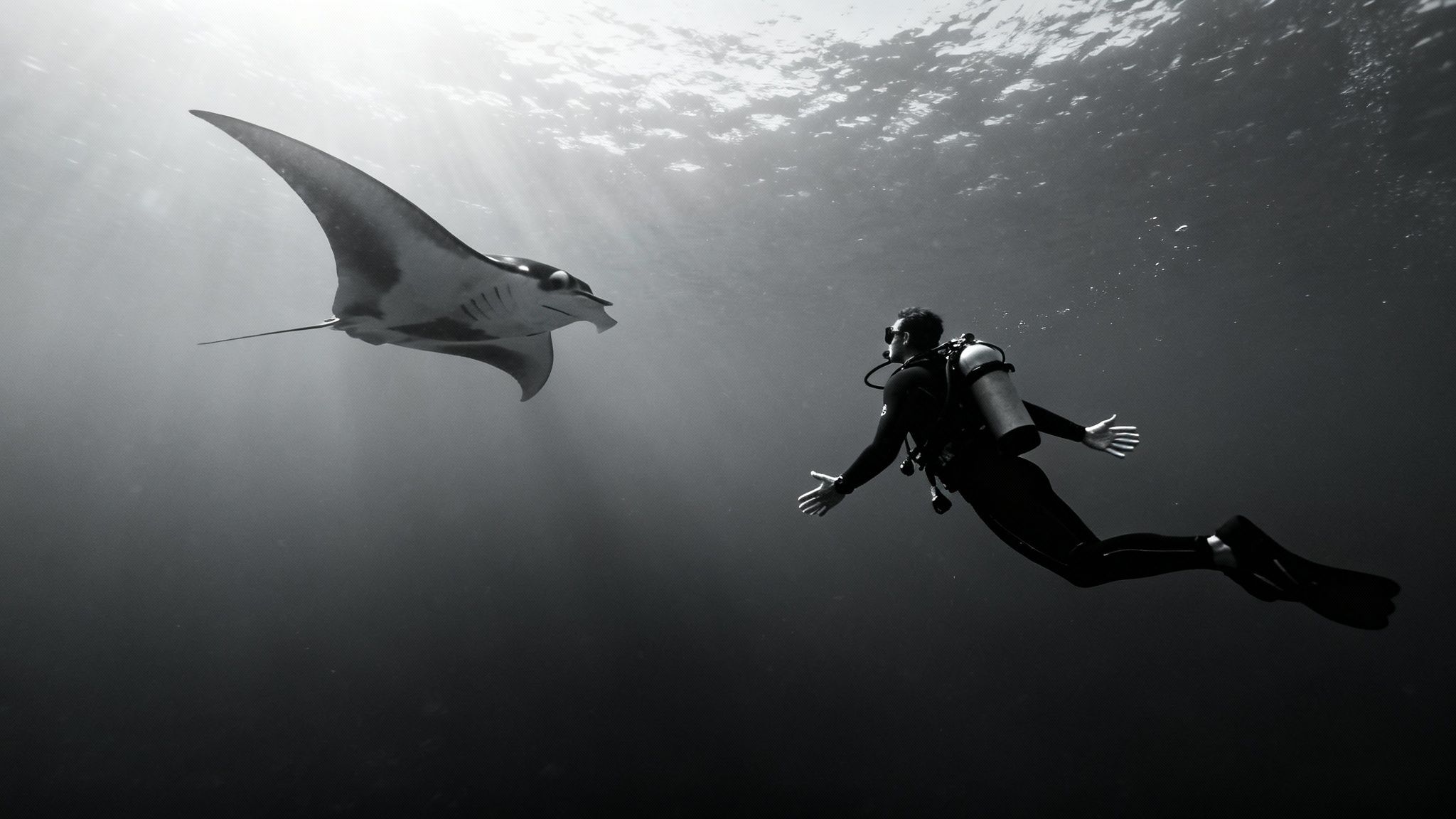
Being part of the manta ray dive in Kona is an absolute privilege. But with that privilege comes a huge responsibility to protect these gentle giants. This isn't just another tourist attraction; it's a real, up-close encounter with wild animals, and its future depends entirely on us being respectful and mindful.
To make sure this incredible experience is around for years to come, every single person in the water—divers and snorkelers alike—needs to follow a few simple, non-negotiable rules. These guidelines aren't there to ruin your fun. In fact, they do the opposite. When the mantas feel safe, they stick around longer and put on the stunning, otherworldly show you came all this way to see.
The Golden Rules of Manta Ray Interaction
The best way to think about it is that you're a guest in their house. The whole idea is to be a quiet observer and let the mantas run the show. This simple approach keeps both you and the rays safe.
- Observe Only, Never Touch: Manta rays are covered in a protective mucus coating that acts like their immune system, shielding them from nasty infections. If you touch them, you can wipe off this slime layer, leaving them vulnerable to disease. Just don't do it.
- Do Not Chase or Pursue: Let the mantas come to you. Chasing after them only stresses them out and will make them bolt, which ruins the dive for you and everyone else in the water.
- Maintain Your Position: If you're diving, stay put on the sandy bottom. If you're snorkeling, stay on the surface. This creates a wide-open space in the middle—the "water column"—for the mantas to swoop and glide through as they feed. They won't feel cornered or trapped.
Sticking to these rules is what keeps this dive sustainable. For a more detailed look at how to be a great guest in the underwater world, you can check out our guide on responsible and considerate diver etiquette.
A Deeper Connection Through Culture
Beyond just protecting the ecosystem, there's a powerful cultural reason to treat these animals with the utmost respect. In Hawaiian culture, specific animals are considered ʻaumakua—ancestral family guardians that are believed to be the embodiment of ancestors' spirits. For some Hawaiian families, the manta ray, or hahalua, is their ʻaumakua.
This belief elevates the dive from a simple tour into something much more meaningful. It adds a profound layer of reverence, reminding us that we're interacting with a creature of deep spiritual significance.
When you understand this cultural context, the whole encounter changes. You're no longer just watching an animal eat. You're witnessing a sacred being in its element, an experience that highlights the deep connection between local traditions and the conservation work we do today.
Discover More Kona Diving Adventures
The manta ray dive is an absolute showstopper, the kind of experience that stays with you forever. But believe it or not, it's just the opening act for everything the Big Island has to offer. While the mantas definitely own the night, Kona's daylight hours pull back the curtain on a whole world of vibrant reefs, ancient lava tubes, and marine life you just have to see.
If you have the time, sticking around for a few more days will completely transform your diving trip.
Daytime scuba diving tours in Kona are a must. Imagine gliding through dramatic underwater arches and caverns sculpted by volcanoes centuries ago. These incredible structures are now home to an amazing cast of characters, from sleepy white-tip reef sharks and resting sea turtles (honu) to dazzling schools of tropical fish. The water clarity here is just stunning, making every single dive a postcard-perfect moment.
Beyond the Manta Dive
If the manta encounter sparked your love for night diving, you're in for a treat. The Kona blackwater dive takes that thrill to a whole new level. It's a completely different kind of dive where you drift tethered in the deep, dark open ocean, watching some of the planet's most bizarre and beautiful creatures rise from the abyss. It honestly feels like you're floating through deep space. Find out more about this truly unique Blackwater Dive tour and see what's really down there.
For certified divers eager to sharpen their skills, Kona also has some incredible advanced diving opportunities. These charters head out to deeper, more remote sites—we're talking sponge-covered walls, hidden pinnacles, and even shark hangouts. It’s the perfect way to challenge yourself while exploring the wilder side of the Big Island.
With so much to see and do, figuring out an itinerary can be part of the fun. To make it easier, a lot of divers go for Kona diving packages that bundle a few of these incredible experiences into one trip.
Ready to see what else is waiting for you beneath the waves?
Your Manta Ray Dive Questions, Answered
It's completely normal to have a few questions before embarking on an adventure like this. We've been doing this a long time, so we've heard them all. Here are the answers to the most common things people ask when planning their manta ray dive in Kona.
Do I Need to Be Scuba Certified to See the Manta Rays?
Nope, not at all! While scuba diving gets you a seat on the ocean floor for an incredible "bottom-up" view, the snorkeling experience is just as breathtaking.
Snorkelers hang onto a large floating light board on the surface. The lights draw in the plankton, which in turn brings the giant mantas right up to you for a truly magical, face-to-face encounter.
What Happens If We Don’t See Any Manta Rays?
This is probably the biggest worry people have, and it's a fair question. These are wild animals, after all, and there are no guarantees in nature.
That said, the success rate at the Kona dive sites is remarkably high—often over 90%! To put your mind at ease, most top-tier operators, including us here at Kona Honu Divers, offer a "manta guarantee." If your trip is one of the very rare ones where the mantas don't show, you can come back out with us again for free. Just be sure to ask about the specific policy when you book.
How Long Is the Entire Manta Ray Dive Experience?
From the moment you check in to when you're back on dry land, you should plan on about three to four hours.
This timeline covers everything: the boat ride out to the site, a thorough safety briefing (plus some cool facts about the mantas), getting all your gear on, and of course, the main event—about 45-60 minutes of in-water time with these gentle giants.
Ready to book your adventure?
At Kona Honu Divers, our passion is sharing this safe, respectful, and absolutely breathtaking adventure with you. Book your manta ray dive tour today and get ready for a night you’ll talk about for years to come.