
The manta ray dive in Kona is legendary. Seriously, ask any diver who's been, and they'll tell you it's one of the most unforgettable experiences you can have underwater. It's not just a dive; it's a front-row seat to a mesmerizing underwater ballet, where massive, graceful manta rays swoop and feed on plankton, illuminated by powerful lights after the sun goes down.
What Makes the Kona Manta Ray Dive So Unique
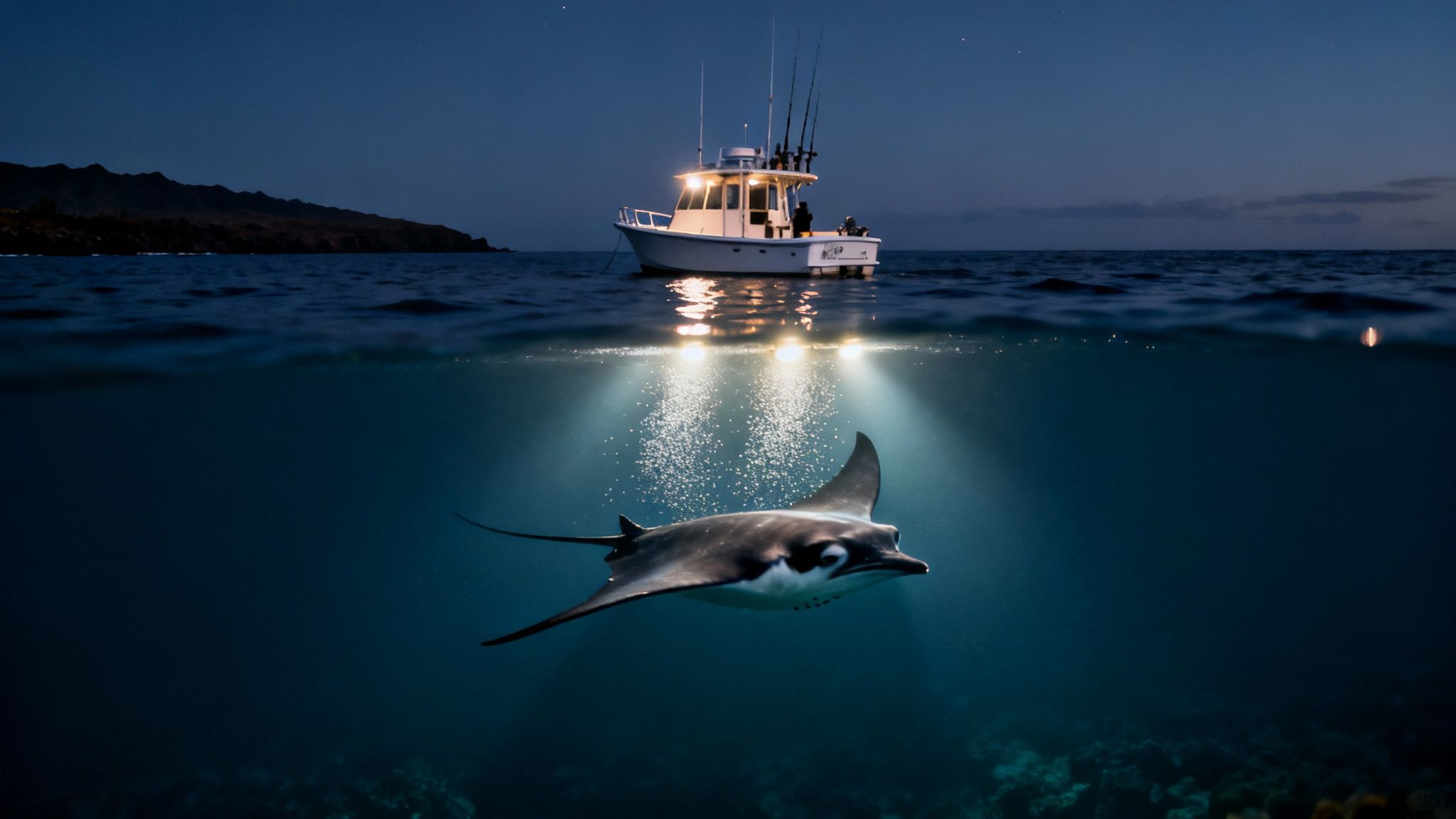
You might have seen mantas elsewhere in the world, often at "cleaning stations" where they get a spa treatment from smaller fish. But Kona is different. This is a dynamic, high-energy feeding event.
The whole thing started accidentally decades ago. Hotels along the coast had bright lights shining on the water, which attracted clouds of plankton. The mantas, never ones to pass up an easy meal, quickly figured this out and started showing up.
Today's dive operators have perfected this process, creating what's affectionately known as the "manta campfire." We anchor at designated sites, set up powerful underwater lights on the seafloor pointing upwards, and wait. The light draws in a thick soup of plankton, and soon enough, the gentle giants arrive for their nightly feast.
The Famous Kona Dive Sites
There are two main, world-renowned spots on the Kona coast for this incredible encounter. While both are fantastic, they offer slightly different vibes.
Kona Manta Ray Dive Sites at a Glance
Choosing between the two primary sites can depend on your experience level and what you're hoping to see. Here’s a quick breakdown to help you decide.
| Feature | Manta Village (Garden Eel Cove) | Manta Heaven (Keahou Bay) |
|---|---|---|
| Location | North of Kailua-Kona, near the airport | South of Kailua-Kona |
| Depth | 35-45 feet | 25-35 feet |
| Typical Sighting | Can attract larger groups of rays at once. | Extremely consistent, often with several resident mantas. |
| Best For | Confident divers comfortable with slightly deeper conditions. | Divers and snorkelers of all levels due to its calmer, shallower bay setting. |
Ultimately, you can't go wrong with either location. Both are managed by experienced operators who know how to provide a safe and spectacular experience.
Why Kona Is the Premier Destination
Kona's reputation as the best place on Earth for a manta ray dive isn't just marketing hype; it’s built on incredible consistency. These encounters draw around 80,000 visitors every year for a reason.
The success rate is astounding. Data consistently shows that the chance of seeing mantas here is between 80% and 90% on any given night. You can dive deeper into the manta ray sighting statistics to see just how reliable it is.
This incredible reliability, combined with well-established, eco-conscious guidelines to protect the animals, makes the manta ray dive Kona an ethical and absolutely awe-inspiring adventure.
Ready to see it for yourself? You can book one of the best manta ray dive tours and grab your spot for the show.
How to Choose the Right Manta Ray Tour
Picking the right operator for your manta ray dive in Kona is easily the most critical decision you'll make for this trip. A great company can turn a cool dive into a truly magical, life-changing memory. On the flip side, a subpar operator can leave you feeling rushed, crowded, and disappointed.
The secret is to look past the price tag. Focus on the quality of the experience they provide for this one-of-a-kind underwater ballet.
Think about group size. Companies that cap their numbers, like the ones we recommend, offer a massive advantage. Fewer divers and snorkelers in the water means less chaos, fewer distracting bubbles, and a much clearer, up-close view of the mantas. It fosters a more intimate and respectful atmosphere for everyone—divers and mantas included.
Dive vs. Snorkel: Which Is Right for You?
First things first, you have to decide: are you diving, or are you snorkeling? Both give you a front-row seat to the action, just from totally different angles.
- Scuba Divers: If you're certified, you'll be on the ocean floor, looking straight up. The mantas swoop and barrel-roll literally inches above your head. It’s an incredibly immersive, eye-to-eye perspective that’s hard to beat.
- Snorkelers: As a snorkeler, you'll hang out on the surface, holding onto a custom-built light board. The powerful lights attract the plankton, and the mantas swim right up from the deep to feed. You get an amazing bird's-eye view of the whole spectacle.
If you're still getting your sea legs, it can be helpful to brush up on the basics. Your personal comfort in the water is a huge factor when picking a tour. For anyone wanting to learn more about water sports or get some general scuba diving information, there are some great resources out there to help you prepare.
What to Look for in a Tour Operator
Beyond the dive-or-snorkel question, a few key things really separate the best operators from the rest.
An experienced crew is a game-changer. When the divemasters know the individual mantas by name and can predict their behavior, you know you're in good hands. They'll position you perfectly to see all the action.
Safety and conservation are non-negotiable. Look for companies that are serious about "manta etiquette"—like a strict no-touching policy. This protects these gentle giants and ensures they'll be around for generations to come.
Most reputable outfits, including the manta ray dive tours offered by Kona Honu Divers, will have you covered with all the essential gear: wetsuits, tanks, weights, and high-powered dive lights. They almost always provide snacks and drinks, too.
You'll just need to bring your certification card, a towel for after, and maybe a light jacket for the boat ride home—it can get chilly once the sun goes down.
If you want to dig deeper into your options, check out our guide on the top 5 manta ray night dive tours. It's always a good idea to see what fellow divers are saying before you book.
Getting to Know Kona’s Manta Rays
The manta ray dive in Kona isn't just another item on a vacation checklist. It's a genuine encounter, a personal introduction to some of the ocean's most intelligent and graceful inhabitants. Taking a moment to understand who these gentle giants are can turn a great dive into a profound connection with the marine world.
The main attractions of this nightly underwater ballet are the reef manta (Mobula alfredi). These are the local residents you're almost certain to meet, known for their incredible wingspans that typically average 12-14 feet. They're surprisingly social creatures and can be just as curious about us as we are about them.
Every once in a while, a true titan of the deep makes an appearance: the giant oceanic manta (Mobula birostris). As the largest rays on the planet, their wingspans can stretch beyond an astonishing 20 feet. These are true wanderers of the open ocean, so spotting one at the Kona feeding sites is a rare and unforgettable event.
How We Know Our Manta Rays
What really sets the Kona manta population apart is that we know them as individuals. This isn't just a random gathering of animals; it's a well-documented community where everyone has a name and a story.
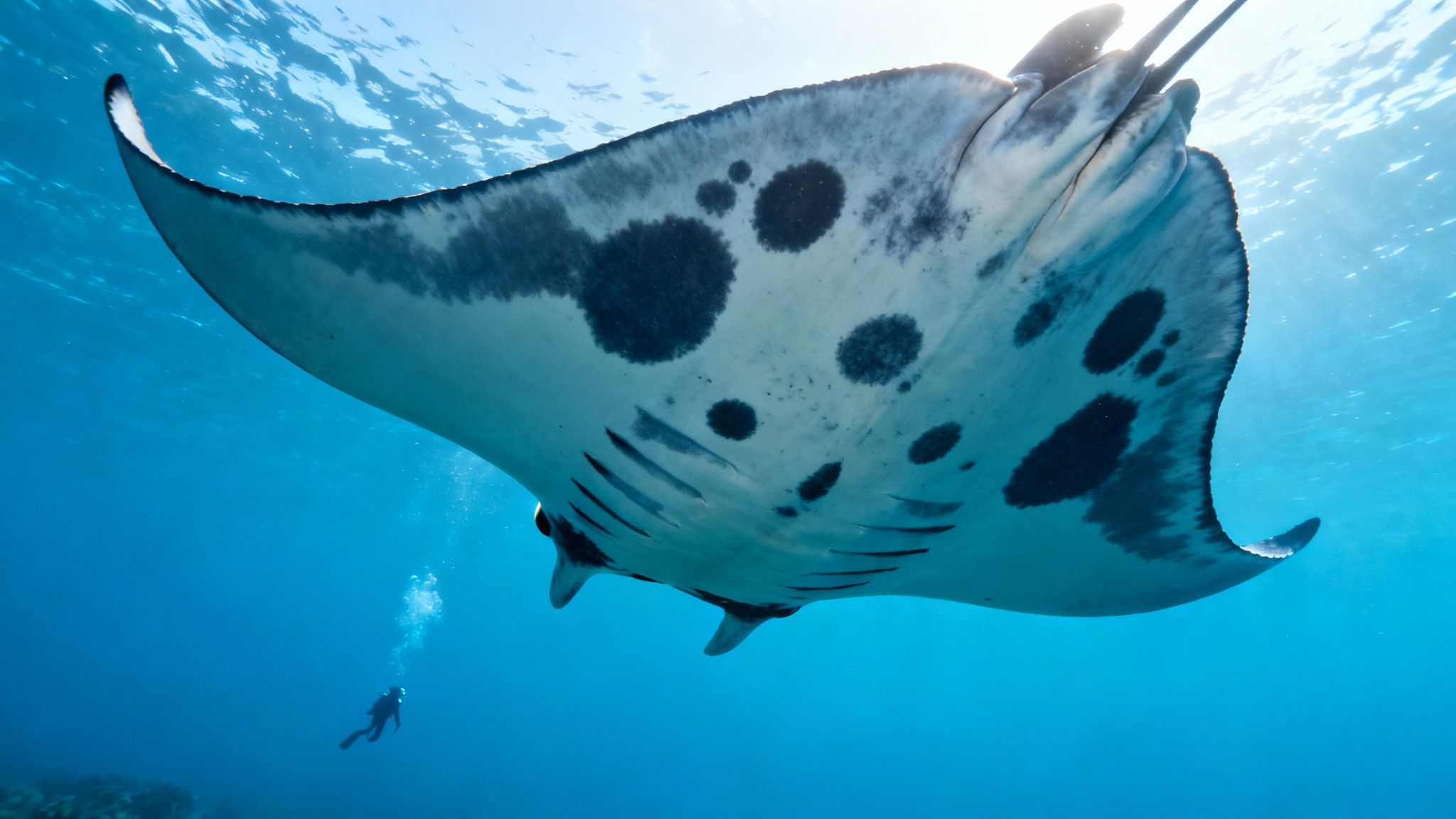
This incredible level of familiarity comes from a long-running photo-identification project. Much like a human fingerprint, the unique spot pattern on a manta ray’s belly is a one-of-a-kind identifier. Since 1991, local researchers and dive operators have been meticulously photographing these ventral patterns, building a comprehensive catalog of the local population. This massive citizen science effort has identified over 330 individual manta rays along the Kona coast—a powerful testament to how special this place is. You can dive deeper into this groundbreaking manta ray research and even browse the catalog of identified individuals yourself.
Because we can tell them apart, many of the regulars have names. Don't be surprised if you hear your dive guide call out for "Big Bertha," "Lefty," or even "Amanda Ray" during your dive. It adds a wonderfully personal touch to the whole experience.
By knowing who's who, we can track their movements, monitor their health, and understand their life cycles. It also means your dive is more than just a tour—it's an active contribution to marine conservation. You become an observer helping to protect this remarkable species. The data gathered helps ensure this incredible underwater spectacle will be here for generations to come. When you dive with the mantas in Kona, you really do become a small part of their ongoing story.
What the Manta Ray Night Dive Is Really Like
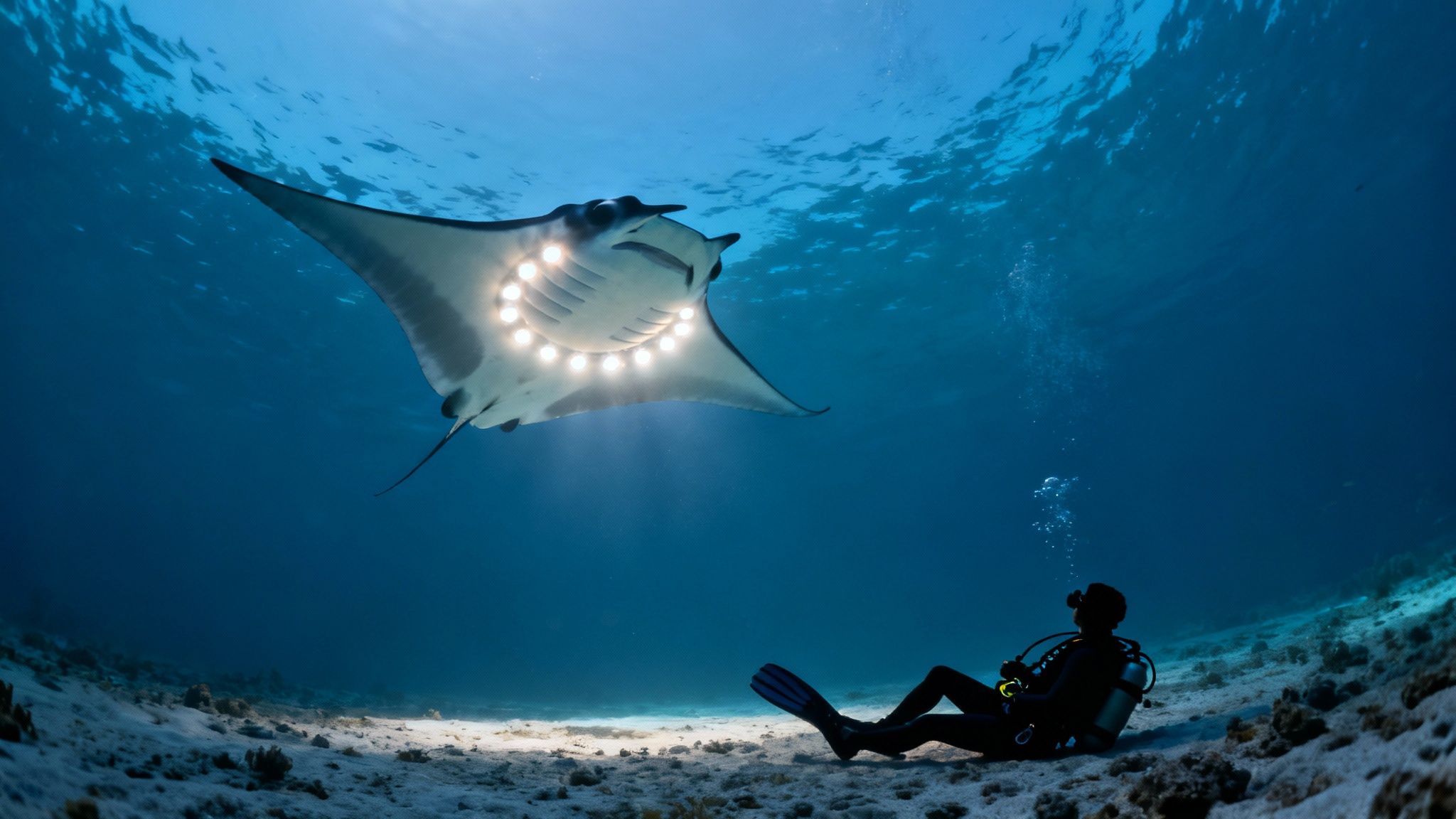
The buzz for your manta ray dive in Kona really kicks in the second you get on the boat. As the sun starts to set, painting the water with that classic Hawaiian glow, your divemaster will pull everyone together for a pre-dive briefing. This is more than just a quick safety rundown—it’s your introduction to manta etiquette.
The number one rule, and it's a big one, is do not touch the manta rays. They have a protective slime coat on their skin that keeps them healthy, and our touch can strip it away, leaving them vulnerable. The briefing also covers exactly how to position yourself on the ocean floor, the best way to aim your light, and what you can expect from the moment you jump in. It’s all about creating an encounter that’s safe, respectful, and absolutely unforgettable.
Dropping Into the Darkness
Once the briefing is over, it’s time to gear up. There’s a special kind of thrill that comes with a backward roll into the ocean at night. As you start your descent, the surface world and its sounds melt away, leaving you with just the steady, rhythmic sound of your own breathing.
Your group will follow the guide down to a spot on the sandy bottom, usually somewhere between 30 to 40 feet deep. This is where you'll find the "campfire," a big, powerful light set up in the middle. Divers get into a circle around it, find a good spot on the sand, and point their personal dive lights straight up.
All those beams of light create an illuminated stage, a beacon in the dark water. You’ll see the first signs of life almost immediately as tiny plankton are drawn to the lights, forming a shimmering, pulsating cloud. This is the dinner bell, and the guests of honor are on their way.
The Underwater Ballet Begins
You're settled on the bottom, your light cutting a path through the dark water, and the sense of anticipation is electric. Then you see it—a shadow moving on the edge of the light. The first manta ray glides into view, and it’s a moment that will genuinely take your breath away.
Soon, another joins, and then another. They swoop and soar in graceful arcs, performing these incredible barrel rolls right over your head as they filter the plankton from the water. You can't truly appreciate their size until one is just inches above you, its massive wingspan casting a shadow that momentarily blocks out the light.
This isn't just watching animals in the wild; it's something more profound. You become part of their world for a short time, a fixture in their nightly feeding ritual. The feeling of connection is something you’ll never forget.
Making the Most of Your Dive
To get the absolute best experience on your manta ray dive in Kona, a few simple things can make a world of difference.
- Nail Your Buoyancy: Staying low and still on the seafloor is the name of the game. It makes you non-threatening and keeps the mantas' flight path clear for those amazing close passes.
- Be an Air Sipper: The calmer you are, the slower you'll breathe. More air means more bottom time, and you'll want every single second you can get with these creatures. Just relax and enjoy the show.
- Mind Your Space: Remember, you're sharing this moment. Be aware of your fins so you don't kick up sand and ruin the view for others. A little situational awareness ensures everyone has a fantastic dive.
Ready to see it for yourself? Take a look at the available manta ray dive tours and grab a spot on the boat.
How to Get Great Photos of the Manta Rays
Trying to capture the sheer magic of the manta ray dive in Kona is an awesome challenge. The good news? You don't need a thousand-dollar camera rig to go home with incredible images and video. Even simple gear can produce amazing results if you know how to use it.
If you’re bringing a GoPro or a basic point-and-shoot, I’d suggest focusing on video. It’s the perfect way to capture the graceful, flowing movements of the mantas as they barrel-roll through the water. For even better footage, snap on a red filter. It's a simple trick that works wonders, bringing back the vibrant colors that get washed out at depth and stopping everything from looking flat and blue.
For More Advanced Shooters
Diving with an external strobe setup? You've got the power to capture some seriously dramatic, tack-sharp still photos. Your biggest enemy down there will be backscatter—all those pesky white flecks in your images caused by your strobe lighting up the plankton floating in the water.
The secret to beating it is all about strobe positioning. You'll want to get them as far away from your lens as possible—out to the sides and even a little bit in front of your housing. This way, you're lighting the manta from the side, not the water directly between your lens and the animal. Getting your camera settings dialed in is the other half of the battle.
A Good Starting Point: I usually begin around ISO 400, f/8, and a shutter speed of 1/125s, then tweak from there. It all depends on how much ambient light there is and how powerful your strobes are. Focusing is also a pain in the dark, so a good trick is to pre-focus on something predictable, like another diver's tank or a steady dive light, before a manta glides into frame.
Manta-Friendly Photo Etiquette
Honestly, the most important photography tip has nothing to do with f-stops or strobes. It’s all about being a responsible, respectful diver. We're visitors in their world, and the experience is what matters most.
- Hold Your Position: Plant yourself on the seafloor and stay put. Let the mantas come to you. Chasing after them is a surefire way to spook them and ruin the dive for everyone else.
- Watch Your Gear: It’s easy to get tunnel vision when you’re looking through a viewfinder. Be mindful of where your camera and strobes are so you don’t accidentally block someone else's view or bump into them.
- No On-Camera Flash: The massive "campfire" of dive lights on the bottom provides all the illumination needed. The harsh, direct pop from a built-in camera flash can startle the mantas, so keep it turned off.
Remember, your camera is just one piece of the puzzle. For a full rundown of what to bring, take a look at our guide on the gear you will need for your Kona diving adventure. By keeping these tips in mind, you’ll not only get incredible photos but also help protect this amazing natural encounter for years to come.
How to Be a Responsible Manta Ray Diver
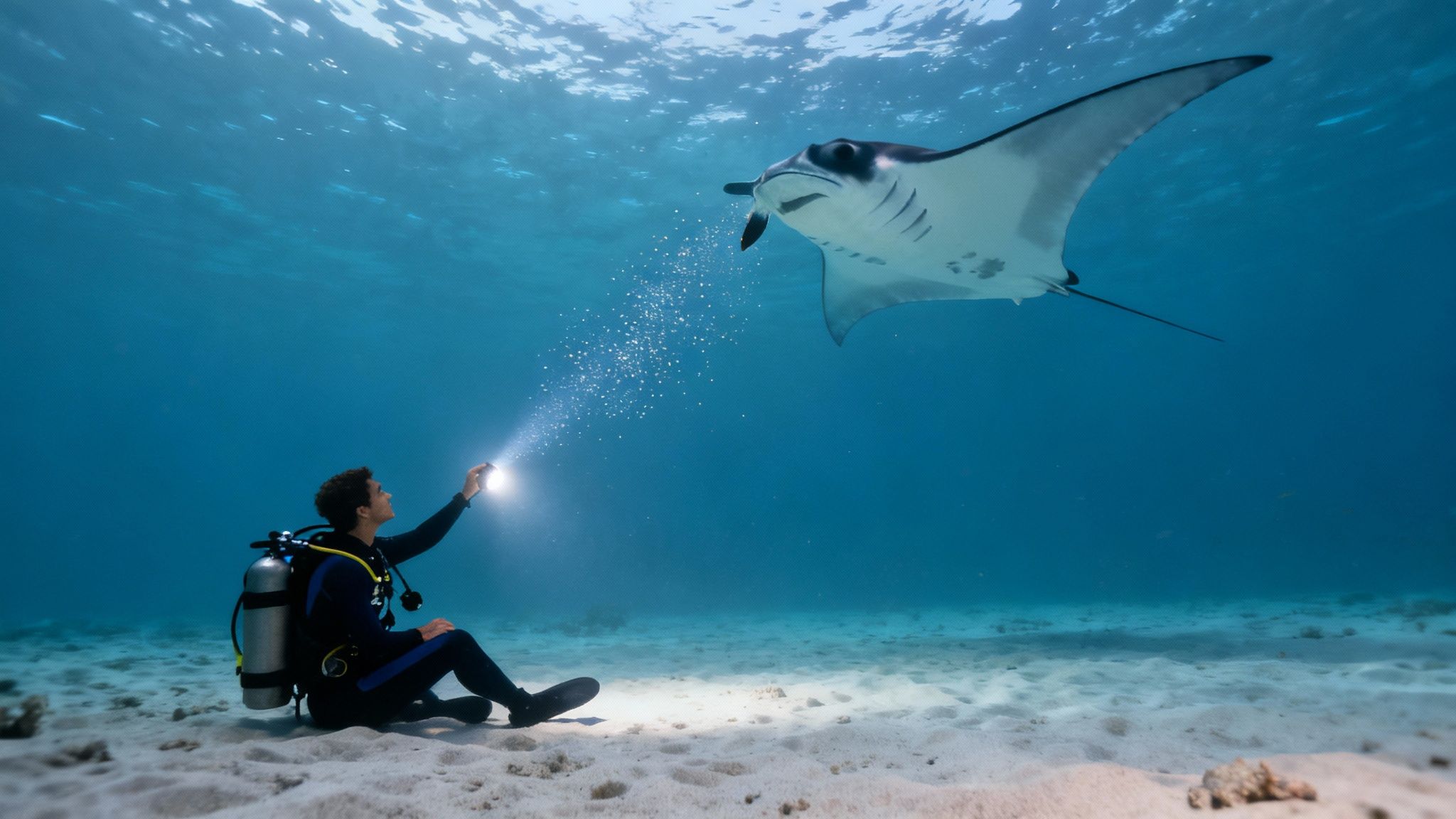
The future of the incredible manta ray dive in Kona really does rest on our shoulders. As divers, we're guests in their world, and it's up to us to make sure our presence doesn't cause any harm. Following the guidelines isn't just about a good dive; it's about protecting this experience for everyone who comes after us.
The number one rule is simple: observe, don't interact. This means absolutely no touching the mantas, ever. They have a delicate mucus coating on their skin that acts as a shield against infection. If we touch them, we can easily damage that protective layer and leave them vulnerable to disease. It’s a small act of respect that makes a huge difference.
Manta Etiquette in Action
To keep the mantas safe and the dives sustainable, everyone follows a set of "Manta Etiquette" rules. They're straightforward, easy to remember, and absolutely critical for protecting Kona’s famous manta population.
- Stay on the Seafloor: Find your spot on the sand and stay put. This keeps the water column clear, giving the mantas plenty of room to swoop and glide overhead as they feed.
- Lights Up, Not Out: Point your dive light straight up toward the surface. This attracts the plankton and creates a "campfire" that draws the mantas in, all without blinding them with a direct beam to their eyes.
- Be a Passive Observer: This can be the hardest part, but resist the temptation to swim after a manta. Just relax and let them come to you. The most magical moments happen when you’re still and they feel comfortable getting close.
These simple rules are vital for the well-being of Kona's resident reef mantas (Mobula alfredi), some of which have incredible wingspans of up to 14 feet.
Honestly, following these guidelines doesn't just protect the mantas—it makes for a much better dive. When a group is calm and respectful, the mantas are more likely to put on their natural, breathtaking feeding display right above your head.
By choosing to be a considerate guest in their home, you're playing a direct role in conserving this one-of-a-kind ecosystem. If you want to dive deeper into proper underwater conduct, check out our guide on being a responsible and considerate diver.
Ready to join a tour that puts manta safety first?
Your Manta Ray Questions Answered
Let's tackle some of the most common questions people have before they book this incredible adventure. Knowing what to expect will help you plan your trip and get the most out of seeing Kona's famous manta rays.
Do I Need to Be a Certified Diver?
Not at all! You can have an amazing, up-close encounter whether you're a certified diver or a snorkeler. The experience is just a little different depending on where you are in the water.
- For snorkelers: You'll hold onto a custom-built light board that floats on the surface. The bright lights attract the plankton, and the mantas swim right up to feed, sometimes just inches below you.
- For divers: If you're certified, you'll be on the sandy bottom looking up. This gives you a front-row seat to watch the mantas perform their graceful barrel rolls and glide right over your head.
Both views are absolutely spectacular.
Is Seeing Manta Rays Guaranteed?
While nothing in nature is ever 100% guaranteed, Kona's manta ray dive has an incredibly high success rate—we're talking over 90% on most nights. These are wild animals, after all.
That said, the best operators, including Kona Honu Divers, stand by their tours with a "manta guarantee." If for some reason the mantas decide not to show up, you can come back for another trip, free of charge.
> **Pro Tip:** Book your manta ray tour for one of the first few nights of your vacation. That way, if you need to use the guarantee, you have plenty of time to reschedule.
What’s the Best Time of Year to Go?
Anytime! The Kona manta ray dive is a fantastic year-round activity. The resident manta population doesn't migrate, which means they are here feeding every single night.
The water is a bit warmer from about April to October, but the experience is just as breathtaking in the winter months. No matter when you plan your trip to the Big Island, the mantas will be waiting.
Is This Dive Safe?
Yes, this is a very safe and well-managed experience, provided you go with a professional and reputable operator. Safety is the absolute top priority.
Every tour starts with a detailed safety briefing before anyone even touches the water. The crews provide all the necessary gear and have experienced guides in the water with you to ensure the dive is controlled, respectful to the animals, and unforgettable for all the right reasons.
Ready to see the magic for yourself? The crew at Kona Honu Divers would love to guide you on this underwater adventure.