
Picture this: you’re floating in the warm, dark Pacific Ocean, completely weightless. Suddenly, a colossal, gentle creature with a wingspan wider than a car swoops down from the darkness, gliding inches above your head. It’s not a dream or a sci-fi movie—it's the world-famous manta ray dive Kona is known for, a true bucket-list adventure for anyone who loves the ocean.
What Makes the Kona Manta Ray Dive So Famous
The Kona coast on Hawaii’s Big Island has a legendary reputation for one simple reason: it is, without a doubt, the most reliable place on the entire planet to see manta rays. While other destinations offer seasonal or hit-or-miss sightings, Kona delivers a spectacular underwater ballet almost every single night.
This incredible predictability all started by accident decades ago. A hotel owner pointed a light into the water, which attracted a cloud of plankton. The local manta rays, being incredibly smart, quickly figured out this was an all-you-can-eat buffet. Today, expert operators like Kona Honu Divers have refined this simple concept into a breathtaking and sustainable encounter.
The Science Behind the Spectacle
At the heart of the experience is the "manta campfire." After the sun goes down, dive boats head to specific sites and place powerful, eco-friendly lights on the seafloor or on floating rafts. These lights act like giant magnets for phytoplankton and zooplankton—the manta rays' favorite food.
Once the plankton gather, the show begins. The mantas swoop in, performing graceful somersaults and barrel rolls through the beams of light. With their huge mouths wide open, they filter the dense soup of plankton from the water, often coming just inches from the divers and snorkelers watching in awe.
Kona's unique geography, with its calm and protected bays, provides the perfect natural amphitheater for this nightly feast. This magical combination of factors has turned the manta ray dive in Kona into the global gold standard for responsible and mind-blowing wildlife encounters.
An Unforgettable Encounter with Gentle Giants
What really makes this experience so special is the near-guarantee of seeing these animals. The Kona coast has a documented sighting success rate of 80–90% on guided tours. That’s why around 80,000 people travel here each year for a front-row seat. You can dig into more of the fascinating statistics in this guide from Manta Ray Night Snorkel Hawaii.
Of course, choosing a top-rated and responsible operator is crucial for a great experience. Kona Honu Divers has built an incredible reputation for running Kona scuba diving tours that are safe, respectful to the mantas, and truly unforgettable.
This isn’t just another dive. It’s a chance to connect with one of the ocean's most intelligent and magnificent creatures. From the moment you slip into the water to the final, heart-stopping fly-by, the Kona manta ray dive is an experience that will stick with you for a lifetime.
Ready to see the magic for yourself? You can check out available manta ray dive tours and book your spot for nature’s greatest show.
Understanding Kona’s Gentle Giants
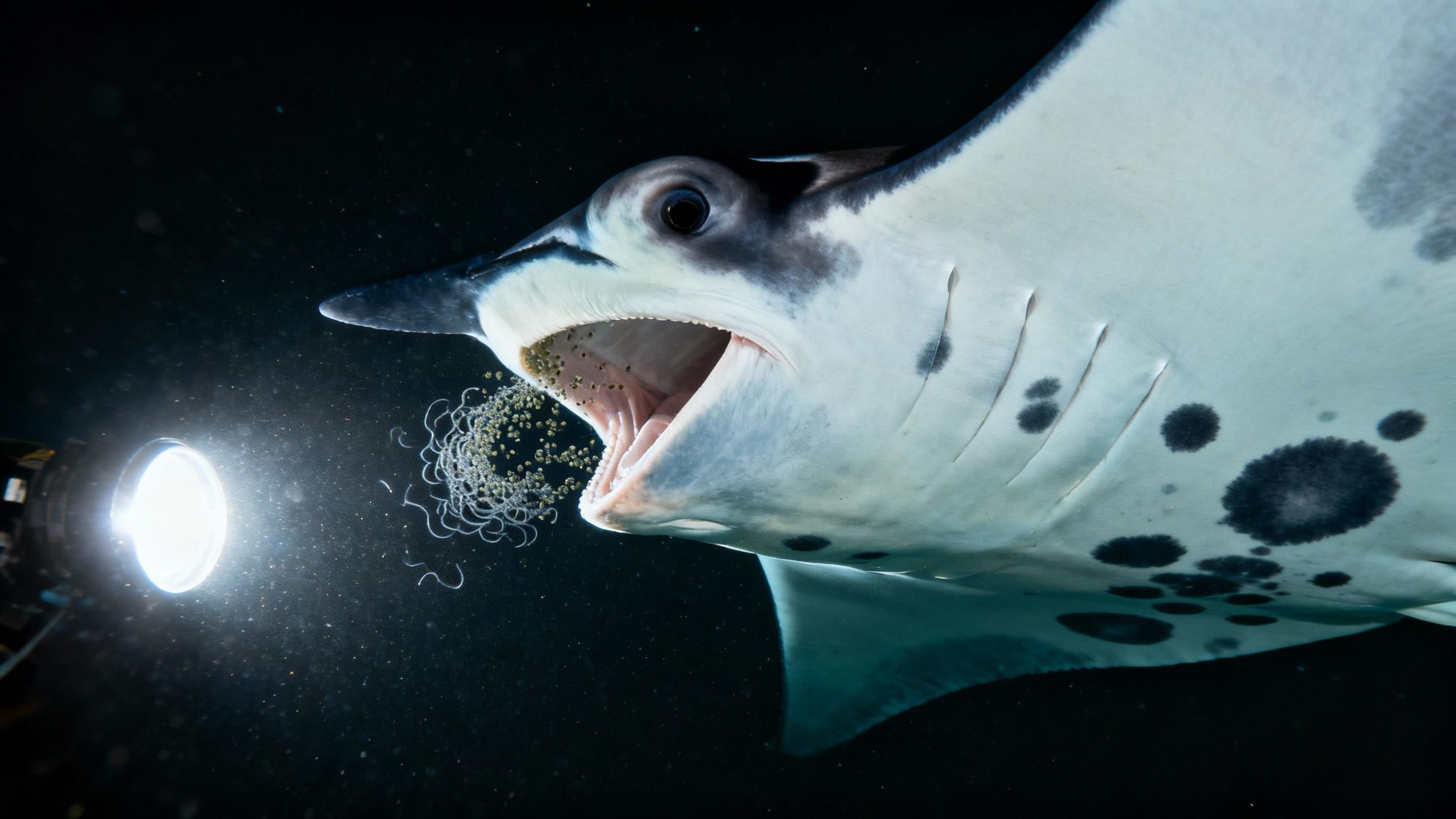
The famous Kona manta ray night dive is so much more than a spectacular light show. It's a genuine, up-close encounter with some of the smartest and most graceful creatures in the sea. To really get the most out of it, it helps to understand a bit about the biology and behavior of Kona's resident reef mantas. When you know what’s actually happening down there, the whole experience transforms from just watching to truly connecting.
The science behind the "manta campfire" is beautifully simple. Dive operators set up powerful lights that shine up from the seafloor, illuminating a big patch of water. This bright light attracts huge clouds of plankton—microscopic critters that are the manta rays' favorite meal. The mantas, being incredibly intelligent animals, have figured out that these lights mean an easy, all-you-can-eat buffet is served. It's this learned behavior that makes the manta ray dive in Kona such a reliable and mind-blowing event.
Meet the Locals by Name
Here's something that makes the Kona dive truly special: many of the mantas are known individuals. Local guides and researchers can actually identify specific mantas by the unique spot patterns on their bellies. These markings are like a fingerprint, allowing them to track and study the rays over many years.
This personal touch completely changes the dive. You're not just seeing "a manta ray." Your guide might point out a local celebrity like:
- Big Bertha: One of the original and largest mantas in the area, she’s known for her massive size and impressively calm presence.
- Lefty: You can spot him easily because of an old, distinctive injury to his left cephalic fin (the lobe near his mouth).
- Koie: This manta is famous for her graceful, acrobatic feeding style. She often performs beautiful barrel rolls right near the divers.
Knowing their names and a little of their history creates a real connection. You start to see them as individuals with their own personalities, not just a species.
A Living Laboratory for Manta Ray Research
Because these encounters happen so consistently, Kona has become a world-renowned hub for manta ray research. The Kona manta population is one of the most studied on the planet, thanks in large part to a citizen science project that has cataloged over 330 individual manta rays since 1991. The database is constantly growing, with thousands of encounters logged by researchers, dive guides, and even tourists like you.
While oceanic mantas can reach an unbelievable 7 meters (22 feet) across, the stars of Kona’s night dive are reef mantas, which still have an impressive wingspan averaging 3–4 meters (10–14 feet). You can dive deeper into some amazing facts about Kona's mantas to learn more.
This ongoing research gives us vital clues about their life cycles, social habits, and migration patterns—all crucial information for protecting them.
By participating in a professionally guided manta ray dive in Kona, you are not just a spectator; you are contributing to a legacy of research and conservation that helps protect these incredible animals for future generations.
This deeper understanding—from the science of their feeding to the personal stories of individual mantas—is what elevates the dive into a truly meaningful adventure. It's your chance to see a complex ecosystem in action and meet its most magnificent residents on a first-name basis.
Ready to meet these gentle giants for yourself? An expertly guided tour is the best way to experience the magic safely and responsibly.
How to Choose the Best Manta Ray Tour
The Kona coast is world-famous for its manta rays, so it's no surprise there are plenty of boats ready to take you out. But here's the thing: picking the right tour operator is the single biggest decision you'll make. It’s what separates a decent trip from an absolutely unforgettable, safe, and magical manta ray dive kona experience.
Your first choice comes down to how you want to witness the show: from below the surface or from above.
Manta Ray Dive vs Manta Ray Snorkel
Deciding whether to scuba dive or snorkel is all about the perspective you're after and your comfort level in the water. While both are incredible, they offer two very different ways to experience the manta ray ballet.
To make it easier, here's a quick side-by-side look at what to expect from each.
| Feature | Scuba Diving | Snorkeling |
|---|---|---|
| Perspective | Bottom-up view from the ocean floor | Top-down view from the water's surface |
| Requirements | Scuba certification is mandatory | No certification needed; basic water comfort |
| Proximity | Mantas often glide inches overhead | Mantas come very close to the surface |
| Equipment | Full scuba gear (tanks, BCD, regulator) | Mask, snorkel, fins, and flotation device |
| Best For | Certified divers seeking an immersive experience | Families, non-divers, and those new to ocean activities |
So, which is right for you? If you’re a certified diver who wants to feel completely surrounded by the action, diving is your ticket. If you're not certified or prefer to stay on the surface, snorkeling offers a spectacular bird's-eye view that’s just as breathtaking. You honestly can't go wrong either way.
What to Look For in a Tour Operator
Okay, you've decided between diving and snorkeling. Now, how do you pick a company? This is where a little research goes a long way. A top-notch operator like Kona Honu Divers doesn't just take you out on a boat; they create a whole experience built on safety, intimacy, and a deep respect for the animals.
Here are the non-negotiables to look for when booking your tour:
- An Ironclad Safety Record: This is number one, period. You want operators with seasoned, certified guides and a flawless reputation. A great crew runs a tight ship, gives clear safety briefings, and makes sure every single person feels confident and looked after.
- Small Group Sizes: Imagine trying to watch a beautiful sunset while jostling for space in a huge crowd. No thanks. A smaller group gives you a front-row seat to the action, free from bumping into fins and cameras. It's just a more personal, relaxed, and ultimately better experience.
- Real Eco-Consciousness: The best companies are in this for the long haul, and that means protecting the mantas. Look for operators who live by the "passive observation" rule—no touching, no chasing, no getting in their way. They should be passionate about educating their guests on how to be respectful observers.
- Guides Who Know Their Stuff: A guide can make or break the trip. An experienced guide doesn't just point and say, "There's a manta." They'll tell you its name (yes, they have names!), share amazing facts about its behavior, and point out other cool critters hiding in the reef. It turns a viewing into an education.
When you find an operator that nails these four things, you know you're in good hands. It shows they're committed to giving you a safe, respectful, and truly incredible manta ray dive in Kona.
Ready to book an unforgettable trip with an operator that checks all the boxes? You can learn more about their world-class manta ray dive and snorkel tours and secure your spot today.
Preparing for Your Kona Manta Ray Dive
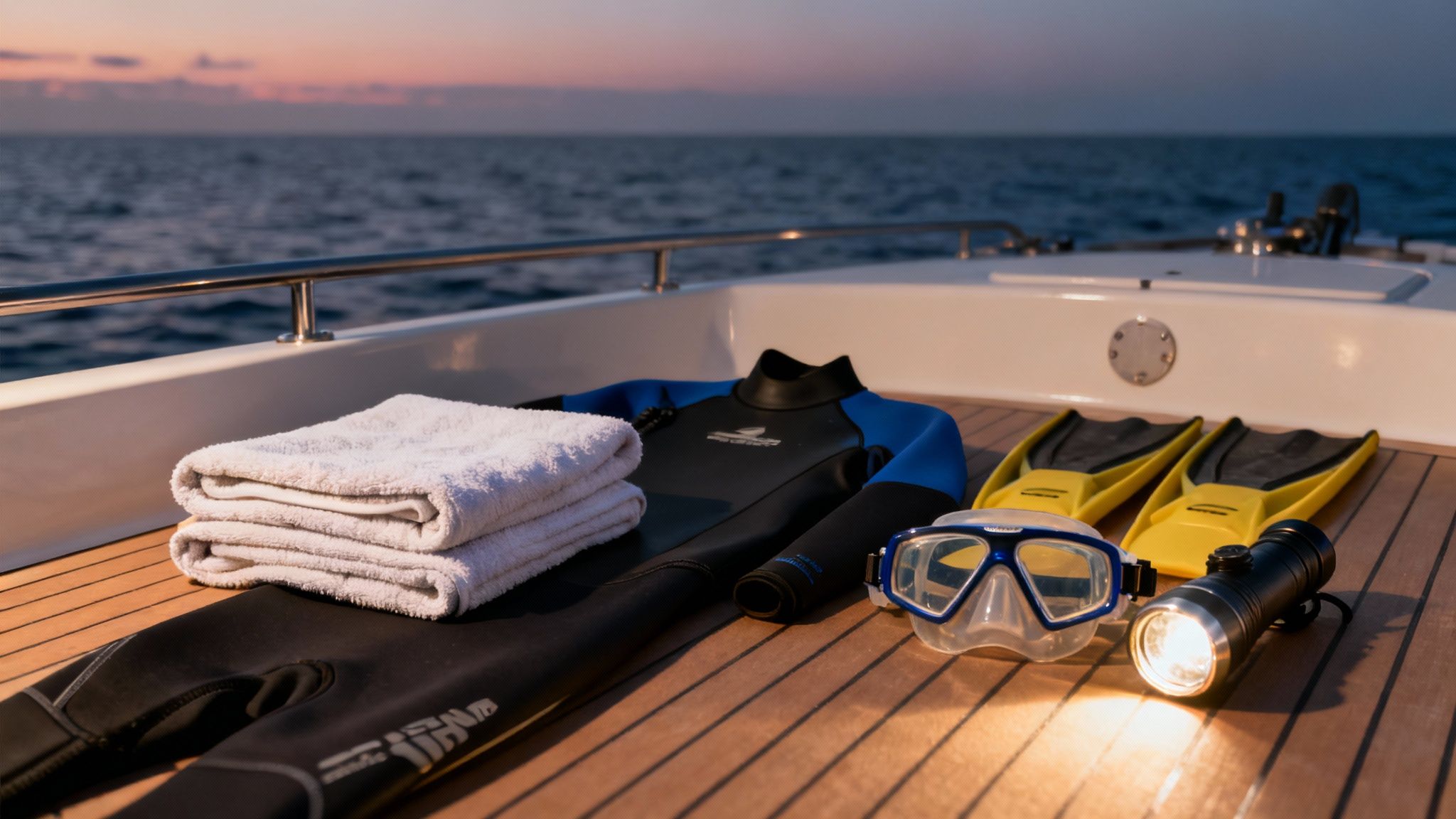
A little prep work can be the difference between a good dive and an absolutely unforgettable one. When you know what to bring and what to expect for your manta ray dive Kona adventure, you can trade any pre-dive nerves for pure, unadulterated excitement. Let's walk through everything you need to know, from your personal packing list to how the evening typically unfolds.
The great news is that when you book with a professional dive operator, they handle most of the heavy lifting. All the essential scuba or snorkel gear—masks, fins, wetsuits, and lights—is almost always provided. This means you'll have high-quality, well-maintained equipment that’s right for the job.
Most tours even provide snacks and drinks on the boat to keep your energy up. Your main responsibility? Just show up ready for the experience of a lifetime.
Your Personal Packing Checklist
While the dive shop has the core gear covered, a few personal items will make your trip that much more comfortable. Think of it as your personal comfort kit for before and after hitting the water.
- Towel & a Change of Clothes: Nothing feels better than a warm, dry towel after a night dive. Having a dry set of clothes makes the boat ride back to the harbor infinitely more enjoyable.
- A Warm Jacket or Sweatshirt: Even in Hawaii, the boat ride back can get surprisingly chilly once you’re out of the water. A windbreaker or a cozy sweatshirt is an absolute must.
- Reef-Safe Sunscreen: If you're on a two-tank trip that kicks off in the late afternoon, you'll want to apply reef-safe sunscreen to protect your skin and Hawaii's fragile coral reefs.
- Reusable Water Bottle: Staying hydrated is key. Most boats have water, but bringing your own reusable bottle is a fantastic way to cut down on plastic waste.
- Waterproof Camera: You’re going to want to capture this. An underwater camera like a GoPro is perfect for the job, but remember to turn off the flash—it can bother the mantas.
If you want to get into the nitty-gritty of dive gear, have a look at our full guide on the gear you will need for your Kona diving adventure.
Managing Common Concerns
It’s totally normal to have a few butterflies, especially if this is your first night dive or you get a little queasy on boats. The good news is that these common worries are easy to manage with a bit of planning.
If motion sickness is a concern, consider taking an over-the-counter remedy like Dramamine or Bonine before you head out. Just be sure to follow the directions, as some need to be taken an hour or two before departure to be effective. Booking a spot on a larger, more stable boat can also make for a much smoother ride.
Worried about getting cold? A well-fitting wetsuit is your best friend. Reputable operators will provide one, but if you know you get chilly easily, just mention it to the crew. They can often find you a thicker suit or an extra layer to keep you comfortable.
The entire experience is designed with your safety and comfort in mind. From the detailed safety briefing before you leave the harbor to the watchful eyes of certified divemasters in the water, you are in expert hands the whole time.
The trip usually starts with a check-in and a safety briefing right at the harbor. Once you're on the boat, you’ll get a beautiful sunset cruise out to the dive site. Your guides will review the plan one last time, and then it’s into the water for about 30-45 minutes of pure magic. Afterward, you’ll climb back on board for a relaxing ride back to shore. Knowing the flow of the evening helps take the mystery out of it, letting you relax and just soak in every incredible moment of your manta ray dive in Kona.
Safety and Sustainable Manta Interactions
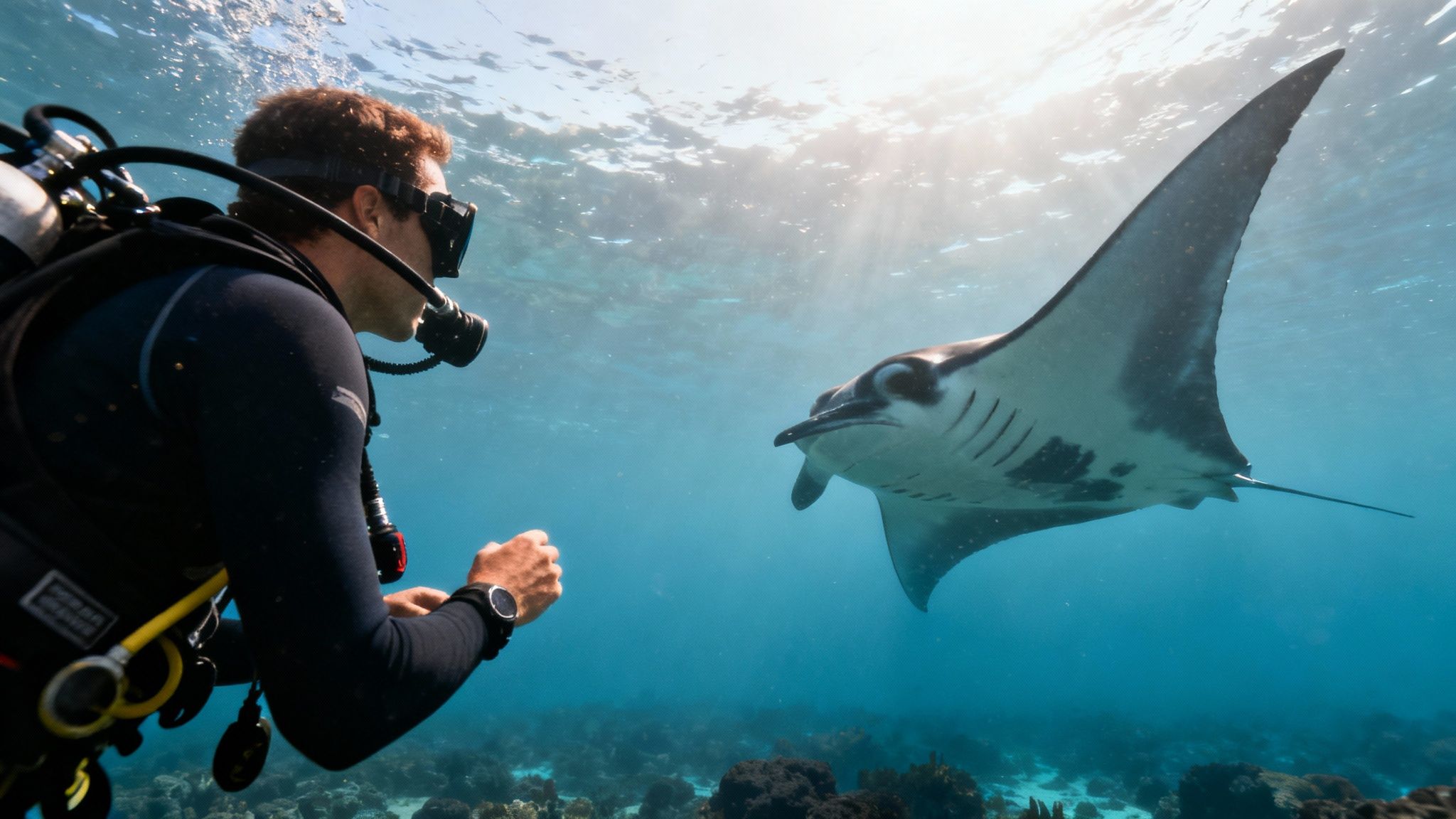
Participating in the manta ray dive Kona offers is far more than just another dive; it’s a privilege. We’re stepping into their world, a delicate marine ecosystem that thrives when we treat it with respect. Protecting Kona's incredible manta population is a responsibility every diver shares, ensuring this magical encounter can continue for generations.
The entire experience is built around one simple but powerful concept: passive observation. You're here to watch the show, not become a part of it.
The Golden Rule: No Touching, Ever
If there’s one rule to remember, it’s this: never, ever touch a manta ray. It’s the most critical guideline for a reason. Manta rays are covered in a protective mucus layer, which is their primary defense against harmful bacteria and parasites.
When you touch a manta, you can inadvertently wipe off this vital coating, leaving them vulnerable to skin infections and disease. Think of it like admiring a priceless work of art in a museum—you can look, but you can’t touch. By keeping your hands to yourself, you are directly helping to keep them healthy.
Following Manta-Safe Diving Practices
To keep both divers and mantas safe, reputable operators follow a strict set of guidelines that have been refined over years of experience. These practices are designed to create a calm, predictable environment where the mantas feel comfortable enough to feed naturally right above your head.
Here are the key rules you'll be briefed on before you hit the water:
- Stay on the Bottom: As a diver, your place is on the sandy ocean floor. This keeps the water column clear, giving the mantas a wide-open space to swoop and glide without any obstacles.
- Hold Your Position: Get comfortable, whether you’re kneeling or lying flat, and stay put. Chasing after the mantas will only scare them away and ruin the experience for everyone. Let them come to you.
- Lights Point Up: Your dive light should always be pointed straight up toward the surface. This creates a cone of light that attracts plankton, which in turn draws the mantas in for their dinner.
- Mind Your Bubbles: It's a simple courtesy, but try to time your breathing so you don't exhale directly into a manta's path as it passes overhead. It helps keep them calm and comfortable.
Following these rules makes you a predictable, non-threatening part of the underwater landscape. For a deeper look into responsible ocean behavior, check out our guide on considerate diver etiquette.
Your role is to be an underwater rock—still, quiet, and observant. The more passive you are, the more comfortable the mantas will be, and the closer they are likely to approach.
Kona's Commitment to Conservation
The Kona community has truly created a world-class model for sustainable ecotourism. Despite the immense popularity of the manta ray dive in Kona, local operators work together to protect these gentle giants. This dedication is especially important when you look at the bigger picture.
While Kona's manta population is thriving, the species faces serious threats worldwide. The IUCN classifies manta rays as vulnerable to extinction due to dangers like overfishing. The success story here in Kona proves that responsible tourism can be a powerful force for conservation, blending science and sustainability into a beautiful, working model.
By choosing a responsible operator and following these simple guidelines, you're doing your part to ensure the Kona manta ray dive remains a beacon of sustainable wildlife interaction for years to come.
Your Manta Dive Questions, Answered
It's totally normal to have a few last-minute questions, even after you've done your homework. An adventure like Kona's manta ray night dive is a once-in-a-lifetime experience, and you want to feel completely ready.
Think of this as your final check-in before the big show. We've gathered the most common questions we hear from our guests to put your mind at ease so you can focus on the magic ahead.
What’s the Best Time of Year to See the Mantas in Kona?
This is the best part: there’s no bad time! The Kona manta ray dive is a year-round spectacle, which is one of the things that makes it so special.
Thanks to our calm, protected coastline and a steady food supply, the mantas show up for their plankton buffet pretty much every single night. The overall sighting success rate is an incredible 90% throughout the year.
While it’s true that the summer months (April to October) can sometimes bring even flatter, glassier seas, the manta activity itself doesn't really change with the seasons. The real key to a great trip isn't the calendar date—it's choosing a great crew who knows exactly where to find the action on any given night. For a deeper dive, check out our guide on when to dive with manta rays in Kona.
Is the Manta Ray Dive Really Safe for Everyone?
Absolutely. Your safety is the top priority for every reputable operator in Kona. The entire encounter is carefully managed to be a safe, comfortable, and awe-inspiring experience for everyone, from seasoned divers to first-time snorkelers.
Here’s how we keep everyone safe:
- For Snorkelers: You don't need to be a champion swimmer. You'll be given a wetsuit and other flotation gear, and you’ll hang onto a large, custom-built light board that floats on the surface. All you have to do is float and watch the show happening just feet below you. It's incredibly serene.
- For Divers: A certified divemaster will guide you to a specific spot on the sandy ocean floor. These sites are fairly shallow, usually between 25 and 40 feet, and are tucked into bays protected from any strong currents. It’s a very controlled and predictable environment.
From the moment you step on the boat, you're in the hands of experienced pros whose entire job is to make sure your adventure is as safe as it is unforgettable.
What Happens If We Don’t See Any Manta Rays?
It's extremely rare for the mantas to be a no-show for dinner, but they are wild animals, so a sighting can never be 100% guaranteed. But the best operators for the manta ray dive Kona is famous for are so confident you'll see them that most offer a "manta guarantee."
This means that on the very off chance your tour doesn't see any mantas, you can come back for another trip for free, usually on a standby basis. It’s not just a nice policy—it’s a testament to just how reliable this encounter is. Just be sure to confirm the specific guarantee policy with your operator when you book.
Can I Touch the Manta Rays?
No. This is the golden rule, and it's non-negotiable. You must never, under any circumstances, touch a manta ray.
These beautiful creatures have a delicate mucus coating on their skin, which is their primary defense against harmful bacteria. When a person touches them, it can rub off this protective slime layer and leave them vulnerable to infections. Chasing or reaching out also disrupts their natural feeding behavior and causes them stress.
The whole point of an ethical wildlife encounter is passive observation. We are guests in their world. Your job is to simply watch in awe as they glide, swoop, and somersault all around you.
By keeping your hands to yourself, you are actively helping protect Kona's beloved manta ray population. It ensures this incredible experience remains sustainable and magical for generations of divers to come.
Ready to see this underwater ballet for yourself? At Kona Honu Divers, we're committed to running the safest, most respectful, and most breathtaking manta ray dive on the Big Island. Our experienced crew and small groups mean you get a front-row seat to one of nature's greatest spectacles.
Book your 2-Tank Manta Dive & Snorkel Tour today and get ready for an adventure you’ll never forget.