
Imagine floating in the dark, tropical ocean while majestic manta rays, some with wingspans wider than a car, glide effortlessly just inches away. This isn't a scene from a documentary; it's the world-famous manta ray dive in Kona, one of the most profound underwater encounters you can have on this planet.
This is your essential guide to experiencing this bucket-list adventure for yourself.
Why Kona is the Manta Ray Capital of the World
So, what makes the Kona coast the undisputed best place on Earth for this dive? It boils down to a perfect storm of reliable sightings, great conditions, and a deep, community-wide respect for the animals.
Unlike other spots where a manta encounter is a lucky break, Kona offers a near-guarantee of seeing these gentle giants up close. Night after night, they show up for dinner.
This guide breaks down everything you need to know, from the best dive sites to what to expect on the boat. We'll introduce you to expert operators like Kona Honu Divers, who have built their reputation on keeping both you and the mantas safe. Let's get you ready for what will likely be the highlight of your Hawaiian journey.
The Famous Manta Ray Dive Sites
The manta ray dives in Kona have become a global phenomenon, drawing an estimated 80,000 people every year to see these incredible creatures. The Kona Coast is famous for its viewing opportunities, but two sites really stand out: Manta Village and Manta Heaven.
Manta Village, tucked into the calm waters of Keauhou Bay, is especially known for its gentle conditions. This makes it a perfect spot for divers of all skill levels, even beginners. Here, multiple mantas often gather for what can only be described as a "manta ballet," feeding on the plankton attracted by the dive lights. You can dive deeper into the specifics of the Kona Manta Dive and what makes it special.
The whole operation works like a dinner bell. Bright lights are placed on the ocean floor, which illuminate the microscopic plankton that rise from the depths after dark. The mantas, being incredibly smart filter-feeders, figured out a long time ago that this light show means an easy meal.
The experience is often described as a graceful, silent ballet. Divers and snorkelers become stationary observers in an underwater theater as the mantas perform barrel rolls and swoop down to feed, sometimes coming within inches of your mask.
To give you a quick snapshot, here are the essential details for planning your trip.
Kona Manta Ray Dive At a Glance
| Feature | Details |
|---|---|
| Location | Kona Coast, Big Island, Hawaii |
| Primary Dive Sites | Manta Village (Keauhou Bay) & Manta Heaven (near the airport) |
| Best Time to Go | Year-round, with consistently high sighting rates |
| Water Depth | 25-45 feet (suitable for divers and snorkelers) |
| Water Temperature | 75-80°F (a 3mm or 5mm wetsuit is recommended) |
| Manta Wingspan | Can exceed 15 feet |
| Annual Visitors | Approximately 80,000 |
This table should give you a solid starting point for what to expect from this unique adventure.
What to Expect on Your Dive
Your trip usually starts with a scenic boat ride along the stunning Kona coast as the sun begins to set. Before you even get in the water, the crew will give you a detailed briefing on safety and—most importantly—how to interact with the mantas respectfully.
Once you arrive at the site, divers descend to a sandy spot on the bottom, while snorkelers hold onto a custom-built floating light board. Here's a quick rundown of the key parts of the experience:
- A Sunset Boat Trip: Enjoy breathtaking views of the Hawaiian sunset as you head out to the dive site.
- Expert Guidance: Your divemasters are pros. They're certified, they know the area, and many even know the local mantas by name.
- The "Campfire": Divers gather in a circle around a central light source on the seabed. This creates a well-lit "stage" for the mantas to come in and feed.
- Passive Observation: This is the golden rule. You stay still and let the mantas control the entire encounter. This ensures a safe, natural experience for them and an unforgettable one for you.
This overview should help you plan your manta ray dive tour and get a real sense of what makes it so incredible.
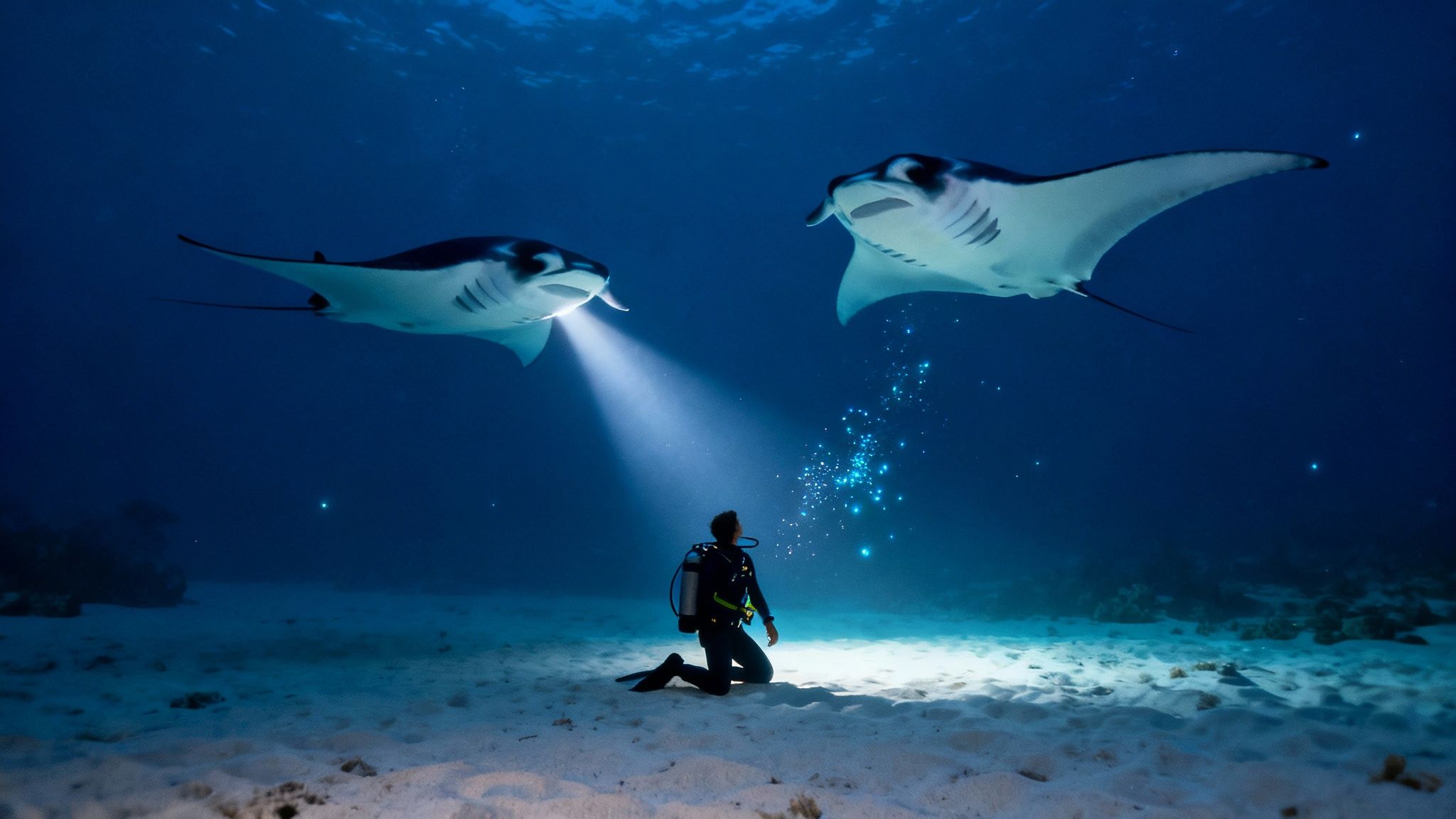
Meet the Gentle Giants of the Kona Coast
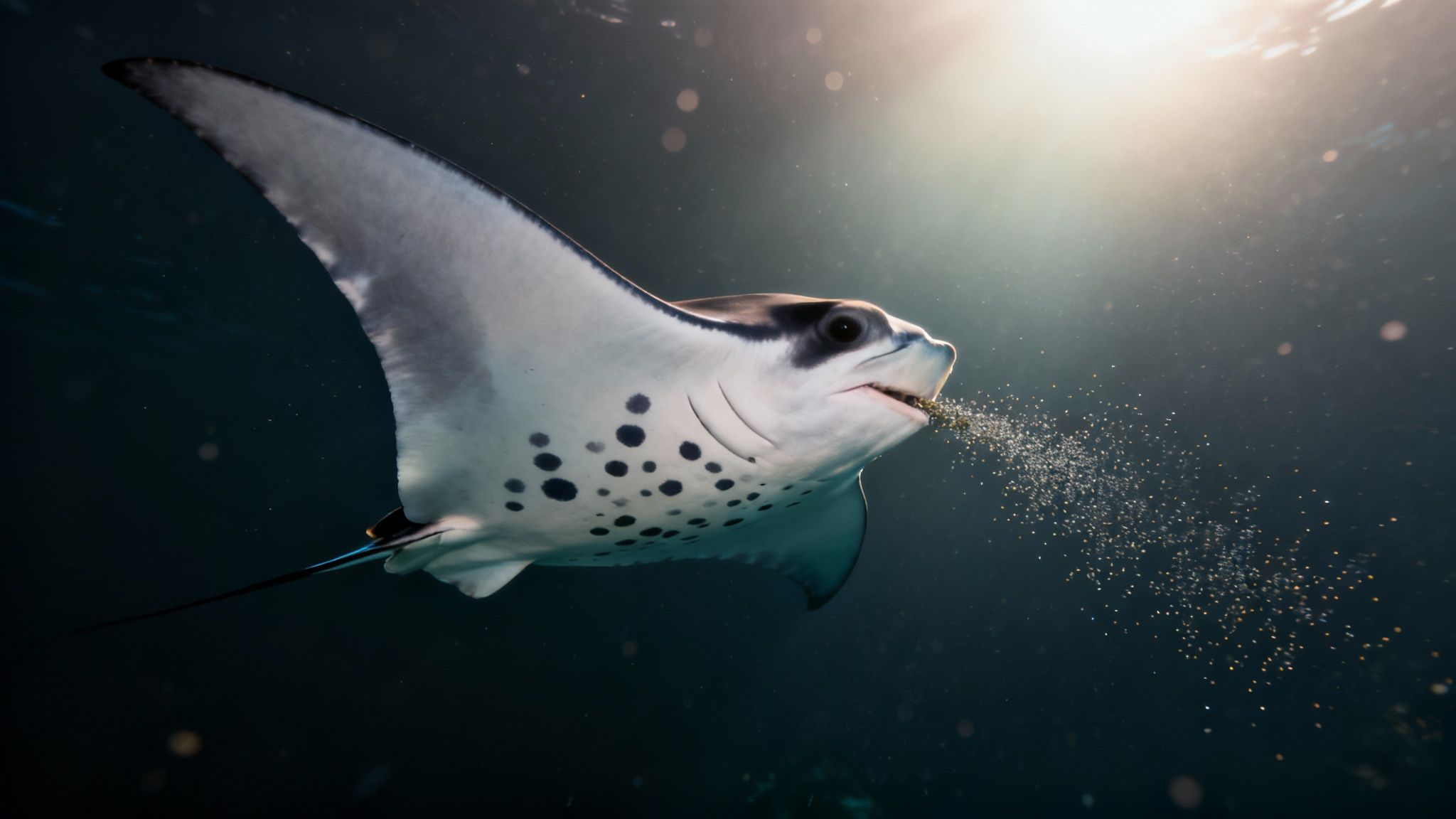
Before you jump in the water, let's talk about who you're really going to meet. First thing's first: the stars of the manta ray dive Kona are not "stingrays." They are completely harmless and have no stinger, so you can breathe easy. Think of them less as a threat and more as the ocean's graceful, winged ballerinas—intelligent, curious, and totally focused on their next meal.
These majestic creatures are essentially the baleen whales of the ray world. They glide through the water with their enormous mouths wide open, scooping up tons of microscopic plankton. This natural feeding behavior is the secret sauce that makes the Kona night dive so magical and reliable. The powerful lights we use on the tour attract a thick cloud of plankton, creating an irresistible, all-you-can-eat buffet that the mantas just can't pass up.
It's this predictable "dinner bell" that draws them to the dive sites almost every single night, giving you a front-row seat to one of nature’s greatest shows.
How We Know Our Mantas
One of the coolest things about Kona's manta population is that we actually know them as individuals. This changes the experience from just seeing an animal to meeting a personality.
Every manta ray has a unique pattern of black spots on its white belly, which works just like a human fingerprint. Seriously, no two are alike. This allows local guides and marine biologists to identify, name, and track individual rays over the years.
So, you won't just see a manta ray; you might get to meet a local celebrity. You could run into:
- Lefty: Instantly recognizable by a cephalic fin that was injured by a fishing line and now curls to the left.
- Big Bertha: One of the largest and most frequently sighted mantas in the area—a true matriarch.
- Melainey Ray: Famous for her inquisitive nature and spectacular barrel rolls right in front of the lights.
Learning the names and backstories of these residents creates a much deeper connection. It turns an incredible wildlife encounter into a personal introduction, and you'll walk away with a whole new appreciation for the Kona coast. If you're ready for your own up-close meeting, you can check out a manta ray dive tour to get started.
Reef Dwellers and Ocean Roamers
The waters off the Kona coast are actually home to two different species of manta ray. On the nightly dives, you'll most likely see the reef manta ray, which can have an impressive wingspan of up to 14 feet. But every now and then, Kona is visited by the much larger and more elusive giant oceanic manta ray, which can boast a staggering wingspan of 22 feet! Both are gentle giants, thriving in the warm, plankton-rich waters that make this place so special. You can discover more must-know manta ray facts to brush up before you go.
The Hawaiian name for manta rays is "hāhālua," which can be interpreted as "two breaths." This name holds deep cultural significance and is even mentioned in the Kumulipo, the ancient Hawaiian creation chant.
Another thing that will blow you away is their intelligence. Manta rays have the largest brain-to-body weight ratio of any fish, which scientists believe contributes to their complex social behaviors and genuine curiosity. You can feel this intelligence in the water as they interact with the lights and the divers. It truly feels like a two-way encounter.
Booking your spot to meet these gentle giants is the first step toward an adventure you will never, ever forget.
Choosing Your Manta Ray Adventure: Dive or Snorkel?
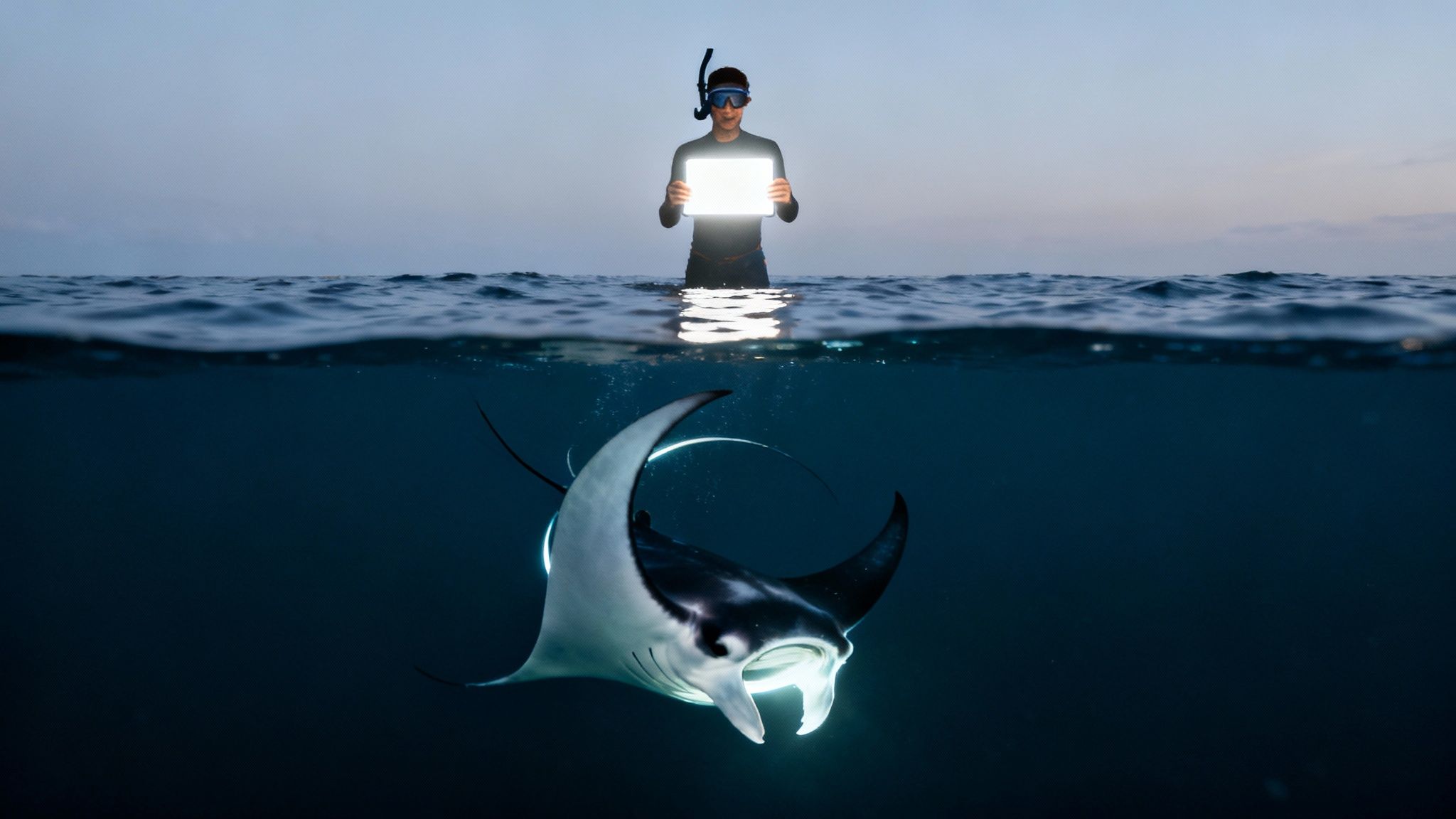
So, you're ready to see Kona's famous manta ray ballet. Fantastic! You've got two incredible ways to do it, and the best one for you really boils down to one simple question: do you want to be on the "ocean floor" looking up, or at the "surface" looking down? Both options give you a front-row seat to one of the most amazing shows on Earth.
For certified scuba divers, the manta ray dive Kona experience is a total immersion. After a quick boat ride out to the site, you'll descend with your group to a sandy spot about 35 feet deep. Everyone gathers around a powerful light source—we call it the "campfire"—that lights up the water and attracts plankton, the mantas' favorite meal.
From this vantage point, you get a truly unique, bottom-up perspective. You become part of the underwater world as these gentle giants perform their acrobatic barrel rolls and graceful swoops right over your head. It’s a humbling, breathtaking spectacle that makes you feel completely connected to their environment.
The Scuba Diving Experience
If you're a certified diver, this is the gold standard. Being stationary on the seafloor gives you a stable, unobstructed view of all the action above. You just settle in, relax, and watch the performance unfold.
- Mind-Blowing Proximity: It’s not uncommon for mantas to glide within inches of you. It's an awe-inspiring feeling you’ll never forget.
- Total Immersion: You're completely submerged in their world, with the only sound being your own breathing as these silent giants dance in the light.
- A Stable Platform: Unlike bobbing on the surface, you won't be bothered by waves or chop, letting you focus entirely on the show.
Since you're not moving around much, your air consumption is usually quite low. This means you can get a solid 40-50 minutes of bottom time to soak it all in.
The Snorkeling Experience
Not a diver? No problem! The snorkeling option offers an equally magical, just from a different angle. Snorkelers get to hold onto a custom-built, high-powered light board that floats on the surface. Its bright beams shine down into the dark water, creating a column of light that draws in the plankton.
All you have to do is float comfortably, look down, and watch the mantas rise from the depths to feed right below you. Think of it as having a VIP balcony seat overlooking the main stage.
This is a fantastic option for families, non-divers, or anyone who might be a little hesitant about a night dive. It’s incredibly easy to do and delivers the same jaw-dropping views.
Both experiences are carefully managed to keep everyone safe and, most importantly, to protect the well-being of the mantas. You're there as a passive observer, letting the rays run the show. If you want to dig deeper into the pros and cons, you can learn more about whether it's better to snorkel or dive with manta rays in our detailed guide.
Ultimately, the choice is yours. The up-close, fully-immersed perspective of diving is hard to top, but the "bird's-eye" view and pure accessibility of snorkeling make it a world-class experience in its own right. Either way, you're guaranteed an unforgettable night with Kona's gentle giants.
Ready to book your front-row seat to the greatest show on Earth?
How to Prepare for Your Manta Ray Night Dive
A little prep work can make the difference between a good manta ray dive and an unforgettable one. Knowing what to bring and what the evening will look like lets you relax and soak in every moment of the underwater ballet. It’s all about being comfortable before you hit the water and especially after you get out.
You can pack pretty light for this trip. Great operators like Kona Honu Divers will have all the big stuff covered—wetsuits, tanks, masks, and the powerful lights needed to attract the plankton. They even usually have snacks and drinks on the boat, which is a lifesaver after a dive.
It also helps to know the flow of the trip so there are no surprises. You’ll get a solid briefing from the crew on the way out, gear up, and then follow your divemaster into the dark. Knowing what’s coming next helps calm any pre-dive jitters you might have.
Your Pre-Dive Checklist
To make sure you're set for an amazing time, run through this simple checklist before you head to the harbor.
- Towel and a Warm Jacket: This is non-negotiable. Even on a balmy Hawaiian evening, the boat ride back can get surprisingly chilly once you’re out of the water. A dry towel and a windbreaker or hoodie will feel like pure luxury.
- Motion Sickness Medication: If you even think you might get seasick, take something before you get on the boat. The ride is usually pretty smooth, but it's always better to be safe than sorry.
- Reusable Water Bottle: Staying hydrated is key. Most boats have water, but bringing your own is a great way to cut down on plastic waste.
- Leave Valuables Behind: There’s no need for expensive jewelry or a wallet full of cash on the boat. It’s best to just leave them safe and sound back at your hotel.
Pro Tip: Grab a light meal an hour or two before the tour. You don’t want to be starving, but diving on a full stomach isn't the most comfortable feeling, either.
Taking care of these small details beforehand means you can focus 100% on the incredible encounter waiting for you.
An Experience for All Skill Levels
One of the coolest things about the Kona manta ray dive is just how accessible it is. You don't need to be a seasoned pro to do this. The dive itself is fairly shallow—around 35 feet—and you'll be stationary on the sandy bottom, so it’s perfect for newly certified divers or anyone who feels a little rusty.
The manta rays here are more than just a tourist attraction; they're part of a massive, long-term research project. Since 1991, scientists have been identifying individual mantas by the unique spot patterns on their bellies. This incredible effort has resulted in a database with nearly 6,000 reported encounters and over 28,500 manta sightings, helping to track more than 330 individual rays. It’s amazing to know you’re part of something so important.
Timing your trip can also play a role. To get the inside scoop, check out our guide on the best time to dive with manta rays in Kona.
Safety and Sustainability: The Manta Ray Promise

The breathtaking manta ray dive Kona is built on a simple yet profound promise of mutual respect. It's a silent pact between us and the mantas, and it’s what has turned Kona into a global model for responsible marine tourism. This deep-seated commitment ensures the encounter remains magical and safe for everyone—human and animal alike.
The number one rule is easy to remember and absolutely crucial: look, but don’t touch. This isn’t just about being polite; it’s about their health. Manta rays are covered in a protective mucus coating, a natural shield that guards them against nasty bacteria and infections.
When a person touches them, that delicate layer gets rubbed off, leaving them vulnerable to disease. Simply by keeping our hands to ourselves, we play a direct role in their well-being, helping these magnificent animals continue to thrive in Kona’s waters.
The Rules of Engagement
To keep every encounter positive, the Kona dive community has established a clear set of guidelines. They’re all designed to create a passive observation environment where the mantas are in complete control of the interaction.
- Divers on the Bottom: As a scuba diver, your job is to find a spot on the sandy seafloor and stay put. Think of yourself as a piece of the scenery, like a rock or a bit of coral. Staying still creates a predictable, non-threatening space that allows the mantas to feel comfortable feeding right above you.
- Snorkelers at the Surface: If you're snorkeling, you'll hold onto a custom-built light board. This provides a stable, floating platform to watch the show from above. It's essential to remain on the surface and resist the urge to kick or dive down, as that can easily disrupt the mantas' feeding patterns.
This structured approach is the real secret to Kona's success. It minimizes our impact and maximizes the quality of the interaction, creating a safe and predictable "dinner theater" that the mantas trust enough to return to night after night. By following these simple rules, you become an active partner in conservation. You can learn more about being a good underwater guest in our guide to responsible and considerate diver etiquette.
Your Role as a Conservation Partner
When you book your manta ray dive in Kona with a responsible operator, you’re doing more than just planning a fun trip—you’re casting a vote for sustainability. Reputable companies are deeply invested in protecting this precious resource. They educate their guests, enforce the rules, and contribute to the ongoing research and conservation of Kona’s manta population.
The commitment to passive observation is what truly sets Kona apart. It’s a community-wide pledge to put the well-being of the mantas first, ensuring this incredible encounter will be here for generations of divers to experience.
This promise of respect isn't just for the manta dive. It's a core principle of all responsible marine tourism on the Big Island. By choosing to dive with care, you help preserve the magic of Hawaii’s underwater world for years to come.
Ready to be part of this incredible, sustainable adventure?
Your Kona Manta Ray Questions Answered
Alright, even after getting the big picture of this incredible manta ray dive in Kona, you’ve probably still got a few questions. That’s totally normal! Planning a once-in-a-lifetime trip means sorting out all the little details so you can book with complete peace of mind.
Let's dive into the most common questions we hear from travelers before they commit to this amazing night on (and in) the water. I'll give you clear, straight-up answers to help you know exactly what to expect.
How Much Does the Manta Ray Dive Cost?
This is usually the first thing people ask, and for good reason. While prices can shift a bit between different operators, you should budget somewhere between $150 and $200 per person for a manta ray tour.
So, what does that price tag get you? Typically, it covers everything you need:
- All your scuba or snorkel gear (wetsuit, mask, fins, BCD, regulator).
- The boat ride out to the site and back.
- An expert divemaster or snorkel guide watching over you.
- Light snacks and drinks on the boat.
When you think about what you're getting—a front-row seat to one of nature's most spectacular shows, all managed by professionals—most people feel it's an incredible value. Booking a manta ray dive tour is an investment in a world-class wildlife experience you'll be talking about for years.
Is It Safe to Swim with Manta Rays at Night?
Yes, absolutely. Every reputable operator in Kona puts safety above all else. These are true gentle giants; they have no teeth, no stingers, no barbs—nothing to harm you with. Honestly, their only interest is the all-you-can-eat plankton buffet attracted by the lights.
The whole experience is very structured and controlled. Divers stay in one spot on the seafloor, and snorkelers hold onto a large, floating light board. This setup creates a predictable, safe environment for both you and the mantas, with experienced guides keeping a watchful eye on everything.
What Happens if We Don’t See Any Manta Rays?
It’s the million-dollar question! While the Kona manta dive has an unbelievably high success rate—often over 90%—we are dealing with wild animals. Their appearance can never be 100% guaranteed.
The good news? The best local operators know this and have your back with a "manta guarantee." If your tour is one of the rare ones where the mantas don't show, most companies will let you try again on another night for free (usually on a standby basis).
Pro Tip: Try to book your manta dive for one of your first nights in Kona. That gives you plenty of wiggle room to reschedule later in your trip if bad weather rolls in or if the mantas were a no-show.
Always double-check the specific policy when you book, but this community-wide practice gives you a great safety net.
What’s the Water Temperature Like?
The ocean here is beautiful and warm all year. You can expect water temperatures to hover between a pleasant 75°F and 80°F (24°C – 27°C).
That said, you'll be staying relatively still in the water for about 45 minutes, and it's night, so you can still get chilly. That’s why operators provide good-quality wetsuits, usually 3mm or 5mm thick, which are more than enough to keep you comfortable for the entire dive.
Is the Manta Ray Dive Ethical?
This is a fantastic and crucial question. The Kona manta ray encounter is actually praised worldwide as a model for sustainable wildlife tourism. The entire experience is built around one simple principle: passive observation.
Here’s what makes it work:
- No Touching: There’s a strict hands-off policy. Touching a manta can damage the protective mucous coating on their skin.
- No Chasing: You stay put. This allows the mantas to come and go as they please, controlling the entire interaction.
- Education: Great operators like Kona Honu Divers use the trip as a chance to teach you about manta biology and conservation.
By choosing companies that follow these rules, you're helping prove that a living, thriving manta ray is far more valuable to our community than a captured one.
Dive or Snorkel: Which is Better?
Honestly, there isn't a "better" choice—it just depends on what kind of experience you want. Both scuba diving and snorkeling offer breathtaking, five-star views of the manta ballet.
Deciding between the two can be tough, so here’s a breakdown to help you figure out what’s right for you.
Manta Dive vs Manta Snorkel Comparison
| Aspect | Scuba Diving | Snorkeling |
|---|---|---|
| Perspective | A bottom-up view. You're looking up as giant mantas glide inches over your head. | A top-down, "bird's-eye" view. You get to watch the entire spectacle unfold below. |
| Experience | Totally immersive. You feel like you're a part of their underwater world. | Very accessible and less gear-heavy, making it perfect for families and all ages. |
| Requirements | You must be a certified scuba diver. | No certification needed, but you should be a comfortable swimmer. |
| Proximity | Feels incredibly close as mantas perform barrel rolls just above your bubbles. | Just as close! Mantas frequently come right up to the surface and the light board. |
At the end of the night, it doesn't matter if you were breathing from a tank or a snorkel. Everyone comes out of the water with a huge smile and a story they'll tell forever. The best choice is the one that gets you most excited for the adventure.
Ready to book this incredible night?
At Kona Honu Divers, we are dedicated to providing a safe, respectful, and absolutely unforgettable manta ray experience. Join our expert crew for the adventure of a lifetime and see why this is one of the top-rated night dives in the world. Book your manta ray dive tour today!