
Picture this: you're weightless in the warm, dark waters of the Pacific, and massive, graceful shadows are soaring just over your head. This isn't a dream—it's the magic of the Kona manta ray night dive, easily one of the most reliable and jaw-dropping underwater experiences on the planet. The Big Island of Hawaii hosts this incredible spectacle night after night, transforming the ocean into a breathtaking underwater ballet.
Why Kona Is the Best Place for Manta Ray Dives
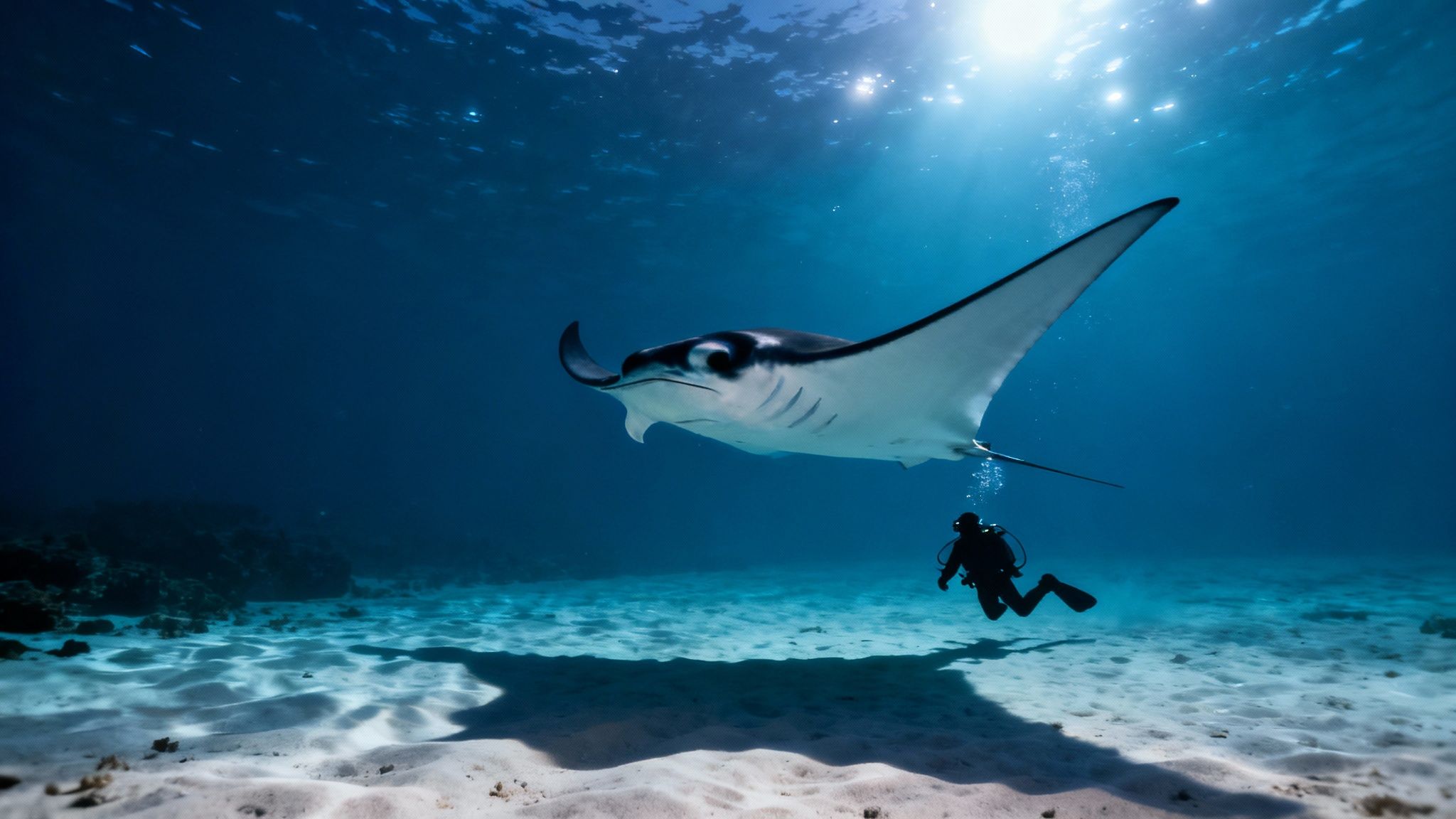
So, what makes the Kona coast so special for this adventure? It's all about dinner. Unlike other manta hotspots around the world that are built around "cleaning stations" where fish groom the mantas, Kona's dive sites are their natural feeding grounds.
This is the key. The whole experience is built on a brilliantly simple idea: using powerful lights to attract huge clouds of plankton, which is a manta ray's favorite meal.
For a quick snapshot of what to expect, here's a look at the key details.
Kona Manta Ray Dive At a Glance
| Aspect | Details |
|---|---|
| Location | Kona Coast, Big Island of Hawaii |
| Experience Type | Night Dive or Snorkel |
| Main Attraction | Giant Manta Rays feeding on plankton |
| Manta Population | Over 200 identified resident mantas |
| Annual Participants | Approximately 80,000 |
| Dive Depth | 30-40 feet (Shallow and accessible) |
| Water Temperature | 74°F-80°F (Warm year-round) |
| Sighting Success | Consistently high, with sightings on most nights |
This table gives you the basics, but the real magic is in how it all comes together.
The Underwater Campfire Effect
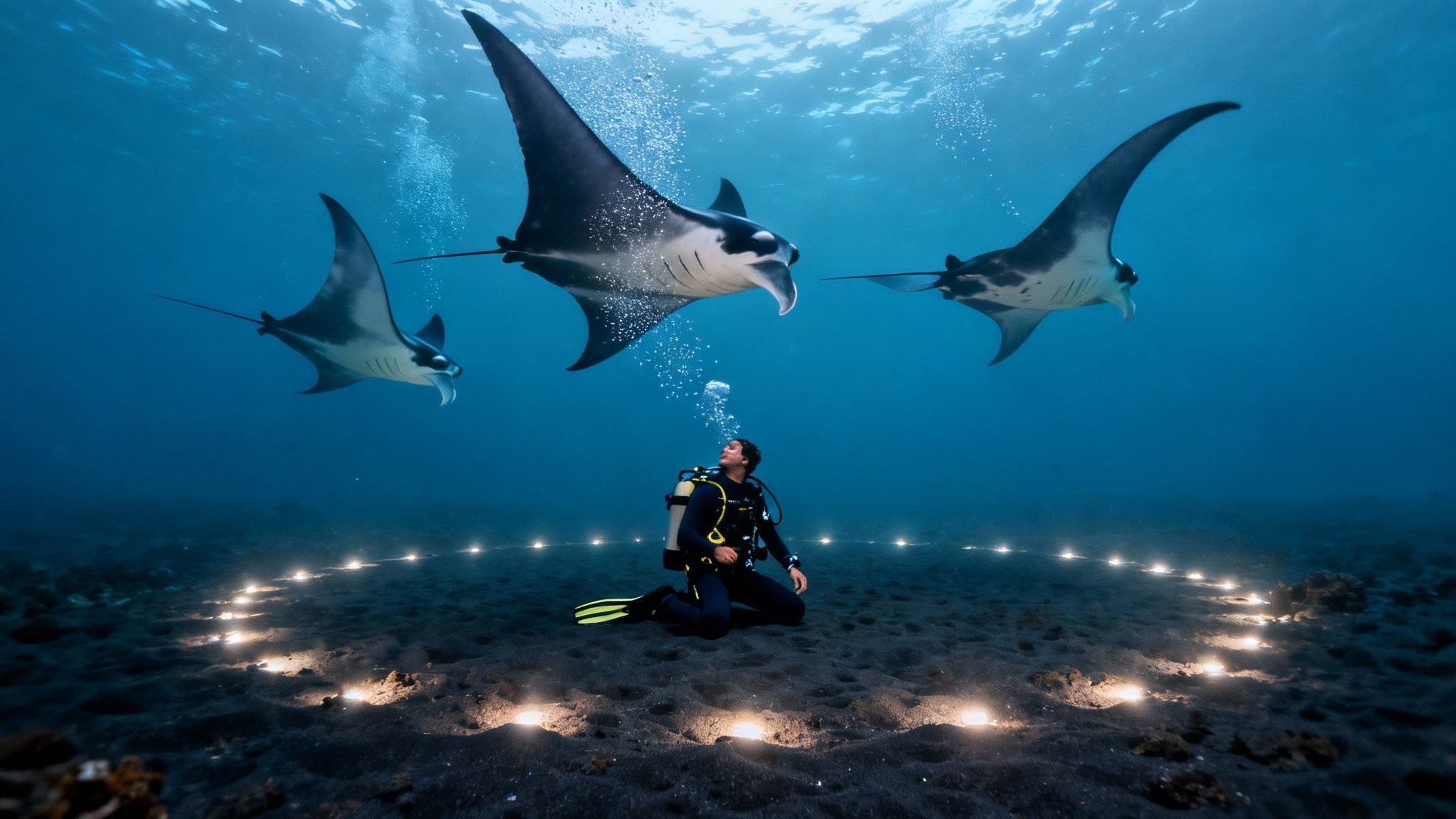
Guides have perfected a technique they call the "underwater campfire." They place a cluster of powerful, upward-facing lights on the ocean floor. This bright beacon acts like a magnet for plankton, creating a concentrated buffet that the local manta population simply can't resist.
Here's how it plays out for everyone:
- Divers find a spot on the sandy bottom, sit back, and look up. The show unfolds just a few feet above as the mantas swoop in, performing effortless barrel rolls to scoop up the plankton.
- Snorkelers get an amazing view from above. They hang onto floating rafts equipped with lights that shine down, drawing the mantas right up to the surface.
This reliable feeding frenzy is why Kona has become a world-renowned wildlife encounter. Famous sites like Manta Village and Manta Heaven often see 8 to 12 mantas on a single dive. The success rate is incredibly high, and when you combine that with Kona’s calm, warm waters, you have an unforgettable adventure that’s perfect for all experience levels.
To get the timing just right for your trip, check out our guide on the best times to dive with manta rays in Kona.
What to Expect During Your Manta Ray Night Dive
Your adventure kicks off as the sun dips below the horizon, setting the Hawaiian sky ablaze with color. Once you're on board, the crew will walk you through a detailed pre-dive briefing. They’ll cover all the safety need-to-knows, explain the best way to interact with the mantas without disturbing them, and share some incredible facts about these gentle giants.
The boat ride out to one of the iconic dive sites, like 'Manta Village' or 'Manta Heaven', is part of the magic. Watching the last rays of sunlight fade as you cruise along the coast is an experience in itself. But once you arrive and the boat's engine cuts out, the real show is about to begin.
The Underwater Ballet
After you descend into the warm, dark water, you’ll find a spot on the sandy bottom, usually at a comfortable depth of 30-40 feet. Your group will gather around a central light source—something we affectionately call the "campfire." This powerful light is the dinner bell, attracting swarms of tiny plankton, which happens to be the manta rays' favorite meal.
It doesn't take long. Soon, the stars of the show make their grand entrance. Giant manta rays, some with wingspans stretching up to an incredible 16 feet, emerge from the darkness and glide effortlessly through the water. They perform a mesmerizing dance of barrel rolls and graceful loops, swooping just inches above your head to feast on the plankton concentrated in the light beams. It’s a silent, almost surreal, and completely unforgettable performance.
The feeling is almost indescribable—watching these massive, gentle creatures dance effortlessly in the beams of light is a powerful reminder of the ocean's magic.
Scuba vs. Snorkel Perspectives
Don't worry if you're not a certified diver—you can still witness this incredible spectacle. Both scuba diving and snorkeling offer fantastic, though slightly different, vantage points.
- Scuba Divers: You get a front-row seat from the ocean floor. From here, you’ll be looking up as the mantas put on their acrobatic show directly overhead.
- Snorkelers: You'll float on the surface, holding onto a specially designed light board. This board attracts plankton from above, which brings the mantas right up to the surface for an amazing face-to-face view.
Both options are absolutely breathtaking and guarantee an up-close encounter you'll never forget. To get a better sense of how it all works, you can learn more about the Kailua-Kona manta ray night dive.
Ready to see it for yourself?
Choosing the Right Manta Ray Tour Operator in Kona
Picking the right company for your manta ray dive is a huge part of the experience. It's not just about getting in the water; it's about making sure your adventure is safe, respectful, and genuinely contributes to protecting these incredible animals. Your choice matters.
The best operators aren't just boat captains—they're passionate conservationists and experienced guides. Look for companies that strictly follow the rules, like keeping a safe distance and having a firm "no-touching" policy. This is critical because touching a manta ray can remove its protective mucus coating, leaving it vulnerable to infection.
Why We Recommend Kona Honu Divers
When it comes to doing things the right way, Kona Honu Divers consistently sets the bar. Their crew isn't just professional; they're deeply committed to an ethical and awe-inspiring encounter for everyone on board.
They get that a truly memorable dive is built on respect for the mantas and their home. With a focus on education and keeping group sizes manageable, they make sure you walk away with more than just photos—you leave with a real appreciation for these gentle giants.
But don't just take our word for it. Here's what other divers have said about their experience.
When you book with an eco-conscious company, you're doing your part to protect Kona's manta rays for years to come. Your decision supports the kind of sustainable tourism that allows this unique ecosystem to thrive. It’s a partnership between us and the ocean.
Ready to book a tour that puts manta conservation first? Check out the manta ray dive and snorkel tours offered by Kona Honu Divers.
How Your Dive Supports Manta Ray Conservation
The Kona manta ray night dive is an incredible experience, but what many people don't realize is that it's also a cornerstone of local conservation. When you join one of these tours, you’re doing more than just witnessing a natural wonder; you're becoming part of a decades-long research project.
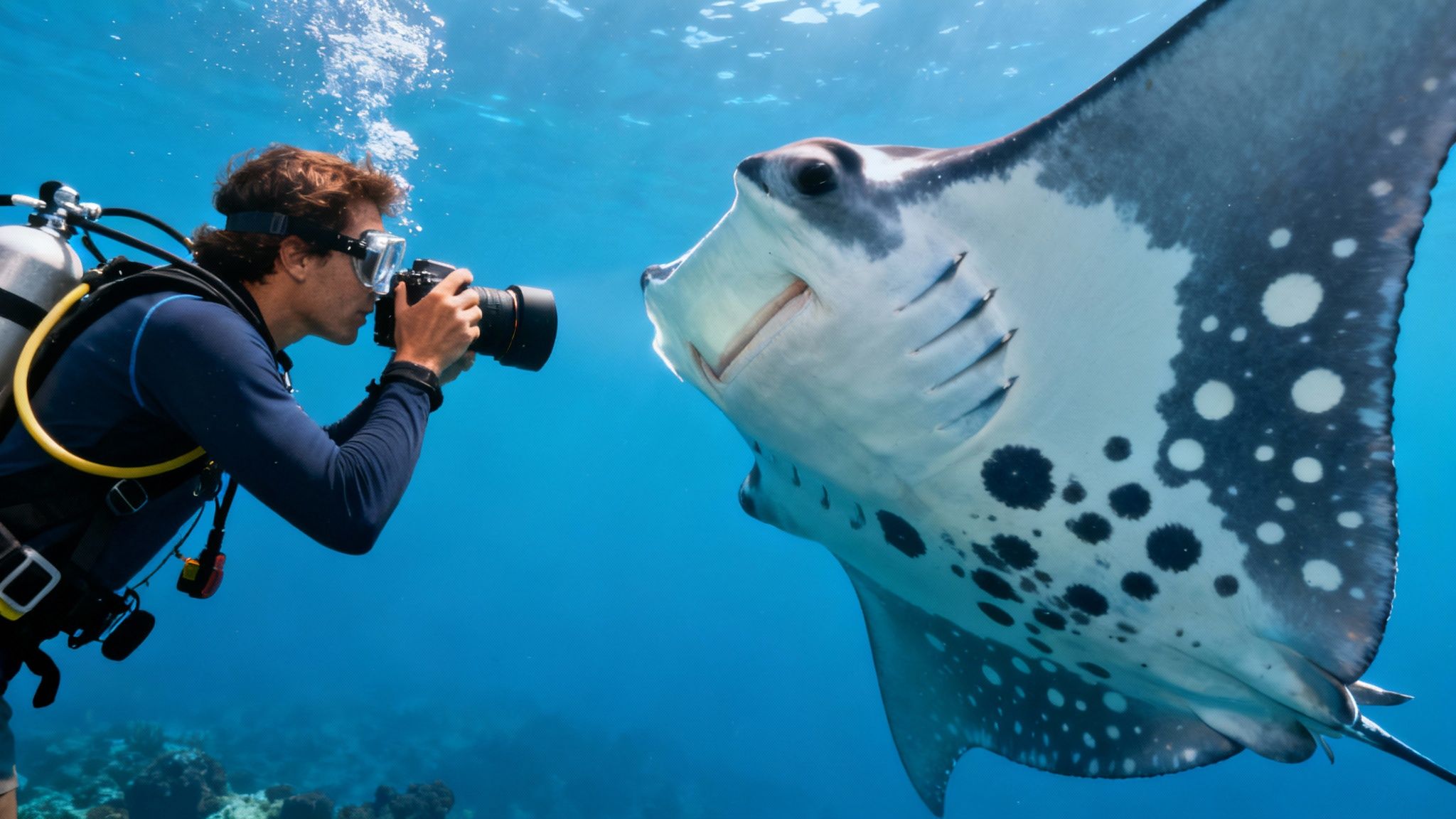
It all comes down to a simple, brilliant fact: every manta ray has a unique pattern of spots on its belly. Think of it as a fingerprint. This allows dive guides and researchers to identify individual mantas just by looking at them.
Turning Tourism into Research
This simple observation has turned the nightly dive into a massive citizen science operation. The formal study of Kona's manta rays kicked off back in 1991, and today, the local catalog features over 330 identified individuals. This isn't just a list; it's one of the most comprehensive datasets on manta rays anywhere in the world, built on thousands of documented encounters year after year.
This data is pure gold for scientists. It helps them track population trends, understand behavior, and make informed decisions to protect these animals, not just in Hawaii but globally. It’s vital work, especially as mantas worldwide face threats from being hunted for their gill plates or tangled in fishing gear.
By putting a clear economic value on a living manta ray, tourism gives local communities a powerful reason to protect them. It proves, without a doubt, that these magnificent animals are worth far more alive than dead.
Thankfully, Hawaiian law already protects manta rays in state waters, making it illegal to capture or harm them. The eco-tourism industry that has grown around this dive provides a sustainable livelihood that reinforces this protection.
So when you book with a responsible operator, your money does more than just secure a spot on a boat. It's a direct investment in keeping Kona's manta population safe and thriving for generations to come.
Preparing for Your Kona Dive Adventure
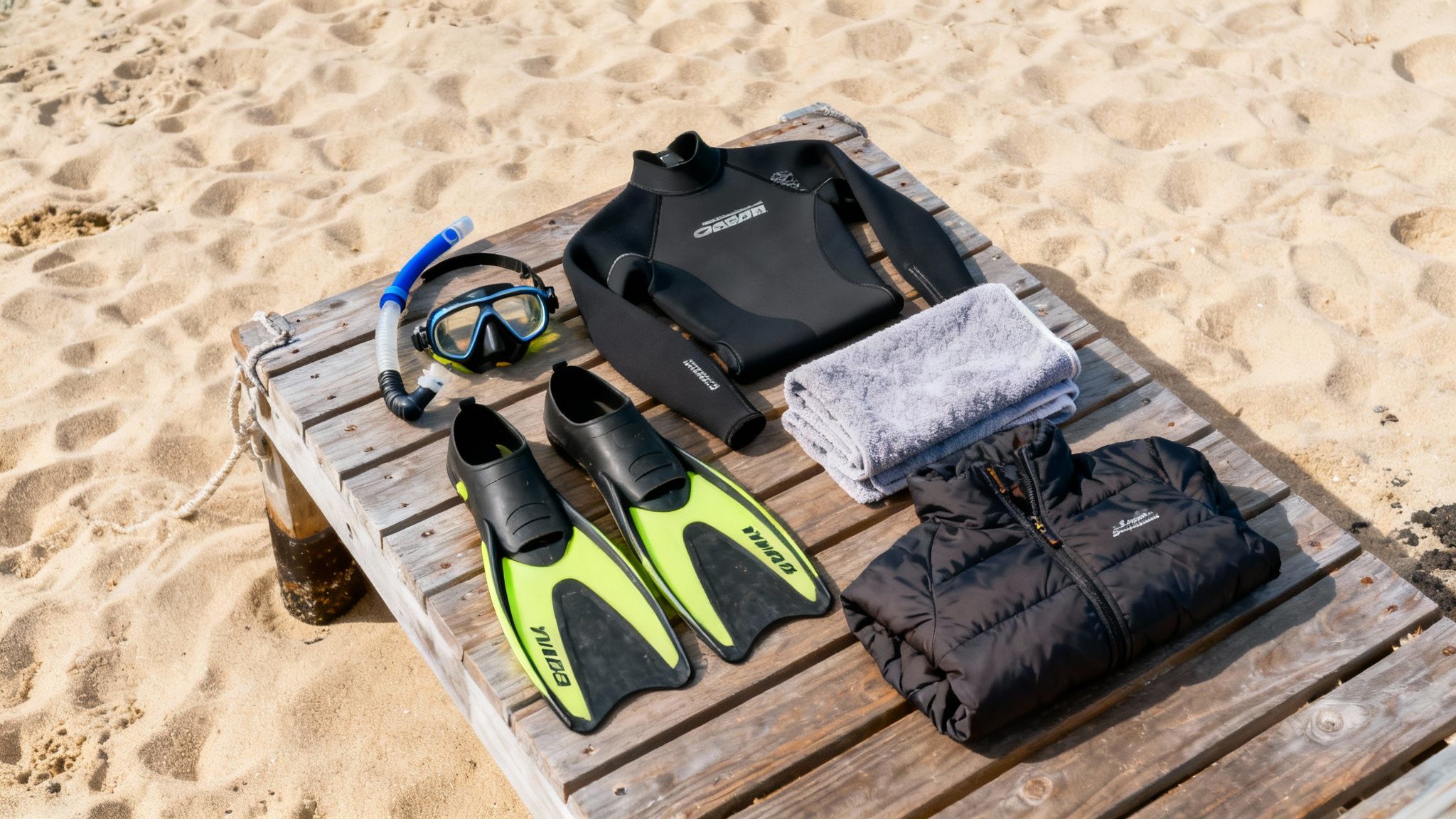
Getting ready for your manta ray dive in Kona is straightforward, but a little bit of prep work makes a huge difference. Following a few simple tips will help make sure your experience is as incredible as it should be, whether you're a seasoned diver or just getting your fins wet as a snorkeler.
The key is to pack smart. You'll obviously need your swimwear and a towel, but don't forget something warm and dry to throw on for the boat ride home. It can get surprisingly cool after an evening in the water. For a full rundown of what to bring, check out this list of the gear you will need for your Kona diving adventure.
Onboard Briefing and Safety
Listen up when your guide starts the pre-dive briefing—it’s the most important part of your preparation. They’ll walk you through all the safety procedures and share some amazing facts about the mantas you're about to meet.
The number one rule? No touching. It’s a strict policy for a very good reason. Touching a manta ray can strip away the protective mucus coating on its skin, which is like its immune system. Without it, they're exposed to harmful bacteria and infections.
Manta ray tourism is a big deal for Kona, both for the local economy and for the animals themselves. The industry brings in over $2.5 million every year, which creates a strong financial reason to protect these gentle giants. This is a huge part of why Hawaii passed laws back in 2009 to make it illegal to harm or capture manta rays, giving them the protection they desperately need.
Expanding Your Dive Horizons
The manta ray night dive is an absolute must-do, but Kona’s underwater world has so much more to offer. Once you’ve experienced the mantas, you might be hooked and looking for your next adventure. Check out all of the diving tours on the Big Island for more ideas.
For a truly unique and otherworldly experience, the Kona blackwater dive is unforgettable. You’ll drift in the open ocean at night, surrounded by bizarre and beautiful creatures that rise from the deep. If you’re a certified diver looking to push your skills, advanced dive tours will take you to stunning underwater lava formations and arches.
It’s also smart to be a well-rounded and prepared diver, which includes understanding dive-related safety. This could mean knowing about things like the official hyperbaric oxygen therapy indications, a treatment for certain dive-related conditions.
Common Questions About the Kona Manta Ray Dive
If you're planning a manta ray dive in Kona, you probably have a few questions swirling around. Getting the inside scoop beforehand is the best way to make sure you're ready for this once-in-a-lifetime adventure. Here are answers to the things we get asked most often.
When Is the Best Time of Year to See Manta Rays?
This is one of the best parts about diving here: Kona's manta rays don't migrate. They're a resident population, which means you can see them any time of year. There really is no "manta season."
That being said, if you're looking for the calmest seas and warmest water, you might prefer coming between April and October. But honestly, the success rate for sightings is fantastic year-round. Don't let the calendar stop you.
Do I Need to Be a Certified Diver?
Nope! You definitely don't need a scuba certification to experience the magic. This adventure is designed for just about everyone, offering incredible (and slightly different) experiences for both divers and snorkelers.
- Scuba Divers: You'll get to settle on the sandy bottom, around 30-40 feet deep. Your view is from below, watching these massive creatures glide and somersault just inches above you. It's a truly humbling perspective.
- Snorkelers: You'll float on the surface, holding onto a specially designed light board. The bright lights draw in the plankton, and the mantas come right up to the surface to feed, giving you an amazing face-to-face view.
Either way, you get a front-row seat to the show. It just comes down to what you’re most comfortable with.
Is the Manta Ray Night Dive Safe?
Absolutely. Safety is the number one priority for professional dive operators like Kona Honu Divers. The whole experience is carefully managed by experienced divemasters and instructors who know these sites and these animals like the back of their hand.
You'll get a detailed safety briefing before even touching the water. And remember, manta rays are gentle giants. They have no teeth, stingers, or barbs. They are filter feeders completely uninterested in humans, making this one of the safest and most profound wildlife encounters on the planet.
What Happens if No Mantas Appear?
It's a fair question—after all, we're dealing with wild animals. While the manta ray dive in Kona boasts a success rate that's consistently over 90%, nature never comes with a 100% guarantee.
Good tour companies know this and stand by their trips with a "manta guarantee." If your tour is one of the very rare ones where no mantas show up, most operators will invite you back on another night, either for free or at a steep discount. It’s their way of making sure you have every chance to see the spectacle.
Ready to book your unforgettable encounter with these gentle giants? Join Kona Honu Divers for a safe, ethical, and breathtaking adventure you’ll never forget.