
Picture this: massive, graceful shadows gliding just inches above you, their wings stretching out up to 14 feet as they perform a silent, underwater ballet. It’s not a dream or a scene from a sci-fi movie—it's the world-famous manta ray dive in Kona, and it's an experience that consistently ranks as one of the most unforgettable underwater encounters on Earth.
Why Kona Is The Manta Ray Capital Of The World
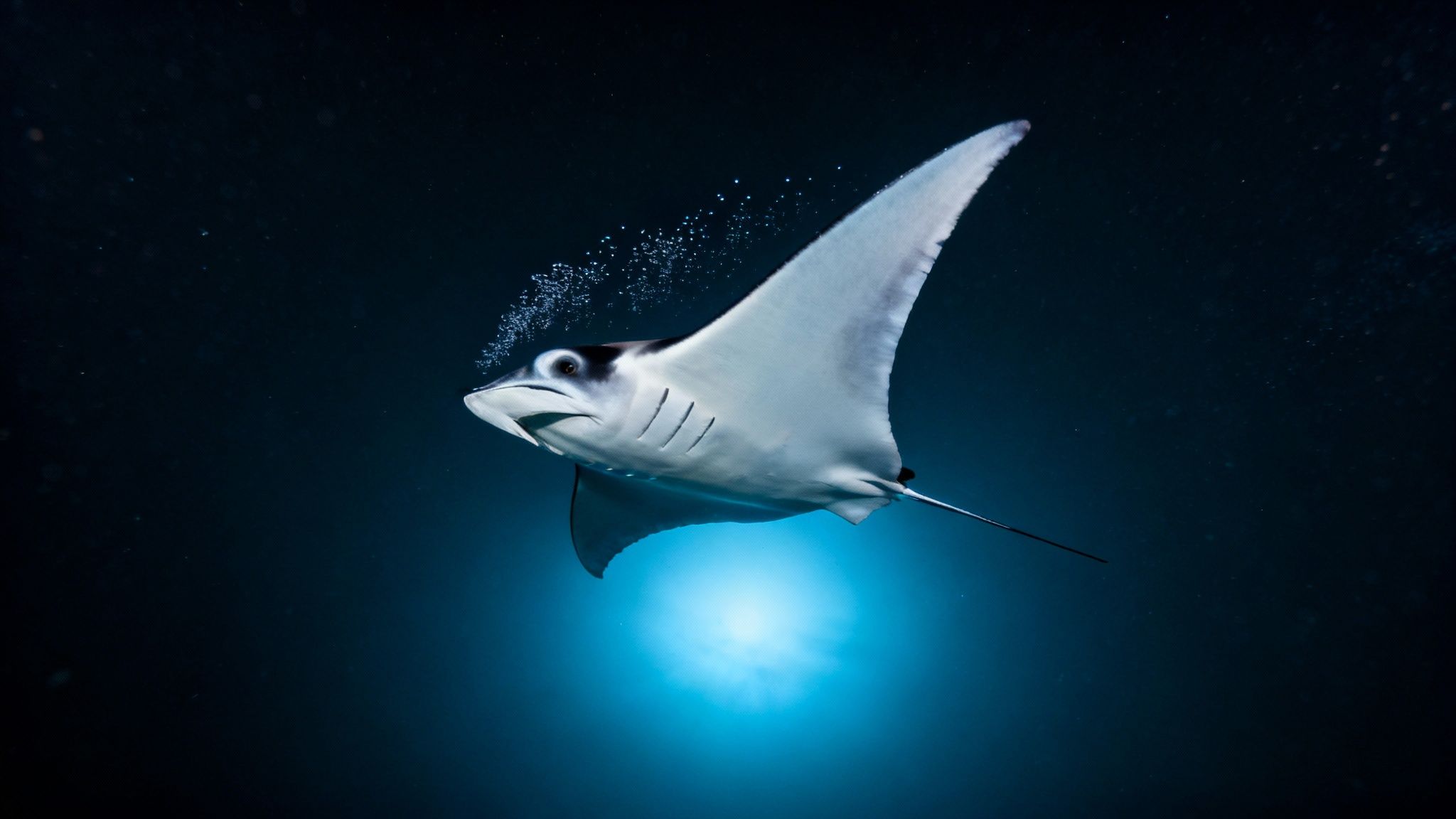
The Kona coast of the Big Island has more than earned its title as the global epicenter for manta ray encounters. The nightly show here is so reliable that it draws people from every corner of the globe. This isn't just a happy accident; it's the perfect storm of geography, biology, and a bit of human ingenuity.
The magic all comes down to two main locations, affectionately known as the "stages" for this nightly performance: Manta Village and Manta Heaven. Think of these spots as a dependable, all-you-can-eat buffet for the mantas, which keeps them coming back with incredible consistency.
The Science Behind The Spectacle
So, how does it all work? The method is actually quite brilliant in its simplicity. Tour boats shine incredibly powerful lights into the water after the sun goes down. These lights attract massive clouds of plankton—the tiny organisms that make up the manta rays' entire diet.
The mantas, being the intelligent and opportunistic creatures they are, have figured this out. They’ve learned that the bright lights are a dinner bell, signaling an easy, concentrated meal. It's this conditioning that has created a resident population of reef mantas who return to the same spots, night after night, turning a simple feeding behavior into a mesmerizing show for divers and snorkelers.
Two Legendary Dive Sites
Kona is famous for its manta ray experiences, but two spots truly stand out: Manta Village and Manta Heaven. Manta Village, tucked into the calm, shallow waters of Keauhou Bay, is where it all began. As the original night dive site, its gentle conditions and sandy bottom make it a fantastic setting for first-timers to witness the "manta ballet."
At these sites, you're not just hoping to see a manta; you're practically guaranteed an encounter. Sighting rates are incredibly high, with most operators reporting success between 85% and 90% of the time. It’s not uncommon to see 8 to 12 mantas on a single dive, each with an average wingspan of 14 feet, gracefully feeding on the plankton.
Of course, Kona is known for more than just its underwater residents. It’s also famous for hosting world-class events like the Ironman World Championships in Kona.
At Kona Honu Divers, we're proud to guide divers and snorkelers on this truly unforgettable adventure. Our experienced crew is committed to providing a safe, respectful, and absolutely awe-inspiring experience every single time.
Meet The Gentle Giants Of The Kona Coast
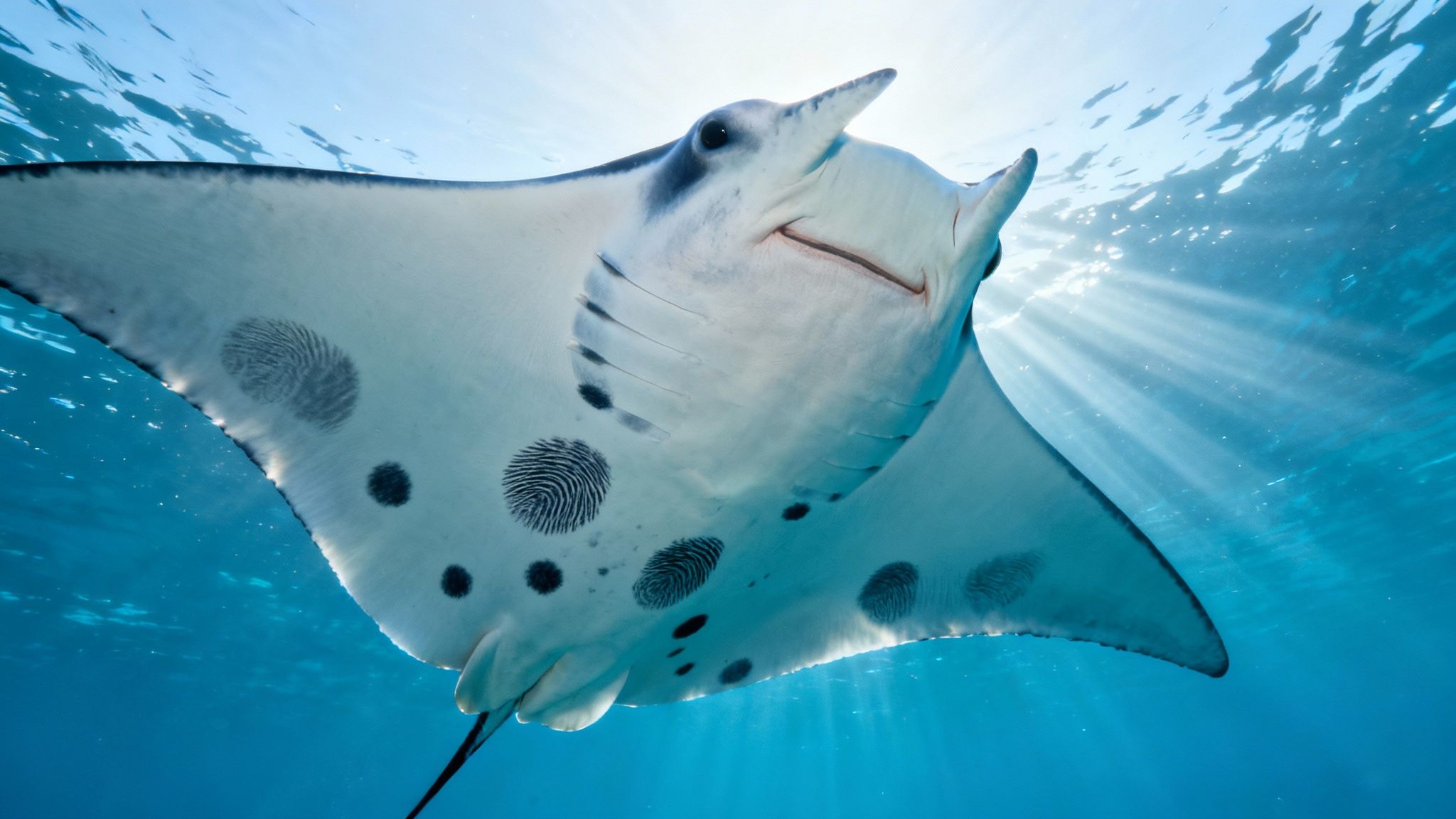
Before you even think about getting your fins wet, let's get acquainted with the real stars of the show. The manta rays you'll meet aren't just a species; they're a tight-knit community of individuals. For decades, researchers have been documenting them, and many even have names. Your manta ray dive in Kona isn't just an excursion—it’s an introduction to the locals.
So, how do you tell one from another? It's all in the belly spots. Much like a human fingerprint, the unique pattern of black spots on a manta's white underside is a one-of-a-kind identifier. This natural "nametag" allows guides and scientists to recognize, name, and follow these animals throughout their long lives.
Don't be surprised if your guide suddenly gets excited and starts pointing out a specific manta by name. You could find yourself swimming alongside local celebrities like "Big Bertha," "Lefty," or "Sugar Ray." It turns a simple wildlife sighting into a genuine personal encounter.
Reef Dwellers And Ocean Voyagers
While two types of manta rays cruise through Hawaiian waters, you're almost certain to meet one specific kind on the famous night dive.
- Reef Manta Rays (Mobula alfredi): These are the regulars, the ones who call the Kona coast home. They're the stars of the night dive, boasting an impressive wingspan that often reaches 14 feet. They stick to shallower, coastal waters where their favorite food—plankton—is plentiful.
- Oceanic Manta Rays (Mobula birostris): These are the true giants, the globetrotters of the open ocean. With a colossal wingspan that can stretch up to 22 feet, seeing one is a rare and breathtaking treat, as they prefer the deep, offshore currents.
This amazing ability to identify individual rays isn't just a party trick; it's part of a massive scientific effort. Since 1991, researchers and divers like you have helped build a photographic catalog of Kona's manta population. They've identified over 330 unique individuals so far, all based on those belly spots. This ongoing project is crucial for tracking their behavior and supporting global conservation efforts. You can actually see the catalog of named mantas and find out who you might meet on your dive.
Despite their intimidating size, these gentle giants pose absolutely no threat to humans. They are filter-feeders, meaning they glide through the water with their mouths open, scooping up tiny plankton. They have no teeth for biting and no stingers like their stingray cousins. The only interest they'll show in you is pure curiosity as they perform their mesmerizing feeding ballet in the glow of the dive lights.
Check Availability
Choosing Your Manta Ray Adventure: Dive Or Snorkel
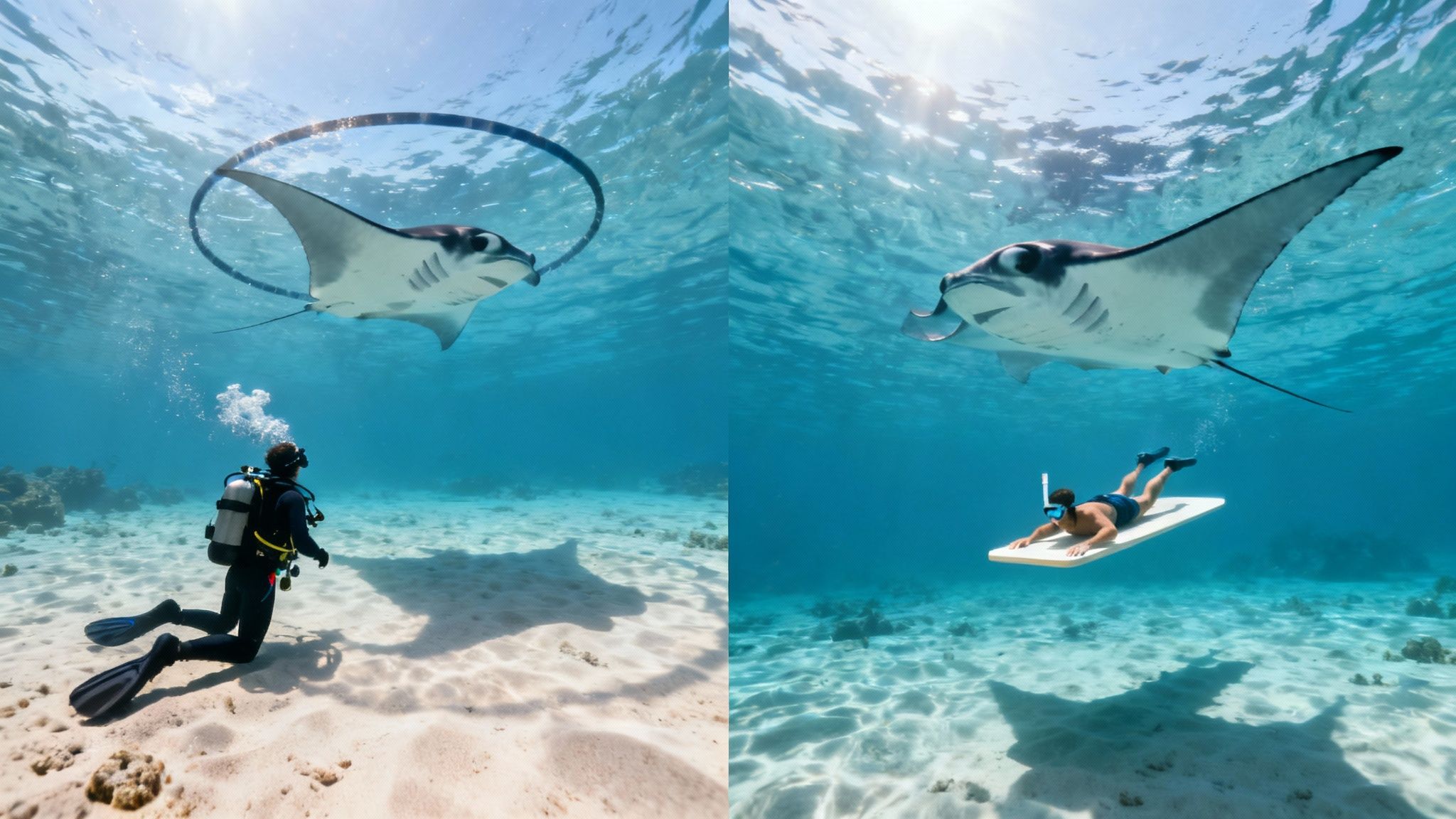
The manta ray dive in Kona offers two incredible ways to witness the magic, and your biggest decision is choosing your vantage point. Will you watch the underwater ballet from the front-row seats on the ocean floor, or from the VIP balcony floating just above the action?
Deciding between scuba diving and snorkeling is the first step in planning your perfect night. Both get you unbelievably close to these gentle giants, but the experience is completely different. One isn't better than the other; it really just boils down to your comfort in the water, your certifications, and the kind of encounter you're dreaming of.
The Scuba Diver's Perspective
If you're a certified diver, this is about as immersive as it gets. You'll descend to a sandy patch on the ocean floor, around 35 feet deep, and settle in for the show. From down there, you get to look up as the massive mantas swoop, glide, and perform graceful barrel rolls just inches above your head.
It’s a truly humbling, awe-inspiring view that makes you feel like a tiny guest in their massive underwater world.
The feeling of a 14-foot manta ray gracefully gliding directly over you, close enough to see every intricate detail, is an experience that stays with you forever.
Divers are essentially sitting in the orchestra pit, getting an intimate, ground-level view of the performance. You become part of the underwater landscape, watching the spectacle unfold in the beams of light piercing the darkness from the snorkelers' boards above.
The Snorkeler's Viewpoint
For snorkelers, the experience is more of a panoramic, bird's-eye view of the entire scene. You'll hold onto a custom-built light board that floats on the surface. These boards are brilliant—they give you something stable to hold onto and, more importantly, they shine powerful lights into the water to attract the plankton that the mantas come to eat.
From your spot on the surface, you look straight down as the mantas rise from the deep to feed directly below you. They swoop and swirl, often coming within inches of the light board. It's a fantastic option for families, non-certified friends, or anyone who just feels more comfortable staying on the surface.
If you're still on the fence, we've got a whole guide that breaks down the pros and cons of each. Check out our thoughts on whether snorkeling or diving with manta rays is better for you.
Comparing Kona's Premier Manta Ray Sites
Where you go also plays a role in the experience. Kona is famous for two primary manta viewing locations, Manta Village and Manta Heaven, and each has its own unique vibe. Knowing the difference can help you pick the perfect spot for your adventure.
Manta Ray Dive Kona Site Comparison
| Feature | Manta Village (Keauhou Bay) | Manta Heaven (Garden Eel Cove) |
|---|---|---|
| Location | South of Kailua-Kona, near the Sheraton | North of Kailua-Kona, near the airport |
| Conditions | Generally calmer waters, more protected bay | Can be more exposed to open ocean swells |
| Depth | A bit shallower, around 25-35 feet | Slightly deeper, typically 30-40 feet |
| Crowds | Can get busy, but access is more spread out | Often has more boats concentrated in one area |
| Manta Behavior | Extremely consistent and reliable sightings | Known for sometimes having larger groups of mantas |
While one site might be better on any given night, both locations offer spectacular encounters. It's tough to make a bad choice here.
No matter which adventure you choose, an experienced operator like Kona Honu Divers can accommodate both divers and snorkelers on the same boat, ensuring everyone has a safe and unforgettable night. The expert crew is a huge reason why they consistently get such stellar reviews.
Ultimately, whether you decide to dive or snorkel, you're guaranteed a front-row seat to one of the most incredible shows on Earth.
Check Availability
How To Prepare For Your Manta Ray Night Dive
A little bit of prep work can be the difference between a good manta ray dive and a truly mind-blowing one. Think of it as your pre-flight checklist before launching into another world. Getting these details sorted out beforehand means you can just relax and soak in every magical moment once you're there.
Your preparation should start well before you ever step foot on the boat. Being comfortable both in the water and on the ride home is crucial. Most tour companies provide decent wetsuits, but a simple swimsuit is all you need to wear underneath. What's just as important is having a few things ready for after the dive.
Your Essential Packing List
Once you get out of the water, the boat ride back to the harbor can feel surprisingly chilly under the night sky. Tossing a few small items into a dry bag will make that return trip way more pleasant.
- A Warm Jacket: Seriously, don't skip this. A windbreaker or a cozy hoodie will be your best friend.
- Dry Towel: Getting dry right away makes a huge difference.
- Seasickness Medication: If you even think you might get seasick, take your preferred remedy before you board. The ocean can be unpredictable, and it's better to be safe than sorry.
- Reusable Water Bottle: Diving can dehydrate you, so having fresh water on hand is always a smart move.
The number one rule for the entire night is simple, yet absolutely critical: Look, but do not touch. Manta rays are protected by a delicate mucous layer on their skin, which acts as their immune system. The oils from our hands can strip this layer away, leaving them vulnerable to dangerous infections.
Rules of Engagement for a Respectful Encounter
Getting to share the water with these gentle giants is a privilege, and a few simple rules keep the experience safe and positive for everyone—especially the mantas. The Kona dive community has worked together to create these standards to protect the local manta population for years to come.
- Observe Only: I know it's tempting, but you have to resist the urge to reach out and "pet" a manta as it glides inches from your face. Never chase, grab, or try to ride them.
- Hold Your Position: If you're diving, you'll be instructed to stay on or very near the sandy bottom. This keeps the water column clear for the mantas to do their thing. Snorkelers need to hang onto their light board at the surface.
- Let Them Come to You: The most incredible passes happen when you stay still and let the mantas' curiosity bring them to you. Find your spot near the lights and just enjoy the show.
- Mind Your Bubbles: For scuba divers, try to time your breathing so you aren't exhaling a stream of bubbles directly into a manta's face as it swoops overhead.
Following these simple guidelines makes you a responsible guest in their underwater home. It’s how we ensure this amazing spectacle continues for future generations. With your bag packed and these rules in mind, you’ll be ready to board the boat feeling confident and prepared for a night you'll never forget.
Check Availability
When Is The Best Time For A Kona Manta Dive
One of the best things about planning a **manta ray dive in Kona**? You can do it almost any night of the year. Our resident reef mantas are here **365 days a year**, so there isn’t really a “manta season” to aim for. They don’t migrate, which means you always have a fantastic shot at seeing their incredible underwater ballet.
That said, some times of the year are just a little more pleasant for being on the water. The summer months, typically from April to October, bring warmer and calmer ocean conditions. If you're hoping for that perfect, glassy night, this is your best bet.
Factors That Can Influence Your Dive
While the mantas are always around, a few natural cycles can sometimes sweeten the pot. These aren't guarantees, but they can occasionally influence how many mantas show up for their nightly feeding.
- Plankton Blooms: Mantas are here for one reason: to eat plankton. When natural blooms occur, the concentration of food in the water skyrockets, and we sometimes see even bigger groups of mantas showing up for the all-you-can-eat buffet.
- Moon Phases: It's a bit of local wisdom, but some guides feel that the nights around a new moon (when the sky is darkest) can be slightly better. The theory makes sense: less moonlight means our underwater lights create an even more powerful, concentrated beacon for attracting the plankton the mantas feed on.
Ultimately, the most important factor is just being there. If you want to dive deeper into how conditions change throughout the year, check out our guide on when to dive with manta rays in Kona.
No matter when you book, the success rate for seeing mantas in Kona is remarkably high, often exceeding 90%. My best advice? Book your manta dive for the beginning of your trip. That way, if bad weather forces a cancellation, you still have time to reschedule.
Whether you're aiming for perfect weather or trying your luck on a new moon, your chances of an unforgettable night are excellent. This year-round reliability is truly what makes the Kona manta dive one of the best in the world.
Check Availability
Diving With Purpose: Manta Conservation in Kona
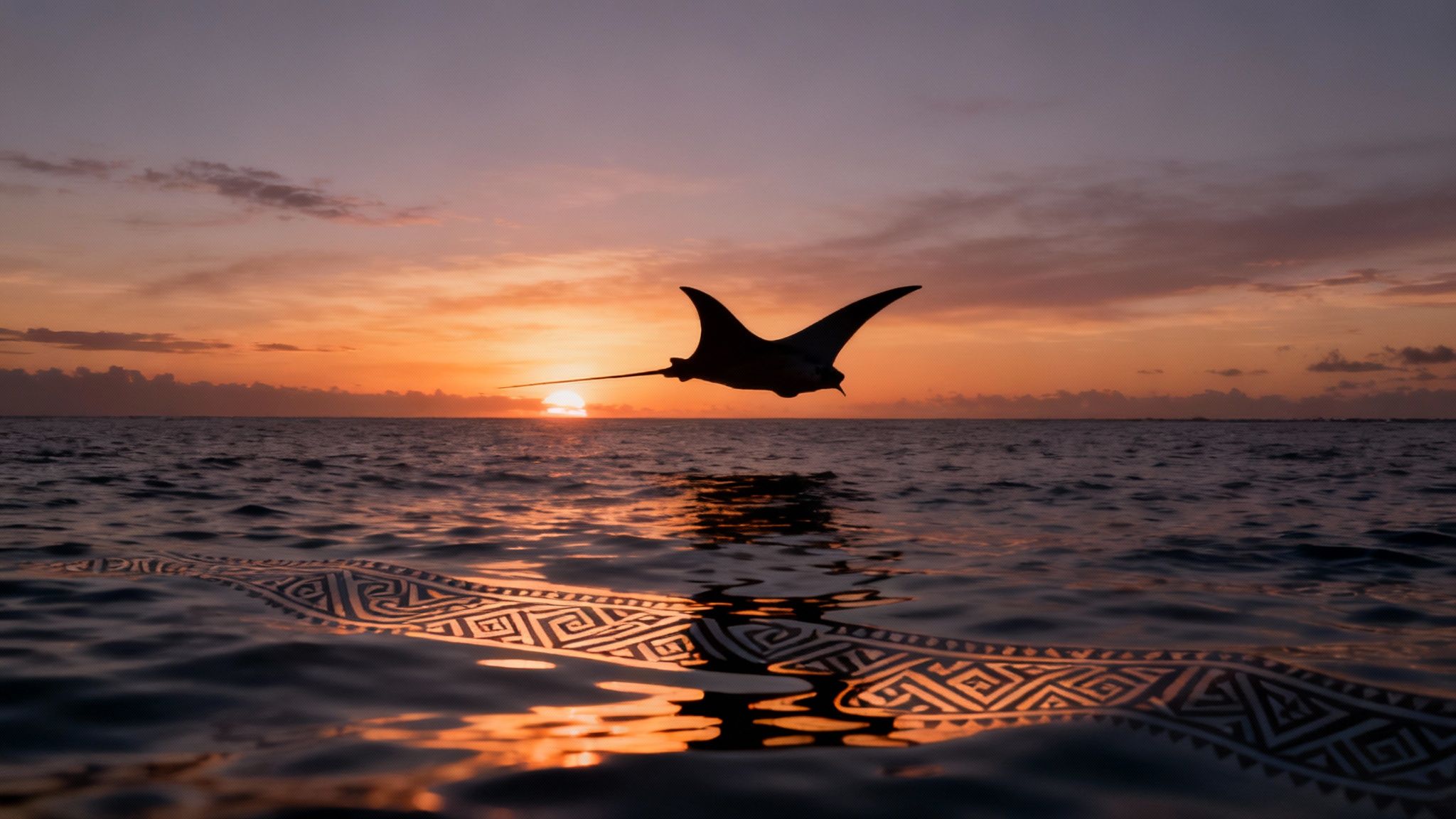
When you go on a manta ray dive in Kona, you're doing so much more than just witnessing an incredible underwater spectacle. You're actually becoming part of a powerful conservation story where tourism directly helps protect these gentle giants for future generations.
In Hawaiian culture, manta rays, known as hāhālua, are held in high regard. They are often considered ‘aumakua—ancestral guardian spirits that embody wisdom, elegance, and a deep spiritual connection. This long-standing cultural respect is really the bedrock of today's conservation work.
From Adventure to Advocacy
Manta rays, both the reef and oceanic species, are classified as vulnerable and face serious threats around the world. But here in Kona, something amazing has happened. Well-managed eco-tourism has created a powerful economic reason to protect them, effectively turning the local dive sites into safe havens.
Think about it: around 80,000 people come to dive and snorkel with Kona's mantas every year. This means the entire local community has a stake in making sure the mantas are healthy and safe. It's a win-win. You can learn more about the cultural and ecological importance of mantas in Hawaiʻi.
Every responsible operator follows strict rules to keep these encounters safe for everyone, especially the mantas. The most important rule is simple: look, but don't touch. This is absolutely critical for their health. The local dive community has also fought hard for protective regulations, which you can read about in our open letter regarding manta rules.
By choosing a reputable tour for your manta ray dive, you are directly funding a sustainable model that proves these animals are worth far more alive and thriving in their natural habitat than they are to any other industry.
Your presence in the water does more than you think. It sends a clear message that conservation isn't just a nice idea—it's a sustainable economic force. It's how we all ensure the Kona manta ray ballet continues to inspire awe for many, many years to come.
Common Questions About The Kona Manta Ray Dive
Even with all the details, you probably still have a few questions. That's totally normal. This is one of the most unique underwater encounters in the world, and knowing exactly what to expect helps you relax and soak it all in. Here are some of the most common things people ask our guides right on the boat.
Is The Manta Ray Experience Safe For Beginners Or Kids?
Yes, absolutely. For snorkelers, the experience is designed to be accessible for just about every age and swimming level. You'll hold onto a large, custom-built light board that floats on the surface. This gives you plenty of stability and a front-row seat to the incredible show happening right below you.
If you're a certified diver, you'll find it's a very straightforward and beginner-friendly dive. This is especially true at the Manta Village site, which is well-known for its calm, protected conditions. Every trip with a solid operator like Kona Honu Divers starts with a detailed safety briefing, and professional guides are always in the water with you from start to finish.
What Happens If No Manta Rays Show Up?
It's a fair question! While manta sightings are incredibly consistent—we're talking an 85-90% success rate on most nights—it’s crucial to remember we're dealing with wild animals. Their presence is never a 100% guarantee.
Because of this small chance, the best tour companies offer what's known as a "manta guarantee."
This usually means that if your tour doesn't see a single manta, you can come back and try again on another night for free. The re-booking is typically on a standby basis, which is why we always suggest scheduling your manta dive early in your vacation—that way, you have a few backup nights just in case.
Ready to book your own incredible night with these gentle giants? Kona Honu Divers runs expert-led manta ray dive and snorkel tours with a crew that’s passionate about your safety and the well-being of the mantas.
Check Availability