
Picture this: you're floating in the warm, inky black waters off the Kona coast. Suddenly, a colossal, shadow-like figure glides effortlessly into the beams of light below you, barrel-rolling in a silent, hypnotic ballet. It's a giant manta ray, and it's just inches away. This isn't a nature documentary; this is the Kona manta ray night dive, one of the most reliable and profoundly magical wildlife encounters you can have anywhere on the planet.
It’s an experience that consistently tops the bucket lists of divers and snorkelers for a very good reason.
Why This Kona Adventure Is a Must-Do
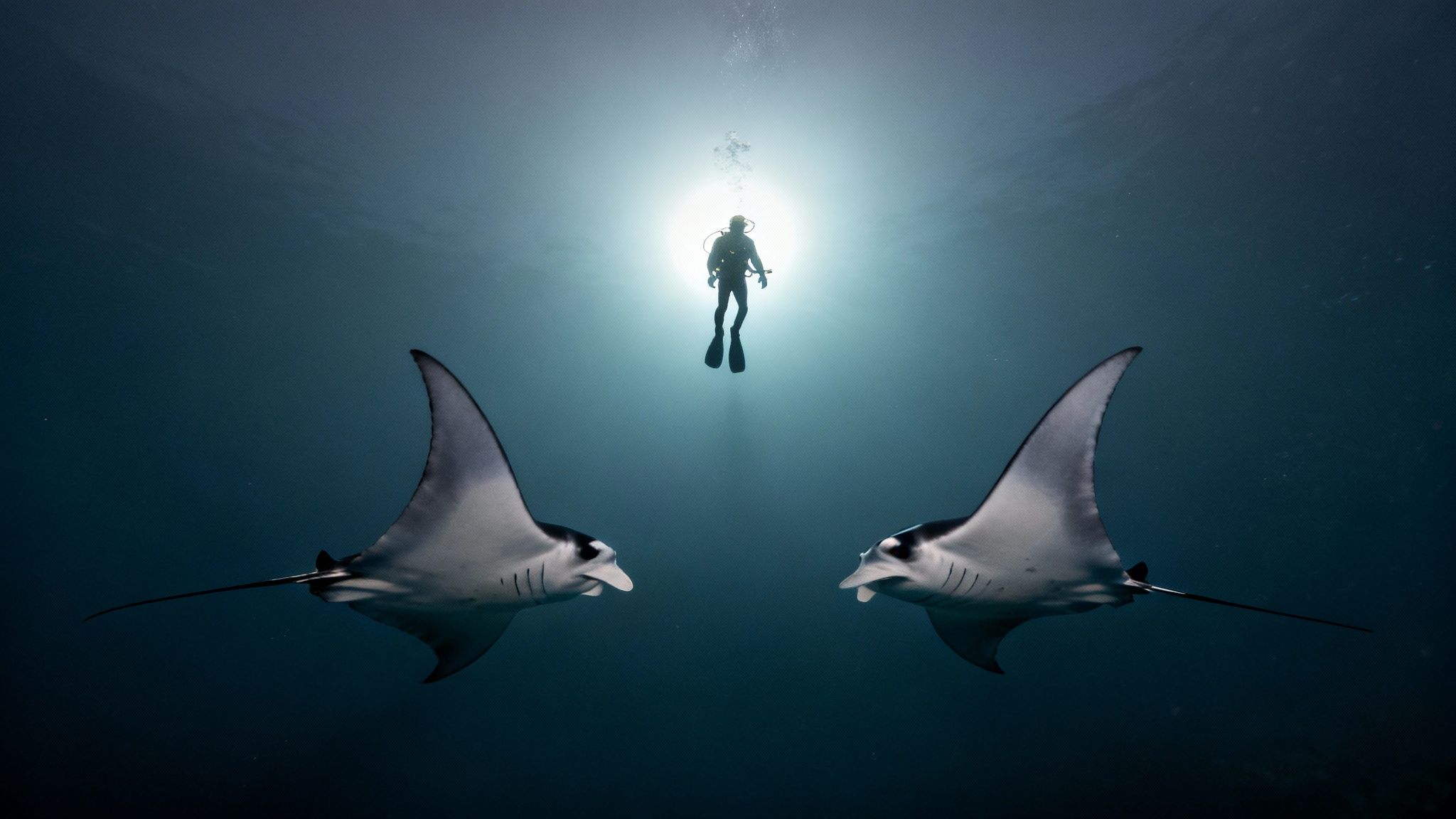
The Kona manta ray dive isn't just another tour; it's a front-row seat to one of nature's most spectacular dinner shows. While many wildlife viewings are a game of chance, seeing mantas in Kona is practically a sure thing. The secret to this consistency is beautifully simple.
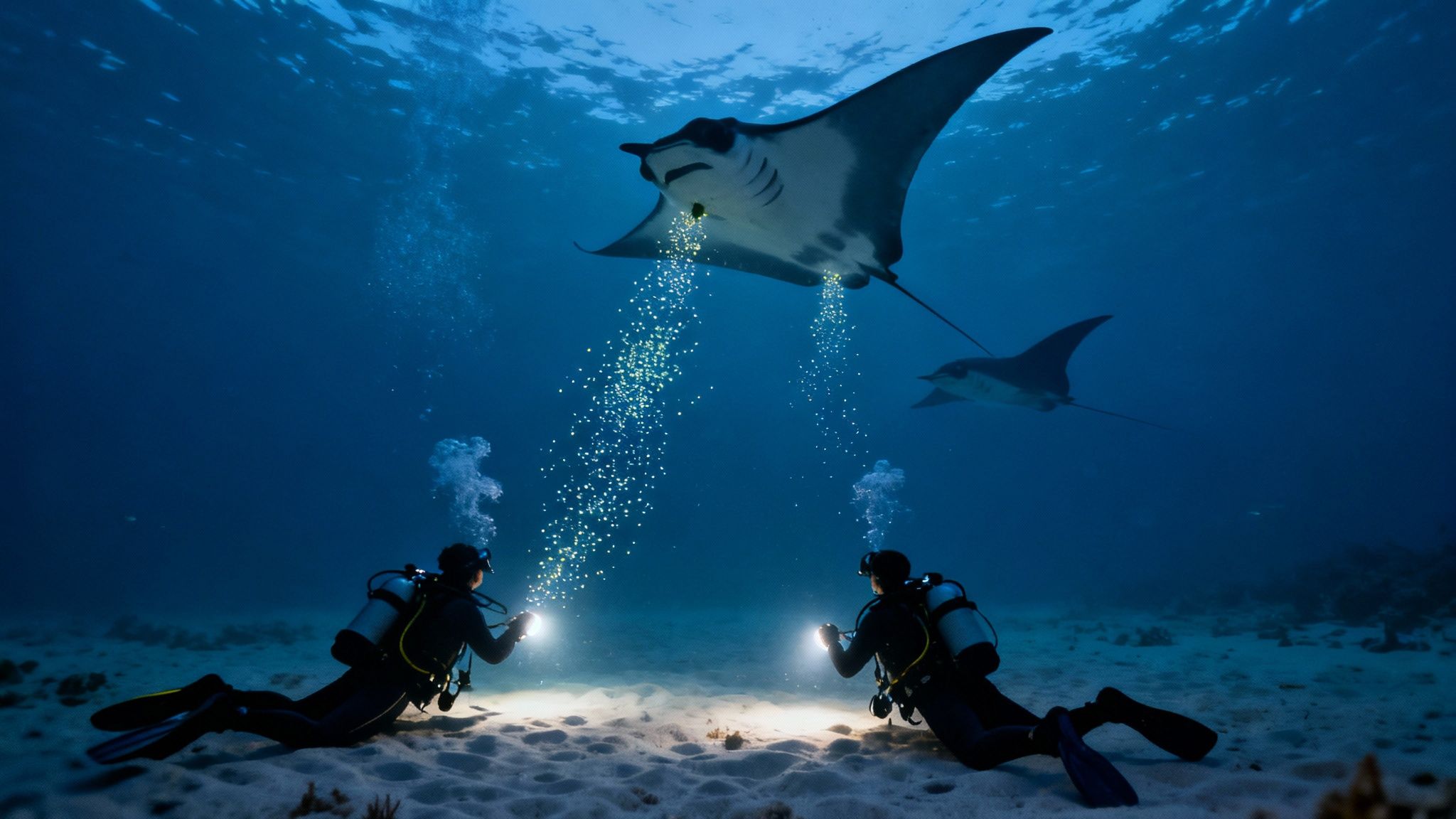
After sunset, dive operators set up what can only be described as an underwater "campfire." They place powerful, eco-friendly lights on the ocean floor or on floating rafts. These bright lights attract swarms of plankton, the microscopic critters that manta rays love to eat. The mantas, clever as they are, have figured this out and show up night after night for an easy, all-you-can-eat buffet.
What follows is pure magic. These gentle giants, some with wingspans over 12 feet, swoop and somersault through the light beams, their cavernous mouths wide open to filter the plankton-rich water. It's a breathtaking, silent performance that unfolds right before your eyes.
To give you a quick rundown of what to expect, here’s a handy chart.
Kona Manta Ray Dive At-a-Glance
This table provides a quick summary of the essential details for planning your manta ray night dive experience in Kona.
| Aspect | Typical Details |
|---|---|
| Location | Kona Coast, Big Island of Hawai'i |
| Best Time | Year-round, but calmest seas in summer (May-Sept) |
| Best Viewing | After sunset, during a night dive or snorkel |
| Water Depth | 25-40 feet (divers on the bottom, snorkelers on top) |
| Manta Species | Pelagic & Reef Manta Rays |
| Tour Duration | 2-3 hours total, including boat ride |
| Success Rate | ~90% chance of seeing mantas with reputable operators |
This combination of factors makes it one of the most dependable and awe-inspiring underwater adventures available.
A Unique and Accessible Experience
One of the best things about the Kona manta ray dive is that you don't have to be a seasoned diver to witness the spectacle. The experience is designed to be incredible for everyone, regardless of their comfort level in the water.
- For Divers: Certified divers get to settle on the sandy ocean floor, about 30-40 feet down. From there, you look up as the mantas glide directly over your head, sometimes so close you could almost touch them (but don't!). It’s a truly humbling perspective.
- For Snorkelers: Not a diver? No problem. Snorkelers hold onto a custom-built floatation raft on the surface, which has the lights shining down. You just put your face in the water and watch the show from above as the mantas swoop up to feed.
This brilliant setup means families, couples, and groups with mixed scuba experience can all share in the same incredible moment.
The feeling of watching a massive fish, the shape of a stealth bomber, glide into view is impossible to describe. It's an experience that stays with you long after you've dried off.
Kona's calm waters and well-established dive sites, affectionately known as "Manta Village" and "Manta Heaven," are the perfect stage for this nightly event. The local reef manta population is well-known and studied; many even have names given to them by researchers, adding a personal touch to your encounter. Booking with a trusted, local operator like Kona Honu Divers ensures your adventure will be safe, ethical, and absolutely unforgettable.
Meeting the Gentle Giants of Kona’s Coast
To really get the most out of the manta ray dive kona experience, it helps to know a little about the incredible animals you're about to meet. This is so much more than a tourist attraction; it's a chance to have a genuine encounter with a remarkably intelligent species. Understanding them turns a cool dive into a truly meaningful connection.
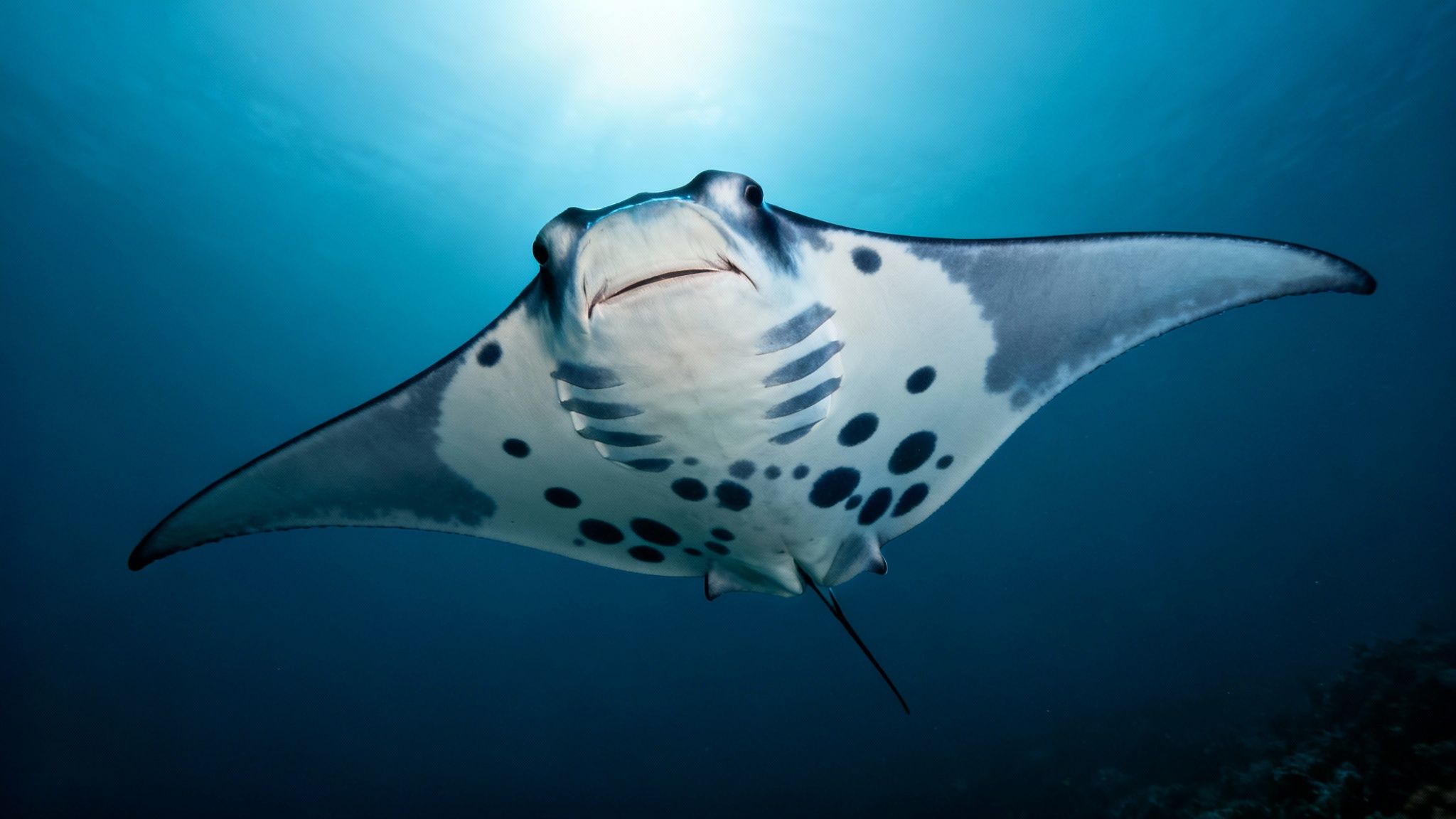
The stars of this underwater show are Kona's resident reef manta rays (Mobula alfredi). These are the second-largest ray species on the planet, and some of the local regulars have massive wingspans of over 12 feet! But don't let their size fool you—they are completely harmless and have no barbs or stingers like their stingray cousins.
An Underwater Fingerprint
So, how do we tell these giants apart? It's one of the coolest parts of the Kona manta story. Each manta ray has a completely unique pattern of black spots on its white belly.
Think of it like an underwater fingerprint. This natural marker allows local researchers and even the dive guides to recognize specific individuals by name.
This isn't just a fun fact; it's the backbone of local conservation. Researchers have been cataloging these spot patterns since 1991, building an incredible database of over 330 identified mantas. This data gives us priceless insight into their behavior and the health of the population, making Kona a world-renowned hub for manta research. The tourism that supports this work also brings in over $2.5 million to the local economy each year. To dive deeper into the science, check out the great work being done by the Hawaii Association for Marine Education and Research.
The Manta Ray Buffet
Manta rays are what we call "filter feeders." Their diet is made up of tiny organisms like plankton, which they scoop up by gulping huge amounts of water and filtering it through specialized plates in their gills.
The genius of the Kona night dive is that it taps directly into this natural feeding instinct. The bright lights that tour operators place on the seafloor attract swarms of plankton, creating a concentrated, irresistible buffet for the mantas.
You'll get to see them perform graceful underwater acrobatics—barrel rolls, somersaults, and swoops—all designed to get as much food as possible.
This isn't just a swim; it's a front-row seat to one of nature's most elegant dinner parties. Watching their feeding techniques up close gives you a whole new appreciation for their place in the ocean.
Whether you choose to watch this from the ocean floor as a diver or from the surface as a snorkeler, you're in for an unforgettable view. If you're still on the fence, we have a helpful guide explaining whether it is better to snorkel or dive with manta rays.
Supporting a Sustainable Future
Getting to know these incredible animals also means understanding the threats they face from things like fishing gear and habitat loss. The carefully managed tourism here in Kona plays a huge part in protecting them.
When you book with a responsible operator, you're supporting a sustainable model where these mantas are worth far more alive and swimming free. It's an eco-tourism success story that directly funds conservation and education, helping ensure these magnificent creatures will be here for generations to come.
Choosing the Best Manta Ray Dive Operator in Kona
Picking the right tour operator is easily the most critical decision you’ll make when planning your manta ray dive in Kona. This single choice shapes everything: your safety, how incredible the experience feels, and even the well-being of the mantas themselves.
A great company takes an already spectacular dive and turns it into something truly seamless and unforgettable. They’re the ones who really get it.
The difference between a mediocre operator and a top-tier one is night and day. The best outfits prioritize small groups, so you're not just another face in the crowd. They hire passionate, seasoned guides and run boats that are comfortable and meticulously maintained. Most importantly, they are fiercely committed to the conservation guidelines that protect the rays.
By choosing wisely, you’re not just booking a tour. You’re actively supporting the companies that act as guardians of Kona’s precious marine ecosystem, ensuring this magical encounter is around for generations to come.
Key Factors for Selecting a Tour Operator
With so many companies to choose from, it’s easy to feel a bit lost. The trick is to tune out the noise and focus on a few non-negotiable factors that really separate the good from the great.
Here’s what I always look for:
- Safety Standards: This is non-negotiable. Look for a solid safety record, professional divemasters, and comprehensive pre-dive briefings. Your safety has to be the absolute top priority.
- Guide Experience: The best guides are more than just underwater babysitters; they’re marine naturalists. They can often identify individual mantas by their spot patterns and share amazing stories about their behavior.
- Adherence to Green List Guidelines: The official Manta Ray Green List program may have been discontinued, but its principles are more important than ever. Responsible operators still enforce these rules, like "observe only, no touching," to protect the mantas' delicate mucous coating.
- Group Size: Smaller is almost always better. Fewer people in the water means less crowding, a more intimate viewing experience, and more personal attention from your guide.
Focusing on these points will lead you to an operator that delivers a safe, educational, and genuinely respectful dive.
Choosing a company with a deep commitment to conservation isn’t just good practice—it's an investment in the future of these magnificent animals. Your decision directly supports the businesses doing it right.
When it comes to picking the right company, a little homework goes a long way. Here's a breakdown of what to weigh when making your decision.
How to Select Your Manta Ray Tour Operator
| Factor | What to Look For | Why It Matters |
|---|---|---|
| Safety Record & Staff | Impeccable safety history, certified and experienced divemasters and boat captains. | This is the foundation of a good trip. You need to trust the crew implicitly so you can relax and enjoy the dive. |
| Group Size | Small groups, typically 6-12 divers per guide. | Smaller groups provide a more personal, less chaotic experience and a better chance for prime viewing spots. |
| Boat Quality & Comfort | Well-maintained, spacious boats with amenities like a marine head (toilet), fresh water rinse, and snacks. | You'll be on the boat for a few hours. Comfort makes the whole experience, from gearing up to the ride back, much more pleasant. |
| Conservation Ethos | Strict adherence to manta-safe diving practices. Look for Manta Ray Green List principles. | Supporting ethical operators ensures the mantas are not stressed or harmed, preserving this amazing natural encounter for the future. |
| Guest Reviews | Consistent, recent, and positive reviews on platforms like Google, TripAdvisor, and Yelp. | Real-world feedback is invaluable. It tells you what the experience is actually like, beyond the marketing hype. |
Ultimately, you're looking for an operator whose passion for the ocean matches your own. A company that sees this as more than just a business, but as a privilege.
Our Top Recommendation: Kona Honu Divers
For a truly world-class manta ray dive kona experience, we wholeheartedly recommend Kona Honu Divers. They consistently hit the mark on every single key factor, from their expert crew and custom-built boats to their deep-rooted commitment to marine conservation. Their stellar reputation is well-earned.
You can feel their team's passion for the ocean in everything they do, which makes the trip both incredibly fun and deeply educational. Their two-tank manta ray dive and snorkel tour is a fantastic option that includes a stunning reef dive during the "magic hour" of sunset before the main event with the mantas.
If you want to survey the whole field, we've also put together a detailed guide on the top 10 Kona diving companies ranked that gives you a broader look at the best operators in town.
Understanding Different Tour Types
To find the perfect match, it helps to know the main types of tours on offer. Most companies have a few options designed for different comfort and certification levels.
- Two-Tank Dive: This is the gold standard for certified divers. You get a beautiful late-afternoon reef dive to see other marine life, then you stay at the same site for the main event with the mantas after dark.
- Single-Tank Dive: A great choice if you're short on time. This trip heads straight out for just the manta ray night dive.
- Snorkel-Only Trip: Perfect for non-divers, families, or anyone who'd rather stay at the surface. You'll hold onto a custom-built, floating light raft and watch the incredible ballet from above.
By weighing these factors and tour types, you can confidently book an incredible manta ray adventure that you’ll be talking about for years to come.
How to Prepare for Your Manta Ray Adventure
A little prep work can be the difference between a good night and an absolutely unforgettable one. When you show up for your manta ray dive kona with the right gear and mindset, you can just relax and soak in the magic. Think of it as a simple pre-flight checklist for an incredible underwater show.
When you plan ahead, you'll feel confident, comfortable, and ready for what's easily one of the most awe-inspiring sights in nature.
What to Pack for the Boat
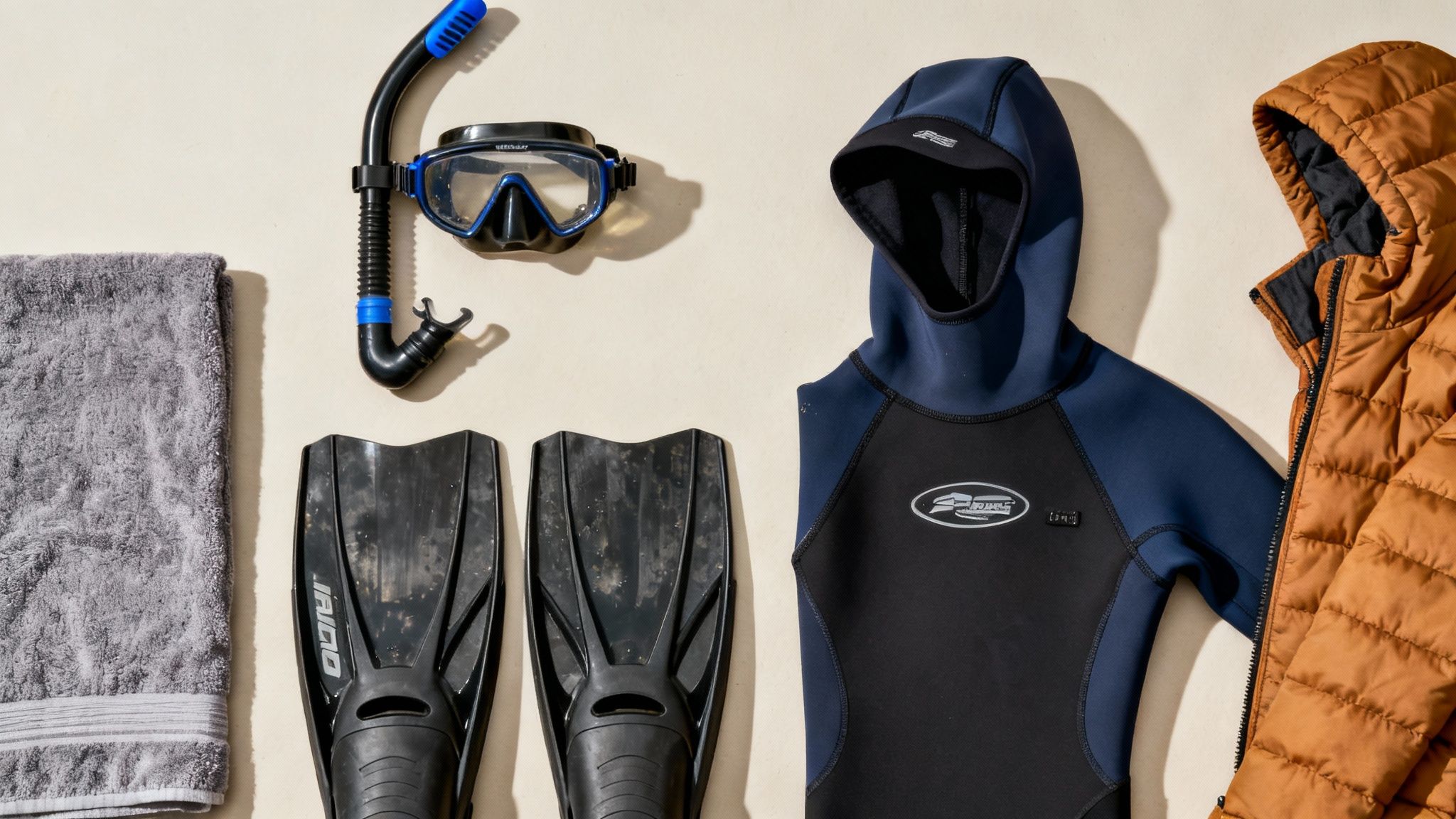
Don't let the tropical paradise fool you—it can get surprisingly chilly on the boat after a night dive. Packing a small "go-bag" with a few essentials will make the ride back to the harbor much more pleasant.
- A Warm Jacket or Hoodie: This is non-negotiable. After peeling off a wet wetsuit, you’ll be so glad you have something warm and dry to throw on.
- Towel: While most boats have some, bringing your own is always a safe bet.
- Reusable Water Bottle: It's easy to get dehydrated. Keep a water bottle handy for sipping before and after you hit the water.
- Seasickness Medication: If you're even a little prone to motion sickness, take your preferred remedy before you board the boat. It works best when it's already in your system.
Having these simple items means you'll be focused on replaying the incredible encounters in your head, not shivering all the way back to shore.
Gear, Certifications, and Briefings
Alright, let's talk logistics. Knowing what’s expected in terms of equipment and qualifications will take any guesswork out of the equation. Any reputable operator will make this part of the process seamless.
For a deeper dive into all the equipment we use, check out our guide on the gear you will need for your Kona diving adventure.
The goal of the pre-dive briefing is to answer every question you have before you even think to ask it. A good briefing builds confidence and ensures everyone knows exactly what to do for a safe and respectful encounter.
Most operators, including us here at Kona Honu Divers, provide top-notch, well-maintained rental gear as part of the tour. This usually covers your wetsuit, mask, and fins, and for divers, it includes a BCD, regulator, and dive computer. If you have your own mask that fits you perfectly or a dive computer you know and love, by all means, bring it!
The best part? You don't need to be some grizzled, expert-level diver to do this. The manta dive is done in one spot and is relatively shallow, which opens it up to almost everyone.
- Scuba Divers: A basic PADI Open Water Diver certification (or an equivalent from another agency) is all you need. We're typically in water that's only 25-40 feet deep, which is well within the limits of an entry-level certification.
- Snorkelers: No certification is required at all! If you can comfortably float and breathe through a snorkel, you're good to go.
Finally, treat the pre-dive briefing like gold. Your guides will walk you through everything from safety measures to "manta etiquette"—the essential rules for interacting with these giants passively and safely. Listening closely is the key to having a truly fantastic and responsible experience.
What Happens on a Manta Ray Night Dive
The experience really kicks off the moment your feet hit the deck. As the boat motors out of the harbor, you get to watch the Hawaiian sun dip below the horizon, setting the sky ablaze in brilliant oranges and purples. This ride isn't just about getting from point A to point B; it’s the opening act, a chance to soak in the view and feel the buzz of anticipation building around you.
Your guides will use this time to give a thorough, and usually pretty entertaining, safety briefing. They'll walk you through everything you need to know about the manta ray dive kona, from getting into the dark water safely to the specific procedures that keep the whole operation running like a well-oiled machine. This is when you learn the golden rules for the night—all designed to keep both you and the mantas safe.
Creating the "Campfire of Light"
Once you arrive at the dive site, the crew gets everyone into the water with practiced efficiency. The entire setup is a brilliant, yet simple, exercise in passive observation. It's all about creating an irresistible beacon for the mantas.
- For Divers: You’ll descend to a sandy patch on the ocean floor, usually around 30-40 feet deep. Once you’re settled, everyone arranges into a semi-circle and points their powerful dive lights straight up. Together, these beams form a massive "campfire of light" that attracts plankton, the mantas' favorite food.
- For Snorkelers: You'll hang out on the surface, holding onto a specially designed float that has bright lights shining down into the water. This creates a similar plankton buffet right at the surface. All you have to do is put your face in the water and watch the show from a perfect bird's-eye view.
This two-pronged approach ensures that whether you're diving or snorkeling, you've got a front-row seat for one of nature's most incredible performances.
Mastering Manta Etiquette
If there’s one rule to remember for the manta ray night dive, it's this: look, but don't touch. The well-being of these gentle giants is the absolute top priority, and any good operator will have strict guidelines to make sure the encounter is respectful.
Manta rays have a delicate, protective mucous layer on their skin that acts as a shield against infection. When people touch them, it can strip away this coating, leaving them vulnerable to disease. Simply being a passive observer is the best way you can show them respect.
Following proper manta etiquette is what makes this a sustainable, ethical experience for years to come.
- No Chasing: Whatever you do, don't swim after a manta ray. Let them come to you.
- Stay in Your Spot: Divers should stay put on the bottom, and snorkelers should stick to the surface. This keeps the water column clear so the mantas have plenty of room to maneuver.
- Mind Your Bubbles: If you're diving, try to time your breathing so you aren't blowing a big cloud of bubbles right in a manta's face as it glides overhead.
By sticking to these simple rules, you become a welcome guest in their underwater dining room. It’s what keeps the mantas comfortable and coming back night after night. The sheer popularity of these tours, with about 80,000 people participating each year, is a testament to how reliable the sightings are. During the peak season from April to October, it's not unusual to see 8 to 12 manta rays on a single dive. You can dig into more specifics on the Kona manta dive success rates and seasons.
The Post-Dive Celebration
After about 45 minutes of pure, jaw-dropping wonder, you’ll head back to the boat, absolutely buzzing. The ride back to the harbor is often just as fun as the dive itself. Most crews, like the fantastic team at Kona Honu Divers, are waiting with hot cocoa, snacks, and warm towels.
This is when everyone starts sharing stories—high-fives all around, comparing notes on who saw the biggest barrel roll or which manta glided closest. Seeing the whole process laid out like this demystifies the tour, turning it from a vague idea into an exciting and totally doable adventure you can really look forward to.
Your Kona Manta Ray Dive Questions Answered
Even with a solid plan, it’s totally normal to have a few last-minute questions before an adventure as wild as the **Kona manta ray dive**. I’ve pulled together the most common questions we get from divers and snorkelers, using insights from our seasoned guides right here on the Big Island.
Think of this as your final check-in for peace of mind. Our goal is to get all the logistics out of the way so you can focus on the pure magic of meeting these incredible animals.
What Is the Best Time of Year for the Manta Ray Dive?
This is the best part: there is no bad time! The Kona manta ray dive is a year-round spectacle with an unbelievably high success rate—we're talking over 90% with top-tier operators. These mantas are residents, not tourists, so they hang around all year long.
That said, there are some subtle differences between the seasons you might want to consider:
- Peak Season (April – October): This is when Kona really shines. You'll typically find the calmest, glassiest ocean conditions and balmy water temps, often a comfortable 75-80°F. It’s pretty much ideal.
- Winter Season (November – March): The mantas are absolutely still here and the show is just as good. The main thing you'll notice is slightly cooler water and a greater chance for a bit of chop on the boat ride out.
The bottom line? Don't stress about the calendar. Whenever you can make it to Kona, your chances of having a mind-blowing encounter are fantastic.
Is the Manta Ray Night Dive Safe?
Yes, absolutely. When you go with a professional, safety-obsessed operator like Kona Honu Divers, this is an exceptionally safe and well-managed experience. Safety isn't just a talking point; it's built into every single step of the tour.
Here’s why it has such a stellar safety record:
- It’s Shallow: We’re not talking about a deep, technical dive. You'll be settled on a sandy bottom at a mellow 30-40 feet.
- You Don't Move: Unlike a typical reef tour where you're swimming around, this is a stationary dive. You find your spot and stay put, which simplifies everything and minimizes risk.
- Constant Supervision: Our professional divemasters are in the water with you the entire time. They manage the group, keep an eye on everyone, and are ready to assist at a moment's notice.
As long as you pay attention during the pre-dive briefing and follow your guide’s lead, it's a completely safe and awe-inspiring dive perfect for any certified PADI Open Water diver.
The entire experience is structured and supervised. Your only job is to relax, stay in your designated spot, and be mesmerized by the underwater ballet unfolding above you.
Can I See the Mantas if I Don't Scuba Dive?
You sure can! Snorkeling with the manta rays is an equally incredible option. It’s the perfect way for non-divers, families with kids, or anyone who just prefers staying on the surface to get in on the action. The view from the top is just as spectacular.
Snorkelers get fully kitted out with a wetsuit, mask, and snorkel. In the water, you'll float comfortably while holding onto a custom-made light board. These powerful, downward-facing lights do the exact same thing as the divers' lights below—they attract the plankton, which is the mantas' food source.
This brings the mantas right up to the surface, where they'll often feed and perform their graceful barrel rolls just inches away from you. You get a perfect bird's-eye view of the whole show. No snorkeling experience is required, making this an amazing adventure for literally everyone.
What Other Unique Dives Can I Do in Kona?
The manta ray night dive is the star, but it's just the opening act for what the Kona coast offers. The Big Island is a world-class diving destination with an incredible variety of underwater sites for every skill level.
After you've had your mind blown by the mantas, you've got to check out some of these other unforgettable dives:
- The Kona Blackwater Dive: For a truly surreal, out-of-this-world experience, the Blackwater Night Dive is a must. You drift in the deep, dark open ocean at night while tethered to the boat, watching bizarre and bioluminescent creatures rise from the abyss. It’s like diving in outer space.
- Advanced Lava Tube Dives: If you're an experienced diver looking for a bigger thrill, our advanced dive charters can take you to explore dramatic underwater lava tubes, massive archways, and deep reefs. These sites often host sharks, huge schools of fish, and other amazing marine life.
- Daytime Reef Exploration: The vibrant coral reefs along the coast are just teeming with life. A classic daytime diving tour in Kona is your ticket to seeing green sea turtles, spinner dolphins, eels, and a kaleidoscope of colorful reef fish.
Kona's diverse underwater landscape means there’s always a new, exciting dive site waiting for you, no matter how many times you visit.
Ready to experience the magic for yourself? At Kona Honu Divers, we are dedicated to providing the safest, most ethical, and most unforgettable manta ray dive kona experience possible. Our expert crew, comfortable boats, and deep respect for the ocean make us the top choice for your adventure.
Book your [manta ray dive tour](https://konahonudivers.com/diving-tours/2-tank-manta-dive-snorkel/?ref=blog) with us today and prepare for the memory of a lifetime.