
Picture this: you're floating in the warm, dark Pacific waters off the Big Island. Below you, powerful beams of light cut through the black, and suddenly, giant, gentle shadows glide through them like otherworldly dancers. This is the manta ray night dive in Kona, a true bucket-list experience that puts you front and center for an unforgettable underwater ballet.
It's an adventure that perfectly blends the thrill of a night dive with the serene, breathtaking beauty of one of the ocean's most majestic animals.
Experience Kona’s World-Famous Manta Ray Night Dive
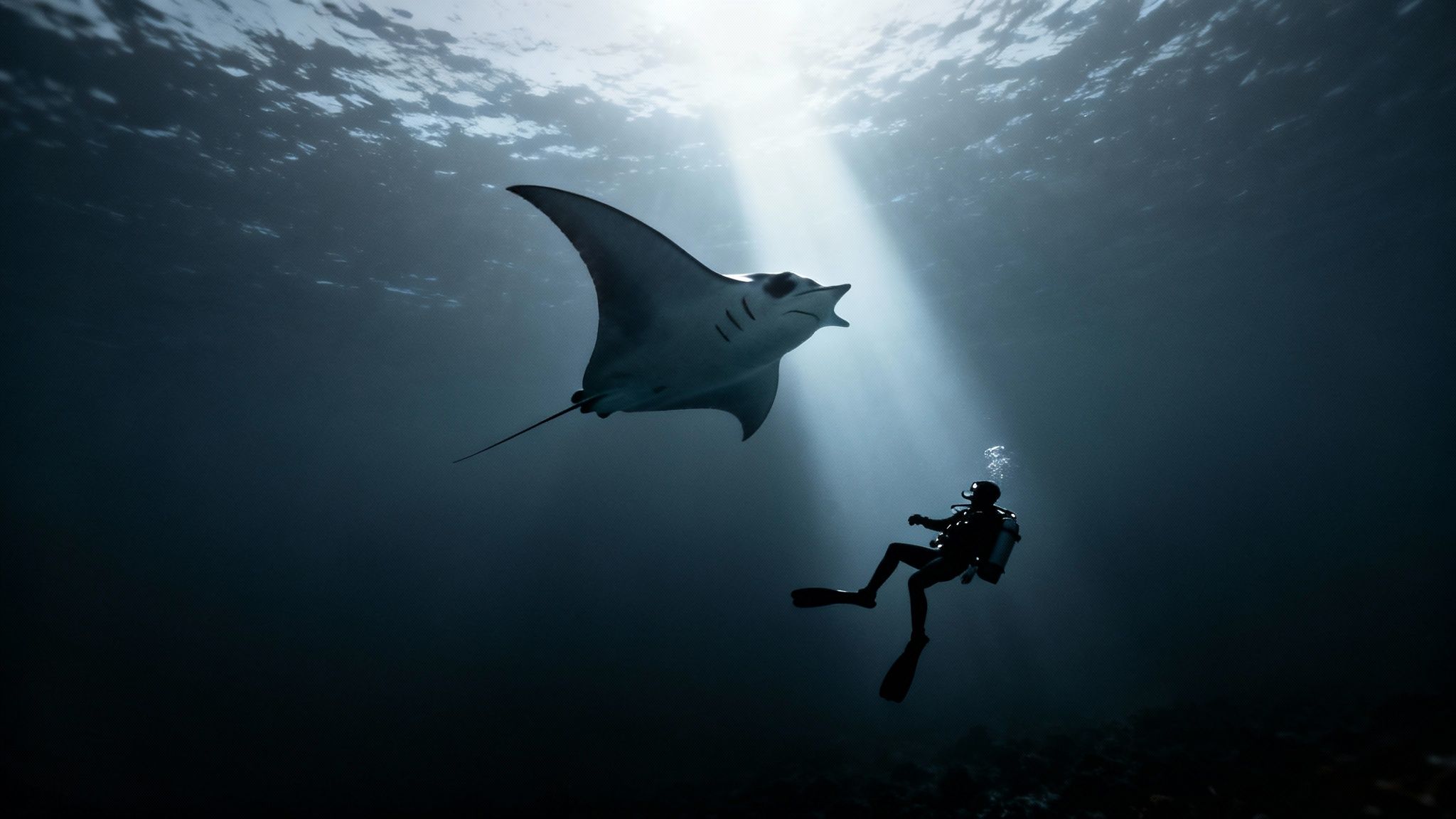
The Kona coast isn’t just a good place to see manta rays; it’s arguably the most reliable and spectacular place on Earth for this specific encounter. While you might get a lucky, fleeting glimpse of a manta elsewhere, Kona has established sites where these giants gather like clockwork every single night to feed on plankton.
This guide will walk you through everything you need to know to plan this incredible adventure, from understanding manta behavior to the nitty-gritty of booking your tour.
Why This Dive Is an Absolute Must-Do
There's a reason the Kona manta ray dive is one of the most sought-after marine wildlife encounters in the world. Each year, an estimated 80,000 people gear up for a snorkel or dive tour to witness the spectacle. It all comes down to a brilliant, yet simple, setup: dive operators place powerful, eco-friendly lights on the seafloor.
These lights attract dense clouds of plankton, which in turn draw in the hungry mantas, creating a massive, illuminated feeding station. It's this reliable, respectful interaction that makes the dive so consistently magical. You can learn more about these must-know manta facts before your Kona adventure to get even more out of your trip.
Choosing Your Guide for an Epic Adventure
To make sure your experience is safe, ethical, and absolutely mind-blowing, picking the right dive operator is key. We highly recommend Kona Honu Divers, a top-rated company that is as committed to the manta rays' well-being as they are to giving you an amazing tour. Their experienced crew and dedication to smaller group sizes make for a much more personal and awe-inspiring encounter.
Ready to see the underwater ballet for yourself? It’s an evening you’ll talk about for the rest of your life, so be sure to secure your spot.
Meet the Gentle Giants of Kona
Before you even think about getting in the water, let's talk about who you're going to meet down there. The manta ray dive in Kona isn't just about seeing some big fish; it's about having a real encounter with intelligent, curious, and incredibly gentle giants. Understanding them is what turns a cool dive into a profound connection with one of the ocean's most majestic creatures.
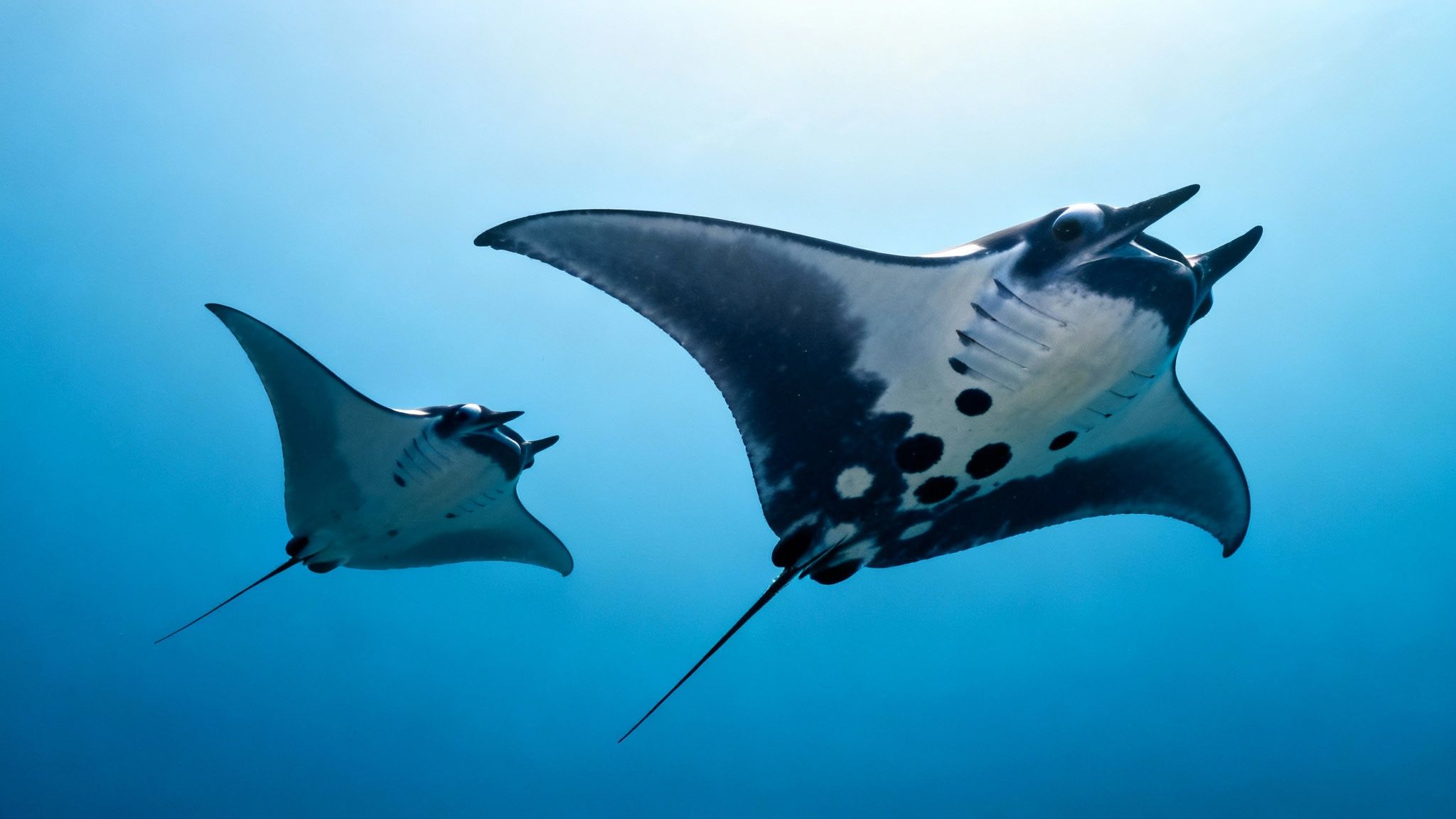
The stars of the show along the Kona coast are primarily Reef Manta Rays (Mobula alfredi), and these guys can have a massive wingspan of up to 18 feet. Once in a while, the even bigger, more elusive Giant Manta Ray (Mobula birostris) will cruise by, leaving divers absolutely speechless. Despite their intimidating size, they're completely harmless—just peaceful filter feeders with no teeth, stingers, or barbs to worry about.
An Underwater Ballet of Feeding
The behavior that will truly blow you away is the famous "barrel roll." To feed, mantas glide through the water, their huge mouths open to scoop up tiny plankton. When they hit a particularly rich patch of food, they'll perform a graceful, looping somersault to stay right in the middle of it.
Think of it like someone twirling under a shower of confetti to catch as much as they can—it's just the most efficient way for them to get a full meal. This mesmerizing, elegant movement is the heart of the underwater show you've come all this way to see.
The feeling of watching a massive fish the shape of a stealth bomber coming into vision is impossible to describe. It’s akin to watching your child ride a bike for the first time or finding a winning lottery ticket.
Knowing the Locals by Name
What makes the Kona experience so unique is that we actually know these mantas. I mean, we really know them. Since 1991, Kona has been at the center of an amazing citizen science project. Each manta has a unique pattern of spots on its belly, just like a human fingerprint.
By photographing these patterns, a local research database has identified and named over 330 individual mantas. The database holds nearly 6,000 recorded encounters and over 28,500 sightings, which makes this one of the most well-documented manta ray populations in the world. You can discover more insights about this incredible research effort to get a sense of just how special this place is.
This incredible familiarity means your dive guide might point out "Big Bertha" or "Lefty" and share stories about them. Suddenly, you're not just observing wildlife; you're visiting the home of well-known locals. That personal connection is a huge part of what makes the manta ray dive in Kona an experience you'll never forget.
What to Expect on Your Manta Ray Adventure
A manta ray dive kona experience is more than just the time you spend underwater—it's an entire evening built around this incredible encounter. Knowing what’s coming just adds to the anticipation.
Everything kicks off at the dock. The crew will get you checked in, make sure your gear is dialed in just right, and answer any questions you have. Once you're on board, they'll give a full briefing that’s part safety, part schedule, and part Manta 101. It’s your first step toward becoming a respectful guest in their underwater dining room.
The Sunset Cruise and Manta Etiquette
As you cruise out from the harbor, you're treated to a front-row seat for a spectacular sunset over the Kona coast. It’s a pretty incredible warm-up act. During the ride, your guides will walk you through the safety plan and, just as importantly, the rules for interacting with the mantas.
The guidelines are straightforward, but they are absolutely crucial for protecting these animals and making sure the experience is magical for everyone. It all boils down to one simple idea: passive observation.
- No Touching: Manta rays are covered in a protective mucus layer. Our hands can easily damage this coating, leaving the mantas vulnerable to skin infections.
- Stay in Your Zone: Divers will settle on the sandy bottom, while snorkelers hang out at the surface. This keeps the water column open so the mantas have a clear, safe flight path.
- Let Them Approach You: The real magic happens when you stay still. Never chase a manta or try to grab a fin. Let their natural curiosity bring them to you.
Descending into the Magic
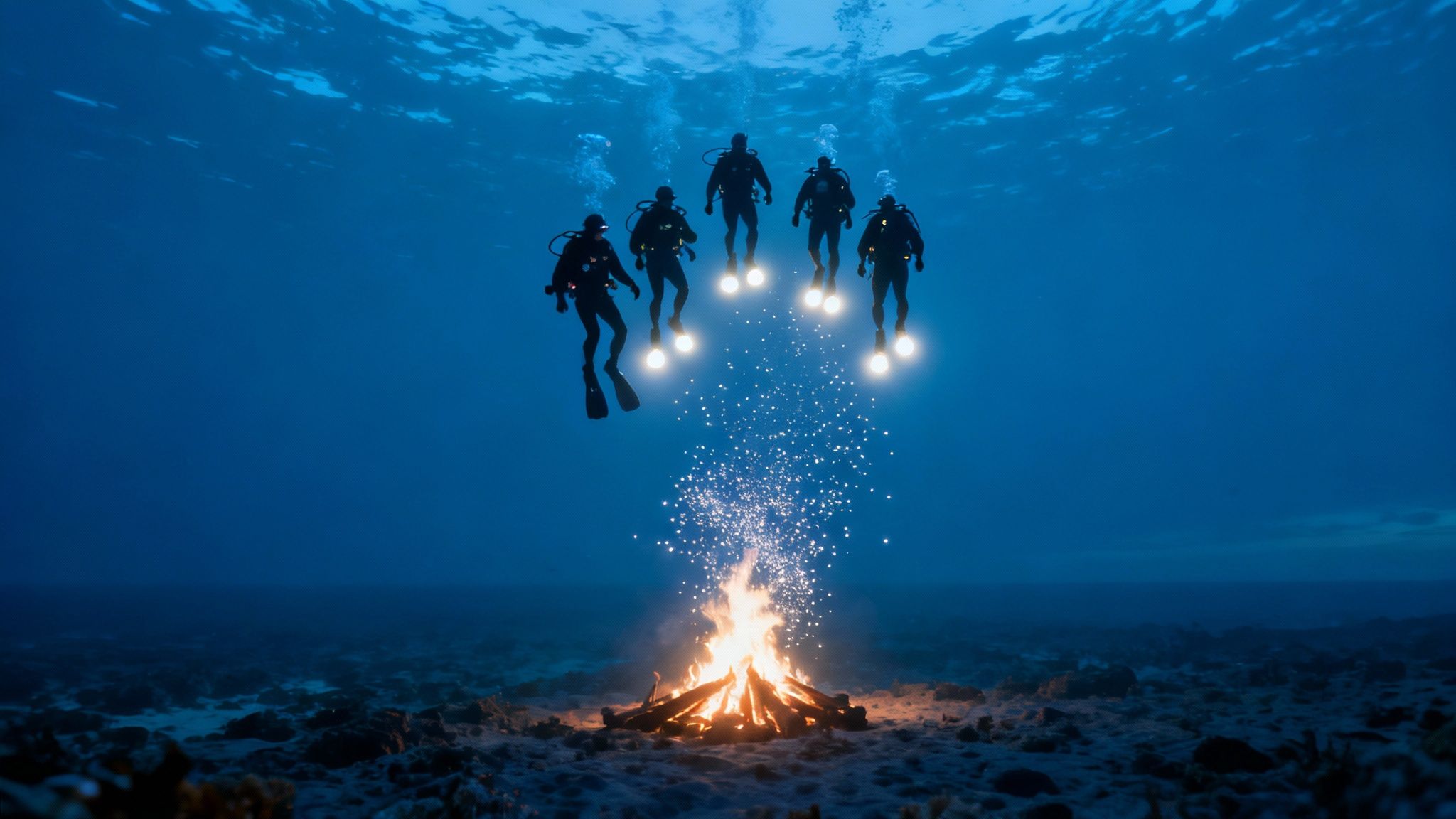
When the last bit of light fades from the sky, it's time to get in the water. Divers make their way down to the sandy bottom, arranging themselves in a semi-circle. You'll point your dive light straight up, creating a beam that acts like a dinner bell for plankton. It feels a bit like sitting around a submerged campfire, waiting for the show to begin.
Up on the surface, snorkelers will hold onto a specially designed flotation board. These boards are outfitted with bright lights that shine down, creating the same plankton buffet from above.
The feeling in the water is electric. You can see the tiny plankton beginning to cloud the beams of light. Then, out of the darkness, a shadow takes shape. The first manta ray glides into view, and it’s a moment that will genuinely stop you in your tracks. They swoop, glide, and perform effortless barrel rolls, sometimes passing just inches away. This is the heart of the manta ray dive kona—a silent, beautiful ballet you won't ever forget.
After about 30 to 45 minutes of pure awe, it's time to head back to the boat. A warm shower and some snacks are waiting for you as you make the starlit journey back to the harbor. While the manta dive is truly unique, don't forget the Big Island is packed with other world-class dive spots. If you're looking for more, there's a huge variety of amazing scuba diving in Kona to explore.
How to Plan Your Perfect Manta Dive
Booking your manta ray dive in Kona shouldn't be a shot in the dark. A little bit of planning goes a long way, and when you know what to look for, you can guarantee your adventure will be safe, respectful to the mantas, and completely unforgettable.
First things first: when should you go? Here's the good news—Kona's manta rays are here all year. They’re residents, not seasonal tourists. That said, if you’re hoping for the calmest, glassiest ocean conditions, your best bet is to plan your trip between April and October. The water is usually a bit warmer and the seas are flatter, which makes for a much smoother boat ride out to the site.
Choosing the Right Tour Operator
With so many boats heading out each night, picking the right operator is probably the single most important decision you'll make. A great company doesn't just take you to the mantas; they prioritize safety and the well-being of these incredible animals above everything else.
Make sure to look for an operator that follows the established Manta Ray Tour Operator Standards. This is a voluntary code of conduct, but it's a huge green flag, showing they're committed to passive observation and protecting the mantas. We're big fans of Kona Honu Divers because of their top-notch safety record and dedication to small group sizes. That means you get a more personal experience without feeling like you're in a crowd.
Scuba Dive or Snorkel?
This is the classic question. Should you dive, or should you snorkel? Honestly, you can't go wrong. Both give you spectacular, up-close views, just from different angles. Divers get to settle on the sandy bottom and watch the mantas glide and barrel-roll right over their heads. Snorkelers float on the surface, looking down into the bright lights as the show unfolds below.
It all comes down to your comfort in the water and your certification level. One isn't "better" than the other—they're just two different ways to witness the same magical underwater ballet.
If you’re on the fence, we've put together a full guide on the differences between snorkeling and diving with manta rays to help you decide. And while you're planning, remember that safety comes first. A manta dive is an adventure sport, so it's a smart move to look into adventure sports travel insurance just in case.
For certified divers looking for more unique night dives, Kona has other options, too. The famous Blackwater Dive is a completely different kind of thrill, taking you into the deep open ocean to see the strange and wonderful creatures that migrate up from the abyss after dark. You can also find advanced trips to explore Kona’s deeper reefs and dramatic lava tube formations by day.
Ready to book the adventure of a lifetime?
Essential Gear and Photography Tips for Your Dive
To really soak in the magic of the manta ray dive kona, being prepared with the right equipment and a few camera tricks makes a world of difference. Your dive operator will handle the heavy lifting with essentials like tanks and weights, but there are a few personal items you won't want to be without.
First things first, don't show up without your certification card, a swimsuit, and a towel. I also can't recommend a warm jacket or hoodie enough for the boat ride back—you'll be surprised how chilly you can feel after emerging from the water at night. For a more detailed list, you can see our complete guide on the gear you will need for your Kona diving adventure.
Capturing the Magic Underwater
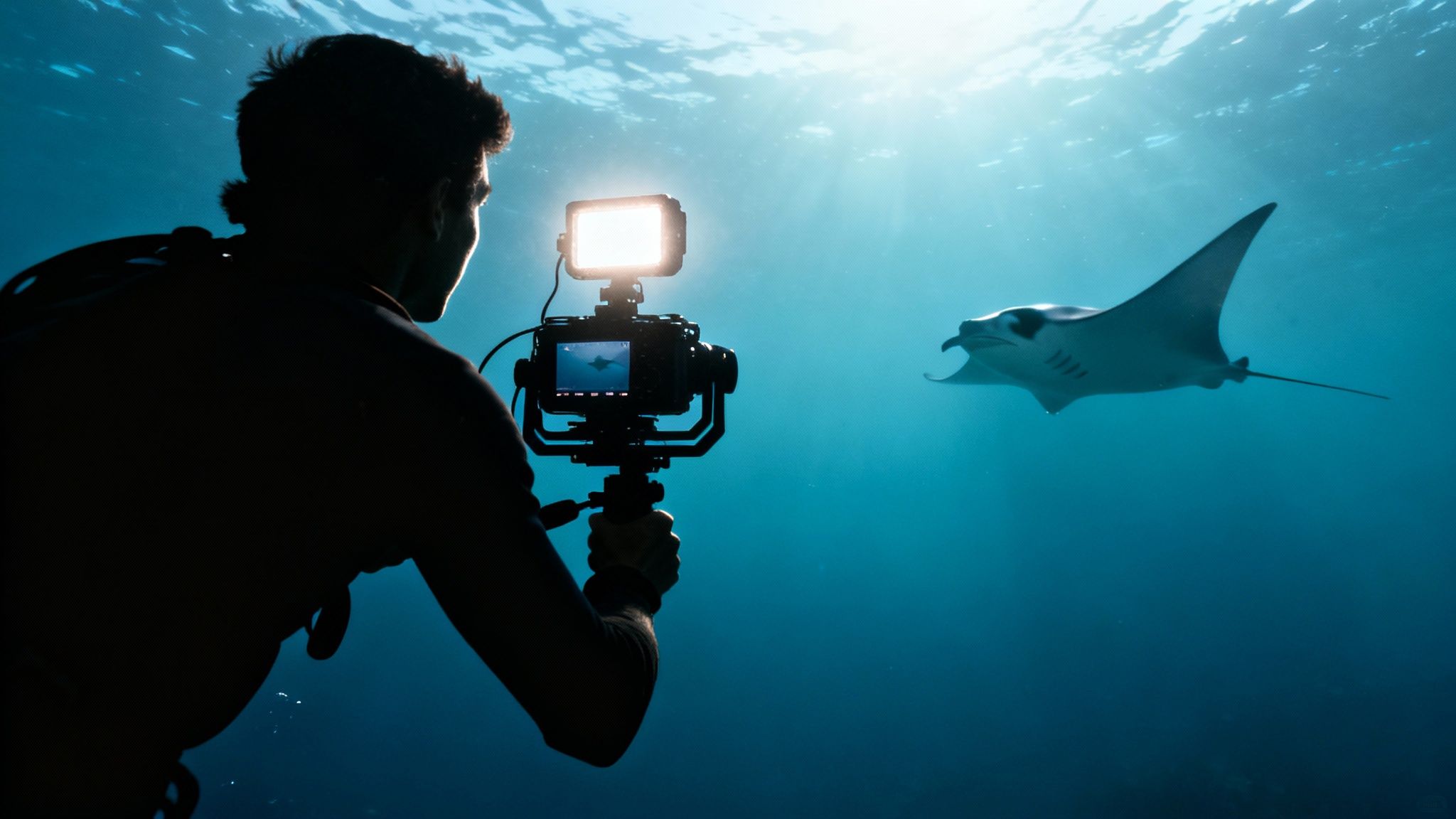
For most of us, getting a great photo or video of this encounter is a huge part of the experience. It doesn't matter if you're using a simple GoPro or a full-blown professional setup; a few simple techniques will help you nail the shot. Your biggest challenge is, of course, the dark. That’s why a powerful video light is your single most important tool—far more useful than a standard camera flash.
A strong, wide-beam video light does two crucial things: it brings out the beautiful details of the mantas and, just as importantly, it gives your camera's autofocus the light it needs to lock on, ensuring your shots are sharp and clear.
One of the classic frustrations of night photography is backscatter—those annoying white specks that look like a snowstorm in your photos. They're caused by your light bouncing off tiny particles in the water right in front of your lens. The fix? Hold your light source as far away from your camera lens as possible. This creates an angle that illuminates the manta without lighting up the space between you and it.
Composition and Camera Settings
When you're framing your shot, think about telling a story. Try to include another diver or the bright "campfire" of lights on the seafloor in your frame. This simple trick adds a powerful sense of scale, showing just how enormous these gentle giants really are. And if you get the chance, positioning yourself directly underneath a manta as it performs its signature barrel roll can result in an absolutely stunning, symmetrical image.
If you're shooting manually, here are a few good starting points for your settings. Tweak them as you go!
- Aperture: Open it up wide (meaning a low f-stop number). You want to let in as much precious light as you can.
- ISO: Start as low as possible to keep the image clean and avoid that grainy look. You’ll likely have to bump it up, but only as much as you need.
- Shutter Speed: A faster shutter speed is your friend here. It's the key to freezing the mantas' graceful, flowing movements and preventing motion blur.
With these pointers in your back pocket, you’re all set to bring home some incredible images that do justice to this unforgettable Kona experience.
Protecting the Mantas Through Responsible Tourism
Being part of the manta ray dive in Kona is more than just an incredible experience; it's a privilege. And with that privilege comes a real responsibility to protect these gentle giants.
Manta rays in Hawaii are facing some serious challenges. The two local species you might encounter, the reef manta (Mobula alfredi) and the giant manta (Mobula birostris), are both listed as vulnerable or endangered. They're up against threats like overfishing, getting accidentally caught in fishing gear (bycatch), and the loss of their natural habitats.
The great news is that well-managed tourism here in Kona offers a powerful solution. When these animals are valued more alive than not, it creates a sustainable economy that depends on protecting them. Your visit directly supports the health of our local marine ecosystem, turning every diver and snorkeler into a guardian of the ocean.
The Golden Rules of Manta Interaction
To keep the mantas safe and the experience magical for everyone, dive operators enforce a strict set of guidelines. Think of these as the essential rules of engagement for interacting with marine wildlife. You can get a more detailed look at our guide on responsible and considerate diver etiquette.
- Observe, Don’t Touch: This is the big one. You must never touch a manta ray. Their skin is coated in a fragile mucus layer that acts as their immune system, protecting them from infection. Touching them strips this layer away, making them vulnerable to disease.
- Don't Chase: Let the mantas dictate the encounter. Chasing them not only stresses them out but can also scare them away from the light and their dinner.
- Hold Your Position: If you're diving, stay on or very near the seafloor. If you're snorkeling, stay flat on the surface. This creates a clear "water column" in the middle, giving the mantas a safe and predictable space to swoop in and feed.
In Hawaiian culture, some families consider manta rays, or hahalua, to be their ‘aumakua—ancestral spirit guardians. This deep cultural reverence is a powerful reminder to treat these magnificent creatures with the utmost respect and aloha.
Choosing a responsible operator and supporting broader conservation efforts is crucial for the long-term survival of marine life. By following these simple rules, you play a direct role in making sure the Kona manta ray dive remains a sustainable, awe-inspiring encounter for many, many years to come.
Your Manta Ray Dive Questions Answered
It's totally normal to have a few questions buzzing around your head before you commit to an adventure like this. Here are the answers to some of the most common things people ask us before diving with Kona's manta rays.
Do I Need to Be a Certified Diver?
Nope, you don't! While certified divers get to watch the action from the seafloor, snorkelers have an equally amazing experience. You'll float at the surface, holding onto a specially designed light board that draws the mantas right up to you for a spectacular view.
Both experiences get you incredibly close to the action. That said, if you want to be on the bottom looking up, you will need to have at least an Open Water Diver certification to join the scuba group.
Is the Manta Ray Night Dive Safe?
Absolutely. When you go with a professional, safety-focused crew, you're in great hands. Every tour starts with a detailed safety briefing, and the dive guides are in the water with you, managing the experience and following strict procedures to ensure everyone's well-being.
The manta rays themselves are completely harmless—true gentle giants. The most important thing you can do to stay safe is to listen to your guide and follow their lead. They do this every single night and know exactly how to keep the dive smooth and secure.
What Happens If No Mantas Show Up?
Kona's manta ray sightings are incredibly reliable, with most operators boasting a success rate well over 90%. But, we always have to remember these are wild animals, and nature doesn't offer a 100% guarantee.
Because of this, almost every reputable company has a "manta guarantee." If you're on one of those very rare nights where the mantas decide to be elsewhere, they'll usually let you come back another night for free or for a steep discount. Just make sure you ask about their specific policy when you book.
Can I Touch the Manta Rays?
This one is a hard no—you should never, ever touch a manta ray. Their skin is covered by a fragile mucus coating, which is basically their immune system. Touching them can rub off this protective layer, making them susceptible to nasty skin infections.
The whole point of a responsible manta ray dive in Kona is to be a passive observer. Find your spot, relax, and let them put on their show. Watching them glide effortlessly past you is a powerful experience all on its own, no touching required.
Ready to witness this incredible underwater ballet for yourself? Kona Honu Divers runs fantastic, professionally guided manta ray dive and snorkel tours that put safety and the well-being of the mantas first.