
Picture this: you're floating in the warm, dark Pacific waters off the coast of Kona. Suddenly, giant, gentle shadows emerge from the deep. This is the world-famous Kona manta ray night dive—an almost otherworldly ballet where majestic rays glide, swoop, and barrel-roll just inches away from you. It’s consistently rated as one of the most unforgettable underwater encounters on the planet, and for good reason.
What Makes the Kona Manta Ray Dive Unforgettable
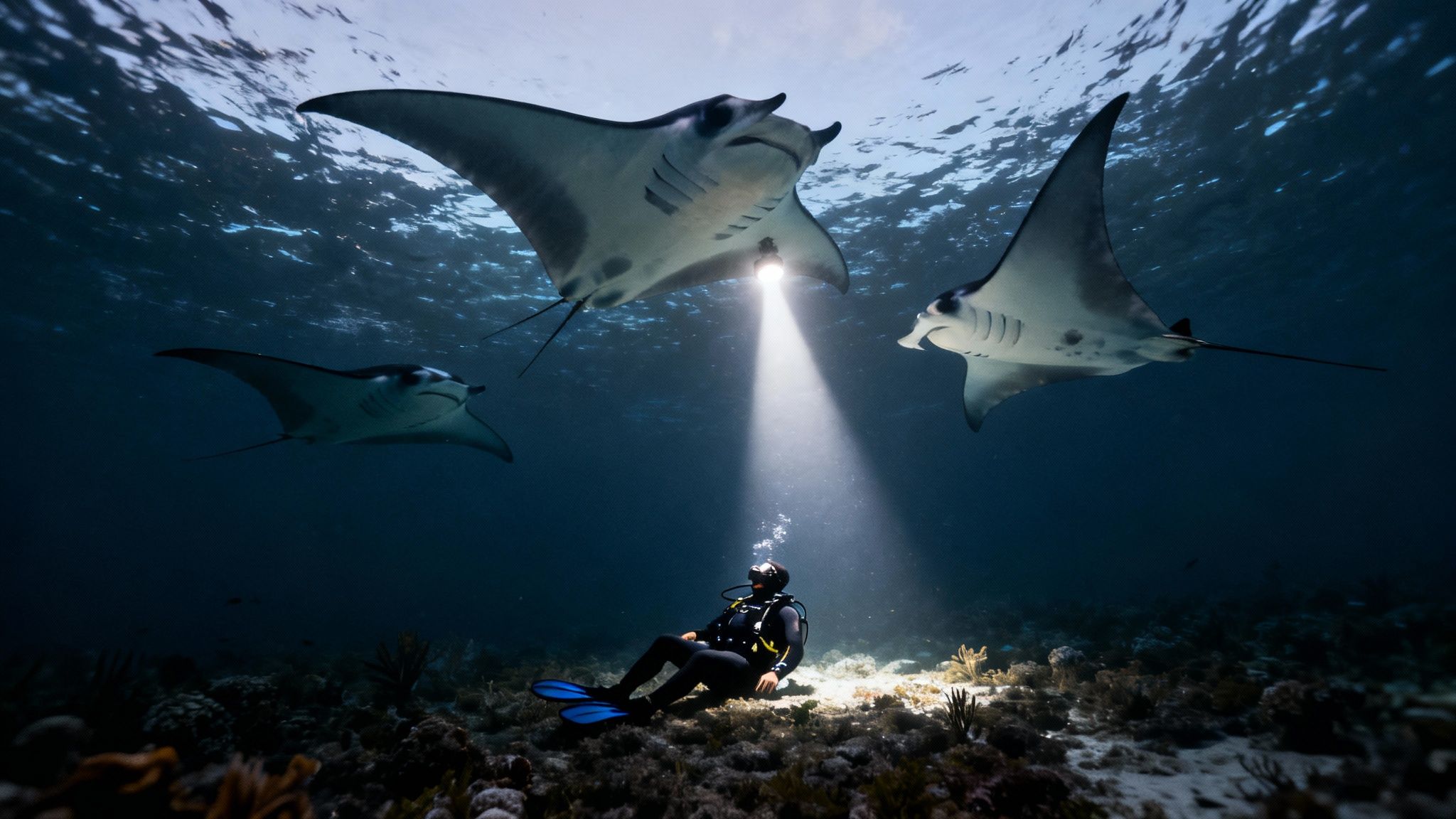
The Kona coast of the Big Island isn't just another pretty dive spot; it's a perfectly designed natural theater for one of the ocean's greatest shows. While seeing a manta ray in many destinations comes down to sheer luck, the experience in Kona is incredibly reliable. It’s a special combination of factors that has turned this specific coastline into the world’s premier destination for this adventure.
So, what's the secret? It all comes down to plankton. For decades, coastal lights have attracted dense clouds of these microscopic organisms—the primary food source for manta rays. Over time, this created a consistent "dinner bell" for the local, non-migratory manta population.
Dive operators like us at Kona Honu Divers have learned to safely and responsibly recreate this phenomenon. After the sun sets, we shine powerful, eco-friendly lights into the water. This draws in the plankton, and the gentle giants gracefully follow for their nightly feast.
The Kona Advantage
What truly makes the Kona experience so unique is the calm, predictable environment. The island’s geography naturally shields the coastline from rough open-ocean swells, which creates nearly perfect conditions for a night dive. This accessibility is key, as it allows both scuba divers and snorkelers to witness the spectacle in comfort and safety.
Here’s what really sets this dive apart:
- Reliable Sightings: Because we visit established feeding sites, the success rate for seeing mantas is incredibly high—often over 90%.
- Up-Close Encounters: The rays are completely used to the lights and the presence of people, allowing for breathtakingly close fly-bys as they feed.
- Accessibility for All: With options for certified divers on the ocean floor and snorkelers on the surface, almost anyone can participate.
The Kona Coast is celebrated as one of the world's best spots for this experience, attracting around 80,000 participants annually. On a typical night, you can expect to see between 8 and 12 manta rays, creating a spectacle you have to see to believe. You can explore more facts about this incredible marine encounter on mantarays.info.
Here at Kona Honu Divers, our entire focus is on providing a world-class experience that puts the safety of our guests and the well-being of the manta rays first. Our experienced crew works hard to make every trip magical, educational, and absolutely unforgettable.
Ready to check this bucket-list adventure off your list? You can book your spot on one of our highly-rated manta ray dive tours and get ready for an evening you’ll be talking about for years to come.
Meeting the Gentle Giants of Hawaii
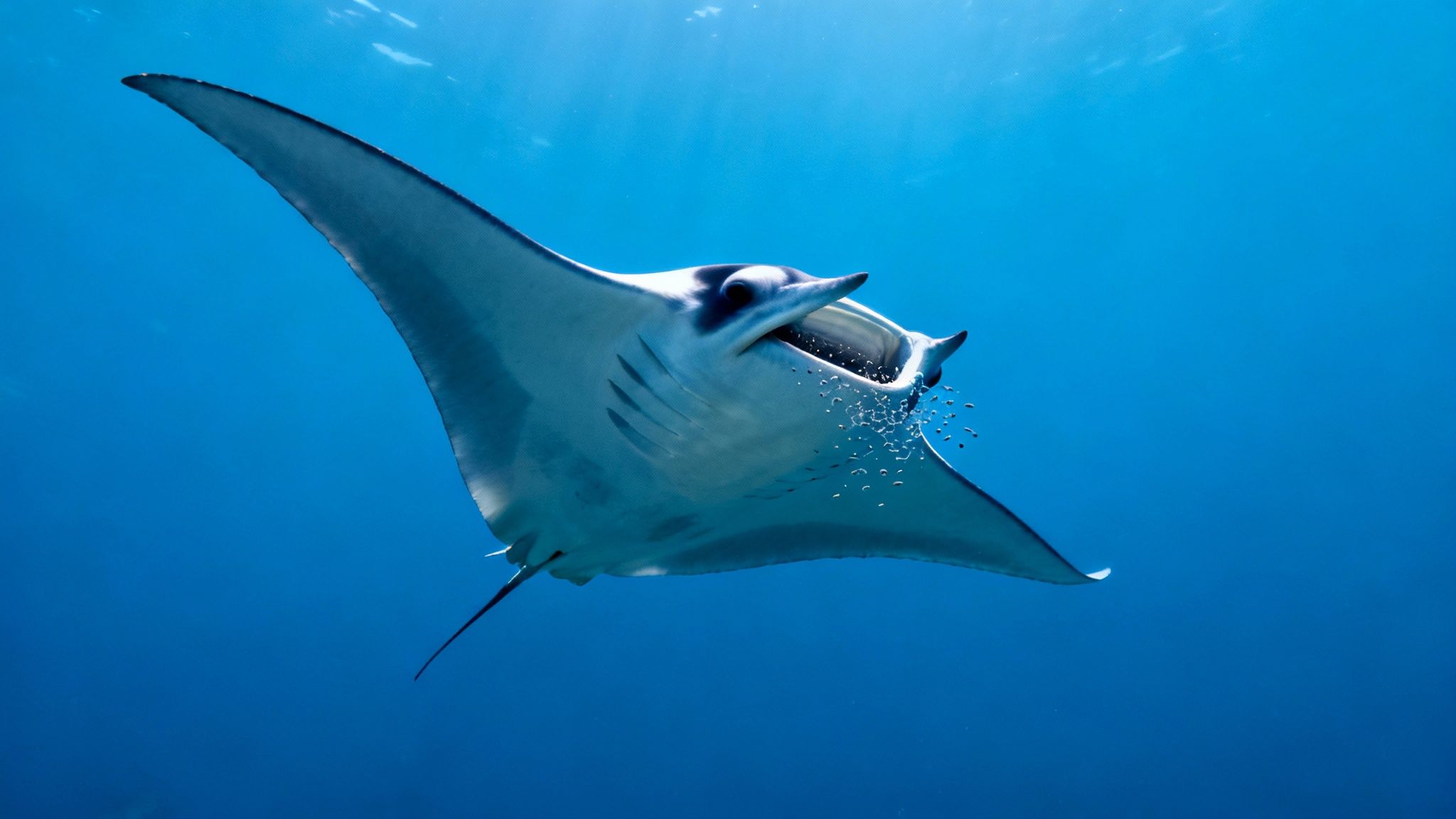
Before you even think about getting in the water, let's talk about who you're going to meet down there. Knowing a little about the stars of the show—the manta rays—turns a cool activity into a truly unforgettable connection. These aren't just big fish; they're intelligent, graceful giants that seem to fly through the ocean like underwater birds.
Once you understand them, the whole experience takes on a new meaning. After all, they’re the reason we’re all here.
Kona's Resident Manta Rays
The waters off the Kona coast are home to a resident population of reef manta rays (Mobula alfredi), the second-largest ray species in the world. The key word here is resident. Unlike many other marine animals, these mantas stick around all year, which is exactly why Kona is one of the most reliable places on Earth to see them.
They're gentle filter feeders, living entirely on tiny zooplankton. This is the secret to the whole night dive operation. The powerful lights we shine into the water attract massive swarms of plankton, creating an all-you-can-eat buffet that draws the mantas in for dinner. It's a perfectly choreographed event, and you get a front-row seat.
Manta rays have the largest brain-to-body size ratio of any fish. This intelligence really shows in the water—they are incredibly curious and sometimes even seem playful, making every single encounter feel personal and unique.
What really makes this special is that these aren't just anonymous animals. Researchers have identified and named over 240 individual manta rays in Kona, each recognized by the unique spot patterns on their belly, almost like a human fingerprint. You might get to meet local celebrities like "Big Bertha" or "Lefty," who have been regulars at this dinner party for years.
Understanding Their Size and Status
You really can't appreciate the scale of these animals until one glides inches over your head. The reef mantas we see in Kona typically have a wingspan of around 14 feet, but their bigger oceanic cousins can reach a staggering 22 feet across. These gentle giants can live for about 40 years, but despite their size, they're facing serious threats.
The International Union for Conservation of Nature (IUCN) has listed manta rays as a vulnerable species. This makes every respectful encounter with them even more precious. You can learn more about the fascinating biology of manta rays on konasnorkeltrips.com to get the full picture.
Their vulnerable status is also a powerful reminder of why it’s so important to choose a responsible tour company. The future of Kona’s manta population depends entirely on us—divers and snorkelers—following the rules and observing them passively.
Why They Are So Gentle
One of the first questions people ask is, "Are they dangerous?" The answer is a definite no. Manta rays are completely harmless to humans, and here’s why:
- No Stinger: Unlike stingrays, mantas don't have a venomous barb on their tail.
- Filter Feeders: They don't have teeth designed for biting. They just filter microscopic plankton from the water.
- Curious, Not Aggressive: Their interest in us seems to be pure curiosity. They are known to be inquisitive but never show aggression.
When you understand their gentle nature, their intelligence, and the challenges they face, you stop being just a tourist. You become an advocate for these amazing animals, ready to share their story long after you’ve dried off.
Your Manta Ray Dive Experience from Start to Finish
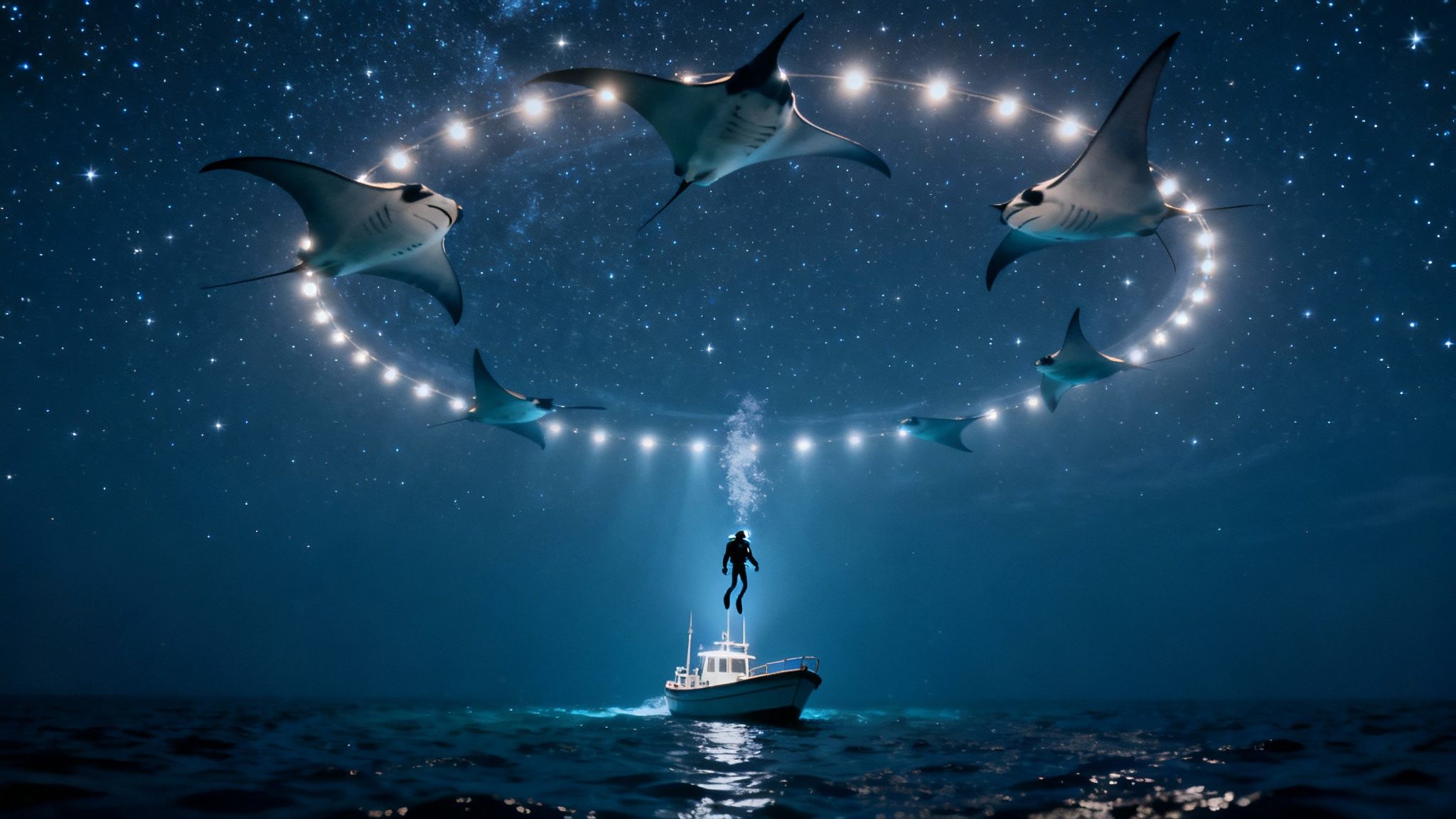
Knowing what’s coming can turn any pre-dive jitters into pure, unadulterated excitement. The world-famous manta ray dive in Kona is an incredibly slick operation from start to finish. I'll walk you through exactly what to expect so you feel like a seasoned pro before you even step on the boat.
From packing your bag to that final high-five back at the dock, here’s how your magical evening is going to play out.
What to Bring: The Pre-Dive Checklist
Your adventure really starts at home. A little prep goes a long way in making sure you’re comfortable. Even though we're in tropical Hawaii, it gets surprisingly cool on the water after sunset, especially when you're wet.
- Warm Layers are a Must: Seriously, don't skip this. A windbreaker or a cozy hoodie will be your best friend on the boat ride back.
- Towel and Dry Clothes: You’ll want to get out of your wet gear for a comfortable trip back to shore.
- Reef-Safe Sunscreen: If you're on a two-tank trip that starts in the afternoon sun, make sure you're protected—both your skin and our delicate coral.
- Reusable Water Bottle: Staying hydrated is key. Most operators have water, but bringing your own is always a smart and eco-friendly move.
Once you get to the harbor, the dive crew will be there to greet you. This is where you can really tell the difference between a good operator and a great one, like our team at Kona Honu Divers.
All Aboard: The Briefing and the Sunset Cruise
On the boat, the crew runs through a full briefing. Pay close attention—this isn't just about safety procedures. They'll cover the most important part of the night: the golden rules for interacting with the mantas.
You’ll learn the single most important principle of the entire experience: passive observation. The guides will make it crystal clear why you can't touch, chase, or get in a manta's way. Your job is to become part of the underwater scenery, like a rock on the seafloor, and let the show come to you.
As the boat heads out to the site, you get treated to a spectacular Kona sunset. It’s the perfect opening act. The crew will help you get your gear set up, running through all the final safety checks before you hit the water.
Showtime: The Underwater Experience
Dropping into the dark ocean at night is a thrill all its own. Your dive light carves a path through the twilight as your guide leads the group down to a sandy patch on the bottom, usually around 30-40 feet deep.
This is where you take your spot in the underwater amphitheater. Divers settle in a semi-circle and place their lights on the sand, pointing the beams straight up. Together, our lights create a massive column that acts like a dinner bell, attracting swarms of plankton.
And then, the magic begins.
The first manta ray appears, gliding silently out of the darkness and into the light. Soon, another follows, and then another. They perform the most incredible underwater ballet, doing graceful barrel rolls and swooping just inches over your head to filter-feed on the plankton. It’s absolutely breathtaking.
Your dive guide is on watch the whole time, keeping an eye on everyone’s safety and making sure we all stick to the rules. This expert supervision means you can just relax and soak in one of the most mesmerizing wildlife encounters on the planet.
After about 45 minutes of pure awe, your guide will give the signal to start heading back to the boat. The crew is right there waiting to help you climb aboard and get your gear off.
But the night isn't over yet. The ride back to the harbor is buzzing with energy. We always have hot cocoa and snacks ready—the perfect way to warm up and share stories with your new dive buddies. It’s a time to relive the best moments and just bask in the afterglow of an adventure you'll never forget.
Ready to see it for yourself? Grab your spot on one of the best manta ray dive tours in Kona.
Choosing the Right Manta Ray Adventure for You
Not all manta ray trips are the same, and picking the right one comes down to your comfort in the water, your experience level, and what you’re hoping to get out of the night. Making the right call between the different sites and ways to see the mantas is your first step toward an unforgettable memory.
Whether you're a seasoned diver with hundreds of log entries or someone who has never put on a snorkel mask, there’s a perfect manta adventure waiting for you. The trick is to understand what makes each option unique so you can pick the tour that fits your group and guarantees everyone has an incredible time.
Scuba Diving vs. Snorkeling: What's the Difference?
The biggest decision you'll make is how you want to see the manta ballet: from the ocean floor looking up, or from the surface looking down. Both scuba diving and snorkeling offer jaw-droppingly close encounters, but the experiences themselves are worlds apart.
-
Scuba Divers: If you're a certified diver, you'll gear up and descend to a sandy patch on the bottom, usually somewhere between 25-50 feet deep. You'll settle in with your group, find a spot to kneel, and point your dive light straight up. This creates a "campfire" of light that attracts plankton, and you get a front-row seat as giant mantas glide and barrel-roll just inches over your head. It's a completely immersive, bottom-up perspective.
-
Snorkelers: As a snorkeler, you'll float on the surface while holding onto a specially designed light board. These boards shoot powerful beams of light down into the water, creating a huge, glowing buffet of plankton for the mantas. They swim right up to feed, often getting so close you could almost reach out and touch them. It’s an equally mind-blowing experience that's open to just about anyone, no certification needed.
Still on the fence? Each option is amazing in its own way. For a closer look at the pros and cons, check out our guide on whether it's better to snorkel or dive with manta rays.
Comparing Kona's Premier Manta Ray Sites
Once you’ve figured out how you want to see the mantas, the next question is where. While both of Kona’s main manta sites boast incredibly reliable sightings, they each have their own personality.
The two main "stages" for this nightly show are Manta Village to the south and Manta Heaven up north. Knowing a bit about each one can help you pick the spot that’s best for your skill and comfort level.
Manta Village is generally the more protected and shallower of the two sites. This makes it a fantastic choice for first-time night divers, families, and anyone who prefers calm, predictable conditions. Manta Heaven can be a bit more dynamic and deeper, offering a different kind of thrill for more experienced divers.
To make it even simpler, we've put together a quick comparison of Kona's two legendary manta ray dive sites.
Manta Ray Dive Kona Site Comparison
Choosing between Manta Village and Manta Heaven often comes down to logistics and personal preference. Here’s a quick breakdown to help you decide which location is the right fit for your adventure.
| Feature | Manta Village (Keauhou Bay) | Manta Heaven (Garden Eel Cove) |
|---|---|---|
| Location | South of Kailua-Kona | North of Kailua-Kona, near the airport |
| Typical Depth | 25-40 feet (Shallow) | 35-50 feet (Deeper) |
| Best For | Beginner divers, snorkelers, calmer conditions | Experienced divers, a more dynamic experience |
| Seafloor | Mostly sand, easy to settle on | A mix of reef and sand patches |
| Manta Interaction | Mantas often glide very close over divers on the sand | Mantas perform amazing acrobatics in the water column |
Ultimately, there’s no wrong choice. Both locations offer a world-class experience. No matter which site you visit or whether you decide to dive or snorkel, you are in for a night you will never forget. The most important decision is just to go!
How to Be a Responsible Manta Ray Observer
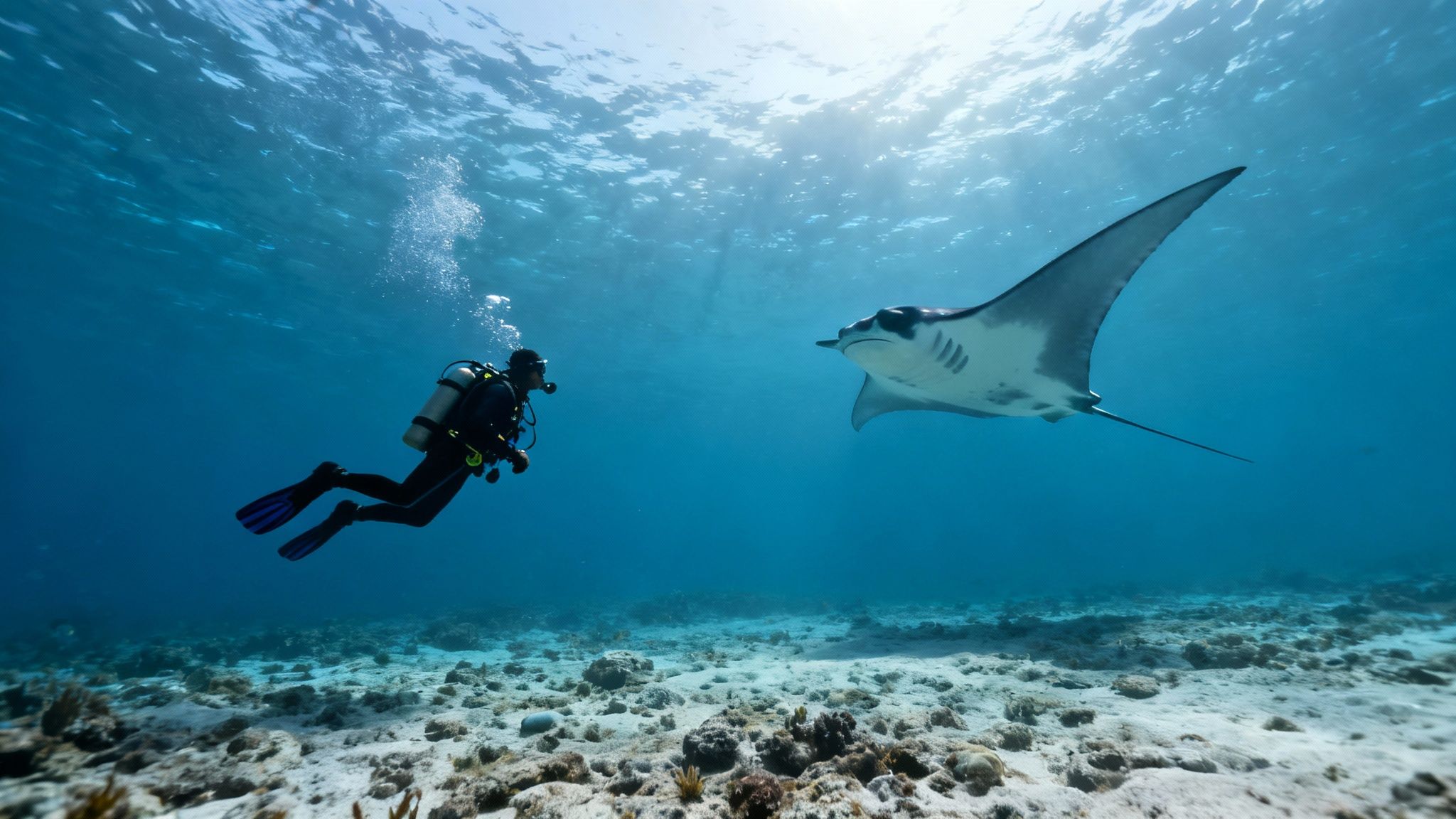
Watching Kona’s gentle giants up close is more than just a bucket-list dive; it’s a privilege. The future of this amazing manta ray population really depends on every single person in the water acting as a guardian of the ocean. Following a few simple, but absolutely critical, rules helps you go from being just another tourist to a true "Manta Advocate."
This isn't about limiting your experience—it's about making sure the mantas stay safe, healthy, and comfortable in their natural dining room. These guidelines are what keep this magical encounter possible for generations of divers and snorkelers to come.
The Golden Rule: Passive Observation
If you take only one thing away from your pre-dive briefing, make it this: passive observation. Your entire job during the manta ray dive in Kona is to become part of the underwater scenery. Picture yourself as a rock on the seafloor, letting the incredible show unfold all around you.
This means you never, ever touch, chase, or block a manta ray's path. These aren't just suggestions; they are hard-and-fast rules for the animals' well-being.
Manta rays have a delicate, protective slime coat—think of it as their immune system. Touching them, even with the lightest brush of a finger, can wipe off this coating and leave them wide open to nasty skin infections.
Following this one rule is the single biggest thing you can do to help protect them.
Essential Rules for a Safe Encounter
To keep everyone—divers, snorkelers, and especially the mantas—safe, all the operators in Kona follow a strict set of rules. Getting these simple behaviors right is the key to being a responsible observer.
- Divers, Stay on the Bottom: Find a spot on the sand, get settled, and stay put. The water column above you is the mantas' dance floor, and they need that room to glide and feed.
- Snorkelers, Stay on the Surface: If you're snorkeling, your job is to hold onto the light board and float. Diving down into the feeding zone can spook the mantas and interrupt the whole show.
- Watch Your Bubbles: Divers, try to time your breathing. Avoid exhaling a huge cloud of bubbles right into a manta’s face as it swoops overhead. It’s the equivalent of someone blowing smoke in your face—startling and unpleasant.
- Mind Your Lights: Point your dive light straight up toward the surface to attract plankton. Snorkelers have their lights built into the board, shining down. Never shine your light directly into a manta's eyes.
Mastering Your Buoyancy
For scuba divers, solid buoyancy control is non-negotiable for any responsible marine life interaction. When you can hover effortlessly just off the seafloor, you won't kick up sand or accidentally bump into the reef.
This skill isn’t just about protecting the environment; it makes your dive better, too. You’ll have a much calmer, more stable platform to watch the action. For more tips on being a great guest in the underwater world, check out our guide on responsible and considerate diver etiquette.
By following these simple guidelines, you become an active part of the solution. You ensure your visit helps, not hurts, allowing this incredible natural spectacle to thrive for years to come.
Exploring More World-Class Diving in Kona
While the legendary manta ray night dive is what puts Kona on the map for most divers, it's really just the opening act. The Big Island's volcanic past has created a stunning underwater playground, offering a ton of world-class diving that goes way beyond that one famous encounter. Once you've seen the mantas, your Kona dive trip is just getting started.
The very same clear, calm conditions that make the manta dive so perfect also support incredible coral reefs, ancient lava tubes, and some truly unique deep-water dives. Whether you're looking for another mind-bending night dive or a relaxing day on the reef, Kona has something for every diver.
The Thrill of the Blackwater Night Dive
If you're feeling adventurous, the Kona Blackwater Dive is one of the most unique experiences you can have, not just in Hawaii, but anywhere on the planet. This is nothing like a reef dive. You'll head miles offshore and drift in the deep, dark ocean, tethered to the boat.
Down below, you'll witness the largest migration on Earth, as strange, often bioluminescent creatures rise from the abyss to feed in the dark. It’s a parade of alien-like organisms, from pulsating, rainbow-colored ctenophores to tiny, see-through larval fish. It's a surreal and mesmerizing dive that honestly feels more like floating through outer space.
Advanced Diving and Daytime Reefs
For experienced divers wanting to explore more challenging sites, Kona absolutely delivers. The coastline is full of incredible spots that require a bit more skill to appreciate fully. Think intricate lava tube swim-throughs, dramatic underwater arches, and plunging deep walls covered in rare corals and sponges.
On these advanced dive tours, you'll see a different side of Kona's marine world, with better chances for spotting sharks, eagle rays, and big schools of jacks. The volcanic terrain creates a fantastic playground for divers with the training to explore it.
Of course, you can't come all this way and skip the classic daytime dives. Kona's sunlit reefs are bursting with life. You'll find healthy coral gardens and an amazing number of endemic Hawaiian fish—species you literally can't see anywhere else in the world.
These vibrant Kona diving tours are the perfect, relaxing way to fill out your logbook. The manta dive might be what brings you to Kona, but it's the sheer variety and health of its underwater ecosystem that will make you want to come back year after year.
Common Questions About the Manta Ray Dive
Getting ready for a big adventure always comes with a few questions. We get it. To make sure you feel completely comfortable and excited, we've put together some quick, straightforward answers to the questions we hear most often about the manta ray dive Kona experience.
Let's clear up those last-minute details so you can focus on the amazing night ahead.
Do I Need to Be a Certified Diver to See the Mantas?
Nope, not at all! While certified divers get a fantastic view from the seafloor looking up, snorkelers get an equally mind-blowing experience from the surface. You'll hold onto a custom-built, high-powered light board that floats on the water.
This light acts like a dinner bell, attracting massive clouds of plankton. The mantas swim right up to the surface to feed, often coming within inches of the board. It’s an incredible, up-close encounter that’s open to just about everyone, no certification required.
What Is the Best Time of Year for This Dive?
Here's the great news: you can do this dive any time of year. Kona’s manta ray population sticks around all year long—they don’t migrate—so sightings are consistently excellent no matter when you book your trip.
That said, many people prefer the summer months, from about April to October. The ocean tends to be calmer and the water is a bit warmer, which can make the whole experience more comfortable. For a deeper look into the seasonal details, check out our guide on when to dive with manta rays in Kona.
Is the Manta Ray Night Dive Considered Safe?
Absolutely. Safety is the top priority on this dive. Every reputable operator runs a tight ship with a thorough pre-dive briefing that covers all the safety rules and procedures. You’ll have experienced, professional guides in the water with you the entire time.
As for the mantas, they are true gentle giants. They don't have stingers, barbs, or any way to harm you. The most important rule is to just be a passive observer—listen to your guides, don't touch the animals, and just enjoy the show.
What Happens If We Do Not See Any Mantas?
It's extremely rare, but it can happen. These are wild animals in their natural habitat, after all. Sightings happen on well over 90% of trips, so the odds are definitely in your favor.
Still, most top-tier operators offer a "manta guarantee" for peace of mind. If your tour is one of the unlucky few with no manta sightings, they’ll typically let you come back another night for free, as long as there’s space available. Just be sure to ask about the specific policy when you book your manta ray dive tour.