
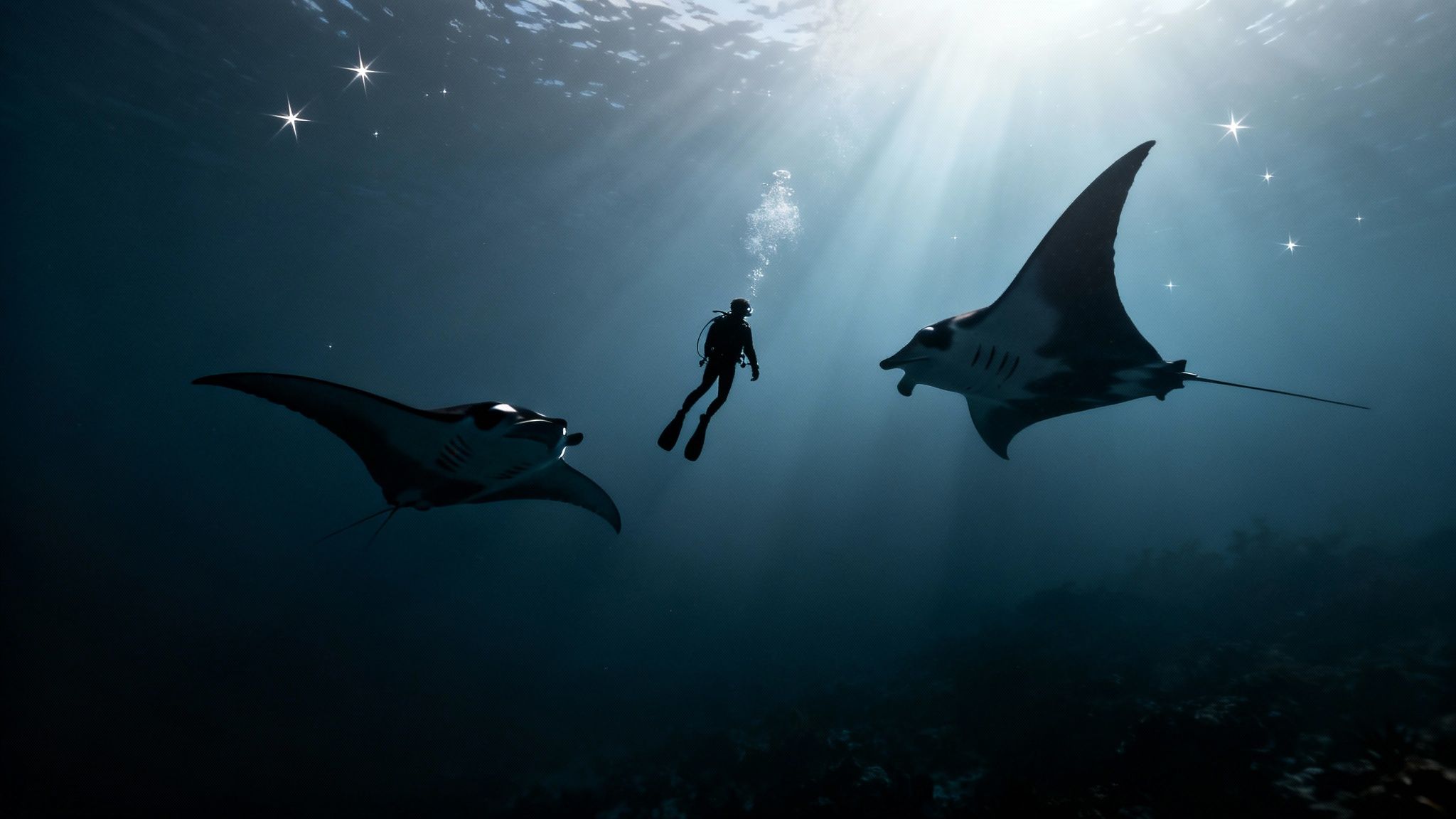
Picture this: you're floating in the warm, dark Pacific waters off Hawaii's coast as giant, gentle shadows glide silently past you. This is the Kona manta ray dive, a world-famous, once-in-a-lifetime encounter that consistently ranks among the most incredible underwater experiences on Earth. It's more than just a dive—it's a surreal, underwater ballet starring some of the ocean's most majestic creatures.
What Makes the Kona Manta Ray Dive So Unforgettable?
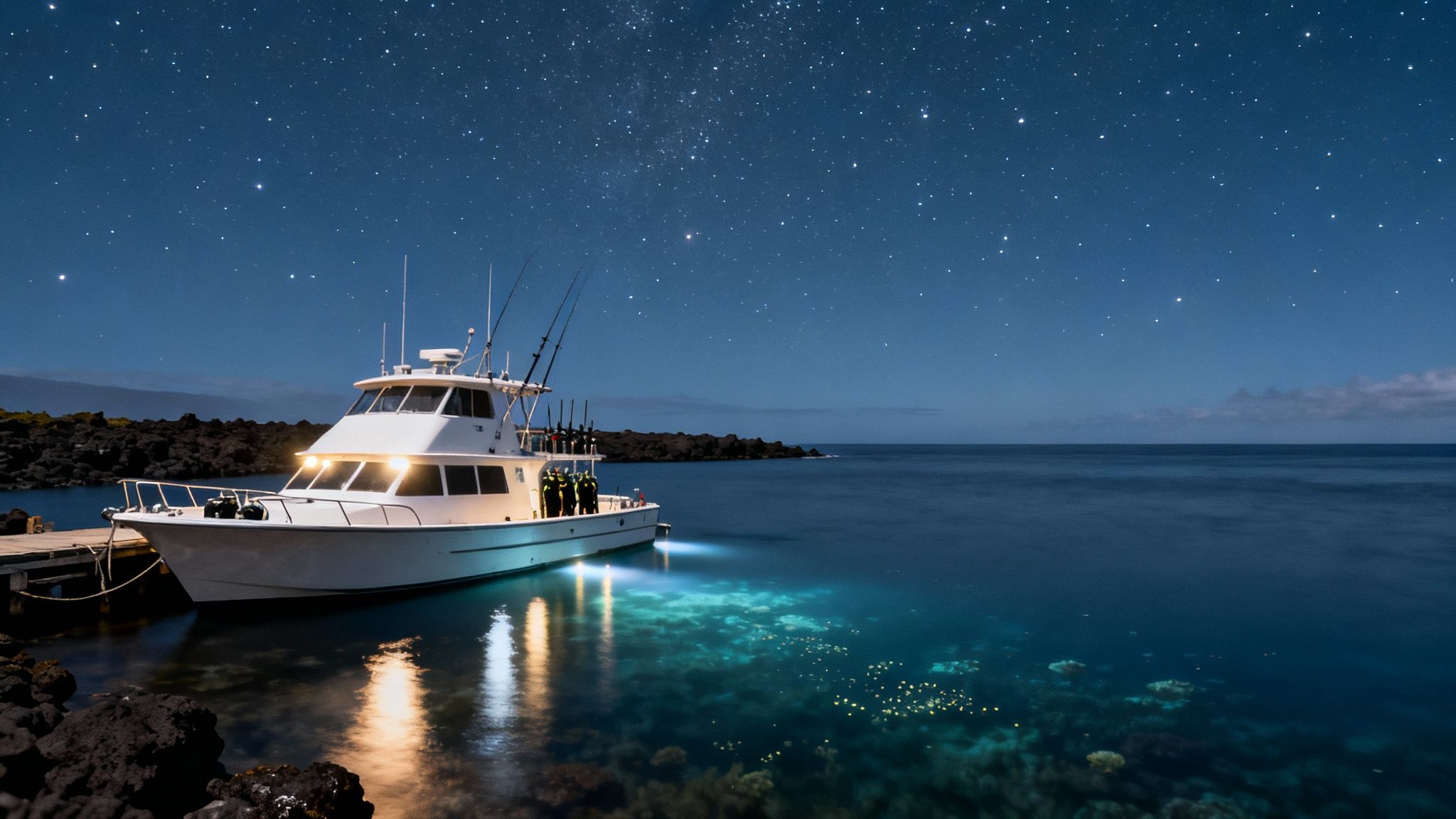
The adventure really kicks off as you board the boat, leaving the shore behind under a sky full of stars. There's a buzz of excitement in the air, but the true magic doesn't hit you until you slip beneath the surface into the dark, welcoming water.
Once your eyes adjust, you’ll see a circle of powerful lights on the ocean floor, pointing straight up and creating a brilliantly lit stage. This light is a magnet for plankton—the manta rays' favorite meal—and it sets the scene for one of nature’s greatest shows.
Your Front-Row Seat to an Underwater Spectacle
Then, they arrive. Seemingly out of nowhere, giant manta rays emerge from the deep blue. Some of these gentle giants have wingspans stretching over 12 feet, and they glide effortlessly through the beams of light, performing graceful somersaults and barrel rolls as they feast on the clouds of plankton.
Their movements are completely mesmerizing. This isn't one of those wildlife encounters where you're squinting through binoculars. The manta ray dive in Kona is up close and personal. The rays often sweep within inches of you, their huge bodies soaring just overhead in a breathtaking display of silent, gentle power.
What really sticks with you is the connection. Watching these intelligent, graceful animals move with such purpose is a deeply humbling experience—a memory that will stay with you long after you're back on dry land.
This incredible dive has become a global phenomenon. Each year, around 80,000 people join manta ray tours along the Kona Coast, cementing its status as the world's premier destination for this activity. You can find more insights about the Kona manta experience and see just how popular it has become.
Why Kona Is the Manta Ray Capital of the World
So, what makes Kona the perfect spot? It all comes down to the unique coastal ecosystem. The local reef manta rays (Mobula alfredi) aren't just passing through; they live here year-round. Several key factors make this possible:
- A Reliable Buffet: The currents along the coast are rich in nutrients, ensuring a constant supply of plankton.
- Established "Restaurants": For decades, lights from hotels and, more recently, dive operators have created consistent feeding stations that the mantas return to night after night.
- Ideal Conditions: The island’s leeward coast is sheltered from wind and rough seas, which means the water is usually calm and perfect for night diving.
This perfect combination results in incredibly reliable manta ray sightings, with most operators boasting a success rate of over 90% all year. That consistency is what turns a hopeful bucket-list item into a near-guaranteed adventure, making the manta ray dive in Kona an absolute must-do.
How to Choose the Right Manta Ray Tour
Not all manta ray tours in Kona are created equal, and honestly, who you go with can make or break your entire experience. It's about more than just seeing the mantas; it's about doing it safely and respectfully. The best operators have this down to a science.
Your first big decision is how you want to see the show: from above or below? You can either scuba dive or snorkel.
Divers get to settle on the sandy bottom, about 30 to 40 feet down, and watch the mantas soar like acrobats right over their heads. It’s a completely immersive, almost surreal perspective.
Snorkelers, on the other hand, float at the surface, holding onto a big, custom-made light board that attracts the plankton. From there, you get a stunning bird's-eye view of the manta ballet unfolding just a few feet beneath you.
There’s no wrong answer here, just different experiences. If you're a certified diver, being on the seafloor is an incredible way to feel part of their world. But snorkeling is a fantastic option for everyone else, including families with kids and non-divers. If you’re torn, it’s worth reading a bit more about whether it's better to snorkel or dive with manta rays.
Prioritizing Safety and Sustainability
When you start looking at different companies for a manta ray dive in Kona, keep an eye out for operators who are Manta Ray Green List certified. This isn't just a fancy sticker; it means they've committed to a strict set of rules for responsible interaction. It ensures no one is touching, chasing, or stressing out the mantas, which is vital for keeping this amazing encounter sustainable.
A top-notch operator like Kona Honu Divers takes things a step further. You're not just getting a boat ride; you're getting a whole experience.
Here’s what you should expect from a quality tour:
- A Real Pre-Dive Briefing: The crew should walk you through everything—safety procedures, what happens in the water, and exactly how to behave around the mantas.
- Good Gear: Look for well-maintained equipment, especially wetsuits thick enough for the water temperature. You'll be in the water for a while, so being comfortable is key.
- An Experienced Crew: A great guide doesn’t just keep you safe; they bring the whole thing to life with stories and cool facts about the mantas you're seeing.
- The Little Things: It might sound minor, but a hot shower on the boat and some snacks for the ride back to the harbor make a huge difference after a night dive.
For an experience that checks all these boxes, the Kona Honu Divers manta ray tour is designed to be world-class while putting marine conservation first.
Asking the Right Questions Before You Book
Don't be shy about calling or emailing an operator before you hand over your credit card. A reputable company will have no problem answering a few questions.
A great manta tour isn’t just about seeing mantas; it's about doing so in a way that is respectful to the animals and safe for everyone involved. The best operators understand they are guardians of this incredible natural wonder.
Ask about their success rate. Most operators in Kona will tell you they see mantas over 90% of the time, which is true. The more important question is: what’s your policy if the mantas don't show up? The good ones will usually offer you a chance to come back another night for free.
It’s also smart to ask about the guide-to-guest ratio. A smaller ratio means you'll get more personal attention and a less crowded experience. A little homework upfront ensures you book your manta ray dive in Kona with confidence, knowing you've picked a crew that truly cares.
Picking the Perfect Time and Place
One of the best things about the Kona manta ray dive is that there's really no "bad" time to go. Unlike migratory species, Kona's reef mantas live here all year long. This means your chances of an incredible encounter are always high, with operators reporting over a 90% success rate no matter the season.
That said, a few subtle differences throughout the year might influence when you decide to book. Water temperatures hover in the mid-70s (°F) during the winter and climb into the low 80s in late summer. If you get cold easily, you might prefer the warmer summer months.
The ocean is also typically a bit calmer and glassier in the summer, which is a nice perk for anyone worried about seasickness on the boat ride out. For a more detailed look, you can explore this breakdown of the best seasons for diving with manta rays in Kona to fine-tune your travel dates.
Kona's World-Famous Manta Dive Sites
Kona has two main, world-renowned locations for the manta dive. While both are fantastic, they have their own personalities. Most dive shops have a preferred spot, so knowing what makes each unique will help you set the right expectations for your trip.
Kona Manta Ray Dive Sites Compared
The two primary sites, Manta Village and Manta Heaven, offer slightly different experiences. Here’s a quick comparison to help you understand the key differences.
| Feature | Manta Village (Keauhou Bay) | Manta Heaven (Garden Eel Cove) |
|---|---|---|
| Location | South of Kailua-Kona | North of Kona (near the airport) |
| Typical Depth | Shallower, 25-35 feet | Deeper, can reach 40-50 feet |
| Seafloor | Mostly sandy bottom | Mix of sand and volcanic rock |
| Vibe | The original, classic site | Often has more mantas and boats |
| Best For | Newer divers, a more intimate feel | Seeing the maximum number of rays |
Ultimately, you can't go wrong with either site. The "campfire"—a collection of lights placed on the ocean floor—is used at both locations. This light attracts swarms of plankton, creating a floating buffet that the mantas simply can't resist.
What to Expect on the Dive
So, what's the actual plan once you're in the water? It's beautifully simple.
The entire dive is a stationary viewing experience. You won't be swimming around. Instead, you'll settle on the ocean floor with your group, look up, and let the mantas come to you. This is the safest and most respectful way to ensure an amazing show for everyone.
Your guide will lead the group to a designated spot on the sand or rock. You’ll arrange yourselves in a semi-circle around the central lights, get comfortable, and point your dive torch straight up. Your light beam acts like a dinner bell, attracting even more plankton to the party.
By staying put, you become part of the scenery. The mantas are completely used to divers and will glide, swoop, and perform breathtaking barrel rolls right over your head. All you have to do is relax and witness one of the most magical spectacles in the natural world.
Getting Ready for Your Manta Ray Night Dive
A little prep work can be the difference between a good dive and an absolutely epic one. Getting ready for your manta ray dive in Kona isn’t just about showing up with your C-card. It’s about making sure you’re comfortable, confident, and ready to be fully present for one of the most incredible shows on Earth.
This means thinking about both your equipment and your own physical and mental state. Whether you’re hauling your own regs across the Pacific or renting from a top-notch shop like Kona Honu Divers, a few pieces of gear are non-negotiable for a night dive.
Gearing Up for Comfort and Safety
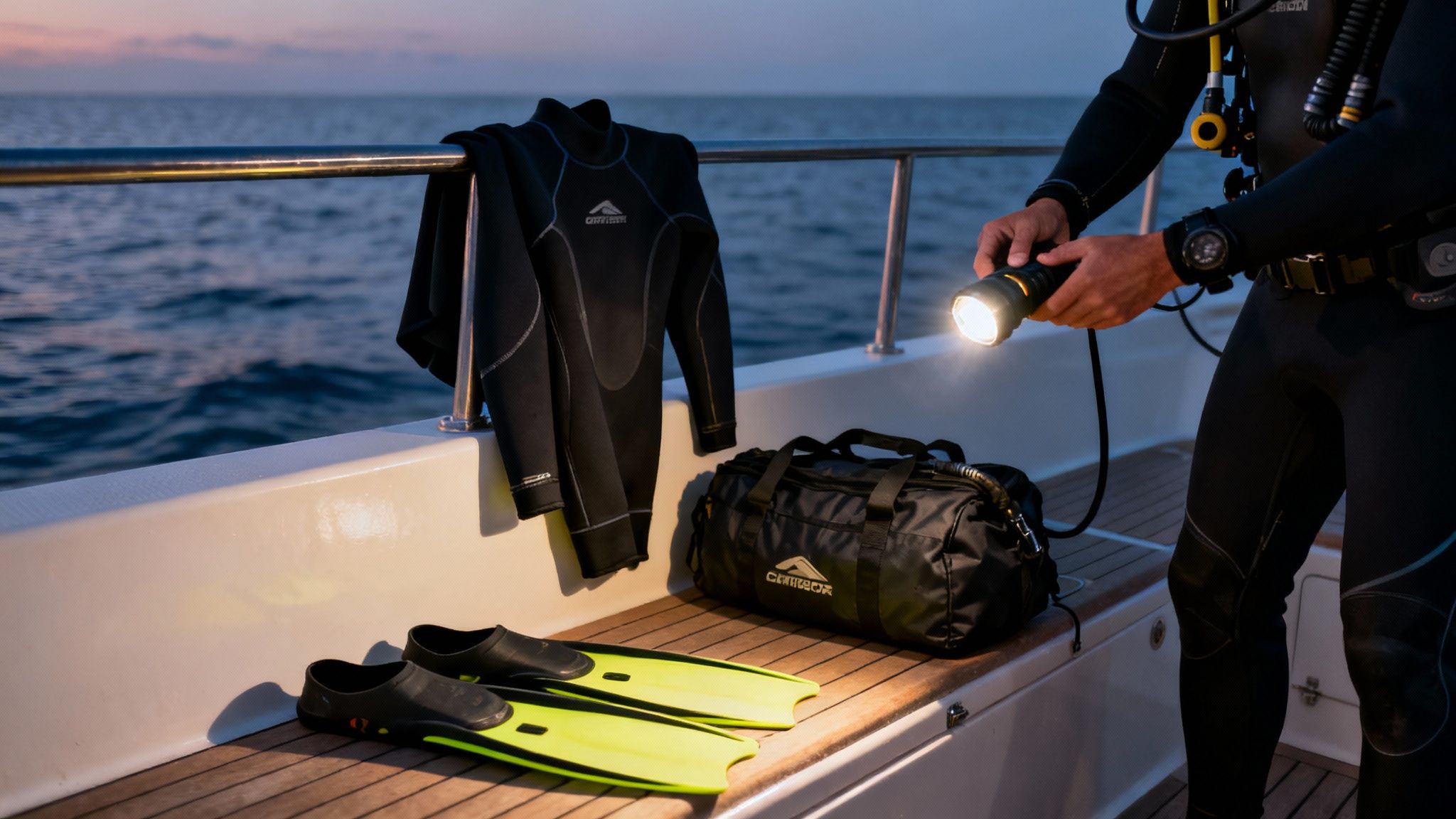
Your gear is what keeps you happy and comfortable underwater, especially after the sun goes down. Even in Hawaii, the water can feel surprisingly cool after 45 minutes of being relatively still. A good wetsuit is a must.
Most operators will have a 3mm or 5mm wetsuit available, and for most people, that’s plenty to stay warm.
A dependable dive light is another essential. The big, powerful lights on the seafloor create the "campfire" that attracts the plankton (and the mantas), but your personal torch is crucial for navigating the boat, checking your gauges, and communicating with your guide. For a full rundown, check out this guide on the essential gear for your Kona diving adventure.
The pre-dive briefing is probably the most critical part of your preparation. Listen carefully. Your guide will walk you through the plan, safety procedures, and the absolute do's and don'ts of interacting with the mantas. This info is your key to a safe and respectful encounter.
Being Physically and Mentally Prepared
Feeling good physically makes all the difference. If you know you're prone to seasickness, don't try to tough it out. Take some motion sickness medicine about an hour before the boat leaves. The ride to the dive site can get a bit bumpy, and you don’t want to be feeling green when the giant acrobats show up.
It's also totally normal to have some pre-dive jitters, especially if this is your first time diving at night. Just remember you're in the hands of seasoned pros who have this down to a science. Trust your guide, stick with the group, and focus on your breathing. You'll be amazed at how quickly you relax.
Here’s a pro tip: pack a small dry bag for the boat. Tossing in a few essentials will make the ride back to shore so much more comfortable.
- A warm, dry towel.
- A sweatshirt or jacket to cut the wind.
- Any personal necessities.
Taking these simple steps ensures you’re set up for a comfortable, safe, and truly unforgettable manta ray dive in Kona. Once you’re geared up, all that’s left to do is descend into the blue twilight and wait for the performance to begin.
Getting to Know Kona’s Gentle Giants
Diving with manta rays in Kona is so much more than just another incredible adventure; it’s a genuine connection with one of the ocean’s most majestic and intelligent creatures. When you understand a little about who they are, the dive transforms from a cool spectacle into a deeply meaningful encounter.
These aren't just big fish gliding by. We're talking about highly intelligent animals with the largest brain-to-body size ratio of any cold-blooded fish. They are famously curious and sometimes even playful, often interacting with divers in a way that feels both gentle and inquisitive. Believe it or not, each one is as unique as a fingerprint.
Identifying the Locals
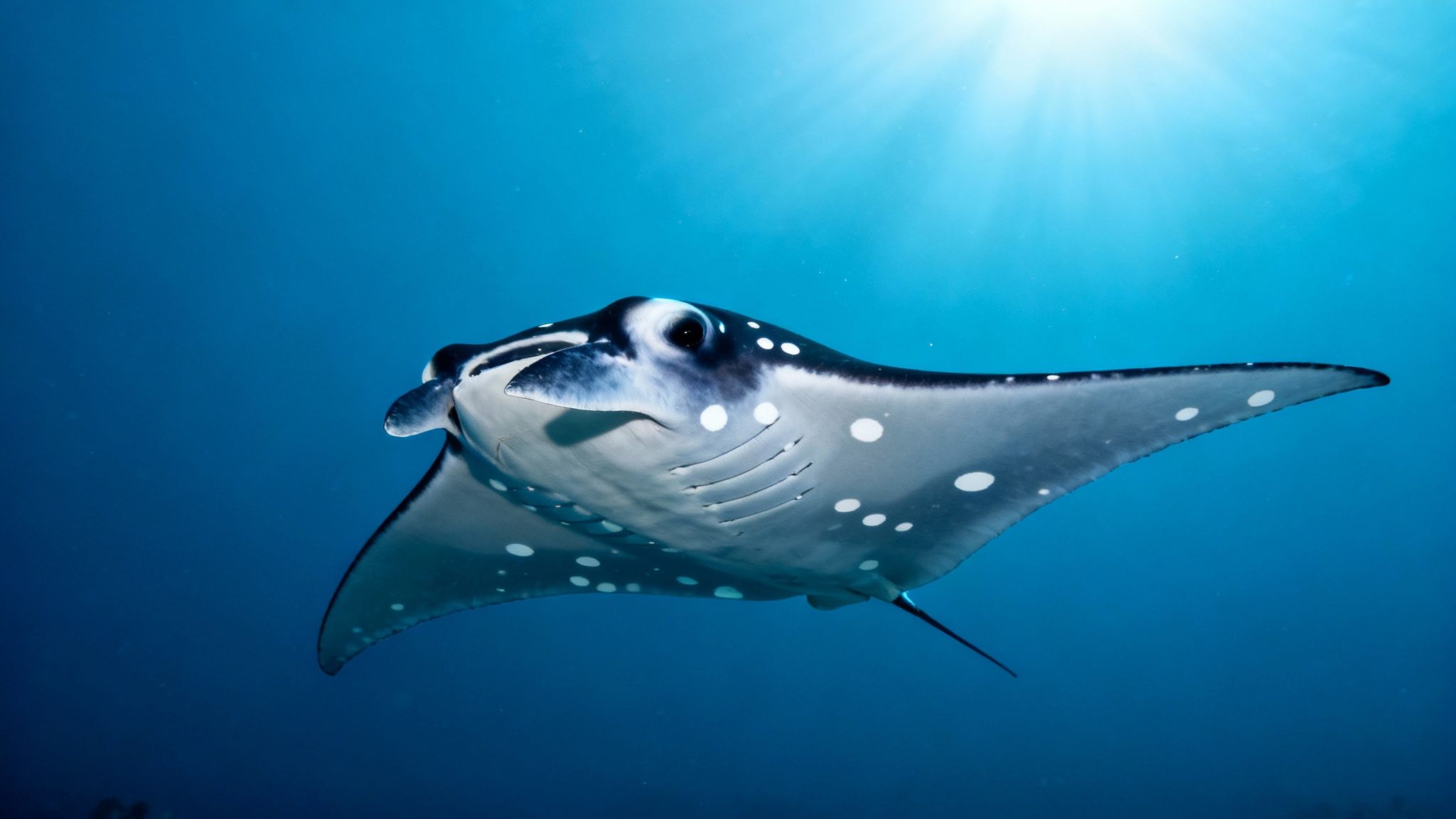
So, how do we know they're all unique? The undersides of Kona’s manta rays are covered in a distinct pattern of black spots, and these markings are exactly what researchers use to identify and track individual animals. This incredible local research effort is really the heart of the Kona diving community.
Since 1991, local scientists and dive operators have been working hand-in-hand to catalog the population. As of today, they've identified and named over 330 individual manta rays just off the Kona coast. It's a massive, ongoing project, and you can dive into the research yourself and see the full catalog of Kona's manta rays on mantarays.info.
This long-term study is crucial. It helps conservationists piece together the puzzle of their life cycles, social structures, and movements—all vital information for protecting them.
When you do the manta ray dive in Kona, you aren’t just seeing anonymous wildlife. You're actually meeting specific individuals like "Big Bertha," "Lefty," or "Ray Charles," each with its own history and personality well-known to the local divemasters.
Why Your Dive Matters: Conservation and Responsible Tourism
Globally, manta rays are a vulnerable species, facing serious threats from overfishing and habitat destruction. But here in Kona, something amazing has happened: tourism has become a powerful force for their conservation. The local economy now has a vested interest in protecting these animals, creating a sustainable model where a living manta is worth far more than a dead one.
By choosing a Manta Ray Green List-approved operator, you become an active part of this success story. These companies follow strict guidelines designed to keep the mantas safe and undisturbed. Your dive isn't just a vacation highlight; it's a direct contribution to preserving these magnificent creatures for future generations.
Tips for Capturing Stunning Underwater Photos
Trying to capture the pure magic of the manta ray dive in Kona is a challenge I absolutely love. It’s a dark, swirling, dynamic environment, but with the right game plan, you can leave with photos that actually do the experience justice—even if you're just using a GoPro.
The biggest hurdle is obviously the darkness. You have to learn how to make the most of the limited light from the boat and your own dive lights. If you're shooting with a manual camera, you'll need to open things up. I usually start with a higher ISO, somewhere in the 800-1600 range, which makes the camera's sensor more sensitive. Just be careful not to push it too high, or your images will start looking grainy.
To complement that, you’ll need a slower shutter speed to let more light hit the sensor. The trick is finding the sweet spot where you get enough light without turning the gracefully gliding mantas into a blurry mess. For me, a shutter speed around 1/60th of a second is a solid place to begin experimenting.
Using Light The Right Way
This is where external lights, like strobes or video lights, really become your best friend. They bring out the incredible details in the mantas, especially the unique spot patterns on their bellies that act like fingerprints. The colors just come alive.
But you have to be smart and respectful about it.
Never, ever point your lights directly into a manta's eyes. Think about how you feel when someone shines a bright light in your face—it's disorienting and stressful for them, too. The best technique is to aim your lights slightly off to the side. This illuminates the manta without blinding it and creates some really dramatic shadows that accentuate their massive wingspan.
The most powerful photos often come from creative composition. Instead of shooting down at the mantas, try getting low on the sandy bottom and shooting upwards. This frames them against the dark, vast ocean, emphasizing their immense size and graceful, soaring movements.
Getting Great Shots With An Action Camera
You really don't need a bulky, professional rig to get amazing footage. Action cameras are perfect for capturing the sheer scale and energy of the manta ray dive in Kona. A few simple pointers will make a world of difference:
- Get Close: Water robs your footage of color and sharpness. The closer you can safely get, the better your video will look.
- Keep It Stable: Nobody likes watching shaky video. Brace the camera against your body or, better yet, use a tray with handles to smooth out your movements.
- Use a Red Filter: This is less critical at night than during the day, but a red filter can still help balance out the colors, especially if there's some ambient light in the water.
- Shoot in High-Res: Always film in 4K if your camera supports it. This gives you so much more freedom to crop, zoom, and edit your clips later without losing that crisp quality.
If you're really looking to take your skills to the next level, this guide on tips for capturing stunning underwater photos has some fantastic advice. A little preparation goes a long way in making sure you bring home incredible memories of your dance with Kona's gentle giants.
Your Manta Dive Questions, Answered
Got questions before you book? Of course, you do! Here are some of the most common things divers ask us, with straight-to-the-point answers from years of experience leading these trips.
Is the Manta Ray Dive Safe?
It’s one of the safest night dives you can do. Let’s clear up the biggest misconception right away: manta rays are not stingrays. They have no teeth, no stinger, and no way to harm a human. They're just gentle giants focused on filter-feeding.
The real safety of the dive comes from the dive operators. We’ve been running this dive for decades and have the whole process down to a science. Your divemaster is there to manage everything, so all you have to do is relax and enjoy the show.
Do I Need to Be an Advanced Diver?
Not at all. An Open Water certification is all you need. This dive is surprisingly simple and isn't considered technical in any way.
Here’s how it works: you’ll descend to a sandy, flat area at a pretty shallow depth, usually between 25 and 40 feet. Then, you just settle in and watch the mantas swoop overhead. There's no swimming around or complex navigation involved, which makes it a fantastic first night dive for new divers.
Is There a Best Time of Year to Go?
This is the best part—there's no "bad" time to go! Kona's manta rays live here year-round, so they aren't a migratory species you have to catch at the right moment.
That means you have a great shot at an amazing encounter no matter when your vacation is. Operators here have an incredible success rate of over 90% all year long. The only real difference is that the water is a bit warmer in the late summer, but the mantas are always here.
What happens if the mantas don't show up? It's rare, but nature is unpredictable. Any reputable operator will have a "manta guarantee" and let you come back another night for free. Just make sure to ask about their specific policy when you book.
Can I Touch the Manta Rays?
This is a hard no. You absolutely cannot touch the manta rays, and here’s why. Their skin is covered in a special protective mucus layer, kind of like a shield against infection. When a person touches them, it strips that layer off and leaves them vulnerable to disease.
Every responsible dive operator in Kona is incredibly strict about this rule. It’s all about protecting these magnificent creatures so we can all continue to enjoy them for years to come. Look, don't touch. It's that simple.
Ready for the underwater ballet of a lifetime? Kona Honu Divers offers a world-class, eco-conscious manta ray dive tour that will leave you with memories you'll cherish forever.