
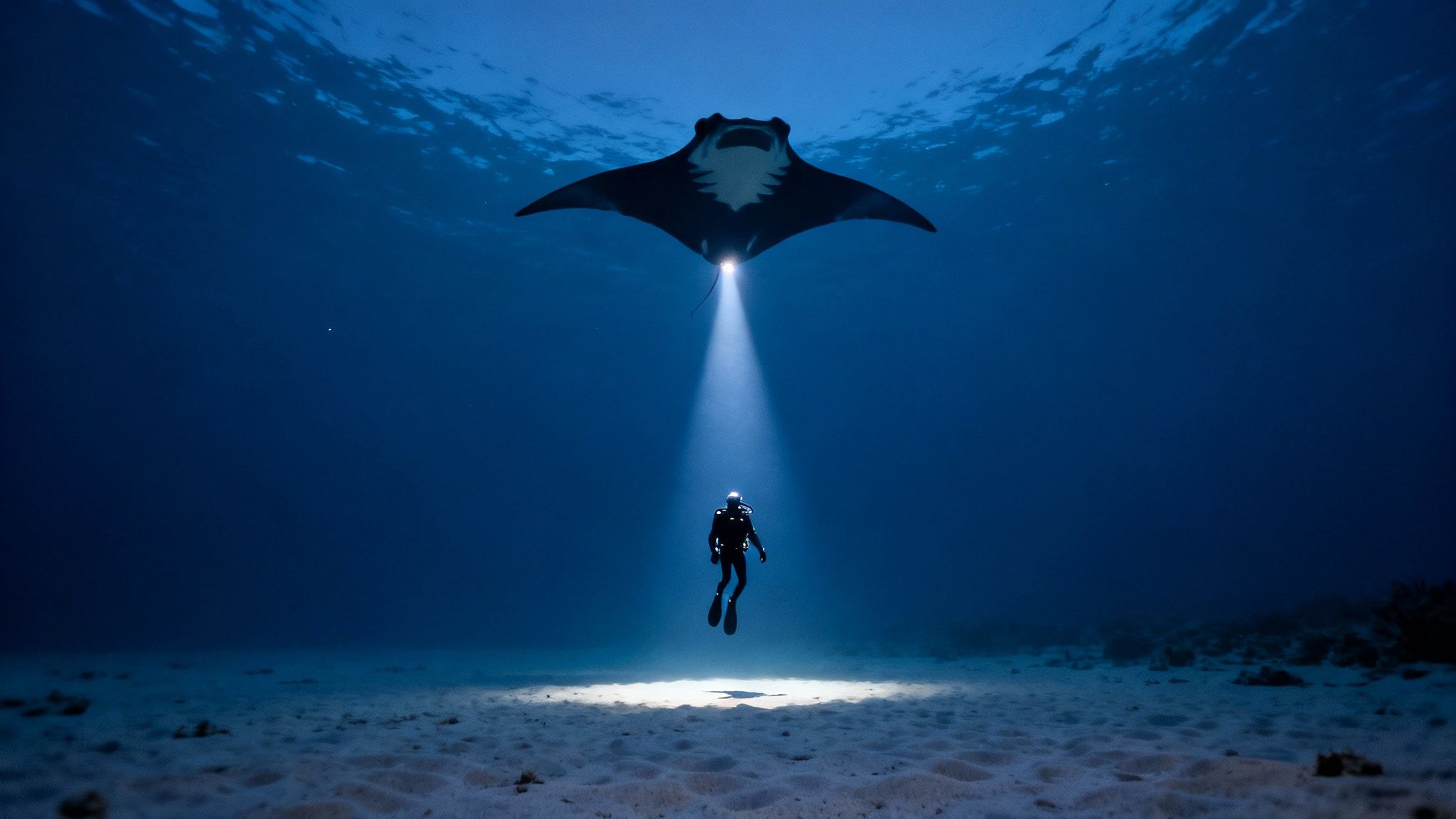
Picture this: you slip into the warm, dark Pacific waters off the Kona coast as the sun sets. Your dive light cuts a path through the deep blue, and then you see it—a colossal, winged shadow gliding effortlessly right over your head, starting a silent, mesmerizing underwater ballet. This is the manta ray dive Kona is famous for, and it’s an experience so otherworldly that it consistently tops the charts as one of the best night dives on the planet.
Experience the Unforgettable Kona Manta Ray Night Dive
I’ve been on this dive many times, and this guide is my way of walking you through every step of this incredible adventure. We'll cover everything from getting to know these gentle giants to picking the right tour operator for you.
We’ll get into exactly why Kona’s unique geography creates the perfect stage for this nightly spectacle, drawing in dozens of manta rays to feed on plankton attracted by underwater lights. You’ll see firsthand why operators like Kona Honu Divers are so passionate about making this encounter safe, respectful, and truly unforgettable.
Why Is Kona the World's Manta Ray Hotspot?
You can swim with manta rays in other parts of the world, sure. But there’s something genuinely unique about the experience right here in Kona. Most global hotspots are "cleaning stations," where mantas stop by to let smaller fish pick off parasites. It’s cool, but it’s a bit like a car wash.
Kona is different. We have reliable "feeding stations."
It all started decades ago, when a hotel aimed its floodlights at the ocean. The lights attracted swarms of plankton, and the mantas quickly figured out it was an all-you-can-eat buffet. Today, dive operators have perfected this process, using powerful, specially designed lights to create a concentrated plankton gathering. This guarantees an incredibly high chance of seeing these majestic creatures perform their graceful feeding dance. How high? We're talking sighting rates that consistently exceed 90% year-round. That makes the Kona manta dive one of the most dependable wildlife encounters on Earth.
The first time you see one of these massive creatures, shaped like a stealth bomber, emerge from the darkness is a feeling you just can’t describe. It’s a moment that stays with you forever and a true highlight of any trip to the Big Island.
Kona Manta Ray Dive At a Glance
To give you a better idea of what to expect, here’s a quick summary of what your Kona manta ray dive adventure will look like. The whole thing is designed to be both thrilling and surprisingly accessible, whether you're a seasoned diver or a first-time snorkeler.
| Aspect | Details |
|---|---|
| Activity Duration | Plan for about 2-3 hours from check-in to your return to the dock. |
| Time in Water | You'll spend a good 30-45 minutes in the water with the mantas. |
| Best Time to Go | It’s a fantastic year-round activity with amazingly consistent sightings. |
| Water Depth | The dive sites are pretty shallow, usually around 25-40 feet. |
| Sighting Success | The success rate is consistently high, greater than 90%. |
| Creature Interaction | This is strictly hands-off. Touching the mantas is prohibited to protect them. |
The experience is truly unforgettable, and you can get even more details on the Kona manta ray night dive to prepare for your trip.
After witnessing something so beautiful, you'll probably come back with some stunning photos. To keep that memory alive long after you've dried off, you could turn your amazing dive photos into beautiful wall art.
Understanding Kona’s Gentle Giants
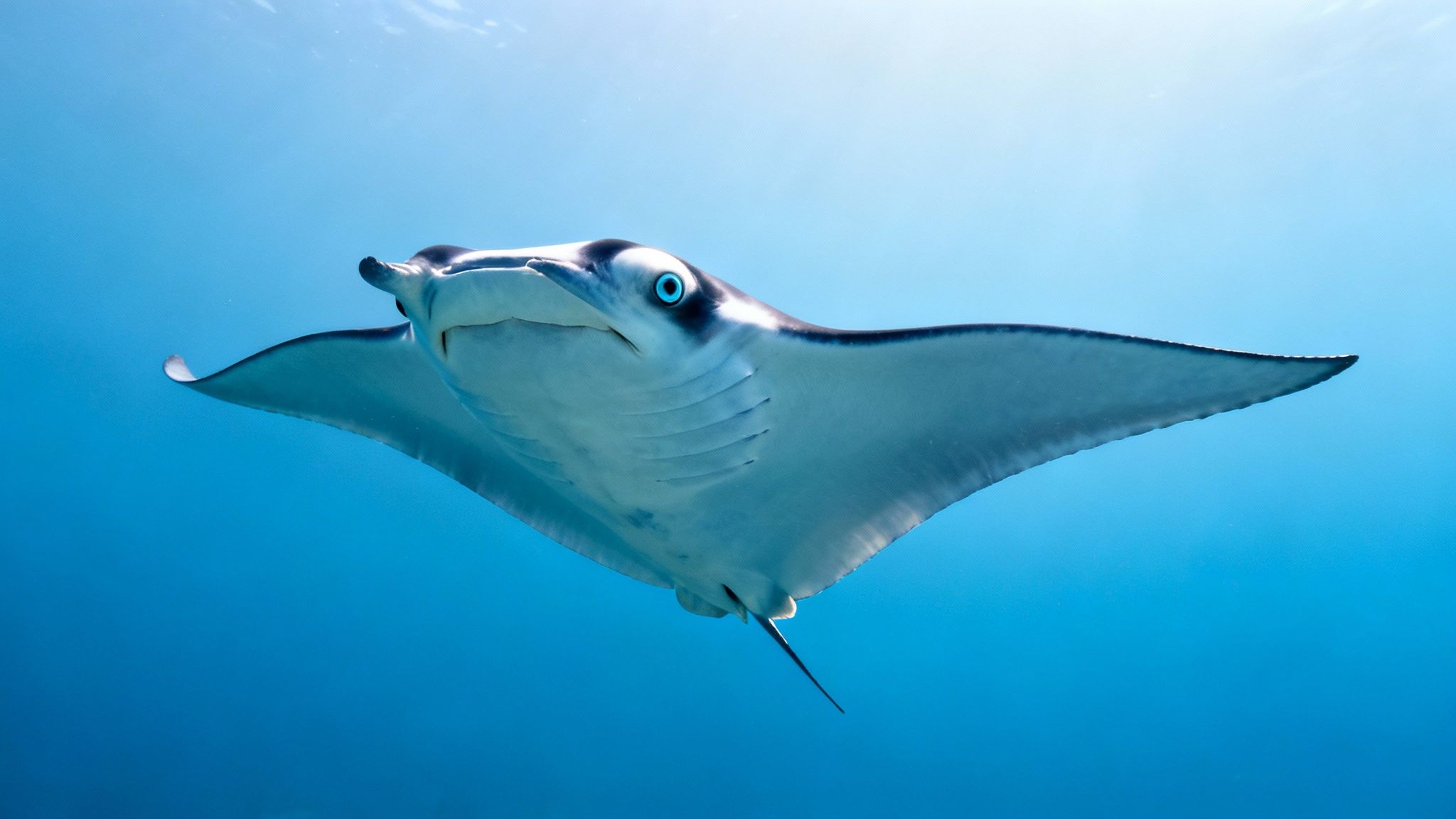
The incredible creatures at the heart of the Kona manta ray dive are so much more than just big fish. They are intelligent, graceful, and long-lived giants of the sea. Taking a moment to get to know them before you even dip a fin in the water will completely transform your encounter from a simple sighting into a real connection.
Think of the manta rays you'll meet in Kona as majestic ocean elders. These animals are powerful yet incredibly gentle, moving through the water with an effortless grace that just seems impossible for something so massive.
The Brains Behind the Ballet
One of the most jaw-dropping facts about manta rays is their intelligence. These animals aren't just swimming on autopilot; they are thinking, curious creatures, and you can almost feel it when you're in the water with them.
The giant manta rays in Hawaiian waters can have wingspans stretching up to 25 feet and can weigh a staggering 3,000 pounds, though the ones you'll typically see are closer to 15 feet across. They can live for 40 years or more, making them true old-timers of the reef.
What's really mind-blowing is that manta rays have the largest brain-to-body ratio of any fish. They’ve even passed the famous mirror test for self-awareness—a trait they share with only a few other highly intelligent animals like dolphins and great apes. You can dive deeper into these fascinating facts about giant manta rays in Hawaii.
This isn't just a fun fact; it means they are often genuinely curious about the divers and snorkelers, making the whole experience feel deeply personal and interactive.
Identifying Kona's Manta Rays
While they might look the same at first glance, the mantas in Kona are all individuals. In fact, local researchers and dive guides can identify specific mantas by the unique spot patterns on their bellies, which are as distinct as our fingerprints.
Many of the resident mantas even have names! On your dive, you might be lucky enough to meet some of the local celebrities:
- Big Bertha: One of the largest and most famous mantas you can encounter here.
- Lefty: Instantly recognizable due to an old injury on his left cephalic fin.
- Kailey: Known for being incredibly curious and making very close, graceful passes.
Knowing a little about these characters adds a whole new dimension to your dive. It’s no longer just a manta ray; it’s Lefty!
A Gentle Nature and a Vulnerable Status
Despite their imposing size, manta rays are completely harmless to humans. They are filter feeders, dining on microscopic plankton, and they lack the venomous barbs their stingray cousins are known for.
Their only real defense is their speed and size. Sadly, that's not enough to protect them from global threats like overfishing and habitat loss.
Manta rays are currently listed as Vulnerable on the IUCN Red List of Threatened Species. This classification underscores just how critical sustainable, respectful tourism really is.
When you choose a responsible manta ray tour, you're doing more than just having an unforgettable experience. You're actively supporting an industry that places real economic value on keeping these animals alive and protected. This eco-tourism model is absolutely vital for their survival.
Choosing Your Adventure: Scuba Diving vs. Snorkeling
So, you’re ready to see the famous Kona manta rays. Your first big decision is how you want to experience this incredible underwater ballet. Will you be watching from below the surface or floating peacefully above it?
Both scuba diving and snorkeling offer jaw-dropping views, but they are very different experiences. The best choice really comes down to your personal comfort, your level of certification, and what you’re hoping to get out of the night.
The great news? There's no wrong answer. Either way, you're getting a front-row seat to one of the most magical wildlife encounters on Earth.
The Scuba Diver's Perspective
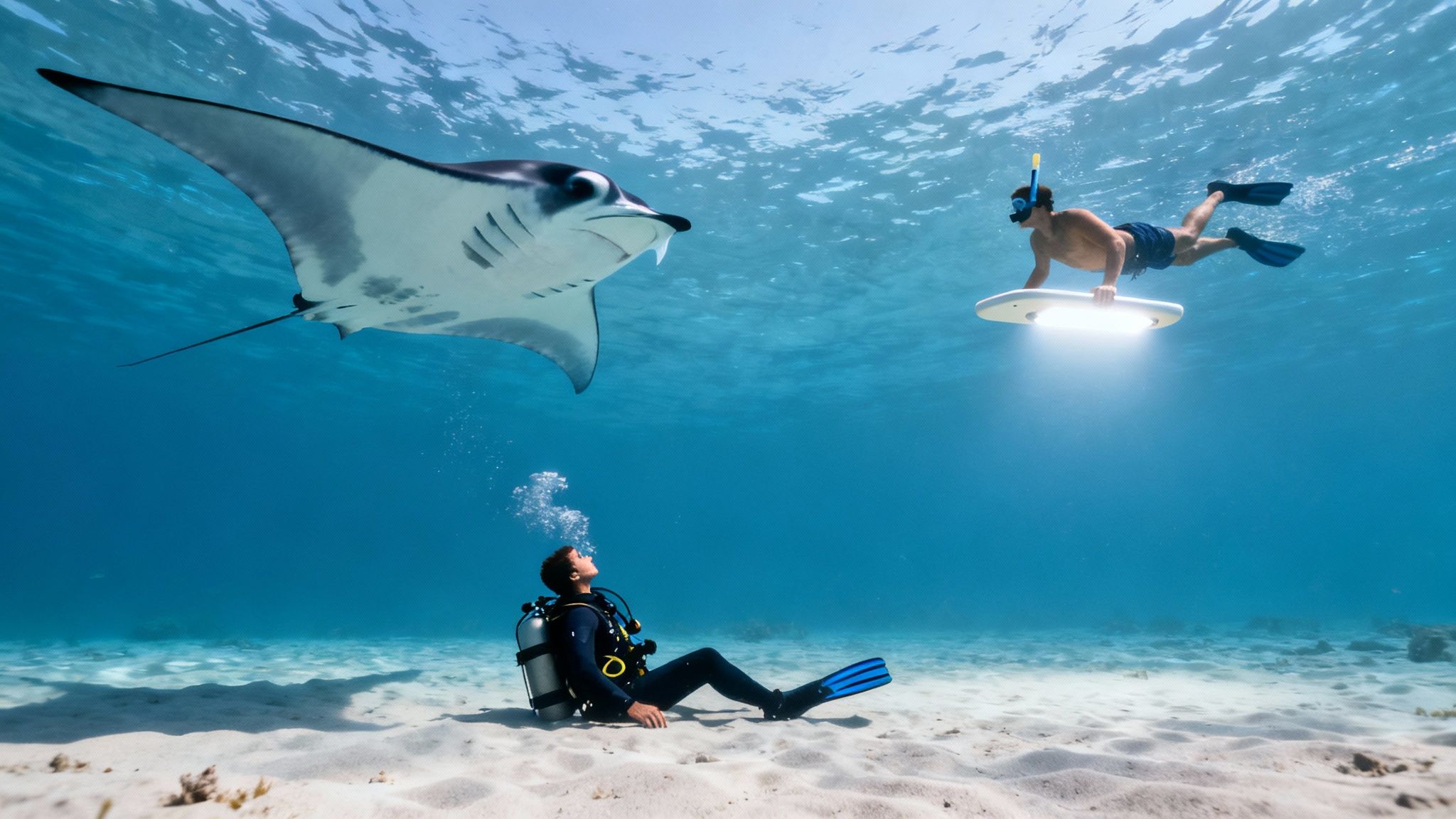
If you’re a certified scuba diver, this is your chance for a truly immersive experience. After a short boat ride, you’ll descend with your guide to a sandy patch on the ocean floor, usually around 30-40 feet deep.
Once you’re settled, you’ll kneel or sit, point your dive light toward the surface, and wait. Your light helps create a column of light that attracts the plankton, and soon enough, the mantas arrive for their dinner.
From here, the show is simply breathtaking. These gentle giants swoop and barrel-roll right over your head, sometimes just inches away. You're right there with them, a silent observer in their world. Looking up at their massive silhouettes against the glow of the lights is a memory that will stick with you forever.
The Snorkeler's Bird's-Eye View
Don't have a dive certification? No problem. Snorkeling is an equally amazing—and incredibly accessible—way to see the mantas. It's a fantastic option for families, beginners, or anyone who just prefers to stay near the surface.
Snorkelers gather around a large, custom-built floatation board. These boards have powerful lights that shine straight down, creating a giant beacon that draws in the plankton. You just hold on, put your face in the water, and watch the action unfold below.
You get a spectacular bird's-eye view as multiple mantas glide in and out of the light beams. It gives you a sense of the sheer scale of the event, watching the whole beautiful, chaotic dance from the best seat in the house.
Whether you're a diver looking up from the "stage floor" or a snorkeler watching from the "mezzanine," the experience is pure magic. The only real difference is your vantage point.
Making the Right Choice for You
Still not sure which way to go? Let’s break it down.
- Scuba Diving: This is for certified divers only. It offers a unique, bottom-up view where you feel completely part of the action. It's an intimate, eye-level encounter.
- Snorkeling: This is open to absolutely everyone, no experience needed. You get a fantastic top-down perspective of the entire scene and it’s often a bit more budget-friendly.
Many of Kona’s best operators, like Kona Honu Divers, run trips that accommodate both divers and snorkelers on the same boat. This is perfect for groups with a mix of certified divers and non-divers.
If you want to dig a little deeper, we have a whole guide exploring whether it's better to snorkel or dive with manta rays.
Exploring Kona’s Premier Manta Ray Dive Sites
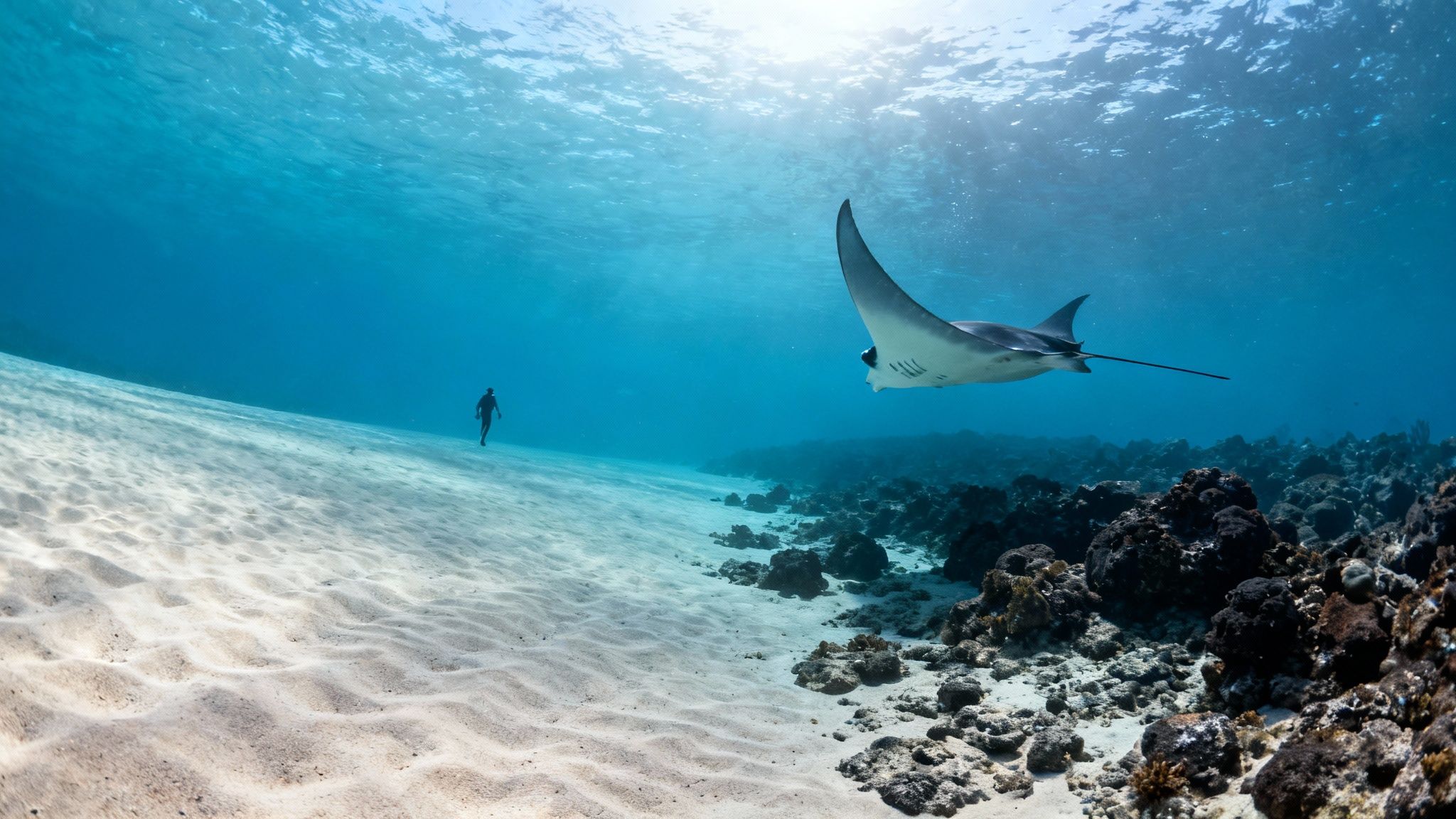
The incredible magic of the manta ray dive Kona offers really comes down to the specific spots where these gentle giants gather. While you might get lucky and see mantas cruising the coast, there are two world-famous feeding sites that have become the reliable, go-to locations for this nightly spectacle.
Each spot has its own unique vibe and feel, offering a slightly different flavor of adventure. Knowing the difference between them is the key to picking the perfect tour for your trip. Whether you're after the calm of a protected bay or the thrill of the open ocean, Kona has a manta ray stage set just for you.
Manta Village: The Original Classic
Just south of Kailua-Kona in Keauhou Bay, you'll find Manta Village. This is the O.G. spot, the one that started it all. Its history is completely accidental—years ago, the Sheraton Kona Resort lit up its shoreline, and that light attracted plankton. The mantas followed, creating the world's first reliable manta ray buffet!
This spot is legendary for its consistency and easy access. Here’s what makes it a fan favorite:
- Protected Waters: Being tucked inside a bay means the water is usually much calmer and shielded from big ocean swells. This makes for a super comfortable experience for just about everyone.
- Shallower Depths: The sandy bottom sits at a comfortable 25 to 35 feet, which is perfect for both first-time night divers and snorkelers.
- High Success Rate: Manta Village has an almost unbelievable success rate for sightings, often hitting over 95%. It's one of the most dependable wildlife encounters on the planet.
For these reasons, Manta Village is almost always the top recommendation for families, people new to diving, and anyone who just wants a beautiful and predictable evening with the mantas.
Manta Heaven: A Deeper Dive
Head a bit further north, offshore from the Kona International Airport, and you'll find a site aptly named Manta Heaven. By day, divers know this spot as Garden Eel Cove, but at night, it transforms into a different kind of theater for the manta ray dive Kona is known for.
Manta Heaven has more dramatic underwater cliffs and ledges and can sometimes host even larger groups of mantas. But being out in the open ocean means conditions can be a little more unpredictable.
This site is often a favorite among more experienced divers who are comfortable in potentially deeper water with a bit of current. The reward is often a truly wild, up-close-and-personal encounter that leaves you breathless.
The deeper setting and dynamic environment at Manta Heaven can serve up some truly spectacular fly-bys, making it a hotspot for underwater photographers chasing that perfect, jaw-dropping shot.
Choosing the Right Site for You
Every year, an estimated 80,000 people come to the Kona Coast for this world-renowned experience. Manta Village and Manta Heaven are the two pillars of this legacy. Manta Village offers a graceful "manta ballet" in its calm, shallow waters, while Manta Heaven delivers a more exhilarating, raw encounter for seasoned divers. You can always discover more insights about these unique Kona dive sites to get a better feel for them.
So, which one is for you? Here’s a quick breakdown to help you decide:
| Feature | Manta Village (Keauhou Bay) | Manta Heaven (Near Airport) |
|---|---|---|
| Location | Protected bay, south of Kona | Open ocean, north of Kona |
| Depth | 25-35 feet | 35-45 feet |
| Conditions | Generally calm and predictable | Can have stronger currents |
| Best For | Beginners, snorkelers, families | Experienced divers, photographers |
| Vibe | Classic, consistent, and serene | Wild, dynamic, and adventurous |
Honestly, no matter which site your operator chooses for the night, you're in for an incredible show. The best local outfits, like Kona Honu Divers, will check the conditions and pick the spot that gives you the best and safest chance for a fantastic encounter.
Ready to book your adventure?
How to Prepare for Your Manta Ray Dive
A little bit of prep work can be the difference between a good trip and an absolutely unforgettable one. When you know what to pack, what to expect, and how to behave in the water, you set yourself up for a manta ray dive Kona experience that's as magical as it gets.
Think of it as a pre-flight check before launching into an incredible underwater ballet. Getting the small stuff sorted out first means you can completely lose yourself in the moment when those gentle giants start gliding out of the darkness.
What to Bring and What Is Provided
The good news is that packing is incredibly simple. Your tour operator handles all the heavy lifting, especially reputable outfits like Kona Honu Divers who provide everything you need to be safe and comfortable.
Here’s a quick rundown of what’s on you and what’s on them:
- What You Should Bring:
- Swimsuit: The easiest thing to do is wear it under your clothes so you're ready to go.
- Towel: You’ll definitely want this for the boat ride back, which can get surprisingly chilly.
- A Warm Layer: A simple hoodie or a windbreaker is perfect for after you get out of the water.
- Reef-Safe Sunscreen: For a sunset dive, make sure to apply it well before boarding the boat.
- What Your Operator Provides:
- All Dive/Snorkel Gear: This covers your mask, fins, and either a snorkel or a full regulator setup.
- Wetsuit: The water feels much cooler at night, and a wetsuit keeps you warm enough to enjoy the show.
- Lights: This is the most important part! They provide the high-powered underwater lights that attract the plankton.
This system lets you focus on the excitement of the dive, not the headache of hauling a bunch of gear.
Understanding Manta Manners
Without a doubt, the most critical part of your preparation is the pre-dive briefing. This is where your guides will walk you through the essential "manta manners"—the rules of engagement designed to keep both you and the mantas safe. Listen carefully, because following these guidelines is non-negotiable for a respectful encounter.
The golden rule of interacting with manta rays is simple: Do not touch the manta rays. Their skin is covered with a protective mucous coating that acts as a shield against infection. When you touch them, you can strip this layer off, leaving them vulnerable to disease.
This strict no-touch policy is the backbone of responsible ecotourism. Just by being a passive observer, you are playing an active role in protecting these incredible animals for years to come. Your guide will also explain the proper positioning in the water—divers on the sandy bottom looking up, snorkelers on the surface looking down—to create a wide-open "stage" for the mantas to swoop and feed.
For anyone visiting from abroad, it’s also wise to get all your travel documents in order beforehand. This includes checking things like the passport requirements for international travelers to the U.S. to ensure your entire trip goes smoothly.
Once you know the rules and have your small bag packed, you're all set. It’s time to hop on the boat, trust your guides, and get ready for an experience you will never forget.
Why Your Choice of Manta Ray Tour Operator Matters
Let's be honest, picking the right guide for your manta ray dive in Kona is just as crucial as the dive itself. Lots of boats can get you out on the water, but the truly great operators are the ones who put safety, conservation, and your overall experience first. That’s what turns a good night into an unforgettable one.
This is where companies like Kona Honu Divers really shine. The difference between a "meh" experience and a magical one often boils down to the crew's genuine passion and expertise.
Experienced Guides and Quality Gear Make a World of Difference
You're not just looking for a boat captain; you want a guide who lives and breathes marine life. The best guides can tell you about the individual mantas by name, share fascinating behaviors you might otherwise miss, and make sure every interaction is safe and respectful for these gentle giants.
The quality of the gear is a close second. Think about it: a top-notch operation will have thick wetsuits to keep you warm and comfortable, plus powerful, bright lights that attract the plankton and give you a front-row seat to the manta feeding frenzy. Smaller group sizes also make a massive difference, offering a much more personal and less chaotic encounter. For more on what to look for, our guide on how to choose a Kona dive shop has you covered.
Look for a Real Commitment to Conservation and Safety
A truly responsible operator isn't just selling a tour; they're guardians of the ocean. The best companies are deeply committed to the Manta Ray Green List standards, which are strict guidelines designed to keep both the mantas and the divers safe.
This dedication to conservation is what keeps Kona's manta ray population healthy and thriving, so future generations can witness the same incredible spectacle. When you choose an operator who follows these rules, you're directly supporting these vital preservation efforts.
Nothing speaks louder than the experiences of fellow divers. Real-world reviews give you the confidence you need to know you're booking with a crew that consistently delivers. Check out what people are saying about their dives with a top-rated local company.
Ready to book an incredible adventure with a trusted crew? You can view available manta ray dive tours here.
Your Top Questions About the Manta Ray Dive, Answered
It's completely normal to have a few questions buzzing in your head before you book a big adventure like this. Getting clear, honest answers helps turn that last bit of uncertainty into pure excitement.
Let's walk through some of the most common things people ask, so you can book your trip feeling confident and ready for the experience of a lifetime.
Is the Manta Ray Night Dive Safe?
Yes, absolutely. Every reputable operator in Kona puts your safety above everything else. Think of it as a carefully choreographed underwater show, not a free-for-all in the open ocean. You're in a controlled environment, supervised by experienced professionals the entire time.
Guides are in the water with you from start to finish, and everyone goes through a detailed safety briefing beforehand. They’ve got this down to a science, making sure you can relax and just soak in the incredible sight in front of you.
Do I Need to Be a Certified Diver?
Nope! And that’s one of the best things about this experience—it's open to just about everyone. While certified divers get to watch the show from the "front row seats" on the ocean floor, snorkelers have an equally incredible vantage point.
Snorkelers hang onto a large, custom floatation board at the surface. Bright lights shine down from the board, drawing the mantas right up to you. You get this amazing bird's-eye view of them gliding, spinning, and barrel-rolling just a few feet below.
This makes it the perfect adventure for families or groups with different comfort and certification levels. No one gets left out of the action.
Will I Definitely See Manta Rays?
The manta ray dive in Kona has an incredible success rate, with sightings on more than 90% of nights. The lights create a reliable "plankton buffet," making this one of the most dependable wildlife encounters on the planet.
But, and this is important, these are wild animals. There's never a 100% guarantee. On the very rare night the mantas decide to dine elsewhere, most operators will invite you back for a second chance on another night, free of charge.
What's the Best Time of Year for the Dive?
You’re in luck—this is a fantastic year-round activity. Kona has a resident population of manta rays, so there’s no specific "manta season." You have a great shot at an amazing encounter no matter which month you visit.
That said, the ocean is often calmest and clearest between April and October. The warmer water during these months can also create a richer plankton bloom, which sometimes attracts even larger groups of mantas to the party.
Kona's mantas are so well-loved that they've been studied since 1991. Researchers can identify over 330 individuals by the unique spot patterns on their bellies! This incredible long-term research has turned a simple dive into a world-class ecotourism experience. You can learn more about the extensive manta ray research here.
At Kona Honu Divers, we live and breathe this stuff. Our mission is to give you a safe, respectful, and completely unforgettable experience with these gentle giants. With our expert crew and commitment to conservation, you're in for the adventure of a lifetime. Ready to see the magic for yourself? Book your manta ray dive tour today.