
Picture this: you're floating in the warm, dark Pacific off the Kona coast. Suddenly, a majestic creature with a wingspan wider than a car glides silently, just inches above your head. This isn't a nature documentary—it's the world-famous manta ray dive in Kona, and it's an experience that will stick with you for life.
If you're ready for an unforgettable underwater ballet, this guide has everything you need to know.
Experience the World Famous Kona Manta Ray Dive
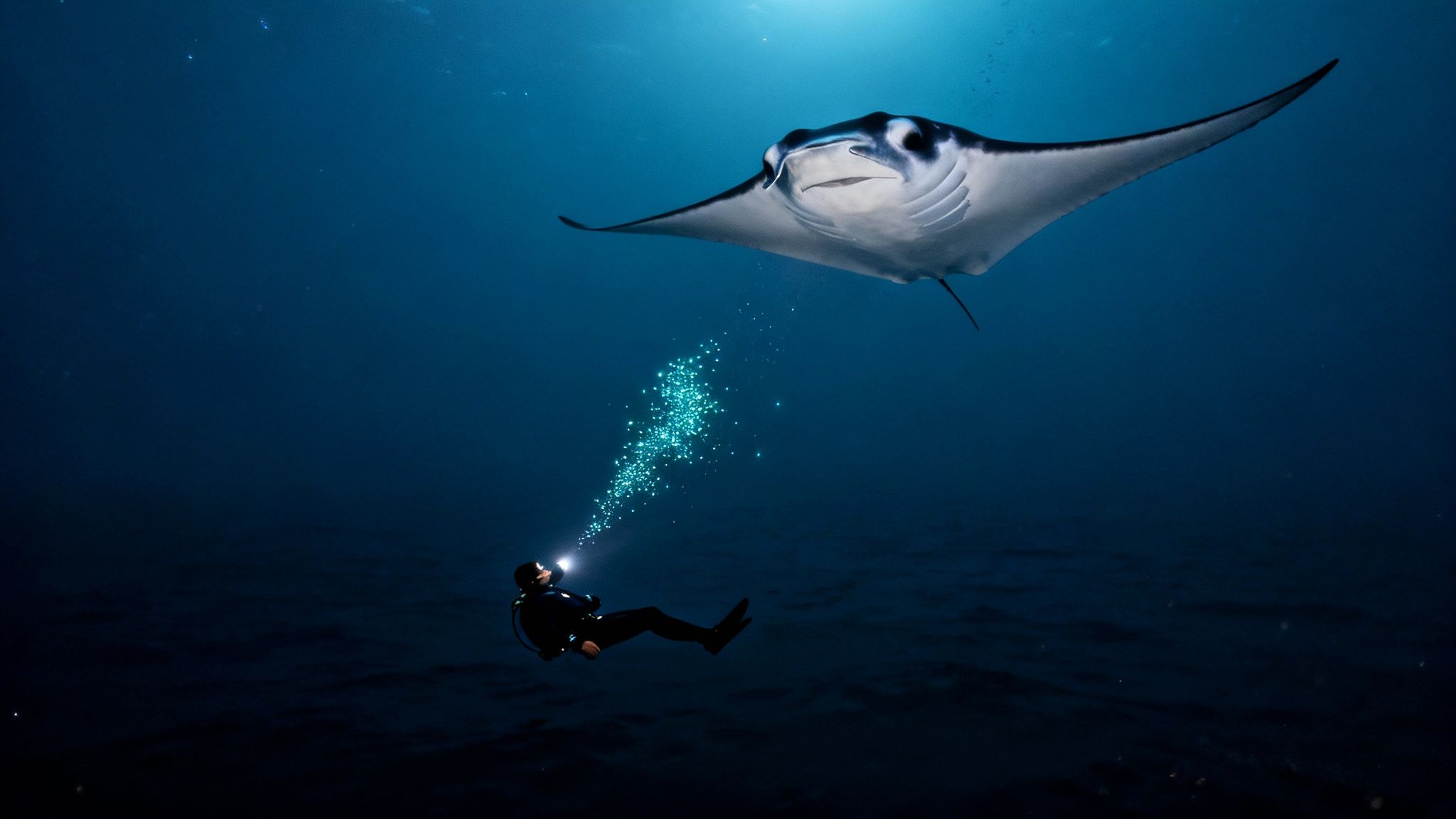
We'll break down exactly what makes this dive so incredible, why Kona is the best place on the planet for it, and how to plan your own trip. We’ll cover everything from picking the right tour operator to what to expect on the boat, and even how your trip helps protect these amazing animals.
The genius behind the Kona manta ray dive is beautifully simple. After the sun goes down, dive operators submerge powerful lights into the water. These lights act like a magnet for plankton, the tiny organisms that are the foundation of the ocean's food chain.
For Kona's resident population of reef manta rays, this gathering of plankton is an all-you-can-eat buffet they just can't resist. The mantas flock to the light, performing graceful, acrobatic barrel rolls to scoop up their dinner. It's this reliable feeding behavior that makes the encounter so consistently magical for both divers and snorkelers.
Why Kona is the Epicenter for Manta Encounters
Kona isn't just a good place for this dive; it's the best. The Big Island has become a global hotspot for manta ray interactions, drawing around 80,000 people every year to witness the spectacle.
The action is concentrated at two primary sites, fondly nicknamed "Manta Village" and "Manta Heaven." Each spot offers a slightly different backdrop for the nightly show, but both are incredible. You can discover more insights about what makes Kona the best place for manta dives to get the full picture.
This adventure is so much more than just a cool dive. It’s a chance to connect with the ocean in a truly profound way. When you book with a responsible company, you're also directly contributing to marine conservation.
Ready to take the plunge? Let's dive into what you need to know. If you want to see what's available, head over to the manta ray dive tours page.
Choosing Your Manta Ray Adventure
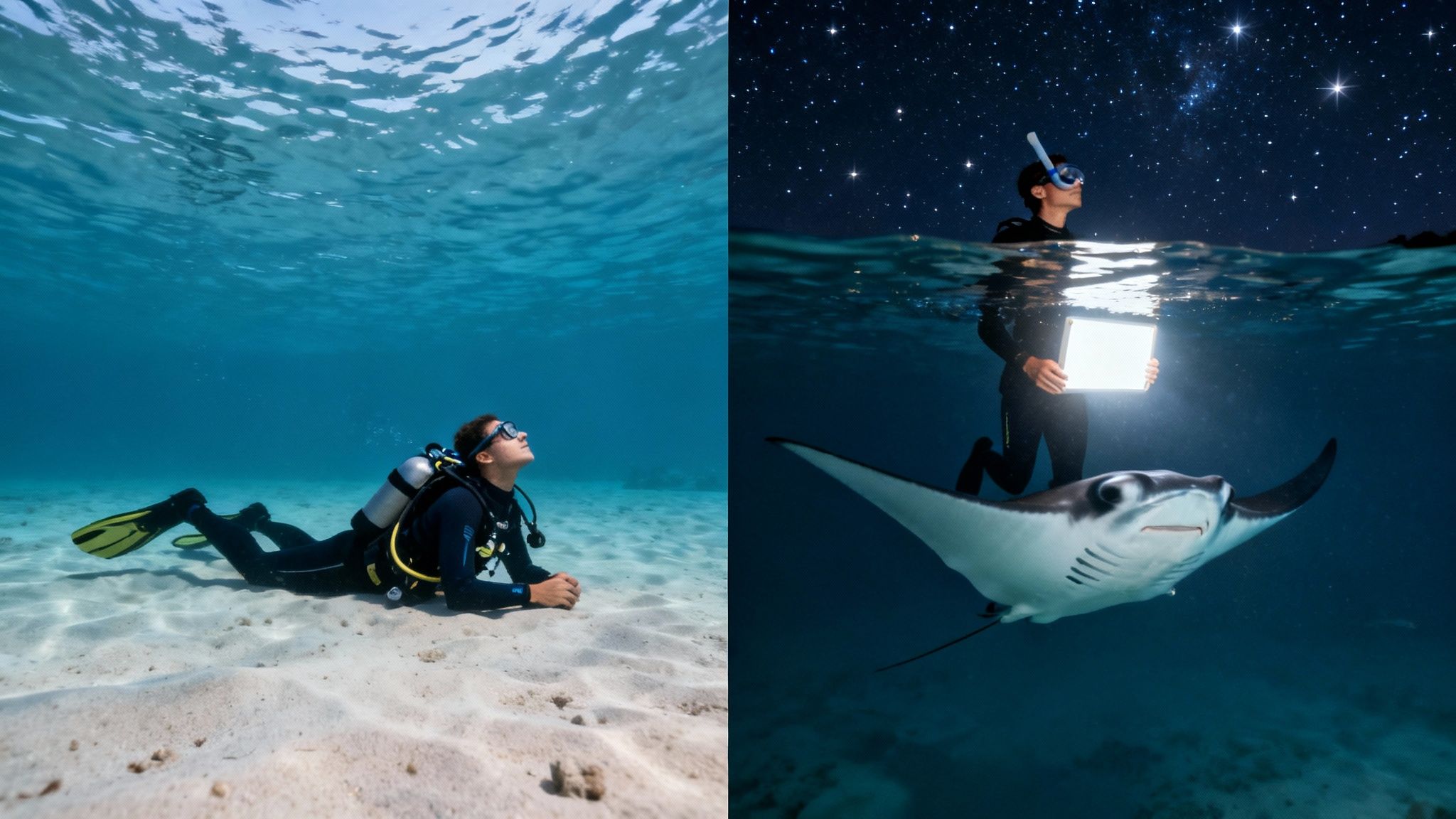
When you're gearing up for the manta ray dive in Kona, your first big choice is deciding how you want to see the show. You’ve got two amazing options on the table: scuba diving or snorkeling.
Truthfully, one isn't better than the other. They're just different. The right choice for you really boils down to your comfort in the water and the kind of experience you’re hoping for.
The Scuba Diver's Perspective
If you're a certified diver, this is your chance to get a front-row seat to the performance from the ocean floor. You’ll descend with your group to a sandy "campsite" about 30-40 feet down. Once you're settled, you just point your dive light up toward the surface and wait for the magic to happen.
From this vantage point, you see the mantas as massive, graceful silhouettes gliding against the glow from above. They swoop and barrel roll just inches over your head in a mesmerizing, otherworldly ballet. It’s an immersive experience you feel in your soul.
The Snorkeler's Viewpoint
For snorkelers, the view is just as spectacular, but from a different angle. The great thing here is that you don’t need any special training, so almost anyone can join in. You'll float comfortably on the surface, holding onto a custom-made light board that shines powerful beams down into the dark water, attracting the plankton.
This gives you an incredible bird's-eye view of the whole scene. You’ll watch as the giant mantas emerge from the darkness, their bright white bellies lit up as they feed directly below you. Seeing these gentle giants perform their dance from above is a truly powerful sight.
If you're still on the fence, we've put together a more detailed breakdown to help you decide. You can explore our guide on whether it's better to snorkel or dive with manta rays.
Selecting The Right Tour Operator
No matter which adventure you pick, your experience hinges on the quality of your tour operator. A top-notch company doesn't just look after your safety; they are guardians of the manta rays, too. This is why we wholeheartedly recommend a proven, top-rated operator like Kona Honu Divers.
Their reputation is built on expert guides, a serious commitment to safety, and a genuine passion for manta ray conservation. You can feel their respect for the ocean in everything they do, which makes the encounter that much more meaningful.
But don't just take our word for it—see what other divers and snorkelers have to say in their reviews.
When you’re ready to book your own magical evening, you can explore their manta ray dive and snorkel tours for a seamless experience.
What to Expect During Your Tour
Knowing exactly what's coming can make a good trip unforgettable. The manta ray dive in Kona isn't just a jump in the water; it's a carefully planned experience that puts safety and wonder front and center. Let's walk through what the evening looks like so you know just what to expect.
Your adventure will likely kick off late in the afternoon at the harbor. This is where you'll meet your dive crew and the other divers sharing the experience. There’s a special kind of energy in the air as everyone boards the boat for a ride up the Kona coast. As the sun starts its descent, your guides will give a detailed pre-dive briefing.
Pay close attention here. They’ll cover the whole plan for the night, run through all the safety procedures, and explain the golden rules of manta ray interaction. These aren't just suggestions; they’re vital for protecting the mantas and making sure this incredible encounter remains sustainable for the future.
Entering the Underwater Theater
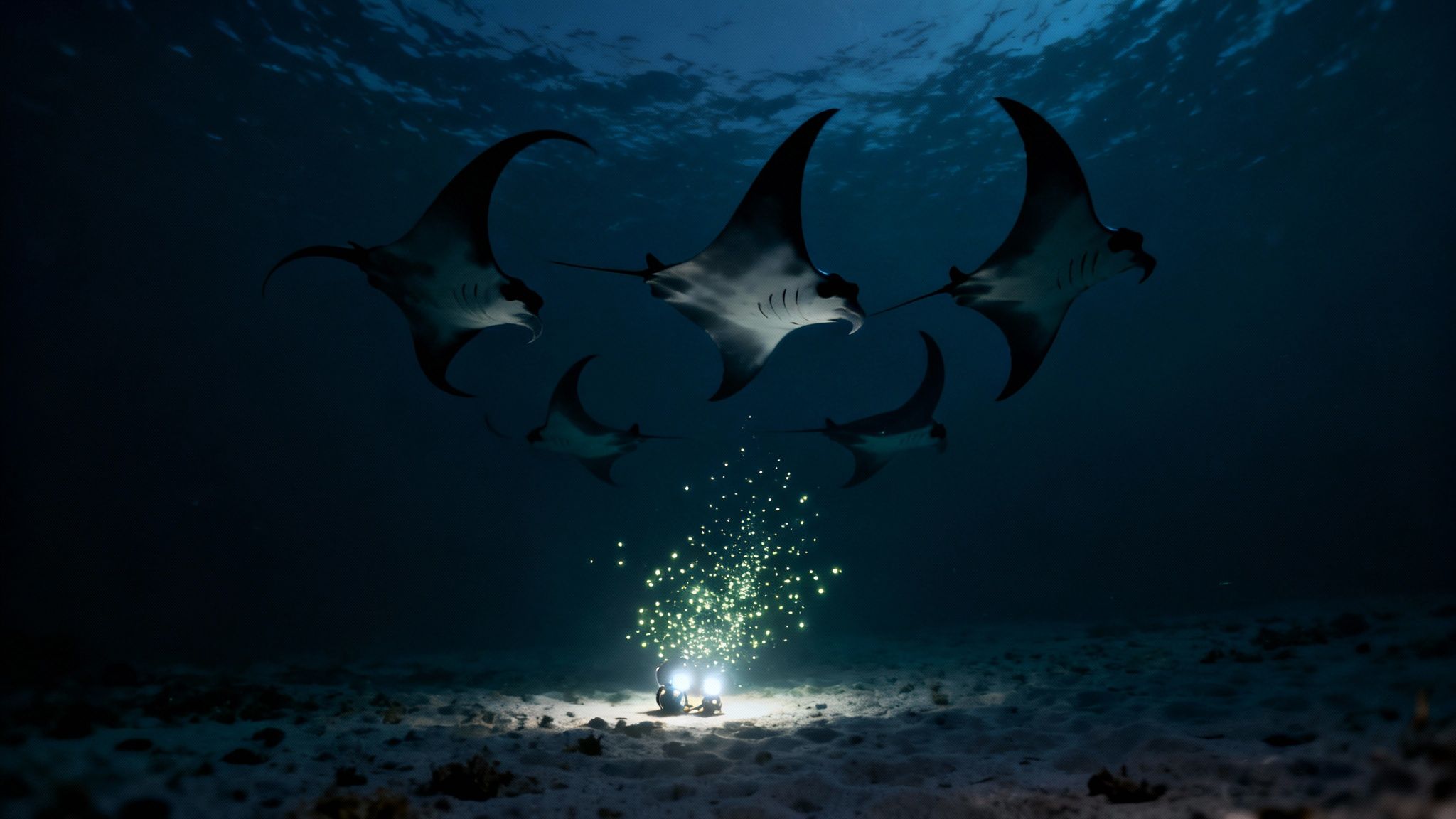
When you arrive at the site, it’s time to get your gear on and slip into the dark, calm ocean. As the divers make their way down to a designated spot on the sandy sea floor, the real show gets underway. Your guides will switch on a set of powerful lights, creating what everyone calls the "campfire."
This underwater beacon shines up into the water column, attracting clouds of tiny plankton. It’s the equivalent of a massive, glowing dinner bell for the manta rays.
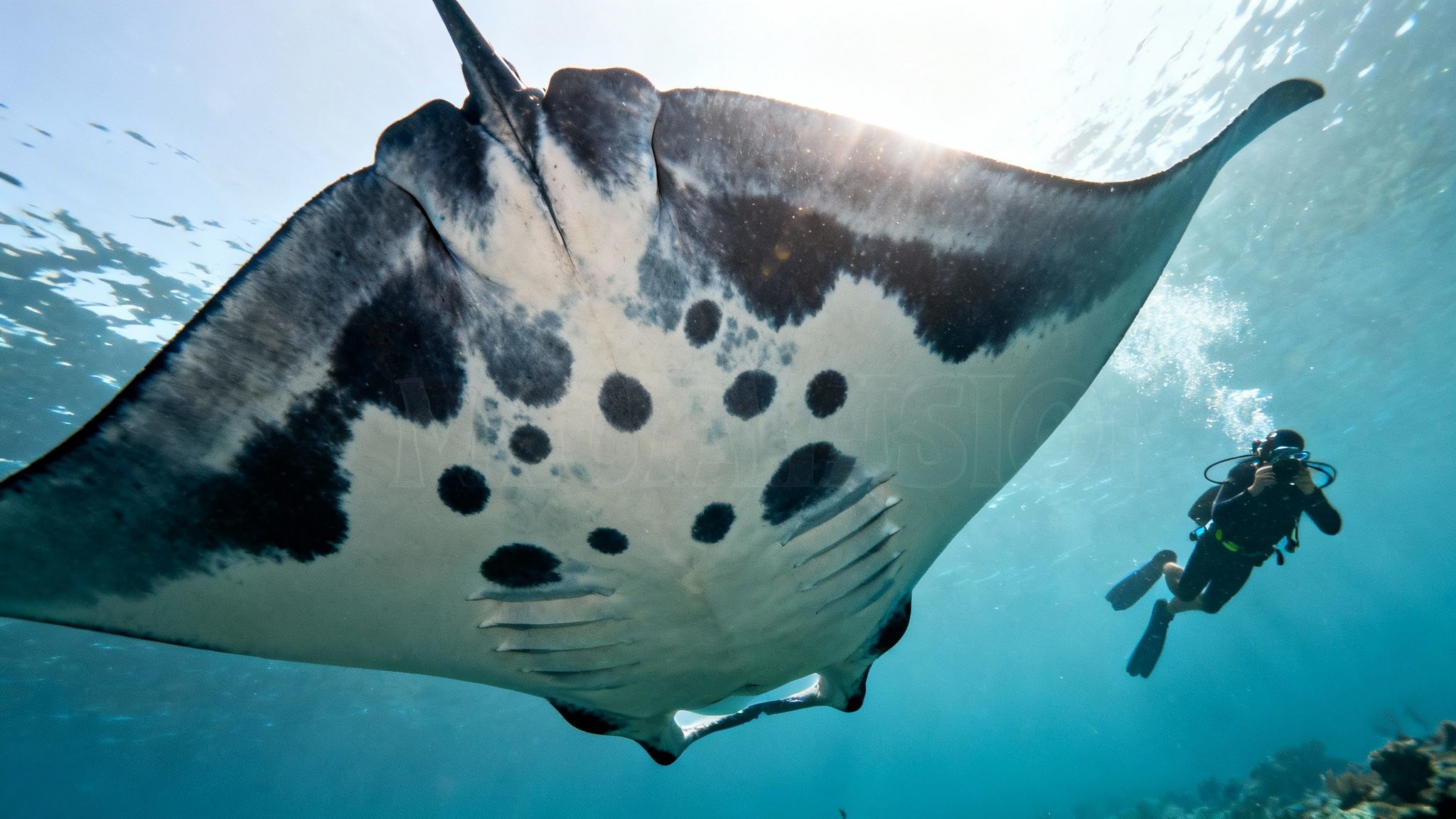
It doesn't take long. Usually, within minutes, the first massive, graceful shadow emerges from the darkness. Then another. Soon, you'll be completely captivated as giant manta rays glide, swoop, and perform effortless barrel rolls right above your head, feasting on the plankton. They get so close you can see the unique spot patterns on their undersides, which are like fingerprints for identifying individual rays. For a deeper look into the dive, you can read more about the Kailua-Kona manta experience.
This dive is much more than just a tourist activity—it’s a cornerstone of the local community. Manta ray tourism brings in over $2.5 million annually for Kona's economy. In 2009, Hawaii recognized how important and vulnerable these animals are, passing a law to protect them. This legislation makes it illegal to harm or capture a manta ray in state waters.
The boat ride back to the harbor under a sky full of stars is the perfect way to wrap up the night. You'll head home with more than just pictures; you'll have the memory of witnessing an otherworldly ballet that happens every single night off the coast of Kona.
The Science and Conservation Behind the Magic
The manta ray dive in Kona is more than just a spectacular light show. It's an incredible living example of how tourism can directly fuel science and conservation. As you watch these graceful giants glide overhead, you’re actually part of a long-running research project that helps protect them.
It all comes down to a simple, brilliant idea. Just like a human fingerprint, the pattern of black spots on a manta ray's white belly is completely unique. No two are the same. This allows local researchers and dive guides to identify, name, and track individual mantas year after year.
This simple act of identification has blossomed into a massive database, giving us an unprecedented look into the lives of Kona's resident manta population. It’s a beautiful, collaborative effort that pays off every single night.
A Living Laboratory for Manta Research
The amount of data gathered here is just staggering. Thanks to countless observations from guides and divers like you, researchers have logged nearly 6,000 reported encounters and over 28,500 sightings. It's citizen science at its best.
This wealth of information has allowed them to catalog more than 330 individual manta rays, effectively turning the Kona coast into the world’s premier natural laboratory for studying these creatures. You can dive deeper and learn more about these amazing manta ray findings to see just how much we've learned.
The entire system works because of one core principle: passive interaction. This is the golden rule of the manta dive. It means you are there to be a quiet, respectful observer, a guest in their world.
The rule is simple and absolute: never touch, chase, or get in a manta's way. Their skin is covered in a protective mucous coating, and a single touch can rub it off, leaving them vulnerable to nasty infections.
Sticking to these rules ensures the mantas feel safe and keep coming back to the dinner table we set for them. The local dive community takes this so seriously that they are constantly working to improve and strengthen these protections. You can even read more about the proposed rules for manta ray viewing in Hawaii to see their commitment in action.
Ultimately, the most important thing you can do is choose a responsible tour operator. When you go with a company that puts conservation first, your dive ticket does more than just buy you a spot on the boat. It funds the very research and advocacy that keeps Kona’s mantas thriving, turning an unforgettable experience into a powerful force for good.
How to Prepare for Your Manta Ray Dive
A little prep work goes a long way in making sure your manta ray dive is absolutely unforgettable. Getting the details right beforehand means you can relax and be fully present for what is truly a once-in-a-lifetime experience.
Let's start with the basics. Plan on wearing your swimsuit to the harbor, right under your clothes, to make things easier. You'll also be glad you packed a towel and something warm and dry—like a hoodie or a windbreaker—for the boat ride back. The air can get surprisingly chilly after an evening swim, even in Hawaii.
What to Bring and What to Leave Behind
Most quality tour operators will have you completely covered with all the scuba or snorkeling gear you'll need. This includes a wetsuit, mask, fins, and a regulator if you're diving. So, unless you’re really attached to your own gear, you can save some luggage space. Just double-check with your specific tour company when you make your reservation.
It’s also important to remember we're visitors in their world. We're dealing with wild animals, so while Kona’s manta population is one of the most reliable on the planet, a sighting is never 100% guaranteed. These aren't creatures in an aquarium.
That said, the success rate here is phenomenal, consistently hitting over 90%. The dive operators have perfected the "plankton buffet" over decades, and the local mantas know exactly where to show up for dinner.
Feeling Anxious About a Night Dive?
If the thought of being in the dark ocean gives you a few butterflies, you're definitely not the only one. It's a common feeling.
The best thing you can do is stick close to your guide. They are seasoned pros who know these waters like the back of their hand and are trained to make you feel safe. Concentrate on your breathing—nice, slow, and steady—and remind yourself that you’re in a well-lit, controlled, and very safe environment.
Choosing Your Dive Site
Kona is famous for its manta ray dives, and there are two primary sites where all the action happens. Each has a slightly different vibe, so knowing the difference can help you pick the perfect spot for your adventure.
Kona Manta Ray Dive Sites Compared
Deciding between Manta Village and Manta Heaven often comes down to logistics and what kind of experience you're hoping for. Both are incredible, but this table breaks down the key differences to help you choose.
| Feature | Manta Village (Keauhou Bay) | Manta Heaven (Near Airport) |
|---|---|---|
| Location | South of Kailua-Kona | North of Kailua-Kona |
| Typical Depth | 25-35 feet | 30-40 feet |
| Key Feature | Known for extremely consistent sightings | Can sometimes attract larger groups of mantas |
| Bottom Type | Sandy bottom | Coral rubble and sand |
Ultimately, you can't go wrong with either location. Your tour operator will typically choose the best site based on the current conditions and recent manta activity to give you the best possible show.
While the specialized gear for this dive is provided, you can find great general travel packing tips to get everything else ready for your Hawaiian getaway.
And for divers who get hooked on the magic of night diving, Kona has more to offer. The Blackwater Dive is an otherworldly drift dive in the deep, dark ocean where you'll see strange and wonderful creatures that rise from the abyss. Experienced divers can also check out a range of advanced diving opportunities to explore more of what makes Kona's underwater ecosystem so special.
Answering Your Manta Ray Dive Questions
It’s completely normal to have a few questions buzzing around your head before you take the plunge. In fact, it’s a good sign! It means you’re getting excited and want to be prepared.
Let’s walk through some of the most common questions we get from divers and snorkelers, so you can head out on the water feeling totally confident.
Is the Kona Manta Ray Night Dive Safe?
Yes, absolutely. Safety isn't just a talking point; it's the foundation of the entire operation. Every reputable company in Kona puts your well-being first, and that starts with the crew. You’ll be guided by seasoned, certified divemasters and instructors who know these specific sites like the back of their hand.
Before anyone even dips a toe in the ocean, you'll get a thorough safety briefing covering everything you need to know. The whole experience is incredibly structured and controlled, making it a safe and mesmerizing adventure for everyone, from first-time snorkelers to veteran divers. Your guides are with you every step of the way.
What Is the Best Time of Year to See Manta Rays in Kona?
Here's the great news: any time is a good time! We're lucky enough to have a resident population of manta rays, which means they live here year-round and don't migrate.
That said, if you're trying to pin down the absolute "best" conditions, the months between April and October are often fantastic. The ocean tends to be warmer and calmer, which can sometimes attract even larger groups of mantas to the nightly plankton feast. But honestly, the tours run all year with a ridiculously high success rate, so don't stress too much about the calendar.
Manta ray sightings in Kona are about as close to a sure thing as you can get in the wild. Tour operators consistently report a success rate of over 90% year-round. They are wild animals, of course, so nothing is ever 100% guaranteed, but your odds of an incredible encounter are sky-high.
Do I Need to Be a Certified Scuba Diver?
Not at all! This is what makes the Kona manta ray experience so special—it's one of the world's most amazing wildlife encounters, and almost anyone can do it.
Certified divers get the incredible perspective of watching the show from the ocean floor, looking up as these gentle giants swoop overhead. But snorkeling is an equally mind-blowing option. You'll float comfortably at the surface, holding onto a custom-made light board that attracts the plankton. From there, you get a perfect bird's-eye view as the mantas glide and barrel-roll just inches beneath you.
Are We Guaranteed to See Manta Rays?
While no one can ever offer a 100% guarantee when dealing with wild animals, this is about as close as it gets. The local mantas have been showing up to these "campsites" for their plankton dinner for decades. They know the routine.
The success rate is so high that many of the best operators, including Kona Honu Divers, back their trips with a "manta guarantee." If your group happens to be one of the very few that doesn't see a manta, you can come back another night for free. Pro tip: book your dive for early in your vacation, just in case you need to use that second chance!
Ready to witness the underwater ballet for yourself? Kona Honu Divers offers expertly guided manta ray dive and snorkel tours that put safety and conservation first, ensuring an unforgettable and responsible adventure.