
Are you ready for one of the most incredible underwater encounters on the planet? Just off the coast of Kona, Hawaii, a world-famous night dive lets you get face-to-face with majestic manta rays. It's often called an "underwater ballet," and for good reason—it’s consistently ranked as one of the best night dives in the world. With a professionally guided manta ray dive tour, you can be part of this unforgettable spectacle.
What Makes The Kona Manta Ray Dive Unforgettable
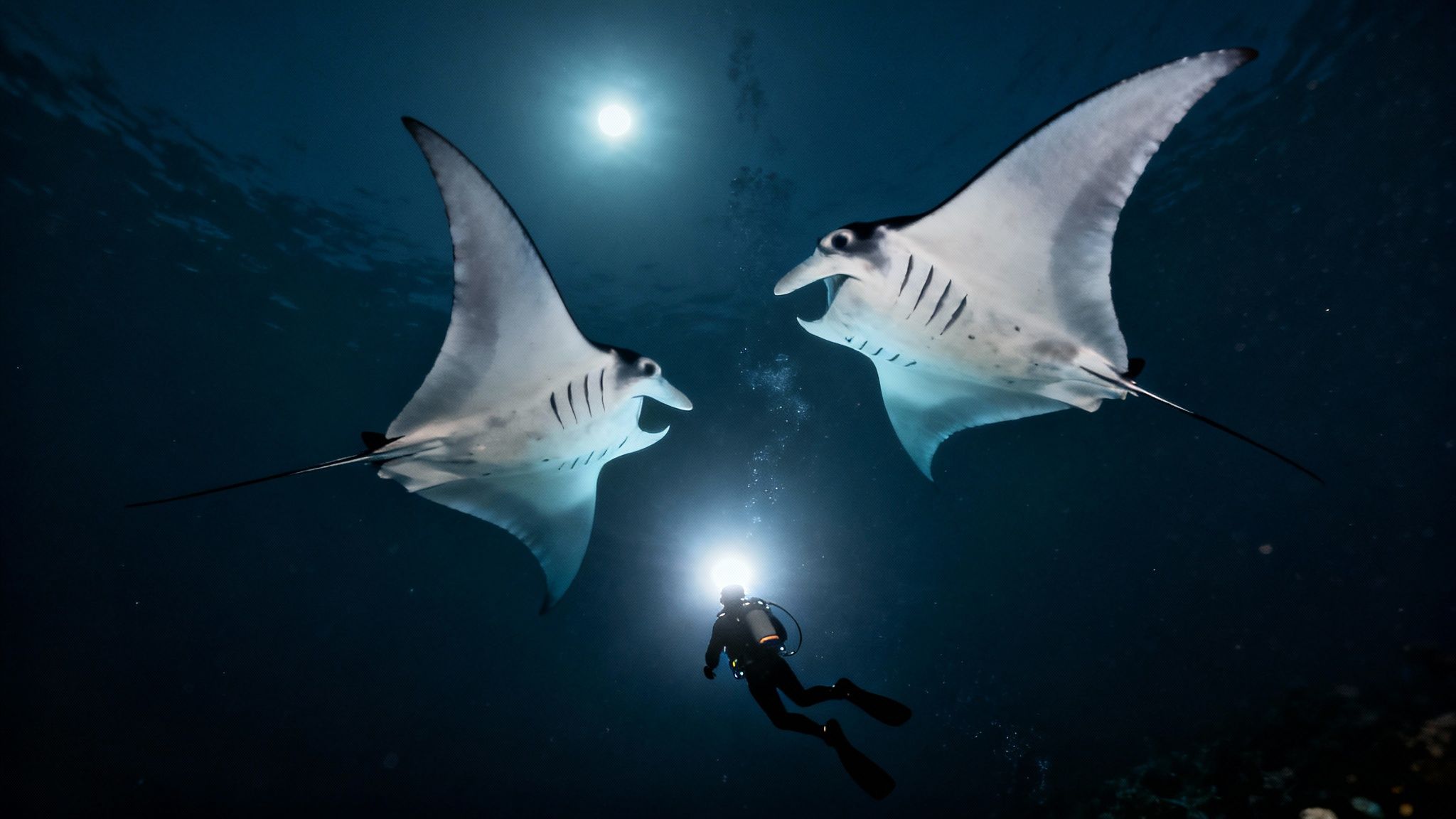
Picture this: you're floating in the warm, dark Pacific Ocean as colossal figures emerge from the gloom. Giants with wingspans reaching up to 18 feet glide silently towards you, their huge mouths wide open to filter plankton attracted to your light. This isn't a scene from a nature documentary; it's the real deal—the manta ray dive Kona experience.
So, what makes this specific dive so special? It boils down to a magical combination of reliable sightings and nearly perfect conditions. Unlike other spots where seeing a manta is a matter of luck, Kona’s mantas are residents. They show up almost every single night to feed at established "campsites."
This incredible consistency is no secret. It has turned the Kona coast into a global destination for this one-of-a-kind adventure, drawing roughly 80,000 people every year. Two primary locations, affectionately known as Manta Village and Manta Heaven, provide a natural, theater-like stage for the nightly show. You can learn more about what makes Kona's premier manta dive sites so unique.
A Ballet Of Gentle Giants
The phrase "underwater ballet" gets used a lot, but it's the perfect description. As divers settle on the sandy ocean floor and point their flashlights up, the beams attract clouds of microscopic plankton. It doesn't take long for the stars of the show to arrive. The mantas swoop in to feast, performing graceful barrel rolls and somersaults, sometimes just inches from your mask.
This is more than just a dive; it’s a profound interaction. Watching these massive, intelligent creatures move with such grace creates a memory that lasts a lifetime and fosters a deep appreciation for our oceans.
And you don't have to be a certified diver to experience it! Snorkelers get a front-row seat from the surface, holding onto floating light boards that draw the plankton—and the mantas—right up to them. Both perspectives offer an equally mesmerizing show.
To give you a better sense of why this is a true bucket-list adventure, here's a quick breakdown.
Kona Manta Ray Dive At A Glance
The table below highlights the key features that make this experience so consistently amazing.
| Feature | Why It Matters | What to Expect |
|---|---|---|
| Reliable Sightings | High success rates (often >90%) mean you have an excellent chance of an encounter. | Seeing multiple mantas gracefully feeding throughout your dive or snorkel. |
| Year-Round Access | Kona's mantas are residents, not migratory, making any time of year a great time to visit. | Consistent opportunities to book a tour regardless of the season. |
| Unique Behavior | Witnessing the natural feeding behavior of barrel rolls is spectacular and rare. | An up-close view of an underwater acrobatic display unlike any other. |
| Accessibility | Options for both certified divers and snorkelers make it available to everyone. | A comfortable and safe experience tailored to your skill and comfort level. |
From the high likelihood of seeing these creatures to the ease of access for everyone, the Kona manta dive truly stands apart as a must-do for any ocean lover.
Getting to Know Kona’s Famous Manta Rays
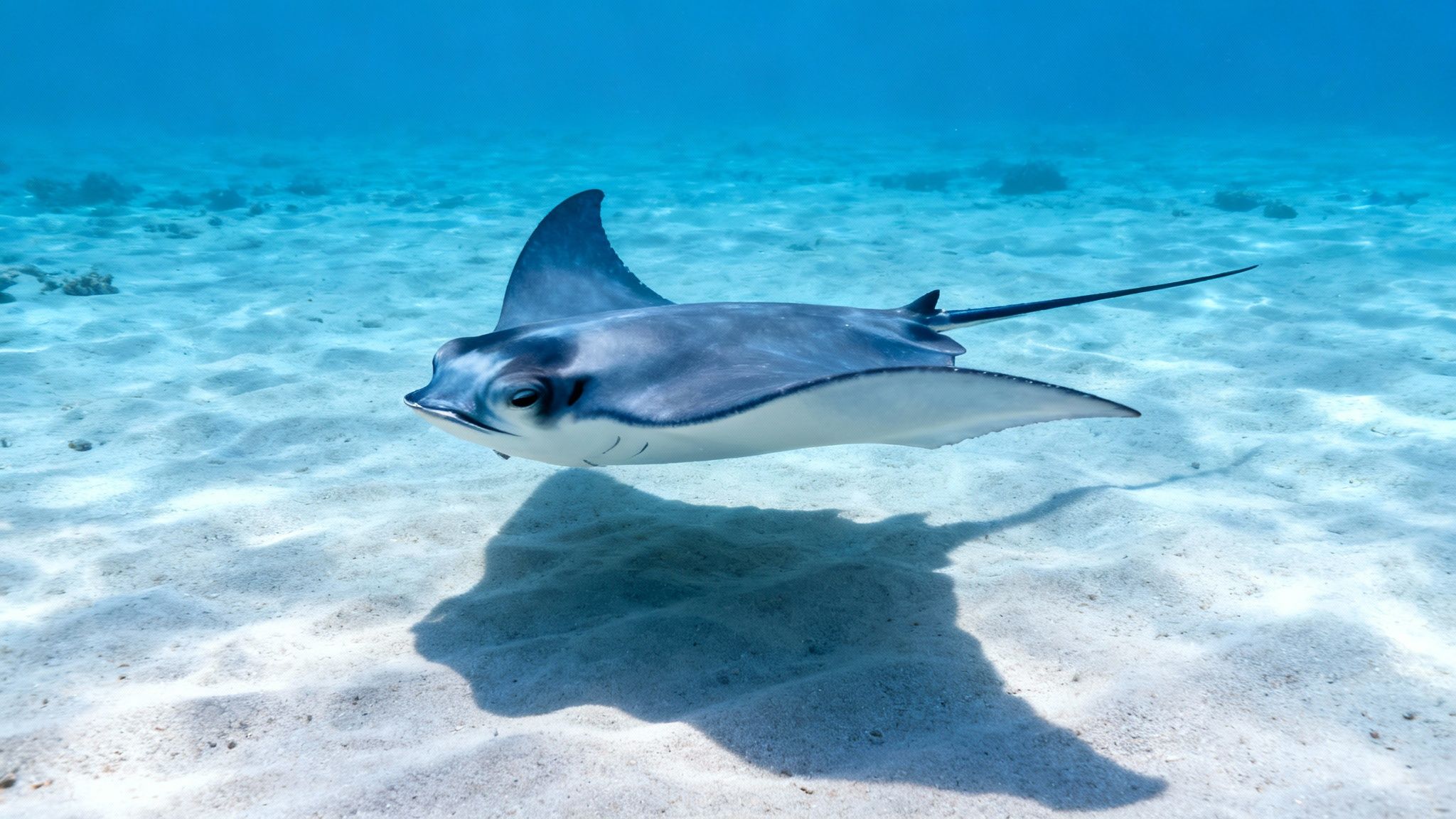
To really get the most out of the manta ray dive Kona experience, it helps to understand a bit about the creatures you're about to meet. They are truly the stars of the show. These are not the fearsome predators some movies make them out to be—far from it. They're incredibly gentle and pose zero threat to people.
One of the most common mix-ups is confusing manta rays with their stingray cousins. Here’s the key difference: mantas have no teeth, no stingers, and no barbs. They are giant filter-feeders, gracefully gliding through the water with their mouths wide open to scoop up microscopic plankton. It's this gentle feeding behavior that makes the encounter so safe and absolutely breathtaking.
The waters off the Kona coast are a prime habitat for the reef manta ray (Mobula alfredi), famous for its impressive size and elegant, wing-like movements. These aren't just one-time visitors; they are long-term residents who return to the same feeding spots night after night. That's what makes the sightings here so incredibly reliable.
Why Your Dive Is Bigger Than Just A Tour
As magical as these encounters are, they come with a heavy dose of responsibility. The manta rays here, including both the reef manta (Mobula alfredi) and the larger oceanic manta (Mobula birostris), are classified as vulnerable to extinction by the International Union for Conservation of Nature (IUCN). Global populations are at risk from threats like overfishing and habitat destruction. You can read more about the challenges they face and the conservation efforts in Hawaii to get the full picture.
Knowing their vulnerable status changes everything. Your dive goes from being just another tourist activity to a meaningful act of conservation. By being here, you're supporting an ecosystem where these animals are valued and protected.
This context is what really matters. Picking the right tour company isn't just about having a great time—it's about safeguarding these animals for years to come. The best operators put the mantas' well-being first, sticking to strict guidelines that make the whole experience sustainable and respectful.
How You Can Help Protect The Mantas
When you book your trip with a reputable guide, you’re doing more than just planning a dive. You're investing in the local economy and directly supporting the protection of these amazing animals. You become part of the solution, showing that sustainable tourism is one of the most powerful tools we have for conservation. The rules are simple but crucial:
- Look, but don't touch: Mantas are covered in a protective mucus layer. Touching them can strip it away, leaving them vulnerable to infections.
- Hold your position: Divers stay on the seafloor, and snorkelers float on the surface. This creates a clear, safe "dining room" for the mantas to swim through.
- Let them come to you: The most incredible moments happen when you stay calm and still, allowing their natural curiosity to bring them close.
Following these simple guidelines ensures the manta ray dive Kona continues to be a safe, ethical, and unforgettable experience for everyone—especially the mantas.
Choosing Your Adventure: Scuba Diving Vs. Snorkeling
Alright, so you’re ready to see the mantas. The big question is: how do you want to do it? The great thing about the Kona manta ray night dive is that it’s incredibly accessible, whether you’re a seasoned scuba diver or have never put on a pair of fins in your life.
You can choose to scuba dive or snorkel, and both give you a front-row seat to the main event. It really comes down to your personal comfort in the water and the kind of view you're after. Honestly, there's no wrong choice here—either way, you're in for an unforgettable night with these gentle giants.
The Scuba Diving Perspective
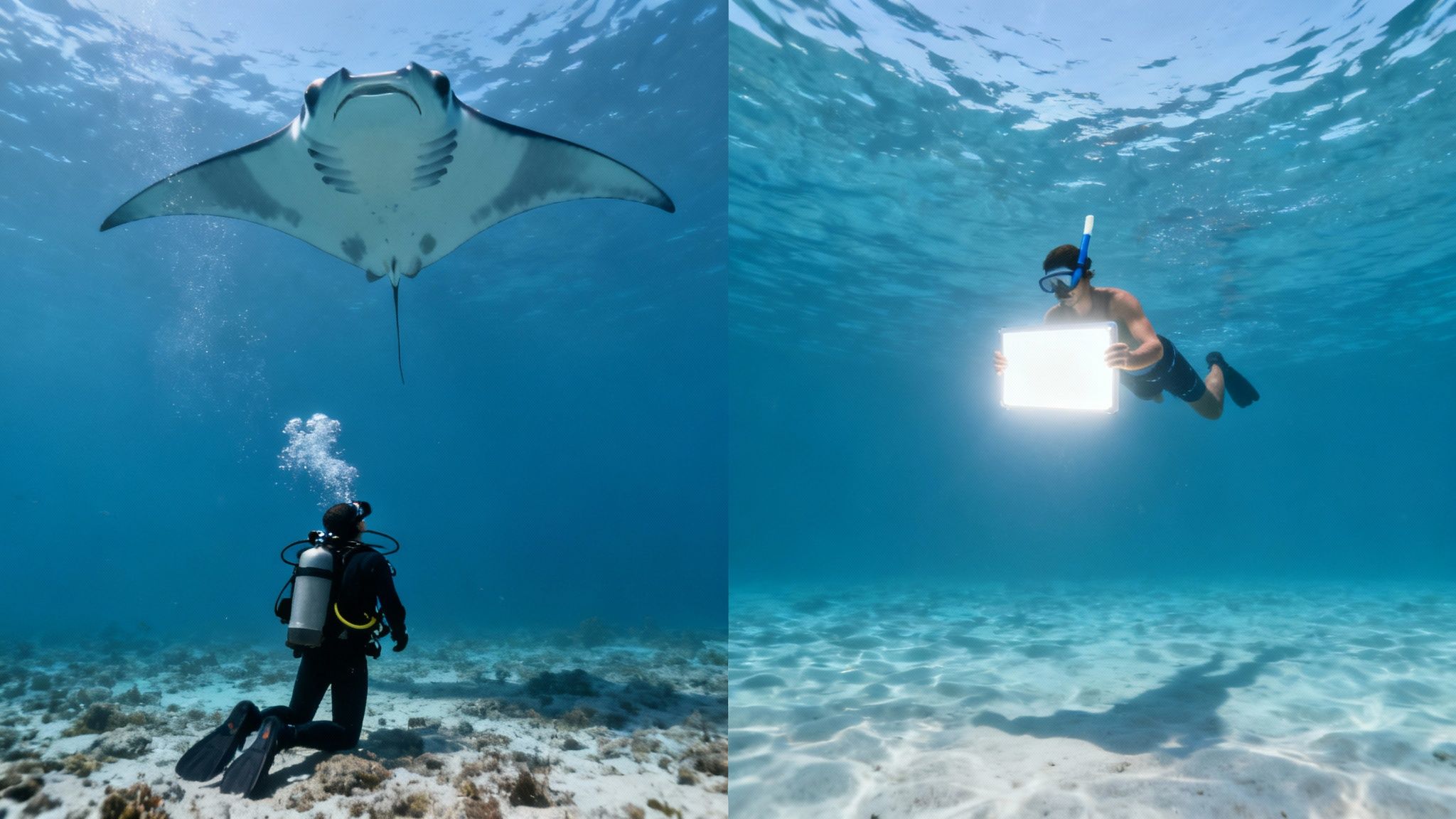
If you're a certified diver, this is the experience you’ve been waiting for. You’ll descend with your guide to a designated spot on the sandy ocean floor, usually somewhere between 25 to 35 feet deep. Once you’re settled, you’ll shine your dive light up toward the surface, creating a column of light that attracts the plankton.
And then, you wait for the show to begin.
The view from the "campfire"—what we call the circle of divers on the bottom—is just jaw-dropping. You'll be looking up as the massive silhouettes of manta rays glide silently overhead, performing graceful barrel rolls just inches above your head. It’s a completely immersive, almost spiritual experience that makes you feel like a guest in their world.
The Snorkeling Experience
Not a certified diver? No problem at all. Snorkeling is an equally incredible way to see the mantas, and you don’t need any prior experience to join in.
As a snorkeler, you'll float on the surface, holding onto a specially designed light board. These boards shine powerful lights down into the water, creating an irresistible plankton buffet. The mantas swim right up from the dark depths to feed, coming within inches of the surface—and you! You get a fantastic bird's-eye view of their acrobatic feeding frenzy, watching them dance in the light just below. It's safe, exhilarating, and perfect for the whole family.
Still trying to figure out which is right for you? We break it down even further in our guide on whether it's better to snorkel or dive with manta rays.
Manta Ray Dive Vs. Snorkel Experience
To make the decision a little easier, here’s a side-by-side look at what to expect from each adventure. Top-tier operators like Kona Honu Divers run trips where divers and snorkelers can be on the same boat, which is perfect for groups with mixed certifications.
| Aspect | Scuba Diving | Snorkeling |
|---|---|---|
| Perspective | A bottom-up view, watching mantas glide and barrel roll directly overhead. | A top-down view, with mantas swooping up to feed just below the surface. |
| Proximity | You're part of the "campfire" on the ocean floor as mantas pass inches away. | Incredibly close encounters as mantas come right up to the light board you're holding. |
| Certification | Open Water certification (or higher) is required. | No certification needed; great for all ages and swimming abilities. |
| Equipment | Full scuba gear, including tanks, BCDs, and regulators. | Mask, snorkel, fins, and a wetsuit. You'll hold onto a floating light board. |
At the end of the day, whether you're looking up from the ocean floor or down from the surface, you're guaranteed a view that will stay with you for a lifetime.
Getting To Know Kona’s Famous Resident Rays
When you sign up for a manta ray dive in Kona, you’re not just going to see some random wildlife. You’re actually being introduced to a whole community of local celebrities, each with their own name, personality, and life story. It completely changes the experience from a simple observation to a personal encounter.
So, how is this even possible? It all comes down to a fantastic, long-running citizen science project. Each manta ray has a completely unique pattern of black spots on its white belly—it's just like a human fingerprint. For decades, local divemasters, researchers, and even divers like you have been snapping photos of these underbellies to identify and keep tabs on the population.
The Manta Ray Identification Project
This grassroots effort to catalog Kona's gentle giants has become the heart and soul of marine conservation here. The whole thing started with the identification of a manta they named 'Lefty,' and it has since blossomed into a massive database. Since 1991, this collaborative project has logged nearly 6,000 encounters and cataloged over 330 distinct individuals.
By tracking these rays, we get incredible insights into their life cycles, social habits, and travel patterns, all of which are crucial for protecting them. You can really dive deep into the history of this project and learn about the pioneering work with Kona's mantas that made it all possible.
This means that when a manta glides over your head, your guide might just tell you, "Hey, that's Big Bertha," or "Look, here comes Kailey Ray!" It adds such a personal and powerful layer to the whole experience.
You're not just seeing a manta ray; you're meeting a specific, recognized individual with a known story. This shift in perspective really deepens your appreciation for these intelligent creatures and hammers home why it's so important to protect their home.
A Few Famous Kona Residents
While you could meet any number of the resident rays, a few have become local legends. They're famous for their massive size, unique markings, or for just being reliable regulars at the nightly "dinner table." Here are a few of the big names you might hear tossed around:
- Lefty: The OG of Kona mantas. Lefty was the very first ray to be identified way back in 1991, kicking off this entire incredible project.
- Big Bertha: She's a crowd favorite, known for her absolutely impressive size and super calm demeanor. You'll know her when you see her!
- Kailey Ray: A frequent visitor to the feeding sites, she's easy to spot thanks to her very distinct spot pattern.
Learning a bit about these individuals before you even get in the water makes the eventual face-to-face encounter that much more special. It's a great reminder that we're just respectful guests in their world, privileged to witness a nightly ritual that has been cherished and protected for decades.
How To Prepare For Your Manta Ray Adventure
A little bit of prep work is what separates a good trip from a truly incredible one. When you know what to expect, what to pack, and how to act in the water, your manta ray dive Kona adventure will be smoother, safer, and more respectful to these amazing animals.
So, when is the best time to go? Here's the great news: Kona's manta rays don't migrate. They're here all year long, so there's no specific "manta season." That said, ocean conditions can change. Winter sometimes brings bigger swells, while summer often has flatter, calmer seas.
A pro tip from years of experience: book your manta tour for one of your first nights in Kona. It gives you a buffer. If bad weather rolls in or the mantas just aren't in the mood that night (it happens!), you have some flexibility to reschedule.
What to Bring and What to Leave Behind
You don’t need to pack a ton for this trip. Reputable tour operators provide all the main gear—wetsuits, masks, fins, snorkels, and lights. But a few personal items can make a world of difference for your comfort.
- Swimsuit: The easiest thing to do is just wear it under your clothes when you show up. You'll be ready to go in no time.
- Towel & Dry Clothes: Nothing feels better than a warm, dry towel and a fresh change of clothes after an evening in the ocean.
- Reef-Safe Sunscreen: If you're on a sunset trip, put your sunscreen on well before you get on the boat. It must be reef-safe. Chemicals like oxybenzone and octinoxate are devastating to our coral reefs. Double-check the label.
- Motion Sickness Meds: The water off Kona is usually calm, but if you're even a little prone to seasickness, take something about an hour before you depart. Better safe than sorry!
Being thoughtful about what you bring—especially your sunscreen—is a huge part of protecting the very ecosystem you've come to see. For a more exhaustive list, check out our guide on the gear you will need for your Kona diving adventure.
Safety and Respect in the Water
Every good tour puts safety first, and you'll get a full safety briefing from your guides before you even touch the water. They'll go over how to use your gear, the plan for the dive, and what to do if you need help. Listen up—it's important stuff.
The golden rule of this encounter is passive observation. You're a guest in their home. Your job is to watch the magic, not to become part of it. This means you must never, ever chase, reach out, or touch a manta ray.
Manta rays have a delicate mucus coating on their skin that acts as their immune system, protecting them from infection. Touching them can rub this layer off, making them incredibly vulnerable to diseases.
The most breathtaking encounters happen when you just stay still. Let the mantas' own curiosity guide them. If you're diving, that means staying low near the sandy bottom. If you're snorkeling, hold on to the light board at the surface. By following these simple guidelines, you help guarantee a magical and safe experience for everyone—especially Kona's gentle giants.
Kona Night Dives Beyond The Manta Rays
The manta ray dive is deservedly famous, but don't think for a second that's where Kona's underwater nightlife ends. For certified divers craving something truly different, an even more surreal adventure is waiting out in the deep: the Kona Blackwater Dive.
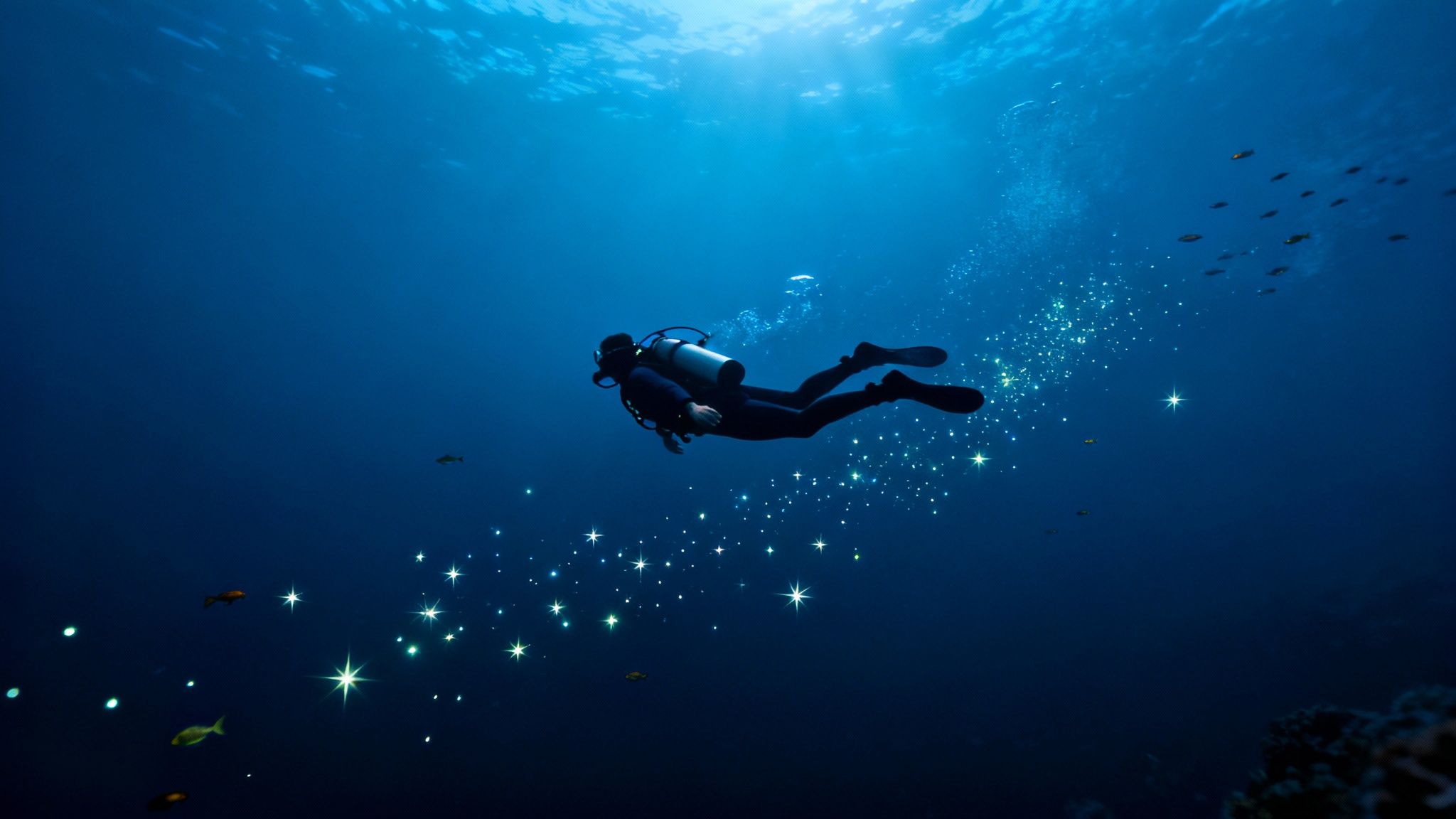
This isn't your typical night dive. Forget the reef "campsite." Instead, imagine drifting in the inky blackness miles from shore, suspended over thousands of feet of open ocean. You’re dropping in on the largest migration on Earth—the nightly vertical migration where strange, wonderful, and often bioluminescent creatures rise from the depths.
Diving Into The Abyss
A blackwater dive is a complete sensory reset. You're not exploring a reef; you're a visitor in the vast pelagic zone, a world that few people ever get to witness firsthand. It’s a humbling, awe-inspiring experience.
The life forms you'll encounter are straight out of a sci-fi film. Get ready for:
- Translucent Squids: Shimmering with mesmerizing, iridescent colors.
- Bioluminescent Jellies: Pulsing with an otherworldly internal glow.
- Larval Fish: Looking like tiny, alien versions of their adult selves.
I've heard this dive described countless times as "diving in outer space," and it’s the perfect analogy. You're surrounded by tiny, glowing life against a backdrop of infinite black. For photographers and divers with a real sense of adventure, it's an absolute game-changer.
This dive is definitely geared toward more experienced divers. The open-ocean setting demands excellent buoyancy control and a calm mindset. If you feel you're ready to take the plunge, you can learn more about this incredible Kona Blackwater Dive tour.
Kona truly has a world-class night diving scene. The manta dive might be the gateway, but it opens the door to even deeper, more mysterious realms waiting to be explored.
Your Manta Ray Dive Questions, Answered
Got questions about the manta ray dive in Kona? You’re not alone. Here are the answers to some of the most common things people ask before they go. Getting these details sorted out first means you can relax and just soak in the magic of the dive.
Are Manta Ray Sightings Guaranteed?
This is the big one, right? While we're dealing with wild animals and nothing in nature is ever 100% guaranteed, the success rate for this particular dive is off the charts. We're talking a better than 90% chance of seeing mantas on any given night.
These specific dive sites aren't random spots; they're established feeding grounds the mantas have been returning to for decades. The best operators, like Kona Honu Divers, have this down to a science, knowing exactly where to go to give you the best shot at a truly mind-blowing encounter.
What's The Water Like? And What Should I Wear?
The water in Kona stays wonderfully warm all year, usually hovering between 75°F and 80°F (that’s 24°C to 27°C). Your tour operator will provide a wetsuit, typically a 3mm or 5mm one, and you should definitely wear it.
Even if you don't usually get chilly, you'll be floating or kneeling in one spot for a while at night. That wetsuit is the key to staying comfortable for the whole dive so you don't have to cut the adventure short.
Is It Okay To Touch The Manta Rays?
The answer is a simple and firm no. You must never touch the manta rays. It's not just a rule; it's for their safety. Manta rays have a special mucus coating on their skin which is basically their immune system.
Touching them can rub off this protective layer, leaving them wide open to harmful infections.
The golden rule here is to be a passive observer. Your presence is enough. By just watching in awe, you're doing your part to protect these gentle giants and keep this incredible experience possible for years to come.
Do I Have To Be A Certified Diver?
Not at all! You absolutely do not need to be a certified diver to witness this spectacle. The snorkeling experience is just as incredible, offering a stunning bird's-eye view of the action.
Snorkelers hang onto a specially designed float board equipped with bright lights. These lights attract the plankton, and the mantas glide right up to the surface to feed, often just inches below you. It makes the manta ray dive Kona adventure accessible to almost everyone, regardless of their experience in the water.