
Picture this: you’re sinking into the warm, dark Pacific Ocean, and suddenly, massive yet gentle giants begin an acrobatic ballet just inches above your head. This isn't a scene from a nature documentary—it's the world-famous manta ray dive in Kona, and it's one of the most breathtaking wildlife encounters you can possibly have.
This guide will walk you through everything you need to know to experience this magic for yourself.
Why the Kona Manta Ray Dive is a Global Phenomenon
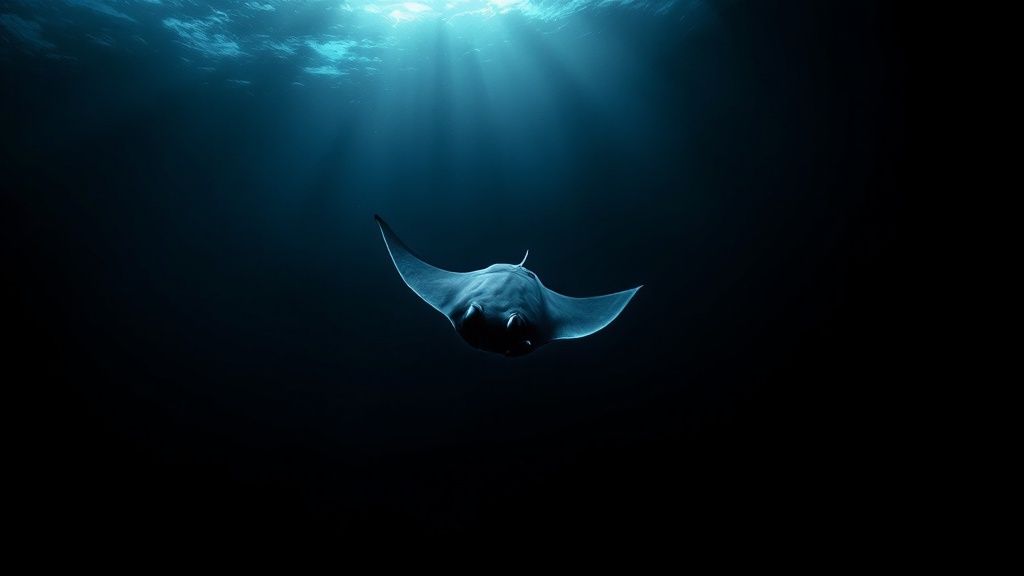
The Kona coast on Hawaii’s Big Island isn't just another pretty dive spot; it's the undisputed world capital for getting up close with manta rays. Sure, you might get lucky and spot a manta in other tropical waters, but what Kona offers is a uniquely reliable and jaw-dropping spectacle that pulls in divers and snorkelers from all over the world.
And this isn't just by chance. The local ecosystem, carved out by volcanic coastlines and fed by nutrient-rich currents, is the perfect habitat. These conditions support a massive population of microscopic plankton, which happens to be the manta rays' favorite meal. Over decades, these intelligent creatures learned that light means dinner, creating a predictable feeding ritual we can witness today.
For a quick overview of what to expect, take a look at the table below.
Kona Manta Ray Dive At a Glance
This table provides a quick summary of the key aspects of the Kona manta ray night dive experience for easy reference.
| Aspect | Details |
|---|---|
| Location | Kona Coast, Big Island, Hawaii |
| Success Rate | 80-90% chance of sightings year-round |
| Best Time to Go | All year, with consistent nightly activity |
| Manta Size | Wingspans can reach up to 16 feet |
| Water Depth | Typically 30-40 feet, suitable for all skill levels |
| What You'll See | Manta rays performing barrel rolls to feed on plankton |
| Activity | Both scuba diving and snorkeling options are available |
It's a one-of-a-kind experience, and these numbers only hint at the incredible reality of the dive.
A Reliable Natural Wonder
Unlike so many wildlife encounters that hinge on the right season or a lucky migration pattern, the Kona manta ray experience is a year-round show. Dive operators have set up designated viewing areas with powerful lights placed on the ocean floor. Think of it as a "campfire" for plankton. The light attracts swarms of them, which in turn draws in the mantas for a feeding frenzy.
This brilliantly simple, symbiotic setup results in unbelievably high success rates. Kona is famous worldwide for its consistency, boasting an incredible 80-90% success rate for seeing mantas on any given night. This isn't just marketing hype; it's backed by years of sighting data that confirms Kona’s unique status. You can learn more about the best times for manta sightings and the data behind it.
An Unforgettable Underwater Ballet
What truly makes the manta ray dive in Kona so special is the encounter itself. As a diver, you'll settle onto the sandy bottom, look up, and just watch. These majestic animals, with wingspans stretching up to 16 feet, will glide, swoop, and somersault right over you. It's a silent, graceful ballet performed under the stars.
It’s impossible to describe the feeling of watching a massive fish the shape of a stealth bomber coming into vision. It’s akin to watching your child ride a bike for the first time or finding a winning lottery ticket.
The experience is both a massive thrill and profoundly peaceful. The mantas are true gentle giants, completely absorbed in their plankton feast, making this a safe and mesmerizing adventure for divers of all skill levels. If you’re planning a trip, booking a dedicated manta ray dive tour is hands-down the best way to get a front-row seat to one of nature's greatest shows.
Choosing Your Manta Ray Adventure
Okay, so you're ready to plan your manta ray dive in Kona. The first big decision you need to make is how you want to see them. This isn't a one-size-fits-all experience; the Big Island has options for everyone, from hardcore divers to families who have never even worn a snorkel mask.
No matter which you choose, you're getting a front-row seat to one of nature's most incredible shows. It really boils down to two main ways to join the party: scuba diving or snorkeling. Each gives you a completely different, but equally breathtaking, perspective on the action.
Scuba Diving vs. Snorkeling
If you're a certified diver, this is the way to go. You'll gear up and descend to a nice sandy spot on the ocean floor, usually about 30-40 feet down. From there, you just settle in and look up. The mantas glide, swoop, and do these incredible barrel rolls just inches over your head. It’s quiet, peaceful, and feels like you’ve been invited into their world.
Now, if you're not a diver or you've got kids with you, snorkeling is a fantastic option. You’ll hang onto a specially designed light board that floats on the surface. This board shines a bright light down into the water, which attracts the plankton. And where the plankton goes, the mantas follow! They come right up to the surface to feed, giving you a perfect bird's-eye view of the underwater ballet.
The biggest difference between the night dive and the night snorkel is your (vertical) location. If you go on a diving tour you will be sitting on the ocean floor…If you go on a snorkeling tour you will stay near the water surface.
Honestly, you can't go wrong with either. The decision really just comes down to your comfort level in the water and whether you want to watch the show from below or above.
Kona's Premier Manta Ray Dive Sites
Once you’ve decided how you want to see the mantas, the next question is where. Kona has two world-famous, super-reliable sites for this. Most of the time, the dive operator will pick the best spot based on that day's ocean conditions, but it's good to know the difference.
-
Manta Village (Keauhou Bay): This is the original, the classic, the OG manta spot just south of Kailua-Kona. It’s tucked into a protected bay with a nice, shallow sandy bottom. This makes it perfect for literally everyone, including people doing their very first night dive. The water is almost always calm, and your chances of seeing mantas are incredibly high.
-
Manta Heaven (Garden Eel Cove): This spot is a little further north, up by the Kona airport. It tends to be a bit deeper and can sometimes have a bit more current, which is why it often appeals to more experienced divers. Don't get me wrong, it's still an amazing site, but it can present more of a challenge. It's also famous for attracting huge groups of mantas.
If you're curious to learn more, you can read up on the differences between these iconic Kona dive sites to see which sounds like a better fit.
Selecting a Top-Rated Operator
This is probably the most important decision you'll make. A great tour operator doesn’t just keep you safe—they also make sure the mantas are respected and protected. It’s the difference between a good trip and an unforgettable one.
We always point people toward a top-rated operator like Kona Honu Divers. They have a fantastic reputation for their experienced crew, unwavering commitment to safety, and genuine love for the marine life they work with.
When you go with a quality guide, you get a solid briefing, excellent gear, and someone in the water with you who knows what they're doing. That lets you just relax and soak in the absolute magic of the experience.
What to Expect During Your Night Dive
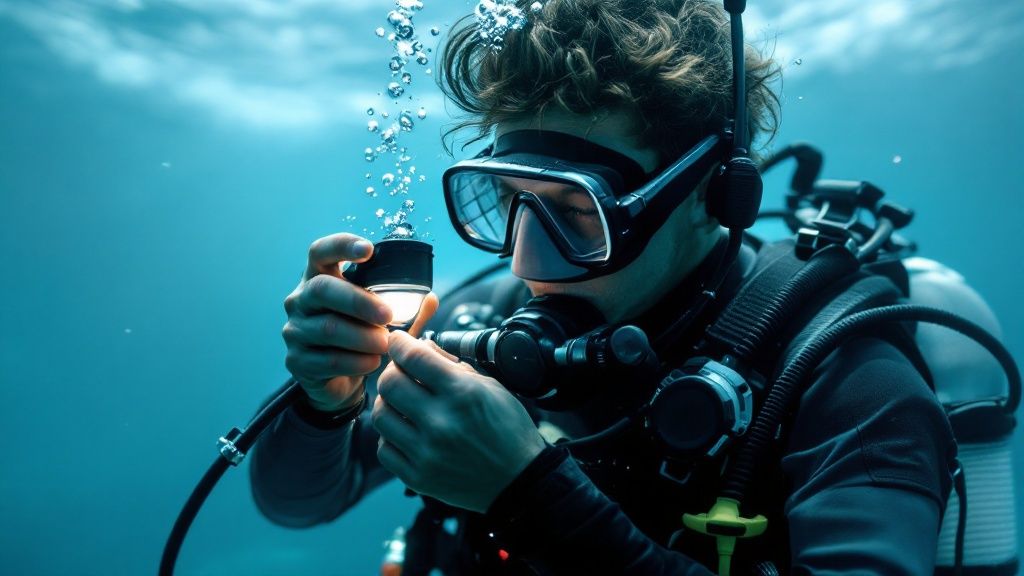
The Kona manta ray dive is a beautifully orchestrated show, and knowing the sequence of events helps you relax and just soak it all in. The entire evening is meticulously planned for your safety, comfort, and, of course, giving you the best possible view of the mantas.
Your adventure kicks off in the late afternoon. You'll check in at the dive shop, sort out the paperwork, get fitted for any rental gear you need, and meet your crew and fellow divers. Before you know it, you're on the boat, and the excitement really starts to bubble up as you cruise out onto the open water.
Sunset Cruise and Site Briefing
Honestly, one of the most underrated parts of the whole experience is the boat ride out to the dive site. As you motor along the stunning Kona coast, you're treated to a world-class Hawaiian sunset. The sky just explodes with fiery oranges, pinks, and purples. It's the perfect, peaceful prelude to an absolutely exhilarating night.
During the ride, your dive guide will give a thorough briefing. This is a crucial part of the trip that covers everything you need to know to have a safe and amazing dive.
- Safety Procedures: The crew will go over boat safety, how you’ll get in and out of the water, and what to do in the unlikely event of an emergency.
- The Dive Plan: You’ll get the rundown on the dive site's layout, how deep you'll be going (usually a comfortable 30-40 feet), and how long you can expect to be underwater.
- Manta Etiquette: This is the big one. Your guide will explain the golden rule of passive observation—how to position yourself on the seafloor and why it’s absolutely critical to never, ever touch the mantas.
This briefing gets everyone on the same page, making sure you feel confident and ready for what’s to come.
The Underwater Campfire
Once the boat is securely anchored, the crew gets to work setting up the "campfire." It's not a real fire, obviously. It's a clever setup of powerful, stationary lights placed on the ocean floor, right in the middle of the dive area. These lights are the secret sauce to the whole experience.
The intense beams attract clouds of microscopic plankton, which is what manta rays eat for dinner. It’s like ringing a dinner bell for every manta in the vicinity. This brilliantly simple setup is what makes the Kona manta dive so incredibly reliable.
With the campfire glowing below, it’s time to gear up. You’ll do your final checks, and just as twilight fades completely to black, you’ll take that giant stride into the warm Pacific.
The Main Event: A Silent Ballet
Descending into the dark water is a feeling like no other. You’ll follow your guide down to the sandy bottom, find your spot around the edge of the circle of light, and settle in. Then, all you have to do is get comfortable, point your dive light up to add to the plankton buffet, and wait.
You can feel the anticipation in the water. It’s dark, it’s quiet… and then it happens. A massive, shadowy figure glides gracefully into the light. The first manta has arrived.
Soon, another follows, and then another. For the next hour, you have a front-row seat to an incredible, silent ballet. These gentle giants swoop, glide, and perform barrel rolls just inches over your head. It’s a profoundly moving experience—an unforgettable wildlife encounter that truly captures the magic of the Kona manta ray dive.
How to Dive with Mantas Responsibly
Jumping into the water for the manta ray dive Kona isn't just another checklist item for your logbook; it's a genuine privilege. We're visitors in their world, and how we act has a direct impact on the health and future of Kona's resident manta population. It really is a team effort.
The entire philosophy behind a responsible encounter boils down to one simple idea: passive observation. You're there to watch the ballet, not join the dance. The golden rule is to never, ever touch, chase, or get in a manta's way. Just picture yourself as a stationary piece of the reef—you’re part of the scenery, letting these incredible animals go about their business completely undisturbed.
There's a critical biological reason for this strict "no-touch" policy. Manta rays have a special mucus layer, a kind of slime coat, covering their skin. This coating is their first line of defense against nasty bacteria and parasites in the ocean.
The Importance of Passive Observation
When a person touches a manta, that essential protective layer gets rubbed off, leaving the animal exposed to all sorts of potential infections. It's like taking down their immune system's shield. By staying put on the sandy bottom and just watching, you’re actively protecting the mantas and helping preserve this encounter for future divers.
To make sure everyone is on the same page, the local dive community has worked together to establish clear, common-sense guidelines. These rules create a safe, predictable environment where the mantas feel comfortable coming in to feed, free from any perceived threats.
Here are the key things to remember for a responsible manta ray dive in Kona:
- Stay on the Bottom: As a diver, your spot is on or just above the sand. This leaves the entire water column open for the mantas to swoop and glide without having to navigate around you.
- Lights Point Up: Your dive light is the magnet for plankton. Keep it aimed straight up toward the surface to create that "campfire" effect that draws the mantas in.
- Mind Your Bubbles: Try not to exhale directly into a manta's face as it glides over you. A slight tilt of your head is all it takes to send your bubbles off to the side.
- No Free Swimming: Once you've found your spot, stay there. Swimming around the site can be disruptive and easily spook the mantas, ruining the experience for everyone.
Manta Ray Research and Conservation
These aren't just arbitrary rules we made up; they're the result of decades of careful scientific study. Researchers have been tracking the Big Island's manta population since the early 1990s, and the catalog now identifies over 330 individual manta rays! This incredible database, built from thousands of sightings, proves just how important Kona is for marine biology and manta conservation. You can learn more about this vital research and the Kona manta ray catalog.
By following these simple guidelines, you become a direct contributor to the conservation of these gentle giants. Your respect and consideration ensure the Kona manta ray dive remains the sustainable, ethical, and jaw-dropping experience it's meant to be. For a more detailed look, check out our guide on responsible and considerate diver etiquette.
Preparing for Your Manta Ray Dive
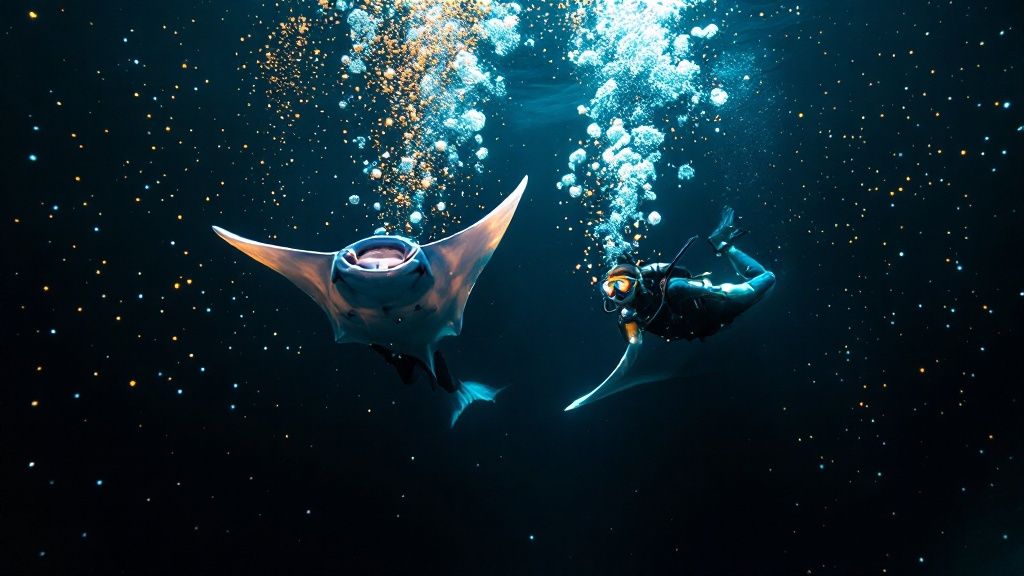
A little prep work can be the difference between a good dive and an unforgettable one. Knowing what to bring and how to capture the moment lets you relax and truly soak in the magic of the manta ray dive Kona experience.
First things first: the absolute must-haves. Don't leave your scuba certification card or your logbook behind. Every reputable operator needs to see proof of certification before you can even think about getting wet. Also, toss a towel and a warm jacket or sweatshirt in your bag. It gets surprisingly chilly on the boat ride back, even in Hawaii, after a night in the water.
Gearing Up for Comfort
While your dive shop will handle the big stuff like tanks and weights, your personal gear is what really dictates your comfort level. The water temperature around Kona is usually quite pleasant, but you’ll be staying more or less in one spot on the ocean floor for the better part of an hour. You'll cool down much faster than you would on a regular dive where you're constantly swimming.
Because of this, a full wetsuit is a really good idea.
- A 3mm full wetsuit is generally perfect for most of the year when the water is at its warmest.
- A 5mm full wetsuit is your best bet during the cooler winter months, or if you're someone who just gets cold easily.
That extra layer of neoprene will keep you focused on the majestic mantas, not on trying to stop your teeth from chattering. For a more complete checklist, check out our guide on the gear you will need for your Kona diving adventure.
Capturing the Underwater Ballet
Getting great photos of the manta ray night dive is a fun challenge. The combination of low light and the constant, graceful motion of the mantas calls for a specific game plan.
The real secret is to let the mantas come to you. Settle into your spot, get your camera settings right, and just be patient. The best shots always happen when you become part of the background and a manta glides right into your frame.
Traditional camera strobes can be disruptive to the mantas, which is why many experienced underwater photographers opt for continuous video lights. These provide a constant, steady beam of light that doesn't flash, creating a much more natural environment for the animals and giving you the flexibility to shoot both photos and video.
Here are a few technical pointers to get you started:
- Use a Wide-Angle Lens: A wide lens lets you get incredibly close while still capturing a manta's full, massive wingspan.
- Adjust Your ISO: Don't be shy about bumping up your ISO to help the sensor gather more light. Just keep an eye on it to avoid making your images too grainy.
- Shutter Speed: Try a slightly slower shutter speed to soak up some of that beautiful ambient light from the dive site, but keep it fast enough to avoid motion blur.
Beyond the Mantas
The manta ray dive Kona is an absolute bucket-list experience, but it’s just one of the incredible night dives the Big Island has to offer. If you’re looking for another adventure that feels like visiting another planet, the Kona blackwater dive is it. You'll drift tethered in the deep, open ocean at night, watching as strange and wonderful creatures rise from the abyss under the cover of darkness. It's an experience that will completely redefine your understanding of what lives in the ocean.
When Is the Best Time to Go?
It’s the first question on everyone’s mind: "What time of year gives me the best shot at seeing the mantas?" I've heard this countless times, and the answer always brings a smile to people's faces.
The simple, fantastic truth is that Kona's manta ray dive is a spectacular year-round activity.
Unlike so many other wildlife encounters that hinge on migratory patterns or specific seasons, our local manta population sticks around. They’ve learned that the "dinner bell" rings every single night at the established feeding sites along the coast. This gives us an astonishingly high success rate of around 90% all year long. It’s genuinely one of the most reliable big animal encounters in the world.
Seasonal Considerations
Now, while the mantas are always here, the ocean conditions do change a bit with the seasons. This doesn't really affect whether the mantas show up, but it can make a difference in your personal comfort.
From about June through September, we get our warmest water and flattest seas. If you're someone who gets chilly easily or if it's your first time doing a night dive, summer often provides the most comfortable and serene experience.
Winter, on the other hand, can bring slightly cooler water and the possibility of larger swells. We’re experts at handling these conditions safely, but it’s something to be aware of when planning. For a deeper dive into this, check out our complete guide on when to dive with manta rays in Kona.
Does the Moon Phase Matter?
This is another great question we get all the time. The logic seems sound: a darker night during a new moon should make our dive lights more attractive to plankton, right? And more plankton should mean more mantas.
While plankton levels can fluctuate with currents or moon phases, the established feeding sites are so reliable that it rarely impacts the overall experience. The mantas know where dinner is served every night.
In practice, we've found the moon's phase has a minimal effect. The lights we use are incredibly powerful, and the mantas have been conditioned for years to show up at these specific spots. They know the routine, moon or no moon.
Ultimately, the best time for your manta ray dive in Kona is whenever you can make it here. The show goes on every single night.
Frequently Asked Questions
You’ve got questions, and we’ve got answers. Over the years, we've heard just about everything when it comes to the manta ray dive Kona experience. Here are a few of the most common ones that pop up, so you can feel completely ready for your underwater adventure.
Is the Kona Manta Ray Dive Safe for Beginners?
Absolutely. This is probably the number one question we get, and the answer is a resounding yes. The main dive sites, particularly Manta Village in Keauhou Bay, are almost tailor-made for new divers.
The dive is quite shallow, typically between 25-35 feet, and the bottom is a calm, sandy expanse well-protected from any serious currents. It's a very controlled environment.
Great operators like Kona Honu Divers run these trips all the time and are pros at guiding divers of all skill levels. They'll give you a thorough briefing before you even hit the water and stick close by to make sure you feel safe and comfortable the whole time.
Am I Guaranteed to See Manta Rays?
Look, these are wild animals, so a 100% guarantee is never on the table. But let me put it this way: Kona offers one of the highest chances of seeing mantas anywhere on the planet. The success rate consistently sits around 90%, which is just incredible.
The mantas have learned that the lights from the boats attract their favorite food—plankton. They show up for dinner almost every single night. In fact, many tour operators are so confident that they offer a "manta guarantee." If you don't see one, they'll often let you come back another night on standby.
This amazing reliability is what makes the manta ray dive Kona a true, can't-miss, bucket-list experience.
What Should I Bring on the Dive Boat?
A few simple things will make your trip a lot more comfortable. First and foremost, don't forget your scuba certification card!
Beyond that, pack a towel and something warm for the ride back to shore—a sweatshirt or a light jacket is perfect. It can get chilly once you're out of the water. If you're prone to seasickness, it’s a smart move to take medication before you leave the dock. Most boats provide water and snacks, but feel free to bring your own. And, of course, your underwater camera is a must!
Can I Touch the Manta Rays?
This is a hard no. The single most important rule is to never, ever touch the manta rays.
Here’s why: mantas have a special mucus coating on their skin that acts as their immune system, protecting them from harmful bacteria. When you touch them, you can rub off this protective slime, leaving them vulnerable to nasty infections.
The best thing you can do is just be still, stay on the bottom, and let these magnificent creatures put on a show as they glide right over your head. It’s the most respectful way to witness the magic, and honestly, it’s a much more profound experience.
Ready for an adventure you’ll be talking about for years? Book your trip with Kona Honu Divers and grab a front-row seat to one of the greatest shows on Earth. Check out our manta ray dive tours and secure your spot today!