
Picture this: you're floating in the dark, silent waters of the Pacific. Suddenly, a colossal, gentle giant with a wingspan wider than a car swoops down, performing an elegant barrel roll just inches above your head. This isn't a dream—it's the world-famous manta ray dive in Kona, an experience so profound it's considered one of the best night dives on the entire planet.
Why Kona’s Manta Ray Dive Is a Global Phenomenon
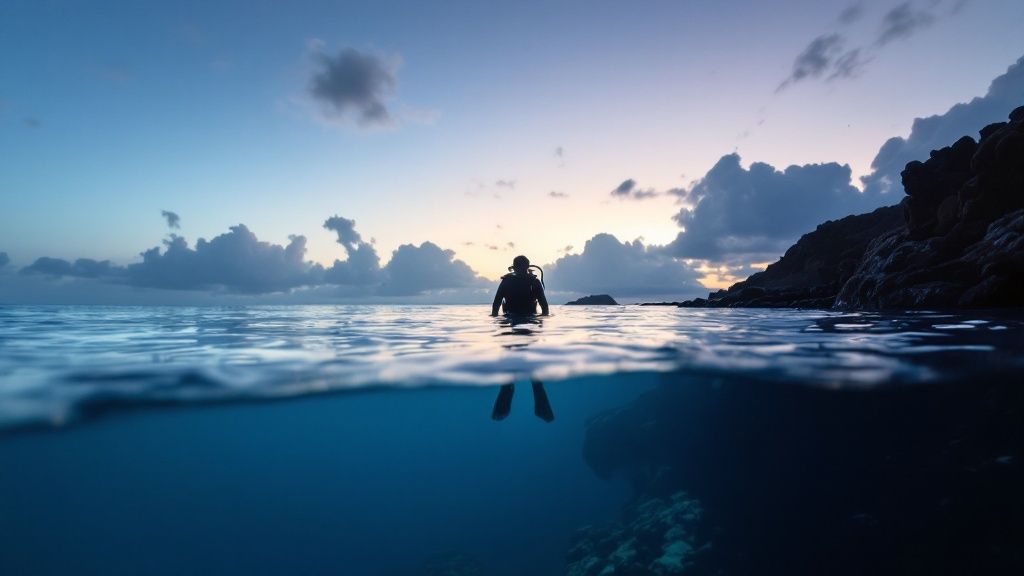
So, what makes this dive different from any other amazing ocean encounter? It all comes down to a perfect, predictable natural recipe that you just can't find anywhere else with such incredible consistency. For decades, this specific spot off the Big Island has become a nightly gathering place for hundreds of resident reef manta rays.
The magic is beautifully simple: light attracts plankton, and plankton is a manta's favorite food.
Dive operators have this down to a science. They anchor in designated locations and shine massive lights into the water. This creates a concentrated, all-you-can-eat buffet for the mantas. It's like turning on a porch light on a warm summer night and watching the moths gather—except here, the moths are microscopic plankton, and they attract something far more spectacular.
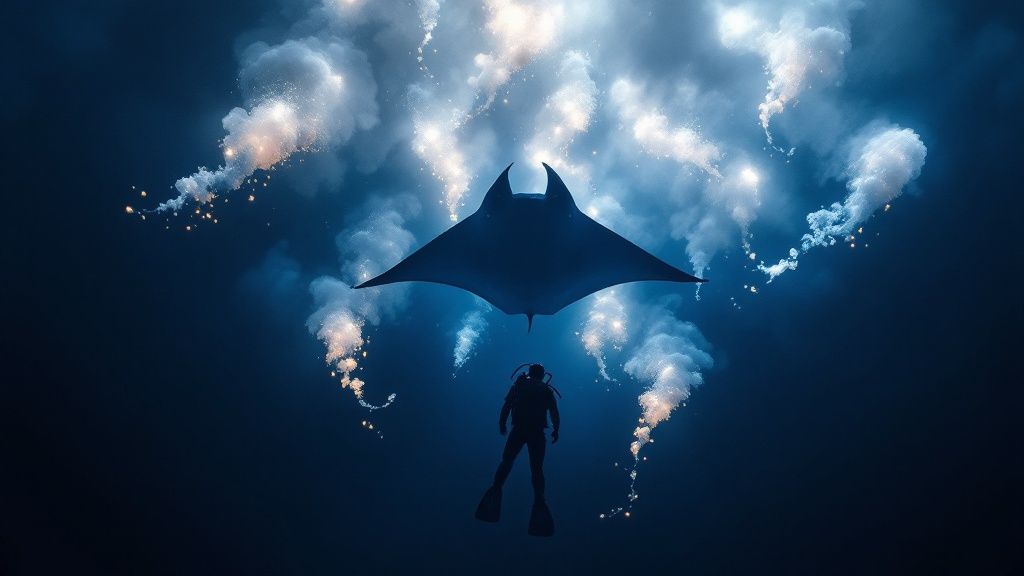
This nightly feast sets the stage for a breathtaking underwater ballet. As a diver, you'll kneel on the sandy ocean floor, pointing your dive light straight up. Snorkelers do the same from the surface, holding onto purpose-built light boards that shine down. Caught in the middle, the mantas perform a hypnotic dance, gliding, swooping, and somersaulting through the beams of light to scoop up their dinner.
The Science Behind the Spectacle
This isn't just a happy accident; it's a learned behavior that's been passed down through generations of Kona's mantas. The whole thing started decades ago when a nearby hotel first pointed lights into the ocean, unknowingly creating the original feeding station. The rays quickly figured out that light equals food, and one of the world's most legendary dive experiences was born.
What makes Kona truly special is the reliability. You can see mantas in other places, of course, but it's often seasonal or a matter of luck. Here, the odds of an unforgettable encounter are sky-high, year-round.
This incredible consistency has turned the Kona Coast into the world's premier destination for manta ray tourism, drawing an estimated 80,000 people every year. While the show is great all year, the best time to go is often between April and October. During these months, the water is warm, and it’s common to see 8–12 mantas per night dive—a concentration you just won’t find anywhere else. You can always learn more about this amazing nightly event and what to expect on your trip.
Before we dive deeper, here's a quick look at the key details for planning your trip.
Manta Ray Dive Kona At a Glance
| Aspect | Details |
|---|---|
| Location | Kona Coast, Big Island, Hawaii |
| Best Time to Go | April to October (Good year-round) |
| Average Sightings | 8–12 mantas per night dive |
| Annual Visitors | Approximately 80,000 |
| Activity | Scuba diving or snorkeling at night |
| Key Attraction | Manta rays feeding on plankton attracted by lights |
This table gives you the basics, but the experience itself is anything but basic.
More Than Just a Dive
This encounter fosters a connection that's hard to describe. You aren't just a spectator watching wildlife from a distance; for a short while, you become a part of their world. Being so close to these intelligent, graceful creatures can truly change your perspective, leaving you with a profound respect for our oceans and the importance of conservation.
If you’re ready to see this incredible underwater spectacle for yourself, Kona Honu Divers offers premier manta ray dive tours led by seasoned professionals who are passionate about safety and protecting the marine environment.
Getting to Know Kona’s Gentle Giants
Before you even think about getting in the water, let’s talk about who you’re going to meet. The stars of the show are the resident reef manta rays (Mobula alfredi), and trust me, they are nothing like the sea monsters you might see in movies. These are the truly gentle, surprisingly intelligent giants of the ocean.
Think of them as underwater acrobats, "flying" through the sea with enormous, graceful wings. They don't hunt or chase prey. Instead, they’re filter feeders, gliding along with their huge mouths open to scoop up microscopic plankton from the water. This also means we humans are definitely not on the menu.
Knowing this helps clear up some common myths. Getting the facts straight is the first step toward appreciating just how special this experience is.
Debunking Manta Myths
A lot of people hear "ray" and immediately picture a stingray. It’s a common mix-up, but they are worlds apart. Understanding the difference is key to feeling completely at ease during your manta ray dive Kona adventure.
Here’s what you need to know about mantas:
- No Stinger: This is the big one. Manta rays have no stinger or barb on their tails. Period. They have absolutely no way to sting you.
- No Real Teeth: Mantas don’t have teeth for biting or chewing. They have tiny, non-functional tooth plates used during mating, but they are completely useless for defense.
- Gentle Nature: These animals are famous for being incredibly docile and curious. Their size is awe-inspiring, but their personality is completely peaceful.
The entire encounter is designed to be passive. You just get to float there and watch their incredible ballet, totally safe and without fear.
Fingerprints of the Sea
Here’s where the experience gets really personal. Every single manta ray in Kona is a unique individual, and we can actually tell them apart just by looking at them. How? It's all in the spots. Each manta has a one-of-a-kind pattern of black spots on its white belly.
Think of it like a human fingerprint—no two patterns are exactly alike. This natural ID allows researchers and local dive guides to recognize, name, and track individual mantas over their lifetimes.
This simple fact transforms your dive. You're not just seeing a manta ray; you might be meeting local celebrities like "Big Bertha," "Lefty," or "Koie." The guides know these animals by name and will often share stories about their personalities and histories. It creates a connection that is profound and deeply moving.
These are some of the smartest fish in the sea, with wingspans that can stretch to an impressive 14 feet for the reef mantas here in Kona. While they pose no threat, their size is why following your guide’s instructions is so important—it’s all about keeping both you and the mantas safe from accidental bumps.
As filter feeders, they’re also a vital part of the marine ecosystem. If you’re curious, you can discover why they're a Kona treasure and learn even more about their role in the ocean.
Once you understand a little about their biology and how they’re identified, you stop seeing them as just animals. You see them as individuals. That knowledge is what makes the manta ray dive Kona experience truly unforgettable. Ready to meet them?
Choosing Your Manta Adventure: Scuba vs. Snorkel
So, how do you want to see the underwater ballet? One of the best things about the Kona manta ray experience is that it’s open to just about everyone. You have two main ways to get a front-row seat: as a scuba diver on the ocean floor, or as a snorkeler floating on the surface.
Both options offer a spectacular view, just from different angles. It really comes down to your comfort in the water, whether you have a scuba certification, and what kind of perspective you’re looking for.
Honestly, there’s no wrong choice—just the one that’s perfect for you. Let’s break down both experiences so you can decide which adventure is calling your name.
The Scuba Diving Experience: An Underwater Campfire
For certified scuba divers, this is the classic, fully immersive way to meet the mantas. You'll descend to about 30-40 feet and settle onto a sandy spot on the ocean floor. Here, you and the other divers create what we all lovingly call the "underwater campfire."
You’ll kneel in a semi-circle and point your dive lights straight up. These powerful beams cut through the darkness, attracting swarms of plankton and turning the water into an irresistible buffet for the mantas.
They swoop in and perform incredible barrel rolls right over your head, sometimes just inches away. It’s an absolutely breathtaking perspective. You’re right there in their world, watching these gentle giants perform against the dark canvas of the night sea. It's a truly humbling experience.
- Pros: You get an unobstructed, upward view as the mantas glide directly overhead. It’s a completely immersive feeling, and the proximity is incredible.
- Cons: You must have a scuba certification. You're also stationary on the bottom for most of the dive.
The Snorkeling Experience: A Floating Light Show
No scuba certification? No problem at all. The snorkeling experience is just as magical and is perfect for families, non-divers, and anyone who prefers staying near the surface.
As a snorkeler, you'll hold onto a custom-built, floating light board. These boards cast powerful beams down into the water, creating that same plankton buffet that the mantas can’t resist. You just float comfortably at the surface, looking down into the action.
The mantas soar up from the depths, drawn to the light, often coming within inches of the board. It’s like having a private window into their world. You get a fantastic bird's-eye view of the entire scene—the divers below, the vast ocean, and the mantas dancing through it all. For many, it's a more relaxed way to enjoy the show.
- Pros: Absolutely no certification is required, making it accessible for almost all ages and swimming abilities. You get a great top-down view of the whole spectacle.
- Cons: You’re observing from the surface, so you’re not as immersed in the underwater environment as the divers are.
Whether you choose to dive down or float on top, our expert team is here to guide you through one of the most memorable nights of your life. A seat for the snorkel manta ray tour or the dive boat guarantees an unforgettable encounter.
Scuba Diving vs. Snorkeling for the Manta Ray Experience
Still on the fence? This side-by-side comparison should help you pinpoint the perfect manta adventure for your trip.
| Feature | Scuba Diving | Snorkeling |
|---|---|---|
| Certification | Open Water Certification required | No certification needed |
| Perspective | Bottom-up view, looking toward the surface | Top-down view, looking into the depths |
| Experience | Immersive, eye-level encounter | Floating observation from the surface |
| Best For | Certified divers seeking an intimate view | Families, non-divers, all swimming levels |
| Proximity | Mantas glide inches overhead | Mantas soar up close to the light board |
Ultimately, both experiences put you right in the middle of the action. Your choice simply determines your vantage point for the greatest show in the ocean.
Exploring Kona’s Premier Manta Ray Dive Sites
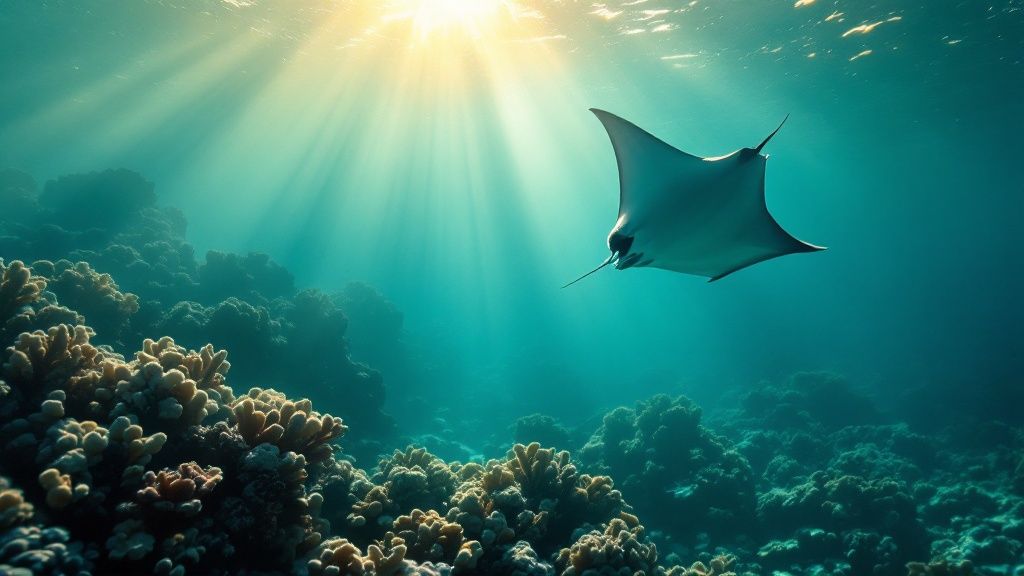
When you're planning a manta ray dive in Kona, you quickly learn that the location is almost as important as the mantas themselves. The "where" really matters. Think of it like a concert—the band is the main attraction, but the venue sets the entire mood.
In Kona, the nightly manta show happens at one of two world-class "stages." The two primary spots are lovingly called "Manta Village" and "Manta Heaven." While you'll see the same incredible creatures at both, they each have a unique vibe. Tour operators don't just flip a coin; they make a careful decision each day to give you the absolute best experience.
Manta Village: The Reliable Classic
Just off Kaukalaelae Point near the Sheraton Kona Resort in Keauhou Bay, you'll find Manta Village. This is the O.G. spot, the original feeding site where this whole incredible experience began. It has a legendary reputation for consistency, with manta sightings on over 90% of nights.
Its popularity comes down to two things: reliability and calmer waters. Tucked into the bay, it's more protected from the open ocean, which makes for a much smoother and more accessible trip for both divers and snorkelers. The sandy bottom and shallower depth are perfect for setting up the "campfire" of lights that draws the mantas in.
Manta Village is the go-to site when the ocean is a little grumpy. Because it's more sheltered, it often allows tours to run safely when conditions elsewhere are too rough.
This dependability makes it a cornerstone of the Kona manta experience. Plus, many boats leave right from Keauhou Bay, so it's often just a quick trip out to the action.
Manta Heaven: The Big Show
Head a bit further north, up by the Kona International Airport, and you'll find Manta Heaven (also known as Garden Eel Cove). This spot is a fantastic reef for a daytime dive, but it truly comes alive at night. While Manta Village is the reliable workhorse, Manta Heaven is known for putting on an absolute spectacle.
On a great night here, the sheer number of mantas can be staggering. We're talking about truly mind-blowing, up-close encounters that you'll remember forever. The trade-off? This site is more exposed to the open ocean, so trips here are much more dependent on good weather and calm seas.
The Captain's Call: How Your Dive Site is Chosen
So, how does the captain decide where you're heading? It’s far from a guess. It's a calculated decision based on a constant flow of real-time info from a tight-knit community of operators.
Every day, the local dive shops are in communication, sharing intel on:
- Ocean Conditions: Swell, wind, and current are the first things they look at. Safety always, always comes first.
- Manta Activity: Captains share notes on where the mantas were thickest the night before.
- Water Clarity: You can't have a good show if you can't see the performers!
This teamwork is what makes the Kona operation so special. It ensures your crew is always taking you to the spot with the highest odds of calm water and plenty of mantas. It's that local knowledge that guarantees you the best possible show, no matter which "stage" gets chosen for the evening.
Whether you end up at the ever-reliable Manta Village or the spectacular Manta Heaven, you are in for an unbelievable night. If you’re ready to see it for yourself, Kona Honu Divers runs expertly guided manta ray dive tours to the best site of the evening.
How to Prepare for Your Manta Ray Night Dive
A little bit of prep work can turn a great dive into a truly mind-blowing one. Knowing what to bring and what to expect for your manta ray dive in Kona helps get rid of any pre-dive jitters so you can just relax and soak it all in. The goal is simple: show up at the boat feeling confident, comfortable, and ready for the main event.
Don't worry about the heavy lifting; your tour operator handles all the essential gear. They'll get you set up with a properly fitted wetsuit, mask, fins, and either a full scuba rig or a snorkel light board. Most even have snacks and drinks on board to keep you going.
That said, there are a few personal items you’ll be glad you packed, especially for that boat ride back to shore.
Your Personal Checklist
Packing a few small things can make a huge difference in your comfort level after the dive. Once the adrenaline wears off, you'll want to get warm and dry as quickly as possible for the ride back to the harbor.
Here’s a quick list of must-haves:
- A Towel: Seems like a no-brainer, but it's the first thing you'll reach for.
- A Warm Jacket or Sweatshirt: Even on a perfect Hawaiian evening, the wind on a moving boat can get chilly when you're wet. A windbreaker is an excellent choice.
- Dry Clothes: Trust me, changing into something dry after you've toweled off makes the trip back infinitely more pleasant.
- Reusable Water Bottle: While operators have water, bringing your own is great for the planet and ensures you have plenty to drink.
- Underwater Camera (Optional): If you've got a GoPro or something similar, make sure it’s fully charged. You won't want to miss this.
Staying Warm and Comfortable
People always ask about the water temperature at night. The Pacific around Kona stays pretty warm all year, but you'll be floating in it for a while after sunset, and your body will start to cool down. This is exactly why the wetsuit your operator provides is so crucial.
These aren't flimsy little things—they’re typically 5mm to 7mm thick and designed to keep you toasty for the entire dive. Don't be tempted to skip it. Even if the air feels balmy, you'll be glad you have it on so you can focus on the mantas instead of shivering.
The single most important part of your preparation is the pre-dive briefing. Your guides will walk you through the plan, safety checks, and the golden rule of manta encounters: passive observation.
This rule is everything. It means no touching, no chasing, and never, ever blocking their path. Think of yourself as a guest in their underwater dining room. Giving them space is what makes the interaction safe, natural, and magical for everyone involved.
For a deeper dive into timing your trip for the best conditions, check out our guide on when to dive with manta rays in Kona. Understanding the plan and the rules helps ensure the experience is respectful and absolutely unforgettable.
How Your Dive Helps Protect the Manta Rays
When you book a manta ray dive kona, you're doing more than just signing up for an unforgettable night. You're casting a vote for conservation. By choosing a responsible operator, you become part of the solution, actively helping protect Kona’s world-famous manta ray population. This is eco-tourism at its best—where your adventure makes a real, positive difference.
The whole encounter is built on a deep respect for these animals. The best tour companies follow a strict set of guidelines, often called the Manta Ray Green List standards, that govern every part of the interaction. These rules are straightforward but absolutely essential for the mantas' well-being.
They cover everything from how boats should behave to where the lights are placed, all to create a safe, predictable environment for the rays. The goal is to keep the nightly feeding a natural behavior, not a disruptive circus. We dive deeper into these practices in our guide to responsible and considerate diver etiquette.
Your Dive is a Contribution to Science
Here’s something really cool: this eco-tourism model is directly tied to scientific research. Every single night, the photos and videos taken by guides—and even by guests like you—feed into a massive citizen science project that is crucial for protecting these gentle giants.
Since 1991, researchers have been photographing the unique spot patterns on the mantas' bellies to identify them individually. Think of it like a fingerprint. This massive effort has created a catalog of over 330 identified animals and a dataset of 28,500 manta sightings over a 14-year period, giving us an incredible window into their lives. While Kona’s population is a success story, global manta numbers are under serious threat from overfishing. That makes Hawaii’s 2009 law, which banned the killing or capture of mantas, incredibly important.
The Bigger Picture of Marine Conservation
By joining a well-managed, responsible tour, you're helping send a powerful message: these incredible animals are worth far more alive than they are to any fishery. Kona's thriving manta ray tourism industry provides a strong economic reason for the local community to protect its marine environment. It proves that a healthy ecosystem is a sustainable, valuable resource.
This model of observation-based tourism is a game-changer for protecting marine life all over the world. It’s not just about mantas; many other amazing wildlife experiences, like thrilling whale watching adventures, are built on the same foundation of responsible viewing. Each one proves that our fascination and respect can be a powerful force for good.
When you choose a tour operator committed to education and conservation, you are directly funding the protection of the very ecosystem you've come to admire. Your ticket purchase helps support local jobs, funds research, and promotes a culture of respect for the ocean.
In the end, your choice really does matter. Picking an eco-conscious company for your manta ray dive kona adventure ensures this breathtaking natural spectacle can continue for generations to come. It’s a beautiful cycle where tourism, science, and conservation all work together to protect one of the ocean's most magical creatures.
Your Manta Ray Dive Questions, Answered
Let's wrap up by tackling some of the questions I hear most often from divers and snorkelers. Getting these sorted out beforehand means you can show up relaxed, confident, and ready for an incredible night.
What Happens if No Manta Rays Show Up?
This is a fair question! While the odds are fantastic—sightings happen on over 90% of nights—we have to remember these are wild animals on their own schedule. No operator can ever guarantee a sighting.
On the rare "no-show" night, most reputable companies, including Kona Honu Divers, will let you rebook for another evening at no extra cost. This is exactly why I always tell people to schedule their manta dive early in their vacation. That way, you have a built-in buffer just in case.
Is There a "Manta Season" in Kona?
Nope! One of the best things about the Kona experience is that it's a year-round affair. The mantas here are local residents, not a migratory population. They stick around for the reliable plankton buffet, so any time you visit is a great time to see them.
Do I Have to Be a Certified Diver?
Not at all. This adventure is truly for everyone. Certified divers get to experience it from the seafloor, while snorkelers get the exact same spectacular view from the surface.
Families, kids, and non-swimmers can all join a snorkel tour and float on the water, watching the mantas swoop and barrel-roll right below them. Both options offer a breathtaking, up-close encounter.
Is It Safe to Be in the Water With Manta Rays?
Absolutely. Manta rays are famously gentle giants. They’re related to stingrays, but here's the key difference: they have no stinger, no barb, and no teeth to bite with. They are massive filter-feeders interested only in tiny plankton, not people.
The number one safety rule is simply not to touch them. This isn't for our safety, but for theirs.
Think of it like this: you're a guest at their underwater dinner party. The entire experience is built on passive observation. Giving them space is what makes the interaction safe, respectful, and completely magical.
Can I Touch the Manta Rays?
This is a hard no, and it’s the most important rule of the night. Manta rays are covered in a delicate mucous coating that acts as their immune system, protecting them from infections. Touching them, even gently, can rub this protective layer off and leave them vulnerable to disease.
By keeping your hands to yourself and following your guide’s instructions, you’re playing a direct role in protecting these incredible animals. It ensures this natural wonder can continue for years to come.
Ready to see the underwater ballet for yourself? Kona Honu Divers runs scuba and snorkel tours guided by an experienced crew that’s passionate about safety and marine conservation. We'd love to show you the unforgettable world of Kona's gentle giants.
Book one of our world-famous manta ray dive tours and let's get you in the water!